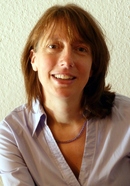
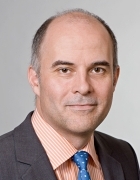
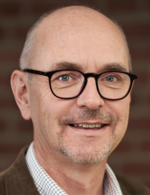
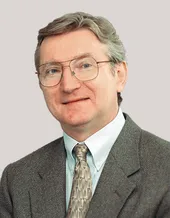
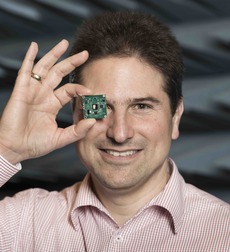
Prof. Waldemar Kolanus leads the Molecular Immunology and Cell Biology department at the University of Bonn's Life & Medical Sciences Institute (LIMES) . His research bridges immunoregulation , stem cell dynamics , and metabolic stress responses in immune cells. Unit 2 member at LIMES Principal investigator in SFB 704 and ImmunoSensation Cluster Leads a multidisciplinary lab with postdocs, PhD students, and technical staff His work focuses on intracellular signaling pathways connecting immune activation to tissue homeostasis, particularly through: Cytohesin proteins in integrin-mediated adhesion and migration TRIM71 in stem cell regulation and congenital hydrocephalus High-salt environments affecting macrophage function Publication trends show expertise in immune cell migration , genetic models , and chemical inhibition , with frequent use of mice and zebrafish for in vivo studies. Key articles explore: TRIM71's dual role in auditory development and germ cell maintenance Cytohesin family's Golgi regulation and insulin signaling Ruxolitinib's off-target migration inhibition of dendritic cells Contact details: Address: LIMES Institute, Carl-Troll-Straße 31, Bonn Email: kolanus.sekretariat@uni-bonn.de Phone: +49 228 73-62788
Prof. Marianne Pouplier is a Professor at the Institute of Phonetics and Speech Processing (IPS) at Ludwig Maximilian University of Munich. Her research focuses on speech production mechanisms, particularly coarticulation, phonetic universals, and language-specific variations. She investigates articulatory timing, speech errors, and cross-linguistic differences in consonant clusters using advanced methodologies like real-time MRI and electromagnetic articulography. Her work bridges theoretical models (e.g., Articulatory Phonology) with empirical data, emphasizing the interplay between phonological representation and motor execution. Key contributions include studies on nasal coarticulation, larynx dynamics, and the role of articulatory effort in speech production. Selected publications highlight her expertise in analyzing speech motor control through interdisciplinary approaches. She collaborates internationally, contributing to projects like the Bavarian Archive for Speech Signals (BAS). No awards or grants are explicitly listed, but her extensive publication record underscores her scholarly impact.
Prof. Dr. Michael Ulbrich is a full professor and Chair of Mathematical Optimization at the Technical University of Munich (TUM), within the School of Computation, Information and Technology. He has held this position since 2006 and previously served as Dean of Studies (2007–2010) and Vice Dean of the Faculty of Mathematics (2012–2015). His research focuses on nonlinear optimization, optimal control, and numerical analysis, with applications in fluid dynamics, shape optimization, and PDE-constrained systems. He leads projects in the DFG SPP 1962 and IGDK 1754, and has received prestigious awards including the Howard Rosenbrock Prize (2015) and the Doctoral Award from the TUM Association of Friends (1996). Ulbrich is Editor-in-Chief of Optimization and Engineering and contributes to multiple journals. His work bridges theoretical foundations and practical applications, including CO2 sequestration, fluid-structure interaction, and distributed optimization algorithms. Education: PhD (1996), Habilitation (2002) in Mathematics at TUM. Research stays at Rice University (USA) under DFG funding. Research Areas: Semismooth Newton methods, PDE-constrained optimization, optimal control of Navier-Stokes equations, and distributed parameter systems. Awards: Rosenbrock Prize, Teaching Excellence Awards, and recognition for doctoral work. Leadership Roles: Department Head of Mathematics (2022–), Member of TUM Senate (2019–2022), and Co-Chair of GAMM 2018. Ulbrich has authored influential textbooks like Semismooth Newton Methods for Variational Inequalities and Nichtlineare Optimierung . His recent projects include OptiGeoS (2024–2026) and collaborations on nonsmooth optimization and stochastic algorithms. His academic contributions span over 100 publications, emphasizing both algorithmic innovation and rigorous mathematical analysis.
Shrikanth (Shri) Narayanan is University Professor and Niki & C. L. Max Nikias Chair in Engineering at the University of Southern California (USC), with appointments spanning Electrical & Computer Engineering, Computer Science, Linguistics, Psychology, Neuroscience, Pediatrics, and Otolaryngology-Head & Neck Surgery. He serves as Research Director of the Information Sciences Institute and Director of the Ming Hsieh Institute. PhD in Electrical Engineering (UCLA, 1995) Engineer and MS in Electrical Engineering (UCLA, 1992 and 1990) BE in Electrical Engineering (Anna University, India, 1988) His interdisciplinary research focuses on human-centered signal processing and machine intelligence , addressing societal challenges in health, education, defense, and media arts. Key areas include: Behavioral signal processing Affective computing Multimodal signal processing Computational speech science Biomedical applications Scientific Awards : IEEE James L. Flanagan Speech and Audio Processing Award (2025) Edward J. McCluskey Technical Achievement Award (2024) ISCA Medal for Scientific Achievement (2023) Claude Shannon-Harry Nyquist Technical Achievement Award (2023) ACM ICMI Sustained Accomplishment Award (2020) USC Distinguished Faculty Service Award With over 1,000 publications and 19 patents , his work has been commercialized through startups like Behavioral Signals Technologies and Lyssn . He leads transformative university initiatives and has served in editorial roles for top journals including Computer Speech and Language and IEEE Transactions on Affective Computing .
Anders Rantzer is a Professor of Automatic Control at the Department of Control Engineering, Faculty of Engineering, Lund University, Sweden. He has held visiting positions at Caltech (2004–2005) and the University of Minnesota (2015–2016) as the Taylor Family Distinguished Visiting Professor. His academic journey began with a PhD from KTH Stockholm in 1991, followed by a postdoc at the Institute for Mathematics and its Applications (IMA), University of Minnesota. His research interests center on modeling, analysis, and synthesis of control systems , with a strong focus on scalability, adaptation, and applications in energy networks . He is particularly known for foundational work in positive systems and integral quadratic constraints (IQCs) . These theoretical frameworks are critical in analyzing stability and robustness of large-scale interconnected systems. His work bridges mathematical rigor with practical engineering applications, especially in sustainable energy and networked systems. The recent publications and lecture materials reflect a consistent trajectory in scalable and robust control, optimization, and distributed systems. Themes such as large-scale convex optimization , nonlinear and stochastic control , and network dynamics dominate his scholarly output, indicating a sustained commitment to advancing control theory for complex, real-world systems. Scientific honors include: Fellow of IEEE Member of the Royal Swedish Academy of Engineering Sciences (IVA) Chairman of the Swedish Scientific Council for Natural and Engineering Sciences Chairman of the Royal Physiographic Society of Lund Rantzer has supervised numerous students and contributed extensively to academic leadership and education. He has been involved in major national and international research initiatives such as WASP (Wallenberg AI, Autonomous Systems and Software Program) and ELLIIT. His work includes developing educational tools and courses in control, optimization, and machine learning. He leads and contributes to research projects on autonomous systems, cloud control, and smart energy networks. He is affiliated with the Control Lab at LTH and participates in collaborative efforts such as the Nordic University Hub on Industrial Internet of Things (HI2OT). His work integrates theoretical advances with practical implementations in robotics, biomedical systems, and industrial automation.
Georg Martius is a Full Professor in the Department of Computer Science at the University of Tübingen's Faculty of Science and a Max Planck Research Group Leader at the MPI for Intelligent Systems. Since April 2023, he has been a core member of the DFG-funded Cluster of Excellence 'Machine Learning: New Perspectives for Science,' which received extended funding through 2032 for its mission to integrate machine learning into fundamental scientific discovery processes. His academic foundation includes a PhD from the University of Göttingen and Bernstein Center for Computational Neuroscience (2005), a Diploma in Computer Science from the University of Leipzig (2003), and a visiting research period at the University of Edinburgh's Division of Informatics. Postdoctoral positions followed at the Max Planck Institutes for Dynamics and Self-Organization (Göttingen, 2009), Mathematics in the Sciences (Leipzig, 2010), and IST Austria (2015). Professor Martius's research pioneers the intersection of reinforcement learning, robotics, and tactile sensing, with emphasis on developing autonomous systems capable of natural locomotion, dexterous manipulation, and physical-world understanding. His work bridges theoretical machine learning with practical hardware applications, particularly in creating differentiable simulators, superresolution tactile sensors, and biologically plausible learning frameworks for robotic control. Analysis of his 2024-2025 publications reveals dominant trends in offline reinforcement learning (especially goal-conditioned and diversity-maximization techniques), object-centric representation learning for video understanding, and tactile sensing innovations. A strong thread connects foundation models to world model construction, while his work on differentiable physics engines enables precise collision handling and contact dynamics for real-world robotic control. His leadership roles include directing the Distributed Intelligence research team at Tübingen and contributing to major collaborative initiatives like the Real Robot Challenge and Myochallenge 2022. The Cluster of Excellence appointment represents recognition of his contributions to transforming scientific methodology through machine learning, particularly in automating hypothesis generation and experimental design. Current projects focus on integrating large-scale machine learning with embodied intelligence, advancing tactile perception systems like the Minsight vision-based sensor, and developing neuroplasticity-inspired approaches for robust out-of-distribution detection. His work directly impacts fields requiring physical interaction intelligence, from autonomous navigation to medical robotics, with emphasis on sample-efficient learning from limited real-world data.
Prof. Dr. Amelie Hagelauer holds a professorship in Micro- and Nanosystem Technology at the TUM School of Computation, Information and Technology, Technical University of Munich. Her work focuses on advanced electronics and systems integration across quantum computing hardware, resistive memory technologies, and high-frequency RF systems. She has contributed to innovations in superconducting qubit readout architectures, multi-level RRAM designs, and 3D-integrated CMOS-compatible quantum devices. Research interests span quantum hardware design, nanoelectronic devices, RF front-end systems, and emerging memory technologies. Her work emphasizes practical implementation challenges such as low-power operation, high-voltage handling in RF switches, and wafer-scale fabrication processes. Recent projects include D-band radar systems, energy-efficient 60 GHz transceivers, and antenna tuning solutions for 5G applications. Publications from 2023-2025 showcase advancements in resistive switching device characterization, mitigation of TLS losses in superconducting qubits, and reconfigurable AI accelerators using RRAM-based digital twins. Her work bridges theoretical device physics with practical integrated circuit design, addressing scalability and reliability in next-gen electronics. Awards and grants: None explicitly listed in provided texts. Active collaborations include EU-funded projects on quantum computing platforms and TUM's Electronic Photonic Integration initiatives. Leads research teams in microsystem technology with emphasis on cross-disciplinary approaches combining CMOS processes, MEMS, and quantum engineering.
Moritz Wiese is a Researcher at the Chair of Theoretical Information Technology within the Department of Electrical and Computer Engineering at Technische Universität München (TUM) . His work focuses on information-theoretic security, quantum communication, and wireless networks, with significant contributions to interference modeling and secure coding schemes. Research Interests : Information-Theoretic Security, Quantum Wiretap Channels, MIMO Systems, 5G/6G Technologies, Physical Layer Security, and Network Coding. Key Grants : Involved in DFG-funded projects (Gottfried Wilhelm Leibniz Prize, UKoloS) and BMBF initiatives (6G-life, QuaDiQua). Collaborations : Worked with Prof. Holger Boche, Christian Deppe, and Rami Ezzine on secure communication and randomness generation. Labs : Active in the ACES Lab and 6G-life research hub, focusing on joint communication/sensing and neuromorphic computing. Publications : Over 20 papers on secure estimation, wiretap channels, and quantum secrecy, including top-tier journals like IEEE Transactions on Information Theory and Journal of Mathematical Physics .
Wolfgang Porod is a Professor of Electrical Engineering and holder of the Frank M. Freimann Chair at the University of Notre Dame. He is also a Hans Fischer Senior Fellow at the TUM Institute for Advanced Study (TUM-IAS) since 2009, affiliated with the Nanoimprint and Nanotransfer Focus Group led by Paolo Lugli. His research focuses on nanoelectronics and quantum devices, notably co-inventing the Quantum-Dot Cellular Automata (QCA) framework, a molecular-scale information processing paradigm. Porod earned his Diplom (M.S.) and Ph.D. from the University of Graz, Austria, and held postdoctoral roles at Colorado State and Arizona State Universities before joining Notre Dame in 1986. He directs Notre Dame’s Center for Nano Science and Technology, advancing interdisciplinary nanotechnology research. His academic accolades include Fellowships from the AAAS (2005) and IEEE (2001), and teaching awards such as the Kaneb Teaching Award (2005) and the Ruth and Joel Spira Award (2000). Porod’s work bridges quantum physics and engineering, with applications in low-power computing, spintronics, and nanoscale device fabrication. At TUM-IAS, he collaborates on nanoimprint lithography and nanotransfer technologies, advancing scalable nanomanufacturing methods.
Anna Levina is an Assistant Professor for Computational Neuroscience at the University of Tübingen , affiliated with the Department of Computer Science under the Faculty of Science. Her research focuses on the self-organization of neuronal activity, critical dynamics in neural networks, and the excitation/inhibition balance in cortical circuits. Current positions: Assistant Professor (since 2018), Group Leader (2017-2018), Equality Officer (Computer Science) Previous roles: IST Fellow (2015-2017), Associated Researcher (2011-2015), Postdoc/PI (2011-2015), Postdoc (2008-2011) Her research integrates mathematical modeling , statistical physics , and computational neuroscience to study criticality phenomena, neural avalanches, and adaptive network dynamics. Key interests include: Self-organized criticality in neural systems Excitation/Inhibition balance mechanisms Network topology and dynamics Timescale analysis in neural processing Stochastic modeling of neural activity Recent publications reveal trends in understanding critical dynamics across biological and artificial networks, with applications to memory systems, sensorimotor integration, and disease modeling. She has received recognition as an IST Fellow .
Prof. Dr. Stefan Luther is a Max Planck Research Group leader (W2, tenured since 2013) at the Max Planck Institute for Dynamics and Self-Organization, Göttingen, and an Honorarprofessor at the Faculty of Physics, University of Göttingen. He holds adjunct roles as Adjunct Associate Professor at Cornell University (2009–2012) and Northeastern University (2016–2018), and serves as DZHK-Professor at the Institute of Pharmacology and Toxicology, University Medical Center Göttingen. His research focuses on nonlinear spatiotemporal dynamics in excitable biological media, particularly cardiac arrhythmias. He pioneered 4D imaging of heart function and developed algorithms for optogenetic and electrical control of arrhythmias. Translational efforts span basic research to preclinical and clinical studies. Education includes a Diplom in Physics (1997) and PhD (2000) from Georg-August-University, Göttingen. Postdoctoral training followed at the University of Twente (2001–2004) and Cornell University’s LASSP (2004–2006). His lab, the Biomedical Physics group, explores electromechanical coupling in cardiac systems and develops novel therapeutic approaches. Collaborations include work on computational modeling, uncertainty quantification in dynamical systems, and fluid dynamics of multiphase flows.
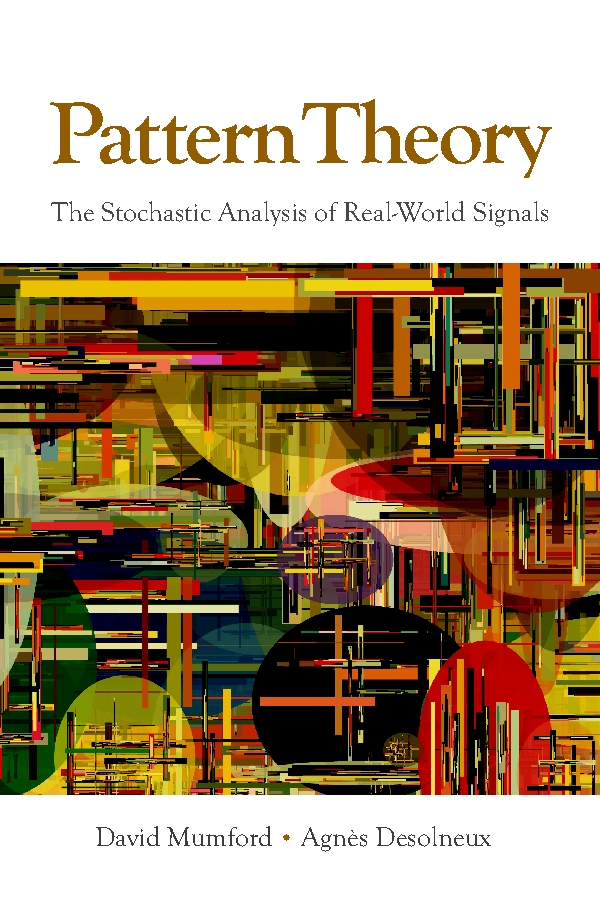
Agnes Desolneux is a CNRS Research Director at the Borelli Centre (formerly CMLA) and a Professor attached to the Mathematics Department at ENS Paris-Saclay. Education: PhD in Applied Mathematics (2000) from ENS Cachan Habilitation in Applied Mathematics (2010) from Université Paris Descartes Her research focuses on image analysis via statistical methods , particularly a contrario approaches, image restoration, texture synthesis, Determinantal Point Processes (DPP), optimal transport, Gaussian mixtures, geometry of random field excursions, shot-noise models, and mathematical modeling of visual perception through Gestalt theory. The articles extracted reflect her expertise in applied mathematics and computer vision , with recent works (2025-2020) on optimal transport algorithms, DPP applications, multiscale texture analysis, and stochastic modeling in medical imaging. Keywords span machine learning, probability theory, medical imaging, and computer vision . She has no listed scientific awards but has authored influential works including the book From Gestalt Theory to Image Analysis: A Probabilistic Approach (Springer, 2008) and Pattern Theory: the stochastic analysis of real-world signals (AK Peters, 2010).
Prof. Dr.-Ing. Ahmad Osman is a Professor at the Saarland University of Applied Sciences (htw saar), specializing in Test Technologies and Test Methods within the Faculty of Engineering. He also holds an Adjunct Professor position at Laval University in Quebec, Canada, in the Department of Electrical Engineering and Computer Science. His research focuses on Artificial Intelligence applications in Signal and Image Processing for Non-destructive Testing (NDT) , with extensive work on Deep Learning , 3D Ultrasound Tomography , and Sensor Data Fusion in industrial contexts. Engineering Artificial Intelligence Signal Processing Image Processing Non-destructive Testing Quality Control Augmented Reality Osman leads the AutomaTiQ research group and serves as Head of the Algorithms/Signal and Data Processing Department at Fraunhofer IZFP . His recent publications (2017–2022) emphasize Deep Learning for defect detection in CFRP , Terahertz Imaging for artwork diagnostics, and Acoustic Sensors for agricultural quality control. He has organized international conferences on Structural Health Monitoring and contributed to Springer books on NDT technologies. His projects include ComforTex-AI (2024) and development of 3D positioners for ultrasound measurements. Collaborations span institutions in Germany, Canada, Italy, and Brazil, with advisory roles in the German Society for NDT and technical committees for conferences in Montreal and Egypt.
Prof. Dr.-Ing. Thomas Zwick is a full professor and director of the Institute of High Frequency Engineering and Electronics (IHE) at the Karlsruhe Institute of Technology (KIT). He holds a Dipl.-Ing. (M.S.E.E.) and Dr.-Ing. (Ph.D.E.E.) from the University of Karlsruhe. His career includes roles at IBM Research (2001–2004), Siemens AG (2004–2007 managing automotive radar teams), and KIT since 2007. He leads research in high-frequency technologies, antennas, radar systems, and wireless communications. Research interests include radio wave propagation, antenna design, automotive radar architectures, and millimeter-wave systems. He has authored/co-authored over 400 papers, 20 patents, and received IEEE Fellow status (2018), honorary doctorate from Budapest University (2022), and membership in the Heidelberg Academy and acatech. His work emphasizes integrating sensing and communication systems, 3D-printed RF components, and high-frequency measurement techniques. Teaching focuses on high-frequency engineering, electronic circuits, and radar systems. He oversees the IHE’s laboratories, including the Microwave Engineering Lab and Student Innovation Lab. Recent work explores sub-THz communication, RIS-aided ISAC systems, and beamforming for reduced EMF exposure in urban scenarios.
Prof. Massimo Fornasier holds the Chair of Applied Numerical Analysis at the Technical University of Munich (TUM), within the School of Computation, Information and Technology and the Department of Mathematics. His research focuses on mathematical modeling, numerical analysis, and data-driven methods, particularly in areas like compression, sparse recovery, and optimization. He has made significant contributions to consensus-based optimization, control of multiagent systems, and applications in image/signal processing. Education: PhD in Computational Mathematics, University of Padua (2003) Postdoctoral fellowships at University of Vienna, Sapienza University of Rome, and Princeton University Awards: ERC Starting Grant (2012) START Prize (2011) Prix de Boelpaepe (2009) His work bridges theoretical analysis and computational methods, with applications ranging from compressive sensing to machine learning. Recent research emphasizes consensus-based optimization frameworks and their global convergence properties. Editorial roles include journals like Networks and Heterogeneous Media and Calcolo . He leads research groups in areas such as Data Science and Numerical Analysis at TUM.