
Raquel Fernández is Full Professor of Computational Linguistics and Dialogue Systems at the University of Amsterdam, where she leads the Dialogue Modelling Group at the Institute for Logic, Language & Computation (ILLC). As Vice-Director for Research at ILLC and a Fellow of the ELLIS Society, she bridges computational linguistics, cognitive science, and artificial intelligence through her research on language use in multimodal and conversational contexts. PhD in Computational Linguistics from King's College London Prior research positions at University of Potsdam and Stanford University's CSLI Her work explores how cognitive constraints, social interaction, and perception shape language use, with a focus on: Visually-grounded language processing Multimodal dialogue modeling Model uncertainty and calibration Language grounding in multimodal data Language learning and semantic change Dialogue reference resolution Recent publications analyze multimodal reasoning limitations, cross-lingual knowledge consistency, and uncertainty modeling in dialogue systems. She has received multiple accolades including an ERC Consolidator Grant , NWO VENI/VIDI/Aspasia fellowships , and EMNLP/GenBench awards . Outstanding Paper Award (EMNLP 2023) Best Data Award (GenBench Workshop 2023) ELLIS Society Fellow ERC Consolidator Grant #819455 recipient NWO VENI/VIDI/Aspasia awardee As a leader in academic service, she serves on the SIGDAT Executive Committee and chairs multiple conference committees. Her lab develops models for multimodal dialogue, visual storytelling, and grounded language understanding.
جستجوی استاد راهنمای دانشگاهی
برای مسیر پژوهشیتان، استاد راهنما، استاد دانشگاه و پژوهشگر مناسب را پیدا کنید و با آنها ارتباط بگیرید.
نمایش ۱-۱۵ از ۴۰۵ استاد راهنما
اطلاعات پروفایلها از صفحات عمومی دانشگاهها گرفته شده و ممکن است بهروز نباشد.
Massimo Mischi is a Full Professor at the Faculty of Electrical Engineering of the Eindhoven University of Technology (TU/e) and chairs the Signal Processing Systems (SPS) Division , the largest division at TU/e with over 250 researchers. He founded the Biomedical Diagnostics (BM/d) Lab in 2012, which now includes 180 researchers and clinical/industrial advisors, focusing on biomedical signal processing for diagnostics and monitoring.
Qian Taoمشاهده پروفایل
استادیار
Qian Tao is an Assistant Professor at the Department of Imaging Physics , Faculty of Applied Sciences , Delft University of Technology . She previously worked at the Division of Image Processing, Department of Radiology, Leiden University Medical Center from 2009 to 2020. Academic Background: BSc in Electrical Engineering (Fudan University), MSc in Biomedical Engineering (Fudan University), PhD in Biometric Authentication (University of Twente) Research Interests: Focus on trustworthy AI methodologies for critical healthcare applications, including medical imaging for patient diagnosis and clinical intervention. Specializes in cardiac MRI analysis, image-guided interventions for cardiac arrhythmias, and AI in Radiology. Publication Trends: Recent work emphasizes motion correction in cardiac MRI, deep learning for image registration, and novel techniques like TRAFF2 mapping. Keywords include Medical Imaging , Machine Learning , Cardiac MRI , and Quantitative Analysis . Contact: Email: Q.Tao@tudelft.nl

Michel Versluis is a Full Professor at the University of Twente, Netherlands, specializing in Physical and Medical Acoustics within the Physics of Fluids group. His work focuses on microbubbles and microdroplets for medical imaging and therapy, as well as microfluidic applications in medicine and nanotechnology. University of Twente, Physics of Fluids group His research bridges physics and biomedical engineering, with publications in high-impact journals like PNAS and IEEE Transactions. Recent work emphasizes ultrasound-driven microbubble dynamics, additive manufacturing of flow phantoms, and deep learning for super-resolution imaging. 2025 publications: vascular phantoms, PROTEUS simulator, acoustic microbubble control 2024 innovations: 3D-printed medical devices, immunogenic cell death optimization Contact: m.versluis@utwente.nl
Anna Salvatiمشاهده پروفایل
دانشیار
Anna Salvati is an Associate Professor specializing in nanomedicine and drug delivery systems. Her research focuses on nanoparticle-cell interactions, biomolecular corona formation, and the physicochemical properties governing nanomaterial behavior in biological environments. Key research themes include cellular uptake mechanisms, toxicity of nanomaterials, and nanoparticle targeting strategies. Recent publications highlight her work on nanoparticle stability, membrane interactions, and environmental impacts of microplastics. Her studies integrate multiomics approaches, advanced imaging, and interlaboratory validation to address challenges in nanomedicine design and safety testing. Current projects explore the role of high-density lipoproteins in nanoparticle functionality and the modulation of drug release kinetics through material engineering.
Julia Kamenzمشاهده پروفایل
استادیار
Dr. Julia Kamenz is an Assistant Professor (Rosalind Franklin fellow) at the University of Groningen's Faculty of Science and Engineering, where she leads research in the Molecular Systems Biology group within the Groningen Biomolecular Sciences and Biotechnology Institute (GBB). Her work focuses on understanding the molecular mechanisms that regulate cell cycle progression and cell division. Dr. Kamenz received her undergraduate training in Biochemistry at the University of Tuebingen, completed her PhD at the Friedrich Miescher Laboratory of the Max Planck Society under Dr. Silke Hauf (defended February 2015 with highest honors), and conducted postdoctoral research at Stanford University with Prof. James E. Ferrell. Her PhD work was supported by a Boehringer Ingelheim Fonds fellowship, and her postdoc was funded by a German Research Foundation (DFG) Postdoctoral Fellowship. Her research expertise spans cell cycle regulation and dynamics, post-translational modifications, Xenopus laevis model systems, and live cell microscopy. Dr. Kamenz investigates how kinases and phosphatases intricately regulate cell proliferation and division, with particular interest in the molecular mechanisms that ensure faithful chromosome segregation during mitosis. Her recent work has revealed novel insights into mitotic checkpoint signaling, particularly in early embryonic development where these checkpoints appear to function differently than in somatic cells. Dr. Kamenz's publication record demonstrates a strong focus on the dynamics of cell cycle transitions, with recent papers appearing in high-impact journals including Nature, The Journal of Biological Chemistry, and The Journal of Cell Biology. Her research integrates experimental biochemistry, live-cell imaging, and computational modeling approaches to understand complex regulatory networks. ERC Starting Grant (November 2022) NWO Vidi Grant (July 2021) Mansour Postdoctoral Travel Award (2019) Dr. Kamenz has secured significant research funding including an ERC Starting Grant (€1.5 million) and an NWO XS grant (€50,000) for her project "What limits mitotic checkpoint signaling in the early embryo?" Her research contributes to understanding fundamental biological processes with implications for developmental biology and cancer research. She collaborates extensively within the University of Groningen and with international partners, particularly in the areas of cell cycle research and biophysical approaches to biological problems. Dr. Kamenz leads a research group focused on cell cycle regulation within the Molecular Systems Biology division of the Groningen Biomolecular Sciences and Biotechnology Institute. Her lab combines biochemical approaches using Xenopus egg extracts with live-cell imaging and computational modeling to dissect the molecular mechanisms controlling cell division.
- Cell cycle regulation
- Cell division
- Biochemistry
- +۷ مورد دیگر
Ed E. Moretمشاهده پروفایل
دانشیار
Dr. Ed E. Moret is an Associate Professor of Computational Medicinal Chemistry at Utrecht University, where he serves as Managing Director of the Utrecht Institute for Pharmaceutical Sciences. He is a member of the Departmental Executive Board and Chair of the Board of Examiners of the School of Pharmacy. His academic career spans over three decades with significant contributions to pharmaceutical sciences. Utrecht University, Utrecht Institute for Pharmaceutical Sciences School of Pharmacy, Department of Chemical Biology and Drug Discovery Managing Director since January 2010 Dr. Moret's educational background includes completing Gymnasium-b at Gymnasium Camphusianum in Gorinchem in 1979, followed by pharmacy studies at Utrecht University until 1988. He earned his PhD in 1993 with research on calculations and simulations of DNA-alkylating cytostatics under supervision of Prof. L.H.M. Janssen and Prof. J.P.A.E. Tollenaere. He also conducted postdoctoral research at the Scripps Research Institute with Prof. A.J. Olson. His primary research interests focus on molecular recognition, particularly in auto-immune diseases, with expertise spanning computational medicinal chemistry, computer-aided drug discovery, cheminformatics, and bioinformatics. Dr. Moret's work bridges the gap between theoretical calculations and experimental validation in drug design. His research portfolio demonstrates a consistent trajectory from fundamental molecular interactions to applied drug discovery, with particular emphasis on enzyme inhibitors, carbohydrate-protein interactions, and molecular recognition processes. Analysis of his publication record reveals a strong focus on structure-based drug design, with significant contributions to the development of inhibitors for enzymes like β-glucocerebrosidase, NNMT, and neuraminidase. His work spans multiple therapeutic areas including lysosomal storage disorders, cancer metabolism, and infectious diseases. The interdisciplinary nature of his research is evident in the integration of computational approaches with experimental validation across biochemistry, pharmacology, and medicinal chemistry. Teacher of the Year (awarded three times by Pharmacy students) Member of editorial boards for Medicines and Conceptuur journals Secretary of Board of FIGON (2016) Secretary of Raad voor de Farmaceutische Wetenschappen (2024) Member of Board of Stichting Farmaceutische Erfgoed (2024) Dr. Moret has been actively involved in educational innovation, developing and coordinating the master's programme Drug Innovation, the profile Drug Regulatory Sciences, and the Honours programme Pharmaceutical Sciences. He has taught courses for pharmacy, chemistry, UCU and medical sciences students, as well as PhD courses in bioinformatics and computer-aided drug discovery. His educational contributions include developing an inquiry-based elective course on drug discovery, for which he published educational research. He holds BKO and SKO teaching qualifications and participated in the Centre of Excellence in University Teaching program. As Managing Director of the Utrecht Institute for Pharmaceutical Sciences, Dr. Moret leads research initiatives across chemical biology, drug discovery, and pharmaceutical sciences. His leadership extends to multiple advisory and editorial roles within the pharmaceutical research community, reflecting his significant contributions to both academic and professional spheres of pharmaceutical sciences.
- Antibodies
- Bioinformatics
- Cheminformatics
- +۷ مورد دیگر
Prof. Sander Bohte is a part-time full professor of Computational Neuroscience at the University of Amsterdam (Swammerdam Institute of Life Sciences) and an honorary full professor of Bio-inspired Neural Networks at the University of Groningen. He serves as a Scientific Staff Member and Group Leader in the Machine Learning department at CWI, Amsterdam. His work bridges computational neuroscience and machine learning with a focus on continuous-time information processing. Key research interests include: Spiking Neural Networks with predictive coding and multi-compartment models Biologically Plausible Learning in recurrent and deep architectures Working Memory modeling via reinforcement learning Neuromorphic Computing for real-time systems and GPU acceleration His recent publications highlight trends in neural adaptation , predictive coding , and SNN hardware-software co-design . Awards include the Veni Innovational Research Grant (2004) and ERCIM grant (2013) . He actively supervises MSc theses and leads grants like the NWO KIC project 'Selfhealing Neuromorphic Systems' (2024).
Sveta Zinger is a Full Professor in context-informed dynamic image analysis for clinical decision support at Eindhoven University of Technology (TU/e). She holds affiliations with the Biomedical Diagnostics Lab, NeuroPlatform, and EAISI Health. Her research focuses on medical image/video analysis, temporal data analysis, and machine learning for clinical applications. She has led projects funded by ZonMw, NWO, Philips, and others. She is also Co-Editor-in-Chief of Computer Methods and Programs in Biomedicine and serves on the Vidi committee for NWO. Education: MSc (2000) from Dnepropetrovsk State University; PhD (2004) from École Nationale Supérieure des Télécommunications, France. Postdoctoral roles at the French Atomic Agency and University of Groningen. Research Projects: Includes FORSEE (video monitoring for adverse events in healthcare) and NEUROTREND (fMRI biomarkers for depression). Awards: Second place in the CAMELYON17 challenge for metastases detection. Her teaching includes courses on DSP fundamentals, medical image processing, and cognitive neuroscience. She collaborates with clinical and industrial partners to advance biomedical diagnostics and healthcare technology.
Carlijn Bouten is Full Professor of Cell-Matrix Interactions in Cardiovascular Regeneration at Eindhoven University of Technology. She leads the Soft Tissue Engineering & Mechanobiology group, investigating cellular interactions with extracellular environments in tissue growth, adaptation, and regeneration. Her research develops biodegradable heart valve prostheses that enable in vivo tissue regeneration, applying tissue engineering approaches to cardiovascular medicine. Professor Bouten holds an MSc from Vrije Universiteit Amsterdam and a PhD from TU/e. She completed postdoctoral research at Université Laval and University of London before joining TU/e's faculty. She directs the national Gravitation program 'Materials-Driven Regeneration' and received an ERC Advanced Grant for cardiac tissue organization research. Research Focus: Her interdisciplinary program spans: Mechanobiological cues in tissue regeneration Development of living heart valve replacements Advanced biomaterials for cardiovascular applications In vitro models for tissue development Soft robotic systems for cardiac assistance Recent publications demonstrate innovations in biohybrid devices, standardized biomaterial testing, and novel tissue patterning techniques. Her work integrates engineering, materials science, and clinical translation through collaborations with medtech spin-offs. Leadership and Recognition: Fellow of the European Alliance for Medical and Biological Engineering President-elect of the Heart Valve Society Member of AcademiaNet for Outstanding Female Scientists Recipient of NWO VICI grant and Aspasia award She leads multinational consortia in regenerative medicine and teaches courses on heart/blood physiology and regeneration. Her lab develops model systems spanning cellular to tissue levels to quantify mechanobiological processes.
Guy G. Drijkoningen is an Associate Professor in Applied Geophysics at Delft University of Technology (TU Delft), Faculty of Civil Engineering and Geosciences. He is actively involved in teaching and research within the Department of Applied Geophysics & Petrophysics. Education: MSc, Delft University of Technology, The Netherlands PhD, Cambridge University, UK Research Focus: His work centers on Seismic Experiments & Modelling , particularly in exploration and shallow-subsurface contexts. Key areas include: Seismic data acquisition on land Continuous seismic monitoring Shallow shear-wave imaging (land and marine) Seismic wave propagation in porous media Current projects leverage advanced sensor networks (e.g., LOFAR), full-waveform inversion for tunnel-boring machines, and novel vibrator technologies. Publications Trend: Recent works (2011–2016) emphasize seismic modeling, inversion techniques, and experimental validation across marine and terrestrial environments. Topics span poroelastic wave theory, ambient-noise interferometry, and innovative seismic source design, reflecting a blend of theoretical and applied geophysics. Scientific Awards: Best-paper award Geophysics 2015 for "A seismic vertical vibrator driven by linear synchronous motors" Professional Memberships & Editorial Roles: Member: Society of Exploration Geophysicists (SEG) Member: European Association of Geoscientists and Engineers (EAGE) Associate Editor: Geophysics Teaching: He teaches undergraduate and graduate courses including Introduction to Geophysics, Reflection Seismology, and specialized PhD-level modules on seismic data analysis.
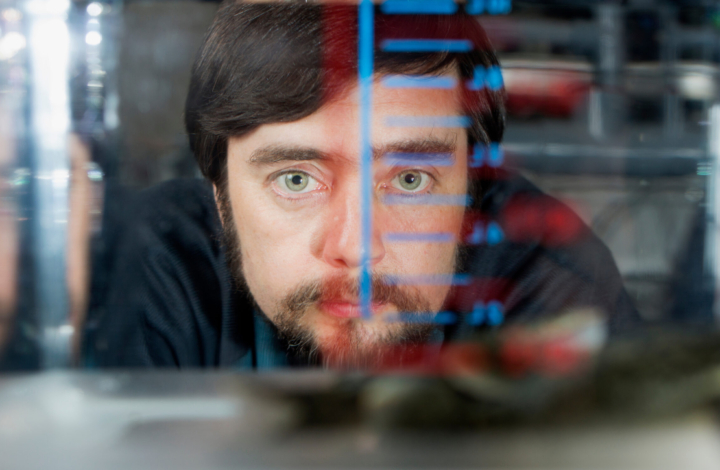
Michael Levin is a Distinguished Professor at Tufts University in the Department of Biology within the School of Arts and Sciences. He serves as Director of both the Allen Discovery Center at Tufts University and the Tufts Center for Regenerative and Developmental Biology. His laboratory investigates the intersection of developmental biology, artificial life, bioengineering, synthetic morphology, and cognitive science. Allen Discovery Center at Tufts Tufts Center for Regenerative and Developmental Biology Tufts/UVM: ICDO Harvard Wyss Institute Stibel Dennett Consortium for Brain and Cognitive Science The Proteus Institute MIT Science and Technology Center EBICS Levin's research focuses on understanding diverse intelligence in evolved, designed, and hybrid complex systems. His lab combines developmental biophysics, computer science, and behavioral science to study how cognition scales up from cellular competencies to organism-level behaviors. A key specialty is developmental bioelectricity—the study of how somatic electrical networks store, process, and act on information to control large-scale body structure. His team creates tools to read and edit the bioelectric code guiding proto-cognitive computations in the body. Levin's publications reveal a strong focus on bioelectricity, morphogenesis, and non-neural cognition across multiple model systems including Xenopus, planarians, and synthetic living constructs. His recent work explores collective intelligence as a unifying concept across biological scales, the development of microfluidic devices for measuring electrical connectivity, and optical estimation of bioelectric patterns in living embryos. His research spans fundamental developmental mechanisms to potential biomedical applications in regeneration and disease treatment. As an editor, Levin serves as Co-Editor-in-Chief of Bioelectricity and Founding Associate Editor of Collective Intelligence. He has mentored numerous post-doctoral fellows and graduate students who have gone on to establish their own research programs. His lab has received significant attention for creating novel biological machines (xenobots) and demonstrating that cells can store and transmit behavioral memory outside the brain. The Levin Lab maintains several significant research initiatives including the Allen Discovery Center at Tufts, the Tufts Center for Regenerative and Developmental Biology, and collaborations with the Wyss Institute at Harvard. The lab employs a multidisciplinary approach combining wet lab experiments with computational modeling to investigate how living systems achieve goal-directed behavior and pattern formation.

Dr. Dierck Hillmann is an Associate Professor at the Faculty of Science, Department of Biophotonics and Medical Imaging, Vrije Universiteit Amsterdam. He holds a PhD in Holoscopy from Luebeck University (2013). His research focuses on advanced optical imaging techniques, particularly Optical Coherence Tomography (OCT), with applications in retinal imaging, functional signal analysis, and computational imaging. He is affiliated with the LaserLaB - Biophotonics and Microscopy research group. Key research areas include improving OCT resolution through holographic methods, functional imaging of retinal neurons and photoreceptors, and developing computational adaptive optics to enhance imaging quality. His work addresses challenges like speckle reduction, aberration correction, and real-time data processing in biomedical imaging. Dr. Hillmann’s contributions span over 37 publications, including innovations in full-field OCT, optoretinography, and phase-sensitive measurements. He teaches courses such as Computational Optical Imaging and Light-Tissue Interaction. His current project explores imaging individual retinal cells and their functions using advanced techniques. No scientific awards are explicitly listed, but his extensive publication record reflects significant academic impact. Students advised are not specified in the provided materials.

Anna Vilanova is a Full Professor in Visual Analytics at the Department of Mathematics and Computer Science, Eindhoven University of Technology (TU/e), and is associated with the Electrical Engineering department's Signal Processing Systems. Previously, she served as Associate Professor at TU Delft (2013-2019) and Assistant Professor at TU/e (2002-2013). Her research focuses on Visual Analytics for high-dimensional data , explainable AI , and biomedical applications including Diffusion Weighted Imaging, 4D Flow, and Pangenomics. Education: Doctorate in Computer Graphics & Visualization (2001) Master in Computer Science (1997), Universitat Politècnica de Catalunya Research Highlights: Vilanova leads work on Visual Analytics systems for biomedical data, with recent publications in Diffusion MRI modeling , Tractography visualization , Explainable AI frameworks , and Pangenomic variant analysis . Her work bridges dimensionality reduction , uncertainty visualization , and medical imaging applications. Scientific Contributions: NWO-Veni grant (2005): "Visualization of global tensor information for diffusion tensor imaging" NWO-Aspasia grant (2013) Best Poster Award EuroVis (2025) Best Demo/Poster Awards (2022) Leadership & Service: Vilanova serves on the IEEE VIS Steering Committee , was EUROGRAPHICS President (2019-2022), and contributes to conferences like IEEE Visualization and EG-EuroVis . She co-founded the EAISI Health research initiative at TU/e.
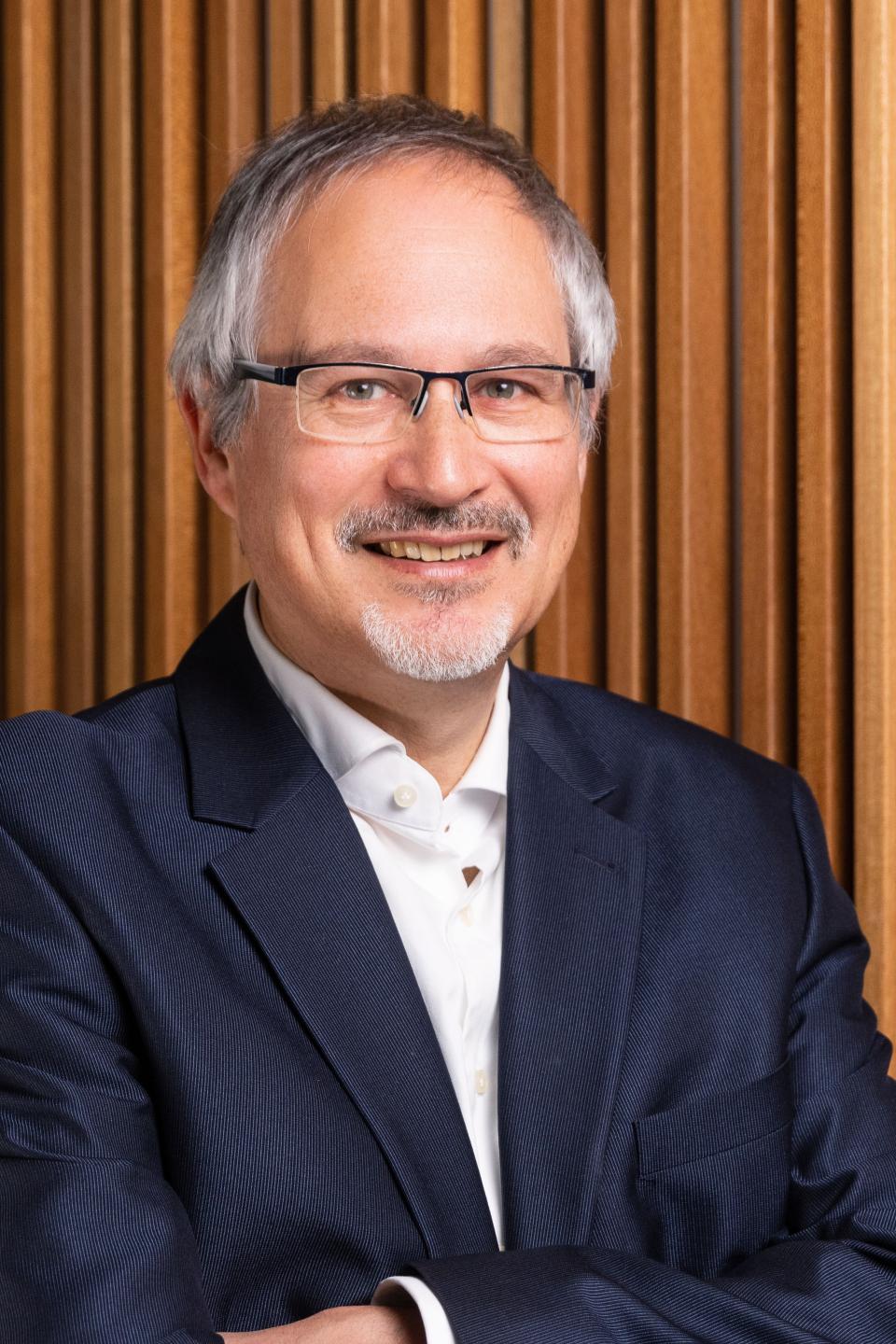
Ralf Peeters is a Full Professor in Mathematics of Knowledge Engineering at Maastricht University's Faculty of Science and Engineering , Department of Advanced Computing Sciences. He serves as Vice-Dean of Research and Director of the STEM Graduate School, while leading the university's team at the inter-university research school DISC and co-chairing the Mathematics Centre Maastricht. Education: PhD in Mathematics (Free University, Amsterdam, 1994) Technical Mathematics (Delft University of Technology, 1988) Research Interests span applied mathematics, systems and control theory, signal/image processing, artificial intelligence, and biomedical engineering applications. His work bridges mathematical techniques with real-world challenges in healthcare and industrial systems. Recent Publications highlight advancements in deep learning for cardiac signal reconstruction, tensor-based signal decomposition, and recurrence plot analysis. These works integrate machine learning with clinical diagnostics, particularly in electrocardiographic imaging and arrhythmia characterization. Key Collaborations: Mathematics Centre Maastricht Dutch Mathematics Platform Dutch Institute of Systems and Control Leadership Roles: Vice-Dean of Research (FSE), Director of STEM Graduate School, Head of DISC-affiliated team, and Co-Chair of Mathematics Centre Maastricht. He has supervised over 25 PhD projects, emphasizing applied research across health and industrial domains.