Wai Pang Ng is a Professor and Head of the Department of Mathematics, Physics and Electrical Engineering at Northumbria University. He holds a BEng (Hons) in Communications and Electronic Engineering from the University of Northumbria and a PhD in Electronic Engineering from the University of Wales, Swansea. His research focuses on radio-over-fiber systems, distributed fiber sensing, high-speed optical communications, and adaptive signal processing. Ng has held leadership roles in IEEE chapters and conferences, including chairing the IEEE UK&RI Communications Chapter (2011–2015) and serving as publicity chair for IEEE ICC 2015 and 2016. His research interests include innovative fiber optic sensor designs, acoustic wave devices for biomedical applications, and hybrid communication systems combining radio-over-fiber and free-space optics. Recent work emphasizes ultra-sensitive pressure/temperature sensors using microstructured fibers and acoustofluidic platforms for lab-on-a-chip applications. Ng has supervised seven PhD/MSc projects and actively contributes to standards development in optical communication systems. Ng’s publications span advanced sensor technologies, nonlinear compensation in optical systems, and turbulence-resistant free-space optical links. His work bridges academic research with practical applications in telecommunications, environmental monitoring, and healthcare diagnostics. Professional affiliations include IEEE technical committees (SPCE, TCGCC, ONTC) and guest editorships for IET Communications.
Joachim Weickert is a Professor of Mathematics and Computer Science at Saarland University where he heads the Mathematical Image Analysis Group since 2001. He received his diploma and Ph.D. in mathematics from the University of Kaiserslautern (1991, 1996), and a habilitation degree in computer science from the University of Mannheim (2001). Prior to his current position, he worked as a research assistant at the University of Kaiserslautern, as a post-doctoral researcher at the universities of Utrecht and Copenhagen, and as an assistant professor at the University of Mannheim. His research focuses on image processing, computer vision, and scientific computing, with special emphasis on techniques based on partial differential equations, variational principles, wavelets, morphological and nonlocal methods, as well as neuroexplicit approaches. He has developed mathematical models and efficient numerical algorithms for image restoration, enhancement, segmentation, compression, optic flow computation, stereo reconstruction, shape from shading, and signal processing methods for tensor fields. These ideas have been successfully applied in industry, biomedical image analysis, and other fields. Analysis of his recent publications reveals a strong trend toward combining traditional PDE-based methods with modern deep learning approaches, particularly in the areas of image inpainting and compression. His work increasingly explores the connections between numerical algorithms for partial differential equations and neural network architectures, demonstrating how mathematical foundations can inform cutting-edge AI techniques while maintaining strong theoretical guarantees. Gottfried Wilhelm Leibniz Prize (2010), considered the most important research award in Germany ERC Advanced Grant (2017) for "Inpainting-based Compression of Visual Data" Elected member of Academia Europaea - The Academy of Europe Jan Koenderink Prize for Fundamental Contributions in Computer Vision (2014) Multiple DAGM Prizes and Best Paper Awards throughout his career AAIA Fellow (2021) and Highly Ranked Scholar (2024) distinctions Professor Weickert has supervised over 250 bachelor's and master's theses and initiated the Master Programme in Visual Computing at Saarland University, the first of its kind in Germany taught in English. He has established numerous interdisciplinary collaborations with colleagues from medicine, bioinformatics, pharmacy, physics, mechatronics, and mechanical engineering. As Principal Investigator for Visual Computing within the Multimodal Computing and Interaction Cluster of Excellence, and former dean of the Faculty of Mathematics and Computer Science (2008-2010), he has played a significant leadership role in advancing visual computing research and education. He heads the Mathematical Image Analysis Group, which has been at the forefront of developing mathematical methods for image analysis. The group maintains strong connections with both theoretical mathematics and practical applications, bridging the gap between fundamental research and real-world implementation across various domains including medical imaging, industrial inspection, and multimedia processing.
Georg Fantner is an Associate Professor at the Swiss Federal Institute of Technology Lausanne (EPFL) with dual appointments in the School of Engineering (STI) within the Institute of Bioengineering and the School of Life Sciences (SV) for teaching. He directs the Laboratory for Bio- and Nano-Instrumentation (LBNI) and holds leadership roles including President of the Open Science Strategic Committee and the Association des Professeurs de l'EPFL. Research Focus: Bioinstrumentation, Nanotechnology, Scanning Probe Microscopy, and Metrology Teaching: Structural Mechanics for Life Sciences, Metrology, and Metrology Practicals His research pioneers advanced instrumentation for nanoscale characterization, emphasizing data-driven approaches to enhance microscopy techniques. Recent work integrates deep learning with scanning probe microscopy for real-time biological imaging and develops novel MEMS devices for fluid-compatible nanoscale manipulation. Key innovations include hermetically sealed sample chambers for pathogen studies and deterministic nanotopography engineering. Professor Fantner actively mentors 7 current PhD students and has supervised 14 graduates. His laboratory fosters interdisciplinary collaboration across engineering, physics, and life sciences to advance nanoscale measurement technologies and instrumentation development.
Daniel Kifer is a Professor in the Computer Science and Engineering department at Pennsylvania State University, with affiliations to the Huck Institutes of the Life Sciences. His work bridges computer science, privacy-preserving machine learning, and geoscience applications. With over 10,000 citations and a high h-index, he focuses on methods to unify theoretical and applied research. Research Interests: Differential Privacy, Privacy-Preserving Machine Learning, Physics-Informed Neural Networks, Landslide Prediction, and Formal Verification of Privacy Systems. Recent projects include grants from the National Science Foundation: SaTC: CORE: Small (2024): privacy-preserving user data embedding in machine learning pipelines. SaTC: CORE: Medium (2017-2023): formal methods for differential privacy and accuracy optimization. His research outputs span domains like geoscience, database systems, and policy analysis, emphasizing precision and scalability of privacy-preserving algorithms.
Jerome Engel, M.D., Ph.D. is a Professor at the Jane and Terry Semel Institute for Neuroscience and Human Behavior , University of California, Los Angeles (UCLA). He serves as Director of the Epilepsy Telemetry Unit within the Seizure Disorder Center and is a member of the Brain Research Institute and the Neuroscience GPB Home Area. His work spans neurology, psychiatry, and biomedical research. Research Focus: Epilepsy, epileptogenesis, high-frequency oscillations (HFOs), neuroimaging, surgical interventions, and biomarker development. Key Contributions: Pioneering studies on fast ripples as biomarkers, network-based surgical outcome prediction, and advanced HFO detection algorithms. Publications (15 most recent) address topics such as kainic acid models of epileptogenesis, thalamic sleep spindles in pediatric epilepsy, self-supervised HFO analysis, and graph theoretical measures for surgical planning. His work frequently employs medRxiv and Epilepsia as platforms for translational findings. Contact: engel@ucla.edu
Sharon Rozovsky is a Professor in the Department of Chemistry and Biochemistry at the University of Delaware's College of Arts & Sciences, where she leads research on oxidative stress response mechanisms and protein quality control pathways. Her work bridges biochemistry, chemical biology, and structural biology with direct implications for understanding neurodegenerative diseases and viral pathogenesis. Her academic foundation includes a B.S. from Tel Aviv University (1994) and a Ph.D. from Columbia University (2000), establishing her expertise in protein dynamics and redox biochemistry. These credentials underpin her innovative approaches to studying cellular stress responses. Rozovsky's research program centers on selenoproteins—proteins containing the rare amino acid selenocysteine—and their critical roles in endoplasmic reticulum (ER) stress resolution. She investigates how membrane-bound selenoproteins like Selenoprotein S and K regulate the ER-associated degradation (ERAD) pathway, with recent work revealing their surprising autoproteolytic activity and involvement in SARS-CoV-2 replication. Her lab pioneers chemical tools including expressed protein ligation and advanced 77Se NMR spectroscopy to characterize these systems at molecular resolution. Analysis of her 2021-2025 publications shows dominant themes in selenoprotein structure-function relationships, ER stress mechanisms, and viral interactions, alongside methodological innovations in cryo-EM grid technology and NMR. This body of work demonstrates consistent focus on redox biochemistry with expanding applications in virology and structural biology. No major scientific awards or fellowships were explicitly documented in the available materials, though her research impact is evident through high-impact publications and methodological contributions. She directs the active Rozovsky Research Group, mentoring graduate students and postdoctoral researchers in biochemical and biophysical techniques. Her laboratory operations are supported by competitive funding including an NSF CAREER award (2011) focused on selenoprotein reactivity, reflecting sustained recognition of her innovative research program.
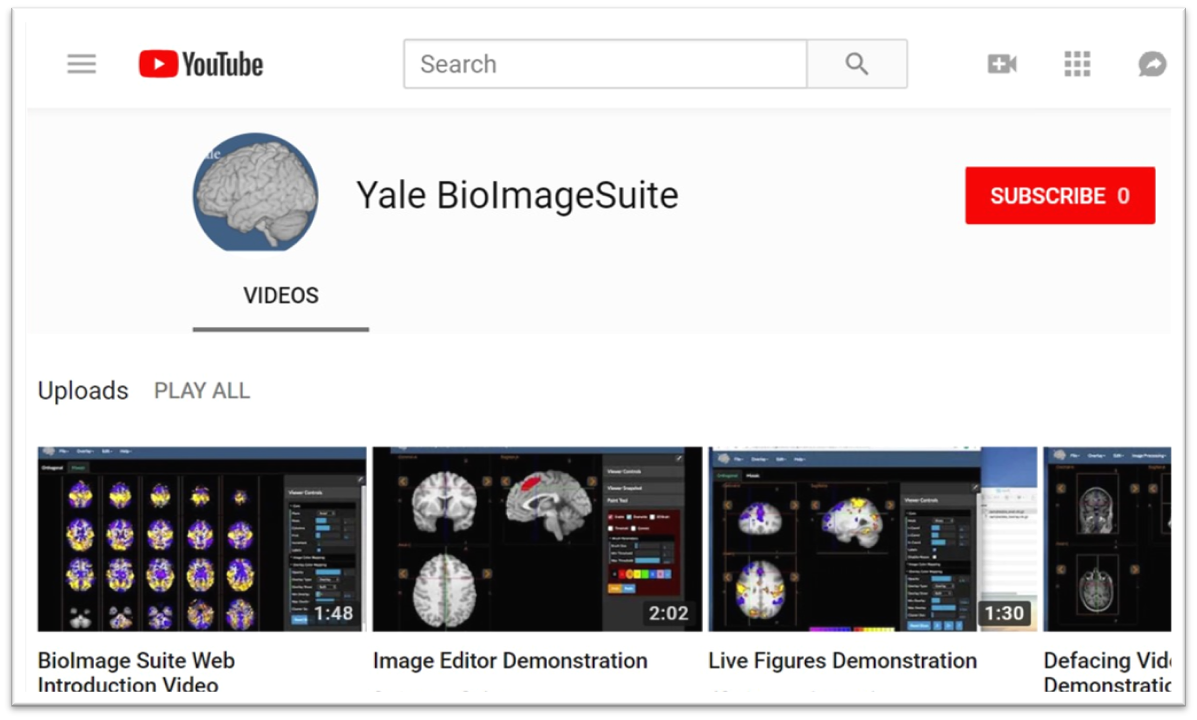
Xenophon Papademetris is a Professor of Biomedical Informatics & Data Science and Radiology & Biomedical Imaging at Yale School of Medicine. He serves as Associate Director of Biomedical Imaging Data Sciences at Yale Biomedical Imaging Institute and directs the Medical Software and Medical Artificial Intelligence Certificate Program. PhD in Electrical and Information Sciences from Yale University (2000) BA from Cambridge University (1994) Postdoctoral Fellowship at Yale University (2002) His research focuses on medical image analysis, machine learning, and biomedical software development. He has developed tools like BioImage Suite Web and contributed to standards committees at the Association for the Advancement of Medical Instrumentation (AAMI). His work spans modalities including MRI, CT, PET, and optical imaging. Recent publications emphasize neuroimaging analysis, explainable AI in healthcare, and multimodal data integration across species. He leads NIH-funded research under the BRAIN Initiative (R24 MH114805) and has authored a textbook on Medical Software published by Cambridge University Press. IEEE Senior Member Yale Brown-Coxe Postdoctoral Fellowship Harding Bliss Prize for Excellence in Engineering He directs the BioImage Suite Project, creating web-based image analysis tools using JavaScript and WebAssembly. His teaching includes both academic courses and a Coursera program on Medical Software with over 14,000 enrollments.
Prof. Dr. Nabeel Aslam is a Full (W3) Professor in Physics at the Felix Bloch Institute for Solid State Physics , Leipzig University, Germany, since September 2023. He previously held a Tenure Track W1 Juniorprofessor position at TU Braunschweig (2022–23) and was a Feodor Lynen Fellow at Harvard University (2018–22). His research focuses on quantum sensing, spin qubits, and nanoscale nuclear magnetic resonance (NMR). Education: Dr. rer. nat. in Physics (2018), University of Stuttgart Diplom in Physics (2012), Johannes Gutenberg University Mainz Bachelor of Science in Economics (2012), Johannes Gutenberg University Mainz Research Interests span quantum information, solid-state physics, and nanotechnology. His work leverages nitrogen-vacancy (NV) centers in diamond for high-resolution quantum sensing, probing spin dynamics in 2D materials, and developing programmable quantum processors with mechanically mediated interactions. Recent efforts include biomedical applications of quantum sensors and enhancing NMR capabilities at the nanoscale. Publication Trends highlight advancements in quantum sensing technologies, spin-mechanical systems, and nanoscale spectroscopy. Key themes include NV center optimization, 2D material analysis, and quantum memory engineering for biomedical and quantum computing applications. Scientific Awards Quantum Futur group funding (2022) Bruker Thesis Prize (2020) Finalist in Quantum Futur Award (2019) Feodor Lynen Fellowship (2019) Exchange Program Fellowship by SFB/TRR 21 (2017) Advising & Grants include mentorship under Prof. Mikhail Lukin and Prof. Hongkun Park during his postdoc at Harvard. His current lab at Leipzig University investigates quantum information processing and biomedical sensing, supported by the Quantum Futur grant. Labs & Teams involve the Quantum Information Group at Leipzig University, focusing on quantum sensors, spin qubits, and related technologies.
Bérénice Benayoun, PhD is an Associate Professor at the USC Leonard Davis School of Gerontology , with secondary appointments in the Department of Molecular and Computational Biology (USC Dornsife College of Letters, Arts and Sciences) and the USC Norris Comprehensive Cancer Center . Her research bridges aging biology , epigenetics , and sex differences using vertebrate models like the African turquoise killifish and machine learning . Education : École Normale Supérieure (BSc, MSc), Paris Diderot-Paris 7 University (PhD in Genetics and Cell Biology) Her lab investigates epigenome and transcriptome remodeling during aging , focusing on how biological sex influences these processes. Key themes include inflamm-aging , genomic instability , and immune senescence , with applications in neurodegeneration and reproductive longevity . Recent publications highlight sex-dimorphic gene regulation in neutrophils , macrophages , and brain aging , alongside novel insights into transposable elements and MOTS-c mitochondrial signaling . She pioneers the use of single-cell transcriptomics and multi-omics in aging research. Scientific awards include: 2024 Vincent Cristofalo Rising Star in Aging Research Award 2023 AGHE Rising Star Early Career Faculty Award 2023 USC Mentoring Award 2023 Rising Star in Reproductive Biology 2021 Nathan Shock New Investigator Award 2019 Rosalind Franklin Young Investigator Award Her editorial roles include Geroscience , Translational Medicine of Aging , and eLife . She mentors students across PhD programs in Biology of Aging , Neuroscience , and Molecular Medicine , as well as Master's and undergraduate trainees.
Özüm Asirim is a Researcher at the Technical University of Munich (TUM) under the Associate Professorship of Computational Photonics led by Prof. Christian Jirauschek. Her work focuses on computational photonics , quantum optics , and nonlinear optical phenomena , particularly in micro-resonators and semiconductor devices. Education: Ph.D. in Electrical Engineering from Middle East Technical University (Ankara, Turkey). Research spans optical parametric amplification , Fourier domain mode-locked lasers , self-phase modulation , and machine learning applications in photonics . Her studies include optimizing gain factors, enhancing harmonic generation, and modeling supercontinuum sources via carrier injection. Recent publications (2019–2023) highlight interdisciplinary approaches, merging photonics with computational finance and nonlinear dynamics . She contributes to EU Project QOMBS and teaches courses like Python for Engineering Data Analysis and Quantum Engineering and Machine Learning seminars. Collaborations include Prof. Christian Jirauschek (TUM), Prof. Mustafa Kuzuoğlu (Middle East Technical University), and teams in computational photonics and quantum optics. Her work impacts semiconductor physics , laser technology , and adaptive optical systems .
Laura Toni is an Associate Professor in the Department of Electronic and Electrical Engineering at University College London's Faculty of Engineering Sciences. She serves as the leader of a research team focused on advanced signal processing and machine learning applications, documented at https://lasp-ucl.github.io . Additionally, she holds prestigious affiliations as an ELLIS (European Laboratory for Learning and Intelligent Systems) Member and Turing Fellow Alumni. PhD in Electrical Engineering, University of Bologna (2009) MS in Electrical Engineering, University of Bologna (2005) Professor Toni's research spans theoretical and applied aspects of machine learning with particular emphasis on graph-based approaches. Her work integrates signal processing techniques with modern AI methodologies to address complex problems in communication systems, multimedia processing, and scientific discovery. She has made significant contributions to reinforcement learning theory, graph signal processing, and their applications across diverse domains including drug discovery and immersive technologies. Analysis of her recent publications reveals a strong focus on graph-based machine learning approaches, with increasing emphasis on reinforcement learning applications. Her work demonstrates a progression from theoretical foundations to practical implementations, particularly in multimedia processing, network science, and drug discovery applications. Many of her recent papers combine graph neural networks with diffusion models and reinforcement learning for complex prediction and generation tasks. Professor Toni has received notable recognition through her ELLIS membership and Turing Fellow Alumni status, which represent significant achievements in the European AI research community. ELLIS (European Laboratory for Learning and Intelligent Systems) Member Turing Fellow Alumni As an academic leader, Professor Toni supervises postgraduate students and leads a research team at UCL, focusing on cutting-edge projects at the intersection of signal processing and machine learning. Her team has secured research funding through various channels including European initiatives and industry partnerships, enabling them to pursue ambitious projects in graph learning, reinforcement learning, and multimedia processing. The team actively collaborates with institutions worldwide, including previous connections with UCSD and EPFL. Professor Toni leads the LASP research group at UCL (https://lasp-ucl.github.io), which focuses on Large-scale Adaptive Signal Processing for intelligent systems. The team comprises researchers working on graph signal processing, reinforcement learning, and multimedia applications, with strong connections to both theoretical foundations and practical implementations across various domains including healthcare, communications, and immersive technologies.
Dr. Steven A. Miller is a Professor of Psychology in the Department of Psychology at Rosalind Franklin University of Medicine and Science, within the College of Health Professions. He joined RFUMS in 2013 and serves as a statistics consultant for the university. His academic background includes a PhD in Social Psychology from Loyola University Chicago, an M.S. in Psychology from Illinois State University with specialization in Clinical Psychology, and an M.S. in Mathematics from Loyola University Chicago with specialization in Probability and Statistics. PhD in Social Psychology, Loyola University Chicago M.S. in Psychology, Illinois State University (Clinical Psychology specialization) M.S. in Mathematics, Loyola University Chicago (Probability and Statistics specialization) Dr. Miller's research focuses on the intricate relationship between personality characteristics/individual differences and emotional experiences. He investigates anxiety and emotional disorders, social cognitive models of personality, and applies quantitative methodology to psychological questions. His work examines intra-individual variability in emotional responses and how situational factors interact with personality to shape emotional experiences. He employs diverse methodologies including experience sampling studies and laboratory experiments to explore these complex dynamics. His recent publications demonstrate a strong focus on psychopathy, emotion regulation, network analysis of personality, and the tripartite model of anxiety and depression. His work spans clinical, forensic, and general populations, often employing sophisticated statistical techniques. There's a clear trajectory toward more complex modeling approaches including network analysis, longitudinal modeling, and advanced psychometric techniques across his publication history. Accredited Professional Statistician (PStat®) with the American Statistical Association Chartered Statistician (CStat) with the Royal Statistical Society Dr. Miller actively mentors graduate students, with numerous student co-authors appearing in his publications. He teaches advanced statistical courses including multivariate statistics, longitudinal models, and categorical data analysis. He is currently accepting doctoral students for the 2026/2027 academic year. His collaborative research spans multiple institutions including DePaul University and Texas A&M, focusing on emerging adults, romantic relationships, and chronic illness. His research laboratory examines the fundamental relationship between personality and emotion, exploring how situational contingencies and individual expectancies shape emotional responses. Current collaborative projects investigate daily experiences of emerging adults, psychopathy in romantic relationships, and social media use among individuals with chronic illness using diverse methodological approaches.
Sri Kolla, Ph.D. is a tenured Professor in the Department of Electronics and Computer Engineering Technology at Bowling Green State University (BGSU) , where he has served since August 2002. He also served as a Visiting Professor at the Indian Institute of Science (2017) and as a Fulbright Research Scholar (2008-2009). His academic career spans faculty roles at Penn State University, University of Toledo, and consortium graduate faculty at Indiana State University. Education: Ph.D. in Electrical Engineering and Computer Science (University of Toledo, 1989) M.S. in Electrical and Computer Engineering (University of Saskatchewan, 1986) M.E. in Electrical Engineering (Indian Institute of Science, 1983) B.E. in Electrical Engineering (Andhra University, 1981) Research Interests: Dr. Kolla specializes in Electrical Power and Energy Systems with Smart Grid applications, Control Systems for networked environments, and Machine Learning techniques for power system diagnostics. His work focuses on fault detection in microgrids using LSTM networks, stability robustness of discrete-time systems, and multi-agent protection schemes for power infrastructure. Scientific Contributions: Developed robust control frameworks for microgrid systems under parameter variations (2023-2025) Pioneered AI-based fault identification in induction motors and transformers (1995-2000) Advanced networked control system designs addressing time delays (2002-2012) Published 82+ technical articles in IEEE, ISA Transactions, and conference proceedings Honors and Recognition: Recipient of the Fulbright-Nehru Academic and Professional Excellence Award and Whiteford Scholarship . Senior member of IEEE and ISA , with listings in Marquis Who’s Who and fellowships in The Institute of Engineers (India) .
Prof. Dr. Johan Robertsson is a Full Professor of Applied Geophysics and Head of the Exploration and Environmental Geophysics (EEG) Group at ETH Zürich's Department of Earth and Planetary Sciences. He holds a MSc from Uppsala University (1991) and a PhD in Geophysics from Rice University (1994). Before joining ETH in 2012, he spent 15 years at Schlumberger in R&D roles, leading projects that revolutionized marine seismic data acquisition. His research focuses on wave propagation physics, seismic data inversion, and applications in exploration and environmental geophysics. He pioneered the use of Distributed Acoustic Sensing (DAS) for landslide monitoring and contributed to Mars seismology via the InSight mission. Education: MSc in Engineering Physics, Uppsala University (1991) PhD in Geophysics, Rice University (1994) Research Interests: Seismic wavefield modeling and inversion Planetary seismology (Mars, Moon) Acoustic metamaterials and wave control Environmental geohazard monitoring Marine seismic acquisition techniques His work on the Martian soil properties using InSight data and lunar exploration instrumentation (ALGEP) reflects his cross-disciplinary approach. He holds 90+ patents and has secured prestigious grants like the ERC Advanced Grant. Awards: EAGE Guido Bonarelli Award (2020) ERC Advanced Grant MATRIX (2017) EAGE Conrad Schlumberger Award (2018) Grants & Advising: Led the MATRIX ERC project advancing seismic imaging algorithms Advised over 20 PhD/MS students (names not listed) Secured Schlumberger's largest R&D project in marine seismic sampling His EEG Group operates cutting-edge labs for immersive wave experimentation and planetary geophysical instrumentation. Current initiatives include lunar subsurface exploration and acoustic invisibility experiments.
Emily Prud'hommeaux is an Associate Professor in the Computer Science Department at Boston College. She holds a B.A. from Harvard University, an M.A. from the University of California, Los Angeles, and a Ph.D. from Oregon Health & Science University. Her research focuses on natural language processing and speech signal processing, particularly in under-resourced and endangered language contexts, with applications to health and accessibility. Her work emphasizes community-centered approaches to language technology, including developing tools for endangered language documentation and supporting neurodiverse communication needs. She co-founded the Computational Linguistics and Speech Processing lab at RIT and leads a lab at Boston College, supported by an NSF DLI grant for corpus development in endangered languages. Recent achievements include student recognitions such as Gavin Zhang’s McCarthy Prize and Neuhauser Award, and Robbie Jimerson’s successful defense of a dissertation on Seneca language ASR. Collaborators include Dr. Eric Le Ferrand (postdoc, 2023) and former student Dr. Zoey Liu, now a faculty member at the University of Florida.