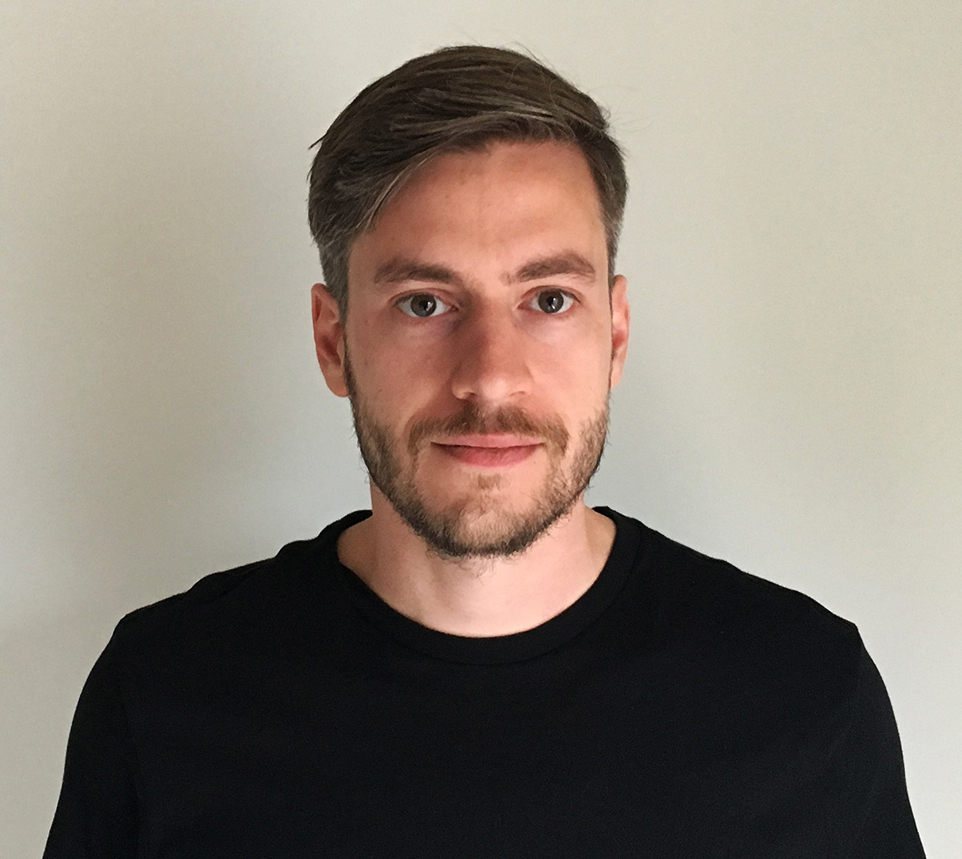
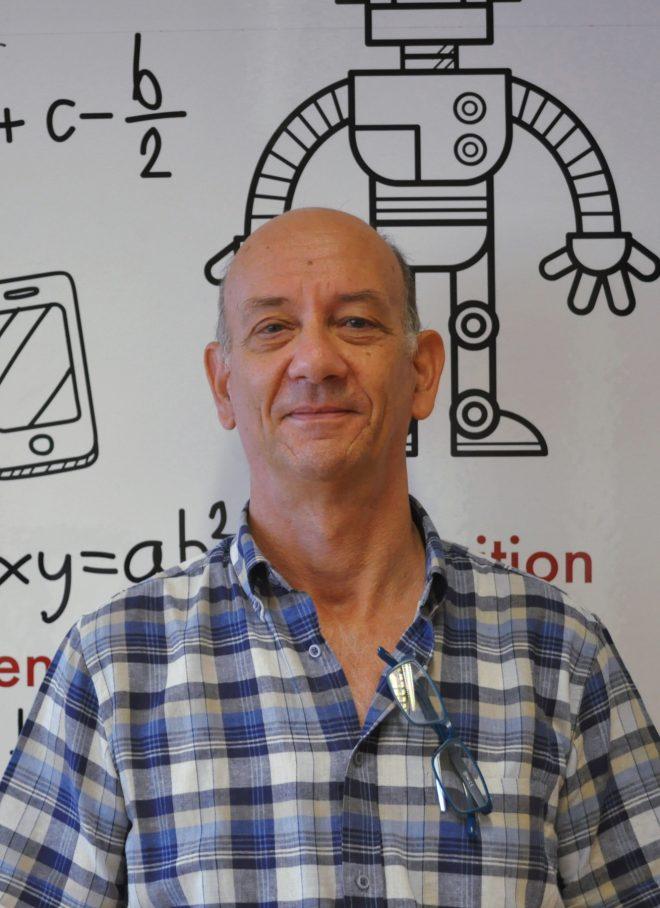
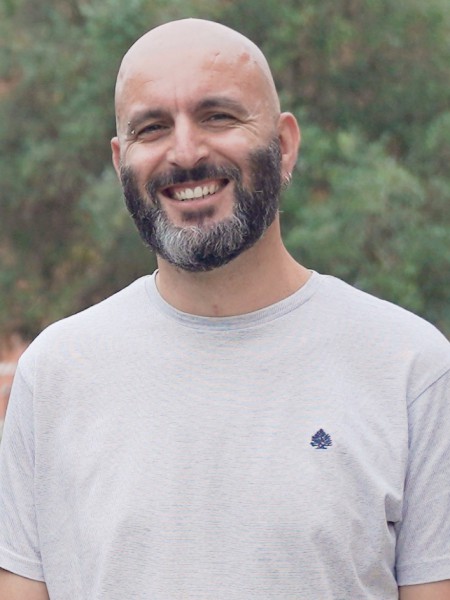
Rodrigo Ventura is an Associate Professor at the Department of Electrical and Computer Engineering, Instituto Superior Técnico (IST), University of Lisbon. He is also a senior researcher at the Institute for Systems and Robotics (ISR-Lisbon), leading the Space and Aeronautics thematic line. His research focuses on the intersection of Robotics and Artificial Intelligence, emphasizing human-robot interaction, space robotics, and cognitive architectures. He coordinates the Minor in Space Sciences and Technologies at IST and the MBE on Space Systems for Tecnico+. As Adjoint Faculty at the International Space University (ISU), he contributes to global academic initiatives. His work includes experiments on the International Space Station and participation in analog space missions. Research interests span biologically inspired systems, machine learning, and teleoperation interfaces. Recent publications address reinforcement learning for UAVs, microgravity experiments, and pseudo-haptic feedback for robotic control. He teaches subjects like Artificial Intelligence and Decision Systems, Satellite Engineering, and Autonomous Systems.
David Lindlbauer is an Assistant Professor at the Human-Computer Interaction Institute (HCII) within Carnegie Mellon University's School of Computer Science. He leads the Augmented Perception Lab and co-directs the CMU Extended Reality Technology Center (XRTC) . His research bridges Human-Computer Interaction, Computer Graphics, and Computer Vision to create adaptive interfaces that enhance human-digital interaction. Education : PhD (summa cum laude) from Technische Universität Berlin , MSc and BSc from University of Applied Sciences Upper Austria Previous Affiliation : Postdoctoral Researcher at ETH Zurich (2018-2020) David's research focuses on understanding human perception of digital information and developing computational approaches to optimize AR/VR interface usability. Key areas include: Context-aware adaptive interfaces Visual saliency and attention modeling Spatial audio-haptic systems Optimal placement algorithms Object manipulation in Remixed Reality Diminished/ambient MR interfaces His 15 most recent publications (2024-2025) span topics in adaptive XR interfaces, multimodal notifications, haptic systems, and spatial cognition. These works appear at venues like ACM CHI, ACM UIST, IEEE VR, and Frontiers in VR. Common themes include: Machine learning for interface adaptation Human factors in XR design Real-time environment analysis Privacy-aware display systems Collaborative MR interfaces Accessibility enhancements Scientific Recognition : Best Paper Honorable Mention Award (ACM CHI 2024) Best Paper Award (ACM ISS 2023) ETH Zurich Postdoctoral Fellowship Multiple best paper recognitions at CHI, UIST, and IEEE VR Teaching & Leadership : Course developer for CMU's "Interactive Extended Reality" Mentor for NASA SUITS Challenge team Co-chair roles at CHI and UIST Overseeing PhD students and research interns
Joe Paton is a Professor and Principal Investigator at the Champalimaud Neuroscience Programme, Champalimaud Foundation in Lisbon, Portugal. He leads the Paton Lab which focuses on understanding how animals determine which environmental cues are predictive of behaviorally relevant events, known as the credit assignment problem. His research combines behavioral experiments with neurophysiological recordings in rodents to investigate neural mechanisms of time perception and decision making. Dr. Paton's research interests center on interval timing, temporal processing in the brain, and the neural basis of learning. His work particularly examines how the striatum and dopamine systems contribute to time perception and how animals solve the credit assignment problem through statistical inference in the time domain. His lab employs advanced techniques including optogenetics, neural recordings, and computational modeling to address these questions. Analysis of Dr. Paton's recent publications reveals a strong focus on striatal function in timing processes, with particular attention to how neural populations encode temporal information. His work bridges behavioral neuroscience with computational approaches, demonstrating how timing mechanisms influence decision making and learning processes. The research spans multiple levels from cellular mechanisms to behavioral outputs. Midbrain dopamine neurons control judgment of time (2016) Striatal dynamics explain duration judgments (2015) A Scalable Population Code for Time in the Striatum (2015) The Neural Basis of Timing: Distributed Mechanisms for Diverse Functions (2018) Dr. Paton has mentored numerous PhD students and postdoctoral researchers through the INDP (International Neuroscience Doctoral Program) and supervises a diverse team including research technicians, postdocs, and students. His lab has contributed significantly to understanding the neural basis of time perception and its role in learning and decision making. The Paton Lab also develops experimental tools and frameworks like Bonsai for behavioral neuroscience research.
João Paulo Costeira is an Associate Professor at the Department of Electrical and Computer Engineering, Instituto Superior Técnico (IST), Lisbon. He holds a PhD in Electrical and Computer Engineering from IST (1995) and was a Visiting Scientist at Carnegie Mellon University's Robotics Institute (1991–1995). His research focuses on Computer Vision, 3D Reconstruction, and Structure from Motion, with contributions to object recognition, robotics, and multimedia analysis. Education: PhD in Electrical and Computer Engineering, IST (1995); Visiting Scientist, CMU Robotics Institute (1991–1995). Roles: Coordinator of the Signal and Image Processing Group (SIPg), Co-director of the Carnegie Mellon|Portugal Dual PhD Program in ECE and Robotics (2007–2018), and Scientific Director of Carnegie Mellon|Portugal (2014–2018). Research Interests: João's work emphasizes 3D reconstruction from video, rigid and non-rigid motion analysis, and applications in robotics and urban surveillance. He has pioneered methods for motion segmentation and robust correspondence problems in computer vision. Publications: His recent work includes advancements in apple counting systems, rotation averaging for robotics, and domain adaptation for traffic density estimation. These contributions highlight his expertise in real-world computer vision challenges. Awards: None explicitly listed. However, his extensive publication record and academic leadership reflect significant scholarly impact. Advising & Grants: Supervised 13 PhD students, many co-advised with CMU faculty. Active in projects like CityCam (vehicle counting) and MultiDrone (robotics collaboration). Funded by FCT, EU, and industry partnerships. Labs/Teams: Leader of the Signal and Image Processing Group (SIPg) at ISR. Involved in NETSyS program for networked systems and robotics.
Megan Carey is a Researcher at the Champalimaud Foundation , leading the Carey Lab . Her research focuses on understanding how cellular and synaptic mechanisms in the cerebellum influence motor behavior and learning. Key projects include studies on cerebellar neural circuits, locomotor adaptation, and sensory-motor integration. Her recent work highlights cross-species comparisons (mice and flies), zebrafish visual system neurobiology, and pharmacological modulation of motor learning. The lab employs genetic perturbations, optogenetics, and behavioral analysis to dissect neural circuit dynamics. Notable collaborators include senior scientists, postdoctoral researchers, and PhD students. The lab's publications span high-impact journals like J. Neurosci. , eLife , and Neuron , with funding from HHMI and NIH.
André Catarino is an Assistant Professor in the Department of Textile Engineering at the University of Minho, Portugal, and Deputy Director of the 2C2T – Center for Textile Science and Technology since 2022. He is an integrated researcher at the center, with a strong focus on interdisciplinary research at the intersection of textiles, electronics, and materials science. Education: Postgraduate Specialization in Digital Business, University of Porto, Porto Business School (2020–2021) Ph.D. in Textile Engineering, University of Minho (2005) M.Sc. in Textile Engineering, University of Minho (1998) B.Sc. in Electrical and Computer Engineering, University of Porto (1992) Research Interests: André Catarino's research spans a wide range of domains, including smart and electronic textiles , wearable sensor systems , materials engineering , and functional textiles for health and sports . His recent work also delves into digital marketing and the application of artificial intelligence in textile systems. His expertise encompasses electronics, instrumentation, programming, fabric manufacturing, and textile characterization. He has led or participated in over 25 national and international research projects , including EU-funded initiatives like BE@T, GreenAuto, and Fashion Alive. His work has resulted in 4 Portuguese patents and 1 European patent , alongside numerous prototypes and technology transfers. Publications and Impact: With over 115 scientific publications , including journal articles, book chapters, and conference proceedings, his research output is both broad and impactful. His recent publications focus on smart vests for posture monitoring, textile-based EMG electrodes, and consumer behavior in fashion marketing. Student Supervision: He has supervised or co-supervised more than 45 master’s and doctoral dissertations , covering topics from wearable health monitoring systems to sustainable fashion design and digital marketing strategies. Labs and Teams: As Deputy Director of the 2C2T – Center for Textile Science and Technology , he leads a multidisciplinary team of researchers and engineers. The center is a hub for innovation in textile science, with a strong emphasis on integrating electronics, sustainability, and human-centered design into textile applications.
Marta Moita is a Research Professor and Principal Investigator at the Champalimaud Foundation's Champalimaud Research center in Lisbon, Portugal, where she leads the Moita Lab in the Behavioral Neuroscience research group. Her laboratory investigates the neural and behavioral mechanisms underlying threat responses in animals, with particular focus on how contextual cues influence defensive decision-making between freezing and fleeing behaviors. Dr. Moita's research spans multiple levels of analysis, from collective behavior in social contexts to detailed neural mechanisms. Her lab employs diverse model organisms, particularly fruit flies ( Drosophila melanogaster ) and rats, to study how animals integrate social, spatial, and internal state information to guide threat responses. Key research areas include fear conditioning, emotional contagion, social safety cues, and the neural circuits underlying defensive behaviors. Her work often bridges behavioral neuroscience with evolutionary biology perspectives, examining how defensive strategies have been shaped by natural selection. The Moita Lab's publication record demonstrates a consistent focus on innovative approaches to understanding threat processing across species. Recent work has revealed how looming visual stimuli drive defensive responses in rats, how social cues can override threat levels, and the physiological consequences of threat exposure. The lab frequently publishes in high-impact journals including Current Biology , Nature Communications , and Science Reports , reflecting the significance of their contributions to the field. Dr. Moita actively mentors several PhD and Masters students, including Charlotte Rosher, Violetta La Franca, Mariana Franco, Matilde Henriques, and Mirjam Heinemans. Her laboratory team also includes postdoctoral researchers like Alexandre Leitão, Anna Hobbiss, and Ricardo Neto Silva, along with research technicians and lab administrators who support the diverse research projects.
Nuno Miguel Fonseca Ferreira is a Full Professor at the Instituto Superior de Engenharia de Coimbra (ISEC), part of the Polytechnic of Coimbra, where he currently serves as President of the Scientific Council. His academic career spans over 25 years at ISEC, progressing from Assistant to Professor Coordenador Principal. He has held significant leadership positions including Vice-President of ISEC (2001-2005), Pro-President of the Polytechnic of Coimbra (2009-2010), President of ISEC (2010-2013), and Vice-President of the Polytechnic of Coimbra (2013-2017), where he was responsible for internationalization initiatives. His educational background includes a degree in Electrical Engineering from the University of Porto (1996), a Doctorate in Electrical Engineering from the University of Trás-os-Montes and Alto Douro (2006), and a Habilitation Title (Aggregation) from the same institution (2020). His research focuses on Robotic Systems, with specialization in cooperative robotic systems as evidenced by his Habilitation work. Professor Ferreira's research spans multiple domains of robotics and intelligent systems, with particular emphasis on multi-robot coordination, environmental applications, and medical robotics. His work bridges theoretical control systems with practical applications across diverse fields including forestry, healthcare, manufacturing, and education. He has developed innovative approaches to robotic manipulation, sensor integration, and human-robot interaction, often incorporating advanced techniques from artificial intelligence and machine learning. His recent publications demonstrate a strong trend toward practical applications of robotics in real-world environments, particularly in forestry maintenance, industrial automation, and medical applications. The research shows progression from theoretical control systems to applied robotics in challenging environments, with increasing integration of computer vision, deep learning, and collaborative systems. His work spans both fundamental robotics research and immediate industrial applications, reflecting a balance between academic inquiry and practical implementation. Professor Ferreira has supervised two doctoral theses and participated in numerous research projects with substantial funding. His leadership extends to coordinating 15 of the 33 national and international R&D projects he has participated in, demonstrating significant grant acquisition and management capabilities. His international collaborations through Erasmus+ and other European programs highlight his role in fostering global research partnerships. He is an integrated member of GECAD (Research Group in Engineering and Intelligent Computing for Innovation and Advanced Development), a Portuguese R&D unit classified as Excellent by the Portuguese Science and Technology Foundation. Additionally, he is a member of LASI (Associated Laboratory for Intelligent Systems), the Portuguese laboratory associated with Artificial Intelligence, connecting him to a broader national research ecosystem.
Adriano Jorge Cardoso Moreira is an Associate Professor with Habilitation at the Department of Information Systems, School of Engineering, Universidade do Minho, Portugal. He is also a Senior Researcher at the Algoritmi Research Centre and Scientific Coordinator of the Urban and Mobile Computing department at Centro de Computação Gráfica. His research focuses on indoor positioning , mobile and context-aware computing , urban computing , and simulation of wireless networks . Research Interests : Indoor Positioning, Mobile Computing, Urban Mobility, Sensor Networks, Wi-Fi and UWB Localization, Smart Cities. Leadership : Coordinated the Computer Communications and Pervasive Media Group (2008-2016), Scientific Committee member (Director of MAP-tele PhD program in multiple terms), and leads the Master in Telecommunications and Informatics since 2021. Publications : Over 100 papers, including IEEE Transactions and Sensors journal articles, with an h-index of 23 and 2136 citations. Awards : First and second prizes in EvAAL-ETRI Indoor Localization Competitions (2015, 2016, 2017).
Isabel M. Santos is an Associate Professor of Psychology at the University of Aveiro and serves as coordinator of the NeuroLab, an integrated research unit within the university's Health Team. Her work bridges clinical psychology, oncology, and cognitive neuroscience through interdisciplinary collaboration. Her research program centers on Cancer-Related Cognitive Impairment (CRCI) in cancer survivors, focusing on developing the CanCOG web-based cognitive rehabilitation program. Additional investigations include neuropsychological assessment tools for CRCI, biomarker identification, work-related impact analysis, and attentional biases. The NeuroLab also employs psychophysiological methods and eye tracking to examine social cognition—particularly facial signal processing (emotions, identity, gaze)—and how individual differences, clinical conditions, and adverse childhood experiences modulate these processes. Recent publications (2021-2023) reveal strong thematic continuity in CRCI research, with emphasis on Portuguese population adaptations, breast cancer-specific cognitive challenges, and intersections between cancer history and reproductive concerns. Methodologically, her work combines experimental psychology, clinical assessment, and digital intervention development. Scientific Awards: No scientific awards mentioned in source materials While specific student advising details are absent from source materials, her NeuroLab leadership implies active mentorship of graduate researchers. No grant information appears in the provided text, though her program development (CanCOG) suggests external funding involvement. The NeuroLab operates as a specialized research hub within the Health Team, utilizing eye-tracking technology and psychophysiological measures to investigate cognitive-emotional processing in clinical populations—particularly cancer survivors—and normative social cognition mechanisms. Current projects integrate rehabilitation science with fundamental cognitive research to address real-world patient challenges.
Pedro R. M. Inácio is an Associate Professor at the University of Beira Interior (UBI) , where he teaches information assurance, cybersecurity, and computer simulation courses in undergraduate and graduate programs. He serves as Pro-Rector for the Digital University and Data Protection Officer at UBI, and leads the Cross Cutting Skills Lab and the Network Security research group at Instituto de Telecomunicações. His work bridges academia and industry, including a PhD at Nokia Siemens Networks Portugal.
Vitor Sencadas is an Associate Professor at the Department of Materials and Ceramic Engineering, University of Aveiro, Portugal. His research focuses on advanced materials for biomedical, energy, and environmental applications, with a strong emphasis on nanotechnology and additive manufacturing. He leads projects such as 3S4Leather, addressing leather waste valorization and sensorized additive manufacturing solutions. He has supervised multiple PhD students and contributed to over 150 publications in journals like Advanced Functional Materials and ACS Applied Materials & Interfaces. His research interests include biomimetic materials, flexible electronics, wearable sensors, and sustainable materials. Notable achievements include developing piezoelectric and luminescent solar concentrators, and contributions to Stanford’s 2022/2024 World Top 2% Scientists list. His work bridges materials science with practical applications in healthcare, energy harvesting, and environmental biorefinery processes. He collaborates extensively with CICECO – Aveiro Institute of Materials, contributing to interdisciplinary research and innovation in smart materials and biomedical devices. His group explores multifunctional materials for healthcare monitoring, energy systems, and sustainable manufacturing.
José Manuel Ferreira Machado is a Full Professor at the Department of Informatics, School of Engineering, University of Minho, where he has been affiliated since 1988. His research integrates Artificial Intelligence, Medical Informatics, and Data Mining, with applications in healthcare, industrial systems, and public services. He founded ALGORITMI's 'Knowledge Engineering' group and served as Director of the ALGORITMI R&D Center (2018-2024). Education: Agregado in Informatics (AI), Universidade de Trás-os-Montes e Alto Douro (2011-2012) PhD in Informatics (AI), Universidade do Minho (1995-2002) Licenciatura in Systems and Informatics Engineering, Universidade do Minho (1982-1988) Research Interests: Machado's work focuses on intelligent systems for healthcare (e.g., AIDA medical platform), industrial automation, and smart cities. He emphasizes real-world applications, including clinical decision support, predictive maintenance, and sustainable urban infrastructure. Publications: His recent articles (2022-2025) demonstrate a strong focus on healthcare AI (e.g., disease prediction, COVID-19 analytics) and smart systems (e.g., traffic optimization, energy sustainability), utilizing data mining and machine learning. Awards: Hospital of the Future (2007, 2008, 2009) Good Practices in Health (2014) Portugal Digital Awards (2016) IHF Awards (2021) Advising & Grants: Supervised 16 PhD, 101 MSc, and 4 post-doc students. Leads sub-projects in PRR agendas GReenAuto and Be.Neutral. Secured funding from FCT, EU, and industry partners (e.g., Bosch) for 50+ projects. Labs & Teams: Coordinates the 'Knowledge Engineering' research group at ALGORITMI, focusing on intelligent decision support and interoperability in healthcare and industry.
Minjoon Seo is an Associate Professor at KAIST AI, Korea Advanced Institute of Science and Technology. He holds a BS in Electrical Engineering & Computer Science from UC Berkeley and previously worked as a software engineer at Oracle. His research focuses on natural language understanding, large-scale end-to-end question answering, and multimodal AI systems combining language and vision. Research Interests: His work spans Natural Language Processing, Machine Learning, Deep Learning, and Language-Vision integration. He develops neural network architectures for machine comprehension and multimodal understanding, with applications in question answering systems and diagram interpretation. Publications: His research demonstrates a consistent focus on multimodal AI systems, with recent works advancing neural approaches to machine comprehension and diagram understanding. Publications show strong emphasis on NLP-CV integration and practical applications in healthcare and education. Awards: Best Paper Nomination at UbiComp 2014 for BiliCam research Professional Activities: Maintains active open-source contributions through GitHub repositories related to question answering systems and NLP research. Co-founded Config Intelligence while maintaining academic position.
Alexandre Manuel de Castro Passos de Almeida is an Assistant Professor in the Department of Information Science and Technology at the University Institute of Lisbon (ISCTE-IUL), where he also contributes to the School of Technology and Architecture. He is an Associate Researcher at the Institute of Telecommunications - IUL, actively involved in the Radio Systems Group, focusing on telecommunications and sensor-based environmental monitoring. PhD in Telecommunications, ISCTE-IUL, 2012 His research interests span telecommunications, wireless sensor networks, air quality monitoring, computer architecture, and robotics. He has led and contributed to innovative projects such as ExpoLis, which uses mobile sensor networks on public buses to map urban air pollution. His work bridges engineering and environmental science, aiming to influence urban policy and public health through real-time data systems. The most recent publications highlight a strong trend toward deploying low-cost, mobile sensor networks for environmental monitoring, particularly in urban settings. His work integrates computer systems, signal processing, and sustainable technology, with applications in smart cities, public health, and robotics. Topics like air quality mapping, energy harvesting, and noise-aware robot navigation reflect a multidisciplinary approach to solving real-world problems. He has advised seven Master’s students at ISCTE-IUL, guiding research in sensor networks, air pollution, database performance, robotic navigation, and personal photography assistants. While no specific scientific awards are listed, his contributions to funded research projects and consistent scholarly output indicate recognition in his field. He has held leadership roles in academic governance, including Vice President of the Pedagogical Council, underscoring his institutional engagement. His teaching portfolio includes core courses such as Fundamentals of Computer Architecture, Operating Systems, and Big Data Processing, delivered across multiple undergraduate and postgraduate programs. He is involved in research projects that combine academic innovation with practical urban applications, particularly through the deployment of scalable, open-source environmental sensing systems.