Evrim Acar Ataman is a Research Professor and Chief Research Scientist at Simula Metropolitan, where she serves as Head of the Department of Data Science and Knowledge Discovery. Her research focuses on advanced data mining techniques for complex, multi-modal datasets across biomedical and network domains. Her primary research interests include Data Mining , Matrix and Tensor Factorizations , and Data Fusion for multi-modal data analysis. She develops constrained and coupled factorization methods to extract interpretable patterns in applications spanning neuroimaging, metabolomics, and mobile network analysis, with emphasis on dynamic and longitudinal data structures. Her work integrates mechanistic models with data-driven approaches to enhance biological and system understanding. Analysis of her recent publications (2024-2025) reveals a dominant trend applying tensor and coupled matrix-tensor factorizations to biomedical data for biomarker discovery, particularly in metabolomics and neuroimaging. Key innovations include tracking evolving patterns in temporal data (tPARAFAC2), constrained fusion methods (dCMF), and integration of mechanistic models with tensor decompositions for longitudinal analysis. As Head of the Department of Data Science and Knowledge Discovery, she leads research in developing novel data mining methodologies and their real-world applications at Simula Metropolitan, with significant contributions to interpretable AI for complex systems.
Adam Zylbersztejn is an Assistant Professor (Maître de conférences HDR) at Université Lumière Lyon 2 and affiliated with GATE Lyon Saint-Etienne, a research group in economics. He holds a PhD from the Paris School of Economics (2013) and previously conducted postdoctoral research at WU Wien (Vienna University of Economics and Business). His research focuses on behavioral economics using experimental methods to study individual and interactive decision processes, particularly in contexts involving trust, strategic uncertainty, and cultural variability. Key research areas include behavioral game theory, experimental finance, and the impact of nonverbal communication in economic interactions. His work has been published in top journals such as Journal of Economic Psychology , Games and Economic Behavior , and Experimental Economics . Recent studies examine topics like anonymity effects in charitable giving, trust in market exchanges under oath, and cognitive processes in asset markets using eye-tracking technology. His ongoing projects include research on risk-incentive tradeoffs and ambiguity framing in decision-making. While no formal academic awards are listed, his work has received press coverage in outlets like Le Monde and CORTEX Mag . He collaborates widely with institutions such as GATE-LSE and the Paris School of Economics, contributing to both theoretical and applied economic inquiry.
Habib Ullah is an Associate Professor in Data Science at the Norwegian University of Life Sciences (NMBU), Norway, where he conducts research at the intersection of computer vision and machine learning. He is affiliated with the Institute of Data Science under the Faculty of Science and Technology. He has previously held academic positions at COMSATS University Islamabad, Pakistan, and the University of Ha'il, Saudi Arabia, and served as a postdoctoral researcher at The Arctic University of Norway. Educational Background: PhD in Information and Communication Technology (Computer Vision), University of Trento, Italy (2011–2015) MSc in Electronics and Computer Engineering, Hanyang University, South Korea (2007–2009) BSc in Computer Systems Engineering, NWFP University of Engineering and Technology, Pakistan (2002–2006) Habib Ullah's research is primarily focused on computer vision and machine learning, with applications in aquaculture, agriculture, and human behavior analysis. He investigates underwater fish feeding sounds using audio classification, develops zero-shot learning models for recognizing unseen classes, and applies deep learning to detect stress in salmon via skin dot patterns. He also explores AI-driven controlled environment agriculture, leveraging sensors and automation for optimal crop growth. His work emphasizes practical AI solutions for real-world challenges in environmental and biological domains. The recent publications highlight a strong trend in leveraging deep learning for zero-shot and semi-supervised learning, particularly in computer vision tasks such as sea ice classification, crowd anomaly detection, and agricultural monitoring. His research spans remote sensing, biomedical signal processing, and human activity recognition, demonstrating interdisciplinary versatility. The keywords reflect a focus on robust feature representation, knowledge transfer, and model generalization. Scientific Awards and Funding: Industrial PhD grant 'Advancing Controlled Environment Agriculture AI' from The Research Council of Norway (Project number 354125, 2 million NOK, 2024) Team member (Coordinator-Participant) in the Battery Cell Assembly Twin (BatCAT) project funded by Horizon Europe (7 mEuro, 2023–2027) Development of an AI-Based Image Analysis System for Monitoring Plant Status (Funding: 1.8 mNOK, starting 2025) Habib Ullah actively supervises PhD projects and contributes to academic service through editorial and organizational roles. He has served as an Associate Editor for IEEE Access, Guest Editor for MDPI Remote Sensing, and Editor of the Springer book Machine Learning Techniques and Sensor Applications for Human Emotion, Activity Recognition, and Support (ML-SHEARS) . He has also been a Track Chair and Program Committee Member for several international conferences, reflecting his leadership in the academic community. His research is supported by significant grants and collaborative projects, indicating strong institutional and international engagement. He is involved in multiple research teams and projects, including the BatCAT project on battery manufacturing and AI applications in controlled environment agriculture with RIFT LABS AS. His lab work integrates deep learning, sensor fusion, and data analytics for environmental and biological monitoring systems.
Michael Riegler is a Researcher at the AI Department, Simula Research Laboratory , focusing on interdisciplinary applications of Artificial Intelligence in healthcare, sports analytics, and multimedia systems. His work bridges Machine Learning , AI Alignment , and Applied AI across clinical and real-world domains. Key Affiliations: Simula Research Laboratory (AI Department Head) Research Themes: Explainable AI in medicine, multimodal data analysis, and AI-driven health monitoring Research Interests include: Developing AI/ML algorithms for medical imaging (e.g., polyp detection, embryo analysis) Addressing missing data challenges in healthcare through novel imputation techniques Creating multimodal virtual avatars for investigative interview training Designing edge AI systems for sports analytics and sustainable fishing Recent Publications highlight collaborations with institutions in Norway and globally, with a focus on: Medical Applications: Polyp segmentation, ECG analysis, and explainable models for disease detection Sports Analytics: Athlete performance prediction and soccer video processing Data Infrastructure: Lifelogging datasets (ScopeSense), semantic representation frameworks Labs & Teams include leadership in Simula’s AI Department and participation in projects like Medico Multimedia Task , ImageCLEF , and MediaEval workshops. His work emphasizes responsible AI innovation in public sectors and privacy-preserving systems for edge environments.
Swati Aggarwal is a Professor in Artificial Intelligence at the Faculty of Logistics, Molde University College (HiMolde). Her research focuses on AI applications in healthcare, ethics, cognitive development, and neural networks. She holds a PhD in Neutrosophic Neural Networks, a Master's in Information Technology, and a Bachelor's in Computer Science and Engineering. Previously, she was a Marie Curie Postdoc Fellow at NTNU, working on AI models for cognitive assessment in infants (AIM_COACH project). Research Interests - AI in Health/Medicine - Ethics in AI and Societal Impact - EEG/BCI for Cognitive Assessment - Machine Learning and Deep Learning Publications Her recent work spans AI ethics, BCI applications, adversarial attacks, and healthcare diagnostics. Notable contributions include EEG-based infant perceptual monitoring (2025) and malaria detection via EfficientNet (2023). She also explores cross-lingual adversarial robustness and blockchain in hospitality systems. Labs/Teams - ABC-AI: Applied, Basic, and Conscientious AI Group - Virtual Technologies and Learning Research Group
Anne H Schistad Solberg is a Professor in the Department of Informatics at the University of Oslo's Faculty of Mathematics and Natural Sciences. She leads research in digital signal processing and image analysis, with a focus on machine learning applications across multiple domains. As co-director of SFI Visual Intelligence, she oversees research on interpretable deep learning models, uncertainty quantification, contextual learning, and self-supervised learning approaches. Her research spans medical imaging (particularly cardiovascular ultrasound), environmental monitoring using satellite imagery, and seabed mapping with sonar technology. Professor Solberg's work demonstrates a consistent trajectory from foundational signal processing techniques to cutting-edge deep learning applications. Her recent publications show increasing specialization in medical image analysis, particularly in echocardiography enhancement and cardiac structure segmentation, while maintaining strong contributions to remote sensing and geophysical applications. She teaches several popular courses including IN2070, IN3310, and IN5400 (Machine Learning for Image Analysis), which is noted as the most popular master's/PhD course on deep learning at the University of Oslo. Professor Solberg serves as principal investigator for the Intelligent Cardiovascular Ultrasound Scanner (INCUS) project, collaborating with GE Vingmed Ultrasound to develop AI-enhanced cardiac imaging systems that improve diagnostic accuracy and productivity in echocardiography. Co-director of SFI Visual Intelligence research center Principal Investigator for the INCUS project (Intelligent Cardiovascular Ultrasound Scanner) Member of the Digital Signal Processing and Image Analysis (DSB) research group Member of the Strategic Research Initiative: Multimodal Medical Imaging and Image Analysis (MEDIMA) Her research group develops algorithms that address real-world challenges in medical diagnostics and environmental monitoring, with a particular emphasis on making deep learning models more interpretable and reliable for critical applications. The INCUS project, funded through User-driven Research-based Innovation (BIA), aims to reduce the time wasted during cardiac ultrasound examinations by implementing intelligent algorithms that learn from expert users and historical data.
Daniel Leunbach is a Senior Lecturer at the School of Business, University of Oslo , specializing in Entrepreneurship . He teaches courses in strategy, innovation management, and entrepreneurship while integrating philosophy and psychology into his research to study decision-making under uncertainty. Ph.D. in Strategy and Entrepreneurship, University of Oslo MSc in Innovation and Entrepreneurship, University of Oslo BSc in Molecular Biology, University of Bergen His research explores the intersection of entrepreneurship theory , philosophy , and psychology , focusing on how entrepreneurs navigate situations where outcome probabilities are impossible to quantify. Recent publications investigate topics such as entrepreneurial imagination through poetry , resource acquisition negotiations , and Wittgensteinian approaches to defining entrepreneurship . Leunbach collaborates with scholars like Truls Erikson and Glenn Roger Kristiansen , publishing in journals such as Academy of Management Review , Scandinavian Journal of Management , and Journal of Business Venturing Design . He is affiliated with the Entrepreneurship (ENT) research group and consults on entrepreneurial decision-making frameworks.
Marta Molinas is a Professor at the Department of Engineering Cybernetics within the Faculty of Information Technology and Electrical Engineering at the Norwegian University of Science and Technology (NTNU). Her research spans multiple interdisciplinary domains with a focus on EEG technology and brain-computer interfaces. She actively supervises numerous Master's projects and maintains extensive international collaborations with institutions including Kavli Institute for Systems Neuroscience, RIKEN Center for Brain Science, University of Tsukuba, Juntendo University, and several European universities. Professor Molinas' research interests center on developing innovative EEG technologies, particularly her FlexEEG concept for reduced-channel EEG systems with brain imaging capabilities. Her work integrates signal processing, artificial intelligence, and neuroscience to create practical applications in mental health, sleep research, neurorehabilitation, and human-computer interaction. She specializes in EEG source imaging, machine learning for brain signal analysis, and the development of brain-computer interfaces for various applications including locked-in syndrome communication, ADHD treatment, and driver monitoring systems. Her publication portfolio demonstrates strong trends in interdisciplinary research combining neuroscience with electrical engineering and artificial intelligence. The work shows particular emphasis on developing practical EEG-based systems that minimize invasiveness while maintaining analytical power, with applications spanning healthcare, rehabilitation, and human augmentation. Her research bridges theoretical signal processing with real-world implementations through numerous student projects and international collaborations. Professor Molinas actively supervises a large team of Master's and PhD students across multiple projects, with each project typically requiring two students working collaboratively. Her research is supported through numerous international collaborations with institutions in Japan, India, and Europe, indicating substantial research funding and project leadership. She has developed a pipeline of student projects that build upon previous work, creating a cumulative knowledge base within her research group. She leads the EEG ITK research team at NTNU, which focuses on developing the FlexEEG headset prototype featuring flexible, wireless, dry electrodes designed to move across the scalp. This team works at the intersection of neuroscience, electrical engineering, and computer science, developing applications for sleep research, mental health monitoring, neurorehabilitation, and brain-computer interfaces. The team collaborates extensively with international partners including the Kavli Institute for Systems Neuroscience, the International Institute of Integrative Sleep Medicine at University of Tsukuba, and several engineering departments across Europe and Asia.
Molly Maleckar is a Research Professor at the Computational Physiology Department of Simula Research Laboratory , Oslo, Norway. Her work bridges computational modeling, cardiac electrophysiology, and biomedical applications, with a focus on arrhythmia mechanisms, fibrosis modeling, and machine learning integration in cardiac risk prediction. Research Interests include: Computational Cardiology Ion Channel Dynamics Machine Learning in Medicine Excitable Tissue Modeling Cardiac Fibrosis Analysis Biomedical Simulation Scientific Contributions span 15+ publications (2018-2024) addressing atrial fibrillation, calcium handling, and AI-driven ECG analysis. Key collaborative projects involve patient-specific ventricular modeling and educational initiatives like the Simula Summer School in Computational Physiology .
Jianhua Zhang is a Professor of Computer Science and founding deputy head of the AI Lab at the Department of Computer Science, OsloMet - Oslo Metropolitan University, Norway. He holds affiliations with the Faculty of Technology, Art and Design. His career includes roles as Scientific Director at Vekia (France), Head of Machine Learning Lab, and Professorships at East China University of Science and Technology and Beijing University of Technology. He has held visiting positions at TU Berlin, TU Dresden, and the University of Catania. Educations: PhD in Electrical Engineering and Information Sciences (Ruhr University Bochum, 2005), Postdoctoral Research at the University of Sheffield (2005-2006). Research focuses on artificial intelligence, computational intelligence, cognitive human-machine systems, neuroergonomics, affective computing, and AI-driven neuroergonomics. Applications span engineering, biomedicine, finance, and business. He has led over 20 large-scale projects and published extensively (4 books, 13 chapters, ~200 papers). Leadership roles include Chair of IFAC Technical Committee on Human-Machine Systems (2017-2023), Vice Chair of IEEE Norway Section, and editorial roles at journals like Frontiers in Neuroscience and Cognitive Neurodynamics . He organized major conferences like IFAC HMS2025 (Beijing) and ICMLT 2024 (Oslo). Awards: Stanford/Elsevier Top 2% Scientists (2023/2024), Senior Research Fellowship (CSC, 2012), Max Planck Fellowship (2011), Shanghai Pujiang Talent (2007), DAAD Scholarship (2002-2004). Grants and advising: PI for 20+ projects, advising PhD students in AI, machine learning, and control systems. Teaching includes courses on computational intelligence, IoT, and fuzzy systems at both undergraduate and graduate levels. Labs/Teams: AI Lab at OsloMet, Machine Learning Lab (Vekia), and collaborations with institutions globally. Current work emphasizes AI ethics, neuroergonomics in smart cities, and adaptive human-machine systems.
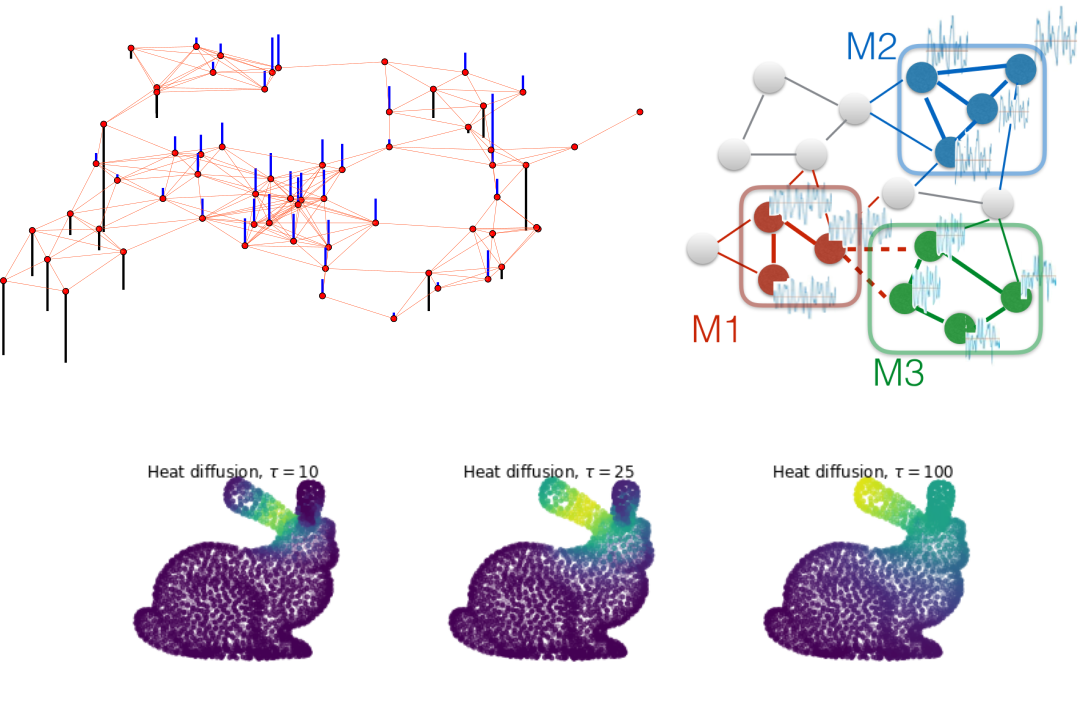
Filippo Maria Bianchi is an Associate Professor in the Department of Mathematics and Statistics at UiT The Arctic University of Norway, where he conducts research at the intersection of machine learning, dynamical systems, and complex networks. He is also a Senior Researcher at NORCE Norwegian Research Centre and actively contributes to the IEEE Task Force on Learning for Structured Data and the ELLIS Society. Department: Department of Mathematics and Statistics School: Faculty of Science and Technology University: UiT The Arctic University of Norway Adjunct Position: Senior Researcher, NORCE Education: Bachelor’s in Computer Engineering, Sapienza University of Rome Master’s in Artificial Intelligence & Robotics, Sapienza University of Rome (cum laude, 2012) PhD in Machine Learning, Sapienza University of Rome His research focuses on graph machine learning, time series analysis, reservoir computing, and probabilistic forecasting , with applications in energy analytics and remote sensing. He has led and contributed to numerous projects involving Arctic power grids, satellite-based environmental monitoring, and deep learning for sustainability. The recent publications reflect a strong trend in graph neural networks —particularly pooling mechanisms, spatiotemporal modeling, and explainability—alongside applications in energy forecasting, avalanche detection, and remote sensing . His work combines theoretical innovation with real-world impact, especially in Arctic and remote environments. Scientific Affiliations and Leadership: Vice-Chair, IEEE Task Force on Learning for Structured Data Member, ELLIS Society Co-founder, Northernmost Graph Machine Learning group Member, IEEE Task Force on Reservoir Computing Visiting Professor, Politecnico di Milano (2024–2025) He actively mentors students and collaborates on interdisciplinary research. He has led projects in power grid reliability, solar fault detection, and unsupervised change detection in satellite imagery . His work is supported by open-source implementations and reproducible research practices. Laboratories and Research Groups: Northernmost Graph Machine Learning group (co-founder) ARC Research Group, UiT Graph Machine Learning Group, Lugano
Bettina Sandgathe Husebø is a Professor and Head of the Center for Geriatric and Nursing Home Medicine at the Department of Global Health and Community Medicine, Faculty of Medicine, University of Bergen (UiB). She also serves as Innovation Manager at IGS, UiB since 2019. Her extensive career spans clinical practice, research, and leadership roles in geriatric and palliative care. Dr. Husebø completed her medical education at the University of Bonn, Germany in 1988, followed by specialization in Anaesthesiology and Intensive Care in 1995. Her Norwegian qualifications include Medical Specialization in Palliative Medicine (2012) and Nursing Home Medicine (2014) from UiB, along with a PhD from the Faculty of Medicine Dentistry at UiB in 2008. She further enhanced her expertise with a Postgraduate Safety, Quality, Informatics and Leadership (SQIL) Program from Harvard University in 2021. Her research focuses on critical geriatric issues including pain assessment and management in dementia patients, behavioral disturbances in dementia, palliative care in nursing homes, and digital phenotyping applications for elderly care. She has pioneered work on the relationship between pain, agitation, and neuropsychiatric symptoms in dementia patients, particularly through the COSMOS trial and LIVE@Home.Path study. Her recent publications (2023-2025) demonstrate a strong emphasis on digital health solutions for dementia care, with particular focus on activity monitoring, pain assessment through technology, and community-based interventions for aging populations. Her work bridges clinical geriatrics, technology innovation, and patient-centered care models. Among her notable recognitions are the National Dementia Award by His Majesty King Harald of Norway (2022) and multiple awards for research excellence in pain management and palliative care. Her work has significantly influenced Norwegian healthcare policy regarding dementia care and end-of-life practices. As an educator, she lectures in English, German, and Norwegian on dementia, pain in dementia, innovation technologies for older adults, symptom management at end-of-life, systematic medication review, and advance care planning. She has received teaching awards including 'Teacher of the Year' from the Faculty of Medicine and Dentistry at UiB. Dr. Husebø leads the Center for Geriatric and Nursing Home Medicine (SEFAS) and has been instrumental in establishing Norway's first palliative care ward in a nursing home. Her research group focuses on translating evidence into practice to improve quality of life for elderly patients, particularly those with dementia.
Trym Vegard Haavardsholm is a 20% part-time Lecturer at the University of Oslo (UiO) within the Section for Autonomous Systems and Sensor Technologies. He also serves as Principal Scientist at the Norwegian Defence Research Establishment (FFI) and is a PhD candidate at the Department of Engineering Cybernetics, NTNU. His research focuses on computer vision, machine learning, robotics, and image analysis, with a particular emphasis on multispectral imaging systems and unmanned aerial vehicles (UAVs). Haavardsholm has contributed to advancements in sensor technologies for tactical reconnaissance, autonomous navigation, and real-time data processing. His work spans applications in defense, environmental monitoring, and emergency response systems. Research Interests Haavardsholm’s research integrates interdisciplinary approaches to develop innovative sensor systems and algorithms. Key areas include compact multispectral imaging for small UAVs, in-operation camera calibration, and anomaly detection in hyperspectral data. His contributions emphasize practical applications such as urban feature classification, collaborative indoor navigation, and bioaerosol detection. His work bridges theoretical computer science with applied engineering, addressing challenges in autonomous systems and sensor fusion. Publications His publications highlight trends in multispectral sensor design, UAV imaging, and real-time georeferencing. Recent work includes compact sensor systems for tactical use and advancements in pushbroom image rectification. Earlier research explored band selection algorithms for target detection and GPU-accelerated anomaly detection. Professional Roles As a lecturer, Haavardsholm contributes to academic supervision and teaching in autonomous systems. His dual role at FFI and UiO reflects his commitment to translating academic research into practical defense and civilian applications. His PhD candidacy at NTNU underscores his ongoing academic engagement in engineering cybernetics.
Zhiyuan Wu is a Doctoral Research Fellow at the University of Oslo , affiliated with the Digital Signal Processing and Image Analysis research group under the Faculty of Mathematics and Natural Sciences . Education: Bachelor’s degree in Communication Systems and Information Technology from Lanzhou University, China Master’s degree from the Technical University of Munich, School of CIT Research Focus: Zhiyuan Wu specializes in machine learning, with particular emphasis on probabilistic graphical models, information theory, and tackling real-world challenges such as distributional shifts and privacy concerns. His work explores entropy regularization techniques to address label shift in distributed learning systems, aiming to improve model robustness and data privacy across diverse domains like medical applications. Publications & Research Trends: His recent publication at the International Conference on Learning Representations highlights a novel approach to mitigating label shift through entropy regularization. This aligns with his broader research goals of enhancing the adaptability and interpretability of machine learning models in dynamic, privacy-sensitive environments. Labs & Teams: He is actively involved with the Digital Signal Processing and Image Analysis (DSB) research group, contributing to collaborative projects that bridge theoretical advancements with practical implementations in machine learning.
Benjamin Ricaud is an Associate Professor and Group Leader in Machine Learning at UiT The Arctic University of Norway's Department of Physics and Technology. His core affiliations include membership in the Machine Learning Group, Visual Intelligence center, and co-directorship of the Digital Technology Innovation Lab focused on Arctic-region tech startups. He also co-chairs the annual Northern Light Deep Learning conference. Ricaud's research spans: Fundamental ML : Graph signal processing, explainable AI, and generative models Applications : Microfossil classification, medical diagnostics (retinal aging), drug analysis, and climate data interpretation Emerging domains : Self-supervised learning and biological data analysis using Raman spectroscopy His recent publications (2020-2025) cluster in three domains: Graph ML methodologies (35%) Biomedical/biological applications (40%) Geoscience/climate informatics (25%) with consistent focus on interpretability and real-world data challenges. Teaching includes Image Processing (FYS-2010), Pattern Recognition (FYS-3012), and Machine Learning (FYS-2021). He leads outreach initiatives developing AI exhibits for Tromsø Science Centre.



/trymh/trym.jpg)