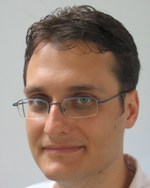
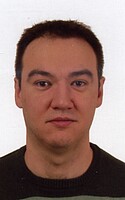
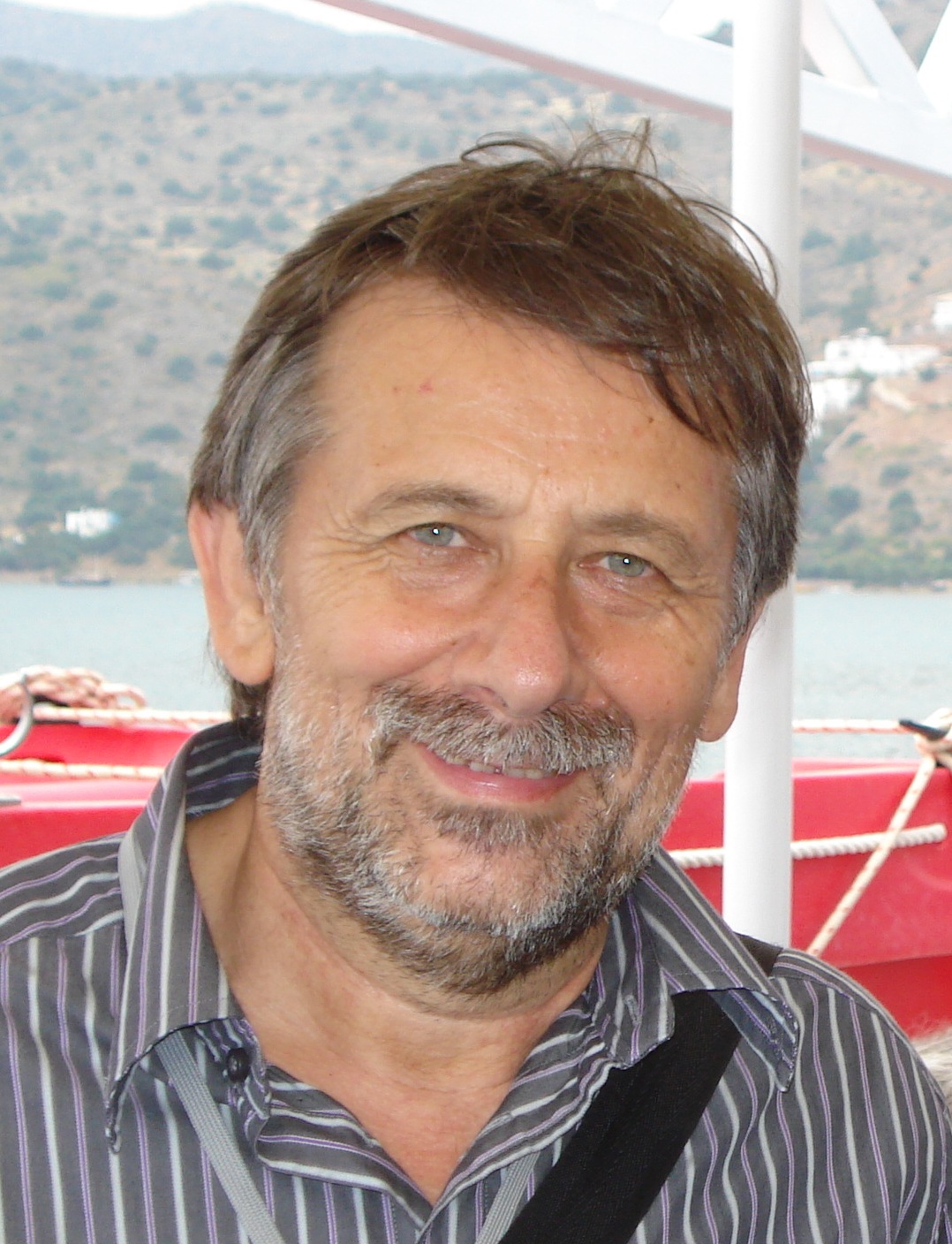
Michael Mühlebach is a Lecturer at the Department of Information Technology and Electrical Engineering at ETH Zurich, affiliated with the Max Planck Institute for Intelligent Systems in Tübingen, Germany. He received Bachelor (2010) and Master (2013) degrees from ETH Zurich, awarded the Outstanding D-MAVT Bachelor Award and Willi-Studer Prize for top performance. His research specializes in multibody dynamics , control of nonlinear systems , and model predictive control , with applications in robotics and aerospace systems. Publications demonstrate consistent focus on theoretical control frameworks validated through experimental platforms like ducted fans and reaction-wheel systems. Awards: Outstanding D-MAVT Bachelor Award Willi-Studer Prize (Best Master in Robotics, Systems, and Control)
Labros Bisdounis is a Professor at the Department of Electrical and Computer Engineering, University of the Peloponnese, Greece. He previously held positions at the Technological Educational Institute of Western Greece, including Associate Professor, Full Professor, and Dean of the School of Technological Applications (2016–2018). He has extensive industry experience as a senior research engineer and project manager at Intracom S.A. (2000–2008), focusing on VLSI circuits and telecom applications. His research interests include CMOS circuit timing/power modeling, low-power/high-speed design, MOSFET modeling, and sensor applications. He has authored over 30 papers with 740+ citations and is an IEEE member. Education: Diploma in Electrical Engineering (1992), University of Patras Ph.D. in Electrical Engineering (1999), University of Patras Research Interests: CMOS circuit timing and power dissipation modeling Deep-submicron/nano-CMOS circuit design MOSFET device modeling Low-power embedded systems and SoC Sensor applications and organic electronics Leadership Roles: Dean of the School of Engineering, University of the Peloponnese (2023–present) Director of Training & Lifelong Learning Centre (2019–2019) Board Member, Hellenic NARIC (2016–2019) Collaborations: Active at the Hellenic Open University as a tutor in Computer Architecture and Digital Systems modules. Co-developed the AETHER framework for pervasive computing and contributed to energy-aware SoC designs for 5 GHz WLANs.
Aggelos Bletsas is a Professor at the School of Electrical and Computer Engineering, Technical University of Crete. He holds a PhD from MIT (2005) and has expertise in wireless communication, backscatter networks, and RFID systems. His research focuses on scalable wireless networks, ultra-low-cost sensor technologies, and signal processing. Education: PhD, MIT Media Lab (2005) MSc, MIT Media Lab (2001) Diploma in Electrical & Computer Engineering, Aristotle University of Thessaloniki (1998) Research Interests: His work spans wireless transmission techniques, backscatter sensor networks, and RFID systems. Key areas include: Ultra-low-cost sensor deployment RFID localization and multi-static systems Energy-efficient hardware implementations Probabilistic inference in distributed networks Awards: IEEE Marconi Prize Paper Award (2008) Technical University of Crete Research Excellence Award (2012-2013) Multiple best paper awards at RFID-TA, ISWCS, and SENSORS Academic Contributions: He advises students who have won IEEE best thesis awards and leads projects funded by ERC grants. His laboratory focuses on practical implementations of wireless sensor networks and backscatter systems. Labs & Affiliations: Director of the Telecommunications Laboratory and affiliated with the Telecommunication Systems Institute (TSI).
Evangelos Papapetrou is an Associate Professor in the Department of Computer Science and Engineering at the University of Ioannina, Greece. He holds a Diploma (1998) and PhD (2003) in Electrical and Computer Engineering from Aristotle University of Thessaloniki. His research focuses on wireless and mobile networks, including mobile ad-hoc networks, opportunistic networks, satellite networks, quality of service (QoS), and network coding. He has contributed to over 50 peer-reviewed publications and actively participates in EU/nationally funded projects. Research interests include: Wireless/Mobile Network Architectures Opportunistic and Social Mobile Networks Satellite Communication Systems Network Coding Techniques Routing Protocol Design His work emphasizes practical implementations of network protocols, with recent trends focusing on ultra-reliable low-latency communication, energy-efficient broadcasting, and protocol optimizations for 5G/IoT environments. He has developed simulation tools like Adyton for opportunistic networks and contributed to privacy-preserving routing solutions. Teaching responsibilities include courses on Computer Networks I and Wireless Networks (2024/25). He maintains active IEEE/ACM memberships and serves on conference review committees.
Sotirios K. Goudos is a Professor at the Department of Physics, Aristotle University of Thessaloniki (AUTH), Greece, and Director of the ELEDIA@AUTH lab within the ELEDIA Research Center Network. His research focuses on antenna design, evolutionary algorithms, wireless communications, machine learning, and IoT applications. He holds a B.Sc. in Physics (1991), M.Sc. in Electronics (1994), Ph.D. in Physics (2001), and additional qualifications in Information Systems and Electrical Engineering. Prof. Goudos is a Senior Member of IEEE and serves as Editor-in-Chief of the Telecom open access journal (MDPI) and Associate Editor for IEEE Transactions on Antennas and Propagation, IEEE Access, and IEEE Open Journal of the Communication Society. He has organized multiple special issues in journals like EURASIP Journal on Wireless Communications and Networking and has authored/edited books on antennas and AI in networks. His awards include multiple IEEE Access Outstanding Associate Editor recognitions (2019–2023) and inclusion in Stanford University's top 2% scientists list (2020–2024). He teaches courses on telecommunications, Java programming, and microwave systems, and has supervised over two dozen master's students since 2009. His work spans antenna optimization, AI-driven communications, and IoT security, with contributions to 5G/6G, RIS systems, and smart agriculture. Prof. Goudos actively contributes to IEEE Greece Section leadership roles, including Secretary (2022) and Vice-Chair (2023–2024). His labs and teams focus on ELEDIA's research in electromagnetics, optimization, and AI applications.
Balas Konstantinos is a tenured Professor at the School of Electronic & Computer Engineering , Technical University of Crete , and Director of the Electronics Laboratory . His academic journey began with a B.Sc. (1988) and Ph.D. (1992) in Medical Physics from the University of Patras, followed by postdoctoral research and industry consulting before joining FORTH-IESL in 1995. In 2002, he transitioned to academia at TUC, leading the Optoelectronics Group and founding DySIS-Medical Ltd. , a medical imaging spin-off with global reach.
George N. Karystinos is currently a Professor and Dean of the School of Electrical and Computer Engineering at the Technical University of Crete , Greece. He joined TUC in 2005 and was promoted to full Professor in 2019. His academic journey began with a Ph.D. in Electrical Engineering from SUNY Buffalo (2003) and a Diploma in Computer Engineering and Science from the University of Patras (1997). Specialty: Communication theory, coding theory, adaptive signal processing Key research areas: Wireless communications, signal waveform design, L1-norm principal component analysis Leadership: Dean of School of ECE (2021–present) His work focuses on noncoherent detection for RFID/IoT systems and L1-norm PCA for robust signal processing. Recent publications explore power line communication and low-complexity sequence detection . Scientific Awards: 2003 IEEE Transactions on Neural Networks Outstanding Paper Award 2001 IEEE ICT Best Paper Award 2018 IEEE MOCAST Best Student Paper Award 2015 IEEE ICASSP Best Student Paper Award 2013 IEEE ISWCS Best Paper Award 2011 IEEE RFID-TA Second Best Student Paper Award He is affiliated with the Telecommunications Laboratory at TUC and has supervised award-winning research in wireless systems and signal processing.
Evangelos Ioannidis is an Associate Professor at the Department of Statistics, School of Informatics and Statistics, Athens University of Economics and Business. Born in 1962, he holds a Mathematics PhD from the University of Heidelberg (1993) and has served in his current department since 1999, progressing from Lecturer (1999) to Assistant Professor (2007) and Associate Professor (2023). His expertise spans spectral analysis of time series , cointegration methods , and bootstrap applications in economic data analysis, with additional focus on Official Statistics and sampling techniques . University of Heidelberg: MMath (1987), PhD (1993) Researcher, University of Heidelberg (1987-1991) Visiting Researcher, University of Orsay, Paris Sud (1992-1993) OECD, Paris (1994-1998) National Institute of Labour (1999) His scientific contributions focus on time series econometrics, VAR model spectra, and R&D expenditure analysis. Recent work includes non-parametric spectral estimation and risk-based sampling methodology. He has collaborated with Eurostat on statistical projects (2012-2014). Current affiliations include the Athens University of Economics and Business , where he teaches and conducts research on economic time series analysis and statistical methods.
Dimitris Maroulis is a Professor at the Department of Informatics and Telecommunications, University of Athens, leading the Real-Time Systems and Image Analysis Lab (RTS-image). With over 20 years of experience in data acquisition and real-time systems, and 15 years in image/signal analysis, he collaborates extensively with Greek and European hospitals in biomedical informatics. He has led 5 R&D projects and authored 150+ papers with 1400+ citations. University of Athens: Professor (2000–present) Meudon Observatory: Research Fellow (3 years) & Long-term Collaborator (10+ years) Research Interests focus on real-time systems , image/signal processing , and biomedical applications . Key areas include automated segmentation of proteomic images, noise removal methods, and stereo image coding. His 15 most recent publications (2003–2012) span 3D imaging , medical image analysis , and biomedical informatics , with sub-fields like autostereoscopic displays, wavelet-based coding, and computer-aided diagnosis. Awards : Best Paper Award (2012: Integral Image Analysis) Projects include European and national R&D initiatives in image analysis and real-time systems. Labs : RTS-image Lab develops methodologies for biomedical and proteomic applications.
Aggelos Bletsas Aggelos Bletsas is a Professor at the School of Electrical and Computer Engineering (ECE) at the Technical University of Crete (TUC). He holds a PhD from MIT and has expertise in wireless communication, backscatter radio, and IoT. His research focuses on ultra-low-cost sensor networks and ambiently-powered systems. Education PhD in Media Arts and Sciences, MIT (2005) MSc in Media Arts and Sciences, MIT (2001) 5-year Diploma in Electrical & Computer Engineering, Aristotle University of Thessaloniki (1998) Research Interests Bletsas' work spans scalable wireless networks, backscatter radio, RFID systems, and energy harvesting. He pioneers batteryless IoT devices and environmental sensing technologies. His lab develops hardware and algorithms for low-cost, long-range communication. Awards & Recognition IEEE Fellow (2023) 2012-2013 TUC Research Excellence Award Multiple Best Paper Awards (ISWCS, RFID-TA, SENSORS) IEEE ComSoc and RFID Council Distinguished Lecturer (2022-2025) Labs & Projects Bletsas leads the Telecommunications Laboratory at TUC, focusing on batteryless sensors, scatter radio, and robotic inventory systems. Key projects include 'Internet of Plants' and ambiently-powered inference networks.
Paschalis Antonis is a Professor at the Department of Informatics and Telecommunications, National and Kapodistrian University of Athens. His research focuses on hardware architectures for space systems, embedded systems, and image compression standards such as CCSDS. He specializes in FPGA implementations, radiation-hardened electronics, and biomarker development for immunogenic responses to cancer therapies. Research Interests: High-performance FPGA-based hardware accelerators Space-grade embedded systems and data compression CCSDS standard implementations for aerospace applications Molecular biomarkers for immunotherapy response prediction Recent Trends: His work emphasizes resilient systems against radiation effects (e.g., SEUs in FPGAs), high-throughput image compression cores for space missions, and interdisciplinary research linking computational hardware with medical diagnostics via prothymosin α analysis. Grants & Labs: Leads the ASPIICS coronagraph project for ESA's Proba-3 mission, involving advanced optical instrumentation and formation flying systems. Collaborates on COTS FPGA utilization in extreme environments.
Vassilis P. Plagianakos is an Associate Professor at the Department of Computer Science and Biomedical Informatics, University of Thessaly, Greece. He has held visiting academic roles at the University of the Aegean, University of Patras, and University of Central Greece. He currently serves as the Department Head and Director of the postgraduate program Informatics and Computational Biomedicine in the School of Sciences. His research focuses on machine learning, neural networks, bioinformatics, and parallel computing with applications in healthcare and education. Education : Bachelor’s in Mathematics (1996), University of Patras Ph.D. in Mathematics (2003), University of Patras Research Interests : Plagianakos explores neural networks, evolutionary algorithms, and machine learning applications in bioinformatics, medical diagnosis, and educational technology. His work bridges computational methods with real-world challenges in healthcare (e.g., precision medicine) and STEM education (e.g., flipped classrooms, AI integration). Recent Trends in Publications : Recent work emphasizes predictive precision medicine using big data, blockchain scalability solutions, and AI ethics in automated content detection. He has pioneered methods like the HCER hierarchical clustering-ensemble regressor and developed tools for analyzing single-cell RNA sequencing data. Professional Activities : Member of IEEE Neural Networks Society, IEEE BBTC, and former Board Member of the Hellenic AI Society. Active in collaborative projects like CrowdHEALTH for policy-driven health data analytics.
Christos Haldoupis is a retired Professor in the Department of Physics at the University of Crete, where he established his career starting in 1978. He founded and led the Laboratory of Ionospheric Physics, contributing significantly to atmospheric and space physics research for over three decades until his retirement in 2014. Education includes: B.Sc. in Physics from University of Thessaloniki (1970) Ph.D. in Ionospheric Physics from University of Saskatchewan His research focuses on ionospheric plasma physics, particularly: Dynamics of sporadic E layers and their relationship with atmospheric waves Transient luminous events (sprites/elves) and their ionospheric effects Atmospheric electricity and VLF electromagnetic wave studies Geophysical instrumentation development including radar systems He maintains active collaborations worldwide through visiting positions in Norway, Canada, Germany, France, and Japan. Publications demonstrate concentrated focus: Dominant themes in sporadic E layer formation and variability Atmospheric wave-ionosphere interactions across multiple timescales Lightning-induced electromagnetic phenomena and their ionospheric signatures Innovative ionospheric measurement techniques and algorithms Research infrastructure development includes establishing radio Doppler and interferometry systems for ionospheric monitoring. International collaborations span Europe, North America and Japan.
Emmanouil Z. Psarakis is an Associate Professor at the Department of Computer Engineering & Informatics , University of Patras, Greece. Born in 1963, he has been affiliated with the university since 2005 and is a member of the Signal Processing and Communications Lab . His academic journey includes teaching courses such as Signals and Systems Theory , Digital Signal Processing , and Computer Vision and Graphics . PhD in Computer Engineering and Informatics, University of Patras (1991) Dr. Psarakis is renowned for his research in image processing , computer vision , and signal processing , with applications in biomedical imaging , seismology , and robotics . His work spans deep learning , filter design , and 3D reconstruction , reflecting a multidisciplinary approach. His 15 most recent publications (2020–2025) focus on sign language recognition , adversarial defense , 3D shape analysis , and medical imaging . These works integrate machine learning , stochastic modeling , and computer vision to address challenges in video summarization , image inpainting , and seismic signal analysis . Dr. Psarakis has supervised over 10 PhD students , including Fotini Fotopoulou (2016–2019) and Panagiotis Georgantopoulos (2020–2023). He has participated in EU-funded , Hellenic , and bilateral R&D projects related to biomedical signal processing , robot vision , and forest fire monitoring . He leads the Signal Processing and Communications Lab , which collaborates with institutions like the Computer Technology Institute and international universities. His contributions include filter design , image alignment , and stereopsis techniques , with a focus on practical implementations in telecommunications and medical diagnostics .
Athanasios D. Panagopoulos is a Full Professor at the School of Electrical and Computer Engineering, National Technical University of Athens (NTUA), specializing in Satellite & Space Communications , Antennas and Propagation , and Quantum Communication . He leads the Division of Information Transmission Systems and Material Technology, with a focus on wireless systems, machine learning, and 5G/6G technologies. Born in Athens (1975), received summa cum laude Diploma and Dr. Engineering from NTUA (1997, 2002). Former roles: part-time Assistant Professor (2003-2007), head of Satellite Division at Hellenic Authority for Information Security (2005-2008). Research Trends emphasize Quantum Key Distribution (QKD) , Reconfigurable Intelligent Surfaces , and Deep Learning Applications in satellite networks. His work bridges atmospheric propagation effects with terrestrial-satellite convergence , including AI-driven excess attenuation prediction and UAV channel modeling. Scientific Awards include URSI General Assembly Young Scientist Award (2002, 2005) Best Paper Awards: IEEE RAWCON 2006, IEEE ISWCS 2015 Grants & Collaborations : Principal Investigator for EU/ESA R&D programs, with editorial roles at IEEE Transactions on Antennas and Propagation, and Elsevier Physical Communication. Member of ITU-R , ETSI Study Groups , and IEEE (Senior) .