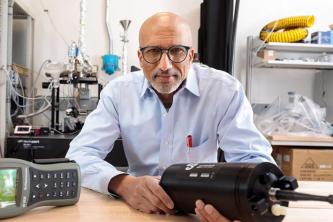
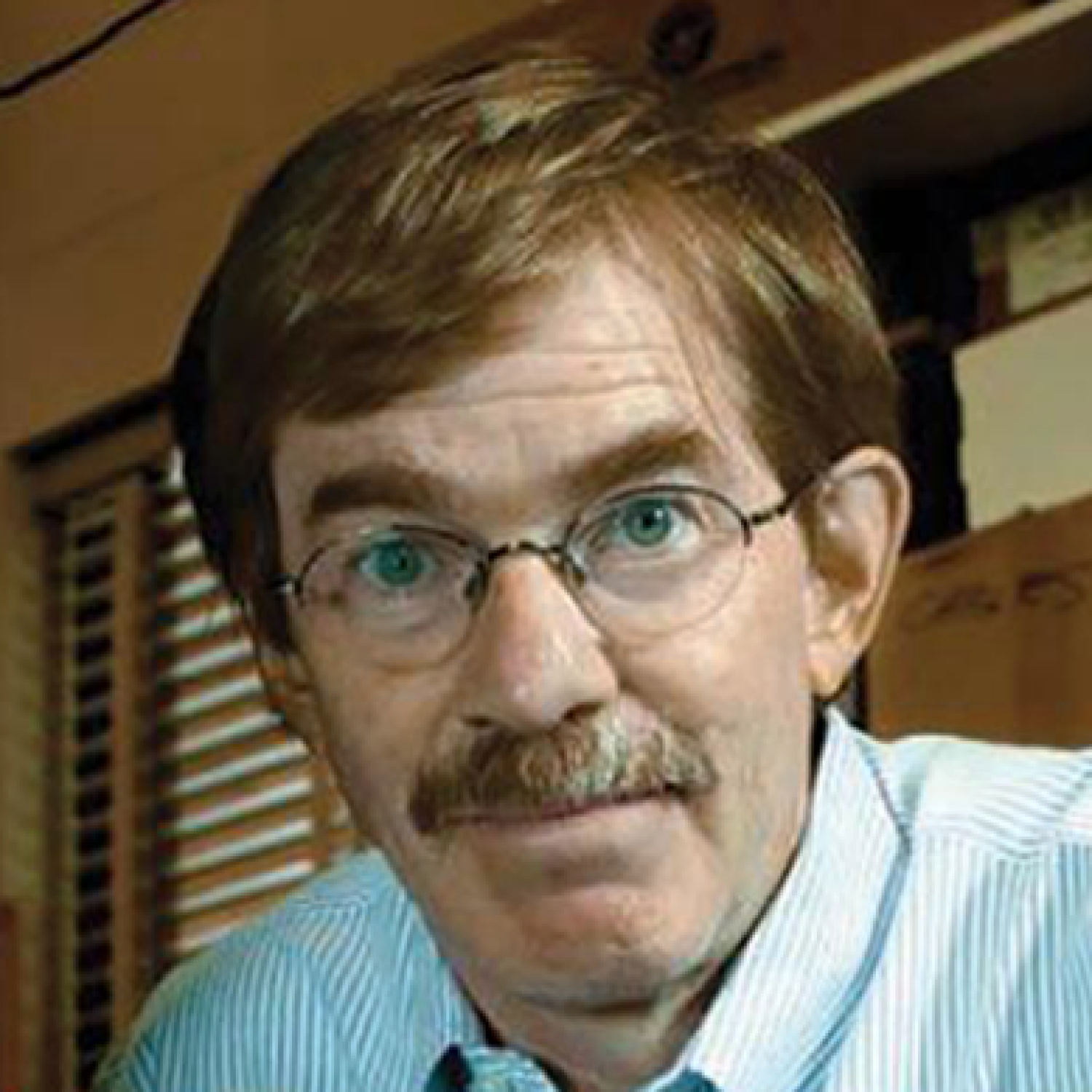
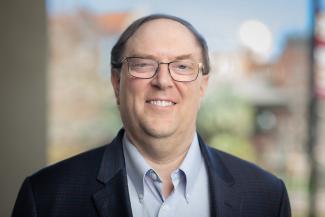
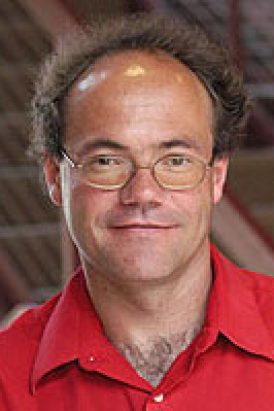
Lars Ulander is a Professor at Chalmers University of Technology specializing in radar remote sensing. His research focuses on synthetic aperture radar (SAR) signal processing, particularly for applications in forest biomass mapping and ground imaging using VHF/UHF-band systems. He is a key proposer for ESA's BIOMASS satellite mission (launching 2025) and leads the BorealScat project, utilizing a 50-meter tower-based tomographic radar to study boreal forest dynamics. His work spans radar system development, SAR tomography techniques, and environmental monitoring of forests and sea surface currents. Current research areas include vegetation water content estimation, bistatic radar configurations, and optimization of SAR data processing algorithms for multi-temporal analysis. Recent publications demonstrate expertise in P-band/L-band SAR for biomass retrieval, passive radar systems, and interferometric techniques. His articles investigate radar backscatter sensitivity to forest structure, moisture parameters, and seasonal changes, while contributing to mission design frameworks like SLAINTE and SESAME.
Lourens Waldorp is an Associate Professor at the University of Amsterdam within the Faculty of Social and Behavioural Sciences , specifically the Department of Psychological Methods . His research focuses on network theory, causal inference, and statistical modeling in psychology and neuroscience. University of Amsterdam IAS Fellow (2024) His research interests include: Network psychometrics Causal inference in psychological models High-dimensional statistical methods Dynamical systems in psychopathology Graph theory applications Signal processing for biophysical data The trends in his recent publications center on causal modeling, network analysis of psychopathology, and statistical techniques for time-series data. He has developed methods for perturbation graphs, moderated network models, and dynamic intervention frameworks. Notable scientific awards : IAS Fellowship for 6 months (2024) He advises PhD students like Kyra Evers and collaborates with researchers across disciplines, including J. Haslbeck , D. Borsboom , and O. Ryan . His work intersects with network theory and clinical psychology .
Supratik Guha is a Professor at the Pritzker School of Molecular Engineering and Senior Advisor to Argonne National Laboratory's Physical Sciences and Engineering directorate. His work bridges industrial R&D with academic and national lab research, focusing on quantum computing , semiconductor materials , and sensor networks for water and soil monitoring. Guha leads Argonne’s quantum information science strategy and serves as Faculty Director for the University of Chicago Center in Delhi. Education: PhD in Materials Science (USC, 1991), BTech in Engineering Physics (IIT Kharagpur, 1985) Research interests span multiple domains: Quantum technologies focusing on erbium-doped oxides for quantum memory and quantum interconnects Sensor networks for soil and water quality monitoring using cyberphysical systems Nanofabrication techniques including controlled spalling for heterogeneous material integration Advanced memory technologies exploring ferroelectric and optically addressable memory at atomic scales Scientific awards include: Election to National Academy of Engineering (2015) APS Prize for Industrial Applications of Physics (2015) Vannevar Bush Faculty Fellow (2018) Fellow of Materials Research Society and American Physical Society IBM Corporate Award (2013) Advising notable students like Manish Kumar Singh (co-founder memQ ), Cheng Ji (now at Intel), and Vamsi Nittala (now at Micron Technology). His group contributes to major DOE , NSF , and USDA funded projects including: Q-NEXT - DOE National Quantum Information Center AIFARMS - NSF/USDA AI for Agriculture Institute Thoreau Project - Geospatial sensor networks Labs and teams operate across University of Chicago and Argonne National Lab , with facilities for molecular beam epitaxy , nanofabrication , and optical/electrical characterization . The group has spawned startups like memQ (quantum networking) and K1 Semiconductors (wide-bandgap material transfer).
Mark Foster is an Associate Professor in the Department of Electrical and Computer Engineering at Johns Hopkins University, with a primary appointment in the Whiting School of Engineering. He is also a Fellow of the Hopkins Extreme Materials Institute. His research focuses on developing ultrahigh-speed optical systems at the intersection of photonics and electronics, emphasizing photonic devices and information theory to advance imaging, sensing, and communications technologies. Applications include quantum-optical systems, ultrawide-bandwidth microwave photonics, and terahertz-rate imaging systems. Dr. Foster received his BS (2003), MS (2007), and PhD (2008) in Applied and Engineering Physics from Cornell University. Before joining Johns Hopkins in 2010, he served as a postdoctoral associate there. His work has been funded by the NSF, IARPA, DTRA, and NIH, resulting in over 200 publications and eight patents. He has held leadership roles, including chairing the IEEE Photonics Society’s Baltimore chapter (2011–2014). Research Highlights: World-leading imaging systems achieving terahertz frame rates Quantum-optical platforms and nonlinear photonic materials (e.g., NbTiOx) Secure authentication via physically unclonable functions (PUFs) Applications in fusion energy diagnostics and medical imaging His awards include the NSF CAREER Award (201?), DARPA Young Faculty Award, and ONR Young Investigator Award. Current projects explore machine learning-resistant PUFs, multi-modal imaging systems, and photonics for extreme environments.
Zhanwei Wang is an Unpaid employee at the Department of Applied Mechanics and the Federated labs AI and Robotics at Vrije Universiteit Brussel. His research focuses on soft robotics, self-healing materials, fluid dynamics, and vacuum technology. He holds a PhD in Mechanical Engineering from VUB (2024), focusing on encoding physical intelligence into soft robotics via smart materials and continuum mechanics. Prior degrees include a Master's in Chemical Process Equipment (Northeastern University, China, 2020) and a Bachelor's in Process Equipment and Control Engineering (Northeastern University, China, 2017). His work emphasizes interdisciplinary innovation in robotics, sustainability, and material science. Key Research Areas: Self-healing robots, 3D printing for robotics, fluid dynamics in soft systems. Recent Collaborations: Peer reviews for Sensors Journal, IEEE Robotics & Automation Letters, and the 2025 IEEE/RSJ IROS conference. His publications explore adaptive robotic systems, sensor integration, and sustainable material solutions. He participated in the IMEC ITF World 2024 conference and contributed to media discussions on self-locking suction cups for robots.
Stephen Redmond is an Associate Professor at the School of Electrical and Electronic Engineering at University College Dublin (UCD), where he leads the Biomedical Sensors and Signals Research Group. He completed his Bachelor of Electronic Engineering at UCD in 2002, followed by a PhD in biosignal processing in 2006 on at-home sleep staging. After spending 10 years at the University of New South Wales in Sydney, he returned to UCD in 2018. His educational background includes: BE Electronic Engineering, University College Dublin (2002) PhD Biosignal Processing, University College Dublin (2006) Redmond's research focuses on the intersection of signal processing, pattern recognition, and novel sensing hardware to enable longitudinal health monitoring in home environments. His group has developed expertise in wearable sensor systems for human movement analysis, robust physiological signal measurement in unsupervised settings, tactile physiology and sensing, and the application of deep neural networks for medical image segmentation and robotic manipulation. His work bridges biomedical engineering with practical applications in healthcare and robotics. His recent publications demonstrate a strong trend toward integrating tactile sensing with machine learning for robotic applications, particularly in slip detection and dexterous manipulation. His research spans multiple disciplines including biomedical engineering, robotics, computer vision, and artificial intelligence, with a particular emphasis on practical applications that bridge the gap between laboratory research and real-world implementation. His notable recognition includes: Science Foundation Ireland President of Ireland Future Research Leaders Award for his project on tactile sensing As a research leader, Redmond mentors multiple doctoral students and postdoctoral researchers, securing significant research funding to support his team's work in tactile sensing and robotic manipulation. His research group has established strong industry connections, notably through the co-founding of Contactile, a tactile sensor company. The group maintains active collaborations with both academic and industry partners to translate research into practical applications. The Biomedical Sensors and Signals Research Group operates a well-equipped laboratory featuring advanced robotics platforms including a UR5e six-axis arm, Physik Instrumente Hexapods, ATI force/torque sensors, multiple 3D printers, and specialized tactile sensing equipment including Contactile Dev Kits and Meta Digit tactile sensors. This infrastructure supports their research in tactile physiology, sensor development, and intelligent robotic manipulation.
Afonso S. Bandeira is a Professor in the Department of Mathematics (D-MATH) at ETH Zurich, where he conducts research at the intersection of mathematics, statistics, and computer science. He maintains strong affiliations with several interdisciplinary research centers including the Institute For Operations Research (IFOR), the Max Planck ETH Center for Learning Systems, the ETH Foundations of Data Science, and the ETH AI Center, with a courtesy appointment at D-ITET. Bandeira actively teaches courses including Mathematics of Signals, Networks, and Learning, and Mathematics of Data Science. His research focuses on High Dimensional Probability, Random Matrices, Mathematical Statistics, Theoretical Computer Science, Combinatorics, and Mathematical Optimization. Bandeira's work often explores the theoretical foundations of data science, examining phase transitions in statistical problems, computational barriers, and the geometry of high-dimensional spaces. He maintains a research group blog called Randomstrasse101 that emphasizes open problems in his field. Analysis of his recent publications reveals a strong focus on matrix and tensor concentration inequalities, synchronization problems, nonconvex optimization landscapes, and computational-statistical tradeoffs in high-dimensional inference. His work bridges theoretical mathematics with practical applications in machine learning and data analysis, particularly examining where computational limitations arise in statistical problems. Bandeira actively mentors students and researchers, currently supervising several doctoral candidates including Daniil Dmitriev, Konstantin Donhauser, Anastasia Kireeva, Kevin Lucca, Chiara Meroni, Gil Kur, Petar Nizic-Nikolac, and Almut Roedder. He emphasizes that students working with him should participate in the DACO seminar and group meetings, and encourages prospective students to have completed his Mathematics of Signals, Networks, and Learning or Mathematics of Data Science courses. He leads a research group focused on the mathematics of data science, with regular group meetings and seminars. Bandeira has developed comprehensive lecture notes including 'A Tour Through the Mathematics of Signals, Learning, and Networks' (2025) and 'Mathematics of Machine Learning' (2021), and previously authored 'Ten Lectures and Forty-Two Open Problems in the Mathematics of Data Science' (2015).
Jungsang Kim is the Schiciano Family Distinguished Professor of Electrical and Computer Engineering and Professor of Physics at Duke University. He serves as Associate Director of the Duke Quantum Center and leads the Multifunctional Integrated Systems Technology group. Quantum Computing with Trapped Ions Quantum Information Science Photonic Device Development Quantum Communication Networks His research focuses on scalable quantum information processors using trapped atomic ions and advanced photonic technologies. Key innovations include microfabricated ion traps, optical MEMS, and cryogenic systems for quantum integration. Recent publications highlight trapped ion quantum simulation, high-fidelity gate design, and photonic error mitigation. His group develops practical quantum hardware and co-founded IonQ, the first publicly traded pure-play quantum computing company. Fellow, American Physics Society (2021) Stansell Family Distinguished Research Award (2016) Fellow, National Academy of Inventors Fellow, Optica (formerly OSA) Kim's work bridges quantum physics and engineering, with over 80 patents and leadership in Duke's quantum computing initiatives. He recently stepped down as IonQ's CTO while maintaining active research and strategic roles at Duke.
Dana Anderson is a Professor of Physics and JILA Fellow at the University of Colorado Boulder. He holds dual affiliations with the Department of Physics and JILA, a joint institute between the University of Colorado Boulder and the National Institute of Standards and Technology (NIST). His research focuses on ultracold atoms, quantum computing, and atomtronics, with applications in quantum sensing and space-based experiments. He currently serves as Chief Strategy Officer (CSO) of Infleqtion (formerly ColdQuanta), a quantum technology company he co-founded. Anderson is a principal investigator in the Quantum Pathways Institute, a NASA-funded initiative to develop quantum-based Earth-sensing technologies. He collaborates with institutions like NIST, JPL, and ColdQuanta on projects such as the Cold Atom Laboratory (CAL) for space-based ultracold atom research. His work has been recognized by TIME Magazine and led to significant grants, including a $15M NASA award for quantum space research. Research interests include atomtronics (hybrid atom-electronics systems), neutral atom quantum computing, and ultracold atom gyroscopes. His group develops novel atom chip technologies, such as window atom chips enabling high-resolution imaging, and explores applications like matterwave transistors and quantum inertial sensors. Current projects include shaken lattice interferometry for navigation and Rydberg atom-based microwave sensors. Anderson has pioneered concepts like the matterwave transistor oscillator and contributed to the first neutral atom quantum computing arrays. His work bridges fundamental physics and applied technologies, with a focus on translating quantum phenomena into practical devices. He actively mentors students and postdocs in experimental atomic physics and quantum engineering.
Todd Adams is a Professor in the Department of Physics at Florida State University . He leads research in particle physics (high energy experiment) with the CMS Experiment at CERN and previously the D0 Experiment at Fermilab , focusing on searches for new physics in underexplored datasets through long-lived particles , machine learning techniques , and charged particle detection . Education : PhD in Experimental Particle Physics from University of Notre Dame (1997); Postdoctoral researcher at Kansas State University (1997-2001) His research includes electromagnetic calorimeter studies for CMS, calorimeter upgrade investigations , and Monte Carlo simulation leadership for D0. He pioneered searches for neutral long-lived particles and top quark decay anomalies , co-authored key publications in Physical Review Letters and Journal of High Energy Physics , and served as Faculty Senate President and Board of Trustees member at FSU. Notable affiliations include: Collaborations : CMS, D0, NuTeV, NuSOnG Laboratories : CERN (Geneva), Fermilab (Chicago), Florida State High Energy Physics Group Key contributions: Co-convenor of D0 Monte Carlo Simulations and New Physics Signatures groups Expert in heavy quark production , dimuon analysis , and neutral current studies Publications on Higgs boson discovery implications, supersymmetry , and anomalous gauge couplings Scientific Awards : Fellow, American Association for the Advancement of Science Multiple Fermilab Result of the Week highlights (2006, 2008, 2013) Contributor to CMS Thesis Award Committee He advises graduate students in experimental particle physics and contributes to detector technology development, particularly in timing studies , calibration , and trigger systems . His research program will continue through the LHC's 2035 operations with ongoing CMS data analysis.
Georg Raithel is a Professor in the Department of Physics at the University of Michigan, Ann Arbor, where he has been a faculty member since 1997 following postdoctoral research at NIST as an Alexander von Humboldt Fellow. His research focuses on experimental atomic, molecular, and optical physics, specializing in Rydberg atom systems for quantum sensing and precision measurement applications. His academic background includes: Habilitation, University of Munich, Germany (1995) Ph.D., University of Munich, Germany (1990) Diploma, University of Munich, Germany (1987) Raithel's work centers on Rydberg atoms and their applications in quantum sensing, precision spectroscopy, and quantum information. His group investigates electromagnetically induced transparency in vapor cells, atom interferometry, ultracold plasmas, and Rydberg-atom-ion molecules. Recent breakthroughs include tractor atom interferometry for rotation sensing and SI-traceable electric field probes, bridging fundamental physics with practical quantum technologies. His publication trends show increasing focus on applied quantum systems, particularly Rydberg-atom-based sensors for electromagnetic field measurement, quantum communication protocols, and precision metrology devices. This evolution reflects a strategic shift from fundamental Rydberg physics toward engineered quantum solutions for real-world measurement challenges. Major scientific recognitions include: Fellow of the American Physical Society Alexander von Humboldt Foundation Fellowship Raithel has mentored approximately thirty Ph.D. students who now hold positions across academia, industry, and government laboratories. His research has been supported by sustained funding from the National Science Foundation and Department of Energy, enabling development of advanced laser systems for cold atom manipulation and quantum control. The Raithel laboratory, housed in Homer A. Neal Laboratory (rooms SB149, SB283, SB290), maintains multiple experimental setups for laser cooling, optical trapping, and vapor-cell spectroscopy. His group actively collaborates with industry through Rydberg Technologies Inc., which he co-founded to commercialize atom-based sensing technology.
Karin Allor Pfeiffer is a Professor in the Department of Kinesiology at Michigan State University (MSU) and Director of the Institute for the Study of Youth Sports. She holds additional membership in the Center for Physical Activity and Health. With a Ph.D. from MSU, her research focuses on physical activity measurement methodologies and population health interventions, particularly among children and adolescents. Her work addresses obesity prevention, environmental design impacts on activity levels, and sociocultural factors influencing youth sport participation. Education: Ph.D. in Kinesiology from Michigan State University Her research interests emphasize: - Quantitative methods for physical activity assessment - Schoolyard redesign strategies and their health impacts - Cardiometabolic risk factors in pediatric populations - Longitudinal tracking of physical fitness and health outcomes Recent work explores accelerometer fragmentation metrics, GPS-linked activity tracking, and disparities in sedentary behavior across demographic groups. She has pioneered interdisciplinary approaches integrating spatial analysis, wearable technology, and policy evaluation. Key contributions include developing the Observational System for Recording Physical Activity in Children and advancing consensus methods for accelerometer data interpretation. Her studies frequently highlight socioeconomic and environmental determinants of health behaviors. Dr. Pfeiffer collaborates with public health agencies and urban planners to translate research into actionable policies. Her lab focuses on scalable interventions for underserved communities, leveraging community-engaged methods to address greenspace accessibility and safety concerns.
Demetris Christodoulou is an Associate Professor in Accounting, Governance and Regulation at the University of Sydney. He holds a BEcon from Piraeus University, an MSc(Fin) from the University of York (UK), and a PhD from Athens University of Economics and Business (AUEB). His research focuses on applying data analytics, econometrics, and visualization techniques to financial analysis, equity valuation, life insurance, and financial advice. He co-directs the PEMA research group, specializing in productivity and performance measurement analytics, and previously led the MEAFA research group (2007–2022). He has collaborated extensively with industry partners including Deloitte and Australian insurers, and developed training programs for over 1,000 executives. His work includes open-source contributions to Stata software and the Graph Workflow platform, alongside $662k in workshop-generated funds supporting academic programs. He has advised multiple PhD students and taught at leading universities globally. Education: BEcon in Economics (Econometrics), Piraeus University MSc in Finance, University of York (UK) PhD in Accounting and Financial Analysis, Athens University of Economics and Business His research interests span financial reporting models, life insurance underwriting strategies, and behavioral finance. Recent projects address dishonesty mitigation in insurance disclosures and the adviser effect on customer disclosures. He has published widely in top journals like the Review of Accounting Studies and Stata Journal , and his work was featured in The Australian for insights on insurance fraud reduction. He maintains international collaborations, including visiting roles at Columbia Business School and the University of Cyprus, and serves on advisory boards for organizations like Behaviour.ai. Publications highlight methodological innovations in econometrics and visualization, with 2025's upcoming Stata Journal paper advancing time-series analysis techniques. His grants include partnerships with industry on longitudinal studies of insured lives, aiming to improve risk modeling and public policy insights.
Professor Kim Eun-hee is a faculty member in the Department of Defense Systems Engineering at Sejong University, specializing in advanced radar technologies and signal processing. Her work bridges theoretical research and practical applications in defense systems. Ph.D. in Mechanical Engineering (2004), KAIST M.Sc. in Engineering (1996), KAIST B.Sc. in Precision Engineering (1994), KAIST Her research focuses on radar system design, including airborne active phased array radar, automotive radar, broadband noise radar, and over-the-horizon radar. She explores waveform optimization, MIMO architectures, and signal processing algorithms to enhance radar performance in complex environments. Publications highlight her expertise in MIMO radar configurations, Doppler-insensitive waveforms, and machine learning integration for signal analysis. She leads industry-academic collaborations with organizations like Hanwha Systems and LIG Nex1. She contributes to technical committees, including the Sensor and Signal Processing Division of the Korean Society of Military Science and Technology. Her laboratory (Defense Radar Technology Laboratory) focuses on radar design, signal processing, and sensor integration.
Dr. Ismail Guvenc is a Full Professor in the Department of Electrical and Computer Engineering at North Carolina State University. He holds an IEEE Fellowship and is a Senior Member of the U.S. National Academy of Inventors. His research focuses on 5G/6G wireless systems, UAV communications, heterogeneous networks, and spectrum management. He leads the NSF AERPAW project and serves as the NC State Site Director for the NSF BWAC I/UCRC center. Dr. Guvenc has authored/co-edited four books and holds over 30 U.S. patents. Education: Ph.D. in Electrical Engineering, University of South Florida (2006) Master's in Electrical and Computer Engineering, University of New Mexico (2003) Bachelor's in Electrical Engineering, Bilkent University, Turkey (2001) Research Interests: Dr. Guvenc’s work spans UAV communication systems, 5G/6G networks, spectrum sensing, and machine learning for network optimization. He emphasizes experimental validation through platforms like AERPAW, focusing on drone-based networks, radio dynamic zones, and testbed-driven innovation. His contributions address challenges in UAV localization, interference management, and energy-efficient networks. Grants & Leadership: PI and Director of NSF AERPAW (2019–Present) NC State Site Director for NSF BWAC I/UCRC (2019–Present) Recipient of NSF CAREER Award (2015) and NC State Faculty Scholar Award (2021) Publications & Awards: He has authored over 130 peer-reviewed papers and contributed to standardization efforts. His awards include the R. Ray Bennett Faculty Fellow Award (2019) and the USF Outstanding Dissertation Award (2006). Labs & Teams: Dr. Guvenc directs research in the ECE’s wireless communications group, leveraging AERPAW’s experimental capabilities to advance UAV networks and 6G technologies. His team collaborates with industry and government on spectrum policy and autonomous systems.