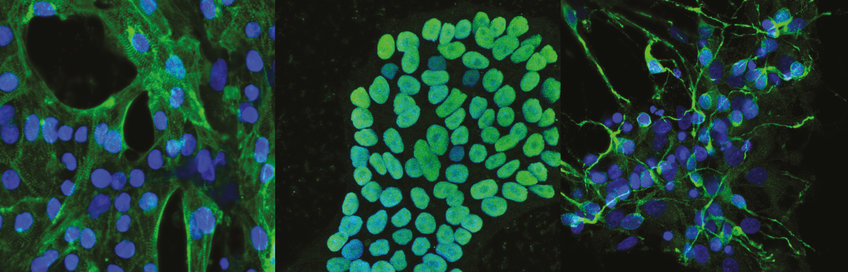
Danny Nedialkova is a Professor for Biochemistry of Gene Expression at the Department of Bioscience, TUM School of Natural Sciences, Technische Universität München, and a Max Planck Research Group Leader at the Max Planck Institute of Biochemistry. Her research focuses on mechanisms of protein biogenesis, translation regulation, and systems biology, particularly in the context of proteostasis networks and their role in aging and neurological diseases. Molecular Cell Biology Protein Biogenesis Translation Regulation Systems Biology Proteostasis tRNA Biology Her recent work explores how translation dynamics and tRNA modifications influence protein folding and cellular health. She has published extensively in top-tier journals such as Science , Nature Structural & Molecular Biology , and Cell . Notably, her group has developed the mim-tRNAseq method for high-resolution tRNA analysis and investigates stem cell models to study proteostasis in aging and disease. Scientific awards include: EMBO Young Investigator Award (2021) ERC Starting Grant 'TransTempoFold' (2018) Free-floating Max Planck Research Group Grant (2016) Participation in Lindau Nobel Laureate Meeting (2014) EMBO Long-Term Postdoctoral Fellowship (2010) PhD cum laude (2010) BSc cum laude (2004)
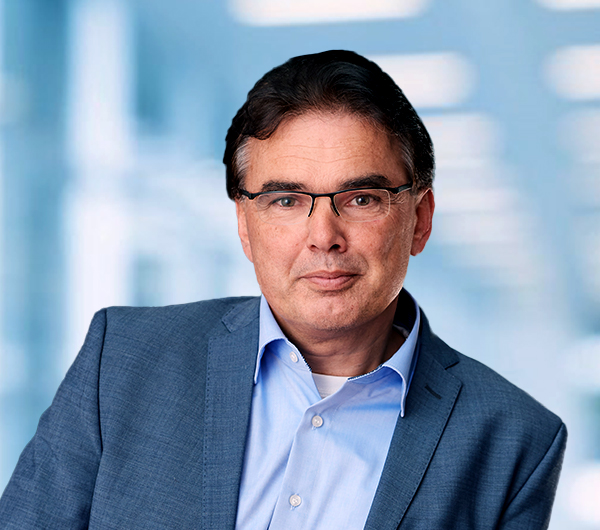
Prof. Jürgen Jasperneite is the director of Fraunhofer IOSB-INA in Lemgo and a board member of the Institute for Industrial Information Technology (inIT) at Ostwestfalen-Lippe University of Applied Sciences (TH OWL). He holds the Professorship for Computer Networks and focuses on industrial communication systems for cyber-physical systems and IoT. Current affiliations: Fraunhofer IOSB-INA (Director), inIT (Board Member), TH OWL (Professor) International collaborations: Guest Professor at Midsweden University (2021–present), Research Fellow at Stanford University (2017–present) Research Interests include: Distributed real-time communication and processing 5G/6G integration into industrial networks Time-Sensitive Networking (TSN) and Ethernet migration Semantic interoperability and IT security SmartFactoryOWL and Industry 4.0 testbeds Zero-touch management and network digital twins His work spans manufacturing, process automation, logistics, and urban mobility , with a focus on bridging information technology (IT) and operational technology (OT) through standards like OPC UA and PROFINET. Scientific Recognition : IEEE Senior Member (since 2006) Over 250 publications and conference leadership roles Best Paper Awards at IEEE ISPCS (2007), IEEE ETFA (2012), GI Echtzeit (2014) Founding director of Germany's first Fraunhofer application center for industrial automation Contact: computernetworks@init-owl.de
Ali Dziri is a permanent researcher at CentraleSupélec's Cedric Laboratory , focusing on wireless communications, signal processing, and embedded systems. His work spans 2004–2023 with key contributions in UWB communication, IoT networks, video/image transmission, and real-time tracking algorithms. His research interests include: Wireless Communications Signal Processing Embedded Systems Machine Learning IoT Networks Video/Image Compression Recent publications highlight trends in neural networks for channel equalization, MIMO relays for WSNs, and 5G D2D communication protocols. He has no listed scientific awards or advisees.
Marc Adrat is an Honorary Professor at RWTH Aachen University and Head of the Software Defined Radio research group at Fraunhofer Institute for Communication, Information Processing and Ergonomics (FKIE). His dual role combines academic teaching with cutting-edge industrial research in communications engineering. Education: Diplom-Ingenieur in Electrical Engineering (1997), RWTH Aachen University Dr.-Ing. (PhD) in 2003 from Institute of Communication Systems and Data Processing (IND), RWTH Aachen Research Focus: Prof. Adrat specializes in channel coding , modulation techniques , and iterative decoding with particular emphasis on polar codes , BICM-ID systems , and EXIT chart analysis . His work bridges theoretical foundations with practical implementations in software-defined radio systems. His recent research directions include applying machine learning techniques (particularly genetic algorithms) to optimize communication systems, developing autoencoder-based signal enhancement methods, and advancing spectrum monitoring technologies for cognitive radio applications. Awards & Recognition: Best Paper Award at ICMCIS 2022 for work on spectrum monitoring techniques Appointed Honorary Professor by RWTH Aachen University in June 2024 Teaching & Supervision: Since 2009, he has taught courses on Modern Channel Coding for Wireless Communications and Advanced Coding and Modulation at RWTH Aachen. His teaching covers both theoretical foundations and practical implementations of modern communication systems. Laboratories & Teams: At Fraunhofer FKIE, he leads the Software Defined Radio research group, focusing on developing flexible, reconfigurable radio systems for military and civilian applications. The group works extensively on real-time implementations of advanced coding and modulation schemes.
Ilona Grunwald-Kadow is Professor of Physiology and Head of the Institute of Physiology II at the University of Bonn ’s Faculty of Medicine, and concurrently serves as Vice Rector for Research and Young Scientists . An elected member of EMBO , she combines neurogenetics, physiology, and behaviour to decipher how neural circuits allow organisms to adapt to ever-changing environments. Education & Career: Professor of Physiology, University of Bonn (2022–present) Vice Rector for Research and Young Scientists, University of Bonn (2022–present) Head, Institute of Physiology II, Faculty of Medicine, University of Bonn (2022–present) Research Interests: Using Drosophila melanogaster and mouse models, her laboratory investigates how sensory inputs, internal states, and genetic programs interact to produce flexible, adaptive behaviour. Core themes include: Neurogenetic bases of state-dependent behaviour Dopaminergic modulation of sensory processing Mechanisms linking metabolic state to decision-making Hormonal modulation of olfaction and taste Neural circuits for motivation, risk-assessment, and memory Scientific Awards: Elected Member, European Molecular Biology Organization (EMBO) EMBO Young Investigator Award ERC Starting Grant Human Frontiers Science Program Career Development Award Otto Hahn Medal, Max Planck Society Research Environment & Funding: Her lab is embedded in the iBehave Network and NeurotechEU consortiums, fostering interdisciplinary collaboration across Europe. Funding sources include the European Research Council, German Research Foundation, and Human Frontiers Science Program. Lab Team & Mentoring: The Grunwald-Kadow group comprises post-doctoral researchers, doctoral students, and technical/administrative staff working at the intersection of genetics, physiology, imaging, and behaviour. The lab actively trains the next generation of neuroscientists through hands-on mentoring and cross-disciplinary projects.
Cornelia Isabella Bargmann is a distinguished American neurobiologist and Professor at Rockefeller University, renowned for her pioneering work on the genetic and neural circuit mechanisms of behavior using C. elegans . Previously a Howard Hughes Medical Institute Investigator (1995-2016) and Head of Science at the Chan Zuckerberg Initiative (2016-2022), she has made seminal contributions to understanding olfaction, neural development, and behavioral genetics. Her research focuses on how genes regulate neuronal development, function, and behavior through studies of C. elegans 's olfactory system. Key discoveries include identifying the "matchmaker" molecule SYG-1 that directs neuron connections, elucidating mechanisms of olfactory coding, and demonstrating how sensory neurons define olfactory preferences. Her work bridges molecular genetics, neural circuits, and complex behaviors. Bargmann's publications reveal consistent themes in neural circuit architecture , olfactory processing , and genetic control of behavior . Recent work emphasizes adaptive sensory mechanisms, neuromodulatory control of behavioral states, and multimodal integration in decision-making circuits, demonstrating remarkable continuity from her early C. elegans research to contemporary systems neuroscience. Kavli Prize in Neuroscience (2012) Breakthrough Prize in Life Sciences (2013) Benjamin Franklin Medal in Life Sciences (2015) Salk Medal for Research Excellence (2021) Gruber Neuroscience Prize (2024) Member, National Academy of Sciences Member, American Philosophical Society Bargmann has mentored numerous scientists through her laboratory and leadership roles, co-chaired the BRAIN Initiative, and significantly influenced science funding policy through the Chan Zuckerberg Initiative. Her research was continuously funded by the Howard Hughes Medical Institute for over two decades, supporting groundbreaking work in neural circuit genetics and behavior. She directs the Laboratory of Neural Circuits and Behavior at Rockefeller University, where her team employs advanced techniques including microfluidics, calcium imaging, and genetic manipulation to dissect C. elegans neural circuits. Her leadership extends to major collaborative efforts like the global BRAIN Initiative, aiming to accelerate neuroscience discovery worldwide.
Prof. Uri Erez, born in 1971 in Tel Aviv, Israel, is a faculty member at the Department of Electrical Engineering-Systems, Tel Aviv University. He received his B.Sc. in Mathematics and Physics (1996), M.Sc. (1999), and Ph.D. (2003) in Electrical Engineering from Tel Aviv University. From 2003 to 2004, he was a Post-Doctoral Associate at MIT's Signals, Information and Algorithms Laboratory. Since 2005, he has been affiliated with Tel Aviv University's engineering faculty. Research Interests Information theory and digital communication Algorithms and signal processing for communication systems Space-time coding and dimension reduction Lattice structures in digital communication applications Contact: uri@eng.tau.ac.il | Office: Electrical Engineering Building, Room 120
Rahul Chaudhari is a Senior Researcher at the Chair of Media Technology, Technical University of Munich (TUM), where he has been working since August 2019. He is affiliated with the Munich Institute of Robotics and Machine Intelligence (MIRMI) and contributes to research in human-computer interaction, particularly in human activity understanding. Dr. Chaudhari earned his doctoral degree (Summa cum Laude) in Communications and Signal Processing from TUM in 2015, following a Master's degree in Communications Engineering from TUM in 2009 and a Bachelor's degree in Electronics and Telecommunications from the University of Pune, India. His academic journey reflects a strong foundation in communications engineering and signal processing that has evolved into interdisciplinary research spanning haptics, computer vision, and artificial intelligence. His research focuses on Human Activity Understanding using Computer Vision, Sensor Fusion, and AI techniques. His current work centers on understanding Human-Object Interactions using camera data (RGB and Depth) recorded in indoor environments, with potential integration of wearable sensors or environmental sensors. His work has significant applications in improving human well-being, comfort, and convenience through intelligent environments and ambient assisted living systems. Dr. Chaudhari's publication record shows a clear evolution from foundational work in haptic communications to cutting-edge research in human-object interaction and 3D pose estimation. His recent publications demonstrate expertise across multiple domains including computer vision for activity recognition, synthetic data generation for training models, and neurosymbolic approaches to human-AI collaboration. This interdisciplinary approach reflects the increasingly connected nature of modern AI research. Best student paper award for Yujun Wang (2025) LMT Spin-off Wins Third Place at euRobotics Technology Transfer Award 2025 LMT featured in Süddeutsche Zeitung (2025) Diego Fernandez Prado selected as finalist for IEEE CASE Best Paper Award (2024) Dr. Chaudhari actively supervises student research, including Master's theses on advanced topics such as 'Simulation and Optimization for 6G Network Planning using Digital Twins.' His supervision work involves guiding students through complex technical challenges in simulation software evaluation, digital twin implementation, and network optimization. He also serves on thesis committees and provides mentorship to students working on related research topics. His research group operates within the broader context of TUM's initiatives in robotics and machine intelligence, contributing to projects like the Centre for Tactile Internet with Human-in-the-Loop (CeTI) and 5G Testbed Bayern. The group maintains a strong focus on both theoretical foundations and practical implementations, with research that bridges the gap between academic innovation and real-world applications in intelligent environments.
Robin Dietrich is a Researcher at the Department of Informatics 6 - Chair of Robotics, Artificial Intelligence and Real-time Systems at the Technical University of Munich . His work bridges computational neuroscience and robotics, focusing on translating neural mechanisms from mammalian brains into algorithms for mobile robot navigation. B.Sc. and M.Sc. in Computer Science Research on hippocampal temporal dynamics for neuromorphic SLAM Specializes in spiking neural networks for navigation and radar processing Research Interests : Robin's research explores the intersection of robotics, artificial intelligence, and computational neuroscience . His work specifically investigates spiking neural networks, FMCW radar data processing, and neuromorphic algorithms for autonomous systems. Recent projects focus on uncertainty quantification, evolutionary optimization, and multi-robot exploration using biologically inspired models. Publication Trends : Robin's publications (2019-2025) demonstrate a consistent focus on neuromorphic computing for robotic perception , with increasing specialization in spiking neural networks for radar processing and biologically inspired navigation algorithms . Key collaborations include contributions to multi-robot exploration metrics and hardware acceleration frameworks. Teaching Contributions : Robin has taught Digital Signal Processing and Real-Time Systems lectures since 2019, co-led seminars on Bio-inspired Data Processing , and supervised practical courses on Intelligent Mobile Robots using ROS.
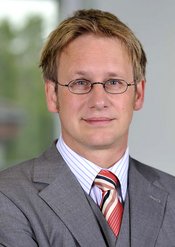
Tilman Triphan is a Scientific Staff member at the Institute of Biology, University of Leipzig. His research focuses on the neurogenetic basis of Drosophila behavior, including motor control, decision-making, spatial orientation memory, and voluntary passive movement. Institute of Biology, University of Leipzig Genetics Department Triphan investigates how fruit flies overcome obstacles, maintain directional flight, and adapt their behavior through sophisticated movement patterns. His work employs high-speed videography and genetic techniques to analyze neuronal circuits and behavioral flexibility. Recent publications span topics such as starvation effects on fly activity, olfactory object recognition, and visual distance estimation. Collaborations with the AG Huetteroth research group are integral to his work. Former students: Julia Vetter (BA 2019), Kristian Schufft (Staatsexamen 2019) Contact: Room 318, Genetics Institute Building, Talstraße 33, Leipzig. Phone: +49 341 97-36962 | Fax: +49 341 97-36720
Professor Matthew Hurles serves as Director of the Wellcome Sanger Institute and leads the Hurles Research Group focused on genomic mutation and genetic disease. He holds the position of Honorary Professor of Human Genetics and Genomics at the University of Cambridge and has established himself as a leading figure in human genomics research through his extensive contributions to understanding genetic variation and developmental disorders. His research interests center on human genetic variation, its clinical impact, and the underlying mutational processes that generate this diversity. Professor Hurles is particularly fascinated by how DNA mutates as it is passed between generations and how this knowledge can be applied to improve diagnosis for patients with rare genetic conditions. His work spans developmental disorders, prenatal genetics, and genomic medicine, with the goal of understanding genetic causes of disorders and their biological mechanisms to advance human health. Analysis of his publication record reveals a consistent trajectory of innovation in genomic technologies and methodologies. His most recent work shows increasing emphasis on functional genomics approaches like saturation genome editing, analysis of diverse populations to understand genetic architecture across ethnic groups, and the clinical translation of genomic findings. There is a clear progression from basic discovery of genetic variants to developing methods for variant interpretation and clinical application. Fellow of the Royal Society (FRS) Fellow of the UK Academy of Medical Sciences (FMedSci) European Society of Human Genetics Award Crick Lecture from the Royal Society Balfour Lecture from the Genetics Society Professor Hurles leads several major collaborative research initiatives including the Deciphering Developmental Disorders (DDD) Study involving 14,000 families, the Prenatal Assessment of Genomes and Exomes (PAGE) Study, and the DECIPHER initiative for global data sharing. His research has directly led to genetic diagnoses for over a thousand children with previously undiagnosed developmental disorders and contributed to the founding of Congenica Ltd, which provides genetic diagnostic services to the NHS. He has secured substantial research funding through these large-scale collaborative projects. As Director of the Wellcome Sanger Institute, Professor Hurles oversees one of the world's premier genomic research institutions. His leadership extends to global collaborations through DECIPHER, which enables rare disease patients to share anonymized genetic and clinical data worldwide. His research group applies cutting-edge technologies to model genetic disorders, with particular focus on developing experimental models to characterize disorder biology and identify therapeutic opportunities.
Elif Saçikara is a Researcher at the Institute for Communications Engineering, Technical University of Munich. Her research interests include Coding Theory, Cryptography, Communications Engineering, Information Theory, Signal Processing, and Network Security. She can be reached via email at elif.sacikara@tum.de.
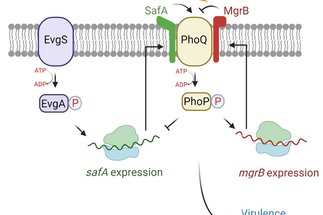
Dr. Jing Yuan is a Research Group Leader at the Max Planck Institute for Terrestrial Microbiology and SYNMIKRO in Marburg, Germany. She leads the research group focused on small proteins in bacterial signaling networks, with a particular emphasis on understanding how bacteria sense and infect mammalian hosts. Education: MSc in Biochemistry and Microbiology, University of Montana, USA (2001) MSc in Molecular Biophysics and Biochemistry, Yale University, USA (2003) PhD in Molecular Biophysics and Biochemistry, Yale University, USA (2007) Dr. Yuan's research centers on small proteins and their critical roles in bacterial signaling, pathogenicity, and host interaction. Her group investigates how these small proteins regulate bacterial infection processes, particularly through interactions with two-component signaling systems like the PhoQ sensor kinase. These systems are crucial for bacterial survival in various environments and represent potential targets for novel antimicrobial development. The Yuan group employs a multidisciplinary approach combining molecular, cellular, and synthetic biology techniques with computational simulations and structural studies to uncover the mechanisms of small protein function. Analysis of Dr. Yuan's publication record reveals a consistent focus on bacterial signaling mechanisms, with increasing emphasis on small proteins and their regulatory roles in pathogenicity. Her work spans fundamental biochemical investigations of protein function to more applied research on antimicrobial development. A notable trend is the evolution from studying basic mechanisms of amino acid biosynthesis and tRNA modification in her earlier career to her current focus on bacterial pathogenesis and small protein-mediated regulation. Advising: Dr. Yuan actively mentors a diverse research team including doctoral researchers, master's students, and bachelor's students. Her current advisees include Camila Cilveti Rodriguez Riglos, Wenting Liu, Dr. Lisa Werland, Marian Sophie Dünkel, Eric Mersinger, Julia Rinn, Tetsuo Bernardino Tomiyasu Marques, Christian Gereg, and Daniel Alejandro Castellar Almonacid. Her mentoring spans experimental design, data analysis, and scientific communication, preparing students for careers in microbiology and related fields. Dr. Yuan's research group operates state-of-the-art facilities for molecular microbiology, protein characterization, and bacterial pathogenesis studies. The lab maintains collaborations with structural biologists and computational scientists to complement their experimental approaches. Current research directions include uncovering the regulation mechanisms of small proteins, understanding how these proteins control bacterial infection, engineering small proteins to suppress virulence, and developing methods to identify functions of newly discovered small proteins.
Dr. Wolfgang Weber-Fahr is a leading researcher in neuroimaging at the Central Institute of Mental Health (ZI), Mannheim, Germany. His work focuses on elucidating the neural mechanisms underlying psychiatric disorders through translational imaging approaches. Research Interests : Neuroscience, Neuroimaging, Functional Connectivity, Psychiatric Disorders Key Contributions : Analysis of brain circuits in psychiatric conditions, consensus protocols for rodent functional connectivity studies, and investigation of oxytocin's role in social cognition. Selected Publications (2017-2024) explore interdisciplinary themes spanning psychiatric neurobiology, rodent brain imaging, and stress-related neural plasticity. These works highlight collaborations within the European IMI-NEWMEDS consortium and emphasize translational neuroscience applications.
Wolfgang Kelsch is an Associate Professor at the Central Institute of Mental Health, Mannheim, where he leads the Research Group for Developmental Biology of Psychiatric Disorders. His work focuses on the intersection of neuroscience, psychiatric disorders, and sensory processing, particularly in olfactory systems. His research explores how neurobiological mechanisms like synaptogenesis, dopamine signaling, and cortical representations contribute to psychiatric conditions. Recent studies highlight his expertise in striatal circuits, oxytocin effects, and reward prediction coding. The trends in his recent publications (2010–2025) span topics such as olfactory reinforcement learning, dopaminergic reward prediction, and feeding-induced sensory suppression. These works emphasize neural plasticity, computational modeling, and translational approaches to understanding psychiatric disorders.