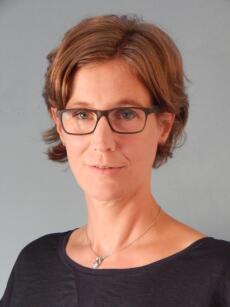
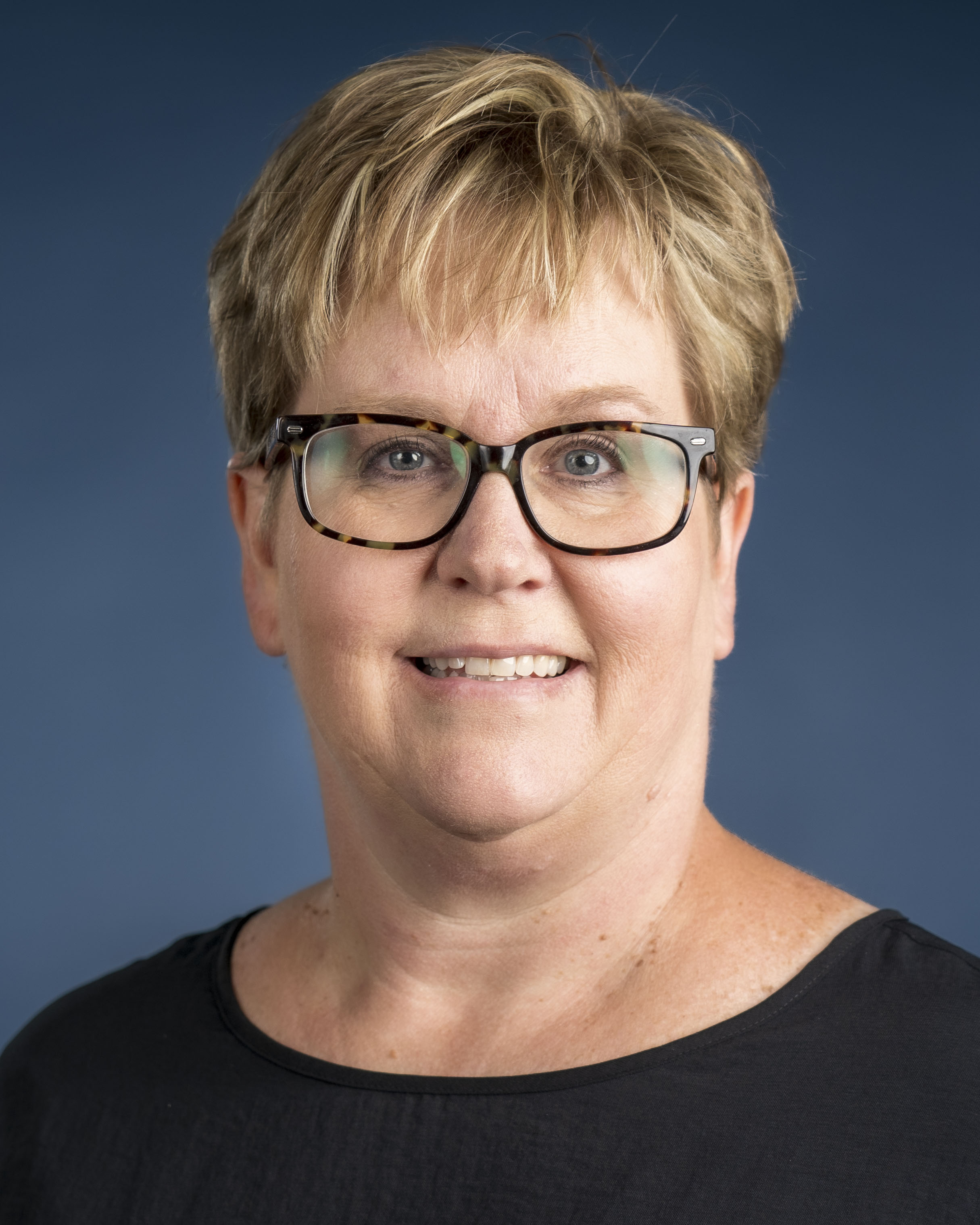
Dan Hoffman serves as an Adjunct Instructor of American Sign Language within the Department of American Sign Language and Deaf Studies under the Division of Behavioral Sciences at Maryville College. His academic workspace is located in the Sutton Science Center, reflecting his integration into the institution's behavioral sciences infrastructure. His educational credentials include: B.A. from Gallaudet University M.S. from Lamar University Ed.D. from Lamar University Hoffman's scholarly focus centers on American Sign Language and Deaf Studies, with particular emphasis on linguistic structures of sign languages, sociocultural dimensions of Deaf communities, and pedagogical approaches for language instruction. His work bridges theoretical linguistics with practical educational frameworks for Deaf learners. No scientific awards or honors were documented in the available information. Regarding academic mentorship and research funding, the source materials indicate no formal student advisement records or grant acquisitions. His part-time faculty status suggests primary engagement through instructional responsibilities rather than research leadership.
Dr. Katrin Huxel serves as a Lecturer at the University of Münster's Faculty of Educational Science within the Working Group on Multilingualism and Education under Prof. Busse's professorship. She functions as a Decentralized Equal Opportunities Officer for Faculty 06 and maintains active teaching responsibilities in the German as a Second Language (DaZ) module. Her research focuses on multilingual education systems and German language acquisition for non-native speakers. The Working Group on Multilingualism and Education explores linguistic diversity in educational contexts, with emphasis on practical implementation of multilingual teaching methodologies. As Decentralized Equal Opportunities Officer for Faculty 06, she implements institutional equity policies while maintaining active teaching responsibilities. Her office hours operate through Learnweb with both in-person and Zoom consultation options, demonstrating adaptability in student support services. She manages seminar enrollment procedures for DaZ courses through a structured first-session attendance system, requiring physical presence for place allocation. Her administrative responsibilities include signing cooperation agreements and handling extracurricular study documentation through the CEMES center.
Professor Weizi Li serves as Professor of Informatics and Digital Health, Deputy Director of the Informatics Research Centre, and Programme Director for MSc Digital and Technology Solutions and MSc Informatics (BIT) at Henley Business School, University of Reading. She directs the EPSRC Future Blood Testing for Inclusive Monitoring and Personalised Analytics Network+, demonstrating leadership in digital health innovation. Her research integrates artificial intelligence, machine learning, and information systems to solve critical healthcare challenges. Key focus areas include digital health analytics, decision support systems for clinical pathways, and personalized medicine applications. Current work targets inflammatory arthritis detection, diabetes management through glucose monitoring, and reducing healthcare inequalities via predictive attendance systems implemented at Royal Berkshire NHS Foundation Trust. Recent publications reveal consistent application of multimodal machine learning to healthcare data, emphasizing uncertainty quantification, risk stratification, and real-world clinical implementation. Her work bridges technical AI advancements with practical healthcare delivery improvements across diverse patient populations. Professor Li has earned significant recognition for research impact including the ESRC O2RB Excellence in Impact Award (2018), Research Engagement and Impact Award (2020), and Times Higher Education STEM Award (2025). Her contributions to patient safety and digital health innovation have been acknowledged through Health Service Journal awards and British Computer Society fellowship. ESRC O2RB Excellence in Impact Award (2018) Research Engagement and Impact Award (2020) Shortlisted for 2022 Impact Award Health Service Journal Patient Safety Award Times Higher Education STEM Award (2025) Fellow of British Computer Society As Principal Investigator, she has secured major funding from EPSRC, NIHR, ESRC, The Health Foundation, NHS, and Innovate UK totaling over £3 million. Current projects include the £1.16M NIHR RMD-Health initiative for rheumatic disease detection and the £600k EPSRC grant for inflammatory arthritis prediction. Her Royal Berkshire NHS partnership has successfully implemented machine learning systems reducing outpatient non-attendance. She leads the Informatics Research Centre's digital health team, fostering collaborations between academia, NHS trusts, and industry partners to translate AI research into clinical practice through the EPSRC Future Blood Testing Network+ and multiple collaborative innovation funds.
Katie McCarthy serves as a Visiting Lecturer in the World Languages Department at Framingham State University, specializing in American Sign Language (ASL) and Deaf Studies. Her academic focus centers on American Sign Language and Deaf Studies, with broader interests spanning Linguistics and Language Education. These areas reflect her commitment to advancing sign language pedagogy and understanding Deaf cultural dynamics within language education frameworks.
Amy Crockford serves as an Adjunct Professor in the ASL/Deaf Studies Department within the College of Arts and Sciences at Niagara University, a position she has held since 2018. She is also a practicing Deaf interpreter and the author of the children's book "My Happy Place," which details her experiences growing up as a Deaf individual. Her academic credentials include a Master of Education in Student Affairs Administration from the University at Buffalo and undergraduate studies at the Rochester Institute of Technology. Professor Crockford's professional focus centers on Deaf Studies , American Sign Language (ASL) , and Deaf Culture advocacy . She emphasizes that "there is more than one way to communicate," integrating her lived experience into teaching and public outreach. Her work bridges academic instruction with real-world interpretation and children's literature to promote Deaf perspectives and cultural awareness.
Aleš Bičan serves as an Assistant Professor in the Department of Linguistics and Baltic Studies at the Faculty of Arts, Masaryk University, Brno. He holds membership in the following academic bodies: Industry Council for General Linguistics Program Board for General Linguistics (bachelor's study) Program Board for General Linguistics (master's follow-up study) Program Board for Interpreting Czech Sign Language (bachelor's study) Program Board for Vietnamese Studies (bachelor's study) His research spans general linguistics, Baltic studies, Indo-European studies, narratology, and sign language (particularly semantics and lexicology of sign languages), with additional focus on phonetics and phonology. He has pioneered e-learning resources for sign language courses and phonetics instruction. Dr. Bičan actively leads research projects supporting student work in linguistics and Baltic studies, including the 2025 "Creation of e-learning support for courses LgBA03 General Phonetics and Phonology" and 2023 "Creation of new interactive curricula for subjects TCZJ30 and LgV13 Semantics of sign languages." His current portfolio includes developing lexicology materials for sign languages and supporting doctoral research in narratology.
Darío David González is a PartTime Lecturer at the University of Copenhagen's Faculty of Humanities, affiliated with both the Department of Communication and Department of Arts and Cultural Studies. He holds a Ph.D. and works in a part-time capacity. His academic roles involve research and teaching in philosophy and cultural studies, with no indication of administrative duties. His research centers on continental philosophy, existentialism, and aesthetics, with specialized focus on: Kierkegaard and Nietzsche studies Ethics and moral philosophy Aesthetic theory and meta-aesthetics Semiotics and literary criticism González maintains an active publication profile with 44 scholarly works. His recent articles (2019–2024) demonstrate consistent engagement with existential philosophy, critiques of theism, and interdisciplinary explorations at the intersection of literature, ethics, and visual culture. Thematically, his work prioritizes deconstruction of philosophical concepts through literary and semiotic lenses.
Carmen Steen serves as an Assistant Professor and Program Director of Sign Language Interpreting at the Sharon Lust School of Education, Augustana University, where she has taught since 2009 after 18 years at the South Dakota School for the Deaf and community interpreting experience. She holds an M.A. in Education and maintains the highest professional certifications in sign language interpretation. Education: Bachelor of Education, University of Sioux Falls M.A. in Education Professional Expertise: Steen specializes in American Sign Language instruction and educational interpreting, with research interests focusing on ASL pedagogy, interpreter assessment methodologies, and accessibility in educational settings. Her work bridges theoretical linguistics with practical application in deaf education. Professional Recognition: NAD V (Master) interpreting certification Educational Interpreter Performance Assessment (EIPA) score of 4.8 American Sign Language Proficiency Interview (ASLPI) level 4.5 Qualified Level Certification from American Sign Language Teachers Association (ASLTA) Professional Service: Steen has held multiple leadership positions on the South Dakota Interpreter's Association Board, contributing to policy development and professional standards for sign language interpreters across the state.
Prof. Dr. Lena Kästner is Professor of Philosophy, Computer Science and Artificial Intelligence at the University of Bayreuth's Faculty of Cultural Studies. She leads the Professorship for Philosophy, Computer Science and AI and serves as Director of the interdisciplinary Master's program 'Philosophy & Computer Science'. Her research specializes in mechanistic explanations, philosophy of AI, and cognitive science, with current projects including 'Explainable Intelligent Systems' (EIS) funded by Volkswagen Stiftung. Research interests focus on: Philosophical foundations of AI explainability (XAI) Mechanistic models in neuroscience and psychiatry Computational approaches to mental disorders Causal reasoning in scientific discovery Interdisciplinary methodology across philosophy and computer science Recent publications demonstrate strong emphasis on AI ethics, mechanistic interpretability, and computational psychiatry. Article analysis reveals consistent focus on developing philosophical frameworks for emerging technologies, particularly concerning transparency in AI systems and modeling approaches for complex psychological phenomena. Supervises bachelor/master theses and PhD candidates in philosophy of mind/science. Heads the 'Explainable Intelligent Systems' research group and co-directs the Research Center for AI in Science and Society (RAIS 2).
Marko Juvan is a Professor of Slovenian Literature at the University of Ljubljana's Faculty of Arts and Head of the Institute of Slovenian Literature and Literary Studies (ZRC SAZU). Born in 1960, he holds a PhD in Literary Studies (1993) and has taught since 1994, becoming full professor in 2007. His research focuses on comparative literature, cultural theory, intertextuality, and world literature's peripheries. He has organized major international conferences on topics like 'The Spatial Turn in Literary Studies' and serves on editorial boards of journals such as CLCWeb: Comparative Literature and Culture . Education : B.A./M.A. in Slovenian and Comparative Literature, University of Ljubljana (1985) PhD in Literary Studies, University of Ljubljana (1993) Postgraduate studies at University of Tübingen (1990) Research Interests : Juvan explores cultural theory, systems theory, European romanticism, and the intersection of literature with geography and nationalism. He emphasizes world literature frameworks to analyze peripheral literatures' dynamics and their global connections. Awards : 2014 Golden Sign of ZRC SAZU 2012 Member of Academia Europaea 1991 Kidrič Award for Young Researchers Advising & Professional Roles : Editor of multiple journals, former president of the Slovenian Comparative Literature Association (2002–2006), and committee member for ICLA/AILC and ENCLS. He has lectured internationally and co-edited volumes on spatial analysis in literary studies. Labs/Teams : Leads research at ZRC SAZU, collaborating on projects like GIS-mapping of literary cultures and comparative studies of world literature's peripheries.
Josefine Andin is a Senior Associate Professor at Linköping University, affiliated with the Department of Behavioural Sciences and Learning and the Disability Research Division (FUSA). Her research focuses on neuroscience, disability research, and cognitive hearing science, particularly investigating how the brain processes cognitively demanding tasks in individuals with hearing loss and deafness. She collaborates across disciplines, including speech and language pathology, audiology, and engineering. Her work emphasizes the biopsychosocial model of disability, exploring how environmental factors interact with biological and psychological aspects of impairment. Dr. Andin’s research is organized into three core areas: cognition under challenging conditions (e.g., working memory and noise effects), mathematics in the signing brain (comparing deaf and hearing populations via neuroimaging), and hearing loss’s impact on emotions and workplace participation. She actively supervises PhD students in projects like Cristina Tobías’ work on working memory and noise, Isabella Ström’s study on auditory noise and children’s learning, and Agnes Andersson’s investigation of mental fatigue. In teaching, she emphasizes problem-based learning and critical thinking, designing courses in disability research, neuroscience, and quantitative methods. She currently manages courses such as Disability Research 2 and Cognitive Psychology 2 . Her educational roles include Director of Studies for disability research courses and membership on faculty curriculum boards. Key collaborations include the Swedish Institute for Disability Research and the Linnaeus Centre HEAD. Recent publications highlight neuroimaging studies on deaf signers’ brain structures (e.g., superior parietal lobule in geometry processing) and acoustic emotion recognition in speech. Her work bridges interdisciplinary gaps, aiming to improve accessibility and cognitive understanding across diverse populations.
Dr. Jessica Kruk is a Lecturer in Indonesian Studies at the School of Social Sciences, The University of Western Australia. Her research focuses on sociolinguistics, cultural identity, and marginalized communities in the Asia Pacific. She holds a PhD in Linguistics from Monash University (2018), an Honours degree in Linguistics and Indonesian Studies (2012), and a Bachelor of Arts (Languages) (2011), all from Monash University. Her key research areas include the languages and identities of ethnic Chinese minorities in Indonesia, extreme metal musicians' use of non-English lyrics, and revitalizing Indonesian language education. She has published on topics such as multilingualism, linguistic subcultures, and deglobalization's sociolinguistic implications. Recent collaborations explore transnational linguistic landscapes and sign language program efficacy. Media engagements address Indonesian language education in Australia and generational language trends. Her work bridges sociolinguistic theory with practical applications, aiming to combat cultural exclusion through language advocacy and pedagogical innovation.
Dr. Andreas Fuls is a Researcher at the Institute of Geodesy and Geoinformation Science at TU Berlin, specializing in historical cartography, archaeoastronomy, and ancient writing systems. He earned his doctorate in History of Natural Sciences from the University of Hamburg (2007) and has worked at TU Berlin since 1988. His research includes analysis of Ptolemy's world map, astronomical dating of Maya culture, and decipherment of ancient scripts like Indus Valley and Cretan Hieroglyphics. He has developed computational methods for analyzing archaeological inscriptions and reconstructing historical maps. Fuls received scientific awards including Jugend forscht prizes and maintains research websites on epigraphy and archaeoastronomy.
Dr. Hesam Jadidbonab is an Assistant Professor (Research) at Coventry University, affiliated with the Centre for Future Transport and Cities. His research is centered on cybersecurity in cyber-physical systems, particularly in connected and autonomous vehicles (CAVs), with a focus on real-time security, intrusion detection, and secure over-the-air (OTA) updates. He leads and contributes to multiple Innovate UK-funded projects aimed at enhancing the safety and security of future transportation systems. Doctorate in Mechanical Engineering, City, University of London MEng in Automotive Engineering, Aachen University of Applied Science His research interests span Cyber Security , Automotive Systems , Machine Learning for Security , Testbed Development , and Experimental Fluid Mechanics . He has developed expertise in advanced imaging techniques such as Particle Image Velocimetry (PIV), X-ray imaging, and computed-tomography reconstruction during his doctoral and post-doctoral work. The recent publications of Dr. Jadidbonab reflect a strong trend in applying ontology modeling , language models , and fuzzing techniques to automotive and IoT security. His work integrates context-awareness , real-time threat detection , and adaptive security policies to address evolving cyber threats in intelligent transport systems. The interdisciplinary nature of his research bridges mechanical engineering, computer science, and systems engineering. Scientific Awards: No specific awards listed in the provided text. Dr. Jadidbonab has been actively involved in research advising and project leadership. He serves as a Co-Investigator and Researcher in multiple high-impact projects including: Secure-CAV : Focused on testbed development and machine learning for intrusion detection in autonomous vehicles. Trade-off Management between Safety and Cybersecurity : Investigating the balance between functional safety and cyber resilience. SCALE : Solihull & Coventry Automated Links Evolution, contributing to automated mobility integration. A Roadmap to Cybersecurity for CI-SRN Integration : Developing strategic cybersecurity frameworks for connected infrastructure. He has collaborated with academic and industrial partners such as Lubrizol Ltd., University of Bergamo, FAU Erlangen-Nürnberg, and Argonne National Laboratory. His lab work includes the design and deployment of multi-bus automotive testbeds to validate security mechanisms in realistic vehicle environments.
Dr. Samantha Rarrick is a Senior Lecturer at Griffith University's School of Humanities, Languages and Social Science, affiliated with the Griffith Centre for Social and Cultural Research. Her research focuses on documenting endangered languages, particularly signed and spoken languages of the Pacific, including Kere and Sinasina Sign Language in Papua New Guinea, and Hawai‘i Sign Language. She emphasizes community-driven approaches to linguistic research, ensuring local stakeholders participate in decision-making. Dr. Rarrick holds a PhD in Linguistics from the University of Hawaii at Mānoa (2017), and has conducted postdoctoral research funded by the National Science Foundation (2017–2019). Her teaching interests include language endangerment, documentation, Pacific languages, and sign languages. She supervises doctoral and master's students on topics ranging from climate-related semantics in Danish dialects to phonological variation in Hawai‘i Sign Language. Dr. Rarrick has received the 2021 Student Experience of Teaching Commendation and actively contributes to professional organizations like the Australian Linguistic Society and the Foundation for Endangered Languages. Her work bridges signed and spoken language documentation, addressing methodological challenges in corpus design and cross-modal linguistic analysis. Key research projects include documenting Sinasina Sign Language, analyzing language ideologies in Papua New Guinea, and developing multimedia resources for Central Queensland Aboriginal languages. Dr. Rarrick's interdisciplinary approach integrates ethnography, typology, and computational methods to preserve linguistic diversity while fostering global awareness of endangered languages.