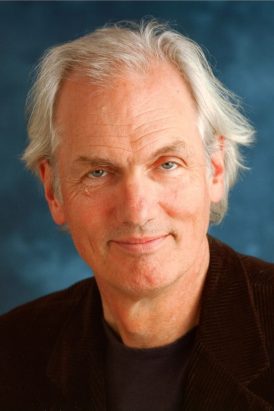
Webb Keane is the George Herbert Mead Collegiate Professor of Anthropology at the University of Michigan. He is affiliated with the Center for Southeast Asian Studies, Global Islamic Studies Center, and the Interdisciplinary Program in Anthropology and History. His research focuses on ethics, semiotics, material culture, and religion in Southeast Asia and beyond. He holds a PhD and AM from the University of Chicago and a BA from Yale College. His major publications include Signs of Recognition , Christian Moderns , and Ethical Life , with his latest book Animals, Robots, Gods (2025) exploring non-human ethics. Keane has held fellowships from the Guggenheim Foundation and the National Endowment for the Humanities, and has lectured globally, including at Cambridge and the London School of Economics. Research Interests: Moral philosophy, semiotics, materiality, religion, media, and historical consciousness. Awards: Guggenheim Fellowship, Annette B. Weiner Memorial Lecturer, Edward Westermarck Memorial Lecturer. Teaching: Courses on language and culture, anthropology of religion, and Southeast Asian studies. Affiliations: Center for Southeast Asian Studies, Global Islamic Studies Center, Interdisciplinary Program in Anthropology and History.
Marcin Wągiel is a semanticist affiliated with Masaryk University's Department of Czech Language and the Centre for Corpus and Experimental Research on Slavic Languages at the University of Wrocław. As an Alexander von Humboldt Fellow at Leibniz-Zentrum Allgemeine Sprachwissenschaft (ZAS), he researches mereotopology across linguistic domains. His work focuses on compositional semantics, quantification, and morphologically complex expressions. Research interests include: Parthood and mereotopological structures Subatomic quantification Cross-linguistic analysis of Slavic languages Semantic change and event semantics He received the E.W. Beth Dissertation Prize for his work on subatomic quantification. Current projects explore classifier constructions and additive numerals across languages.
David Peeters is an Associate Professor at Tilburg University's Department of Communication and Cognition, part of the Tilburg School of Humanities and Digital Sciences. His research focuses on multimodal communication, multilingualism, and digital communication, leveraging immersive virtual reality (VR) technologies combined with EEG, eye-tracking, and fMRI. He explores neurobiological underpinnings of language, including neuropragmatics, non-verbal communication, and multilingualism. His work is supported by grants such as the NWO Veni and Tilburg University Fund. Peeters teaches courses on virtual reality, language psychology, and digital literature integration in education. He is a Research Fellow at the Donders Institute and President of the Tilburg Young Academy. Key research interests include the role of gesture and iconicity in second language acquisition, bilingual language switching in immersive environments, and the impact of dataism on academic publishing. He collaborates with libraries and schools to integrate digital literature into curricula and public collections. His scientific awards include the NWO Veni Grant and a Fellowship from the International Max Planck Research School for Language Sciences. His research bridges cognitive science, linguistics, and technology, emphasizing ecologically valid experimental paradigms.
Manuel DeLanda is a New York-based cross-disciplinary theorist and artist. He holds the rank of Professor at The European Graduate School / EGS and serves as a lecturer at Princeton University's School of Architecture and Pratt Institute's Graduate Architecture and Urban Design program. His academic career includes past roles as a Fellow at Princeton's Institute for Advanced Study (2000/01) and teaching positions at the University of Pennsylvania and Columbia University. Education: BFA from the School of Visual Arts (New York), PhD from the European Graduate School (2010). Research interests span philosophy, complexity theory, materialism, science studies, and Deleuzean thought. His work integrates interdisciplinary approaches to topics like assemblage theory, urban capitalism, morphogenesis, and the philosophy of science. Key themes include the application of mathematical concepts (topology, chaos theory) to social and historical analysis, and rethinking materialist frameworks across disciplines. Notable contributions include books such as War in the Age of Intelligent Machines , A Thousand Years of Nonlinear History , and Assemblage Theory . His lectures (e.g., on economic agglomeration, urban capitalism, and Deleuzean philosophy) reflect his commitment to bridging abstract theory with empirical analysis. Labs/Teams: No specific lab affiliations mentioned, but his work is collaborative through academic networks and interdisciplinary projects in architecture, urbanism, and philosophy.
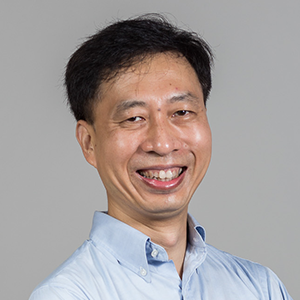
David Hsu is Provost's Chair Professor in the Department of Computer Science at the National University of Singapore (NUS) School of Computing, where he founded and directs the NUS Artificial Intelligence Laboratory (NUSAIL) and leads the Smart Systems Institute. His academic leadership includes chairing major conferences such as Robotics: Science & Systems (2015) and IEEE ICRA (2016), alongside editorial roles in IEEE Transactions on Robotics and the Journal of Artificial Intelligence Research. He earned a B.Sc. in Computer Science & Mathematics from the University of British Columbia and a Ph.D. in Computer Science from Stanford University. His research spans robotics, AI, and computational biology, with recent focus on robot planning under uncertainty and human-robot collaboration. Current work integrates machine learning with decision-theoretic planning to enable robust human-robot co-existence in unstructured environments. Analysis of his 2023-2025 publications reveals dominant trends in deformable object manipulation (e.g., clothes handling via semantic keypoints), open-world navigation using scene graphs, and LLM-driven multi-agent reasoning for complex tasks. Key innovations include perspective-aware visual grounding for human-centric interaction and functional object arrangement through compositional generative models, reflecting a strong emphasis on real-world applicability. His scientific contributions have earned prestigious recognition: IJCAI-JAIR Best Paper Prize (2022) for foundational AI research Robotics: Science & Systems Test of Time Award (2021) IEEE Fellowship (2018) for contributions to robotic planning RSS Best Systems Paper Award (2017) RoboCup Best Paper Award at IROS (2015) Humanitarian Robotics Award at ICRA (2015) As director of the Adaptive Computing Laboratory, Hsu drives research on fundamental computational frameworks for human-robot interaction. The lab's work on uncertainty-aware decision-making has secured significant research funding through grants from Singapore's National Research Foundation and industry partnerships with robotics firms. While specific student names aren't publicized, his leadership in the NUSAIL indicates extensive mentorship of doctoral candidates in AI and robotics.
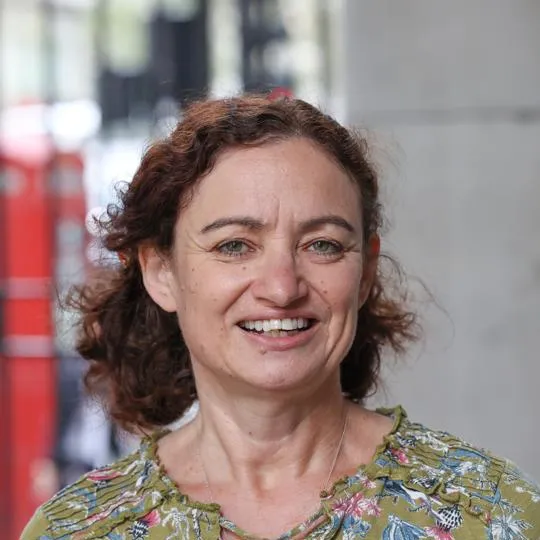
Dr Ellen Adams is a Reader in Classical Archaeology and Liberal Arts at King’s College London, affiliated with the Departments of Classics and Interdisciplinary Humanities. She holds a PhD from the University of Cambridge (2004) and has conducted archaeological fieldwork across Europe. Her research focuses on Minoan Crete, disability studies in classical contexts, and museum accessibility for sensory-impaired audiences. She co-organizes the ICS Mycenaean Seminars and founded the Museum Access Network for Sensory Impairments (MANSIL) in 2018. Her work bridges archaeology and modern accessibility, emphasizing audio description, touch tours, and British Sign Language in museums. Recent projects include Disability Studies and the Classical Body (Routledge, 2021) and collaborations with institutions like the British Museum and the Courtauld Gallery. She teaches Greek archaeology, museum studies, and interdisciplinary modules in global cultures. Adams has appeared on BBC Radio discussing Minoan civilization and classical reception. Her research projects include Making Sense of Visual Art Through a Visual Language (BSL) and Anosmia in Culture and History . She actively curates public engagement events, such as BSL storytelling in Holyrood Park and creative writing competitions for blind/visually impaired audiences.
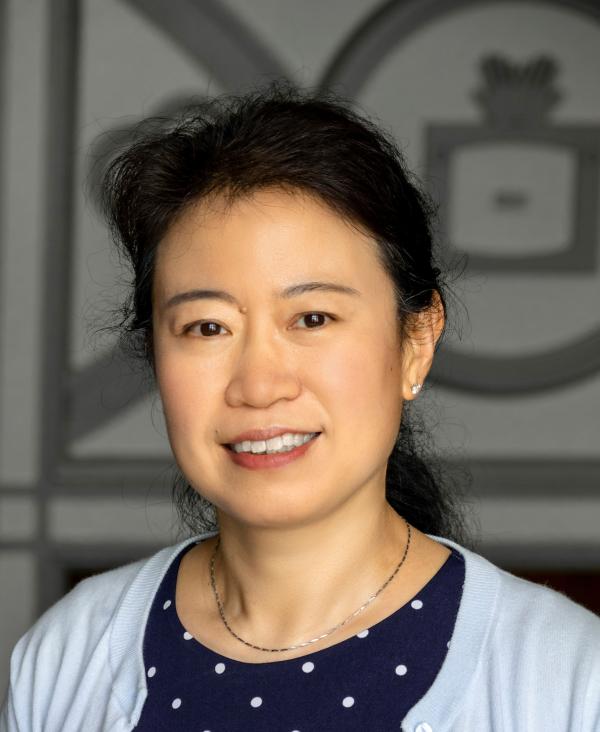
YingLi Tian is a CUNY Distinguished Professor in the Department of Electrical Engineering at The City University of New York. Their work focuses on computer vision, machine learning, and medical imaging. Key areas include sign language recognition, medical image analysis, and AI-driven healthcare solutions. Research Interests: Artificial Intelligence applications in healthcare 3D point cloud and scene understanding Self-supervised learning and domain adaptation Sign language recognition systems Medical imaging segmentation and diagnosis Human-robot interaction and assistive technologies Notable Projects: Developed AI systems for American Sign Language recognition using RGB-D data Pioneered self-supervised feature learning techniques in medical imaging Created virtual contrast enhancement tools for CT scans Advanced sea ice motion prediction using deep learning Labs & Teams: Leads the Media and Information Technology Lab at CCNY, focusing on multimodal AI and healthcare technology innovations.
Andrzej Majkowski is an Associate Professor at the Institute of the Theory of Electrical Engineering, Measurement and Information Systems, Faculty of Electrical Engineering, Warsaw University of Technology. His career spans over two decades of research in biomedical engineering, focusing on brain-computer interfaces, signal processing, and emotion recognition. Active in both teaching and research, he contributes to advancing methodologies in electrophysiological signal analysis. Warsaw University of Technology Institute of the Theory of Electrical Engineering, Measurement and Information Systems Faculty of Electrical Engineering Specializing in biomedical engineering , Majkowski's research bridges control systems and information technologies with neuroscience applications. His work explores brain-computer interfaces , EEG/EMG signal processing , and emotion recognition using multimodal physiological data. Recent studies focus on deep learning architectures for artifact removal and classification tasks. Recent publications highlight trends in CNN-LSTM hybrid models for signal denoising, convolutional networks for seizure detection, and machine learning applications in visual evoked potential analysis. His work spans both clinical applications (epilepsy monitoring) and human-computer interaction (emotion recognition, sign language detection). With over 98 documented publications and significant bibliometric indicators (h-index 13 in Scopus), Majkowski has supervised 95 promoted theses. His research includes one funded project and collaborations in biomedical instrumentation, though specific award details remain unspecified in available records.
M. Tamer Özsu is a University Professor of Computer Science at the David R. Cheriton School of Computer Science, University of Waterloo, where he holds a Cheriton Faculty Fellowship. He also serves as a Distinguished Visiting Professor at Tsinghua University and is the Founding Director of Waterloo-Huawei Joint Innovation Laboratory since 2018. His extensive contributions to computing have earned him numerous prestigious awards including the 2024 ACM Presidential Award for long-standing and significant contributions to the computing field. Professor Özsu's research focuses on data engineering aspects of data science, particularly addressing data management issues with two main foci: management of non-traditional data and large-scale distributed data management. He is renowned for his seminal book "Principles of Distributed Database Systems" (co-authored with Patrick Valduriez), now in its fourth edition, and the "Encyclopedia of Database Systems" (co-edited with Ling Liu), in its second edition. His work bridges theoretical foundations with practical system implementations, targeting grand societal challenges through computational approaches. His recent publications reveal a strong trend toward graph analytics, streaming data processing, and the integration of large language models with vector data management. The research shows increasing focus on GPU-accelerated graph processing, RDF query optimization, and multimodal data analysis, reflecting the evolution of data management challenges in the era of big data and AI. His work continues to address fundamental challenges in distributed data systems while adapting to emerging technologies and application domains. Scientific Awards and Fellowships ACM Presidential Award (2024) IEEE TCDE Education Award (2024) IEEE Innovation in Societal Infrastructure Award (2022) CS Can | Info Can Lifetime Achievement Award (2018/2019) ACM SIGMOD Test-of-Time Award (2015) ACM SIGMOD Contributions Award (2006) The Ohio State University College of Engineering Distinguished Alumnus Award (2008) Fellow of the Royal Society of Canada Fellow of the American Association for the Advancement of Science (AAAS) Life Fellow of the Association for Computing Machinery (ACM) Life Fellow of the Institute of Electrical and Electronics Engineers (IEEE) Fellow of the Asia-Pacific Artificial Intelligence Association (AAIA) Elected member of the Science Academy, Türkiye Professor Özsu has been deeply involved in academic leadership and community building. As Founding Editor-in-Chief of ACM Books (2013-2019), he launched a series that by 2019 had published 28 major books with another 30 under contract. His service to ACM, particularly through SIGMOD, has been exemplary and widely recognized. He directs the Waterloo-Huawei Joint Innovation Laboratory, which focuses on cutting-edge research in data management and distributed systems, fostering strong industry-academia collaboration.
Oisin Mac Aodha is a Reader (Associate Professor) in Machine Learning at the School of Informatics, University of Edinburgh. He is also an ELLIS Scholar and founder of the Turing interest group on biodiversity monitoring and forecasting, having previously served as a Turing Fellow from 2021-2025. Mac Aodha completed his undergraduate degree in electronic engineering from the University of Galway in Ireland, followed by his MSc and PhD at University College London (UCL). His academic journey includes postdoctoral positions at UCL (2013-2016) working with Prof. Gabriel Brostow and Prof. Kate Jones, and at Caltech (2016-2019) in Prof. Pietro Perona's Computational Vision Lab as part of the Visipedia team. His research centers on computer vision and machine learning with emphasis on 3D understanding, human-in-the-loop methods, and AI for conservation and biodiversity monitoring. He has made significant contributions to monocular depth estimation (including the influential Monodepth2 paper), fine-grained visual categorization, and biodiversity monitoring systems. His work bridges theoretical machine learning with practical ecological applications, developing tools for species identification, range estimation, and conservation efforts. Recent publications reveal a strong trend toward ecological applications while maintaining fundamental contributions to 3D vision and representation learning. His major scientific achievements include: Turing Fellow (2021-2025) ELLIS Scholar Founder of the Turing interest group on biodiversity monitoring and forecasting Co-organizer of the Fine-Grained Visual Categorization (FGVC) workshop series at major vision conferences Mac Aodha advises multiple PhD students and postdocs working on computer vision for biodiversity monitoring, 3D understanding, and human-in-the-loop learning. His team has developed practical tools like Whombat (an open-source annotation tool for bioacoustics) and contributed to field-deployed biodiversity monitoring systems. He has served as Area Chair for top conferences including NeurIPS, CVPR, ICCV, and ICML, demonstrating his standing in the computer vision community. His research group collaborates extensively with ecologists at University College London, particularly with Prof. Kate Jones' team, bridging machine learning expertise with ecological domain knowledge. The Vision at Edinburgh group he contributes to focuses on developing practical AI tools that address real-world conservation challenges while advancing fundamental computer vision research.
Professor Byung S. Lee is a distinguished faculty member in the Department of Computer Science at the University of Vermont's College of Engineering and Mathematical Sciences. He joined UVM in 1999 and continues to be actively engaged in teaching, research, and service. His office is located in Innovation Hall at the Burlington campus, where he maintains regular office hours and oversees his research lab. Professor Lee holds a Ph.D. from Stanford University, an MS from Korea Advanced Institute of Science and Technology, and a BS from Seoul National University. His educational background provided the foundation for his extensive career in computer science research and education. Professor Lee's research spans multiple domains within computer science, with a particular focus on database systems, data mining, and data science. His work increasingly integrates machine learning techniques with traditional database approaches, especially in the analysis of time series data. He has made significant contributions to graph theory applications, anomaly detection methods, and environmental data analysis. His research often bridges computer science with practical applications in healthcare, environmental science, transportation, and astrophysics through interdisciplinary collaborations. An analysis of his recent publications reveals a strong trend toward time series analysis and anomaly detection, particularly applied to environmental monitoring and healthcare data. His work demonstrates a consistent evolution from foundational database research to more applied machine learning approaches, with increasing emphasis on real-world problem solving across multiple scientific domains. Professor Lee has served as primary advisor for numerous graduate students across multiple cohorts, including PhD candidates, Master's students, and postdoctoral researchers. His advising portfolio reflects the breadth of his research interests, with students working on topics ranging from graph neural networks to medical informatics applications. He has also been actively involved in professional service, serving on program committees for major conferences including SAC, PAKDD, DASFAA, and CIKM. Professor Lee leads a vibrant research laboratory that focuses on cutting-edge data science methodologies and their applications. His team collaborates extensively with researchers in environmental science, hydrology, and healthcare, demonstrating the interdisciplinary nature of modern data science research. The lab maintains active projects in time series analysis, graph analytics, and environmental monitoring systems, often working with large-scale datasets from real-world applications.
Cristina Baus Marquez is a Research Fellow at the University of Barcelona's Faculty of Psychology, affiliated with the Department of Cognition, Development, and Educational Psychology. She holds a Ramon y Cajal Research Fellowship (2020–2025) and leads research in the Brain Dynamics and Structure of Human Cognition (BraCo) group. Her work focuses on cognitive neuroscience, bilingualism, and language processing, with a particular emphasis on electrophysiological and behavioral studies of language production, perception, and social cognition. Education: Bachelor's Degree (Llicenciatura) in Psychology, University of Barcelona (2003) PhD in Cognitive Neuroscience and Specific Educational Needs, Universidad de La Laguna (2010) Research Interests include the neural mechanisms underlying bilingual speech production, cross-modal language interactions, and how linguistic experience shapes perception of faces and voices. She employs EEG/ERP techniques to study self-monitoring processes in bilinguals and investigates the role of iconicity in sign language production. Key Projects: Ramón y Cajal Fellowship (2020–2025): Investigates verbal interactions and learning mechanisms Fundación BIAL Grant (2017–2019): Explored electrophysiology of bimodal bilingualism AGAUR Grant (2018–2020): Studied verbal interactions' cognitive mechanisms Labs/Teams: Active member of the BraCo research group, collaborating internationally on multilingualism and cognitive neuroscience projects.
Changjian Li is an Assistant Professor in the School of Informatics at the University of Edinburgh. He leads the GraphViX Group (Graphics, Vision and X) and is a member of the Institute of Perception, Action and Behaviour (IPAB). His research spans computer graphics, computer vision, and human-computer interaction with a focus on 3D generation and analysis. Education: Bachelor's Degree from Shandong University (2014) Ph.D. from the University of Hong Kong (2019) under Prof. Wenping Wang Postdoc at University College London (UCL) with Prof. Niloy Mitra Starting Researcher position at Inria with Dr. Adrien Bousseau Research Interests: Changjian's research focuses on sketch-based 3D modeling, CAD modeling, point cloud processing, and medical imaging applications. He develops systems that bridge intuitive sketching with precise CAD workflows, enhances 3D animation pipelines, and applies neural methods to sparse medical data reconstruction. Scientific Recognition: Best Paper Honorable Mention Award (MICCAI 2021) CADTalk selected as Highlight (CVPR 2024 top 10%) ACM SIGGRAPH Asia 2018 cover image selection ACM SIGGRAPH Asia 2015 technical paper highlight CVPR 2019 poster highlighted in 'Computer Vision News' Advising & Collaborations: He mentors postdocs and PhD students including Duolikun Danier, Haocheng Yuan, Ankan Bhunia, and Lei Zhong. Former advisees include Salvatore Esposito (now at Edinburgh), Guangshun Wei (Shandong University), and Mingjun Yang (University of Melbourne). Collaborates with Oisin Mac Aodha, Hakan Bilen, and Niloy Mitra. Professional Service: Currently serves as Associate Editor for IEEE TVCG and participates in program committees for SIGGRAPH Asia, SIGGRAPH, EuroGraphics, and Geometry Design and Computing (GDC) conferences.
Dr. Tatsuya Mori is a Professor at the Department of Computer Science and Communication Engineering , Faculty of Science and Engineering, Waseda University . He also holds visiting researcher positions at RIKEN Center for Advanced Intelligence Project (since 2018) and National Institute of Information and Communications Technology (since 2019). Education: Ph.D. in Information Science (2005), Waseda University Research Interests: Spanning information security and privacy across emerging technologies like autonomous driving , AI , 3D sensing , VR , biometric measurement , and Web3 . His work focuses on offensive security and interdisciplinary research , including physical-layer attacks on sensors and behavioral studies on phishing detection. Scientific Awards: Recipient of multiple prestigious awards, including the Distinguished Paper Award Runners-Up at IEEE EuroS&P 2024 , IPSJ Outstanding Paper Award 2024 , and CSS2024 Concept Research Prize . His research has been recognized in top conferences like USENIX Security , NDSS , and ACM CCS . Professional Leadership: Active in academic governance as Chief Investigator for NISC Working Groups and Committee Member for JST Research Areas . He serves on program committees for NDSS , IMC , and ACM CCS .
Gül Varol is a permanent researcher at École des Ponts ParisTech's IMAGINE group, an ELLIS Scholar, and Guest Scientist at Max Planck Institute. She holds a PhD from Inria Paris/ENS with awards from ELLIS and AFRIF. Her academic service includes Program Chair at ECCV'24 and Area Chair roles at major conferences. Current affiliations: IMAGINE group (École des Ponts ParisTech), Max Planck Institute Previous roles: Postdoctoral researcher at University of Oxford Her research focuses on vision-language applications, particularly in 3D human motion synthesis, sign language technology, and audio description generation. Key techniques include text-conditioned diffusion models, temporal context modeling, and synthetic data utilization. Scientific contributions recognized through: Google Research Scholar award (2023) ELLIS PhD Award (2020) AFRIF PhD thesis award (2020) Best application paper at ACCV'20 Recent publications demonstrate expertise in: Text-driven 3D motion editing (MotionFix, 2024) Cross-dataset generalization studies (TMR++, 2024) Temporal action composition frameworks (TEACH, 2022) Sign language dense annotation methods (BOBSL, 2022) Zero-shot audio description generation (AutoAD-Zero, 2024) She actively contributes to dataset development including BOBSL (British Sign Language corpus) and SURREACT synthetic action dataset, while pioneering new evaluation metrics for audio description quality and motion retrieval benchmarks.