
Prof. Dr. Gülşen Eryiğit is a Professor at Istanbul Technical University within the Faculty of Computer and Informatics , Department of Artificial Intelligence and Data Engineering . She founded and directs the ITU Natural Language Processing Group , Turkey's leading team in Turkish-language NLP, and serves as Senior Action Editor for ACL RR , Director of ITU TÖMER (Turkish Language Teaching Center), and Co-Chair of the EU UniDive Cost Action WG3. Education: PhD in Computer Engineering from ITU (2007), MSc and BSc from ITU and Marmara University Research: Focuses on Natural Language Processing for Turkish, including dependency parsing , coreference resolution , multiword expressions , and language education technology Her recent work involves multilingual transfer learning , LLM applications for Turkish text simplification, and gamification for morphology education. She has received prestigious awards like the Siemens Excellence Award and TÜBİTAK's Above Threshold Award . Her research has produced 65+ publications and 29+ projects funded by EU, TÜBİTAK, and industry partners. Scientific Awards: Siemens Excellence Award (2007) Above Threshold Award (TÜBİTAK, 2015) Certificate of Appreciation (EU 7th Framework, 2012) Thank You Plaque (ITU, 2017) The ITU NLP Group under her leadership has developed Turkey's first licensed NLP software exported internationally. She collaborates with European institutions through COST actions and participates in ACL, CoNLL, and LREC conferences. Her lab focuses on language technology for Turkish , including sign language processing and social media normalization.
جستجوی استاد راهنمای دانشگاهی
برای مسیر پژوهشیتان، استاد راهنما، استاد دانشگاه و پژوهشگر مناسب را پیدا کنید و با آنها ارتباط بگیرید.
نمایش ۱۶-۳۰ از ۱٬۹۳۰ استاد راهنما
اطلاعات پروفایلها از صفحات عمومی دانشگاهها گرفته شده و ممکن است بهروز نباشد.
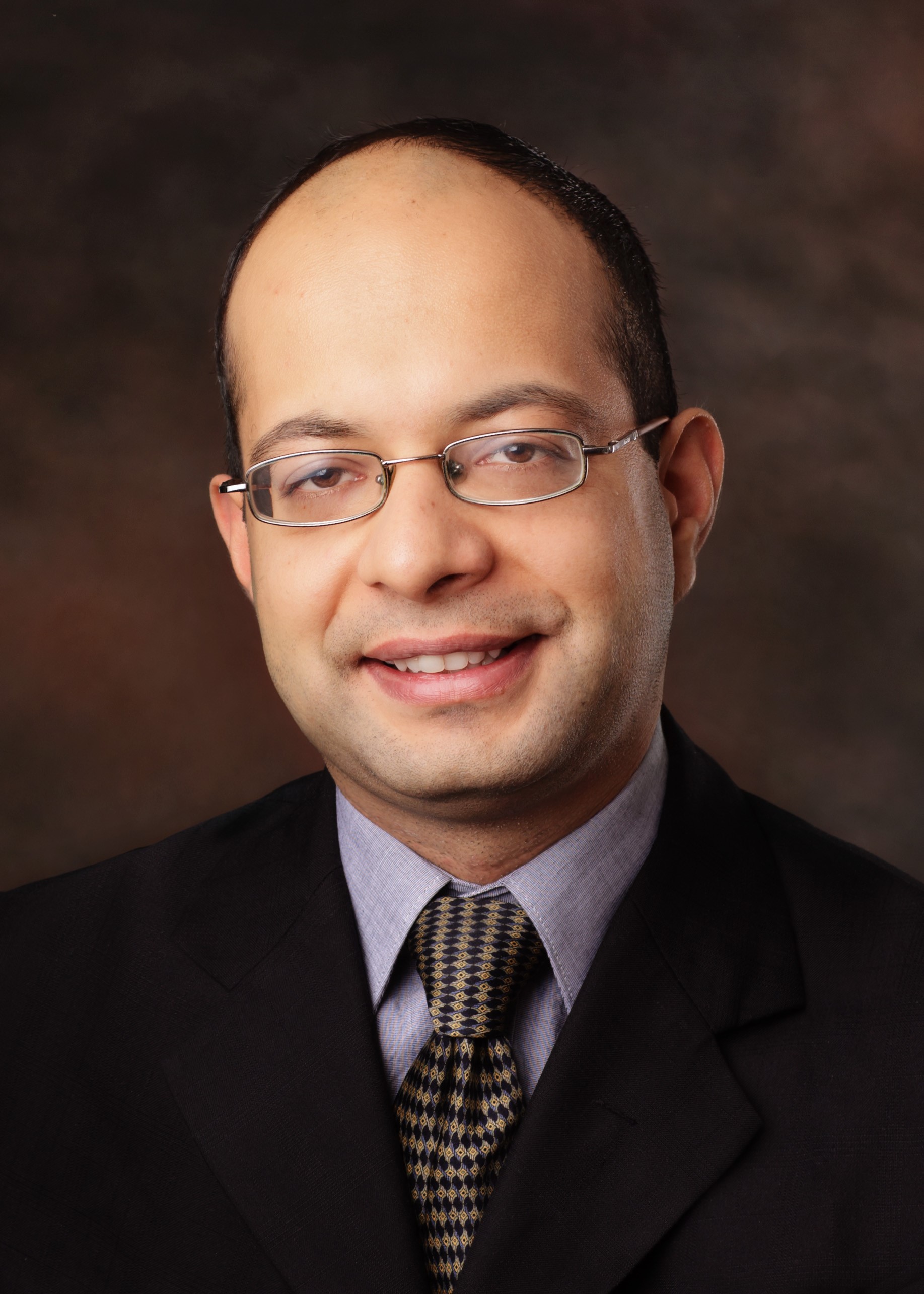
Sumeet Kumar Gupta is an Associate Professor in the Department of Electrical and Computer Engineering at Purdue University. His academic career spans from his current role to a prior Assistant Professorship at Pennsylvania State University (2014-2017) and an engineering position at Qualcomm Inc. (2012-2014). He holds a PhD in Electrical and Computer Engineering from Purdue University (2012), an M.S. from the same institution (2008), and a B.Tech in Electrical Engineering from IIT Delhi (2006). B.Tech, Electrical Engineering, IIT Delhi (2006) M.S., Electrical and Computer Engineering, Purdue University (2008) PhD, Electrical and Computer Engineering, Purdue University (2012) Dr. Gupta's research focuses on neuromorphic computing, low power variation-aware VLSI design in emerging nanotechnologies, device-circuit co-design, and nano-scale device modeling/simulations. His work addresses challenges in ferroelectric materials, crossbar arrays for deep neural networks, and energy-efficient AI hardware. Recent publications (2025-2024) highlight trends in: Ferroelectric HfO2/HZO thin films Compute-in-memory architectures Variability/stochasticity analysis Machine learning for device optimization Interconnect resistance/temperature effects AI hardware fault tolerance Scientific Awards & Recognitions: DARPA Young Faculty Award (2016) Early Career Professorship, Penn State (2014) 6th TSMC Outstanding Student Research Bronze Award (2012) Magoon Award (Purdue) Outstanding Teaching Assistant Award (Purdue, 2007) Intel PhD Fellowship (2009) His professional journey includes academic appointments at Purdue University (2020-present, Associate Professor) and Pennsylvania State University (2014-2017, Assistant Professor) after industry experience at Qualcomm Inc. (2012-2014). He maintains IEEE and EDS membership while publishing over 100 refereed works.
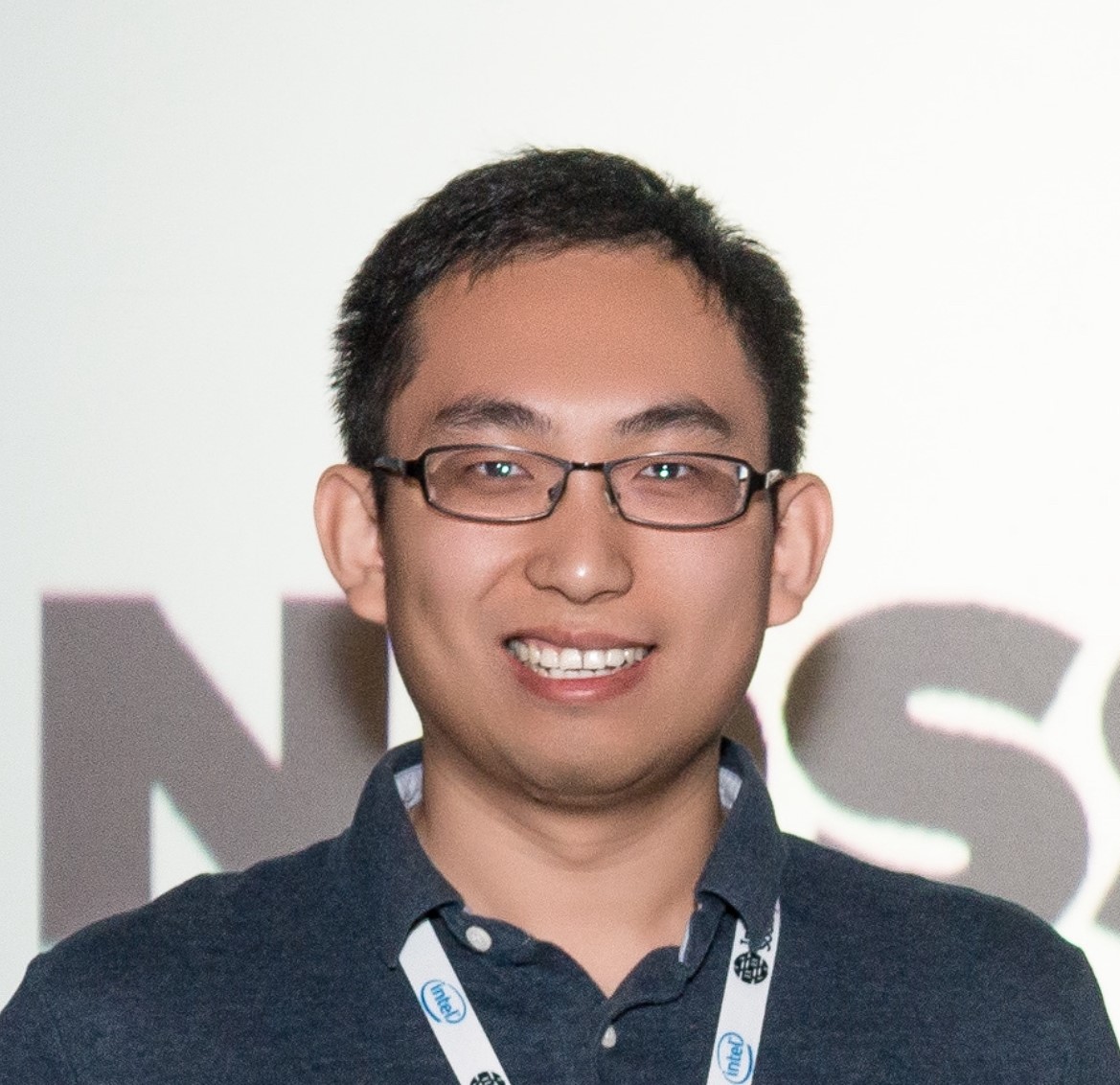
Qi Alfred Chenمشاهده پروفایل
استادیار
- Network security
- Systems security
- IoT security
- +۶ مورد دیگر
Qi Alfred Chen is an Assistant Professor in the Department of Computer Science at the University of California, Irvine (UCI), within the Donald Bren School of Information and Computer Sciences. He also holds affiliations with the Department of Electrical Engineering and Computer Science (EECS), the Institute of Transportation Studies at UC Irvine (ITS-Irvine), the Center for Embedded and Cyber-physical Systems (CECS), the Institute for Software Research (ISR), and the UC Irvine Cybersecurity Policy & Research Institute (CPRI). His research focuses on network and systems security, with particular emphasis on autonomous vehicle and IoT security. Dr. Chen received his Ph.D. from the University of Michigan in 2018. His educational background has prepared him for his current research in security of critical computer systems. His work bridges theoretical security principles with practical implementations in real-world systems. Chen's research interests center on network and systems security , with a major focus on smart systems and IoT security , particularly in transportation and autonomous vehicle systems . His work addresses security challenges through systematic problem analysis and mitigation, discovering and mitigating security problems in next-generation transportation systems, smartphone OSes, network protocols, DNS, GUI systems, and access control systems. His research has high impact in both academic and industry contexts, with over 10 top-tier conference papers, a DHS US-CERT alert, multiple CVEs, and coverage in major news media like Fortune and BBC News. His publication record shows a clear evolution from foundational work on network protocols and smartphone security toward increasingly sophisticated security analyses of autonomous vehicle systems and AI-powered transportation technologies. The research trajectory demonstrates growing technical sophistication and real-world impact, with recent work focusing on physical-world adversarial attacks against autonomous driving perception systems, LiDAR spoofing, and security of multi-sensor fusion in autonomous vehicles. NSF CAREER Award (2022) on securing the AI stack in emerging autonomous and connected CPSs Chancellor's Award for Excellence in Undergraduate Research Mentorship, UC Irvine (2021) 5th place nation-wide at National CCDC competition (2021, as faculty advisor) 1st place (Gold Medal) at CCDC Western Regional competition (2021) ProQuest Distinguished Dissertation Award, University of Michigan (2019) Dr. Chen has mentored numerous successful students, including PhD candidates and undergraduates who have gone on to positions at major tech companies like Meta, Uber, Amazon, and Intel. His research group has secured significant funding, including an NSF CAREER award, and has made substantial contributions to the field through high-impact publications and vulnerability disclosures. He is also the co-founder of the ISOC VehicleSec Symposium and has organized the AutoDriving CTF contest at DEF CON. Chen leads the AV & IoAT Security Research Group at UCI, focusing on security challenges in autonomous vehicles and the broader Internet of Autonomous Things. His team has developed numerous attack demonstrations and security analyses that have received significant media attention and influenced industry practices. The group maintains an active YouTube channel showcasing their security research.

Allison Koeneckeمشاهده پروفایل
استادیار
Allison Koenecke is an Assistant Professor of Information Science at Cornell Tech and a field faculty member in Computer Science at Cornell University. Previously, she was a postdoctoral researcher at Microsoft Research New England and completed her PhD at Stanford University’s Institute for Computational & Mathematical Engineering. Her research focuses on algorithmic fairness, computational social science, and causal inference in public health, addressing disparities in automated systems like speech recognition and policy decision-making. Education : PhD, Stanford Institute for Computational & Mathematical Engineering MA/MS, Stanford University BA/BS, Massachusetts Institute of Technology Research Interests : Dr. Koenecke’s work bridges economics and computer science, emphasizing equity in AI systems. Key areas include: Algorithmic bias in speech recognition (e.g., racial disparities in voice assistants) Fairness in policy tools like environmental justice data systems Causal analysis in public health interventions Ethical implications of large language models in education Media & Impact : Her research has been featured in outlets like New York Times , Science , and Scientific American . Notable studies include exposing racial gaps in speech-to-text systems and advocating for inclusive dataset development. She also explores societal impacts of AI in education and governance. Awards : Sloan Research Fellow in Computer Science Forbes 30 Under 30 in Science NSF Awards Cornell CIS Teaching Excellence Award (2024) Teaching & Outreach : She teaches courses like Designing Fair Algorithms and Data Science for Global Development , emphasizing interdisciplinary collaboration. Her PhD Professionalization course addresses hidden curricula in academia. She advises on AI ethics for nonprofits, tech companies, and government agencies.
Hyunghoon Choمشاهده پروفایل
استادیار
- Biomedical Data Privacy
- Genomics
- Machine Learning
- +۳ مورد دیگر
Hyunghoon Cho is an Assistant Professor at Yale School of Medicine in the Department of Biomedical Informatics & Data Science, with a secondary appointment in the Department of Computer Science. He received his PhD in Electrical Engineering and Computer Science from MIT (2019) and MS/BS in Computer Science from Stanford University (2013). His research focuses on computational challenges in biomedical data privacy, single-cell genomics, and network biology. Assistant Professor (Primary): Biomedical Informatics & Data Science Assistant Professor (Secondary): Computer Science Appointments: Yale School of Medicine | Broad Institute (Schmidt Fellow) Research Themes: Privacy-Enhancing Technologies for genomic and health data Scalable AI/ML tools for omics data analysis Structured biological modeling for system-level discovery His work includes secure GWAS, transcriptomic privacy assessment, and sfkit - a federated genomic analysis toolkit. He received the NIH Director's Early Independence Award and leads NSF-funded projects on confidential genome analytics. Awards: NIH Director's Early Independence Award Lab Members: Haris Smajlović (Postdoc), Vincent Angelo (CBB MS), Denis Loginov (Senior Software Engineer), Lucy Zheng (CBB PhD)
Chandranath Adakمشاهده پروفایل
استادیار
Dr. Chandranath Adak is an Assistant Professor at the Department of Computer Science and Engineering, Indian Institute of Technology Patna (IIT Patna), and concurrently serves as a Visiting Fellow at the School of Computer Science, University of Technology Sydney (UTS), Australia. He holds a Ph.D. in Analytics from UTS (2019) and previously served as an Assistant Professor at Indian Institute of Information Technology Lucknow (IIITL) and the Centre for Data Science at JIS Institute of Advanced Studies, Kolkata. Education: Ph.D. (Analytics), University of Technology Sydney (2019) M.Tech., Computer Science and Engineering, University of Kalyani (2014) B.Tech., Computer Science and Engineering, West Bengal University of Technology (2012) Research Interests: His work spans Computer Vision, Deep Learning, Reinforcement Learning, Document Image Analysis, and AI-driven solutions for healthcare, forensics, and industrial automation. He has pioneered methods in biomarker detection using electrochemical sensors combined with ML models, handwriting analysis for educational and forensic applications, and anomaly detection in industrial systems. His research bridges theoretical advances with real-world applications, such as medical diagnostics and quality control systems. Publications: His recent work includes innovations in biosensor-based medical diagnostics, handwriting evaluation systems, and transformer networks for historical document analysis. These contributions reflect a focus on interdisciplinary applications of AI across healthcare, cultural heritage preservation, and industrial automation. Awards: Start-up Research Grant, SERB, India (2022) Dr. Kalam Doctoral Scholarship, UTS (2018) IEEE CIS Graduate Student Research Grant (2017) Senior Member, IEEE (2024) Teaching & Supervision: Taught courses at UTS including 'Introduction to Data Analytics' and supervised research in machine learning and computer vision. His mentorship emphasizes hands-on experience with AI tools and real-world problem-solving. Labs & Teams: Engaged in collaborative projects at UTS's CIBCI Centre and Griffith University's IIIS, focusing on computational intelligence and sensor-driven AI systems.

- Linguistics
- Morphosyntax
- Phonology
- +۱۳ مورد دیگر
Jonathan David Bobaljik is a leading linguist whose research spans formal syntax, phonology, and the documentation of endangered languages, particularly Itelmen. He is actively involved in multiple international research collaborations and regularly presents at major linguistic conferences across Europe and North America. His work is published in top journals such as Natural Language and Linguistic Theory and Language . His research interests lie at the intersection of theoretical and descriptive linguistics. He investigates universal patterns in morphology and syntax, including suppletion, vowel harmony, ergativity, and control structures, often using data from understudied languages like Itelmen. His work combines rigorous formal analysis with deep empirical grounding in language documentation. The recent publications reflect a strong trend toward integrating typological diversity with formal theory. Key areas include morphosyntactic universals (e.g., suppletion in pronouns), information structure in verb-final languages, and the phonology of ejective consonants. There is also a growing emphasis on sociolinguistic and community-based aspects, as seen in collaborative work on language revitalization and the social life of the Itelmen language. He has received recognition through numerous scholarly publications and invited talks, though specific awards are not listed in the provided text. His collaborative projects suggest active grant involvement, particularly in language documentation and cross-linguistic typology. Bobaljik plays a central role in the Itelmen documentation and revitalization project, contributing to the creation of a dictionary app, the publication of historical manuscripts, and public exhibits on Siberian Indigenous knowledge. He collaborates with a team including David Koester, Chikako Ono, Tatiana Degai, and Maria Pupynina.
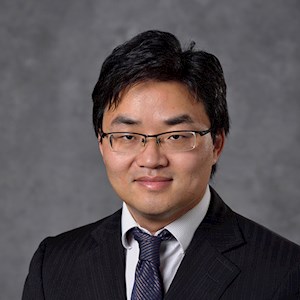
Jiliang Tang is an MSU Foundation Professor in the Department of Computer Science and Engineering at Michigan State University (MSU), part of the College of Engineering. He holds a PhD from Arizona State University (2015) and previously worked as a research scientist at Yahoo Research. His research focuses on graph machine learning, trustworthy AI, and applications in education and biology. He has received numerous awards, including the 2022 AI's 10 to Watch, IAPR J.K. Aggarwal Award, and NSF CAREER Award. Education: PhD in Computer Science, Arizona State University, 2015 (Advisor: Huan Liu) Research Interests: Graph Neural Networks (GNNs) and Deep Learning on Graphs Trustworthy AI: Safety, Robustness, and Fairness AI+X Applications: Education Technology and Biological Data Analysis His work bridges theoretical advancements and practical applications, with contributions to graph representation learning, privacy in generative models, and educational AI systems. Awards & Recognition: Over 8 best paper awards (or runner-ups) Rock Star Award from Association of Chinese Scholars in Computing Extensive media coverage for innovations in AI education and biology Grants & Projects: NSF CAREER Award (2019) for research on signed networks Co-PI on a $1.7M grant for 5G research Leadership in projects like DSE Lab and Data Science initiatives Labs & Teams: Directs the Data Science and Engineering (DSE) Lab at MSU, focusing on advancing AI for real-world challenges. The lab collaborates with industry leaders and publishes widely in top conferences (e.g., KDD, SIGIR, ACL).
Prof. Bryan Ford leads the Decentralized/Distributed Systems (DEDIS) lab at EPFL. He focuses on secure decentralized systems, including blockchain technology, privacy, and systems security. He earned his Ph.D. from MIT and held faculty positions at Yale University and EPFL. His work spans distributed consensus protocols, peer-to-peer networking, and privacy-preserving systems. Key projects include QuePaxa (timeout-free consensus), UIA (global connectivity for mobile devices), and MedCo (secure healthcare data sharing). He advises numerous PhD students and contributes to open-source projects like Bitcoin collective signing and privacy networks like Riffle. Education: Ph.D., MIT; Postdoctoral work at Yale Research interests include blockchain scalability, consensus algorithms, and cryptographic privacy. His lab develops systems like TRIP for coercion-resistant voting and F3B to mitigate blockchain front-running. His work on NAT traversal and peer-to-peer protocols (e.g., STUN/ICE) remains foundational in network architecture. He emphasizes practical, auditable security solutions such as CertiKOS and atomic cross-chain transactions (Atom). Notable contributions: CoSi (collective signing), OmniLedger (sharded blockchain), and privacy-preserving protocols like PURBs (Protected Unsealable Recursive Boxes). His lab collaborates with Swiss Post to audit e-voting systems and designs democratic cryptocurrencies like PoPCoin.
Professor Kay O'Halloran serves as Chair Professor and Head of Department of Communication and Media within the School of the Arts at the University of Liverpool since August 2019. She concurrently holds the position of Co-Director for the Digital Media and Society Institute (DMSI), demonstrating significant leadership across academic and research domains. Her career spans prestigious institutions including Curtin University (2013-2019) and National University of Singapore (1998-2013), where she directed the Multimodal Analysis Lab and served as Deputy Director of the Interactive & Digital Media Institute. PhD from Murdoch University (1996) Postdoctoral position at Martin Luther University (1997-1998) Visiting Distinguished Professor at Shanghai Jiaotong University (2017-2020) Professor O'Halloran's research focuses on multimodal discourse analysis, particularly the interaction of language with visual and mathematical resources. Her pioneering work in systemic functional multimodal discourse analysis (SF-MDA) has significantly impacted mathematics education and digital communication studies. Current research emphasizes digital tools for multimodal analysis and mixed methods approaches to big data analytics, addressing contemporary challenges in misinformation and public health communication. Her recent publications reveal strong thematic concentration in pandemic-related communication analysis, misinformation resistance mechanisms, and multimodal argumentation across social and cultural contexts. The 15 most recent articles demonstrate consistent application of multimodal frameworks to urgent societal issues including public health crises, political discourse, and digital literacy challenges. Founding editor of Routledge Studies in Multimodality book series (57+ volumes) Over 150 publications in leading international journals 50+ plenary/keynote presentations globally Competitive funding from National Research Foundation, MOE Singapore, US Air Force, ARC, NHMRC, and others Professor O'Halloran has directed interdisciplinary research teams comprising social scientists, computer scientists, and designers. Her leadership extends to developing commercial multimodal analysis software (Multimodal Analysis Image and Video) adopted internationally. Current projects include Eurovision 2023 wellbeing evaluation and COVID-19 misinformation immunity development, demonstrating continued relevance to contemporary societal challenges.
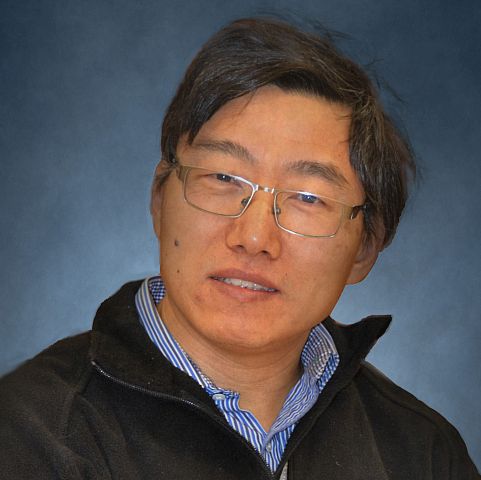
Qingguo Li is a Professor and Associate Head at the Department of Mechanical and Materials Engineering , Queen's University , and a member of the Ingenuity Labs Research Institute . He specializes in biomechanical system design, energy harvesting, wearable sensors, gait analysis, and load carriage systems. His research integrates robotics, biomedical engineering, and sensor technology to develop human-centric devices and mobility aids. Current Roles : Professor, Associate Head, Queen's University Research Institute : Ingenuity Labs Research Institute Lab : Bio-Mechatronics and Robotics Laboratory His work focuses on biomechanical energy harvesting , IMU-based motion analysis , and assistive device development . Key applications include stroke rehabilitation, gait monitoring, and wearable power generation systems. Articles span cable-driven robots , smart walkers , and 3D printing mechanisms , emphasizing human-robot interaction and dynamic modeling . The lab explores sensor calibration , adaptive control algorithms , and human movement optimization . Areas of impact include rehabilitation engineering , load carriage stability , wearable sensor accuracy , and assistive robotics . His team develops solutions for gait asymmetry detection , post-stroke mobility , and low-cost energy systems , leveraging machine learning and kinetic modeling .

Martin Willis Monroe is an Assistant Professor in the Department of Classics and Ancient History at the University of New Brunswick. His research focuses on the ancient Middle East, particularly cuneiform cultures, with an emphasis on the history of scholarly knowledge in Babylonian and Assyrian societies. He specializes in Mesopotamian astronomy and astrology, as well as quantitative approaches to historical data. Dr. Monroe holds a PhD in Assyriology from Brown University (2016), an MPhil and BA in Ancient Near Eastern Studies from the School of Oriental and African Studies (2008, 2007). Previously, he served as a postdoctoral fellow and research associate at the University of British Columbia (2016–2023). His current projects include the publication of his Hellenistic astrology research under contract with Brill, titled Celestial Schemata: A Series of Astrological Tables from Seleucid Babylonia , and his role as associate director of the Database of Religious History , a global initiative to quantitatively analyze religious and cultural data. He has contributed to excavations at the Neo-Assyrian site of Tušhan in southeastern Turkey and advocates for responsible qualitative-to-quantitative data conversion in historical scholarship. Dr. Monroe’s research bridges traditional philological approaches with digital humanities, focusing on topics such as cuneiform astral diagrams, the intersection of ‘scientific’ and ‘religious’ texts in antiquity, and the application of computational methods to undeciphered scripts. He teaches courses on ancient civilizations, Near Eastern history, and archaeology.
- English Linguistics
- Semiotics
- Postcolonial Theory
- +۵ مورد دیگر
Angela Reyes is Professor in the Department of English at Hunter College, City University of New York (CUNY), and Doctoral Faculty in Anthropology at the CUNY Graduate Center. She teaches courses on English linguistic structures, discourse theory, and linguistic anthropology, while serving on advisory boards for Hunter College's Asian American Studies Program and Mellon-Mays Undergraduate Fellowship Program. Education: PhD, University of Pennsylvania (2003) Her research focuses on semiotics, racialization, and coloniality, particularly examining language-personhood relationships in the U.S. and Philippines through three major ethnographic studies: Southeast Asian American youth videomaking (Philadelphia), Korean American fifth graders in a "cram school" (NYC), and Filipino college communities (Manila). She analyzes how elite linguistic registers and mixed-race discourses reflect colonial anxieties and modern aspirations. Key publications include Discourse Analysis Beyond the Speech Event (2021, awarded Edward Sapir Book Prize) and work in The Oxford Handbook of Language and Race (2020). Awards include Advanced Research Collaborative Distinguished Fellowship (2016), Spencer Foundation Postdoctoral Fellowship (2009-2010), Woodrow Wilson Career Enhancement Fellowship (2006-2007), and Ford Foundation Dissertation Fellowship (2002-2003). Scientific Awards: Advanced Research Collaborative Distinguished Fellowship (2016) Spencer Foundation Postdoctoral Fellowship (2009-2010) Woodrow Wilson Career Enhancement Fellowship (2006-2007) Ford Foundation Dissertation Fellowship (2002-2003) Edward Sapir Book Prize (2016) Her work bridges linguistic anthropology with English studies, focusing on how language mediates colonial histories, social media dynamics, and academic institutions. She employs ethnographic, archival, and new media methodologies to trace discursive patterns across time and space.
Cecilia O. Alm is a Professor in the Department of Psychology within the College of Liberal Arts at Rochester Institute of Technology (RIT), where she serves as the Artificial Intelligence Program Director. She holds multiple leadership roles including Director of the Center for Human-aware AI and Director of the Computational Linguistics and Speech Processing Lab (CLaSP). Her institutional affiliations span the School of Information, Ph.D. Programs in Cognitive Science and Computing and Information Sciences, Department of Computer Science, and MS in Data Science program. Dr. Alm earned her Ph.D. from the University of Illinois at Urbana-Champaign. Her research focuses on human-centered artificial intelligence with particular emphasis on linguistic and multimodal sensing, affective computing, and natural language processing. She investigates how AI systems can better understand and respond to human communication through multimodal dialogue processing, with applications in accessibility, education, and healthcare. Her recent publications demonstrate a strong trend toward developing inclusive AI systems, particularly through projects addressing Deaf community needs (MULTICOLLAB-ASL), subtle emotion recognition (FUSE corpus), and bias mitigation in NLP. The work consistently integrates multimodal data streams (speech, gaze, gesture) to create more responsive human-AI interaction frameworks. Current research directions emphasize diversity in AI education, visual prosody in sign languages, and human-in-the-loop AI development. Dr. Alm leads several significant NSF-funded initiatives including the AWARE-AI program, IRES AI-PROWIL international research experience, and collaborative projects with Gallaudet University focused on Deaf scientist-centered AI research. She has secured over $2.5 million in external funding for her work on human-aware AI systems. She directs the CLaSP lab which provides research opportunities for PhD, MS, and undergraduate students, with graduates employed at major technology companies including Amazon, Apple, Microsoft, and Facebook. The lab focuses on real-world AI applications in accessibility, human-robot interaction, and multimodal communication systems.

Tim Van de Cruysمشاهده پروفایل
مدرس ارشد
Tim Van de Cruys is a Senior Lecturer at the Faculty of Arts, KU Leuven, serving as Head of the Centre for Computational Linguistics (CCL). He maintains significant affiliations with LECTIO (KU Leuven Institute for the Study of the Transmission of Texts, Ideas and Images), Leuven.AI (KU Leuven Institute for Artificial Intelligence), and LILI (KU Leuven Interdisciplinary Language Institute). His work bridges computational linguistics, artificial intelligence, and humanities research with practical applications across multiple disciplines. Dr. Van de Cruys specializes in computational semantics and creative language generation, with particular expertise in applying NLP techniques to historical and classical texts. His research spans multiple domains including: Natural Language Processing for ancient languages (Latin, Ancient Greek) Computational approaches to lexical and compositional semantics Large language models and their applications in humanities research Creative language generation and human-AI collaboration Named entity recognition and disambiguation in historical contexts Non-autoregressive modeling for sequential generation tasks His recent publications demonstrate a strong focus on applying cutting-edge NLP techniques to humanities challenges, particularly in processing ancient languages. He frequently employs transformer models to address named entity recognition, word sense discrimination, and semantic analysis in low-resource language contexts. His work consistently bridges formal linguistic theory with practical computational applications, creating valuable tools for digital humanities scholars. As promotor and co-promotor on numerous research projects extending through 2029, Dr. Van de Cruys supervises PhD students working at the AI-humanities intersection. His current major projects include "Living Corpora" (exploring human-AI collaboration in digital humanities), "Stochastic processes and non-autoregressive models for sequential generation," and "NIKAW" (exploring knowledge networks from classical antiquity). These projects demonstrate his commitment to advancing both theoretical understanding and practical applications of computational linguistics. He teaches various courses including Computational Linguistics, Scripting Languages, Programming for Humanities, Computational Creativity, and AI for Humanities, training students to work at this critical interdisciplinary crossroads. His leadership of the Centre for Computational Linguistics positions him at the forefront of computational linguistics research in Belgium, where he continues to expand the boundaries of what's possible at the intersection of language, computation, and humanistic inquiry.
نمایش نتایج تا ۷۵۰ مورد اول. برای یافتن نتایج دقیقتر، جستجوی خود را با فیلترها محدود کنید.