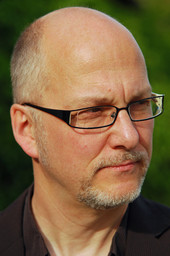
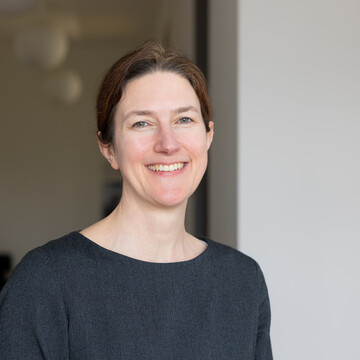
Fahim Kawsar is Professor of Mobile Systems at the University of Glasgow's School of Computing Science. His research focuses on mobile and pervasive systems with applications in augmented reality, human-computer interaction, and health monitoring. He supervises PhD students working on therapeutic music interventions and wellbeing sensing technologies. Research spans: Augmented reality collaboration systems Energy-efficient AI on microcontrollers Contactless vital sign monitoring Wearable computing for health Recent publications explore avatar placement in AR meetings, thermal management of AI accelerators, and neurocomputational models for personalized therapy. Work consistently addresses practical implementation challenges in ubiquitous computing.
Professor John Tucker is a distinguished computer scientist at Swansea University, serving as a Professor in the School of Mathematics and Computer Science within the Faculty of Science and Engineering. His research focuses on computability theory, data theory, and the historical development of computing and its societal impact. He founded the University's Computing History Collection and the research group 'Educational, Historical and Philosophical Foundations of Computing.' Prof. Tucker has held significant administrative roles, including Head of the Computer Science Department (1994-2008), Head of the School of Physical Sciences (2007-11), and Deputy Vice-Chancellor (2011-19). He is also an expert on the history of science and technology in Wales. His teaching emphasizes historical and social dimensions of computing, including modules on computing history and its technological influences. Prof. Tucker's public engagement includes leading initiatives like the Swansea Science and Technology Engagement Program. His research spans theoretical computer science, formal methods, and the philosophical foundations of computing. He collaborates internationally and has supervised students exploring topics like surveillance systems and historical data usage in sports.
Prof. Dr. Andreas Rohde is Professor of Linguistics and Language Didactics at the University of Cologne's English Department II. He earned his doctorate (1995) and habilitation (2001) from Christian-Albrechts University of Kiel, receiving the Faculty Prize in 1996. His career includes positions at Kiel University (1991-2003) and as Acting Professor at University of Vechta (2003-2004) before joining Cologne in 2004. Research Focus: Rohde leads projects examining language acquisition mechanisms in diverse populations. His work spans bilingual daycare programs, inclusive English pedagogy, lexical development disorders, and linguistic risk-taking. Primary research domains include: First/second language acquisition (lexical/tense-aspect systems) Language evolution and bilingual education frameworks Inclusive strategies for learners with special needs (hearing impairment, autism, DLD) Teacher competency development for multilingual classrooms Publication Trends: Recent works (2018-2025) focus on inclusive language education frameworks, specializing in pedagogical adaptations for neurodiverse learners and bilingual curriculum design. Dominant themes include lexical acquisition disorders, technology-mediated learning, and teacher training for special needs contexts. Awards & Recognition: Faculty Prize, Christian-Albrechts University of Kiel (1996) Academic Leadership: Supervised 11 doctoral candidates and 1 habilitation in language acquisition studies. Leads the Linguistic Risk-Taking (LRT) project and EU Speak 3 consortium. Current team includes Dr. Kim Schick, Dr. Alexandra Inglis, and Şeyma Polat.
Srirangaraj (Ranga) Setlur is a Principal Research Scientist and Co-Director of the Center for Unified Biometrics and Sensors (CUBS) at the University at Buffalo. He also serves as the Associate Director of Community Engagement at the Institute for Artificial Intelligence and Data Science. His research focuses on AI, Machine Learning, Pattern Recognition, Computer Vision, and Information Retrieval with applications in biometrics, document analysis, and healthcare. Education: MS in Industrial Engineering, University at Buffalo (1995) Research Interests: Development of AI-driven systems for biometric authentication (e.g., fingerprint, facial recognition) Design of datasets for chart analysis (CHART-Info), gait recognition (DIOR), and cross-domain fingerprint analysis Applications in healthcare diagnostics (e.g., dyslexia screening via handwriting analysis) Advancements in multimodal fusion (e.g., audio-visual, physiological signals) Recent Research Trends: His recent work emphasizes cross-domain learning (e.g., Ridgeformer), sparse feature aggregation (Proxyfusion), and AI applications in social robotics (AutoMisty). He consistently addresses challenges in unconstrained environments and under-represented data scenarios. Awards: Senior Member, IEEE 2019 ICDAR Best Student Paper Award (F. Xu) 2010 IBM Best Student Paper Award (X. Peng) UB Visionary Innovator Award Labs/Teams: Leads research teams in CUBS and the Institute for AI & Data Science, focusing on biometric systems, surveillance optimization, and multimodal AI applications.
Signe Mezinska is a researcher affiliated with the University of Latvia’s Faculty of Medicine and the Riga East Clinical University Hospital Medical and Biomedical Research Ethics Committee. She has been a faculty member in the E-Education in Research Ethics program since 2011. Her work focuses on bioethics, medical ethics, and assisted reproduction ethics, with particular attention to risk communication and cultural narratives in healthcare. She has contributed to international projects like the COST Action on Disaster Bioethics and the EU-funded Capacity Building for Interdisciplinary Biosafety Research. Her research interests include ethical challenges in assisted reproduction, pediatric healthcare decision-making, and the evolution of research ethics committees in Eastern Europe. She has collaborated on studies analyzing Latvian healthcare systems, patient-physician dynamics, and cross-cultural perspectives on fertility treatments. Her projects emphasize interdisciplinary approaches to bioethical dilemmas and policy development. Signe Mezinska’s contributions extend to academic publications in journals such as Studia Philosophica Estonica , The New Bioethics , and Developing World Bioethics . Her work bridges theoretical bioethical frameworks with practical clinical and societal contexts, particularly in Central and Eastern Europe.
Dr. Veronica Irvin is an Associate Professor and the Celia Strickland Austin and G. Kenneth Austin III Endowed Professor in Public Health at Oregon State University's College of Health. She leads research in cancer screening, environmental health interventions, and health disparities. Her work combines community-engaged approaches with rigorous epidemiological methods. Dr. Irvin holds a PhD in Public Health from UC San Diego/San Diego State University and a MPH in Epidemiology from San Diego State University. Her research focuses on breast cancer screening gaps, particularly interval cancers, and environmental health challenges like well water contamination. She co-leads an NIH-funded project adapting interventions to address arsenic/nitrate-contaminated wells in collaboration with OSU Extension. Recent studies include analyzing FDA drug approval transparency and investigating pain management in rare diseases. Dr. Irvin has expertise in NIH-funded behavioral interventions across tobacco control, nutrition, and environmental health. Her multidisciplinary teams engage rural communities through partnerships like the National Grange and the Samaritan Cancer Resource Center. She actively mentors students in the HPHB PhD and MPH programs, emphasizing translational research. Key collaborations include Oregon's Public Health Advisory Board and the OSU Well Water Program. Her work bridges clinical practice and policy, addressing systemic barriers in healthcare access for marginalized populations.
Maria Zelenskaya is an Associate Lecturer in the Faculty of Creative Industries, Education & Social Justice at Queensland University of Technology (QUT), affiliated with the School of Creative Arts and the Film, Screen & Animation department. Her work bridges practical animation expertise with research in interactive and participatory design, virtual production, and sign-language avatars. She holds a Doctor of Philosophy and dual Bachelor of Animation degrees from Griffith University. Research Interests: Maria's research focuses on real-time animation, performance capture, and the application of digital humans in accessibility (e.g., Auslan avatars), co-design methodologies, and virtual production. Her projects emphasize collaboration with communities and industry, such as developing assistive technologies for railway travel and Koala conservation advocacy. Advising & Grants: Currently supervising research students in topics like virtual reality for trauma recovery and Auslan avatars for youth. Active in research centers like the Design Lab. Collaborates with organizations like the Jamieson Trauma Institute and Sydney Trains. Labs/Teams: Involved in interdisciplinary teams across QUT's creative industries, focusing on virtual production and accessibility technologies. Member of ACM SIGGRAPH and the Society of Animation Studies.
April Yi Wang is a tenure-track Assistant Professor at the Department of Computer Science, ETH Zürich, leading the PEACH Lab. She holds core faculty roles at the Institute for Intelligent Interactive Systems and the ETH AI Center. Her research focuses on human-centered approaches in programming, education technology, and data science collaboration. She earned her PhD from the University of Michigan (2023) and MSc from Simon Fraser University (2018), advised by Steve Oney and Christopher Brooks. Education: PhD in Information Science, University of Michigan (2018–2023) MSc in Computer Science, Simon Fraser University (2016–2018) B.Eng in Computer Science, Zhejiang University (2013–2016) Research Interests: Human-Computer Interaction (HCI) Programming Support Systems Collaborative Data Science AI-Enhanced Education Literate Programming Accessibility in Technology Recent Work Trends: Her 2025 publications emphasize AI-driven educational tools (e.g., Math2Visual for math pedagogy, datAR for data literacy), emotion-aware moderation systems, and studies on workplace multitasking. Her work bridges HCI with computational education, focusing on intuitive programming interfaces and inclusive design. Awards: Gary M. Olson Award (2023), ACM CHI Honorable Mentions (2023/2020/2018), Rising Stars in EECS (2022). Grants: Innovedum funding for Coducate project (2025). Lab Focus: Designing expressive systems for programming and data literacy through visual/tangible interfaces, AI co-decomposition tools, and interdisciplinary metaphors. Teaching: Courses on Human-Computer Interaction, Educational Technology, and Mixed Reality at ETH Zürich.
Ifeoma Nwogu is an Associate Professor in the Department of Computer Science and Engineering at the University at Buffalo. She holds an appointment in the School of Engineering and Applied Sciences, specializing in research areas including human behavior modeling, sign language understanding, and probabilistic modeling. Her work spans computer vision, robotics, and AI with applications in healthcare, education, and social signal processing. Her research focuses on advancing technologies for sign language interpretation, infant vocal analysis, and human-robot interaction. Key projects include developing automated code generation frameworks for social robots, 3D motion synthesis systems for sign language avatars, and methodologies for emotion recognition in facial interactions. She teaches courses such as CSE 455/555 (Pattern Recognition), CSE 610 (Special Topics), and CSE 706 (Seminars), reflecting her expertise in AI and machine learning. Nwogu's recent publications emphasize cross-disciplinary applications of machine learning, including medical imaging anonymization, multi-agent systems, and ethical considerations in data privacy. Her work bridges computational methods with societal needs, particularly in education accessibility for deaf communities and stroke rehabilitation technologies.
Casey Guynes is a member of the teaching faculty at the School of Communication, Florida State University. He specializes in American Sign Language (ASL) education, particularly in virtual learning environments. His professional background includes teaching Deaf and hard of hearing students in residential schools, public districts, colleges, and virtual settings. He completed his doctoral degree at Texas Tech University, focusing on virtual ASL education. Education: He holds an MS in Deaf and Hard of Hearing Education (2013) and a PhD in Special Education: Deaf and Hard of Hearing (2021) . Licenses and Credentials: Deaf/Hard of Hearing Teaching Certification: Florida South Carolina Texas Professional Experience: Extensive work in residential schools for the Deaf, public-school districts, colleges, early intervention programs, and virtual learning platforms. Transitioned to fully online ASL instruction for K-12 students in recent years.
Prof. Nicole Altvater-Mackensen holds the Chair of Psycholinguistics at the University of Mannheim's School of Humanities, within the Department of English (Anglistik I). Her research focuses on developmental psycholinguistics, cognitive aging, and multimodal speech perception. She explores topics such as infant speech processing, statistical learning mechanisms across modalities, and the role of social robots in language education. Her work spans experimental psychology, neuroscience, and computational methods. Key areas include emotion processing in late adulthood, action anticipation in children, and cross-modal language activation in deaf populations. She has published extensively in journals like Developmental Science and NeuroImage , with a strong emphasis on interdisciplinary approaches. Core Research: Infant cognition, aging cognition, statistical learning, language acquisition Methodologies: ERP studies, behavioral experiments, neuroimaging Recent projects investigate how social robots can enhance language learning in children, and the neural correlates of speech perception in infants. She collaborates internationally on topics such as vocal emotion recognition and cross-linguistic phonetic contrasts.
Bobbie Kite is an Associate Professor in the Department of Education at Gallaudet University, specializing in Early Childhood Education and ASL/English bilingualism. She holds a Ph.D. from George Mason University and has over 14 years of teaching experience, including roles at Kendall Demonstration Elementary School and New Mexico School for the Deaf. Her research focuses on family language planning, Reggio Emilia educational approaches, and culturally responsive teaching strategies for deaf children. Dr. Kite has advised numerous students across undergraduate, master’s, and doctoral programs, with advising loads averaging 15 students annually since 2020. She coordinates Gallaudet’s ASL & English Bilingual Early Childhood Deaf Education certificate program and serves on national committees like the National American Sign Language and English Bilingual Consortium for Early Childhood Education. Her work emphasizes bilingualism in hearing families with deaf children, teacher preparation for deaf education, and anti-bias education. Notable projects include NIH-funded research on family language planning toolkits and U.S. Department of Education initiatives to optimize linguistic development for deaf students.
Dr. Chizuko Tamaki is a Professor in the Department of Hearing, Speech, and Language Sciences at Gallaudet University, where she directs the AuD Program. She holds dual doctorates (AuD and PhD) from Gallaudet, specializing in clinical audiology and vestibular research. Her work focuses on vestibular dysfunction in deaf populations, spatial cognition, and interprofessional healthcare. Education: AuD (2004) and PhD (2006) in Audiology at Gallaudet University. She has led the AuD Program since 2013 and serves on national boards like the American Academy of Audiology. Her lab explores vestibular assessment techniques and balance rehabilitation. Research interests include vestibular-evoked myogenic potentials (VEMP), spatial navigation in deaf individuals, and fall prevention strategies. She investigates how deafness and ASL fluency influence cognitive and sensory processing. Dr. Tamaki has secured NIH funding for projects like 'Vestibular Function in Diverse Deaf Individuals' and 'Fall Risks in Older ASL Users.' Teaching: Courses include vestibular studies, clinical supervision, and audiology practicum. She advises doctoral students (e.g., 13 in 2023) and mentors through research projects and internships. Awards include the 2021 AAA Board election and CAPCSD Leadership Academy recognition. Labs/Teams: Director of Gallaudet’s Vestibular and Balance Lab, collaborating with neurology and engineering teams. She develops culturally accessible balance assessment tools for deaf patients.
Professor Tonya Stremlau is a faculty member in the Department of English at Gallaudet University's School of Language, Education, and Culture. She specializes in Deaf Literature, Creative Writing, and Composition Studies. Currently teaching courses such as ENG-175H Honors Critical Reading, Writing, and Integrated Learning and ENG-325 Introduction to Deaf Literature, she has extensive experience in curriculum development and student mentorship. Her research focuses on accessibility in academic spaces, particularly through CART and sign language interpretation, as well as exploring narratives by Deaf and hard-of-hearing writers. She has advised honors students including Brenna Smith, Jai Dortch, and Alex Forkin. Stremlau holds roles such as Core English Coordinator and serves on Gallaudet's AAUP Chapter executive committee. She is also a series editor for Gallaudet University Press' 'Deaf Lives' collection.
Miako Villanueva is a Professor and Dean of the Faculty at Gallaudet University, where she also serves as Director of General Education. Her roles include overseeing academic affairs and leading initiatives in bilingual education. She holds a PhD in Linguistics from Gallaudet University (2010), an MA in Linguistics from Gallaudet (2004), and a BA in Psychology from Colorado College (1998). Her research focuses on linguistic structures of American Sign Language (ASL), cognitive linguistics, and bilingual education, with a strong emphasis on applied and community-engaged scholarship. Her teaching spans undergraduate and graduate courses, including Structure of ASL , Cognitive Linguistics , and Guided Research Projects . She actively advises doctoral students in linguistics and interpreting studies. Villanueva co-authored the textbook Linguistics of American Sign Language: An Introduction and contributes to initiatives like the Motivated Look at Indicating Verbs (MoLo) project. She also serves on committees such as the General Education Council, Academic Review Committee, and the Board of Managers for the Center for the Assessment of Sign Language Interpreting (CASLI). Her work bridges academia and practice, emphasizing community-based research and inclusive pedagogy. She regularly presents at conferences, co-organizes panels on Deaf interpreter perspectives, and collaborates on projects like Depiction in the Classroom . Her professional affiliations include the International Society for the Scholarship of Teaching and Learning (ISSOTL) and the Registry of Interpreters for the Deaf (RID).