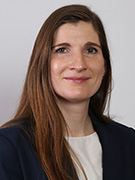
Eliese-Sophia Lincke is a Junior Professor at the Department of History and Cultural Studies, Freie Universität Berlin, since May 2022. Her work bridges computational methods with Egyptology, focusing on digital tools for studying ancient texts. Bachelor's and Master's in Egyptology, Humboldt-Universität zu Berlin (2007) PhD in "The Conception of Spaces in Language" (TOPOI Cluster, 2012) Research interests include: Digital Humanities : Developing machine learning models for Hieroglyphic, Demotic, and Coptic text processing Linguistic Typology : Analyzing classifier systems in Ancient Egyptian and Sign Languages Spatial Linguistics : Investigating prepositions and spatial adverbs in Egyptian-Coptic Recent publications focus on Neural Lemmatization , OCR for Coptic , and Classifier Semantics , demonstrating her commitment to computational Egyptology. Scientific awards include the Humboldt-Preis 2008 for best Master's thesis and the Prize for Good Teaching 2014 . She has co-organized workshops like "Wege zum Ägyptischen" and served as Co-Editor for Lingua Aegyptia . Her teaching contributes to the Digital Studies of Ancient Texts Master's program.
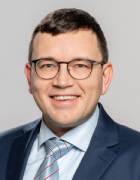
Sen. Prof. Dr.-Ing. Hermann Ney is a Professor at RWTH Aachen University's Chair of Computer Science 6 (Human Language Technology and Pattern Recognition). His primary affiliation is with the Department of Computer Science, where he leads research and teaching activities. Research Interests: Statistical classification and machine learning Automatic speech recognition Statistical machine translation Text/image/sign language recognition Image and object recognition Teaching: Pattern Recognition and Neural Networks Speech Recognition Digital Processing of Speech and Image Signals Language Modeling Statistical Natural Language Processing Advanced Topics in Statistical Modeling Full course details available here . Publications are accessible via the publication page and Google Scholar profile.
Maria Paola Forte is a Doctoral Researcher at the Max Planck Institute for Intelligent Systems, working across the Haptic Intelligence and Perceiving Systems departments. She holds a BSc in Biomedical Engineering from the University of Genova and an MSc in Bioengineering from Politecnico di Milano. Her PhD research focuses on developing interdisciplinary assistive technologies, particularly for sign language capture, combining computer vision with sensor-based approaches. Her research interests center on creating technology for people with sensory or motor deficits, with applications in robotic surgery and human-computer interaction. Key areas include assistive device development, motion capture systems, and haptic feedback interfaces. Her work leverages expertise in biomedical engineering, machine learning, and real-time systems. Publications consistently demonstrate interdisciplinary work in surgical robotics and accessibility technology. Recent articles show a progression toward human-centered applications of computer vision, with emerging focus on wearable bioimpedance sensing and avatar reconstruction for sign language.
Prof. Dr. Barbara Sophie Hänel-Faulhaber is a Professor at the University of Hamburg’s Faculty of Education , specializing in German Sign Language (DGS) and audiopedagogy . Her research focuses on language acquisition and processing in DGS , particularly among deaf children and inclusive educational settings . She leads the Deafness, Language and Learning Lab (D2L) and contributes to the faculty’s core research area Literacy in Diversity Settings . Education: Dr. phil. in Sign Languages (University of Hamburg, 1999–2003) Magister Artium in Sign Languages, Linguistics (University of Hamburg, 1996–1999) Double Degree in Deaf Education, Elementary Education (LMU Munich, 1992–1996) Her work examines bimodal-bilingual education , iconicity in early sign learning , and structural conditions in inclusive daycare centers . She develops diagnostic tools like the DGS-Version of MBK 0 for assessing numerical competencies in deaf children. Current projects include Coactivation of Difference (2023–2026) and Sign4Inclusion (Math) (2023–2024). Scientific Awards: Institutional Prize for German Language 2023 Heinrich Böll Stiftung Promotionsstipendium (1999–2003) Wilhelm-Stiftung Post Doc Fellowship (2005) She collaborates with institutions like the Institute of German Sign Language and Deaf Communication and the Graduate School Martha Muchow , with recent publications spanning sign language diagnostics , inclusive pedagogy , and cross-modal literacy studies .
Prof. Dr. Catrin Misselhorn serves as Professor of Philosophy at the University of Göttingen since 2019, focusing on theoretical philosophy, machine ethics, and human-AI interaction. She is Deputy Director of the Institute of Philosophy and a member of the supervisory board at KIT (Karlsruhe Institute of Technology). Education Studied at University of Tübingen and University of North Carolina at Chapel Hill (1991-1998) PhD in Philosophy (2003) and Habilitation (2010) at University of Tübingen Feodor-Lynen Fellowship at Center of Affective Sciences (2007-2008) Research Interests Her work bridges machine ethics , philosophy of artificial intelligence , and human-machine interaction , with emphasis on moral agency in autonomous systems, empathy in AI, and ethical evaluation of technologies. She explores applications in geriatric care, autonomous weapons, and self-driving vehicles. Recent Article Trends Her 15 most recent publications (2022-2025) highlight intersections between AI governance , robot empathy , and moral implementation . Topics span care robotics , autonomous weapons , AI-generated art , and ethics of language models . Scientific Awards Feodor-Lynen Fellowship (2007-2008) Member, Niedersächsische Akademie der Wissenschaften (2024) Academic Leadership Director of Institute of Philosophy (2012-2019), University of Stuttgart Current editorial roles and media engagements (ARD, Süddeutsche Zeitung, DWIH New York)
Dr. Johanna Rimmele is a Researcher at the Max Planck Institute for Empirical Aesthetics in Frankfurt, Germany. She holds a PhD in Psychology from the University of Leipzig (2012) and has conducted postdoctoral research at institutions including the Albert Einstein College of Medicine, New York University, and the University Medical Center Hamburg-Eppendorf. Her work focuses on auditory perception, temporal processing, and the neural basis of speech perception. She has received several awards, including the 8th Dissertation Competition in Psychology and the Sign UP! Careerbuilding grant. Her research explores how temporal structure in speech influences neural processing, particularly through the lens of cortical oscillations. She investigates neuroplasticity in sensory deprivation (e.g., blindness) and the interplay between auditory perception and motor systems. Rimmele has authored over 20 peer-reviewed articles and co-edited a book on brain oscillations in human communication. She is affiliated with the CLaME research group and actively contributes to interdisciplinary studies on music, language, and neural mechanisms. Education: PhD in Psychology, University of Leipzig (2008–2012) Visiting Researcher, Albert Einstein College of Medicine (2006–2011) Diploma in Psychology (minor Philosophy), University of Leipzig (2002–2008) Awards & Grants: 8th Dissertation Competition, German Society for Psychology (2013) Sign UP! Careerbuilding MPG Grant (2016/2017) ERASMUS MUNDUS Stipendium (2011–2012) Key Research Themes: Rimmele’s projects address speech-specific neural processing, the role of delta/theta oscillations in speech segmentation, and how rhythmic speech production influences perception. Her work on neuroplasticity in blind individuals highlights cross-modal reorganization of brain networks.
Claudia Friedrich is a Professor of Developmental Psychology at the University of Tübingen, Faculty of Mathematics and Natural Sciences, Department of Psychology, where she has held her position since April 2013. Her research focuses on the cognitive processes underlying language development in children, with particular emphasis on speech processing, word recognition, and the acquisition of linguistic structures. Her educational background includes a doctorate in Psychology from the University of Leipzig (2003) and undergraduate studies in Psychology at the Technical University of Berlin (1993-1999). Professor Friedrich's research examines how children process speech sounds, word stress patterns, and develop the ability to understand language in context. Her work investigates cognitive and neural mechanisms involved in language acquisition across different age groups, with special attention to how first and second language learners process linguistic information. Through eye-tracking, ERP, and behavioral experiments, her research explores how children develop the ability to take perspectives during communication, process prosodic features of speech, and build lexical representations. She has made significant contributions to understanding how literacy acquisition shapes speech processing and how cross-modal influences affect language development. Her recent publications reveal a consistent focus on developmental trajectories in language processing, with increasing attention to cross-linguistic comparisons and multimodal aspects of language acquisition. The research demonstrates sophisticated methodological approaches combining behavioral, eye-tracking, and neurophysiological measures to investigate language processing from infancy through childhood. Professor Friedrich leads several major research projects including Project A6 "The Development of Common Ground in First and Second Language Acquisition" (2025-2029), a DFG-funded project on "Stress processing at the word level in children with different language backgrounds" (2024-2027), and previously led Project B1 on modal and amodal cognition (2020-2023). Her research has been consistently supported by prestigious funding bodies including the European Research Council (ERC) and the German Research Foundation (DFG). She heads the Developmental Psychology workspace at the University of Tübingen, where her research group investigates cognitive prerequisites for perspective-taking in language comprehension and the influence of perspective taking during language processing through memory experiments and eye movement studies.
David Menotti is a prominent researcher in computer vision and machine learning, with a focus on biometrics, license plate recognition, and video analysis. He has collaborated extensively with institutions and researchers globally, contributing to over 171 publications between 2003-2025. Key research areas include face recognition, synthetic data generation, and zero-shot learning Major contributions in license plate super-resolution, sign language translation, and ocular biometrics Active in organizing competitions like FRCSyn and OCFR to advance synthetic data applications His work often combines diffusion models, CNN architectures, and multimodal approaches to solve real-world problems in unconstrained environments. Notable recent projects involve enhancing face recognition with synthetic data, vehicle color recognition under adverse conditions, and Libras-to-Portuguese translation. Menotti's publications appear in journals like Information Fusion , IEEE Access , and conferences including CVPR, SIBGRAPI, and IJCNN. He frequently collaborates with researchers such as Rayson Laroca, William Robson Schwartz, and Pedro Vidal.
Pauline Larrouy-Maestri is a Senior Researcher at the Max Planck Institute for Empirical Aesthetics in Frankfurt/Main, Germany, where she has been working since 2019 after serving as a Postdoctoral Researcher in the Neuroscience Department from 2014-2019. Her interdisciplinary research focuses on how humans categorize acoustic information that unfolds over time to make sense of sounds, working at the intersection of music, speech, and neuroscience. Dr. Larrouy-Maestri holds a PhD in Psychology from the University of Liège (2009-2013) and has an unusually diverse educational background including a Bachelor in Music (Piano) from the Royal Conservatory of Mons, a Master in Speech Therapy from the University of Brussels, additional studies in Psychology, Pedagogy, and Music Therapy, and research stays at McGill University and SUNY Buffalo. This multidisciplinary foundation informs her unique approach to studying sound perception. Her research examines how we process ambiguous auditory material that sits at the boundaries between music and speech categories, such as sprechgesang and West-African talking drums. She investigates auditory sequence processing in music, particularly how continuous streams of sound are parsed into meaningful units, and has made significant contributions to understanding the perception of correctness in singing. Her work on vocal communication explores how pitch, timing, and other acoustic features contribute to our interpretation of emotional content and meaning in both music and speech. Analysis of her recent publications reveals a sophisticated integration of behavioral, electrophysiological, and computational approaches to study music-speech interactions, with growing emphasis on cross-cultural perspectives, individual differences, and neural mechanisms. Her work increasingly examines how subtle acoustic variations influence aesthetic judgments and emotional responses to vocalizations. 2023: €20,000 research scholarship for "Humanity of Speech" project 2017: Selected for "Sign Up! Careerbuilding for outstanding female post docs in the MPG" 2016: Young Investigator Award from SEMPRE and ICMPC14 2015: PBEEE Merit scholarship from Fonds de recherche du Québec 2013: Patrimoine de l'Université de Liège and FNRS fundings 2011: Grant from French Community of Belgium Dr. Larrouy-Maestri currently supervises multiple researchers including Camila Bruder, Madita Hoerster, and Zofia Hobubowska. Her research is supported by competitive grants including the recent Imminent scholarship and previous funding from Belgian and Canadian sources. She maintains extensive international collaborations with researchers including David Poeppel, Melanie Wald-Fuhrmann, Marc Pell, and others across neuroscience, psychology, and musicology disciplines. Her work is conducted within the Neuroscience Department at the Max Planck Institute for Empirical Aesthetics, where she contributes to the institute's interdisciplinary mission of studying aesthetic experiences through multiple methodological approaches. She participates in research groups focusing on auditory perception, music cognition, and the neural mechanisms underlying language and music processing, helping bridge traditionally separate fields through innovative experimental designs.
Leah Findlater is a Professor at the University of Washington , Seattle, WA, USA. Her research focuses on Human-Computer Interaction (HCI) and Accessibility , particularly in developing AI and Machine Learning systems for users with disabilities. Key areas: Assistive Technologies , Speech Recognition , Visual Privacy Collaborators: Jon E. Froehlich, Dhruv Jain, Emma J. McDonnell, Abigale Stangl Her recent work includes sound personalization for Deaf users , AI-driven sign language generation , and privacy tools for blind individuals . She explores interactive machine learning and user-centered design to improve accessibility in smartwatches , AR , and generative AI . Articles highlight cross-disciplinary collaborations with disability communities , focusing on inclusive AI , sensory augmentation , and ethical technology design . She advocates for user-driven accessibility solutions in social media and urban environments .
Prof. Dr. Daniel Roth is a Professor of Machine Intelligence in Orthopedics at the TUM School of Medicine and Health at Technical University of Munich (TUM), appointed in September 2023. His research focuses on human-machine interfaces in medicine, including AI, virtual/augmented reality (XR) technologies for surgical assistance systems, disease diagnosis, and rehabilitation. Previously, he held a junior professorship in Human-Centered Computing and Extended Reality at Friedrich-Alexander-Universität Erlangen-Nürnberg (FAU). Education: Bachelor's/Master's in Media and Imaging Technology (TH Köln) PhD in Computer Science (Julius-Maximilians-Universität Würzburg) Research Interests: Roth’s work integrates AI and extended reality to solve healthcare challenges. Key areas include: XR-based surgical training and teleconsultation systems AI-driven analysis of surgical workflows Embodiment in virtual environments for medical applications Accessibility technologies for visually impaired users Publications: Recent work emphasizes immersive medical visualization, telemedicine systems, and user embodiment in VR. Key themes include: XR applications in surgery and patient care 3D teleconsultation for emergency scenarios AI-enhanced anatomy visualization Awards: Best Demo Honorable Mention (IEEE VR, 2021) Best Poster Award (ISMAR, 2020) IEEE TVCG Best Journal Paper (2018) Grants & Teams: Active in interdisciplinary projects at Klinikum rechts der Isar. Collaborates with industry partners on AR/VR healthcare solutions. No formal advisee list is provided, but his work involves multi-disciplinary teams. Labs/Teams: Leads machine intelligence initiatives in TUM’s medical school, focusing on translational research between engineering and clinical practice.
Leonardo Banh is a Researcher at the University of Duisburg-Essen within the Faculty of Computer Science and its Chair of Business Information Systems and Software Engineering . M.Sc. in Business Information Systems (University of Duisburg-Essen, 2022) B.Sc. in Business Information Systems (University of Duisburg-Essen, 2020) Semester abroad at Instituto Superior Técnico, Lisbon (2021) His research focuses on Generative AI and its socio-technical implications, particularly in Machine Learning and Deep Learning applications. He explores intersections with NeuroIS , Smart Tourism , and E-commerce Ecosystems , emphasizing sustainability and digital transformation. Recent publications analyze Generative AI in Software Engineering , AI in Music Sentiment Analysis , and AI-Based Sign Language Translation . His work often involves design science research and grounded theory frameworks. Best Paper in Track Award (ICIS 2024) Nominated for Best Paper Award (ICIS 2024) Outstanding Reviewer (ICIS 2024) As advisor, he supervises theses on topics including AI-Based Mental Health Chatbots , Generative AI in HR , and Smart Tourism Applications . He also contributes to the Institute of Computer Science and Information Systems and serves on appointment/habilitation committees.
Arnulph Fuhrmann is a Professor in Computer Science at Technische Universität Darmstadt. His research focuses on Virtual Reality (VR), Augmented Reality (AR), and advanced rendering techniques. He holds a Ph.D. in Computer Science (2006) from TU Darmstadt, with his dissertation titled Interaktive Animation textiler Materialien (Interactive Animation of Textile Materials). His work spans topics such as real-time rendering optimization, collision detection for deformable objects, and immersive systems for sign language communication. Notable contributions include studies on diffraction phenomena simulation, impostor-based rendering acceleration, and hybrid rendering techniques combining rasterization and ray-tracing. His research often addresses challenges in visual quality, performance, and user interaction in VR/AR environments. Recent articles highlight advancements in diminished reality systems, facial feature enhancement for avatars, and collaborative mixed reality frameworks. Fuhrmann collaborates extensively with institutions like RWTH Aachen and researchers in fields like human-computer interaction and computer vision. His work emphasizes practical applications of theoretical advancements, such as tools for software visualization in VR and accessibility solutions for deaf/hard-of-hearing users.
Lennart Eing is a Researcher at the Chair for Human-Centered Artificial Intelligence at the University of Augsburg . He contributes to projects focusing on multimodal neural networks, self-supervised learning, and sign language recognition systems. Research Interests: Multimodal neural networks, self-supervised learning, deep learning, few-shot learning, sign language recognition, 3D hand mesh reconstruction, physiological constraints in machine learning. He actively engages in GitHub projects, particularly related to self-supervised learning applications for sign language translation and dataset management. His work often involves refining models like HaMeR and MANO for improved 3D reconstruction and implementing attentive probing techniques with Sapiens features. Contact: lennart.eing@uni-a.de
Timothy K. Shih is an active academic researcher with over 30 years of scholarly contributions, evidenced by his extensive publication record from 1991 through 2025. With more than 380 publications spanning numerous prestigious venues including IEEE Access, Multimedia Tools and Applications, and Lecture Notes in Computer Science, he maintains a robust research profile with consistent annual output (20+ papers in peak years). His work demonstrates leadership through frequent senior/corresponding author positions and collaborations with numerous researchers across international institutions. Dr. Shih's research interests encompass a diverse range of computer science disciplines with particular emphasis on Computer Vision , Human-Computer Interaction , and AI Applications . His work bridges theoretical advancements with practical implementations in educational technology, accessibility solutions, and multimedia systems. Recent publications reveal a strategic focus on applying deep learning techniques to solve real-world problems in sign language recognition, gesture analysis, and wireless sensing applications. Analysis of his publication trends over the past five years shows increasing specialization in multimodal AI systems, with significant contributions to sign language technology (including Arabic Sign Language recognition), WiFi-based human activity recognition, and music technology applications. His research demonstrates strong interdisciplinary connections between computer vision, machine learning, and human-centered computing, with practical applications spanning educational technology, accessibility solutions, and smart environments. Through his mentorship, Dr. Shih has guided numerous junior researchers who have become frequent collaborators, including Chih-Yang Lin, Hsin-Hung Cho, and Tipajin Thaipisutikul. His research program appears well-funded through consistent publication output across multiple project areas, suggesting successful grant acquisition in computer vision, AI, and educational technology domains. Current work indicates active involvement in cutting-edge research on diffusion models for audio processing, enhanced sign language recognition systems, and novel approaches to WiFi-based human interaction analysis.