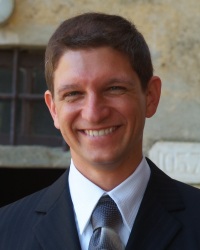
Gabriella Casalino is an Assistant Professor at the University of Bari Aldo Moro, Department of Computer Science, and a key researcher at CILAB - Computational Intelligence Lab. Her work focuses on Computational Intelligence methods for interpretable data analysis, particularly in eHealth, Data Stream Mining, and eXplainable Artificial Intelligence (XAI) within medical and educational domains. She has contributed to innovative approaches in smartphone-based health monitoring, fuzzy logic applications, and remote vital sign detection via photoplethysmography. Education : Ph.D. in Computer Science, with advanced training at institutions like Universitat de Girona and Université de Mons. Research Trends : Recent publications highlight applications of evolving granular computing, neuro-fuzzy systems, and explainable AI in hypertension prediction, bipolar disorder monitoring, and educational data analysis. Key subfields include remote health monitoring, medical data streams, and hybrid AI models. Grants : Research funded by AIRC (Italian Cancer Research Foundation), focusing on computational methods for healthcare challenges. Labs & Collaborations : Active in CILAB, collaborating on projects involving mHealth solutions, cardiovascular risk assessment, and intelligent educational systems.
Monica Barni is a Full Professor at the Department of Modern Literature and Culture, Sapienza University of Rome, specializing in Educational Linguistics and Multilingualism. She serves as the President of the Degree Course in Communication and Interpreting in Italian Sign Language (LIS and LIST) and directs the Ateneo Linguistic Center. Her research spans language policy, Italian L2 education, and the sociolinguistics of migration. Research Interests: Analysis of linguistic policies in Italy and Europe Assessment of language competencies Plurilingual and intercultural education Linguistic landscapes in multicultural urban contexts Translation theory and practice Recent Article Trends: Her 2025 and 2024 publications focus on urban multilingualism, language transmission in migrant families, and policy intersections in education. Earlier works (2022-2023) examine Italian certifications, museum semiotics during pandemics, and European linguistic frameworks like CEFR. Labs & Teams: She leads the Ateneo Linguistic Center and contributes to the GISCEL research network. Her work intersects with projects like Lingua e cittadinanza (Language and Citizenship) and international collaborations in Italian language education.
Sabine Elisabeth Koesters is a Full Professor at the Department of Modern Literature and Culture at Sapienza University of Rome, where she teaches German language and linguistics courses across multiple degree programs including Linguistics, Modern Philology, Communication and Interpretation in Italian Sign Language (LIS and LISt), and Philosophy. Her teaching portfolio includes German linguistics, German language and translation, and general linguistics courses, with specific focus on both beginners and advanced students. Professor Koesters' research spans multiple areas of German language and linguistics, with particular expertise in phonetics, morphology, lexical semantics, linguistic history, linguistic ideologies during National Socialism, educational linguistics, spoken language, contrastive linguistics, and digital humanities. Her work frequently intersects with phraseology, translation studies, and multilingual analysis, with a special focus on Italo Calvino's works and their translations. She has developed specific expertise in analyzing phraseological patterns across languages, particularly examining how Italian phraseological constructions translate into German and other languages. Her recent publications show a consistent trajectory in phraseological research, with particular emphasis on multilingual phraseology, Calvino translations, and the development of the CREAMY (Calvino REpertoire for the Analysis of Multilingual Phraseology) project. Her work combines theoretical linguistic frameworks with practical applications in language teaching, as evidenced by her publications on metalinguistic competence development through multilingual phraseology. Additionally, she has conducted significant research on the Israelkorpus, examining spatial experiences, emotional expression, and memory in narratives of German-speaking Jewish emigrants to Israel. Professor Koesters leads several research projects including 'German Syntagmatic Verbs: Psycholinguistic Data and Language Teaching Consequences,' 'Phraseology in Italo Calvino's Translations: Towards the Construction of Phraseologisms Networks Using the CREAMY Tool,' and 'University teaching of foreign languages as 'third languages': the case of constructions with supporting verbs.'
Erika Raniolo is a Contract Professor of Glottology and Linguistics at the University of Catania 's Special Teaching Structure of Ragusa. She holds a permanent position as Tenured French Language Teacher (AA24) at the G. Curcio Higher Education Institute in Ispica since the 2024/2025 academic year. Her academic journey includes a PhD in Literary, Philological-Linguistic, and Historical-Philosophical Studies (University of Palermo, 2021) and advanced degrees in European and Non-European Languages (Catania, 2013) and Comparative Studies (Catania, 2011). Education: PhD in Literary, Philological-Linguistic, and Historical-Philosophical Studies (2021, University of Palermo) Master's in European and Non-European Languages and Cultures (2013, University of Catania) Bachelor's in Comparative Studies (2011, University of Catania) Research Interests center on poetic translation between sign and spoken languages, onomastics in signed languages, labializations in LIS, and teaching vocal languages to deaf individuals. She explores multimodal communication and sensory linguistic competence through comparative analysis of LIS (Italian Sign Language) and LSF (French Sign Language). Publications demonstrate expertise in: translating poetry through embodied perspectives; tactile sign language (LISt) for deafblind education; name signs in LIS; labialization studies; medical communication between deaf and hearing people; and pandemic-era sign language translation. Her work spans journal articles, book chapters, and a monograph on sign language poetry. Key Conferences: 2024: Accessibility and Cultural Heritage (Catania) 2023: Alterity in Poetry (Catania); Vertical Curriculum in English (Torino) 2022: LIS/LSF Comparative Study (Palermo); Tactile LIS (Catania) Professional Contributions include a Research Grant (2022/2023) on LIS/LSF in Sicilian cultural heritage, teaching LIS and French at the University of Catania for 5 consecutive academic years, and collaborative work with institutions like CNRS Paris, Université d'Ottawa, and BAICR Cultura della Relazione. She serves as a certified LIS interpreter (ANIMU #293) and holds advanced language certifications in French (C2), English (C1), German (B1), and Spanish (B1).
Juan David Guerrero Balaguera is a Research Fellow at Politecnico di Torino's Department of Automatic Control and Computer Science (DAUIN), affiliated with the CAD group. He holds a Ph.D. in Computer and Control Engineering from Politecnico di Torino (2024), advised by Prof. Matteo Sonza Reorda and Prof. Ernesto Sanchez. His research focuses on dependable hardware for safety-critical systems, including GPU reliability, fault tolerance, AI accelerators, and functional in-field testing. Prior to his Ph.D., he earned a Master's (2017) and Bachelor's (2013) in Electronics Engineering from Universidad Pedagógica y Tecnológica de Colombia, where he taught digital design, embedded systems, and FPGA-based image processing from 2014 to 2020. His research interests span advanced FPGA design, computational arithmetic for AI, fault effects analysis in GPUs, and reliability assessment of neural networks. Notable contributions include methods for generating self-test libraries (STLs) for GPUs, evaluating fault impacts on TCUs, and enhancing CNN robustness via dropout layer optimization. Education: Ph.D. in Computer and Control Engineering, Politecnico di Torino (2024) M.S. in Electronics Engineering, Universidad Pedagógica y Tecnológica de Colombia (2017) B.S. in Electronics Engineering, Universidad Pedagógica y Tecnológica de Colombia (2013) He has received the Ph.D. Quality Award (2023 and 2024) from Politecnico di Torino and Best Paper recognitions at DATE 2023 and DDECS 2021. His work bridges theoretical fault models with practical GPU testing methodologies, emphasizing real-world applications in AI and edge computing. Current teaching roles include collaborating on GPU programming (Master's level) and computer sciences courses (Automotive Engineering). Research collaborations involve exploring reliability trade-offs in split-computing DNNs and developing fault-aware design flows for AI accelerators.
Francesca Peressotti is a Full Professor at the University of Padua's Department of Psychology. Her research focuses on language processing, bilingualism, and cognitive neuroscience, particularly exploring how language interacts with other cognitive processes. She leads projects such as the PRIN 2022 grant investigating multisensory speech perception and neural mechanisms. Key areas include predictive speech processing, moral judgments in multilingual contexts, and speech motor control in stuttering. Her work integrates electrophysiological methods (ERP, EEG) and neuroimaging to study language comprehension and production. Her research interests encompass bilingualism, predictive processing, sign languages, and the neural underpinnings of language. Recent studies address speaker-specific prediction mechanisms, the impact of language modality on decision-making, and aging effects on semantic retrieval. She has published widely in journals like Cortex , Psychonomic Bulletin & Review , and Scientific Reports . Active grants include investigating multisensory speech perception and motor-sensory interactions. Collaborations involve interdisciplinary teams exploring plant behavior and neurobiological processes. No specific awards are listed, but her contributions span cognitive science and linguistics. Her lab focuses on experimental psychology and neuroimaging, with ongoing studies on cochlear implant users' audiovisual speech processing and bilingual language control networks. She advises graduate students on topics like speech prediction and moral cognition across languages.
Giovanna Castellano is a Full Professor at the University of Bari Aldo Moro, Italy, where she serves in the Department of Computer Science. She coordinates the Computational Intelligence Laboratory (CILab) and has been active in academia since at least May 2015. Her extensive publication record with 354 publications demonstrates her significant contributions to the fields of Computational Intelligence, Computer Vision, and Explainable AI. Dr. Castellano earned her PhD in Computer Science from the University of Bari Aldo Moro between September 1988 and March 1993. Her academic journey has led her to become a prominent researcher in artificial intelligence applications across various domains including healthcare, education, and digital art analysis. Her research interests span a wide range of computational intelligence topics, with current focus on Computer Vision, Deep Learning, Explainable AI (XAI), and Fuzzy Systems. Dr. Castellano's work demonstrates a strong interdisciplinary approach, applying AI techniques to solve real-world problems in healthcare diagnostics, precision agriculture, educational analytics, and cultural heritage preservation. Her research consistently emphasizes model interpretability, recognizing the importance of transparent AI systems, particularly in critical domains like healthcare where trust in AI decisions is paramount. Analysis of her recent publications reveals a consistent trajectory toward more interpretable and explainable AI systems across multiple application domains. Her work spans medical imaging analysis, stress prediction in educational contexts, art analysis, and precision agriculture. A notable trend is the integration of large language models with computer vision techniques to enhance both performance and explainability of AI systems, particularly in medical and artistic contexts. Excellent Presentation Award at 1st International Conference on Soft Computing and Intelligent Systems 2002 Dr. Castellano leads the Computational Intelligence Laboratory (CILab) at the University of Bari, where she supervises research projects and collaborates with numerous researchers including Gabriella Casalino, Gennaro Vessio, and Gianluca Zaza. Her research group has secured various grants for projects in healthcare AI, educational data mining, and digital art analysis. The CILab research team works on diverse projects including medical diagnostics using AI, analysis of digital art collections, educational data mining, and precision agriculture applications. Their work often involves collaboration with healthcare institutions, cultural organizations, and agricultural technology companies, demonstrating the practical impact of their theoretical research.
Vincenzo Pasquadibisceglie is an Assistant Professor (non tenure) at the Department of Computer Science, University of Bari Aldo Moro. He holds a PhD and is affiliated with the Knowledge Discovery and Data Engineering research group within the LACAM Laboratory. His research focuses on Data Mining, Process Mining, Deep Learning, and their applications in predictive analytics and business process optimization. Key research areas include: Predictive process monitoring using machine learning and computer vision techniques Adaptive models for concept drift in streaming data Explainable AI approaches for customer behavior prediction Integration of LLMs with process event logs Publications emphasize innovative methods like GANDALF (LLM-based environmental analysis), PROPHET (graph neural networks for process prediction), and DARWIN (online deep learning for process drift). Recent work addresses retail analytics (CENTAURO, TSUNAMI) and healthcare applications (contactless vital sign monitoring). His contributions bridge theoretical advancements with practical implementations, including the STARDUST process mining framework and the FOX neuro-fuzzy model. Current work explores LLM applications in healthcare and environmental monitoring.
Sara Comai is an Associate Professor at the Politecnico di Milano , affiliated with the Department of Electronics, Information and Bioengineering . She coordinates the Assistive Technology Group (ATG) and leads the MEP (Maps for Easy Paths) project. Research Focus : Database systems, smart home technologies, indoor localization, and assistive solutions for elderly/dementia patients Recent Trends : 2025-2023 publications highlight Occupancy detection via Wi-Fi/infrared sensors Behavior classification for Alzheimer's patients Wearable/RFID-based health monitoring Human-robot collaboration in agriculture Adaptive machine learning for land use segmentation
Michela Candini is an Adjunct Professor and Research Fellow at the Department of Psychology 'Renzo Canestrari', University of Bologna. Her research focuses on cognitive and social neuroscience, with a particular emphasis on time perception, interpersonal space, autism spectrum disorders, and neural mechanisms underlying mental time travel. She holds affiliations in both academic and research capacities within the university's psychology division. Her work explores how social identity, cultural factors, and neurological conditions like autism influence spatial and temporal cognition. Recent studies include investigations into the role of the ventromedial prefrontal cortex (vmPFC) in mental time travel, interpersonal distance preferences in deaf signers, and the psychological impacts of lockdowns during the pandemic. She also examines physiological and neural correlates of social behavior, such as self-recognition and spatial perception in clinical populations. Candini’s research integrates methodologies from neuroscience, psychology, and clinical studies, often employing fMRI, behavioral experiments, and neuropsychological assessments. Her contributions address both fundamental and applied questions, such as how brain lesions affect time perception or how social distancing behaviors relate to perceived risks during health crises. She actively publishes in high-impact journals, reflecting her interdisciplinary approach to understanding human cognition and behavior.
Lara Mantovan is an Associate Professor at Ca' Foscari University of Venice, affiliated with the Department of Comparative Linguistic and Cultural Studies and the Interdepartmental School of Economics, Languages, and Entrepreneurship for International Exchanges. She specializes in the syntax, phonology, and pragmatics of Italian Sign Language (LIS), with a focus on nominal structures, cardinal systems, and irony expression. Her research bridges theoretical linguistics and applied sign language studies, emphasizing accessibility for deaf communities. She has co-authored major works like Grammar of Italian Sign Language (LIS) and edited volumes on sign language pedagogy. Her recent work explores cross-modal syntactic comparisons, tactile communication, and educational strategies for LIS instruction. She actively contributes to academic committees, including the Third Mission Committee, and has advised on inclusive educational practices for deaf students. Her publications span peer-reviewed journals (e.g., Journal of Linguistics , Sign Language & Linguistics ) and edited volumes, reflecting her commitment to advancing sign language research and application.
Chiara Valzolgher is a Research Fellow at the Interdepartmental Center for Mind and Brain Sciences (CIMEC) of the University of Trento , Italy. Her research focuses on spatial hearing , metacognition , and multisensory perception , particularly in contexts involving hearing loss and age-related auditory decline . She employs virtual reality and motor strategies to investigate perceptual adaptation and cognitive resource allocation during auditory tasks. Education: 2021: Doctorate in Cognitive Sciences (cum laude), University of Trento & Université Claude Bernard Lyon 1 2016: Master's in Psychology (110/110 cum laude), University of Trento 2014: Bachelor's in Psychological Sciences and Techniques (108/110), University of Milan-Bicocca Her recent work explores how active listening and spontaneous behaviors (e.g., head movements, postural adjustments) enhance auditory spatial confidence and reduce perceived listening effort . She also investigates the impact of face masks on sign language metacognition and develops VR-based auditory training for cochlear implant users. Collaborations include researchers like Francesco Pavani , Elena Gessa , and Elena Giovanelli . Her publications highlight interdisciplinary approaches combining cognitive psychology , neuroscience , and virtual reality to address communication barriers in healthcare and educational settings. Key methodologies include behavioral experiments , metacognitive evaluations , and computational modeling of sensory integration.
Rodolfo Delmonte is a retired Professor at Ca' Foscari University of Venice, affiliated with the Department of Linguistics and Comparative Cultural Studies. His research focuses on computational linguistics, natural language processing, and poetry analysis. He has contributed to systems like GETARUNS and SPARSAR, which address text understanding, sentiment analysis, and language modeling. His work spans topics such as machine translation, anaphora resolution, and the application of linguistic tools to literary texts like Shakespeare's sonnets. Delmonte has also explored the intersection of speech synthesis and language learning, developing tools for automated tutoring. His publications reflect a commitment to bridging theoretical linguistics with practical computational methods, including studies on discourse relations, pragmatic processing, and semantic evaluation. Despite no listed advisees, his extensive contributions to academic conferences and workshops highlight his role in advancing computational linguistics research in Italy and globally.
Luca Giliberti is a Senior Researcher (RTD-B) in Sociology of Cultural and Communicative Processes (SPS/08) at the Department of Humanities, Social Sciences and Cultural Enterprises at the University of Parma since 2023. He teaches Sociology of Education , Sociology of Training Processes , and Sociology of Cultural and Communicative Processes across various degree programs including Educational Sciences, Italian Sign Language Interpreter, and Educational Services Planning. Research Focus : Transnational migration, borders, educational processes, racialization, youth identities, gangs, migrant routes, solidarity networks, new social movements, neorurality International Collaborations : University of Genoa, Visual Sociology Lab (2020-2023), Côte d'Azur University (Nice), Institut Convergences Migrations Leadership Roles : Scientific director of Observatoire des Territoires Frontaliers (2019-2021), coordinator of SCERE for ERC AdG project SOLROUTES Research Methodology : Qualitative and ethnographic approaches with emphasis on public sociology and narrative styles through documentaries, graphic novels, and research exhibitions. Active in PRIN 2020 MUR "MOBS" project on border mobility and solidarity. Academic Contributions : Author of two monographs ( Negros de Barcelona , Abitare la frontiera ) and publications in journals like Ethnic and Racial Studies, Journal of Modern Italian Studies, and Mondi Migranti (Class A journal editorial board member). Public Engagement : Developed research documentaries (Transiti. La valle solidale, Main-land) and graphic novel projects (La giacca) with Visual Sociology Lab and Frantz Fanon Center.
Antonio Piccinno is Associate Professor of Human-Computer Interaction (HCI) at the Department of Computer Science, University of Bari Aldo Moro (UNIBA). He is a founding member of the IVU (Interaction, Visualization, Usability & UX) Laboratory where he coordinates research on the interplay between Human-Computer Interaction and Software Engineering through End-User Development techniques. His research interests focus on Human-Centered Design (HCD), End-User Development (EUD), Adaptive Interfaces, Adaptive Multimedia and Multimodal Interaction, and more recently, Secure software analysis and design. He has extensively explored applications in smart home environments, cultural heritage, medical applications, and cybersecurity. Analysis of his recent publications (2022-2025) reveals a strong trend toward applying Human-Computer Interaction principles to emerging technologies. His work increasingly focuses on symbiotic AI systems, particularly in healthcare contexts, and cybersecurity applications where user behavior and interface design significantly impact security outcomes. He has also maintained a consistent research thread in End-User Development for IoT systems and smart environments. Prof. Piccinno has held significant organizational roles including Full Papers Co-Chair for INTERACT 2023 and 2021, and has served on program committees for numerous international conferences including INTERACT, AVI, and IS-EUD. He currently teaches Software Engineering for undergraduate Computer Science students and Cloud Computing for graduate students at UNIBA. Throughout his career, he has supervised approximately 70 bachelor's and master's theses and one PhD student, while also serving on numerous PhD evaluation committees. Prof. Piccinno is an Expert Member, WG Coordinator, and Websites Coordinator of the IFIP TC13 (International Federation for Information Processing Technical Committee on Human-Computer Interaction). He is also a member of ACM, IEEE, ACM SIGCHI, and SIGCHI Italy, demonstrating his active engagement with the international HCI community.