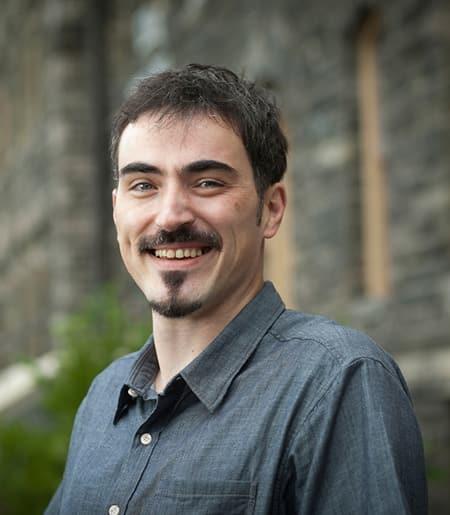
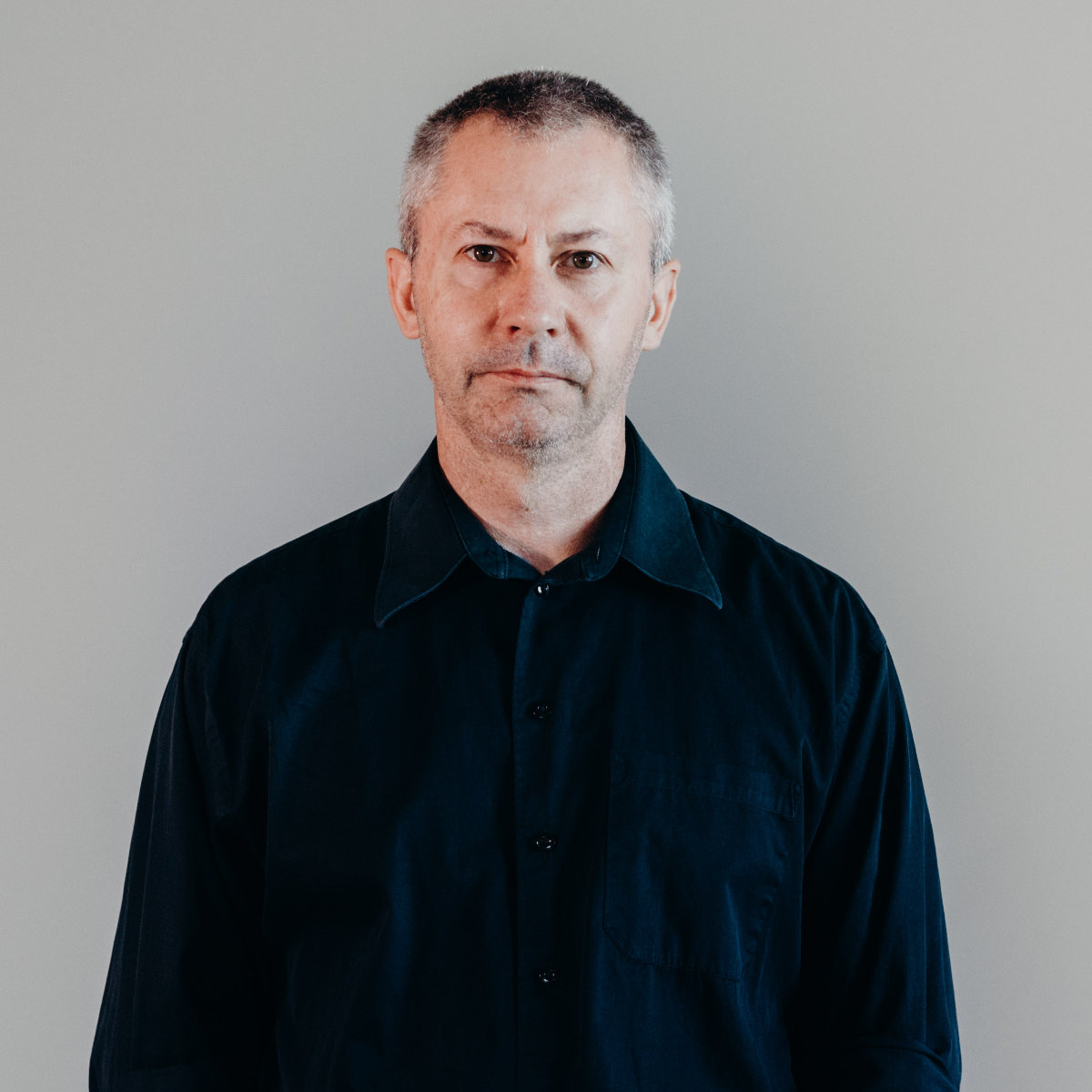
Miloje Despic is an Associate Professor in the Department of Linguistics at Cornell University , affiliated with the College of Arts and Sciences . His research spans theoretical syntax , morphology , and semantics , focusing on cross-linguistic variation and the syntax-morphology interface. Research Focus : Cross-linguistic variation in functional elements (e.g., articles), syntax-morphology interactions (e.g., hybrid agreement, clitic-affix distinction). Languages Studied : Slavic (Serbian, BCMS), Turkic, Algonquian (Cheyenne). Publication Trends : Recent work addresses reflexive possessive agreement in Mongolian, nominal ellipsis in Serbian, cyclic and multiple agreement in Cheyenne, markedness in Algonquian theme signs, and non-intersective adjectives. His research intersects syntactic theory , morphological anomalies , and semantic interpretation .
Meredith Tamminga is an Associate Professor of Linguistics at the University of Pennsylvania, where she directs the Language Variation and Cognition Lab . Her work bridges sociolinguistics , psycholinguistics , and theoretical linguistics , focusing on how linguistic variability is represented in mental grammar and how social context influences speech perception and production. She co-leads the Philadelphia Signs Project , exploring sign language sociolinguistics with collaborators at Penn and Gallaudet University. PhD in Linguistics (2014), University of Pennsylvania BA in Linguistics (2009), McGill University Her research integrates experimental methods with naturalistic speech analysis to study individual and group-level language change. Keywords include phonetics-phonology mapping , intraspeaker variation , and quantitative modeling . Notable grants include NSF awards and SAS Dean’s Mentorship Award . Key affiliations include MindCORE , Penn’s hub for integrative mind sciences, and collaborative ties to the Phonetics Lab , Child Language Lab , and Cultural Evolution of Language Lab . Her lab emphasizes cross-departmental research and welcomes undergraduate RAs and PhD students.
Prof. Dr. Gülşen Eryiğit is a Professor at Istanbul Technical University within the Faculty of Computer and Informatics , Department of Artificial Intelligence and Data Engineering . She founded and directs the ITU Natural Language Processing Group , Turkey's leading team in Turkish-language NLP, and serves as Senior Action Editor for ACL RR , Director of ITU TÖMER (Turkish Language Teaching Center), and Co-Chair of the EU UniDive Cost Action WG3. Education: PhD in Computer Engineering from ITU (2007), MSc and BSc from ITU and Marmara University Research: Focuses on Natural Language Processing for Turkish, including dependency parsing , coreference resolution , multiword expressions , and language education technology Her recent work involves multilingual transfer learning , LLM applications for Turkish text simplification, and gamification for morphology education. She has received prestigious awards like the Siemens Excellence Award and TÜBİTAK's Above Threshold Award . Her research has produced 65+ publications and 29+ projects funded by EU, TÜBİTAK, and industry partners. Scientific Awards: Siemens Excellence Award (2007) Above Threshold Award (TÜBİTAK, 2015) Certificate of Appreciation (EU 7th Framework, 2012) Thank You Plaque (ITU, 2017) The ITU NLP Group under her leadership has developed Turkey's first licensed NLP software exported internationally. She collaborates with European institutions through COST actions and participates in ACL, CoNLL, and LREC conferences. Her lab focuses on language technology for Turkish , including sign language processing and social media normalization.
Jonathan David Bobaljik is a leading linguist whose research spans formal syntax, phonology, and the documentation of endangered languages, particularly Itelmen. He is actively involved in multiple international research collaborations and regularly presents at major linguistic conferences across Europe and North America. His work is published in top journals such as Natural Language and Linguistic Theory and Language . His research interests lie at the intersection of theoretical and descriptive linguistics. He investigates universal patterns in morphology and syntax, including suppletion, vowel harmony, ergativity, and control structures, often using data from understudied languages like Itelmen. His work combines rigorous formal analysis with deep empirical grounding in language documentation. The recent publications reflect a strong trend toward integrating typological diversity with formal theory. Key areas include morphosyntactic universals (e.g., suppletion in pronouns), information structure in verb-final languages, and the phonology of ejective consonants. There is also a growing emphasis on sociolinguistic and community-based aspects, as seen in collaborative work on language revitalization and the social life of the Itelmen language. He has received recognition through numerous scholarly publications and invited talks, though specific awards are not listed in the provided text. His collaborative projects suggest active grant involvement, particularly in language documentation and cross-linguistic typology. Bobaljik plays a central role in the Itelmen documentation and revitalization project, contributing to the creation of a dictionary app, the publication of historical manuscripts, and public exhibits on Siberian Indigenous knowledge. He collaborates with a team including David Koester, Chikako Ono, Tatiana Degai, and Maria Pupynina.
Christiane Fellbaum serves as Lecturer with Rank of Professor in Princeton University's Program in Linguistics and Department of Computer Science, where she has been a senior research scholar since returning in 1987 after postdoctoral work at the University of Paris. Her foundational contributions to computational linguistics include co-developing WordNet and co-founding the Global WordNet Association. Her educational background features: Ph.D. in Linguistics, Princeton University (1980) Postdoctoral Fellowship, University of Paris Fellbaum's research integrates theoretical linguistics with computational applications, specializing in lexical semantics, corpus analysis, and semantic network construction. Her work bridges computational linguistics and lexicography through projects like WordNet and Medical WordNet, with recent emphasis on multilingual resources, bias analysis in embeddings, and African language technology development. She examines semantic phenomena including idioms, verb alternations, and emotion scales through both corpus linguistics and formal ontological frameworks. Analysis of her publication trajectory reveals sustained innovation in lexical resource development since the 2000s, evolving from foundational WordNet studies to contemporary work on large language model adaptation and social bias mitigation. Current research demonstrates increasing interdisciplinary collaboration across NLP, cognitive science, and social justice applications. Her scientific recognition includes: Wolfgang Paul Prize from the German Humboldt Foundation (2001) Antonio Zampolli Prize (2006) Fellbaum has secured continuous research funding from the U.S. National Science Foundation, European Union Seventh Framework, Frank Moss Foundation, and Tim Gill Foundation. She actively mentors junior researchers through Princeton's Independent Work seminars and hosts the North American Computational Linguistics Olympiad (NACLO), while leading major international collaborations including the KYOTO and SIERA European projects. As director of the WordNet project and permanent fellow at the Berlin-Brandenburg Academy of Sciences, she maintains leadership in global lexical resource initiatives through the Princeton Language and Intelligence initiative and Natural and Artificial Minds research group.
Marcin Wągiel is a semanticist affiliated with Masaryk University's Department of Czech Language and the Centre for Corpus and Experimental Research on Slavic Languages at the University of Wrocław. As an Alexander von Humboldt Fellow at Leibniz-Zentrum Allgemeine Sprachwissenschaft (ZAS), he researches mereotopology across linguistic domains. His work focuses on compositional semantics, quantification, and morphologically complex expressions. Research interests include: Parthood and mereotopological structures Subatomic quantification Cross-linguistic analysis of Slavic languages Semantic change and event semantics He received the E.W. Beth Dissertation Prize for his work on subatomic quantification. Current projects explore classifier constructions and additive numerals across languages.
Andrzej Majkowski is an Associate Professor at the Institute of the Theory of Electrical Engineering, Measurement and Information Systems, Faculty of Electrical Engineering, Warsaw University of Technology. His career spans over two decades of research in biomedical engineering, focusing on brain-computer interfaces, signal processing, and emotion recognition. Active in both teaching and research, he contributes to advancing methodologies in electrophysiological signal analysis. Warsaw University of Technology Institute of the Theory of Electrical Engineering, Measurement and Information Systems Faculty of Electrical Engineering Specializing in biomedical engineering , Majkowski's research bridges control systems and information technologies with neuroscience applications. His work explores brain-computer interfaces , EEG/EMG signal processing , and emotion recognition using multimodal physiological data. Recent studies focus on deep learning architectures for artifact removal and classification tasks. Recent publications highlight trends in CNN-LSTM hybrid models for signal denoising, convolutional networks for seizure detection, and machine learning applications in visual evoked potential analysis. His work spans both clinical applications (epilepsy monitoring) and human-computer interaction (emotion recognition, sign language detection). With over 98 documented publications and significant bibliometric indicators (h-index 13 in Scopus), Majkowski has supervised 95 promoted theses. His research includes one funded project and collaborations in biomedical instrumentation, though specific award details remain unspecified in available records.
Na'ama Pat-El is a Professor in the Department of Middle Eastern Studies at the University of Texas at Austin, affiliated with the College of Liberal Arts and the Middle Eastern Languages and Cultures Graduate Studies Committee (MELC GSC). She holds a Ph.D. (2008) in Semitic Philology from Harvard University, preceded by studies at Hebrew University under Gideon Goldenberg and Harvard under John Huehnergard. Education: Ph.D., 2008, Harvard University (Semitic Philology) B.A. and M.A., Hebrew University of Jerusalem Her research focuses on Comparative Semitic Linguistics, Historical Linguistics, Syntax, and Language Contact , with a particular emphasis on syntactic change and morphological evolution. She investigates phenomena such as the development of verbal paradigms, plural morphemes, and copulae across Semitic languages, including Akkadian, Hebrew, and Aramaic. Recent publications address topics like the nondevelopment of third-person nominative pronouns in Semitic perfect/stative paradigms, the diachronic shift of East Semitic subordination markers into West Semitic indicative markers, and the reevaluation of Hebrew 'sign' terminology through epigraphic and comparative evidence. Her work also challenges assumptions about paired body part gender assignment in Semitic languages. Selected Publications (2025–2020) explore: Proto-Semitic verbal morphology Historical syntax in Akkadian and Neo-Assyrian Plural-gender mismatches in Hebrew Substrate influences in Levantine Arabic Biblical text linguistics
Edna Andrews is the Nancy & Jeffrey Marcus Distinguished Professor of Slavic and Eurasian Studies and Professor of Linguistics and Cultural Anthropology at Duke University. She serves as Director of the Program in Linguistics, Director of Undergraduate Studies in the Linguistics Program, and Director of FOCUS, Duke's signature first-year seminar program. Her interdisciplinary work bridges Slavic studies, linguistics, anthropology, and cognitive neuroscience. Dr. Andrews earned her Ph.D. from Indiana University at Bloomington in 1984 and holds an honorary doctorate from St. Petersburg State University (Russia). Her academic journey has evolved from traditional Slavic linguistics to pioneering work at the intersection of language and brain sciences, reflecting her commitment to interdisciplinary scholarship. Professor Andrews' research focuses on cognitive neuroscience and multilingualism, semiotics (particularly Peircean and Lotmanian theories), and the neural basis of language processing. Her work examines how the brain processes multiple languages, the relationship between music and language cognition, and the semiotic foundations of linguistic structures. She has pioneered longitudinal fMRI studies of second language acquisition, challenging traditional linguistic models that often overlook the multilingual reality of most humans. Her research program has produced significant insights into how multilingualism affects brain structure and function, with implications for education, cognitive aging, and language rehabilitation. Andrews' work uniquely integrates theoretical linguistics with empirical neuroscience, creating a more comprehensive understanding of human language as situated within cultural and biological contexts. University Scholar/Teacher Award (2013) Richard Lublin Teaching Award Through her leadership of the Slavic & Eurasian Language Resource Center and numerous federally-funded grants from the U.S. Department of Education, Professor Andrews has secured significant research funding to advance understanding of language acquisition and multilingualism. Her collaborative approach brings together linguists, neuroscientists, anthropologists, and educators to tackle complex questions about language and the brain. Professor Andrews leads research teams through the Duke Institute for Brain Sciences and has developed innovative programs like Duke Intense Global (DIG), which combines intensive language training with neuroscience research. Her work with the Bass Connections in Brain & Society Research Team fosters interdisciplinary collaboration among students and faculty across multiple departments.
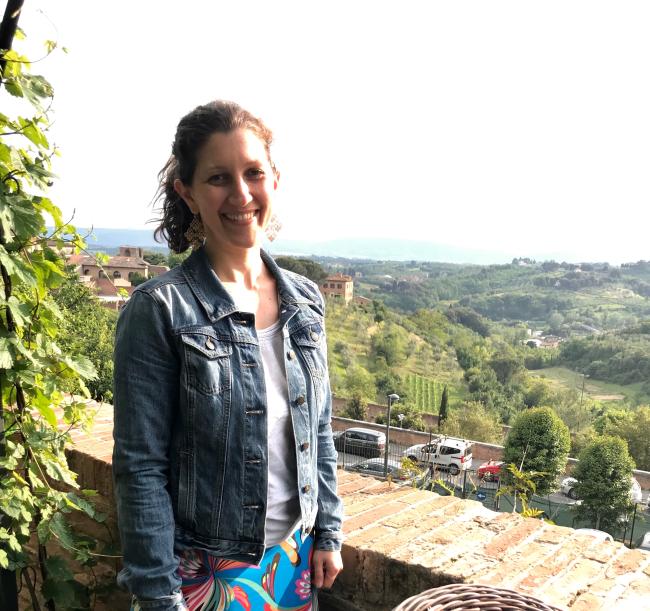
Dr. Jami Fisher serves as Senior Lecturer and Director of the American Sign Language (ASL) Program at the University of Pennsylvania's Department of Linguistics. Affiliated with the College of Arts & Sciences, their work focuses on documenting Philadelphia-area ASL variation, global deaf community collaborations (especially with Italian communities), and integrating sign language studies into broader linguistic curricula. Education includes an Ed.D. in Higher Education from UPenn (2014), M.S.Ed. (2002) and B.A. in Linguistics (1997). Their pedagogical innovations emphasize Academically Based Community Service (ABCS) partnerships with local organizations like the Pennsylvania School for the Deaf and Deaf-Hearing Communication Centre. Research interests bridge sociolinguistics and community engagement, analyzing the linguistic landscape's visual representation of sign languages and exploring how signed languages reflect cultural values. They co-lead the ASL/Deaf Studies minor program, integrating interdisciplinary coursework with field-based capstone projects. Program leadership includes developing UPenn's longest-running Ivy League ASL program, offering advanced courses in Deaf History, Culture, and Linguistics. Collaborative projects emphasize mutually beneficial partnerships with Deaf communities to ensure culturally responsive research and education.
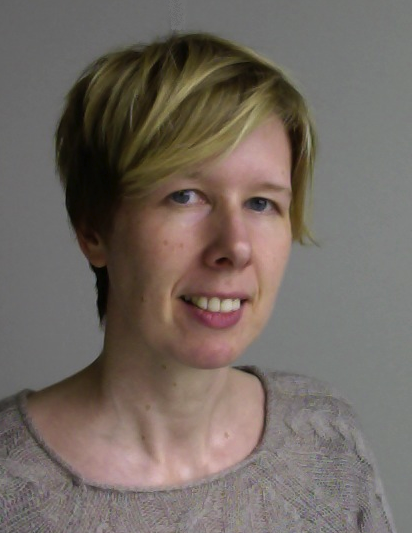
Dr. Silke Hamann is a researcher at the University of Amsterdam, Faculty of Humanities, Department of Linguistics. Her work bridges phonology and phonetics, focusing on the emergence of phonological features, perceptual cues in segmental contrasts, and the interaction of phonology with orthography and language acquisition. Current projects: diachronic loanword adaptation, congenital amusia's impact on speech perception, Bantu languages (with Nancy Kula and Laura Downing), Catalan studies (with Francesc Torres-Tamarit) Research interests span synchronic/diachronic phonology, phonetic perception, computational modeling of phonological acquisition, and cross-linguistic analysis of retroflex consonants. Her publications analyze phenomena in Korean, Japanese, Bantu languages, German, Portuguese, and Slavic languages, with recurring themes of cue weighting, phonological constraints, and orthographic influence. Recent articles highlight her focus on creaky voice diagnostics, loanword phonotactics, congenital amusia, and Bantu intonation systems. Collaborations with Nancy Kula (Bantu) and Francesc Torres-Tamarit (Catalan) underscore her international research network.
Dilara Torunoğlu Selamet serves as a Lecturer in the Department of Computer Engineering within the Faculty of Computer and Informatics at Istanbul Technical University. Holding a PhD, she specializes in Natural Language Processing for Turkish, with research emphases on social media text normalization, named entity recognition, and sentiment analysis. Her academic credentials feature: PhD in Computer Engineering, Istanbul Technical University (awarded circa 2013) Master of Science in Computer and Information Sciences (Non-thesis), Doğuş University (2009-2013) Bachelor of Science in Computer Engineering, Doğuş University (2004-2009) Dilara's scholarship tackles the complexities of Turkish NLP, a language with rich morphology. She has made notable contributions to text normalization for social media platforms, named entity recognition in authentic datasets, and semantic smoothing techniques for sentiment classification. Her work often bridges theoretical NLP with practical applications, as seen in resource-building projects like the ITU Web Treebank and Turkish sign language corpora. Her publication record (2011-2021) demonstrates methodical growth: initial work on text classification (2011) evolved into named entity recognition (2013) and social media normalization (2014, 2017), then expanded to data augmentation (2020-2021) and sign language processing (2020). This trajectory reflects her commitment to advancing Turkish NLP through both foundational research and innovative resource development. While no specific awards are documented, her research impact is evidenced by an h-index of 4 and over 127 citations in Scopus. Available information does not indicate any students supervised or research grants obtained. She is affiliated with Istanbul Technical University's Department of Computer Engineering, but no laboratory or research team memberships are specified in public profiles.
Dr. Steve Nicolle is a Professor specializing in Linguistics with extensive field experience in African language development and Bible translation. He teaches advanced courses including Discourse Analysis, Semantics & Pragmatics, and Historical & Comparative Linguistics, drawing on decades of practical translation work across East Africa. 1993–1996: D.Phil. in Linguistics, University of York, UK 1992–1993: Postgraduate Certificate in Education (UK teaching qualification) in English as a Second/Foreign Language, University College of North Wales, Bangor, UK 1988–1992: B.A. in Linguistics with Philosophy, University of York, UK Nicolle's research centers on African languages (particularly Bantu languages like Digo), Bible translation methodologies, language change processes, and text-level linguistic analysis. His work bridges theoretical linguistics with practical translation challenges, emphasizing how cultural context shapes discourse structures and semantic interpretation in low-resource languages. He has direct involvement with over 60 languages including Deaf Sign Languages through his consultancy work. Analysis of his 15 most recent publications reveals consistent focus on eastern Bantu narrative structures (2012-2017), with recurring themes of grammaticalization, demonstrative functions, and discourse analysis applied to translation. His work uniquely combines Bible translation training materials with academic research on language change, demonstrating how theoretical linguistics directly informs practical language development projects in African communities.
Marco Coniglio is a Professor of German Philology/Linguistics at the Department of German Philology, Georg-August-University Göttingen. His research spans historical grammar, syntactic theory, corpus linguistics, and digital humanities, with a focus on modal particles, information structure, and Germanic language interfaces. Key Research Areas: Historical Grammar, Modal Particles, Corpus Linguistics, Digital Humanities Projects: WiN-Korpus (Middle Low German Corpus), HIPKON (Historical Sermons Corpus), DFG Network on Subordinate Clauses Collaborations: Institute for Digital Humanities at Göttingen, Graduiertenkolleg 'Form-Meaning Mismatches' His 15 most recent publications (2021–2025) address Germanic syntax, modal particles, mood marking in subordinate clauses, and corpus-driven language change. Topics span grammaticalization of adverbs, information structure evolution, and comparative analysis across Old High German, Old Saxon, and Old English. Collaborative works include contributions to the 'Wörterbücher zur Sprach- und Kommunikationswissenschaft' project.
Roman Krivko is an Associate Professor at the Department of Slavonic Studies , University of Vienna. His research focuses on Old Church Slavonic , Byzantine hymnography , and historical linguistics of Slavic languages. Specializes in medieval Slavic epigraphy and liturgical text analysis Key contributor to studies on Christian traditions in Slavic contexts Active editor and researcher in international Slavic studies Research Themes include: Quantitative analysis of loanwords in Slavic Gospels Textological studies of service menaia and kontakia Historical development of Old Bulgarian language Linguistic networks in Central/Eastern Europe Scientific Contributions span Editorial work on Slověne journal Notable publications on the Temnić inscription and Samuil's epigraph Collaborations with institutions like Vinogradov Russian Language Institute