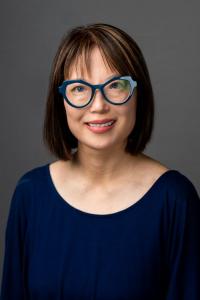
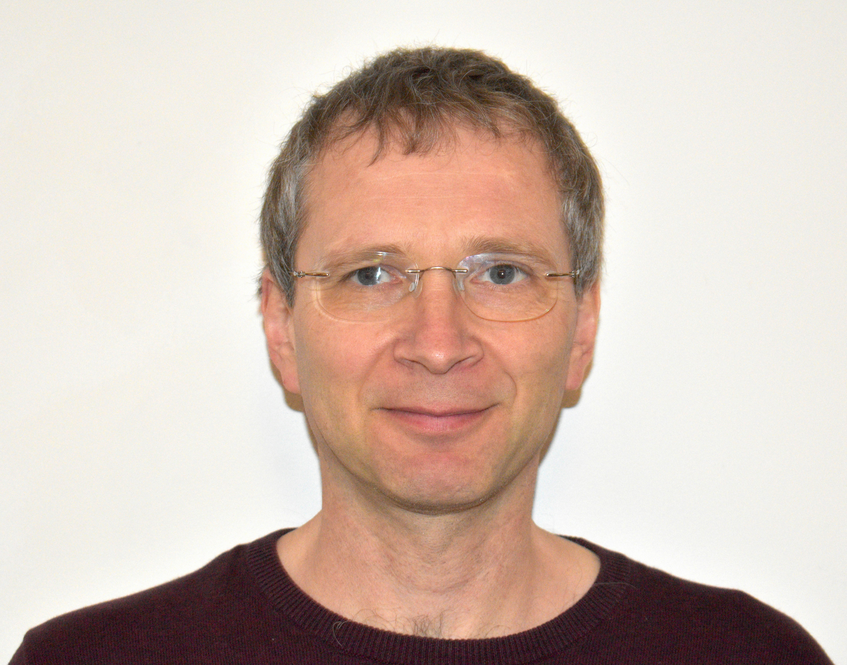
Joanne Weber, PhD (2018), is an Associate Professor in the Department of Educational Psychology at the University of Alberta's Faculty of Education. She holds a Canada Research Chair (Tier 2) in Deaf Education. Her work focuses on language and literacy education, arts-based interventions, and posthumanist theory applied to deaf education. Key areas include bimodal bilingual programs, sign language studies, and inclusive pedagogical practices. Education: PhD in Educational Psychology (University of Regina, 2018). Notable awards include the Governor General Academic Gold Medal (2019) and Saskatchewan Book Awards recognition for her creative works. She leads Deaf Crows Collective, fostering deaf cultural expression through theatre. Research emphasizes deaf community partnerships, policy analysis, and accessible curriculum design. Current projects include SSHRC-funded work on open educational resources and arts integration in deaf education. Grants total over CAD$500k, addressing deaf program evaluation, tactile dance performance, and inclusive online learning. Teaching includes courses on inclusive education, American Sign Language, and literacy assessment. Her publications explore deaf education through interdisciplinary lenses, blending qualitative research with creative methodologies.
Lina Hou is an Associate Professor in the Linguistics Department at the University of California, Santa Barbara (UCSB), and serves as Director of Graduate Studies. She holds a PhD in Linguistics from The University of Texas at Austin (2016) and completed a UC President's Postdoctoral Fellowship at UC San Diego (2016-2018). Her research focuses on signed language documentation, child acquisition of sign languages, and ethnographic approaches to linguistic socialization. She emphasizes linguistic justice and critical methodologies in her work. Research projects include a National Science Foundation Collaborative Award (2022-2025) investigating 'Function and form in the 'what' family of signs in American Sign Language,' led with Erin Wilkinson and Ryan Lepic (Grant #2141350). She has been actively presenting at conferences, including a 2024 panel on 'Crip Linguistics.' Awards: UC President's Postdoctoral Fellowship Teaching: Courses include Sign Languages & Signing Communities, First Language Acquisition, and Language Socialization at both undergraduate and graduate levels. Her work integrates linguistic analysis with sociocultural contexts, advocating for inclusive methodologies in linguistic research and education.
Dirk Delabastita is a Professor of English Literature and Literary Theory at the University of Namur (UNamur), where he contributes to the Namur Institute of Language, Text and Transmediality (NALTT) and previously served as head of the English Department. He is a research fellow at KU Leuven’s CETRA and co-founder of the European Shakespeare Research Association (ESRA). His editorial leadership included editing Target journal and founding the Shakespeare in European Culture book series. Doctor of Letters, KU Leuven (1990) Secondments: Guest Professor at UCLouvain (2010-2013), Francqui Chair (2013-2014) His research spans Shakespeare’s translation and multilingualism, wordplay theory, literary terminology, and cross-cultural reception. He has supervised numerous PhD projects on Shakespearean translation and WWII film linguistics. His 2013-2022 work with the Shakespeare in European Culture series continues to shape interdisciplinary studies. Recent publications focus on multilingualism in performance, Shakespeare’s prophetic themes, and multimodal language translation. Awards include the prestigious Francqui Chair. Administrative roles include serving on UNamur’s Faculty steering group (2013-2022) and the Central University Library’s Philo-lettres Council (2020-present).
Nicholas Heron is a Lecturer in Political Science at the School of Political Science and International Studies within the Faculty of Humanities, Arts and Social Sciences at the University of Queensland, where he also serves as Undergraduate Convenor of Political Science and Public Policy. Previously, he was a Research Fellow at the University of Queensland's Institute for Advanced Studies in the Humanities. Education: PhD, University of Melbourne Dr Heron specializes in modern political thought and theory, with core research areas including the history of political thought, political theology, and historiography. His work critically examines the reception of pre-modern political ideas in modern contexts, engages with theological concepts in political formation, and analyzes intellectual-historical methodologies. Current research focuses on post-WWII responses to the 'end-of-history' diagnosis and liturgical dimensions of political power. His publication record reveals consistent engagement with European political theorists including Giorgio Agamben, Carl Schmitt, and Reinhart Koselleck. Recurring themes across his work include sovereignty, civil war, human dignity, and conceptual history, demonstrating a methodological bridge between historical analysis and theoretical innovation in political philosophy. Dr Heron has secured competitive research funding including a 2018-2019 Universities Australia-Germany Joint Research Co-operation Scheme grant for 'Immanent Hermeneutics in Modern and Postmodern Literature' and a 2016 UQ Early Career Researcher grant for 'On Dante's political theology: according to Ernst Kantorowicz'. He is available for higher degree research supervision.
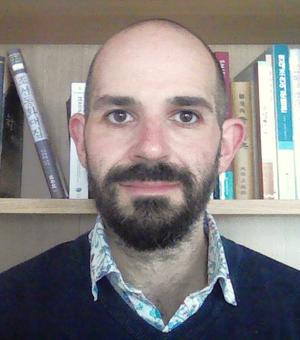
Simon Barnes-Sadler is a Departmental Lecturer in Korean Studies and Academy of Korean Studies (AKS) Postdoctoral Research Fellow at the University of Oxford. He teaches postgraduate Research Methods for Contemporary Korean Studies and undergraduate/postgraduate Prescribed Texts in Korean Studies courses. Affiliation: University of Oxford, Faculty of Asian Studies Projects: Core member of AKS-funded 'Research and Teaching Hub for K-Wave Korean Studies in Europe'; Partner for Oxford Policy Engagement Network's Korean language education initiative His research focuses on Korean linguistic variation through interdisciplinary methods, including: Traditional, quantitative, and perceptual dialectology Social cognition of language variation Digital humanities (GIS, network analysis, data visualization) Korean Wave's impact on language practices Language pedagogy Recent publications examine English appropriation in K-Pop, translanguaging in BTS fandoms, and Korean dialect divergence in diasporic and inter-Korean contexts. He also serves as corresponding editor for Hallyu: The Korean Wave journal.
Aneta Pavlenko is an Affiliated Research Professor at the Center for Multilingualism in Society across the Lifespan at the University of Oslo, Faculty of Humanities, Department of Linguistics and Scandinavian Studies. She previously served as Past President of the American Association for Applied Linguistics (2014-2015) and chaired the 2014 AAAL conference in Portland. Pavlenko maintains an active research program focusing on multilingualism, bilingualism, and forensic linguistics, with particular emphasis on language and identity, crosslinguistic influence, and narratives in multilingual contexts. Her research interests span multiple dimensions of multilingualism, including bilingual cognition , language ideologies , and forensic applications of linguistic knowledge. Pavlenko's work frequently examines how language proficiency affects legal comprehension, particularly regarding Miranda rights for non-native English speakers. She also investigates linguistic landscapes, historical multilingualism, and the emotional dimensions of language use in second languages. Pavlenko's publications reveal a strong focus on the intersection of language, law, and identity, with numerous articles exploring how multilingual speakers navigate legal systems and how language policies affect rights comprehension. Her recent work includes examining multilingual ghost signs in historical memory landscapes and analyzing how Russian has become commodified across Europe. TESOL Award for Distinguished Research (2009) British Association for Applied Linguistics Best Book of the Year Award (2006) AAAL Research Article Award (2021) AAAL Distinguished Scholarship and Service Award (2023) Chair of the 2014 AAAL conference in Portland As a leading scholar in applied linguistics, Pavlenko has contributed significantly to understanding how language shapes identity and cognition in multilingual contexts. Her work bridges theoretical linguistics with practical applications in legal settings, language education, and policy development. She has been instrumental in highlighting the challenges faced by non-native speakers in legal contexts and advocating for improved communication of rights across language barriers.
Helga Gese is a Senior Lecturer at the Department of German Linguistics Didactics, University of Tübingen, focusing on grammar didactics, language reflection, semantics, and pragmatics. She leads the DFG network "i-Funktionen sprachlicher Zeichen im Kontext der Sprachreflexion" and co-leads the project "Praktiken der Wissenschaftskommunikation und die Dynamik des Common Ground" within SFB 1718. Her research bridges theoretical linguistics with pedagogical applications, particularly in adjectival passives and word formation. Education: Second State Exam in German, Philosophy/Ethics, French (2016); PhD in Philosophy (2013) with dissertation on adjectival passives; First State Exam in German, Philosophy (2005). Her research interests include grammar didactics, language reflection, semantics, pragmatics, and sociolinguistics. Recent publications analyze modality, tense semantics, and word formation in educational contexts. She has supervised numerous student theses on topics like language ideologies, corpus studies, and digital learning platforms. Gese actively organizes conferences and workshops on linguistic and didactic innovations. Current teaching includes advanced courses on linguistic variation, sociolinguistics, and grammar didactics for M.Ed. and B.Ed. students. She also leads the "Grammatikpropädeutikum" program for transitioning students into German studies.
Dr. Sonja Gipper is a researcher at the University of Cologne , affiliated with the Institute of Linguistics and its General Linguistics department. Her work focuses on the Yurakaré language of Bolivia, language socialization, and interactional linguistics. Educational Background: PhD in Linguistics (2011, Radboud University Nijmegen) Documentation Project (2006-2011, DobeS/Volkswagen Foundation) Research Interests: Language socialization in endangered contexts Epistemic markers in conversation Cross-linguistic pragmatics Ontological shifts in language attitudes Feedback signals in signed/spoken languages Scientific Awards: IPrA's Pragmatics of an Understudied Language Award (2023) Projects & Collaborations: Language Challenges (SSLAC, Uni Cologne) SCOPIC Project (Comparative Corpus Analysis) DFG Network: Interactional Linguistics Conversational Priming in Language Change (2021-2022, FORUM Funded) ELDP Documentation Projects Global South Studies Center (Covid-19 Impact Research) Publications highlight her contributions to understanding Yurakaré grammar, evidentiality, and interactional structures.
James Slotta serves as Associate Professor in the Department of Anthropology within the College of Liberal Arts at the University of Texas at Austin. Holding a Ph.D. from the University of Chicago, he maintains active research and teaching commitments with contact via jslotta@utexas.edu. His academic background includes: Ph.D. in Anthropology, University of Chicago Dr. Slotta's research investigates political communication, listening practices, expertise, and science communication through the lens of knowledge circulation. His fieldwork in Papua New Guinea's Yopno Valley examines anarchic communities and liberal democratic theory, while North American studies focus on health information dissemination and democratic engagement. Current projects analyze health misinformation dynamics and the political significance of listening practices. His recent publications (2015-2025) demonstrate interdisciplinary convergence across linguistic anthropology, political science, and communication studies. Key patterns include multilingual practices in global contexts, the politics of reception in democratic systems, and cross-cultural communication frameworks spanning Papua New Guinea, Ethiopia, and the United States. His work consistently addresses social justice, language endangerment, and digital media's impact on information ecosystems. Dr. Slotta teaches diverse courses including Cultural Anthropology (ANT 302), Cultural Relativism (T C 302), and Culture and Communication (ANT 307/LIN 312C), alongside specialized seminars on ethnographic methods, science communication, and endangered languages. While specific grant details aren't provided, his sustained fieldwork in Papua New Guinea and collaborative projects indicate active research funding supporting his anthropological investigations.
Martin Reisigl serves as Associate Professor in the Department of Linguistics at the University of Vienna's Faculty of Philology and Cultural Studies. His academic profile shows active engagement in teaching courses including Introduction to Pragmatics, Text Linguistics and Discourse Analysis, Introduction to Sociolinguistics, and Introduction to Language Policy for both the 2025 winter and summer semesters. His research spans multiple interdisciplinary domains with a strong focus on critical approaches to language and society. Reisigl's research interests form a rich tapestry of linguistic inquiry centered on Applied Linguistics with particular emphasis on Critical Discourse Analysis . His work explores the intersections of language with power structures, examining sociolinguistic phenomena, discourse practices, and pragmatic functions across various contexts. He investigates how language operates in political communication, medical settings, environmental discourse, and gender relations. His theoretical framework draws extensively from semiotics, particularly Peirce's sign theory, and integrates perspectives from political linguistics, ecolinguistics, and argumentation theory. A significant portion of his recent work focuses on climate change discourse, analyzing how narratives, storytelling, and linguistic framing shape public understanding of the climate crisis. His scholarship consistently addresses issues of discrimination, examining manifestations of racism, nationalism, populism, and gender-based discrimination through linguistic analysis. Analysis of Reisigl's recent publications reveals a strong trajectory toward examining contemporary sociopolitical issues through linguistic lenses. His work demonstrates increasing focus on climate discourse, where he critically examines narrative frameworks and their implications for public understanding of environmental crises. Simultaneously, he maintains rigorous engagement with right-wing populism, analyzing ambivalent discursive strategies particularly regarding gender relations. His scholarship shows integration of computational approaches to discourse analysis, as seen in his work on AI applications for detecting hate speech. The publications consistently employ the Discourse-Historical Approach, reflecting his methodological commitment to understanding language in its social and historical contexts. Reisigl actively contributes to academic discourse through numerous invited lectures at international institutions, addressing topics ranging from climate communication to critical discourse analysis methodology. His work bridges theoretical linguistic inquiry with practical applications for social understanding and intervention, maintaining a consistent critical perspective on language-power relationships across diverse contexts.
Chaise LaDousa is the Christian A. Johnson Excellence in Teaching Professor of Anthropology and Director of Education Studies at Hamilton College. His work focuses on language, education, and institutions in India and the United States. He holds a Ph.D. from Syracuse University and has conducted extensive field research in North India. Key research areas include linguistic anthropology, nationalism, and the role of education in social class dynamics. His publications include Hindi Is Our Ground, English Is Our Sky (2014) and House Signs and Collegiate Fun (2011). He has received multiple awards for teaching and research, including the Dean’s Scholarly Achievement Award (2012). LaDousa has also served as Department Chair of Anthropology and held roles in Hamilton College’s governance bodies. Research interests span visual language, gender studies, and the anthropology of institutions. Current projects explore neoliberal influences in higher education and the cultural politics of language medium policies in India. He has led grants from the National Science Foundation and contributed to curriculum development initiatives. Education: B.A. University of Chicago; M.A./Ph.D. Syracuse University Grants: NSF Grant SBR-9629784 (1996–97), Hamilton College Faculty Research Grants (2004–2006) Labs/Teams: Active in Hamilton College’s Anthropology Department, collaborating with colleagues on projects linking education, language, and social inequality.
Lucien Brown is the Korea Foundation Associate Professor in Korean Studies at Monash University's Faculty of Arts. He holds editorial roles at the Journal of Pragmatics and Korean Linguistics . Previously, he worked at the University of Oregon (2011–2017) and earned his MA and PhD in Korean Studies from SOAS University of London. His research focuses on socio-cultural linguistics and pragmatics, particularly Korean's multimodal communication of politeness/impoliteness through gestures, prosody, and embodied practices. He emphasizes practical applications in language pedagogy. Key research areas include: Politeness research and multimodal communication Socio-cultural aspects of second language learning Language and identity in Korean Embodied interaction and gesture studies Recognition includes the Commendation for Outstanding Contribution to Teaching and Learning (2020) and Professor Chung-Sok Suh Paper Award (2022) . His work contributes to UN SDGs related to quality education and reducing inequalities through language accessibility. Active projects include: Where Gesture Meets Grammar: Crosslinguistic Multimodal Communication (ARC-funded) 31st Japanese/Korean Linguistics Conference (international collaboration) Monash Korean Studies Beyond Borders (2023–2028) Teaching focuses on integrating multimodal approaches into Korean language education. He supervises PhD students in pragmatics, sociolinguistics, and Korean studies.
Levente Sulyok is a Professor of Painting and Drawing at Wichita State University's College of Fine Arts, within the School of Art, Design and Creative Industries (ADCI). Born in Hungary and based in the U.S. since 1991, his work explores intersections of aesthetics, language, and political resistance through visual art. He holds an MFA from Rhode Island School of Design (2006), a BA in Art Practice from UC Berkeley (2003), and a Collegiate Teaching Certificate from Brown University. Education: MFA, Painting, Rhode Island School of Design, 2006 BA, Art Practice, University of California at Berkeley, 2003 His art critically engages commercial imagery and slogans, recontextualizing them as acts of resistance. Notable projects include Small Pleasures (2012–2016), an interactive installation at the Ulrich Museum of Art, and Documenta Detour in Kassel, Germany. Solo exhibitions include All the Paranoid Monoliths (2012) at Martina Johnston Gallery, reviewed as an 'aesthetically cohesive' exploration of 'voluble silences.' Current projects focus on collaborative interventions and philosophical inquiries into visual form. Sulyok's practice emphasizes transformative reworking of existing signs to expose ideological gaps.
Janet McIntosh , Professor of Anthropology at Brandeis University, is a cultural and linguistic anthropologist with fieldwork-based expertise in East Africa and the United States. Her research spans personhood, militarization, ethnoreligious boundaries, colonialism, and white nationalism, with a focus on semiotic analysis and language ideology. Education: Ph.D. (2002) and M.A. from University of Michigan; B.A. from Harvard (summa cum laude) and University of Oxford (first class honors). McIntosh examines necropolitical language in the U.S. military and has edited Language in the Trump Era: Scandals and Emergencies (Cambridge, 2020). Her articles highlight intersections of language, power, and affect in contexts from neoliberal Indonesia to alt-right movements. Recent publications (2021-2025) include analyses of: Military necropolitics and dehumanizing epithets Alt-right semiotics in "Let's Go Brandon" and QAnon Essentialism and the "Manosphere" Trump-era linguistic emergencies Neoliberal moral discourse in Indonesia She has received numerous accolades including the Clifford Geertz Prize, NEH and ACLS Fellowships, and multiple teaching awards. Her work appears in leading journals such as American Ethnologist , Journal of Linguistic Anthropology , and Signs and Society .
Judith Pine, PhD, is a Professor of Anthropology at Western Washington University. She specializes in linguistic anthropology, focusing on semiotics, ethnographic practice, and the intersection of language with cultural identity. Her research spans the Greater Mekong Subregion, particularly among upland Southeast Asian and southwest Chinese communities, addressing themes of indigeneity, globalization, and language endangerment. Education : B.A. in Anthropology, Kansas State University M.A. and Ph.D. in Anthropology, University of Washington Research Focus : Pine’s work integrates theoretical frameworks with ethnographic fieldwork, emphasizing how meaning is constructed through habitual social practices. Her studies on Lahu communities explore language maintenance, religious identity, and the role of literacy in cultural preservation. She advocates for broader access to anthropological tools to promote social justice and critique toxic ideological structures. Media & Advocacy : Pine has been involved in federal repatriation initiatives and cultural heritage projects, as evidenced by recent media coverage. Her interdisciplinary approach bridges anthropology, linguistics, and semiotics to address contemporary global challenges.