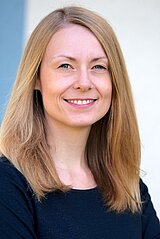
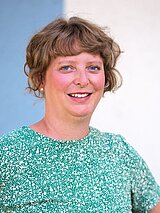
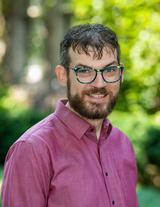
Marie-Noelle Simard is an Associate Professor at the School of Rehabilitation, University of Montreal. Her research focuses on child neurodevelopment, particularly in at-risk populations such as children born prematurely or with congenital heart defects. She specializes in neurodevelopmental screening, identification of delays, and designing adapted physical activity programs. Education: B.Sc. in Occupational Therapy, University of Montreal (2001) M.Sc. in Biomedical Sciences (Rehabilitation Option), University of Montreal (2003) Ph.D. in Biomedical Sciences (Rehabilitation Option), University of Montreal (2009) Postdoctoral Research at Université Laval (2013) Her main ongoing projects include improving neurodevelopmental screening practices for preterm infants, validating early clinical and biological markers for developmental delays, systematic monitoring of children with congenital heart disease, and developing/evaluating parent-child yoga programs for neurorehabilitation. Her research spans pediatrics, developmental medicine, and rehabilitation sciences. Selected publications highlight her work on the Ages and Stages Questionnaire validation, motor development in congenital heart disease, sensory assessment in autism, and longitudinal studies of preterm infants. She collaborates with institutions like CHU Sainte-Justine Research Center and Université Laval.
Dr. Charles Markham is an Associate Professor in the Department of Computer Science at Maynooth University's Faculty of Science & Engineering. He graduated with a degree in Applied Physics from Dublin City University and earned his PhD in element specific imaging in computerised tomography. His research spans novel imaging systems, biomedical instrumentation, and human-computer interaction with a strong focus on brain-computer interfaces and motion capture technologies. Research Affiliations: Hamilton Institute, ALL Institute Teaching: Robotics, Computer Graphics, Advanced Computer Architecture Professor Markham's research interests center on novel imaging technologies including coded aperture imaging and wide-baseline stereo systems, motion capture and wearable computing with applications in rehabilitation, and mobile machine vision for driving simulation and augmented reality. His work with the Mathematics and Statistics Ecology group demonstrates interdisciplinary interests in ecological modelling . His publication record shows consistent contributions to brain-computer interfaces (2007-2011), driver behavior analysis (2014-2021), motion capture systems (2006-2009), and optical imaging techniques (2001-2008). The research spans multiple disciplines including neuroscience, biomedical engineering, and ecological mathematics. He has supervised several graduate students including D. Kelly (2009 thesis on sign language recognition) and J. Foody (2007 thesis on motion capture biofeedback systems). His collaborations extend across institutions with partnerships at TU Dublin and University College Dublin.
Lilia Rissman serves as an Assistant Professor at Rochester Institute of Technology (RIT) in Rochester, NY, specializing in cognitive science and language research. Her work investigates how cognitive biases shape language representation and learning across diverse linguistic systems, integrating methodologies from adult semantic representation studies, cross-linguistic analysis, emerging sign languages, and child language acquisition. A core focus involves event semantics, particularly conceptual frameworks surrounding agency, instrumentality, and causation. Contact is facilitated via lrrgsh@rit.edu .
Dr. Katharina Urbann is a Research Fellow in the Department of Sign Language and Audio Pedagogy at Humboldt University of Berlin's Institute of Rehabilitation Sciences within the Faculty of Cultural, Social and Educational Sciences. She has established herself as a leading researcher in deaf education, sexual violence prevention, and multilingual education for deaf and hard-of-hearing students. Her research interests focus on prevention of sexualized violence against children and adolescents with hearing impairments, sex education for people with hearing impairments, foreign language teaching with students with hearing impairments, and language education for newly immigrated deaf and hard-of-hearing students. She leads the 'Sign Language in the Foreign Language Classroom' (SiLC) research group and works on the 'Digital protection against sexualized violence against children and adolescents with hearing impairments' (DigGaH) project. Dr. Urbann's recent publications (2023-2025) demonstrate her expertise across multiple domains, with a strong focus on digital sexual violence against deaf/hard-of-hearing youth, culturally responsive teaching for deaf multilingual learners, and bimodal-bilingual education approaches. Her work spans empirical research, educational resource development, and practical classroom strategies. Her scientific contributions include: Investigations into digital sexual violence against deaf and hard-of-hearing adolescents Development of culturally responsive teaching strategies for deaf multilingual learners Research on English language learning among deaf students Creation of sex education materials specifically designed for children and adolescents with hearing impairments Analysis of communicative competence as a factor in preventing digital sexual violence As an educator, Dr. Urbann supervises academic theses and teaches courses on bimodal-bilingual education, sex education for hearing-impaired students, and language education for newly immigrated deaf and hard-of-hearing students. She offers specialized sign language consultation hours for students and maintains an active research agenda with numerous international collaborations.
Katie Schuler is an Assistant Professor in the Department of Linguistics at the University of Pennsylvania. Her research focuses on how children acquire language, particularly through distributional learning and regularization of linguistic variation. She leads the Child Language Lab , which investigates topics like recursive structures, statistical learning, and phonological development. Key research areas: Language Acquisition, Neurolinguistics, Cognitive Linguistics, and Statistical Language Learning. Teaching: Courses include Neurolinguistics , Data Science for Studying Language and the Mind , and Introduction to Linguistics . Her recent publications examine how similarity and consistency shape language learning, children’s regularization of variation, and constraints on recursive structure acquisition. She has received awards such as the Best paper by untenured scientists (2023).
Hélène Giraudo is a CNRS researcher affiliated with the Cognition, Languages, Language, Ergonomics (CLLE) at University of Toulouse Jean Jaurès. She works in the Languages and Language team, focusing on psycholinguistics and cognitive psychology. Research Interests: Her work bridges cognitive psychology and psycholinguistics, with emphasis on morphological processing, mental lexicon modeling, and language acquisition. Key areas include affix processing, written production in children, and bilingualism. Morphological decomposition in French Phonotactic constraints in L1 acquisition Word perception in expert vs. apprentice readers Article Trends: Recent publications explore morphological salience in French words, cross-linguistic priming effects, and L2 processing mechanisms. She frequently uses experimental methods like letter-search tasks and masked priming. Teaching: She teaches psycholinguistics and linguistics at University of Toulouse Jean Jaurès, integrating her research into courses on cognitive psychology and language sciences.
Liz Hirshorn is a Professor in the Department of Psychology at the State University of New York at New Paltz, where she directs the Diversity in Language Lab (DiLL). Her research employs behavioral and EEG methodologies to investigate individual differences in skilled reading and cognitive interactions, with particular focus on alternative pathways to literacy that challenge conventional reading models. Her research program centers on psycholinguistics and cognitive neuroscience, specifically examining how skilled reading develops through variable cognitive routes. Key projects include comparing English and Chinese reading processes to identify shared cognitive mechanisms between distinct writing systems, and investigating relationships between reading and face processing to understand lifelong neuroplasticity. Her work has significant implications for understanding struggling readers and developing alternative literacy interventions. Dr. Hirshorn actively advises thesis students in psycholinguistics using behavioral or EEG methodologies, with recent projects exploring music-reading skill relationships and attentional differences in video game players. Her lab emphasizes experimental approaches to cognitive psychology with applications to educational contexts. She maintains an active publication record spanning cognitive neuroscience, psycholinguistics, and reading research, with recent work focusing on holistic word processing, bilingual reading, and neuroplasticity in deaf populations. Her research demonstrates consistent methodological rigor through combined behavioral and neuroimaging approaches.
Dr. Jennifer Beal is a faculty member in the Department of ASL/Interpreting and Deaf Education at Valdosta State University, Georgia. She contributes to both undergraduate and graduate programs in this field, focusing on education and interpreting for the deaf community. Email: jsbeal@valdosta.edu Phone: 229.219.1317 Location: 1029 Education Center, Valdosta State University Her research interests include: American Sign Language (ASL) Education Deaf Education Interpreting Studies Linguistics Special Education Language Acquisition
Carina Lüke is a Professor and Chair of the Department of Pedagogy and Intervention for Language and Communication Impairments at the Institute for Special Education within the Faculty of Human Sciences at Julius-Maximilians-Universität Würzburg. Since August 2020, she has held this prestigious position, leading research and teaching in the field of language disorders and communication impairments. She also serves as the Representative for Equal Opportunities for Women in Science at the Faculty of Human Sciences, demonstrating her commitment to diversity and inclusion in academia. Prof. Lüke earned her Doctor of Philosophy (summa cum laude) from Technical University of Dortmund in 2015, following a Master of Science in Clinical Linguistics from Bielefeld University in 2010. Her academic journey includes positions as Research Project Leader at Paderborn University (2018-2020), Visiting Professor at Heidelberg University of Education (2018-2019), and Research Project Leader at Technical University of Dortmund (2016-2018). She also spent time as a Visiting Scholar at the University of Pittsburgh in 2018. Her research focuses on language and communication development, with particular emphasis on the definition and terminology of language development disorders, diagnosis and therapy for language development delays, multilingualism, supportive communication, and gesture research. She has made significant contributions to understanding how early gesture usage predicts later language abilities, and how multimodal approaches can enhance language learning for children with communication needs. Her work bridges theoretical understanding with practical applications in educational settings, especially in inclusive classrooms. Her publication record reveals several key trends: a strong focus on developmental language disorders terminology and diagnostics, innovative approaches to language assessment (particularly through tools like the Mottier Test), and groundbreaking research on the role of gestures in language acquisition. Her work increasingly addresses multilingual contexts and the intersection of language development with other cognitive domains like theory of mind and metaphor comprehension. Recent publications highlight her leadership in developing clinical guidelines for language disorder interventions across German-speaking countries. Delphi-Study on Definition and Terminology of Developmental Language Disorders (2023-2024) German S3 Clinical Guideline on Interventions for Developmental Language Disorders (2024) Multilingual Assessment Tools Development (Mottier Test) Gesture Research in Language Acquisition Prof. Lüke has secured research funding from major German funding bodies including the BMBF and DFG. Her research group includes doctoral students, research assistants, and collaborators across multiple institutions. She has developed practical materials for educators and clinicians, including 'Gesten und Gebärden zur Wortschatzförderung in Kita & Grundschule' (2024), which translates research into classroom applications. Her research team at the University of Würzburg operates within the Chair of Pedagogy and Intervention for Language and Communication Impairments, conducting studies on projects including ModaKiS, Multitasking, SprESE, and STARKE STIMME macht SCHULE. The team collaborates with outpatient clinics, schools, and international research groups to translate findings into practical applications for children with language development disorders.
Dr. Verena Frank is a Scientific Associate at the Chair of Pedagogy and Intervention for Language and Communication Impairments within the Institute for Special Education at Julius-Maximilians-Universität Würzburg. She contributes to research in the Focus research laboratory IkoGeWo project and teaches in academic speech therapy and teacher training programs. Her research focuses on Early childhood language acquisition Pre-linguistic communication Preventative language strategies Cross-cultural infant vocal development with particular emphasis on multimodal approaches in inclusive settings. Recent publications highlight trends in Iconic gesture applications for vocabulary expansion German Sign Language (DGS) integration Infant comfort sound analysis Preterm infant communication development Acoustic vocal research Early intervention frameworks spanning academic speech therapy, developmental linguistics, and special education. She supervises bachelor's theses in academic speech therapy and participates in state examination committees. Active in the Deutscher Bundesverband der akademischen Sprachtherapeuten (dbs), her work connects academia with practical implementation in Sprach-Kitas and schools.
Tiner Özcelik serves as a Scientific Associate in the Department of German Didactics within the Department of Education and Psychology at the Free University of Berlin, working under Prof. Dr. Petra Wieler since December 2010. Her dual role encompasses teaching responsibilities in primary school German education and active research on linguistic diversity in multicultural contexts, particularly focusing on urban language phenomena. She earned her Magistra Artium in German Linguistics and English Philology through studies at Humboldt-Universität zu Berlin and Freie Universität Berlin between 1996 and 2005, establishing her foundation in linguistic theory and multilingual education. Özcelik's research centers on German didactics through sociolinguistic lenses, with specialization in multiethnolects like Kiezdeutsch, language acquisition in migrant communities, and intercultural pedagogy. Her work examines how grammatical structures and vocabulary function in real-world educational settings, particularly in neighborhoods with high migrant populations, and explores pedagogical strategies for multilingual classrooms. Her publication history from 2006 to 2023 reveals a cohesive research trajectory examining German language education through sociolinguistic frameworks. Key thematic threads include the analysis of contact language varieties, intercultural mentoring dynamics in higher education, and the pedagogical implications of urban youth language, consistently bridging theoretical linguistics with practical classroom applications. She actively contributes to the Learning and Research Workshop for Literary Education, participating in initiatives like the Long Night of Science and the monthly Picture Book feature, which connect academic research with public engagement in literary education.
Aaron Kaat is an Associate Professor in the Department of Medical Social Sciences at Northwestern University's Feinberg School of Medicine. His research focuses on neurodevelopmental disorders, patient-reported outcome measures (PROMs), cognitive assessment tools, and psychometrics. He is affiliated with institutions such as the Institute for Innovations in Developmental Sciences, the Center for Patient-Centered Outcomes, and the Northwestern University Clinical and Translational Sciences Institute (NUCATS). Kaat's work involves developing and validating standardized tools like the NIH Baby Toolbox® and Mobile Toolbox for assessing neurodevelopmental domains including executive function, memory, language, motor skills, and social-emotional functioning. His recent publications examine pandemic impacts on early intervention systems, cross-cultural psychometric validation, and clinical trial readiness for rare disorders like SCN2A-related syndromes and Duchenne muscular dystrophy. He employs mixed-methods approaches, simulation studies, and novel psychometric methodologies such as bookmarking and measurement invariance analysis. Research also includes technology-based assessments (iPad, smartphone platforms), caregiver-mediated interventions, and addressing biases in developmental measurements across diverse populations.
Valentina Adami is Associate Professor of English Language, Translation, and Linguistics at the Department of Human and Social Sciences, University of Bergamo. Her work focuses on innovative pedagogical approaches in English language teaching, particularly in primary and preschool contexts. Current academic rank: Associate Professor Affiliated with: University of Bergamo , Free University of Bolzano/Bozen (former), University of Verona (former) Research interests include: CLIL methodology for early language education Storytelling and translanguaging in primary school Ecolinguistics and ecocriticism in educational contexts Integration of digital humanities and augmented reality in language teaching Publication trends show focus on: Environmental discourse analysis (2023) Sign language pedagogy (2023) Eco-trauma fiction studies (2022) CLIL implementation challenges (2022) Climate change representation in literature (2021) She contributes to projects like GROW, CaRe & Education (2025-2027) investigating inclusive education for children with diverse needs.
Professor Bronwyn Everett is Deputy Head of the School of Nursing at the University of Wollongong, where she has held a leadership position since 2022. She also served as an Adjunct Professor at Western Sydney University from August 2022 to August 2023. With over 30 years of academic experience in nursing education and research, Professor Everett has made significant contributions to nursing workforce development, cardiovascular disease prevention, and patient safety. Her research interests span several critical areas in contemporary healthcare: nursing education and workforce development (particularly in aged care settings), cardiovascular disease prevention and management, and patient safety including clinical communication, falls risk prevention, and safety culture. Professor Everett has led substantial research projects including the ACCELERATE Plus Trial, which evaluates a nurse-led intervention for improving patient assessment and communication across 24 wards in eight hospitals. Professor Everett's publication record demonstrates consistent productivity with over 136 research outputs as of the latest count. Her recent work shows a clear focus on practical solutions to pressing healthcare challenges, particularly in nursing workforce sustainability, patient safety interventions, and healthcare transitions for vulnerable populations. Her research often employs qualitative and mixed methods approaches to address complex healthcare issues. Her scientific contributions have been recognized through research funding including the NSW Small Business Innovation & Research program grant for 'Vital Signs Monitoring' (2022-2023). Professor Everett maintains an active supervision portfolio with multiple PhD students working on diverse topics related to nursing practice and healthcare delivery. As an educator, Professor Everett has taught at both undergraduate and postgraduate levels throughout her career, receiving awards for her teaching of clinicians. She is deeply committed to ensuring quality learning experiences for students and developing future nursing leaders. Her leadership extends beyond her formal role as Deputy Head of School to include significant contributions to research initiatives and professional development across the nursing field.
Stephanie Clark serves as a Lecturer in the Department of World Languages, Literatures & Cultures at the College of the Holy Cross, where she specializes in Deaf Studies, Sign Languages, and comparative world literatures. Her academic role integrates language pedagogy with cultural studies across multiple linguistic contexts. Her educational qualifications include: Master of Education (M.Ed.) from the University of Massachusetts Research interests emphasize the sociolinguistic dimensions of Deaf communities, American Sign Language acquisition, and narrative analysis in global literary traditions. Her work bridges theoretical frameworks with practical language education methodologies, focusing on accessibility and cross-cultural dialogue in multilingual environments. Professional engagement centers on curriculum development within language studies, with particular attention to inclusive educational practices for Deaf and hard-of-hearing students. Current activities include teaching specialized courses in Sign Language and world literature seminars.