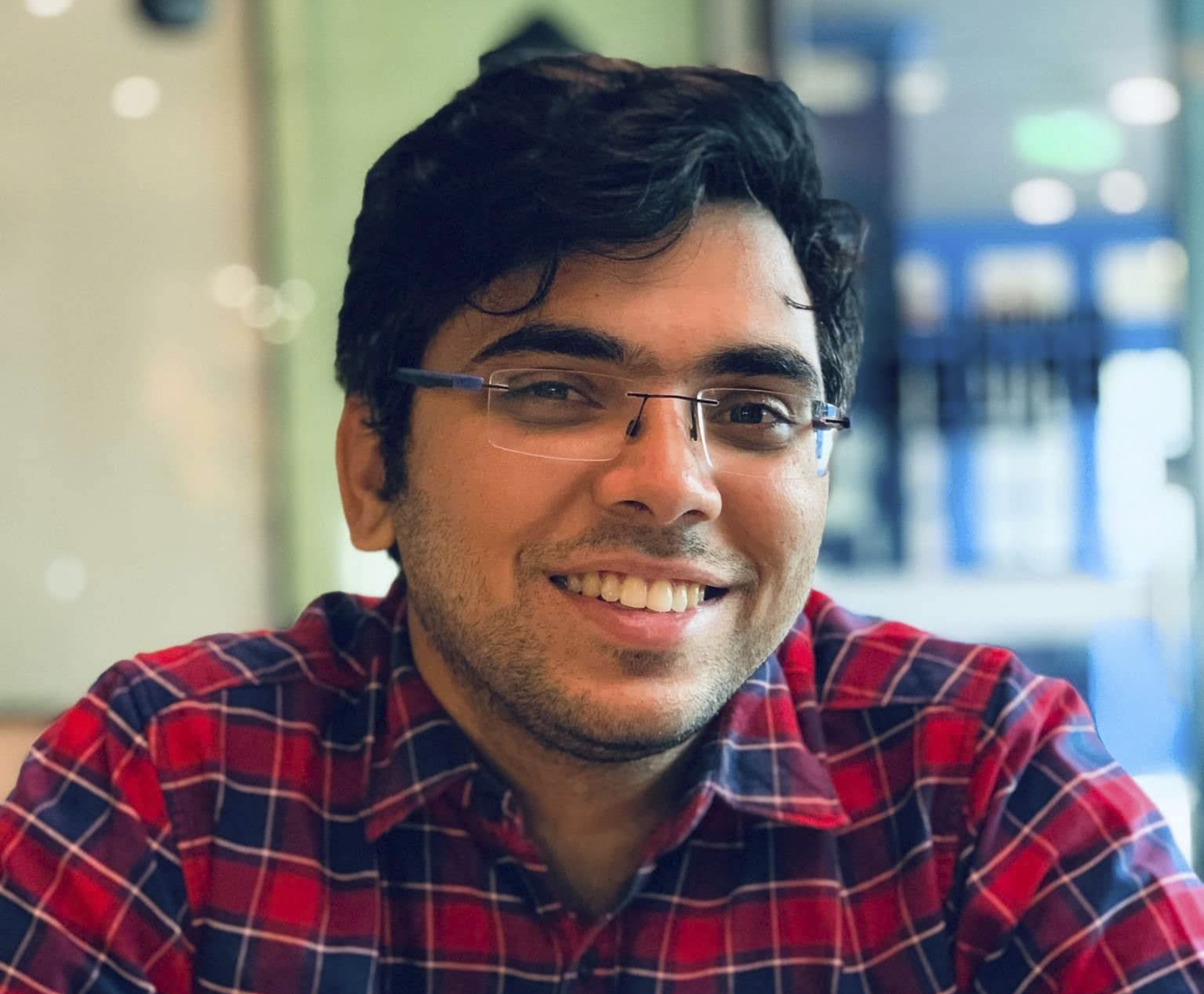
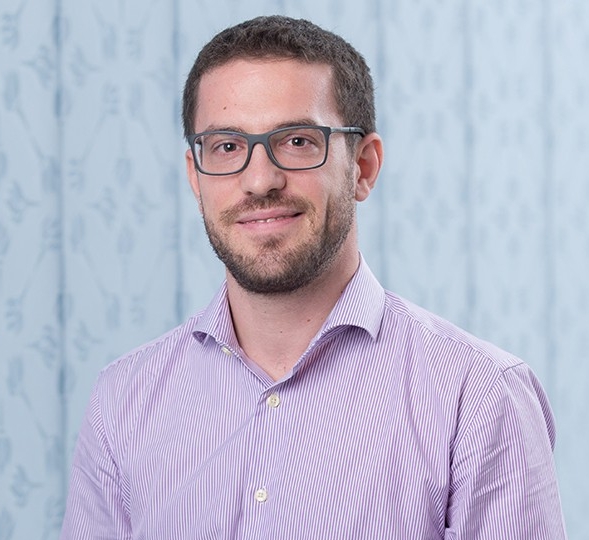
Yuanchao Xu is an Assistant Professor in the Department of Computer Science and Engineering at the University of California Santa Cruz. He earned his Ph.D. from North Carolina State University, advised by Dr. Xipeng Shen and Dr. Yan Solihin, and is a student researcher at SystemResearch@Google since 2021. His research spans computer architecture, security, and ML systems.
Patanjali Sristi is an Assistant Professor at Augusta University's School of Computer and Cyber Sciences, specifically within the Department of Cybersecurity Engineering. Located at 100 Grace Hopper Lane in Augusta, Georgia, Dr. Sristi joined the university in January 2025 after previously working as a Postdoctoral Researcher at the University of Florida with Dr. Swarup Bhunia. Their academic journey began with a B.Tech in Electrical and Electronics Engineering from Pondicherry University in 2011, followed by both MS and Ph.D. in Computer Engineering from the Indian Institute of Technology (IIT Madras). Dr. Sristi's educational background demonstrates a strong foundation in electrical engineering and computer science, with advanced specialization in hardware security. Their Ph.D. research at IIT Madras was supervised by Dr. Kamakoti Veezhinathan, focusing on critical aspects of hardware security that would form the basis of their future research career. Dr. Sristi's research program centers on addressing one fundamental question: "How can we design, measure and build efficient and affordable security assurances for a given hardware design in the context of an untrusted supply chain while respecting the design constraints at each level of abstraction?" This research vision spans three interconnected domains: AI for System Design: Developing data models and AI techniques for next-generation hardware systems AI for Hardware Security: Creating AI models for vulnerability detection, countermeasure evaluation, and mitigation of supply chain threats Cybersecurity for AI: Establishing metrics and algorithms for secure development, deployment, and operation of AI systems Dr. Sristi's scholarly output reveals a consistent focus on hardware security challenges within the modern distributed electronics supply chain. Their work demonstrates a progression from foundational research on hardware trojans and side-channel attacks toward comprehensive frameworks addressing the emerging "zero trust" paradigm in hardware security. A notable trend is the integration of AI/ML techniques with traditional hardware security approaches, reflecting the evolving nature of security threats and countermeasures. Their publications span prestigious venues including IEEE Transactions on VLSI Systems, IEEE Transactions on Computers, and various IEEE conferences, indicating strong recognition within the hardware security community. While specific awards aren't detailed in the available information, Dr. Sristi's research impact is evident through multiple US patents (including US Patent 11,899,827 and US Patent App. 17/392,376) and invitations to deliver talks at prominent organizations including Sony Finishing School, Northrop Grumman, and IEEE events. Their work on Netflix Privacy Analysis was featured in Wired, demonstrating real-world relevance and impact. Dr. Sristi actively engages with students through courses including CSCI 8940 (Dissertation Research), CSCI 8720 (Problems in Computer & Cyber), and CSCI 7900 (Research Colloquium). Their research program appears well-supported through collaborations with major institutions and industry partners, as evidenced by workshops conducted for the Indian Army in conjunction with Pravartak and IIT Madras. These partnerships suggest substantial research funding and collaborative opportunities that enhance the educational experience for students. Though specific lab information isn't provided in the available text, Dr. Sristi's research scope suggests involvement with hardware security laboratories equipped for VLSI design, testing, and security evaluation. Their work on IoT security, hardware trojans, and supply chain security would require facilities for physical device testing, side-channel analysis, and hardware emulation. The focus on "zero trust" implementation for hardware security indicates a research environment that bridges theoretical security models with practical implementation challenges.
Anrin Chakraborti is an Assistant Professor in the Department of Computer Science at the University of Illinois at Chicago, affiliated with the College of Engineering. His work bridges cryptography, systems, and theory to build privacy-preserving technologies for real-world challenges. Ph.D. in Computer Science from Stony Brook University (2020) Postdoctoral Researcher at Duke University B.Tech in Computer Science from Jadavpur University, India Chakraborti’s research focuses on three core areas: Secure Cloud Computing: Developing cryptographic mechanisms to protect data confidentiality and integrity in cloud environments against side-channels and malicious providers. Privacy in Collaborative Systems: Designing tools for private information sharing in cyber-physical systems and collaborative learning pipelines, including autonomous vehicle communication. Deniable Communication & Storage: Creating storage and messaging systems resistant to coercion, backdoors, and key compromise through plausibly deniable encryption. His publications demonstrate a consistent focus on privacy-enhancing technologies, oblivious protocols, and secure storage solutions. Notable contributions include Wink (deniable secure messaging), INVISILINE (plausibly-deniable storage), and ORAM-based protocols for cloud data privacy. He teaches graduate courses like CS 588 (Security & Privacy in Networked Systems) and CS 594 (Applied Cryptography), emphasizing hands-on implementation of secure systems.
Toby Murray is a Professor in the School of Computing and Information Systems at the University of Melbourne, where he serves as Director of the Defence Science Institute and Co-Lead of the Computer Science Research Group. His work bridges formal methods, cybersecurity, and practical system security, with significant contributions to verified security and vulnerability detection. Murray's research focuses on building highly secure computing systems cost-effectively, with expertise in formal verification, information flow security, and vulnerability detection. His current research projects include Verisimilar (Verified, Secure Machine Learning), EDEFuzz (Detecting excessive data exposure in web applications), COVERN (Proving information flow security of concurrent programs), and Time Protection (Proving timing channel freedom for seL4). His work combines theoretical rigor with practical implementation, resulting in multiple open-source tools including SecC, Legion, and Underflow. Murray's recent publications demonstrate a consistent focus on verified security properties across diverse domains, from neural networks to concurrent systems. His work often bridges the gap between formal methods and practical security concerns, with increasing attention to machine learning security and policy implications of technical security measures. His publications span top venues in security, formal methods, and software engineering. Distinguished Paper Award at ICSE 2024 for EDEFuzz work on detecting excessive data exposure in web applications Extensive media commentary on cybersecurity issues including CrowdStrike outage analysis and social media regulation Regular contributions to The Conversation and Pursuit on cybersecurity policy matters Murray has advised numerous PhD students to completion, including Lianglu Pan (EDEFuzz), Zhiyuan Zhang, Mo Zhang, and Renlord Yang. He currently supervises multiple PhD students working on security verification, machine learning security, and web application security. His service includes being Program Chair for CSF'25, Associate Editor for IEEE Security & Privacy and ACM TOPS, and membership in IFIP's WG 1.7 and WG 2.3. His research group has developed multiple significant software tools including SecC (Verified Security for Concurrent C Programs), Legion (Principled Automatic Test Case Generation), and Underflow (Compositional Vulnerability Detection for C Programs), all available under open source licenses. Murray's work often involves discovering and reporting bugs in security analysis tools during his research, demonstrating the practical impact of his verification approaches.
Gail-Joon Ahn is a Professor of Computer Science and Engineering at Arizona State University (ASU), serving as the Founding Director of the Center for Cybersecurity & Trusted Foundations (CTF) and the SEFCOM Laboratory. Previously, he was an Associate Professor at the University of North Carolina at Charlotte, leading the Center for Digital Identity and Cyber Defense Research. He holds a Ph.D. in Computer Science from George Mason University (2000). His research focuses on security analytics, big data-driven security intelligence, vulnerability management, identity privacy, and formal security models. Notable contributions include work on SDN security, phishing defense, and user-centric identity management systems. His research has been funded by major agencies like NSF, NSA, DoD, DOE, and industry partners including Cisco, Intel, and Microsoft. Ahn has received prestigious awards, including IEEE Fellow (2023), ACM Distinguished Scientist (2015), and the DOE Early Career Award (2003). He serves on editorial boards of top journals (e.g., IEEE TDSC, ACM TIFS) and chairs conferences like ACM CCS and ACM SACMAT. His leadership roles include steering committees for cybersecurity initiatives and advisory boards for institutions like NC A&T State University. Education: Ph.D., Computer Science, George Mason University, 2000 Key Grants: NSF-CISE (Privacy-Aware Data Sharing), NSA (DoD Information Assurance), DOE (Assured Resource Sharing) Labs: SEFCOM Lab, CTF Center
Milos Prvulovic is a Professor in the School of Computer Science at Georgia Institute of Technology's College of Computing. His research focuses on computer architecture, hardware security, and physical side channels, particularly leveraging electromagnetic emissions for program monitoring, malware detection, and secure execution. He has published extensively in top-tier conferences like HPCA, MICRO, and IEEE Transactions series. His work has been recognized with awards including ACM Senior Member (2009) and multiple best paper awards. Teaching includes courses such as High Performance Computer Architecture (OMS CS 6290/CS 4290), Processor Design (CS 3220), and advanced topics like Reliability & Security in Computer Architecture (CS 7292/8804). His research lab explores innovative solutions for embedded system security, IoT protection, and side-channel vulnerabilities. Key contributions include the EMSim tool for electromagnetic side-channel simulation, REMOTE malware detection framework, and the EDDIE anomaly detection system. Collaborations with Alenka Zajic and others highlight interdisciplinary work in hardware-software security interfaces.
Setareh Rafatirad is an Assistant Professor in the Department of Electrical and Computer Engineering at George Mason University's College of Engineering and Computing. Her research spans hardware security, machine learning for security applications, and IoT security systems. Her research interests focus on hardware security, machine learning for security applications, IoT security, side-channel attacks, and malware detection. She has developed innovative approaches for securing integrated circuits, detecting malware using machine learning techniques, and protecting against side-channel vulnerabilities in computer systems. Her work bridges the gap between hardware design and security, creating practical solutions for emerging security challenges in computing systems. Her recent publications demonstrate a strong trend toward applying machine learning techniques to security problems, particularly in hardware and embedded systems. She has made significant contributions to understanding and mitigating side-channel attacks, developing secure machine learning models, and creating efficient security solutions for resource-constrained devices. Her work shows increasing interdisciplinary reach, connecting hardware security with healthcare applications and educational technologies. Dr. Rafatirad has collaborated extensively with researchers including Houman Homayoun, Avesta Sasan, and Sai Manoj P. Dinakarrao. She has secured research funding for projects related to hardware security and machine learning applications, though specific grant details are not provided in the available information.
Michail Maniatakos is a Global Network Associate Professor of Electrical and Computer Engineering at NYU Tandon and a Research Associate Professor at NYU Abu Dhabi, serving as Program Head of Computer Engineering. He holds a PhD in Electrical Engineering from Yale University. His primary affiliations include the NYU Center for Cybersecurity (CCS) and directs the Modern Microprocessor Architectures (MoMA) Lab. Education: B.Sc. in Computer Science (University of Piraeus, 2006), M.Sc. in Embedded Systems (University of Piraeus, 2007), M.Sc. in Computer Engineering (Yale, 2008), M.Phil. in Electrical Engineering (Yale, 2009), and Ph.D. in Electrical Engineering (Yale, 2012). Research focuses on encrypted computation, industrial control systems security, and 3D printing security. His work is funded by the U.S. Office of Naval Research, DARPA, and Abu Dhabi's Department of Education and Knowledge. He has authored numerous IEEE/ACM publications, holds patents on privacy-preserving data processing, and serves on conference technical committees. Recent articles explore hardware security, adversarial machine learning, and privacy-preserving computation. His teams have developed secure microprocessor architectures and frameworks for ICS vulnerability analysis. Awards include Senior Member of IEEE. Teaching includes courses like Computer Organization and Architecture and Hardware Security , emphasizing design, security, and ethical implications of emerging technologies. Active in research initiatives such as the NYUAD secure microprocessor project and ICSFuzz framework development. Labs/Groups: MoMA Lab (specializing in microprocessor architectures and security), affiliated with NYU CCS. Collaborates on projects like TREBUCHEt (FHE accelerators) and ICSML (industrial control ML frameworks).
Alexandra Dmitrienko is a researcher at the University of Würzburg's Institute of Computer Science. Her work focuses on cybersecurity, privacy-preserving technologies, and secure machine learning systems. She has collaborated extensively with institutions like TU Darmstadt and the University of California. Her research spans federated learning security, IoT device protection, Tor network analysis, and mobile platform vulnerabilities. Key contributions include defenses against poisoning attacks in federated learning, analysis of contact discovery exploits in messengers, and practical SGX cache attack mitigations. She has authored over 90 publications across top conferences like NDSS, CCS, and USENIX Security, and contributed to open-source tools like DNNShield and ClearMark for model ownership verification.
Stefan Rass is a full Professor at Alpen-Adria-Universität Klagenfurt (AAU), with additional affiliation at Johannes Kepler University Linz (JKU). He holds the academic title Univ.-Prof. (Universitätsprofessor) and possesses advanced degrees including PD (Privatdozent), Dipl.-Ing. (Diplom-Ingenieur), and Dr. (Doctor). His research spans multiple institutions and projects, with a focus on security and risk management through game theory applications. Professor Rass's research interests center around Security and Risk Management, Decision and Game Theory for Security, Security Infrastructures (including Key Distribution and Management, PKI, and Authentication), Unconditional and network security, Applied Quantum Cryptography, and Complexity Theory and Statistics in Security. His work bridges theoretical computer science with practical security applications, particularly in quantum networks and critical infrastructure protection. His recent publications demonstrate a strong trend toward interdisciplinary security research, combining game theory with quantum cryptography, robotics security, and AI-powered penetration testing. The articles reveal increasing focus on practical applications of theoretical security concepts, with notable work in quantum networks, deniable encryption techniques, robotics security benchmarking, and AI-assisted security testing. His research shows consistent evolution from theoretical foundations toward real-world implementation challenges. Professor Rass leads multiple ongoing research projects including Machine Learning for Risk Management, Safe and Secure Robotic Systems Engineering (SEEROSE), Simulation and analysis of critical network infrastructures in cities (ODYSSEUS), and security for cyber-physical value networks Exploiting smaRt Grid systems (synERGY). These projects, primarily funded by FFG (Austrian Research Promotion Agency), demonstrate his leadership in securing critical infrastructure and developing next-generation security frameworks.
Prof. Máire O'Neill is a Professor of Information Security at Queen's University Belfast, leading the Centre for Secure Information Technologies and the UK Research Institute in Secure Hardware and Embedded Systems (RISE). She holds a MEng and PhD from Queen's University Belfast under Prof. Sir John McCanny. Her work focuses on hardware security, including attack-resilient computer hardware, PUFs, post-quantum cryptography, and secure embedded systems. Notable achievements include a six-fold improvement in AES hardware efficiency and patented PUF techniques addressing counterfeiting. Key roles include EPSRC Leadership Fellowship and Royal Academy of Engineering Fellowship. Research interests span hardware security architectures, nanotechnology-based security, and quantum-resistant cryptography. Awards include Royal Irish Academy membership, Irish Academy of Engineering Fellowship, and British Female Inventor of the Year. Recent projects include the EU H2020 SAFEcrypto initiative for post-quantum encryption and TruDetect for hardware Trojan detection. She advises on cybersecurity for IoT and connected devices, emphasizing secure manufacturing and long-term system resilience against quantum threats. Labs/Teams: Principal Investigator at the Centre for Secure Information Technologies (CSIT) and RISE. Active in multi-national collaborations like the EU's SAFEcrypto. Supervised over 8 PhD students (details in full description). Grants include funding from EU H2020, EPSRC, and industry partnerships.
Francesco Regazzoni is a Senior Researcher at the Faculty of Informatics, Università della Svizzera italiana (USI), and affiliated with the Dalle Molle Institute for Artificial Intelligence (IDSIA USI-SUPSI). His work bridges embedded systems, cybersecurity, and artificial intelligence, with a focus on securing hardware and cyber-physical systems. Research Interests: His expertise spans embedded and cyber-physical systems security, side-channel attacks, post-quantum cryptography, hardware trojans, random number generators, and the security of AI and approximate computing. He also contributes to hardware/software co-design and operating systems security. The analysis of his recent publications reveals a consistent focus on hardware and system-level security , particularly in resource-constrained environments like IoT and embedded devices. His work integrates machine learning for attack detection and applies formal methods to ensure trust in hardware. A growing emphasis is placed on securing AI systems from physical and adversarial threats. Scientific Contributions: Over 100 peer-reviewed publications One book and one patent Extensive international collaboration (Belgium, Netherlands, USA, Switzerland, Singapore) Advising and Grants: While specific advisees and grants are not listed, his leadership in funded research projects and involvement with ALaRI and IDSIA suggest active mentorship and project coordination. His work has been supported by industry (e.g., ST Microelectronics, HP), the Swiss National Foundation, and the European Union. Labs and Teams: He is part of the Graph Machine Learning Group (GMLG) at IDSIA, which evolved from the Advanced Learning and Research Institute (ALaRI). This group focuses on graph machine learning, reinforcement learning, and dynamical systems, particularly in non-stationary environments.
UnivProf.Dr. Delphine Reinhardt is a Professor of Computer Science at the University of Göttingen, serving as Head of the Computer Security and Privacy group and Head of the Dean's Office of the Faculty of Mathematics and Computer Science. She is a core member of the Institute of Computer Science and the Campus Institute Data Science (CIDAS). Her work focuses on privacy engineering in emerging technologies like smart devices, extended reality (XR), and human-robot interaction. Research interests include privacy-preserving computation, IoT security, and ethical AI applications. Her recent work explores privacy challenges in smart speakers, telepresence robots for hospitalized children, and cross-platform XR privacy solutions. She leads multiple courses on security and privacy, including advanced seminars and lab internships. Her publications analyze user privacy perceptions across cultures and technologies, with a focus on quantifying privacy risks in smart environments. She actively contributes to standards through leadership roles, balancing academic research with institutional governance responsibilities. Lab affiliations include the Computer Security and Privacy research group, which develops tools like PrivXR and SensitivAlert. She collaborates on EU-funded projects addressing privacy in smart workplaces and autonomous systems.
Yi Zhu is a Professor of Marketing and holder of the Margaret J. Holden and Dorothy A. Werlich Endowed Professor at the Carlson School of Management, University of Minnesota . His work bridges Industrial Organization , Quantitative Marketing , and Chinese Economy with a focus on digital advertising, platform economics, and consumer search behavior. Education PhD in Business Administration, University of Southern California (2013) MA in Economics, University of British Columbia (2004) MA in Management, Shanghai Academy of Social Sciences (2002) BE in Industry Engineering, Shanghai University of Electric Power (1998) His research applies Industrial Organization to Marketing , examining online auctions , advertising mechanisms , media slant , and Chinese economic dynamics . Recently, he has explored two-sided platforms and surge pricing effects on consumer complaints. Publications span Marketing Science , Management Science , and Journal of Marketing Research , with work highlighted in Harvard Business Review and Forbes . His advertising research includes auction design, TV-to-online search interactions, and budget-constrained advertiser behavior. Scientific Awards Winner of John D.C. Little Award (2015) Winner of Don Morrison Long Term Impact Award (2023) 3M Nontenured Faculty Grant (2013-2016) Marketing Science Institute (MSI) Scholar (2022, 2023) Holds the Carlson School Outstanding Teaching Award (2022) and serves as Associate Editor for Marketing Science . Teaching includes Marketing Analytics for MBAs and Marketing Strategy for undergraduates, with consistently high instructor ratings. Referees for top journals like Management Science and Information Systems Research .
Dr. Aryan Pasikhani is a Lecturer in Cybersecurity at the University of Sheffield , affiliated with the Security of Advanced Systems research group . Holding a PhD from the same institution, his research focuses on Intrusion Detection Systems , Reinforcement Learning , and Quantum Computing applications in security. Specializes in securing Embedded Systems and Internet of Things architectures Active in Adversarial Machine Learning and Privacy-Preserving Technologies Peer-reviewer for IEEE Internet of Things Journal and IEEE Transactions on Industrial Informatics His recent work explores 6LoWPAN security through reinforcement learning and Federated Learning frameworks for privacy-preserving data analysis. Awards include Fellow of the Higher Education Academy . Current grants involve real-time ransomware detection (CipherGrit) and automated threat modeling for AI systems. He supervises four PhD students and teaches Security of Control and Embedded Systems .