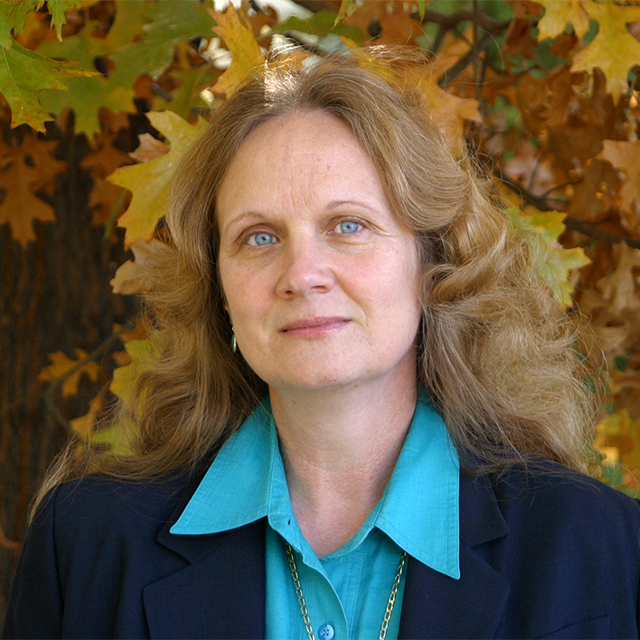
Vanessa Delgado is an Assistant Professor of Sociology at Washington State University (WSU). She holds a Ph.D. in Sociology from the University of California, Irvine (2022). Her research focuses on Latino/a families’ experiences with immigration policies, educational trajectories, and family dynamics in socio-politically restrictive environments. Key areas include immigrant integration, children’s roles in families, and the impact of legal status on socio-economic outcomes. Dr. Delgado employs qualitative methods to explore how immigrant families navigate punitive policies. Her work has been published in journals like Law & Policy , Journal of Latinos and Education , and Sociological Forum . She is currently completing a book manuscript examining how Latino/a children of immigrants influence family integration processes. Her research trends emphasize the intersection of legal status, family obligations, and educational systems. Articles often highlight marginalized groups’ resilience strategies, such as undocumented youth acting as legal brokers or younger siblings shaping siblings’ academic paths. These studies underscore structural barriers faced by Latino/a communities and advocate for policy reforms in education and immigration. Dr. Delgado has no listed awards but actively engages in policy-oriented research. Her advising and grants focus on campus support systems for immigrant students. She is affiliated with WSU’s sociology department and contributes to interdisciplinary discussions on immigration and education equity.
Colleen Murray is a Professor of Sociology and interdisciplinary social psychology at the University of Nevada, Reno. She also holds an adjunct professorship in Human Development and Family Studies. Her affiliations include the Public Health, Justice Management, Gerontology Academic Program, and Gender, Race, and Identity programs. Previously, she served as director of the interdisciplinary social psychology Ph.D. program (2003-2015) and interim director of the School of Social Research and Justice Studies (2011-2012). Education: Ph.D. in Family Relations and Human Development, Ohio State University (with minors in Family Sociology and Research Methods/Statistics) M.A., University of Akron B.S., University of Akron Murray’s research focuses on grief, family dynamics, and interdisciplinary social psychology. Key interests include: Cultural and media influences on grief and loss Intersection of health and justice in technology adoption Advancing research methods and family theories Social construction of relationships and self in diverse contexts Her current projects involve drone usage by first responders, mixed-status immigrant families, and historical media analysis of mass tragedies. She collaborates across disciplines like engineering and computer science in the social behavioral drone lab. Publications: Murray has authored works in journals such as Family Relations , Behavioral Sciences and the Law , and Journal of Applied Social Psychology , with a focus on qualitative and quantitative explorations of bereavement, family systems, and cultural comparisons. Awards: Fellow in Thanatology (Association for Death Education and Counseling) Advising & Grants: With $2+ million in grants, Murray advises doctoral students on topics like terror management theory and transnational family stress. Current advisees include Jordan Reuter and Ashley Thompson. She emphasizes culturally-responsive theoretical models and integrates feminist principles into research. Labs/Teams: Her social behavioral drone lab group meets weekly to study human-drone interaction risks/benefits in rescue scenarios. Collaborators include mechanical engineers, computer scientists, and students from diverse backgrounds.
Richard Gonzalez is the Amos N. Tversky Collegiate Professor of Psychology and Statistics at the University of Michigan, with joint appointments in Statistics and Marketing. He is affiliated with the Research Center for Group Dynamics, Center for Human Growth and Development, UM Comprehensive Cancer Clinic, and Center for Computational Medicine and Bioinformatics. He leads the Biosocial Methods Collaborative at the Institute for Social Research and co-founded the Design Science Program. He earned his Ph.D. in Psychology from Stanford University in 1990, with research focusing on judgment and decision making, applied statistics, and medical decision making. His work bridges theoretical models with practical applications in healthcare technology, product design, and aging studies. His recent research emphasizes AI-driven medical diagnostics (e.g., dementia detection via Vision Transformers), caregiving dynamics, and social determinants of health. He collaborates across disciplines, integrating methods from psychology, statistics, and computational science to address complex societal challenges. His affiliations span multiple centers, reflecting a commitment to interdisciplinary research. His work on dyadic health profiles and pandemic caregiving adaptations highlights his focus on systemic and relational aspects of health.
Elika Bergelson is the John L. Loeb Associate Professor of the Social Sciences in the Department of Psychology at Harvard University, within the Faculty of Arts and Sciences. She leads the Bergelson Lab (BLAB), part of Harvard's Laboratory for Developmental Studies, focusing on infant language acquisition. Her research examines how infants learn words by studying both cognitive mechanisms and environmental input through naturalistic and lab-based methods. Her research interests center on infant language acquisition , cognitive development , and word learning , with a focus on how language input, social interaction, and sensory experience shape early linguistic knowledge. She explores word comprehension, phonological and semantic representations, and the role of variability in talker and wordform input. Her lab has pioneered large-scale cross-linguistic studies and expanded into atypical development, including language acquisition in blind and deaf infants. The 15 most recent publications reflect a strong trend in naturalistic data collection , cross-linguistic comparison , and methodological innovation , particularly in using LENA recordings and open science practices. Topics include acoustic and talker variability, vocabulary development in sensory-impaired children, remote infant testing, and the reliability of speech analysis tools. Dr. Bergelson is committed to diversity, equity, and inclusivity in research and lab recruitment. She actively promotes open science, public outreach, and policy applications of developmental science. She has mentored numerous students and researchers, though specific names are not listed. Her work is supported by collaborative grants and large-scale interdisciplinary projects. The Bergelson Lab employs methods including eye-tracking , EEG , audio discrimination tasks , and corpus analysis . It continues the SEEDLingS project and collects longitudinal data from infants with sensory impairments. The lab maintains open repositories on GitHub and emphasizes reproducibility and transparency in research.
Fangqi Wen is an Assistant Professor in the Department of Sociology at The Ohio State University. She previously held positions at the Australian National University, Nuffield College (University of Oxford), and the University of Oxford. Her research focuses on gender inequality, social stratification, demography, and historical social mobility. She earned her Ph.D. in Sociology from New York University in 2019. Her work explores how informal norms like patrilineality shape demographic patterns and gender disparities, investigates historical roots of inequality through studies of the Tang Dynasty and Scottish social mobility, and examines public misperceptions of social mobility. Her research has been published in leading journals such as Demography , Proceedings of the National Academy of Sciences , and Population and Development Review , and featured in media like the Wall Street Journal . Wen employs rigorous methodologies, including census record linking and advanced statistical techniques, to analyze large-scale demographic data. Her interdisciplinary approach bridges historical sociology, demography, and social inequality studies.
Gael Orsmond, PhD, serves as Associate Dean of Academic Affairs and Professor in the Department of Occupational Therapy and Department of Rehabilitation Sciences at Boston University's Sargent College of Health and Rehabilitation Sciences. Her work centers on autism spectrum disorder and developmental disabilities, emphasizing family and community contexts across the lifespan. Her academic background includes: BA in Psychology from Carleton College MA in Clinical/Developmental Psychology from University of Illinois at Chicago PhD in Clinical/Developmental Psychology from University of Illinois at Chicago NIH Post-Doctoral Fellowship at Waisman Center, University of Wisconsin-Madison Dr. Orsmond's research examines how family, social, and community environments shape outcomes for autistic individuals. She investigates social participation barriers, transition challenges to adulthood, and sibling/family dynamics in developmental disabilities. Recent work develops community-based programs promoting autonomy and future planning for autistic adults and adults with Down syndrome, translating research into practical interventions. Her publication record shows consistent focus on autism across the lifespan, with increasing emphasis on adult outcomes and community integration since 2014. Research spans family perspectives, sibling relationships, museum accessibility, feasibility methodologies, and adolescent media use, reflecting interdisciplinary approaches to understanding disability experiences. Her professional recognition includes: Fellow of Division 33 (Intellectual and Developmental Disabilities/Autism Spectrum Disorder) of the American Psychological Association Dr. Orsmond actively mentors doctoral students through thesis development and practice innovation projects. Her research program is sustained by active grants from NIMH, IES, and BU's CTSI, supporting community-engaged projects that address critical gaps in services for individuals with developmental disabilities. These projects emphasize participatory approaches involving families and community stakeholders. She directs the Families & Autism Research Lab, which focuses on developing and evaluating community-based interventions to enhance social participation, transition planning, and family support systems for individuals across the autism spectrum.
Professor JaneMaree Maher is a leading academic in gender studies and sociology at Monash University's School of Social Sciences. She holds a Professorship in the Centre for Women's Studies and Gender Research and is a key researcher at the Monash Gender & Family Violence Prevention Centre. Her work focuses on gendered violences (e.g., family violence, hate crime) and family dynamics, particularly how neoliberal discourses shape health advocacy and caregiving roles. She has led over 20 research projects, including studies on migrant women’s safety, adolescent family violence prevention, and policy reforms. Maher is also President of the Australian Women's and Gender Studies Association (2016–2018). Research Interests: Gendered violence and criminal justice responses Family dynamics and neoliberal health discourses Policy evaluation (e.g., Victoria’s Family Violence Royal Commission) Her 141+ publications span criminology, sociology, and policy analysis. Key awards include the Dean’s Award for Excellence in Supervision (2001, 2014) and recognition for her role in shaping Australia’s family violence policies. Maher has supervised over 30 PhD/Master’s students, emphasizing critical gender scholarship. Current projects include addressing obesity in disadvantaged communities and enhancing safety frameworks for migrant women. Labs/Teams: Active in the Monash Gender & Family Violence Prevention Centre and collaborates with government agencies (e.g., Victorian Courts, Uniting Communities).
Joseph Doyle is the Erwin H. Schell Professor of Management and Applied Economics at the MIT Sloan School of Management . He is also faculty director of the MIT Sloan Health Systems Initiative , co-chair of the Health Sector at the Abdul Latif Jameel Poverty Action Lab (J-PAL) , and Co-Principal Investigator of the NBER Roybal Center for Behavior Change in Health . Education: BS from Cornell University PhD in Economics from the University of Chicago Research Interests: Doyle’s research lies at the intersection of public economics , health economics , and child welfare policy . He uses large-scale administrative datasets and randomized or quasi-randomized evaluations to study the causal effects of healthcare delivery reforms and child protection policies. His work spans the impact of foster care on long-term outcomes, the value of hospital care, and the effectiveness of social interventions like food-as-medicine programs. Scientific Awards: 2021 Digital Teaching Award 2014 National Council on Crime and Delinquency Baird Award 2016 Finalist, NIHCM Health Care Research Award 2012 Finalist, NIHCM Health Care Research Award 2011 KPMG Prize for Best Publication in Health Economics 2010 HCUP Outstanding Article of the Year 2011 Garfield Economic Impact Award Leadership & Grants: Doyle leads multiple high-impact research initiatives. He directs the MIT Sloan Health Systems Initiative , which partners with healthcare providers to test innovations in care delivery. He co-chairs the Health Sector at J-PAL , guiding global randomized evaluations in health policy. He also co-leads the NBER Roybal Center for Behavior Change in Health , funded to study scalable interventions in healthcare behavior. Labs & Teams: Doyle is affiliated with the Applied Economics Group at MIT Sloan and collaborates extensively with interdisciplinary teams across MIT, J-PAL, and NBER. His work involves partnerships with hospitals, insurers, and government agencies to implement and evaluate large-scale health and social policy interventions.
Stephen Kodish, Ph.D. is an Associate Professor in Biobehavioral Health and Nutritional Sciences at Pennsylvania State University. He holds affiliations with the Population Research Institute (PRI) and Social Science Research Institute (SSRI). His work focuses on designing and evaluating interventions to improve global nutrition in vulnerable populations, particularly maternal and child nutrition in low-resource settings. He earned his Ph.D. in International Health from Johns Hopkins University (2015). Key research themes include formative research methodologies, social and behavioral change strategies, and global health program implementation. His work spans countries like Niger, Guinea, Sri Lanka, and Burkina Faso, addressing chronic and acute malnutrition through humanitarian food assistance programs. Recent studies emphasize understanding cultural determinants of feeding practices, pandemic impacts on nutrition, and innovative mHealth interventions. Dr. Kodish collaborates with international organizations to strengthen monitoring systems for large-scale nutrition programs. His research integrates qualitative and quantitative methods to identify multi-level barriers in nutrition service delivery. Current projects explore decision-making autonomy in maternal nutrition and the efficacy of micronutrient supplements in crisis settings. He has advised no formally listed graduate students but actively participates in interdisciplinary teams through PRI. His work is supported by NIH funding (P2CHD041025) and Penn State institutional grants.
Steph Liberatore is an Associate Professor in the Department of English at George Mason University. She specializes in Creative Nonfiction, Writing Pedagogy, and Composition. Her work explores themes of grief, family dynamics, and educational challenges through literary essays and memoir writing. She earned her MFA in Creative Nonfiction from George Mason University. Dr. Liberatore has received multiple grants and fellowships including the Virginia Center for the Creative Arts Fellowship (2023) and the Mason 4-VA OER Grant (2016-2017). She regularly publishes in journals like River Teeth , Cream City Review , and Inside Higher Ed , and co-founded the literary journal In Short: A Journal of Flash Nonfiction . Her teaching focuses on advanced composition and creative writing courses such as ENGH 486 Senior Capstone and ENGH 393 Forms of Nonfiction. She has presented at prestigious conferences including the Conference on College Composition and Communication and the Association of Writers & Writing Programs. Her research emphasizes innovative approaches to writing pedagogy in polarized educational environments.
Alice Jones is Professor of Psychology and Director of the Unit for School and Family Studies at Goldsmiths, University of London. She researches socio-emotional development and school behavior with focus on inclusive education approaches. Her work investigates bullying dynamics, special educational needs, and intervention strategies for children with emotional/behavioral difficulties. Current projects examine sibling bullying and social care systems' impact on child development. Jones collaborates with schools to develop evidence-based behavior management systems and serves on advisory boards bringing neuroscience research to educational practice. She edits the British Journal of Educational Psychology and has evaluated youth mental health programs.
Diana Robins, PhD is a Professor and Director of the AJ Drexel Autism Institute at Drexel University, with secondary appointments in the Department of Community Health & Prevention within the Dornsife School of Public Health and the Department of Psychological and Brain Sciences in the College of Arts and Sciences. She founded the Research Program in Early Detection and Intervention for autism at the Institute in 2014, establishing Drexel as a leader in public health approaches to autism research. Her leadership extends to mentoring students from diverse disciplines including public health, psychology, and medicine who work collaboratively on autism-related research initiatives. Dr. Robins received her educational training through a rigorous academic pathway: BA in Psychology and Neuroscience from Oberlin College (1996), MA in Clinical Psychology from the University of Connecticut (1999), and PhD in Clinical Psychology with Concentration in Clinical Neuropsychology from the University of Connecticut (2002). Her postdoctoral development included an APA-approved internship at the University of Florida Health Sciences Center followed by a 2-year postdoctoral fellowship at the Yale University School of Medicine Child Study Center. Before joining Drexel, she spent a decade on the faculty at Georgia State University with joint appointments in the Department of Psychology and the Neuroscience Institute. Her research program centers on autism early detection, particularly through the development and validation of screening tools. The Modified Checklist for Autism in Toddlers (M-CHAT), which she developed, has become a globally recognized screening instrument with the original paper cited over 2,400 times. Her work on the M-CHAT-R/F revision demonstrated that children could be diagnosed approximately two years earlier than the national median, significantly improving access to early intervention. Current research examines how early detection strategies in primary care settings impact long-term outcomes for autistic children, representing a public health approach to improving autism services. Analysis of Dr. Robins' recent publications reveals a strong emphasis on refining autism screening methodologies across diverse populations, examining sex differences in symptom presentation, validating screening tools in multiple languages and cultural contexts, and implementing tiered diagnostic approaches to address systemic barriers to diagnosis. Her work increasingly focuses on translating research into community practice, with attention to implementation science, healthcare access disparities, and the integration of screening into routine primary care. Research funded by Eunice Kennedy Shriver National Institute of Child Health and Human Development Research funded by Autism Speaks Research funded by National Institute of Mental Health Treasurer, Board of Directors of the International Society for Autism Research Panel member, Child Psychology and Developmental Disorders study section at NIH Dr. Robins has built a productive research program that draws students and professionals from multiple disciplines to work on public health approaches to autism. Her lab has conducted numerous validation studies of the M-CHAT across different cultural contexts and populations, including work in Northern Mexico to build autism research capacity. Current grants focus on examining how primary care implementation of autism screening affects diagnostic pathways and outcomes, with particular attention to disparities in access and diagnosis. Her team collaborates with community providers to develop practical solutions for identifying autism earlier in diverse clinical settings. The Early Detection and Intervention research program at the AJ Drexel Autism Institute operates as an interdisciplinary hub where public health researchers, psychologists, and medical professionals collaborate on innovative approaches to improving early autism detection. The team works closely with community pediatric practices to implement and refine screening protocols, while also conducting rigorous validation studies of assessment tools. This collaborative model enables the translation of research findings into practical clinical applications that can be implemented in real-world settings.
Ryan Kilmer is a Professor and Chair of the Department of Psychological Science at the University of North Carolina at Charlotte (UNC Charlotte). He holds a Ph.D. in Clinical Psychology from the University of Rochester (1999). His work focuses on child clinical-community psychology, emphasizing resilience in at-risk children, trauma recovery, and evaluative research guiding systemic changes in mental health services. He leads the Community Psychology Research Lab and contributes to the university’s Social Aspects of Health Initiative. Key roles include serving as Chair of Psychological Science, former Senior Fellow for Faculty Engagement at urbanCORE, and Director of the Social Aspects of Health Initiative. His research spans natural disasters (e.g., Hurricane Katrina), military families, sibling dynamics in mental health challenges, and systems of care for child mental health. Publications highlight trauma’s impact on children, posttraumatic growth, and community-based interventions. Collaborations with organizations like Mayfair Elementary and community-university partnerships underscore his commitment to applied research. Teaching includes courses on community psychology, developmental psychology, and personality assessment.
Kristina Wenzel Egan is an Assistant Professor in the Department of Communication Studies at the University of St. Thomas' College of Arts and Sciences. She holds a PhD in Family Communication from the University of Missouri, an MA in Organizational Communication from North Dakota State University, and a BA in Business Administration with a Communication concentration from the University of St. Thomas, complemented by a minor in Women's Studies. Her research focuses on health and interpersonal communication, particularly how individuals navigate storytelling and narrative construction during health challenges. She employs qualitative methods like ethnography, narrative analysis, and the Retrospective Interview Technique to examine communication patterns in healthcare contexts, eldercare relationships, and family dynamics. Her work emphasizes transitions in health experiences and aims to improve communication competency among patients, families, and healthcare providers. Egan has published extensively on topics such as privacy management in eldercare, narrative explanations of caregiving, and interdisciplinary study abroad course design. She teaches courses like Interpersonal Communication and actively contributes to the university's CAS Experience programs. Her research demonstrates a commitment to understanding communication's role in fostering supportive relationships during life's most challenging moments. Her educational background spans multiple institutions, reflecting her interdisciplinary approach to communication studies. She is affiliated with the Communication Studies department and contributes to the broader academic community through peer-reviewed publications and pedagogical innovations.
Mark E. Feinberg serves as a Research Professor in the Department of Biobehavioral Health at The Pennsylvania State University's College of Health and Human Development. He is affiliated with the Prevention Research Center, Family Prevention Lab, and is establishing the International Center for Coparenting and Policy Research. His research pioneers family-focused prevention science, with groundbreaking work on co-parenting dynamics, sibling relationships, and community-level interventions. He developed the evidence-based Family Foundations program—proven through five randomized trials to improve birth outcomes, reduce postpartum depression, and enhance child development—with demonstrated 10-year impacts during the COVID-19 pandemic. His work spans neonatal through early adulthood periods across individual, family, school, and community levels. Feinberg leads major initiatives including PROSPER, Communities That Care, and Evidence2Success, securing significant funding such as a $3.5M NIH grant for military family obesity prevention. He edited the seminal volume Designing Evidence-Based Public Health and Prevention Programs and is co-editing Teen Friendship Networks, Development, and Risky Behaviors . He directs the Family Prevention Lab and is creating the International Coparenting Hub with support from Penn State's Social Science Research Institute to advance global co-parenting research, intervention implementation, and policy advocacy—embodying his mission that 'every child deserves a strong, supportive, healthy family.'