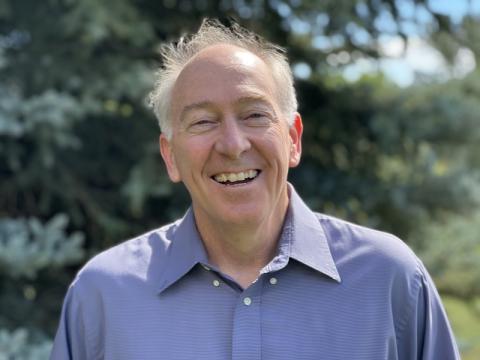
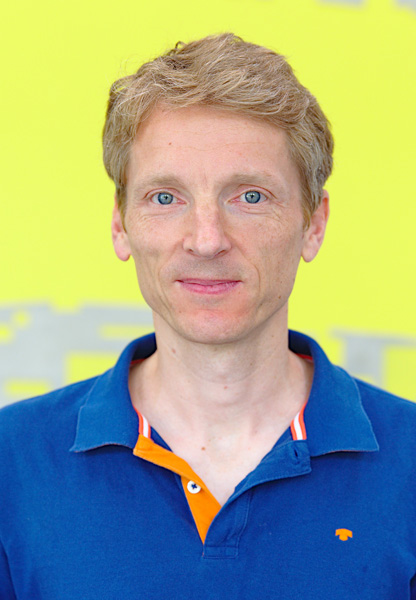
Kenneth McLaughlin is the Evelyn and John G. Phillips Distinguished Chair in Mathematics at Tulane University's School of Science & Engineering. He holds a Ph.D. and B.A. in Mathematics from New York University (1994 and 1989). Prior to Tulane, he served as faculty at the University of North Carolina, Chapel Hill, the University of Arizona, Universidade Federal de Brasília, and Colorado State University, where he also held leadership roles as Department Head and Chair. His research focuses on integrability, applying techniques across mathematics to study complex systems and phenomena. He has held visiting positions at institutions worldwide, including France, Italy, Brazil, Belgium, and the UK. McLaughlin’s research spans integrable systems, nonlinear dynamics, and asymptotic analysis. His work often involves the Riemann-Hilbert problem approach, orthogonal polynomials, and random matrix theory. Notable contributions include studies on soliton gases, the KdV equation, and universality in quantum operator dynamics. His recent articles explore topics such as asymptotic behavior of polynomials, soliton gas condensation, and hydrodynamic limits in integrable systems. McLaughlin’s academic career is marked by interdisciplinary collaboration and international research engagement.
Prof. Dr. Michael Klasen is a leading theoretical physicist at the Institute of Theoretical Physics at the University of Münster, where he heads his eponymous research group. His work bridges nuclear and particle physics, with significant contributions to quantum chromodynamics and physics beyond the Standard Model. His research focuses on Particle Physics , Quantum Chromodynamics , and Physics beyond the Standard Model , with particular emphasis on understanding the quark-gluon structure of atomic nuclei and dark matter phenomena. His innovative approach connects microscopic quark-gluon dynamics with nuclear binding phenomena, creating a crucial bridge between nuclear and particle physics. Prof. Klasen's recent work analyzing nucleon binding at the quark-gluon level was recognized as a "Breakthrough of the Year 2024" by Physics World. His research group's publication in Physical Review Letters demonstrated how quarks and gluons behave differently in nucleon pairs than in free nucleons, fundamentally advancing our understanding of nuclear binding. Breakthrough of the Year 2024 from Physics World Leadership of Research Training Group 2149 "Strong and weak interactions - from hadrons to dark matter" Supervision of award-winning doctoral research including the Infineon Dissertation Prize 2025 Prof. Klasen has successfully mentored numerous PhD students, with 20 of his group's graduates continuing their academic careers at prestigious institutions including CERN and Stanford University. His research has been supported by major funding bodies including the German Research Foundation (DFG), the Helmholtz Alliance for Astroparticle Physics, and BMBF collaborative research programs. The Klasen working group maintains active collaborations with international research networks including CTEQ, DM@NLO, and RESUMMINO.
Louis-Pierre Arguin is a Professor of Mathematics at Baruch College, City University of New York, within the Weissman School of Arts and Sciences. His academic journey includes a Ph.D. in Mathematics from Princeton University, an M.Sc. in Physics from the University of Montreal, and a B.Sc. in Mathematics from the same institution. His research bridges probability theory, number theory, and statistical mechanics, with a focus on extreme value statistics of the Riemann zeta function and spin glass systems. Key areas include logarithmically correlated random fields, branching random walks, and connections between random matrix theory and number-theoretic functions. His work demonstrates how probabilistic methods can solve deep problems in analytic number theory, particularly regarding the distribution of extreme values of the zeta function on the critical line. Arguin's scholarly impact is reflected in publications in premier journals including Annals of Mathematics , Communications on Pure and Applied Mathematics , and Probability Theory and Related Fields . His research program explores the Fyodorov-Hiary-Keating conjecture, large deviations of Selberg's central limit theorem, and disorder chaos in spin glasses, revealing profound connections between number theory and statistical physics. Award for Excellence in Scholarship (Weissman School, 2022) Bourbaki Seminar Presentation (2019) Andre-Aisenstadt Prize (CRM Montreal, 2015) His mentorship includes supervising doctoral dissertations through Baruch's Mathematics Ph.D. program, while his grant portfolio features multiple National Science Foundation awards, including a CAREER grant focused on statistics of extrema in complex systems. He actively serves on departmental and university committees including the Executive Committee of the Mathematics Department and the Real Analysis Qualifying Exam Committee. Arguin maintains a robust research group collaborating with institutions worldwide and frequently presents at major international venues including the Institute for Advanced Study, Princeton University, and the Centre de Recherches Mathématiques in Montreal.
Professor Rodrigo Freitas holds the TDK Professorship in Materials Science and Engineering at MIT. His research focuses on computational materials design, bridging atomistic simulations with mesoscale microstructural analysis. He leads the Freitas Research Group, specializing in machine learning-driven modeling of materials kinetics and solidification processes. Education: B.S. and M.S. in Physics, University of Campinas, Brazil M.S. and Ph.D. in Materials Science & Engineering, UC Berkeley Research Interests: Professor Freitas investigates microstructural evolution in metals and alloys using advanced computational methods. Key areas include solidification mechanisms, interstitial atom behavior in superalloys, and machine learning applications for materials discovery. His work emphasizes bridging atomistic and mesoscale phenomena to guide industrial applications like semiconductor manufacturing and battery design. Publications Trend: Recent work emphasizes machine learning potentials for alloy modeling, short-range order analysis in high-entropy alloys, and kinetic modeling of complex chemical systems. Themes include alloy phase stability, defect dynamics, and data-driven materials discovery. Labs/Teams: Leads the Freitas Research Group at MIT, which develops novel computational tools for materials engineering.
Carlos Brody is the Wilbur H. Gantz III '59 Professor of Neuroscience at Princeton University, where he leads a research group at the Princeton Neuroscience Institute. His laboratory employs a unique combination of computational, behavioral, and electrophysiological techniques to investigate the neural mechanisms underlying cognitive abilities. Dr. Brody's research focuses on understanding how the brain processes information during cognitive tasks, particularly examining short-term memory, decision-making, and time perception. His lab trains rats to perform complex cognitive tasks while recording neural activity, and develops computational models to explain the experimental findings. They have pioneered the study of 'internal signals' in neural activity that constitute 'the internal conversation of the mind,' with their key discovery being 'nTc' (Neurally-inferred Time of Commitment), a biomarker that indicates decision commitment before overt behavioral responses. Dr. Brody's laboratory has been continuously supported by HHMI (Howard Hughes Medical Institute) with renewal until 2032. They are currently conducting groundbreaking research using multiple Neuropixels probes for large-scale recordings across the brain while rats perform cognitive behaviors, representing what Dr. Brody considers the future of cognitive systems neuroscience that combines advanced recording technology, AI-based analysis, and well-controlled behavioral paradigms. Scientific Awards HHMI Investigator (renewed until 2032) Advising and Research Support Dr. Brody has mentored numerous successful researchers who have secured faculty positions and leadership roles: Marino Pagan (Nature publication, SFARI Bridge to Independence Award) Edward Nieh (faculty position at University of Virginia) Manuel Schottdorf (Nature publication) Sue Ann Koay (publications in Neuron and eLife, Group Leader at Janelia) Brian DePasquale (faculty position at Boston University) Emily Dennis (Group Leader at HHMI's Janelia) Ahmed El Hady (Group Leader at Max Planck Institute) Abby Russo (joined CTRL-Labs startup) Diksha Gupta (Best Paper Award at RLDM conference) His lab is currently supported by HHMI funding and is planning to implement next-generation Neuropixels probes in Spring 2025 to record from 6,000-12,000 neurons simultaneously across multiple brain regions. Research Team and Facilities The Brody Lab features a diverse team ranging from purely computational to purely experimental researchers. The lab emphasizes minimizing barriers between computational and experimental approaches, encouraging researchers to move freely along this spectrum based on their interests. They maintain state-of-the-art facilities for behavioral training, electrophysiological recordings, and computational analysis, with plans to implement next-generation Neuropixels recording technology in Spring 2025.
Robert Seiringer is a Professor at the Institute of Science and Technology Austria (ISTA). His academic career spans institutions including McGill University (Associate Professor, 2011–2013) and Princeton University (Assistant Professor, 2003–2010; Postdoc, 2001–2003). His research focuses on quantum many-body systems , mathematical physics , and quantum statistical mechanics , with significant contributions to Bose-Einstein condensation, superfluidity, and polaron models. Research Trends : His recent work explores superconductivity (BCS theory), quantum gases (Bose-Einstein condensation, Landau-Pekar equations), and mathematical tools for non-perturbative analysis. Key subfields include stability of many-body systems, spectral theory, and Density Functional Theory. Awards : Fellow, American Mathematical Society Corresponding Member, Austrian Academy of Sciences ERC Advanced Grant Henri Poincaré Prize (IAMP) Alfred P. Sloan Fellow Erwin Schrödinger Fellow Collaborations : Leads a research group at ISTA with postdocs (e.g., Davide Desio, Lorenzo Pigozzi) and collaborators (e.g., C. Hainzl, B. Schlein).
Michel Gendreau is a Full Professor in the Department of Mathematics and Industrial Engineering at Polytechnique Montréal. He holds a B.Com. from McGill University, and both an M.Sc. and Ph.D. from the University of Montreal. His research focuses on operational research with applications in logistics, transportation, energy systems, and telecommunications. He is affiliated with several prestigious research centers including the Institute for Data Valorization (IVADO), the Trottier Energy Institute (IET), and the Interuniversity Research Center on Enterprise Networks, Logistics and Transport (CIRRELT). Professor Gendreau's research interests span operational research, with particular emphasis on stochastic optimization methods applied to transportation and logistics problems, energy systems management, and telecommunications. His work often addresses real-world challenges through mathematical modeling and algorithm development, with applications ranging from bike-sharing systems to emergency response planning and electricity grid management. The analysis of his recent publications reveals a strong focus on vehicle routing problems under uncertainty, maintenance optimization, and the integration of stochastic programming with machine learning techniques for improved decision making. Professor Gendreau has received numerous prestigious awards recognizing his contributions to the field of operations research. In 2022, he was named a Fellow of the International Federation of Operational Research Societies (IFORS). In 2010, he was awarded Fellow status by INFORMS (Institute for Operations Research and the Management Sciences). Most notably, in November 2015, he received the Robert M. Herman Lifetime Achievement Award from the Transportation Science and Logistics Society of INFORMS, which is considered the most prestigious distinction for operational researchers working in logistics and transportation. Throughout his career, Professor Gendreau has supervised 25 doctoral students and 18 master's students, contributing significantly to the development of the next generation of operations research experts. His research has been supported by numerous grants from organizations including NSERC (Natural Sciences and Engineering Research Council of Canada), with expertise recognized in Operational Research and Management Science (NSERC subject 1601) and Logistics (NSERC subject 1603). Professor Gendreau is actively involved in several research teams and laboratories, particularly those focused on data valorization, energy systems, and transportation logistics. His current work continues to push the boundaries of stochastic optimization and its applications to complex real-world problems, with recent publications addressing challenges in urban transportation, energy management, and emergency response systems.
Niamh Nic Daeid is Professor of Forensic Science and Director of the Leverhulme Research Centre for Forensic Science (LRCFS) at the University of Dundee, leading the £15m Just Tech Institute for Innovation. She holds fellowships with the Royal Society of Edinburgh, Royal Society of Chemistry, and multiple forensic science bodies while serving on committees for INTERPOL, the International Criminal Court, and the United Nations. Her research focuses on forensic chemistry applications in prison drug analysis, explosives detection, and fire investigation. Recent work emphasizes science communication, particularly using comics to improve juror comprehension of forensic testimony. She leads major projects including Clarus (bias prevention in digital forensics) and the Smart Digital Forensic Advisor initiative. Nic Daeid's publications span forensic methodology development, from quantum dots for fingerprint detection to machine learning for footwear impression analysis. Her team's 2025 research includes prison drug studies using seized Scottish evidence and advanced cartridge case imaging techniques. European Network of Forensic Science Institutes Distinguished Forensic Scientist award (2018) Royal Society of Edinburgh Senior Medal for Public Engagement Peter Ganci Award for fire investigation services Gold Engage Watermark for Public Engagement (2019) Best Short Paper Award, International Conference on eXtended Reality (2022) She supervises 13 research students and early-career academics across forensic chemistry, digital forensics, and science communication projects. Current grants include the Leverhulme Trust's £10m LRCFS (2016-2026), UK government's Tay Cities Regional Deal funding, and Dundee City Council's VR/5G initiative. Her team maintains active collaborations with Scottish prisons, international forensic networks, and law enforcement agencies.
Hedy Kober is an Adjunct Associate Professor in Psychiatry at Yale School of Medicine and an Adjunct Associate Professor of Law. She serves as Director of the Clinical and Affective Neuroscience Laboratory at Yale. Her work bridges psychology, neuroscience, and clinical interventions, with a focus on emotion regulation, mindfulness, and addiction. Education PhD in Clinical Psychology (Respecialization), Fielding Graduate University (2021) PhD, Columbia University (2009) MPhil, Columbia University (2008) MA, Columbia University (2007) Research Interests Dr. Kober's research focuses on the cognitive and neural mechanisms underlying emotion regulation, with particular emphasis on mindfulness-based interventions for various conditions including addiction, eating disorders, and depression. Her work explores how individuals regulate cravings, manage negative emotions, and develop healthier behavioral patterns through cognitive strategies and mindfulness practices. She employs a range of methodologies including fMRI, ecological momentary assessment, and clinical trials to investigate these processes in both healthy individuals and those with clinical conditions. Her recent work has increasingly focused on digital interventions that make evidence-based therapies more accessible, particularly for substance use disorders and eating disorders. She examines how brief, scalable interventions can effectively target core mechanisms of behavior change. Research Trends Dr. Kober's recent publications demonstrate a strong focus on the intersection of emotion regulation, mindfulness, and clinical applications. Her work connects basic cognitive neuroscience with clinical interventions, particularly examining how individuals regulate cravings and negative emotions. Recent studies have expanded to include digital delivery of interventions, network approaches to understanding emotional processes, and the development of neuromarkers for addiction. Her research increasingly incorporates longitudinal and ecological momentary assessment methods to capture real-world emotional dynamics. Scientific Awards Outstanding Mentor Award (2019) from American Academy of Child and Adolescent Psychiatry Early Career Investigator Award (2018) from NIDA and NIAAA Teaching Excellence at Yale (2017) from Yale Center for Teaching and Learning Helmsley Fellowship in Cross Disciplinary Science (2016) from Helmsley Charitable Trust Scholar Award (2011) from Yale Center for Clinical Investigation Advising and Grants Dr. Kober has received significant grant funding for her research on emotion regulation and addiction. She serves as Principal Investigator on clinical trials examining brief training for alcohol craving regulation and the role of reward learning and decision making in addiction. Her work has been supported by organizations including NIDA and NIAAA. As a mentor, she has guided numerous students and early-career researchers, recognized by her Outstanding Mentor Award from the American Academy of Child and Adolescent Psychiatry. Laboratory Dr. Kober directs the Clinical and Affective Neuroscience Laboratory at Yale, which investigates the neural and cognitive mechanisms of emotion regulation and their application to clinical problems. The lab employs a multi-method approach including neuroimaging, behavioral experiments, and clinical interventions to understand how people regulate emotions and cravings, with the goal of developing more effective treatments for conditions like addiction and eating disorders.
Stephan Rosenkranz is a Research Fellow and Group Leader at the Materials Science Division of Argonne National Laboratory, where he has been a key figure in advancing neutron and synchrotron x-ray scattering techniques since 2002. He holds a Ph.D. in Physics from ETH Zurich (1997) and a Diploma in Experimental Physics (1992) from the same institution. Educational Background Ph.D. in Physics, ETH Zurich (1997) Diploma (with distinction) in Experimental Physics, ETH Zurich (1992) His research focuses on probing short-range spin, charge, and lattice correlations in strongly correlated electron systems using neutron and x-ray scattering methods. He has led the development of the CORELLI instrument at Oak Ridge National Laboratory's Spallation Neutron Source and pioneered novel approaches to model correlated disorder from diffraction data. Recent publication trends highlight his expertise in charge density waves, spin density waves, and geometrically frustrated magnets. His work integrates experimental scattering with machine learning for big data analysis, particularly in quantum materials like nickelates, iron pnictides, and superconductors. Scientific Awards ETH Pólya Prize (1992) ETH Zurich Medal (1997) University of Chicago Distinguished Performance Award (2006) Fellow of the American Physical Society (2013) Fellow of the Neutron Scattering Society of America (2018) As Co-Director of the National School on Neutron and X-ray Scattering (2018–2024) and former President of the Neutron Scattering Society of America (2013–2016), Rosenkranz plays a pivotal role in training and governance in scattering sciences. He has contributed to beamline reviews, grant panels, and international workshops on competing interactions in transition metal compounds. His leadership extends to the development of advanced x-ray and neutron instrumentation and fostering collaborations between Argonne, Northern Illinois University, and the University of Illinois Chicago through graduate faculty appointments.
Jan Ryckebusch is a Senior Full Professor and Department Chair at Ghent University's Faculty of Sciences, Department of Physics and Astronomy . His research bridges Nuclear Physics and Interdisciplinary Physics , with notable contributions to quantum mechanics, statistical mechanics, and machine learning applications. Key research areas include Short-Range Nuclear Correlations , Neutrino-Nucleus Scattering , and Social Network Dynamics . He has supervised multiple PhD students in projects related to Quantum Computing , Agent-Based Modeling , and Statistical Physics of Social Systems . His recent work explores Econophysics (e.g., wealth-income mobility studies) and Opinion Dynamics in social networks. Scientific Awards : No specific awards mentioned in the provided data. Grants & Collaborations : Active in interdisciplinary projects with co-authors across Physics , Economics , and Computer Science , including Luis E C Rocha, Koen Schoors, Wim Cosyn, and others.
Dr. Bradley Elphinstone is a Senior Lecturer in the School of Health Sciences at Swinburne University of Technology, where he conducts research and teaching in clinical and health psychology, with a focus on mindfulness, nonattachment, self-compassion, and gender-affirming mental health. He is actively involved in PhD supervision and has led research on public trust in genomic data, emotional well-being, and digital mental health interventions. His research interests include: Clinical and Health Psychology Social and Personality Psychology Mindfulness-Based Interventions Nonattachment and Self-Compassion Gender Euphoria and Transgender Mental Health Public Trust in Health Data Systems His recent publications (2020–2025) reflect a strong trend in psychometric scale development (e.g., Gender Euphoria Scale, Equanimity Scale), emotional regulation, and public health psychology, particularly during the pandemic. His work bridges clinical psychology with public engagement and policy, especially in genomic governance and mental well-being. Scientific contributions include: Development and validation of psychological scales Studies on trust and compliance during public health crises Exploration of non-dualistic approaches to mental health (e.g., A Course in Miracles) Telehealth and dignity therapy for older adults Dr. Elphinstone supervises multiple PhD students on topics ranging from financial well-being to gender identity and digital interventions. He has secured external funding, including a grant from the Department of Health and Aged Care on genomic data trust. He is also involved in collaborative research networks and public engagement through platforms like The Conversation. He is affiliated with research teams focused on: Mindfulness and psychological development Trans and gender diverse mental health Digital and telehealth interventions Public attitudes toward biobanks and genomics
Philip Johnson is a Professor and Chair of the Department of Physics at American University (AU), where he has been since 2006. He also serves as Director of the Integrated Space Science and Technology Institute (ISSTI), supporting over 20 AU faculty and external partners like NASA's Goddard Space Flight Center. His research focuses on quantum computing, superconducting qubits, ultracold atoms, and effective interactions in few-body systems. He holds a PhD in Theoretical Physics from the University of Maryland and completed postdoctoral work at NIST and the University of Maryland's superconducting quantum computing group. His academic leadership roles include Associate Dean of Research for AU's College of Arts and Sciences and service on the American Physical Society's council. His research explores quantum control, nonequilibrium dynamics, and applications in quantum sensing and metrology. Key areas include ultracold bosons in optical lattices, nonlocal interactions, and hybrid machine learning approaches for quantum systems. He collaborates with institutions like the Joint Quantum Institute and Johns Hopkins Applied Physics Laboratory. Johnson's recent work advances theoretical frameworks for few-atom systems and superconducting qubits, with publications addressing topics like topological properties of interactions and correlations in quantum systems. His contributions span experimental and theoretical physics, emphasizing interdisciplinary applications in space science and technology through ISSTI.
Mattias Klintenberg is a Professor in the Department of Physics and Astronomy at Uppsala University, Sweden, specializing in computational materials theory. His research integrates advanced simulation techniques to address fundamental questions in condensed matter systems and material properties. His core expertise spans Condensed Matter Physics and Materials Science , with specific focus on: Electronic structure calculations for semiconductors and novel materials Defect physics in interfaces and bulk systems Two-dimensional material characterization Electron-phonon coupling models X-ray spectroscopy data interpretation Computational material discovery through data mining Analysis of his 2013-2019 publications reveals a cohesive research trajectory centered on atomic-scale material behavior. Key themes include radiation damage modeling in nuclear materials, defect engineering in semiconductors (particularly CdTe), and methodological advances in molecular dynamics for electron-phonon interactions. His work consistently bridges theoretical computation with experimental validation, especially in spectroscopy and interface science. No scientific awards were documented in the provided information. Details regarding student supervision, grant funding, or laboratory infrastructure were not specified in the source materials.
Jared M. Allred is an Associate Professor at the University of Alabama in the Department of Chemistry and Biochemistry , affiliated with the College of Arts and Sciences. His research focuses on solid state chemistry, inorganic materials, and magnetic systems, utilizing advanced x-ray and neutron diffraction techniques to explore structure-property relationships. Education: BS from Case Western Reserve University (2007), PhD from Princeton University (2012), Postdoctoral work at Argonne National Laboratory (2012-2015). Research Interests: The Allred group investigates inorganic materials with functional properties, particularly magnetic and multiferroic systems. They emphasize atomic-scale characterization to guide synthesis of materials with tailored electronic, magnetic, and structural behaviors. Recent work includes studies on 1D superconductors, layered chalcogenides, and transition metal oxides. Scientific Contributions: His publications span high-impact journals like Nature Physics and Physical Review Letters , addressing topics in superconductivity, magnetic ordering, and structural transitions. Emerging themes include materials engineering across localized-delocalized electron boundaries and geometric frustration effects. Students: Advisees include PhD graduates Matt Davenport and Tyra Douglas , and current student Nolan Stager . News Highlights: • June 2022: Shared educational resources on scientific image formats. • Jan 2022: Published work on geometric frustration in Journal of Physical Chemistry C . • July 2021: Physical Review Letters publication on fragile 3D ordering in V1-xMoxO2 under extreme conditions.