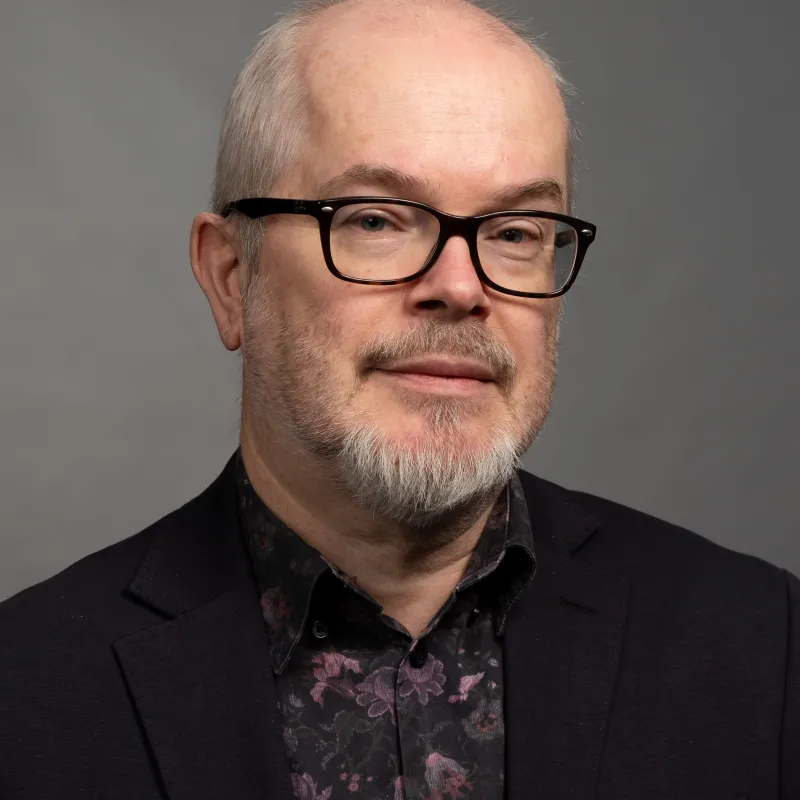
Professor Ingrid Bouwer Utne is a faculty member at the Department of Marine Engineering, Norwegian University of Science and Technology (NTNU). Her primary research focuses on risk analyses of ships, marine systems, and autonomy, with emphasis on operational safety, maintenance management, and risk control in autonomous maritime technologies. Key Projects: Leader of the Risk Group at NTNU, involved in the SFI Autoship initiative and ERC AdG BREACH project addressing risk-based rationality in autonomous systems. Research Interests: Autonomous systems design, probabilistic risk assessment, safety engineering, and risk-informed decision-making for marine operations. Grants & Funding: Secured funding from the Research Council of Norway, MAROFF, and industry partners for projects like ORCAS (Online Risk Management for Autonomous Ships) and UNLOCK (Supervisory Risk Control). She supervises numerous PhD students and postdocs, focusing on topics such as autonomous vessel navigation, risk modeling for underwater robotics, and decarbonization of maritime systems. Her work bridges theoretical risk analysis with practical applications in marine autonomy and safety systems.
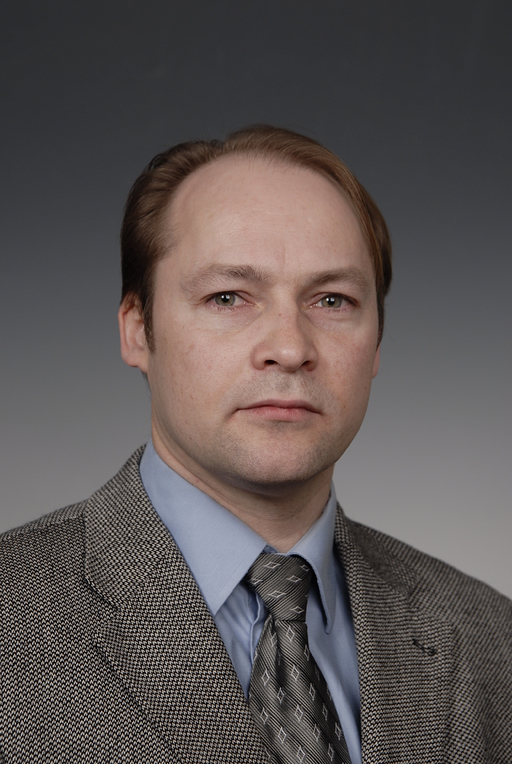
Professor Alan J Murphy is a leading academic in Maritime Engineering at the University of Southampton. He holds a First-Class BEng in Naval Architecture and a PhD in Experimental Hydrodynamics. His research focuses on decarbonizing maritime systems, emission reduction, and sustainable propulsion technologies. He has held leadership roles including Head of the Marine, Offshore and Subsea Technology Group at Newcastle University and is currently Editor-in-Chief of the International Journal of Maritime Engineering. Education: BEng Naval Architecture (Newcastle University), PhD Experimental Hydrodynamics (University of Southampton) Affiliations: Royal Institution of Naval Architects Fellow, Worshipful Company of Shipwrights Liveryman Research interests include net-zero maritime propulsion, energy efficiency, and policy/regulation for sustainable shipping. He has supervised numerous PhD students and contributed to major projects such as the establishment of Newcastle University’s Singapore campus. Publications span topics like electrified port systems, alternative marine fuels, and underwater vehicle navigation. Awards include the Stanley Grey Fellowship and Froude Scholarship.
Harald Martin Hjelle is a Professor at the Faculty of Logistics, Molde University College (HiMolde). He chairs the PhD Logistics committee and serves on the university's board. His research focuses on transport economics, environmental performance of transport modes, and logistics systems. He has held leadership roles including department head and vice-rector for research. Education: Bachelor’s in Economics, University of Oslo (1989) PhD in Transport Technology, NTNU (2003) Research Interests: Hjelle’s work examines sustainable logistics, comparative environmental impacts of transport (road vs. short sea shipping), and supply chain optimization. His studies often address China-Europe trade dynamics and emissions mitigation strategies in maritime transport. Grant Projects: He has managed EU-funded and Norwegian Research Council projects on topics like container supply chain design (SeaConAZ), LNG vs. pipeline emissions, and offshore wind logistics. His research bridges academic inquiry with industry collaboration, particularly in maritime and transport policy. Labs/Teams: Member of the Transport Research Group (TRG), focusing on cross-modal transport efficiency and environmental sustainability.
Børge Rokseth is an Associate Professor at the Department of Engineering Cybernetics, Norwegian University of Science and Technology (NTNU). His work focuses on maritime systems, autonomous vessel control, and safety verification. He actively supervises Master's students and contributes to research on risk-informed control systems, hybrid power systems, and systems-theoretic process analysis (STPA). Research Interests: Rokseth's research spans autonomous ship systems, dynamic risk assessment, and safety verification. He explores risk-based decision-making for maritime autonomy, hazard identification in hybrid propulsion systems, and control function allocation in dynamic positioning. His work integrates systems theory, machine learning, and regulatory compliance (e.g., COLREGS) to enhance safety and environmental performance in marine operations. Publications: His recent work includes probabilistic trajectory prediction frameworks for autonomous ships, STPA-based safety analyses, and studies on decarbonization barriers in the maritime industry. These publications emphasize risk modeling, systems-theoretic approaches, and simulation-based verification. Teaching: Rokseth teaches courses such as TTK4130 - Modelling and Simulation, contributing to the education of future engineers and researchers in cybernetics and maritime systems.
Professor Chin Hoong Chor is a Professor in the Department of Civil Engineering at the National University of Singapore (NUS), affiliated with the Faculty of Engineering. He specializes in transportation systems modeling, safety assessment, and congestion management. As a registered professional engineer and road safety auditor, he has contributed to numerous projects with Singapore’s land authorities and private companies. He holds leadership roles including Vice Chairman of the Chartered Institute of Logistics and Transport and Editorial Board membership for the International Journal of Transport Management. Qualifications include a BEng and MEng from NUS and a PhD in Transportation Engineering from the University of Southampton. His research interests span vehicle detection using image processing, traffic conflict analysis, and public transport optimization. Notable awards include the NUS Faculty Innovative Teaching (Gold) Award (2001/2002) and the UK Institution of Civil Engineers Webb Prize (2003). Education: BEng in Civil Engineering, National University of Singapore MEng in Civil Engineering, National University of Singapore PhD in Transportation Engineering, University of Southampton His research focuses on quantitative safety analysis, traffic flow modeling, and smart city initiatives. Recent work explores maritime collision risk modeling and sentiment analysis for transportation planning. He actively contributes to government committees and has authored over 40 peer-reviewed papers on traffic management and safety. Awards: Faculty Innovative Teaching (Gold) Award, 2001/2002 UK Institution of Civil Engineers Webb Prize 2003 Prof Chin has undertaken traffic impact studies and road safety reviews in Singapore, collaborating with public and private sectors. His work bridges academic research and practical policy implementation, emphasizing sustainable urban mobility solutions.
James S. Noble is a Professor and Chair of the Department of Industrial and Systems Engineering at the University of Missouri, where he also serves as the MU Site Director for the NSF I/UCRC Center for Excellence in Logistics and Distribution (CELDi). His work bridges academia and industry through applied research in logistics, supply chain, and integrated production systems. PhD, Purdue University MS, Purdue University BS, University of Oklahoma Dr. Noble's research focuses on logistics and distribution , supply chain system design , and integrated production systems , with applications ranging from humanitarian logistics to intelligent warehouse systems. His work emphasizes modeling, analysis, and optimization of material flow and transportation systems. The 15 most recent articles reflect a consistent trajectory in logistics systems analysis , supply chain modeling , and material flow improvement . These publications demonstrate a strong integration of operations research, systems engineering, and real-world problem-solving, with applications in energy, transportation, humanitarian aid, and industrial logistics. Keywords span Operations Research , Supply Chain Management , and Industrial Engineering , while sub-fields include Bayesian forecasting, reverse logistics, winter road maintenance, and intelligent systems. Dr. Noble has been recognized with several prestigious awards: Society of Manufacturing Engineers Outstanding Young Manufacturing Engineering Award (1997) William T. Kemper Fellowship for Teaching Excellence (2022) Win Horner Award for Innovative Writing Intensive Teaching (2014) Elected Fellow of the Institute for Industrial and Systems Engineering (IISE) (2019) His research has been generously funded by the National Science Foundation , Bayer , Boeing , Hallmark Cards , Honeywell FMT , Medline , Ameren , UMB Financial , the U.S. Economic Development Administration , the Midwest Transportation Consortium , and the Missouri Department of Transportation . While specific advisees are not listed, his leadership in CELDi and role as department chair suggest extensive mentorship of graduate and undergraduate students in real-world logistics projects. He is also a registered Professional Engineer in Missouri. As MU Site Director for CELDi, Dr. Noble leads a multidisciplinary team of faculty from Industrial Engineering, Civil Engineering, Geography, and Biological Engineering, collaborating with over 30 industry, military, and government partners to solve real-world logistics challenges and develop implementable, cutting-edge solutions.
Matthew Petering is an Associate Professor in the Department of Industrial and Manufacturing Engineering at the University of Wisconsin-Milwaukee. His work bridges operations research with real-world applications in logistics, transportation, and political redistricting. He holds a PhD in Industrial and Operations Engineering from the University of Michigan (2007), an MS from the same program (2003), and a BA in Mathematics from Washington University in St. Louis (1999). His research focuses on optimizing complex systems: from seaport container terminals to university course scheduling, and recently developing the FastMap algorithm for unbiased political redistricting. His algorithm was central to Wisconsin Supreme Court litigation in 2023-2024, submitting proposals for legislative maps that balanced fairness and operational efficiency. Dr. Petering has pioneered board game designs like Distrix (2020), which won international awards, and authored The Distrix Puzzle Book . His peer-reviewed work spans over 30 publications in journals like Transportation Science , European Journal of Operational Research , and International Journal of Production Economics . Key contributions include: Algorithmic solutions for container shipping and rail logistics Cyclic production planning models Real-time location management systems for distribution facilities Emergency evacuation modeling His FastMap redistricting system was recognized with the 2024 INFORMS Practitioner Poster Competition award. Dr. Petering frequently advises governmental bodies and judicial proceedings on redistricting methodology and logistics optimization.
Heikki Handroos is a Full Professor of Mechanical Engineering at LUT University, leading the Laboratory of Intelligent Machines since 1993. He holds a DSc (Technology) from Tampere University of Technology and has served as Vice-Dean of the Faculty of Technology (2007-2009) and currently chairs the Collegiate Body of LUT University. His research focuses on mechatronics, robotics, control systems, and fluid power, with over 300 publications and 2,400+ citations. He has supervised 34 doctoral theses and 150+ MSc projects, managed R&D projects exceeding €20M, and co-founded four tech startups. His work spans industrial collaborations, digital twin applications, and innovative robotics for nuclear energy (e.g., DEMO reactor maintenance systems). He has held visiting professorships in the U.S., Japan, and Russia, and actively contributes to academic editorial roles and professional societies like ASME and IEEE.
Magnus Bång is a Senior Associate Professor at the Department of Computer and Information Science (IDA) at Linköping University, affiliated with the Artificial Intelligence and Integrated Computer Systems (AIICS) division. His research focuses on advancing human-AI collaboration, automation systems, and AI applications in domains like cyberphysical production, air traffic management, and process industries. He has contributed to interdisciplinary projects involving real-time human-automation interfaces, explainable AI dashboards for industrial processes, and safety-critical systems integration. His work bridges theoretical AI advancements with practical implementations in sectors such as aviation and maritime logistics. Notable collaborations include research with the Swedish Maritime Administration to enhance shipping efficiency through AI and interactive visualization. He actively participates in EU-funded initiatives like the Horizon 2020 projects targeting autonomous systems and air traffic control. Research interests span MLOps for industrial systems, glyph-based communication design for human-automation teams, and operator modeling across traffic management domains. His publications emphasize cross-disciplinary solutions to challenges in automation and human-centric AI design.
Prof. Dr. Moritz Petersen is an Associate Professor of Sustainable Supply Chain Practice and Co-Director of the Center for Sustainable Logistics and Supply Chains (CSLS) at Kühne Logistics University (KLU) in Hamburg, Germany. His academic career began at Hamburg University of Technology, where he completed his doctoral studies in 2017 under Prof. Dr. Wolfgang Kersten, and he has been at KLU since 2016. Research Focus: Decarbonization of logistics, Circular Economy, Blockchain applications in supply chains, and sustainable product development Teaching: Courses on Supply Chain Sustainability, Circular Product Development, and Lean Logistics Operations across KLU’s Bachelor to MBA programs Outreach: Co-hosts the podcast “Das Gleiche in Grün?!”, collaborates on educational children’s books about logistics, and frequently speaks at industry events like the Deutscher Logistik-Kongress Research Trends from his 15 most recent articles center on: Blockchain technology’s role in sustainable logistics Decarbonization strategies across maritime and road freight Circular economy implementation through product design and waste stream analysis Behavioral and organizational barriers to sustainability Public-private partnerships in European logistics Information sharing as a CE enabler Scientific Awards: 2020 Best Paper Award, International Journal of Operations & Production Management (IJOPM) Research Projects include: CREAToR: EU Horizon 2020 project on polymer recycling GATE: German Ministry of Economy-funded GHG emissions data exchange HANSEBLOC: Blockchain applications in logistics ChainLog: Blockchain use cases Development of Logistics Competence Assessment Toolkit
Heikki Remes serves as Associate Professor in the Department of Energy and Mechanical Engineering at Aalto University's School of Engineering, where he investigates high-performance steel structures for marine environments with emphasis on lightweight ship designs using advanced materials and manufacturing techniques. His research integrates fundamental fatigue and fracture mechanics with practical structural challenges, spanning from crystal-level material behavior to continuum-scale modeling. Key focus areas include welded joint integrity, additive manufacturing defects, and computational analysis of marine structures under extreme conditions. Recent publications reveal strong trends in fatigue assessment methodologies for complex welded geometries, experimental validation of distortion effects, and AI-enhanced damage prediction systems, reflecting his commitment to bridging theoretical mechanics with shipbuilding applications. Scientific Awards: Aalto Education Impact Award (2018) for establishing Marine Technology study programs SNAME Honorable Mention for 2018 Vice Admiral E. L. Cochrane Award Teaching Award of Aalto School of Engineering (2012) for educational tools No specific student advising or grant information appears in available sources, though his active publication record indicates ongoing research leadership. He contributes significantly to the Marine and Arctic Technology research group, driving projects on structural integrity assessment and advanced manufacturing solutions for next-generation marine vessels.
Dr. Ioanna Kantzavelou is an Associate Professor at the Department of Informatics and Computer Engineering, School of Engineering, University of West Attica. She leads the INSSec Research Group, focusing on Information, Networks, and Systems Security. Her expertise spans Cybersecurity, Game Theoretic approaches in Intrusion Detection, and Critical Infrastructure Protection. She holds a Ph.D. from the University of the Aegean (2011), an M.Sc. from University College Dublin (1994), and a B.Sc. from the Technological Educational Institution of Athens (1991). Education: Ph.D. in Intrusion Detection with Game Theoretic Approaches – University of the Aegean (2011) M.Sc. in Computer Security – University College Dublin (1994) B.Sc. in Informatics – TEI of Athens (1991) Research Interests: Intrusion Detection in IoT/Wireless Sensor Networks (WSN) and Cyber-Physical Systems Cyber Ranges for Education and Research Cybersecurity for Merchant Shipping and Critical Infrastructures Hybrid Threats, Cyberterrorism, and Cyberwarfare Digital Forensics and Blockchain-Based Authentication Systems Her work includes over 30 peer-reviewed publications, three books, and contributions to R&D projects funded by the Greek government, EU, and Irish government. She actively reviews for IEEE, Elsevier, and Springer journals, and is a member of ACM, IEEE Computer Society, and the Greek Computer Society. Grants & Collaborations: EU-funded projects on Cybersecurity and Critical Infrastructure Protection Greek government grants for Cyber Ranges and IoT Security Labs/Teams: Head of the INSSec Research Group, collaborating with industry partners on Cybersecurity solutions for maritime and industrial sectors.
Professor Mehmet Atlar is a Research Professor in the Department of Naval Architecture, Ocean and Marine Engineering at the University of Strathclyde, Faculty of Engineering. He joined in May 2016 via the Global Talent Platform initiative. Previously, he served as Professor of Ship Hydrodynamics and director of the Emerson Cavitation Tunnel at Newcastle University. His work spans experimental and computational naval hydrodynamics with a focus on ship propulsion, energy efficiency, and marine sustainability. His educational background includes a BSc and MSc in Naval Architecture & Marine Engineering from the Technical University of Istanbul and a PhD from the University of Glasgow on the dynamic motion responses of semi-submersibles. Mehmet Atlar’s research centers on ship performance, propulsion systems, cavitation, underwater noise, and marine biofouling. He is particularly interested in novel hull forms, propulsor design, and biomimetic applications for renewable energy and drag reduction. His recent work emphasizes energy-saving devices and sustainable shipping technologies. The most recent publications highlight a strong trend in experimental and computational analysis of advanced propulsion systems like the gate rudder, with attention to real-world conditions such as ageing, fouling, and oblique wave interactions. There is also a clear focus on sustainability, including carbon footprint assessments and retrofitting energy-saving technologies using CFD. Honorable Mention for the 2022 Vice Admiral E. L. Cochrane Award Professor Atlar has supervised over 28 PhD students as principal supervisor and has led numerous research projects funded by the EC Framework Programme, EPSRC, industry, and defense agencies. He has been a principal or co-investigator in major projects such as the Oldendorff Sustainable Shipping Research Centre and initiatives on hydrogen-fueled zero-emissions vessels. His leadership extends to organizing international conferences, including the bi-annual AMT Conference Series since 2009. He is actively involved in research teams focusing on sustainable shipping, hydrogen propulsion, and advanced measurement technologies. He leads the HTF & AMT25 Management project and contributes to national and international technical committees, including ITTC, RINA, and SNAME.
Mustafa ÇAVUŞOĞLU serves as Assistant Professor in the Department of Islamic History and Arts at Kastamonu University's Faculty of Theology since 2024, holding concurrent administrative roles as Department Head, Commission President, and Department Deputy Head. His academic trajectory spans from vocational teaching at Imam Hatip High Schools (1996-2024) to specialized scholarship in early Islamic history following doctoral completion in 2023. His educational background includes: PhD in Islamic History, Necmettin Erbakan University (2019-2023) Master's in Islamic History, Necmettin Erbakan University (2012-2014) BA in Theology, Uludağ University (1991-1996) ÇAVUŞOĞLU's research centers on Islamic History with distinctive focus on maritime expeditions, Sahaba biographies, and historical coexistence models. His work bridges religious studies and historical analysis through examination of naval technology, trade networks, and socio-political structures in formative Islamic periods. Methodologically, he integrates primary source criticism with contextual historical interpretation, contributing to nuanced understandings of Islamic civilization's development. Analysis of his 12 publications (2014-2025) reveals consistent thematic concentration on early Islamic maritime activities (42% of output), Sahaba biographies (25%), and historical coexistence frameworks (17%). His scholarship demonstrates chronological progression from biographical studies toward complex naval history analyses, with increasing methodological sophistication evident in post-2022 works. The publications span journal articles (50%), conference papers (33%), and monographs (17%), primarily engaging Turkish academic discourse while incorporating international scholarly references. No scientific awards or major recognitions are documented in available records. Current teaching responsibilities include undergraduate courses in Islamic History I-II, Islamic Civilization History, and Siyer, alongside graduate seminars on Islamic Historical Methodology and Contemporary Siyer Research. No information exists regarding student supervision or research grant acquisition. Professional engagement centers on symposium participation as session chair, keynote speaker, and scientific committee member, particularly within Kastamonu University's international conferences on Islamic history and culture. His work operates within standard university research frameworks without dedicated laboratory or specialized research team infrastructure.
Morten Birkved is a Professor at the Department of Green Technology, University of Southern Denmark, and Head of SDU Life Cycle Engineering. He leads the SDU Climate Cluster and actively contributes to research on Life Cycle Assessment (LCA) , Circular Economy , and Environmental Sustainability . His work spans cross-disciplinary collaborations in Denmark and internationally. Education: M.Sc. in Environmental Chemistry, PhD in Sustainable Development His research interests focus on integrating LCA with circular economy principles, analyzing environmental impacts of construction materials, and developing sustainable solutions for agriculture and energy systems. Recent projects include microbial protein production, green fuels in shipping, and biorefineries for organic waste valorization. Recent publications highlight 2025 advancements in: Eco-design strategies for buildings Hybrid wastewater treatment systems Carbon-storing asphalt pavements Comparative LCA of housing typologies These studies emphasize Denmark as a case study region and leverage both parametric and probabilistic modeling approaches. Scientific Awards Recipient of SCC Fast Track Prize (2025) Teaching & Supervision Supervised PhD research on circular agriculture and plastic circularity Lectured on chemical processes and environmental impacts since 2019 Labs & Projects Coordinates EU-funded initiatives like FLAVOURFERM (plant-based fermentation) and AgriLoop (circular agriculture) Develops microbial platforms for waste-to-protein conversion Advances biostimulants for sustainable agriculture