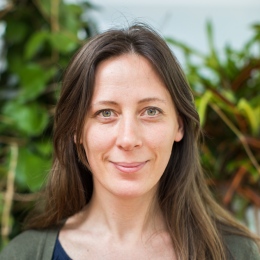
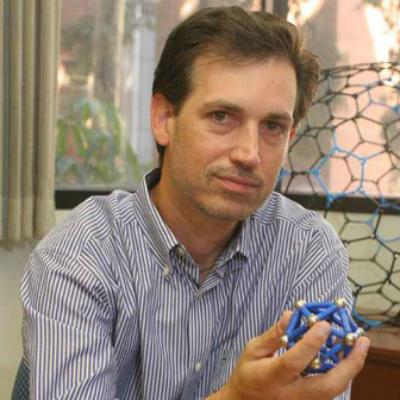
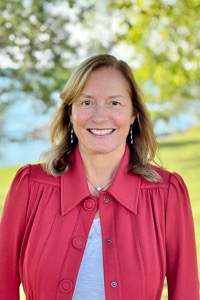
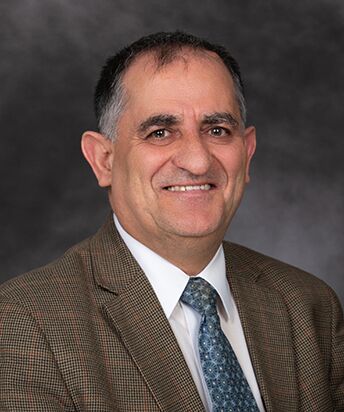
Kornilios Panagiotis is an Assistant Professor at the Department of Cell & Developmental Genetics Biology , University of Patras. He holds a Bachelor's degree (2002) , MSc (2007) , and PhD (2012) in Biology from the University of Patras and the University of Crete. Research Interests: Molecular Ecology, Population Genetics, Phylogeography, Conservation Genetics, Species Delimitation, and Molecular Systematics of animals. Key Themes: Uses molecular-genetic markers to study evolutionary and ecological questions, combining fieldwork, lab work (DNA isolation and sequencing), and computational analysis. Notable Awards: Marie Skłodowska-Curie fellowship for postdoctoral research (2016–2019). Publications: Focus on phylogenomic resolution of species complexes, mitochondrial genome analysis in endangered species, and biogeographical patterns across snakes, lizards, and snails. Contact: Email korniliospan@upatras.gr | Office: 2610 969236 (University of Patras)
Yu Xiao is an Assistant Professor at Shenzhen University of Technology's School of New Materials and New Energy since January 2023. Previously, he served as an Associate Research Fellow at Sun Yat-sen University's School of Materials Science and Engineering (2016-2022) and as a Research Fellow at Hong Kong Polytechnic University's School of Fashion and Textiles (2022). His academic journey includes a PhD in Materials Processing Engineering from Sun Yat-sen University (2016), Master's in Mechanical Design and Theory from Shenyang Aerospace University (2013), and Bachelor's in Mechanical Manufacturing and Automation from Liaocheng University (2010). PhD (2016): Sun Yat-sen University, Materials Processing Engineering Master (2013): Shenyang Aerospace University, Mechanical Design and Theory Bachelor (2010): Liaocheng University, Mechanical Manufacturing and Automation Dr. Xiao's research focuses on advanced materials for electrochemical energy storage systems, particularly sodium-ion, lithium-ion, and zinc-ion batteries, as well as wearable and flexible energy storage devices. His work bridges fundamental materials science with practical applications in next-generation battery technologies, emphasizing sustainable approaches to energy storage. He has developed innovative methods for creating highly ordered electrode materials with improved efficiency and durability, including work on hard carbon anodes for sodium-ion batteries and foldable metal films for flexible electronics. His publication record demonstrates a consistent trajectory from fundamental materials synthesis (early career work on TiO2 nanostructures for solar cells) to increasingly sophisticated battery technologies. Recent publications (2022-2024) highlight breakthroughs in sodium-ion battery anodes with near-perfect initial coulombic efficiency, battery recycling technologies, and covalent organic frameworks for cathode materials. His work shows strong interdisciplinary connections between materials science, electrochemistry, and sustainable engineering, with practical applications in both consumer electronics and large-scale energy storage. Outstanding Instructor of the 9th Guangdong Material Innovation Competition (2019) National Postgraduate Scholarship (2012) As Principal Investigator, Dr. Xiao leads multiple significant research projects including a National Natural Science Foundation Youth Science Fund Project (RMB 300,000), a High-end Talent Project (RMB 3 million), and several provincial and institutional grants totaling over RMB 5 million in active funding. His projects focus on developing advanced materials for flexible energy storage devices, with particular emphasis on sodium-ion batteries and foldable lithium-ion battery technologies. While student advising isn't explicitly mentioned in the provided materials, his role as Assistant Professor and Principal Investigator suggests he likely mentors graduate students in his research group. Dr. Xiao's research integrates multiple laboratories and facilities across institutions, including the State Key Laboratory of Optoelectronic Materials and Technology where he has participated in projects related to sodium-ion battery development. His current work at Shenzhen University of Technology appears to focus on building a research team dedicated to next-generation energy storage solutions, with particular emphasis on flexible and wearable battery technologies that can withstand mechanical deformation while maintaining high energy density.
Dr. Mathis O. Riehle is a Senior Lecturer in Molecular Biosciences at the University of Glasgow. His research focuses on the molecular mechanisms of cell-surface interactions using micro- and nanofabrication technologies. He is affiliated with the Centre for Cell Engineering and Glasgow Science Centre. Research interests include Biomedical engineering of implantable devices Acoustic manipulation of cells and particles Nanotopography-guided tissue regeneration Biomaterials for nerve and bone repair Microfluidic systems for cell sorting Stem cell microenvironment engineering The 15 most recent publications highlight advancements in acoustic cell sorting, nerve repair scaffolds, and nanoscale mechanotransduction. Key trends involve using surface acoustic waves for particle separation, developing implants for CNS regeneration, and exploring topographical cues for stem cell behavior.
Douglas J. Hemingway is a Research Assistant Professor at the University of Texas Institute for Geophysics (UTIG), part of the Jackson School of Geosciences at the University of Texas at Austin. His research focuses on geophysical modeling of planetary bodies to understand their evolution and the diversity observed across the solar system. With extensive experience in both academic research and the space industry, he bridges practical engineering with theoretical planetary science. Education: PhD in Earth & Planetary Sciences, University of California Santa Cruz MSc, cum laude, Space Studies, International Space University, Strasbourg, France BASc, first class hon., Systems Design Engineering, University of Waterloo, Canada Research Focus: Hemingway's research primarily involves geodynamical modeling of planetary interiors, with constraints from spacecraft-based observations of gravitational and magnetic fields. He investigates magnetism, gravity, topography, elasticity/flexure/fracturing, heat production/transfer, and fluid dynamics across multiple planetary bodies. His work spans icy moons like Enceladus and Titan, as well as rocky bodies including the Moon, Mars, and Venus, with particular emphasis on understanding the processes that drive planetary evolution and diversity. Publication Analysis: Hemingway's recent publications demonstrate a concentrated focus on Saturn's icy moons, especially Enceladus and Titan, analyzing their gravity fields, interior structures, and potential subsurface oceans. His work integrates geophysical modeling with spacecraft data from missions like Cassini to develop comprehensive understanding of these planetary bodies. The research shows evolving sophistication in modeling techniques, increasingly incorporating multiple data sources to constrain interior properties, with significant contributions to understanding cryovolcanism, magnetic field generation, and surface evolution processes. Professional Background: Former Chief Scientist for Civil Space at Maxar Technologies Specialized in robotic servicing for International Space Station and Hubble Space Telescope Research positions at UC Berkeley's Miller Institute and Carnegie Institution for Science Teaching experience at UC Santa Cruz in geophysics Research Context: Working within UTIG's collaborative environment, Hemingway benefits from partnerships with the Bureau of Economic Geology, Department of Earth and Planetary Sciences, and Center for Planetary Systems Habitability. His research leverages planetary mission data and advanced computational resources to model complex geophysical processes across the solar system, with implications for understanding planetary habitability and evolution.
Dr. Scott Sulway serves as a Senior Lecturer in the School of Chemistry within the Faculty of Science at the University of New South Wales (UNSW), where he has established a dual research profile since joining in 2014. Originally from Northern England, he transitioned from a postdoctoral position to become an education-focused academic while maintaining active chemistry research, contributing significantly to both molecular magnetism and chemical education innovation. His educational qualifications include: Master of Chemistry with Honours from The University of Manchester (2008) Doctor of Philosophy from The University of Manchester (2012) Post Graduate Certificate in Education (Chemistry) from Manchester Metropolitan University (2013) Dr. Sulway's research program centers on single-molecule magnets, with particular emphasis on Organo-Lanthanide Complexes and strategies to increase their operating temperatures through molecular engineering. His parallel expertise in Chemical Education drives his investigation into digital learning technologies, focusing on how technological interventions can transform student engagement and outcomes in chemistry education. This dual focus creates unique synergies between fundamental materials research and pedagogical innovation. Analysis of his 15 most recent publications (2010-2025) reveals consistent output in high-impact journals, with recent work (2023-2025) showing intensified focus on lanthanide-based single-ion magnets, nanoparticle applications for imaging, and advanced ligand systems. The publications span materials chemistry, molecular magnetism, and educational technology, demonstrating his ability to bridge fundamental research with practical teaching applications. His recognition includes: Vice Chancellor's Award for Teaching Excellence (UNSW, 2015) Dr. Sulway actively contributes to educational advancement through initiatives like his 2018 conference presentation on digital assessment at the UNSW Learning and Teaching Forum, where he collaborated with colleagues to develop student-oriented educational practices that empower learners while supporting instructors. His work exemplifies the integration of cutting-edge research with transformative teaching methodologies in modern academic practice.
Hassan G. Gomaa is a Research Professor at the Department of Chemical and Biochemical Engineering at Western University . He is affiliated with the Western Water Centre (WWC) and the Particle Technology Research Centre (PTRC) . B.Sc. and M.Sc. in Chemical Engineering from Alexandria University, Egypt Ph.D. in Chemical Engineering from the University of New Brunswick, Canada Research Interests: Focus on Process Intensification (PI) for sustainable technologies, including: Membrane Processes (electrocoagulation, distillation, photocatalytic reactors) Hybrid Reactor Design Metal-Organic Frameworks (MOFs) for water treatment and drug delivery Turbulence Promotion via Flow Modulation Pickering Emulsions and Demulsification Functionalized Composite Membranes Publications highlight trends in environmental engineering , nanotechnology , and biomedical applications , with a focus on membrane-based solutions for waste treatment, water recycling, and anticancer drug carriers. His work often integrates hybrid systems and oscillatory motion to enhance process efficiency. Grants include government and industrial funding. He has supervised over 60 individuals, including undergraduates, postdocs, and research engineers. Collaborations span institutions like American University of Sharjah (AUS) and industries worldwide.
David Downes is a Senior Lecturer at the Nottingham School of Art & Design, Nottingham Trent University, where he teaches scripting for animators, procedural animation, and motion capture applications while supporting students across multiple courses. He actively supervises postgraduate research in his specialized domains. His research centers on X-ray systems and image processing for security applications, interaction design, interactive environments, computational creativity, procedural animation, and motion capture. A sustained focus involves developing X-ray imaging systems for security screening, conducted within the Imaging Science Group led by Prof. Paul Evans. This work bridges engineering, computer science, and creative design to solve real-world security challenges. Downes' recent publications (2023-2024) reveal two dominant research trajectories: advanced X-ray imaging techniques (conical shell beam tomography/diffraction for medical/security applications) and machine learning-driven virtual reality exposure therapy for mental health. His work demonstrates interdisciplinary innovation spanning physics, computer vision, and clinical psychology. Professional recognition includes: Fellow of the Higher Education Academy Downes supervises PhD students including Hogg (2024) on focal construct geometry for X-ray diffraction. His research is funded by Defence and Security Accelerator (DASA), EPSRC, US Department of Homeland Security (DHS), and Cranfield University, with collaborations extending to Roma Patel of The Society of British Theatre Design. Key collaborators: Roma Patel (The Society of British Theatre Design) Primary sponsors: DASA, EPSRC, DHS, Cranfield University As a core member of the Imaging Science Group, Downes contributes to internationally recognized research in security-focused X-ray systems. The group maintains active GitHub repositories and ResearchGate presence, with projects emphasizing human-centered design validated through ergonomics studies and real-world security implementations.
Rakhi Pratihar is a Postdoctoral Research Fellow at Inria Saclay Centre, France, affiliated with the GRACE research team. Her work bridges combinatorics, algebraic coding theory, and topological structures, focusing on rank metric codes, q-matroids, and shellable simplicial complexes. Research interests include: Decoding algorithms for rank metric codes and their cryptographic applications Generalizations of shellable q-complexes and matroid-like structures Topological and algebraic invariants (e.g., Betti numbers, Euler characteristic) of coding-theoretic objects Her publications span topics like Reed-Muller codes, Gabidulin codes, and Schur squares of Twisted Generalized Reed-Solomon codes, often exploring connections between coding theory and algebraic topology. She employs computational tools like SageMath for algebraic implementations. Rakhi collaborates with researchers such as Alain Couvreur, Sudhir R. Ghorpade, and Trygve Johnsen. Her work has been supported by institutions linked to Inria and the Simons Foundation.
Damon Bolhassani is an Assistant Professor at the Spitzer School of Architecture, City College of New York (CUNY) , where he has been since 2019. His academic journey includes postdoctoral fellowships at the University of Pennsylvania and Drexel University, and he holds a Ph.D. in Structural Engineering from Drexel University (2015). Education : Ph.D. from Drexel University, with postdoctoral work at UPenn and Drexel. Professional Experience : Visiting roles at Bucknell University, Drexel University, and University of Pennsylvania; consultant engineer at Alfa Engineering Inc. Bolhassani’s research focuses on structural engineering , particularly masonry structures , funicular design , and 3D graphic statics . His work addresses seismic performance, material innovation, and computational modeling. Recent publications explore glass beams, 3D-printed concrete, and polyhedral materials. Research Trends : His 15 most recent articles span 2024-2014 , with keywords like Structural Engineering , Masonry , and 3D Printing . Sub-fields include Post-Tensioned Masonry , Damage Detection , and Historical Construction Techniques . Professional Memberships : American Society of Civil Engineering (ASCE) The Masonry Society (TMS) International Association for Shell and Spatial Structures (IASS) Teaching and Practice : Bolhassani has taught at the University of Pennsylvania and Drexel University, with a focus on structural mechanics and innovative design. He is a licensed Professional Engineer (PE) in Pennsylvania.
Davide Bucci is a Senior Lecturer at Grenoble INP - Phelma, where he serves as Head of the final year of the Biomedical Engineering program and Head of the Master 2 Nanomedicine and Structural Biology program. He is affiliated with the Institute of Microelectronics, Electromagnetism and Photonics (IMEP-LAHC) at Minatec and the Center for Radiofrequencies, Optics and Micro-nanoelectronics of the Alps (CROMA) at Univ. Grenoble Alpes. Dr. Bucci obtained his "diploma di laurea" in electronic engineering from the Politecnico di Torino in Italy in 2003, alongside an engineering degree from the Ecole Nationale Supérieure d'Electricité et Radioélectricité de Grenoble (ENSERG) through a double degree program. He completed his PhD in 2006 at IMEP, focusing on integrated optics on glass. His research focuses on integrated photonics on glass, ion-exchange techniques, and optofluidic sensors for biological applications and harsh environments. He leads the PHOTO team, which specializes in integrated optics on glass, integrated optical sensors, modeling of optical devices, and biophotonics. His recent publications demonstrate consistent contributions to photonic integrated circuits, optofluidic sensors for nuclear environments, and nanowire-based solar cell technologies. Dr. Bucci has published a book titled "Analog Electronics for Measuring Systems" (ISTE/Wiley, 2017) and has been leading the open-source FidoCadJ project since 2007. His research shows a clear progression from fundamental integrated optics to applied optofluidic sensors for biomedical and nuclear applications. He teaches numerous courses including Analog Electronics, Electronics of Measurement Systems, Microelectronics, Technology for Integrated Devices, and Guided Optics. He regularly mentors 3-5 student projects and final projects annually and participates in lifelong training activities organized by Grenoble INP. Dr. Bucci is also the correspondent for Grenoble INP of the AMI CMA program PFDS (Digital Health) and has established himself as a key researcher in glass-based photonic technologies with applications spanning biomedical engineering to nuclear safety monitoring.
Agnes Karlson is an Associate Professor at the Department of Ecology, Environment and Plant Sciences, Stockholm University, specializing in marine and coastal ecosystem dynamics. She leads the Marine Ecology Laboratory Phytal (MEL-Fytal) group, focusing on the phytal zone's algae and associated fauna, particularly in hard-bottom bladder wrack systems. Key Research Areas: Food web ecology, ecotoxicology, stress ecology, environmental monitoring, and stable isotope techniques. Projects: Investigating cyanobacterial bloom impacts on fish toxicity, FORCE (Facilitating Ocean Recovery in a Changing climate), and historical fishery effects on herring populations. Students: Supervises PhD student John Martin Taylor and collaborates with researchers Francesco Masnadi and technician Jesper Ström. Scientific Focus: Combines fieldwork, experimental approaches, and modeling to assess contaminant pathways, nutrient cycling, and ecosystem resilience in the Baltic Sea region.
Todd O. Yeates serves as a Research Professor in the Department of Chemistry and Biochemistry at the University of California, Los Angeles (UCLA), where he leads an active laboratory at the UCLA-DOE Institute for Genomics and Proteomics. His research program integrates molecular, structural, and computational biology to address fundamental questions in protein architecture and function, with significant implications for nanotechnology and bioenergy applications. Professor Yeates' primary research interests include: Bacterial Microcompartments : Pioneering structural studies of protein-based metabolic organelles in bacteria, providing the first 3D views of shell proteins and mechanistic insights into substrate transport across microcompartments Synthetic Protein Design : Developing innovative strategies for engineering self-assembling protein cages, arrays, and nanomaterials with applications in nanotechnology and biomaterials Computational Genomics : Creating genomic context methods to infer protein function, including the discovery of disulfide bonding as a key stability mechanism in thermophilic archaea Protein Crystallography : Solving theoretical challenges in macromolecular crystallization, including space group preferences and racemic crystallography approaches Analysis of recent publications (2023-2025) reveals a dominant research trajectory toward engineered protein scaffolds for cryo-EM applications, with significant focus on overcoming resolution barriers for small proteins. Concurrently, his group continues advancing bacterial microcompartment research while integrating computational tools like AlphaFold for hybrid structure determination. The work demonstrates a consistent theme of bridging fundamental structural biology with practical nanotechnology applications through rational protein design. No scientific awards were documented in the available source materials. The Yeates laboratory maintains an active research program supported by institutional resources at UCLA, though specific grant details and advisee information are not provided in the source text. The laboratory's extensive publication record and methodological innovations suggest robust research infrastructure and mentorship activities within the department. Based at the UCLA-DOE Institute, the laboratory employs interdisciplinary approaches combining X-ray crystallography, cryo-EM, computational modeling, and synthetic biology. Current priorities include refining imaging scaffolds for structural biology, exploring fundamental principles of protein self-assembly, and applying genomic context methods to discover novel biological mechanisms, with ongoing emphasis on translating basic research into nanotechnology applications.
Dr. Rochelle D. Seitz is a Research Professor at the School of Marine Science, The College of William & Mary , affiliated with the Virginia Institute of Marine Science (VIMS). With a PhD from William & Mary, she specializes in marine benthic ecology, predator-prey dynamics, and coastal restoration. Her work bridges experimental ecology with large-scale ecosystem management. Research Interests: Her expertise focuses on (1) environmental stressor impacts on benthic biodiversity, (2) top-down/bottom-up control in marine systems, and (3) bivalve restoration ecology. Current projects examine shoreline resilience, soft-shell clam aquaculture viability, and living shoreline effectiveness in Chesapeake Bay. Education B.A. - Colgate University M.A., Ph.D. - The College of William & Mary Publication Trends: Recent work addresses habitat degradation effects on benthic communities, climate change impacts on predator-prey systems, and global risk assessments for marine artificial structures. Key subfields include oyster reef restoration, ocean acidification responses, and complexity-biodiversity relationships. Scientific Honors: Recipient of W&M’s Diversity Recognition Award (2021) and VIMS Diversity & Inclusion Award (2018). Maintains active editorial roles in Marine Ecology Progress Series and Frontiers in Marine Science . Advising & Grants: Advises graduate students in marine ecology and fisheries science. Leads multi-million-dollar projects funded by DoD, NSF, NOAA, and Virginia Department of Education, focusing on coastal resilience and ecosystem services.
Iraj H.P. Mamaghani is an Associate Professor in the Civil Engineering Department at the University of North Dakota. He earned his BSc from Istanbul Technical University and MSc/D.Eng. from Nagoya University, supported by scholarships from Monbusho, Nisho-Iwai, and Tsurukame Corporations. Research focuses on structural mechanics, steel and composite structures, and seismic engineering Key areas: cyclic plasticity, fiber-reinforced concrete, rock fence systems Recent publications highlight advancements in thin-walled steel structures, machine learning for buckling prediction, and seismic design methodologies. His work bridges numerical modeling with experimental validation. 2024 articles explore stiffened-aluminum shells and cold-formed steel columns 2023 studies analyze steel tubular systems under extreme loads Scientific honors include the Dean’s Prize (Istanbul Technical University, 1989) and Turk Ytong Sanayi A.S. Prize (1989). Grants include $115,000 from NDDOT (2024) for fiber-reinforced concrete and prior funding from Japan Scientific Foundation and UND. His industry experience spans high-energy rock fence systems in Japan and structural consulting in Canada.
Professor Bradley Cheal is a faculty member in the Department of Physics, specializing in nuclear physics and laser spectroscopy. His teaching portfolio includes modules like Electromagnetism I , Foundations of Quantum Physics , and Radiation Protection and Dosimetry , among others. Research Interests: His work focuses on nuclear structure studies using high-resolution laser spectroscopy techniques. Key areas include charge radii measurements of exotic isotopes, investigation of shape coexistence in nuclei, and the evolution of nuclear deformation in the A ≈ 100 region. He employs advanced methodologies at facilities like ISOLDE and IGISOL-IV. Articles Trends: Recent publications emphasize nuclear charge radii analysis, isomer spectroscopy, and nuclear moments determination, particularly for neutron-rich and heavy isotopes. Techniques involve collinear laser spectroscopy, ion beam storage, and computational modeling of nuclear deformation. Research Grants: Funded by the Science and Technology Facilities Council (STFC), his projects include Nuclear Structure in Extremely Exotic Systems , ISOL-SRS: ISOL Beam Storage Ring Spectrometer , and equipment grants for nuclear physics research. These grants cover periods from 2013 to 2027, reflecting sustained contributions to the field. Labs & Collaborations: Active in experimental nuclear physics, he collaborates with international facilities such as ISOLDE-CERN and IGISOL-IV. His work involves precision measurements of nuclear properties using radioactive ion beams.