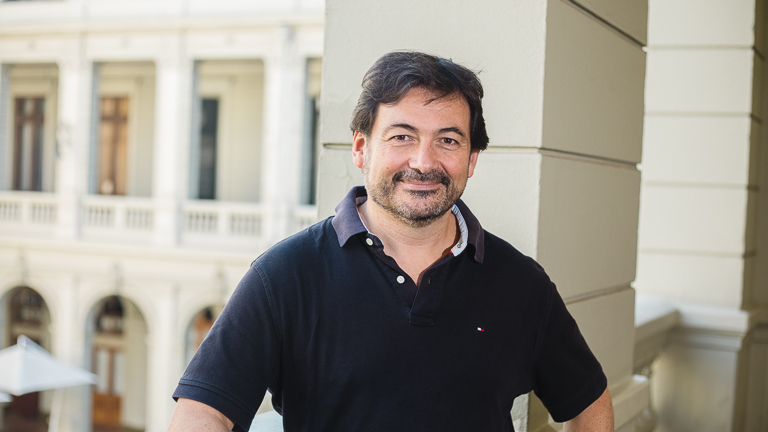
Dr. Shimona Kealy is a Research Fellow at the Australian National University, specializing in archaeology and palaeobiology. Her work focuses on early human movements, cultural evolution, and ecological impacts in the Asia-Pacific islands over the last 50,000 years, particularly in Wallacea. Her research integrates geographic information systems (GIS) palaeogeographic reconstruction biogeographic modelling phylogenetic analysis to study prehistoric human-environment interactions. She leads archaeological surveys and excavations in Indonesia and Timor-Leste, emphasizing multidisciplinary approaches combining archaeology with molecular and morphological phylogenetics. Recent publications highlight her contributions to understanding maritime technology (e.g., shell beads, fishhooks) obsidian trade networks rock art traditions long-term human behavioral continuity across Wallacea. Collaborative initiatives with Indonesian institutions underscore her commitment to regional research training.
Dr. Fred Andrus is a Professor in the Department of Geological Sciences at the University of Alabama , specializing in reconstructing paleoclimate and paleoenvironment through sclerochronological and isotopic analysis of marine and freshwater mollusk shells, coralline algae, and fish otoliths. His work bridges paleoclimatology , isotope geochemistry , and human-environment interaction across diverse regions including the Southeastern US , Pacific coast , Aleutian Islands , coastal Peru , and Greenland . Education: PhD in Geology, University of Georgia (2000) MA in Anthropology, University of Georgia (1995) BA in Anthropology, University of Georgia (1990) His research develops high-resolution climate proxies using stable oxygen and carbon isotopes for temperature and salinity reconstruction, alongside nitrogen isotopes for pollution tracking. His lab group (2025) includes students analyzing mollusk shells for El Niño variability , sea ice extent , and human coastal adaptation . Recent publications focus on shell ring chronology in the Georgia coast (2024), ammonite aptychi analysis (2024), and Antarctic sea-ice proxies (2024). He has mentored 15+ graduate students in projects spanning Quaternary ecology , upwelling systems , and prehistoric resource management . Scientific Awards: Smithsonian Tropical Research Institute fellowship for Hillary Sletten (2016) Advising: PhD/MS students in Alabama , Georgia , and South Carolina Collaborations with institutions in Boston , Western Washington , and Smithsonian
Sarah Jacoba Deborah Wurz is a Professor of Archaeology in the Department of Archaeology, History, Cultural and Religious Studies at the University of Bergen, Norway. Her research is centered on Middle Stone Age archaeology in Southern Africa, with a particular focus on the Klasies River Main Site in South Africa. She maintains active research collaborations with institutions including the University of the Witwatersrand in Johannesburg and participates in the Center for Early Sapiens Behavior (SapienCE) research project. Professor Wurz's research interests span multiple dimensions of Paleolithic archaeology. Her primary focus is on the Middle Stone Age of Southern Africa, examining critical aspects of human evolution and adaptation during the Pleistocene epoch. She specializes in zooarchaeological analysis, particularly faunal remains from sites like Klasies River, which provides insights into early human subsistence strategies and environmental adaptations. Her work also encompasses lithic technology analysis, site formation processes, and paleoenvironmental reconstruction. Wurz has made significant contributions to understanding coastal adaptations during Marine Isotope Stages 4-6, shellfish exploitation patterns, and the relationship between environmental change and human behavioral evolution in Southern Africa. Analysis of Wurz's recent publications reveals a consistent focus on the Klasies River Main Site as a critical location for understanding Middle Stone Age human behavior. Her work integrates multiple analytical approaches including zooarchaeology, taphonomy, stratigraphy, and paleoenvironmental reconstruction. A notable trend is her interdisciplinary approach that combines traditional archaeological methods with scientific dating techniques and environmental analysis. Her research particularly emphasizes the relationship between environmental fluctuations during Marine Isotope Stages and human adaptations, with special attention to coastal resource exploitation and technological innovations during the Middle Stone Age. Professor Wurz actively participates in major research initiatives, most notably the Center for Early Sapiens Behavior (SapienCE), which is funded by the Research Council of Norway (reference 262618). Her collaborative work extends across multiple institutions in Norway and South Africa, reflecting the international nature of Paleolithic research. She has been involved in numerous field projects at key Middle Stone Age sites in Southern Africa, contributing to our understanding of early human behavior and evolution. Wurz's research has been supported by significant funding from the Research Council of Norway, enabling extensive fieldwork and laboratory analysis. While specific laboratory facilities aren't detailed in the provided information, Professor Wurz's research clearly involves extensive work with archaeological collections from Southern Africa, particularly from the Klasies River Main Site. Her collaborations suggest access to specialized facilities for zooarchaeological analysis, lithic technology studies, and potentially ancient DNA research given her involvement in publications related to this field. Her work appears to involve both field-based research teams conducting excavations in South Africa and laboratory-based analysis teams working on material collected from these sites.
John Darwent is a Continuing Lecturer at the University of California, Davis, specializing in Arctic archaeology with a focus on hunter-gatherer societies, site formation processes, and cultural transmission. His research spans the North American Arctic, including regions like Norton Sound, Alaska, and Northwestern Greenland, where he examines subsistence strategies, settlement patterns, and technological innovations. Key projects include investigations of Dorset and Thule cultures, Inuit dispersal routes, and the analysis of zooarchaeological and ceramic evidence. Notable work at sites like Iita (Northwest Greenland) and Shaktoolik (Norton Sound) explores environmental adaptation and cultural continuity. His studies integrate methodologies such as cladistics, spatial analysis, and ZooMS to reconstruct prehistoric lifeways. Recent publications highlight topics like miniature carvings as indicators of hunter-prey relationships, specialized sledge dog domestication, and gendered use of space in Arctic settlements. Dr. Darwent collaborates widely, with co-authors including Christyann M. Darwent, James Savelle, and Hans Lange. His work contributes to understanding regional cultural dynamics and long-term human-environment interactions in Arctic regions.
Dr. Cheryl P. Claassen is a Research Professor in the Department of Anthropology at Appalachian State University. She holds the title of Professor Emerita, reflecting her long-standing contributions to the field. Her research focuses on archaeology, particularly shell studies, gender in prehistory, and ritual practices in Eastern North America and Mexico. She earned a Ph.D. from Harvard University (1982) and a B.A. from the University of Arkansas (1975). Dr. Claassen's work explores topics including the sociology of archaeology, symbolism in material culture, and the role of gender in prehistoric societies. She has conducted significant research on shell middens, ritual sites, and the transfer of religious practices post-Columbian contact in Mexico. Her book Religion in Sixteenth-Century Mexico (2023) examines the synthesis of Aztec and Catholic beliefs. She has also authored influential works on gender in archaeology, such as Gender in the Prehistory of the Eastern United States (2014). She has been recognized with the Donald W. Sink Family Outstanding Scholar Award (2010) from the College of Arts and Sciences. Her research integrates fieldwork, historical analysis, and interdisciplinary approaches to understanding ritual landscapes and prehistoric communities. Dr. Claassen’s teaching spans courses on Mesoamerican cultures, archaeological theory, and North American indigenous studies.
Sally Brockwell is an Honorary Senior Lecturer in Archaeology and Natural History at the Australian National University's School of Culture, History and Language. As an Adjunct Associate Professor at the University of Canberra (2022-2025), she maintains cross-institutional collaborations. Her archaeological research focuses on Northern Australia and Island Southeast Asia, particularly wetland environments and Holocene-era sociocultural adaptations. Prominent projects include the Anbarra Archaeological Project (Blyth River shell middens), Australian wetlands archaeology, and the ARC Linkage project 'Heritage of the Air'. Publications reflect consistent themes of landscape change, climate impacts on cultural heritage, and colonial history. Recent fieldwork in Timor-Leste reveals new insights into human adaptation patterns during the Holocene. Brockwell has led eight major projects including 'Earth Mounds in Northern Australia' (2012-2017) and 'Enhancing cultural heritage management for mining operations' (2011-2015). No specific awards are listed, but her 422 Scopus citations and h-index of 12 demonstrate significant scholarly impact.
Dr. Heather B. Thakar is an Assistant Professor in the Department of Anthropology at Texas A&M University, directing the Archaeobotany & Palynology Laboratories and the Radiocarbon & Isotope Preparation Laboratory. Her research focuses on archaeological theory, evolutionary ecology, and prehistoric foraging societies in the Americas, with specialties in isotope geochemistry and radiocarbon dating. She teaches courses such as ANTH 204 (Prehistoric World) and ANTH 637 (Paleoethnobotany). Education : PhD in Archaeology, University of California, Santa Barbara (2014). Research Interests : Domestication of plants and animals in Mesoamerica and Central America. Coastal and island adaptations, including marine resource use and settlement patterns. Isotope analysis and radiocarbon chronology for reconstructing prehistoric diets, land use, and cultural transitions. Archaeological ethics, repatriation practices, and Indigenous collaboration. Key Projects : Principal Investigator of NSF-funded research on Late Pleistocene-Holocene human niche construction in Pacific Central America and foodways reconstruction in Honduras. Co-leads studies on maize domestication genetics and Holocene environmental change. Advising & Grants : Mentors four current graduate students (Kevin Wann, Chloe Fackler, Bradie Dean, Emma Newman) and has secured multiple NSF grants for collaborative archaeological research. Active in developing ethical frameworks for ancient DNA studies and repatriation advocacy. Labs : Directs specialized facilities for archaeobotanical analysis and radiocarbon sample preparation, supporting interdisciplinary research in prehistoric ecology and material culture.
Professor Sean Ulm is a Theme Leader for Cultural & Linguistic Transformations at The Cairns Institute and holds a Professorial Chair at James Cook University's College of Arts, Society & Education . He is affiliated with the Language and Culture Research Centre and the Centre for Tropical Environmental and Sustainability Studies , focusing on archaeology in northern Australia and the western Pacific. His research addresses persistent problems in tropical archaeology, including coastal and underwater archaeology , Indigenous cultural heritage , landscape evolution , and human adaptation to environmental change . Recent work explores submerged cultural landscapes , shell midden preservation , and long-term demographic patterns through computational modeling and field excavation. Professor Ulm contributes to major databases like SahulArch and OCTOPUS , advancing methodologies in radiocarbon calibration , palynological analysis , and 3D digital zooarchaeology . His projects emphasize collaboration with Indigenous communities and interdisciplinary approaches to sustainability challenges.
Claudio Latorre is a Professor at the Faculty of Biological Sciences, Pontificia Universidad Católica de Chile, where he directs the Paleoecology and Paleoenvironment Laboratory. His research focuses on reconstructing climate and ecological dynamics in arid ecosystems over the past 50,000 years, with primary fieldwork concentrated in the Atacama Desert. His research integrates sediment analysis, plant/animal remains identification, stable isotope analysis, and paleogenomics to investigate spatial and temporal ecosystem dynamics. Key areas include rodent paleoburrows, paleowetlands, and archaeological shell middens as proxies for past climate variability, human-environment interactions, and biodiversity responses to hydrological changes. His work provides critical baselines for conservation under current climate change. Analysis of his publication trends reveals consistent focus on Quaternary paleoenvironmental reconstruction using multi-proxy approaches. Dominant themes include Late Pleistocene megafauna dynamics, human colonization impacts, coastal upwelling variability, and hyperarid ecosystem resilience. His methodologies increasingly incorporate paleogenomics and high-resolution metabolomics to decode plant adaptation mechanisms in extreme environments. Latorre actively collaborates with Chile's major research networks including the Millennium Institute of Integrative Biology (IBIO), Institute of Ecology & Biodiversity (IEB), and Center for Applied Ecology and Sustainability (CAPES). His laboratory serves as a hub for interdisciplinary paleoenvironmental research spanning archaeology, climatology, and conservation biology.
Richard Roberts is a Distinguished Professor of Archaeological Science at the University of Wollongong's School of Earth, Atmospheric and Life Sciences (SEALS), Australia. He leads research in Quaternary geochronology, hominin evolution, and geoarchaeology with a focus on Southeast Asia, Australia, and Siberia. Roles: Academic Leader in the ARC Centre of Excellence for Australian Biodiversity and Heritage (CABAH) Supervision: Actively supervising Masters and PhD students in archaeological science Research Interests : Paleoenvironmental reconstruction using luminescence dating techniques Hominin dispersals and interactions (Denisovans, Neanderthals, Homo floresiensis) Prehistoric human-environment interactions in tropical regions Grants & Leadership: Principal Investigator on ARC grants focusing on rock art chronology, Kimberley occupation, and Beringian archaeology Equipment grants for advanced luminescence dating facilities and microarchaeological labs Labs & Teams: Director of the Centre for Archaeological Science (CAS) at UOW, coordinating interdisciplinary research in archaeological science.
Katherine Patton is an archaeologist specializing in coastal hunter-gatherer economies, holding a position as Assistant Professor (Teaching Stream) at the University of Toronto. Her research explores settlement diversity and fishing/shellfishing practices in the Wabanaki homeland and collaborates on Northwest Coast architecture studies. Funded by SSHRC and National Geographic, she develops community-engaged methodologies in both regions. Patton maintains strong pedagogical interests in critical heritage studies and experiential learning approaches. Her research focuses on: Coastal subsistence economies in eastern North America Collaborative archaeology with Indigenous communities Pedagogical innovation in archaeological education Publications systematically examine coastal subsistence, architectural traditions, and cemetery landscapes through multi-proxy archaeological approaches. Awards include competitive grants supporting community-based fieldwork. Current collaborations include projects on shellfishing practices, contact-era settlement patterns, and Northern Northwest Coast architecture.
Paolo Biagi is a Senior Researcher in the Department of Asian and North African Studies at Ca' Foscari University of Venice. He is a leading figure in prehistoric archaeology, with a career spanning decades of fieldwork and research across South Asia, the Caucasus, the Mediterranean, and Eastern Europe. His work is deeply interdisciplinary, combining excavation, lithic analysis, archaeometry, and environmental studies. His research interests encompass a broad temporal and geographical scope, focusing on the Paleolithic, Mesolithic, Neolithic, and Bronze Ages. Key themes include lithic technology, obsidian sourcing and circulation, shell middens, prehistoric mining, human-environment interactions, and the settlement of coastal and highland zones. He has conducted extensive fieldwork in the Indus Valley (Pakistan), the Arabian Sea coast, the Caucasus (Georgia), Greece (Pindus Mountains, Lemnos), Italy (Alps, Liguria), and Eastern Europe (Romania, Ukraine). His recent publications (2023–2025) reveal a continued focus on the prehistoric archaeology of the Indus Valley and the Caucasus, with detailed studies on chert and obsidian exploitation, Bronze Age monumental landscapes, and the Upper Paleolithic of the Aegean. His work often addresses broader theoretical questions about human adaptation, technological change, and long-distance exchange networks in prehistory. Archaeometric Analysis of the Obsidian Assembly from Hodoni/Hodony (Banat, Romania) Building the Lesser Caucasus Monumental Landscape during the Bronze Age Exploitation, Transport, and Circulation of the Rohri Hills Chert (Sindh, Pakistan) The Late Palaeolithic and Mesolithic Settlement of Northern Italy Forgotten Islands of the Past: The Archaeology of the Northern Coast of the Arabian Sea Paolo Biagi has not been mentioned as receiving specific scientific awards or prizes in the provided text. His career is marked by a prolific output of scholarly articles, book chapters, and monographs, as well as editorial work for academic volumes. He has collaborated with a wide network of international researchers. He has supervised and collaborated with numerous researchers and students, as evidenced by his co-authorship on many publications with scholars such as Elisabetta Starnini, Renato Nisbet, Bernard Gratuze, and Nikos Efstratiou. While specific grant details are not listed, his long-term field projects in Pakistan and the Caucasus suggest sustained funding from national and international sources. His research is closely tied to field projects and excavation teams rather than a formal laboratory. His work is associated with the research infrastructure of Ca' Foscari University, particularly within the Department of Asian and North African Studies. His teams have conducted surveys and excavations in remote and challenging environments, from the Thar Desert in Pakistan to the highlands of the Pindus and the Javakheti Plateau.
Dr. Sally Brockwell serves as Honorary Senior Lecturer in Archaeology & Natural History at the School of Culture, History & Language, Australian National University (ANU) from 2016-2026, and Adjunct Associate Professor at the University of Canberra (2022-2025). Her career includes ARC Research Associate positions at ANU (2008-2012) and University of Canberra (2018-2021), plus ARC Research Fellow at ANU (2012-2016). Her education comprises BA Hons and MA from ANU, and PhD from Charles Darwin University (CDU). Brockwell specializes in Northern Australia and Island South East Asia archaeology, with wetlands archaeology as her core focus. Her research examines Holocene-era human adaptations to environmental and climate changes, particularly in coastal plains of Timor-Leste, East Timor, and Australia's Northern Territory. She investigates how landscape transformations influenced sociocultural developments through shell midden analysis, wooden artifact preservation, and fortification studies. Her recent publications (2020-2023) demonstrate interdisciplinary integration of archaeological fieldwork with climate science and cultural heritage management. Key trends include sociocultural adaptations to landscape change in Island Southeast Asia, climate change vulnerability assessments for heritage sites, and analysis of prehistoric material culture in Arnhem Land. Scientific awards include: ARC Research Associate (ANU, 2008-2012) ARC Research Fellow (ANU, 2012-2016) ARC Research Associate (University of Canberra, 2018-2021) She leads major projects including the Anbarra Archaeological Project (Blyth River, Arnhem Land), Australian wetlands archaeology with Dr. Colin Pardoe, and ARC Linkage project 'Heritage of the Air' (LP160101232) on aviation history. Her grant portfolio spans climate change adaptation methodologies, cultural heritage management for mining operations, and interdisciplinary landscape change studies across eight projects since 2002. Brockwell collaborates with international teams including the Centre for Cultural and Creative Research (UC, 2021-2025), and works with institutions across Timor-Leste, Kakadu National Park, and Wallacea on earth mounds, rock art preservation, and coastal archaeology.
Marc Händel is an Academy Scientist specializing in Quaternary Archaeology at the Austrian Academy of Sciences (ÖAW). He holds a diploma in media studies and degrees in geography/ecology and archaeological sciences. His research focuses on Upper Palaeolithic Central Europe and prehistoric Arabia, with expertise in site formation, lithic technology, and environmental archaeology. He has conducted fieldwork across Europe and the Middle East, contributing to projects like the Krems-Wachtberg excavations and the AQS database initiative. Education: Diploma studies in Media (University of Applied Sciences, Stuttgart) Geography/Ecology (University of Lüneburg, 1993-1996) Technical training in Archaeological Sciences (University of Tübingen, 2000-2002) Research Interests: Human-environment interactions during the last glacial cycle Open-air and cave site analysis in Central Europe Prehistoric subsistence strategies and raw material use Database development for Quaternary archaeological sites Recent Work Trends: Recent publications emphasize interdisciplinary approaches to LGM sites, combining geochemical proxies with archaeological data. He focuses on reconstructing subsistence practices (e.g., reindeer use, faunal exploitation) and environmental conditions during climatic transitions. Labs/Teams: Leads the RG »Quaternary Archaeology« within the Austrian Academy of Sciences, coordinating projects like 'Comparing Upper Palaeolithic Sequences across the Carpathians' and 'MAMBA - Mammoth Bone Accumulations.'
Prof Bryce Barker is a Professor of Anthropology at the University of Southern Queensland's School of Humanities and Communication. His affiliation with the Centre for Heritage and Culture Research underscores his commitment to interdisciplinary research. Holding a BA and PhD from the University of Queensland, Barker specializes in Indigenous archaeology, colonial frontier dynamics, and material culture analysis. His research focuses on reconstructing Indigenous histories through archaeological inquiry, particularly examining the legacy of the Queensland Native Mounted Police, coastal foraging strategies, and rock art interpretation. His work frequently integrates environmental, historical, and anthropological perspectives to address questions of cultural continuity and colonial impact. Recent studies highlight his contributions to understanding Holocene settlement patterns in Papua New Guinea, the material evidence of frontier conflicts, and the analysis of stone artifacts and cultural landscapes. His publications demonstrate a strong emphasis on decolonizing methodologies and community-engaged archaeology. Barker’s research outputs reflect a rigorous engagement with both theoretical and applied archaeology, bridging academic insights with heritage management practices.