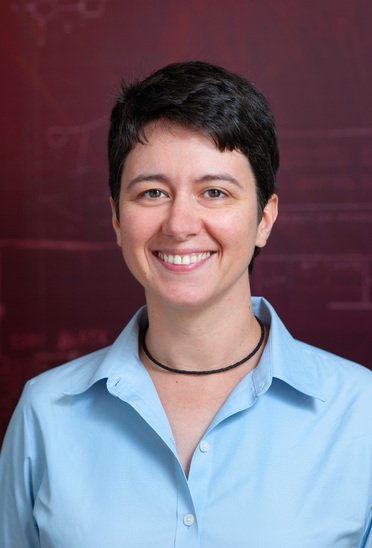
Selçuk Karabatı is a Professor of Operations Management at the College of Administrative Sciences and Economics, Koç University (Turkey). His research spans retail operations, sustainable supply chains, and production systems optimization. He holds a PhD from the University of Texas at Austin and has previously taught graduate courses in Service Operations Management , Operations Strategy , and Sustainable Operations Management at Koç University. Education : PhD (University of Texas at Austin), MS (University of Southern California), BS (Boğaziçi University) Editorial Roles : Senior/Associate Editor at Production and Operations Management and IIE Transactions His research focuses on Supply Chain Management , Retail Operations , and Sustainable Operations , with applications in inventory control, pricing strategies, and production planning. Recent and historical publications reveal expertise in optimization frameworks , dynamic pricing , portfolio rebalancing , and retail analytics . While no explicit scientific awards are listed in the provided text, his work has consistently addressed challenges in inventory substitution, auction mechanisms, and logistics coordination.
Lindsay Holly, Ph.D. is an Assistant Professor in the Department of Psychology at Marquette University, where she directs the CARE Lab for Youth Mental Health Equity. Her work focuses on advancing culturally responsive, evidence-based mental health services for youth, with particular attention to raising treatment accessibility and empowering youth and families to promote mental health equity. Dr. Holly's educational background includes: Ph.D. in Clinical Psychology from Arizona State University (2016) M.A. in Clinical Psychology from Arizona State University (2012) M.S. in Human Development from the University of Rochester (2008) B.A. from the University of Maryland (2007) Her research program examines how to improve evidence-based interventions for youth mental health, particularly for traditionally underserved populations. Grounded in developmental psychopathology and guided by cultural-contextual frameworks, Dr. Holly's work uses qualitative, quantitative, and mixed methods to: (1) elucidate the role of parents in youth mental health treatment; (2) improve cultural appropriateness of clinical practices; and (3) increase accessibility to mental health care. Current projects include examining cultural determinants of parental help-seeking for youth of color and supporting student success through school-based mental health services. Dr. Holly has published extensively on youth mental health equity, with recent work focusing on parental beliefs about mental health etiology across racial/ethnic groups, parental burnout, cultural aspects of anxiety disorders, and evaluation of family-based interventions. Her research demonstrates consistent attention to cultural factors and equity in mental health service delivery. Among her professional recognitions are the Undergraduate Student Research Poster Award (2nd place) from the Wisconsin Psychological Association, the Undergraduate Research Poster Award from the Society for Clinical Child and Adolescent Psychology, and the Best Poster Award at Marquette University's Diversity in Psychology Research Conference. As an educator, Dr. Holly teaches Psychological Assessment 1 and supervises doctoral clinicians at the graduate level, and Abnormal Psychology at the undergraduate level. She is also developing a new course titled "Youth in Context: Culture, Development, and Mental Health." Her mentorship extends to numerous graduate and undergraduate students who have presented research at national conferences and received awards for their work.
Stefan Klonner serves as Professor of Development Economics at Heidelberg University's South Asia Institute since 2010, leading the Development Economics Team. His academic trajectory includes a Ph.D. in Economics from Heidelberg University (2001) and a Master's in Statistics and Econometrics from the University of Utah (1996), with prior appointments at Yale University (postdoctoral fellow and visiting lecturer), Cornell University (assistant professor), and Goethe University Frankfurt (Professor of International and Development Economics). His educational credentials: Ph.D. in Economics, Ruprecht-Karls University Heidelberg, 2001 Master's in Statistics and Econometrics, University of Utah, 1996 Klonner's research centers on microeconomic analysis of low-income economies, specializing in credit/insurance markets, health interventions, poverty targeting mechanisms, and impact evaluation of welfare programs. His extensive fieldwork in South India combines rigorous quantitative methods with deep regional expertise to address practical policy challenges in development contexts. This work bridges theoretical economics with real-world applications for poverty reduction. Analysis of his recent publications reveals consistent methodological rigor in evaluating social programs across India and Burkina Faso, with dominant themes including disaster resilience, maternal health financing, employment guarantee schemes, and poverty targeting. His research demonstrates strong regional specialization in South Asia while addressing universal development challenges through microeconometric approaches and field experiments. Professor Klonner actively engages public discourse through expert commentary in media outlets like Die Tageszeitung (taz) and La Liberté, along with invited lectures at institutions including the State Bank of India Leadership Institute and University of Cologne. His presentations address Sustainable Development Goals, fair trade, and poverty measurement methodologies. As head of the Development Economics Team within Heidelberg's South Asia Institute, he contributes to interdisciplinary research on South Asian economies through the Centre for Asian and Transcultural Studies (CATS), directing field studies and policy-relevant analysis focused on South India.
Jean-Marie Bonnin is a Researcher at IMT Atlantique , affiliated with the Network Systems, Cyber Security and Digital Law department. His work spans autonomous industrial vehicles, vehicular networks, and cooperative systems, with a focus on energy management, task allocation, and safety protocols. IMT Atlantique, Rennes Campus Research in Industry 4.0 and Smart Mobility Research Interests : Autonomous Industrial Vehicle Fleets Fuzzy Logic for Multi-Agent Systems V2X Communication Protocols Scientific Contributions include: Modeling energy consumption in extreme-edge IoT nodes Decentralized task allocation for autonomous vehicles Collision avoidance in industrial environments
Tatiana Anisimova is an Associate Professor at the Department of Marketing and Tourism Studies within the School of Business and Economics at Linnaeus University, Sweden. She is affiliated with GATE – Graduate School of Advanced Technology and Enterprising, which focuses on challenges faced by small and medium-sized enterprises (SMEs) in the digital transition. The School of Business and Economics holds AACSB accreditation, reflecting its commitment to high-quality business education. Her educational background includes: Ph.D. in Marketing from Monash University, Australia Bachelor's degree in Sociology Dr. Anisimova's research spans entrepreneurship and management , with expertise in new venture performance, shared leadership, context in entrepreneurial activity, innovative ambidexterity strategy, and adaptive governance of forestry cooperatives. Her marketing research encompasses strategic marketing, organic food consumption, consumer psychology, corporate branding, brand activism, and authenticity amid AI-driven misinformation. Her interdisciplinary approach bridges social science perspectives with business applications, reflecting her sociology background's strong grounding in critical analysis and research methodology. Her publication record demonstrates consistent focus on consumer behavior (particularly organic food consumption and trust) and entrepreneurship, with recent work increasingly addressing contemporary challenges like AI-driven misinformation, permacrisis conditions, and sustainable consumption. She frequently employs sophisticated statistical methods including moderation and mediation analyses to understand complex consumer decision processes. Dr. Anisimova has secured multiple competitive research grants: Stipendium by Handelsbankens forskningsstiftelser Jan Wallander and Tom Hedelius foundation (2023) for Visiting Scholar at University of Bologna Visiting Scholar grant by Erasmus+ EU program (2024-2025) for continued collaboration with University of Bologna Industry Linkage Grant: Profiling community engagement in food production in Australian Capital Territory Industry Research Grant: Sustainable Consumption investigation of 'smart housing' Småland Linkage Grant: Sustainable Food Consumption and marketing communications Entrepreneurship & Innovation Research Group (EIRG) Research Grant She actively supervises PhD candidates at Linnaeus University and University of Bologna, and has served as external examiner for PhD candidates at Curtin University (Australia) and Montpellier Business School (France), where she has served as President of DBA theses juries. Her international collaborations extend to guest scholar positions at leading universities in Italy, Japan, and China. Through GATE, Dr. Anisimova contributes to interdisciplinary research addressing digital transition challenges for SMEs, working within teams focused on sustainable co-creation solutions that integrate business, technology, and social perspectives.
Sir Harshad Bhadeshia is a renowned Indian-British metallurgist and Professor of Metallurgy at Queen Mary University of London since 2022. Previously, he held the Emeritus Tata Steel Professorship at the University of Cambridge, where he worked from 1980 until his move to Queen Mary. His research focuses on the theory of solid-state transformations in multicomponent steels , aiming to create novel alloys and processes with minimal resource use. Education: BSc from City of London Polytechnic, PhD from University of Cambridge (1980) under David V. Edmonds Research Areas: Phase transformations in steel, computational modeling, neural networks, Bainite, welding technology, hydrogen embrittlement resistance, nanostructured materials Scientific Awards: Bessemer Gold Medal (2006), Hume Rothery Prize (1992), Rosenhain Medal (1994), Knight Bachelor (2015), Adolf Martens Medal (2017), William Menelaus Medal (2025) Editorial Roles: Editor for Materials Science and Engineering: A , Materials Science and Technology , and Science and Technology of Welding and Joining Students: Roger Reed, Rachel Thomson His Google Scholar publications (over 650) cover topics in metallurgy, phase transformations, computational modeling, hydrogen resistance, and AI in materials science, with a significant emphasis on Bainite, welds, and nanostructured steels. The SKF University Technology Centre (2009-2019) and Computational Metallurgy Laboratory (2005-18) highlight his leadership in industrial collaborations and international research. His scientific awards and fellowships (Royal Society, Royal Academy of Engineering, Institute of Materials, Minerals and Mining) underscore his global recognition.
Constantin Grigo is a PhD researcher at the Technical University of Munich (TU Munich), actively engaged in the Continuum Mechanics group. His work focuses on Uncertainty Quantification (UQ) and Machine Learning (ML), particularly for applications in maritime safety, bicycle traffic modeling, and stochastic systems. He has presented his research at major conferences like SIAM UQ and WCCM, and has been recognized with Student Travel Awards from SIAM UQ 2018 and SIAM CSE 2019. Education: Master of Science in Physics, LMU Munich (2015) Bachelor of Science in Physics, LMU Munich (2012) Year abroad at Grenoble INP (2010-2011) Research Interests: Probabilistic machine learning for coarse-graining high-dimensional systems Bayesian model and dimension reduction Stochastic differential equations in heterogeneous media Microscopic traffic simulation for bicycles and autonomous vehicles Digital twin applications for maritime and urban mobility Reduced-order modeling of random materials Selected Awards: SIAM UQ 2018: Student Travel Award Winner SIAM CSE 2019: Student Travel Award Winner His publications span topics such as data-driven scenario specification for autonomous vehicles, bicycle maneuver prediction using neural networks, and physics-constrained surrogates for UQ. He also contributes to open-source simulation tools like SUMO for traffic modeling.
Zhaotian Luo is an Assistant Professor in the Department of Political Science at the University of Chicago, with affiliations to the Committee on Chinese Studies. His research bridges formal theory, political institutions, and the political economy of non-democratic regimes. His scholarly focus lies in the political economy of institutions , information manipulation , and formal theory , particularly analyzing how strategic interactions among political actors shape institutional outcomes. His work spans autocratic governance, authoritarian consolidation, and democratic vulnerabilities. Recent publications explore dynamics of authoritarian power-sharing , censorship mechanisms , repression strategies , and democratic backsliding . Using game-theoretic models, he investigates how information control and strategic trade-offs influence regime stability and institutional evolution. The majority of his recent articles (2021–2025) build on themes of elite bargaining , strategic deception , and equilibrium institutional design , often intersecting with challenges in authoritarian governance and democratic erosion .
Beatrice Orlando is an Associate Professor at the Department of Economics and Management at the University of Ferrara. She holds a Ph.D. in Business Management and Corporate Finance from Sapienza University of Rome and has extensive experience in both academic and professional settings. Her current research focuses on Open Innovation, Corporate Strategy, and Entrepreneurship, with numerous publications in high-impact journals. Her educational background includes a Ph.D. in Business Management and Corporate Finance (Sapienza University of Rome, 2010), a Master in Finance (Sapienza University of Rome, 2007), and a Graduate Degree in Economics and Accounting (Sapienza University of Rome, 2004). Professor Orlando's research interests span multiple domains including Open Innovation, Corporate Strategy, Entrepreneurship, Knowledge Management, Sustainability, and Organizational Slack. Her work particularly emphasizes how digital platforms, organizational slack, and decision-making under uncertainty influence innovation adoption and corporate performance. She has developed theoretical frameworks connecting prospect theory, sunk costs, and risk behavior in innovation contexts. Her recent publications reveal a strong trend toward interdisciplinary research combining innovation management with sustainability, digital transformation, and knowledge sharing. The articles demonstrate a methodological diversity ranging from systematic literature reviews to quantitative empirical studies across multiple countries and sectors, with particular focus on green innovation, knowledge management, and the impact of organizational structures on innovation performance. National qualification as Associate Professor (2017) Chartered Accountant certification (2016) Ranked first in PhD competition Grant for research project 'Design driven innovation' (2016) Grant for research project 'On the long-run performance effect' (2015) Professor Orlando has supervised numerous doctoral students and serves as a reviewer for multiple prestigious journals including Journal of Technological Forecasting and Social Change, Production Planning and Control, and Technology Analysis and Strategic Management. She has received multiple research grants supporting her work on innovation management and corporate strategy. She serves as Co-Editor-in-Chief of the Journal of Corporate and Business Strategy Review and as Regional Editor for the Journal of Knowledge Management. She directs the 'Innovation Management' area at EMRBI KMIRC (Knowledge Management International Research Centre) at the University of Nicosia and is a Research Associate at MADEINIT Research Center in Rome. Her research centers focus on open innovation, digital platforms, and the intersection of knowledge management with entrepreneurial initiatives.
Stefanos Nikolaidis is a tenured Associate Professor in the Department of Computer Science at the University of Southern California (USC), where he directs the Interactive and Collaborative Autonomous Robotic Systems (ICAROS) Lab. His research focuses on enabling robots to interact robustly with humans in dynamic environments through advancements in artificial intelligence, human-robot interaction, procedural content generation, and quality diversity optimization. Education: PhD in Robotics from Carnegie Mellon University (CMU) and MS in Computer Science from MIT. The ICAROS Lab develops interactive agents for real-world tasks while creating diverse testing scenarios to enhance system robustness. Research integrates AI techniques with human-centric design principles across applications like rehabilitation robotics, collaborative manufacturing, and socially interactive embodiments. Recent publications demonstrate trends in quality diversity optimization, human-aware planning, and policy adaptation. Notable works include AutoQD for behavior discovery, CMA-MA for multi-objective optimization, and applications in hair manipulation, rehabilitation personalization, and large language model integration. Scientific Awards: NSF CAREER Award (2022). He actively shares research updates via Twitter and has contributed software tools like pyribs for quality diversity optimization. His work spans theoretical advancements in optimization algorithms and practical implementations in assistive robotics.
Bradley Reaves serves as an Associate Professor in the Department of Computer Science at North Carolina State University and is a core member of the Wolfpack Security and Privacy Research (WSPR) Lab and the Secure Computing Institute. His work focuses on real-world security and privacy challenges across cellular networks, mobile platforms, and software systems. Education: Ph.D. in Computer Engineering, University of Florida (2017) M.S. in Computer Science, Georgia Institute of Technology (2015) Research Interests: Dr. Reaves pioneers interdisciplinary security solutions combining signal processing, machine learning, and cryptography to combat robocalls, mobile fraud, and software vulnerabilities. His work spans telephone network security (e.g., call authentication systems), mobile money security in developing economies, and software secret leakage in repositories. He emphasizes practical impact through industry collaboration and deployable tools. Publication Trends: Recent work (2023-2024) shows concentrated focus on telecom security (call traceback, SMS phishing), software vulnerability management (LLM-assisted patching, secret leakage), and network policy systems . His research consistently bridges theoretical innovation with real-world data collection, including analysis of 1.5 million robocalls and mobile money transaction fraud. Awards: Best Paper at ACM WiSec (2013) Advising and Collaborations: Dr. Reaves mentors Ph.D., Master's, and undergraduate researchers through structured pathways: Ph.D. applicants must demonstrate specific interest in his publications; Master's students typically engage via courses like CSC 574; undergraduates require CSC 230 completion and 10+ weekly hours. Industry partnerships include data sharing under confidential agreements, student hiring pipelines, and commissioned research for telecom fraud analysis. Labs and Teams: He leads the Wolfpack Security and Privacy Research (WSPR) Lab, which operates within NC State's Secure Computing Institute. The lab specializes in large-scale security measurement studies and develops tools like SNORCall for robocall analysis and SecretBench for secret leakage detection.
Svetlana "Lana" Yarosh is an Associate Professor in the Computer Science & Engineering Department at the University of Minnesota, and a faculty member in the GroupLens Research Center. She holds the distinguished titles of Distinguished University Teaching Professor and McKnight Presidential Fellow, and serves as Director of Undergraduate Studies for Computer Science. Her academic journey began with dual B.S. degrees in Computer Science and Psychology from the University of Maryland, followed by a Ph.D. in Human-Centered Computing from Georgia Institute of Technology. Dr. Yarosh's research focuses on embodied interaction in social computing systems, with particular contributions to Child-Computer Interaction, Online Health Communities, and Pervasive Health applications. She leads the ProDUCT (Prototyping, Design, and Usability of Communication Technologies) research group within GroupLens, where her team explores how technology can enhance social connections, particularly in contexts like intergenerational mentorship, substance use disorder recovery, and health support communities. Her work often integrates embodiment perspectives, such as adding projection and haptics to communication systems. Her recent publications reveal a strong trend toward VR/AR technologies, ethical considerations in children's technology, and applications supporting recovery from substance use disorders. The research spans HCI, social computing, and health informatics, with growing emphasis on ethical design frameworks and participatory approaches to technology development. Morse-Alumni Award for contributions to undergraduate education McKnight Presidential Fellow (2020-2023) NSF CAREER Award recipient Multiple Best Paper and Honorable Mention awards at top venues including CHI, CSCW, and IDC Google Faculty Research Award Dr. Yarosh has successfully advised numerous Ph.D. students who have gone on to tenure-track positions at institutions like Carnegie Mellon University, North Carolina State University, and McMaster University. Her research is supported by significant grants including NSF ER2 ($400,000), NSF REU Site ($404,983), and her NSF CAREER award ($548,228). She is particularly committed to mentoring students interested in computational support for substance use disorders and has established structured pathways for undergraduate and graduate students to join her research lab.
Prof. Dr. Andreas Herkersdorf is a Full Professor and Chair of Integrated Systems at the Technical University of Munich (TUM) School of Computation, Information and Technology. His research focuses on application-specific multicore processors (MPSoC), FPGA-based prototyping, fault-tolerant systems, and energy-efficient architectures, with applications in IP packet processing, automotive systems, and visual computing. He has received multiple IBM innovation awards and serves on editorial boards including the DFG Review Board for computer architecture. Education: Dipl.-Ing. Electrical Engineering (TUM, 1987), Dr. techn. Electrical Engineering (ETH Zurich, 1991) Research: MPSoC architectures, autonomic computing, NoC resilience, FPGA acceleration, and self-optimizing systems. Awards: IBM Master Inventor (1998), IBM Outstanding Technical Achievement Award (2001), multiple IBM Innovation Achievement Awards (1996-2003) His recent publications emphasize hardware/software co-design, machine learning integration for runtime optimization, and network-on-chip innovations. He collaborates on projects involving 6G systems, smartNICs, and automotive communication protocols.
Dr. Steve Witt is a Professor and Head of the International and Area Studies Library at the University of Illinois at Urbana-Champaign, where he also serves as Director of the Center for Global Studies. As a subject specialist for Global Studies and Japanese, he bridges library science with international academic collaboration. University of Illinois at Urbana-Champaign International and Area Studies Library Center for Global Studies European Union Center Center for East Asian and Pacific Studies His research examines global information networks through historical lenses, focusing on the Carnegie Endowment for International Peace's role in shaping internationalist thought through library collections. Current projects include analyzing Imperial Japan's contributions to early 20th-century internationalism and developing digital humanities methodologies to study the CEIP's curated book corpus. Publications highlight his expertise in privacy evolution within library associations, resource sharing for area studies, and sustainable library practices. He serves as editor for IFLA Journal , promoting translational research between theory and practice.
Chun Wang is an Associate Professor in the Department of Biomedical Engineering at the University of Minnesota with significant contributions to cancer immunology and drug delivery research. They maintain affiliations with the Cancer Immunology Center and the Center for Immunology, focusing on translational research that bridges engineering principles with therapeutic applications. Dr. Wang's research interests encompass multiple cutting-edge areas at the intersection of biomedical engineering and immunology: Development of innovative polymer-based drug delivery systems for controlled release applications Design of nanoparticle platforms specifically engineered for cancer immunotherapy Creative approaches to vaccine development targeting melanoma and other cancers Advanced hydrogel technologies with applications in embolization and therapeutic delivery Integration of photothermal therapy with immunological approaches for enhanced treatment efficacy Analysis of Dr. Wang's publication record reveals a strong trajectory in translational research, with recent work demonstrating significant advances in polymer-protein nanovaccines, PEI-based nanoparticles for tumor immunotherapy, and novel hydrogel systems. Their research consistently bridges fundamental material science with clinical applications in cancer treatment, showing particular strength in applying engineering principles to solve immunological challenges. Dr. Wang has secured substantial external funding for their research, serving as Principal Investigator on multiple significant projects: A Novel Melanoma Vaccine Based on a Shared Neoantigen and a Liquid Polymer Platform (2023-2025, NIH and Trekka Therapeutics) Analysis of POE IV and Formulation of Granisetron (2021-2023, Evonik Corporation) Translational Development of a Melanoma Neoantigen Peptide Vaccine (2019-2020, Mayo Clinic Rochester) Selective and Efficacious Treatment of Cancer through Combination Approaches (2018-2019, Boston Scientific Corporation) With 108 documented research outputs spanning from 1994 to 2025, Dr. Wang maintains an active laboratory focused on translating polymer science into clinical cancer applications, working closely with industry partners and clinical collaborators to advance novel therapeutic approaches from bench to bedside.