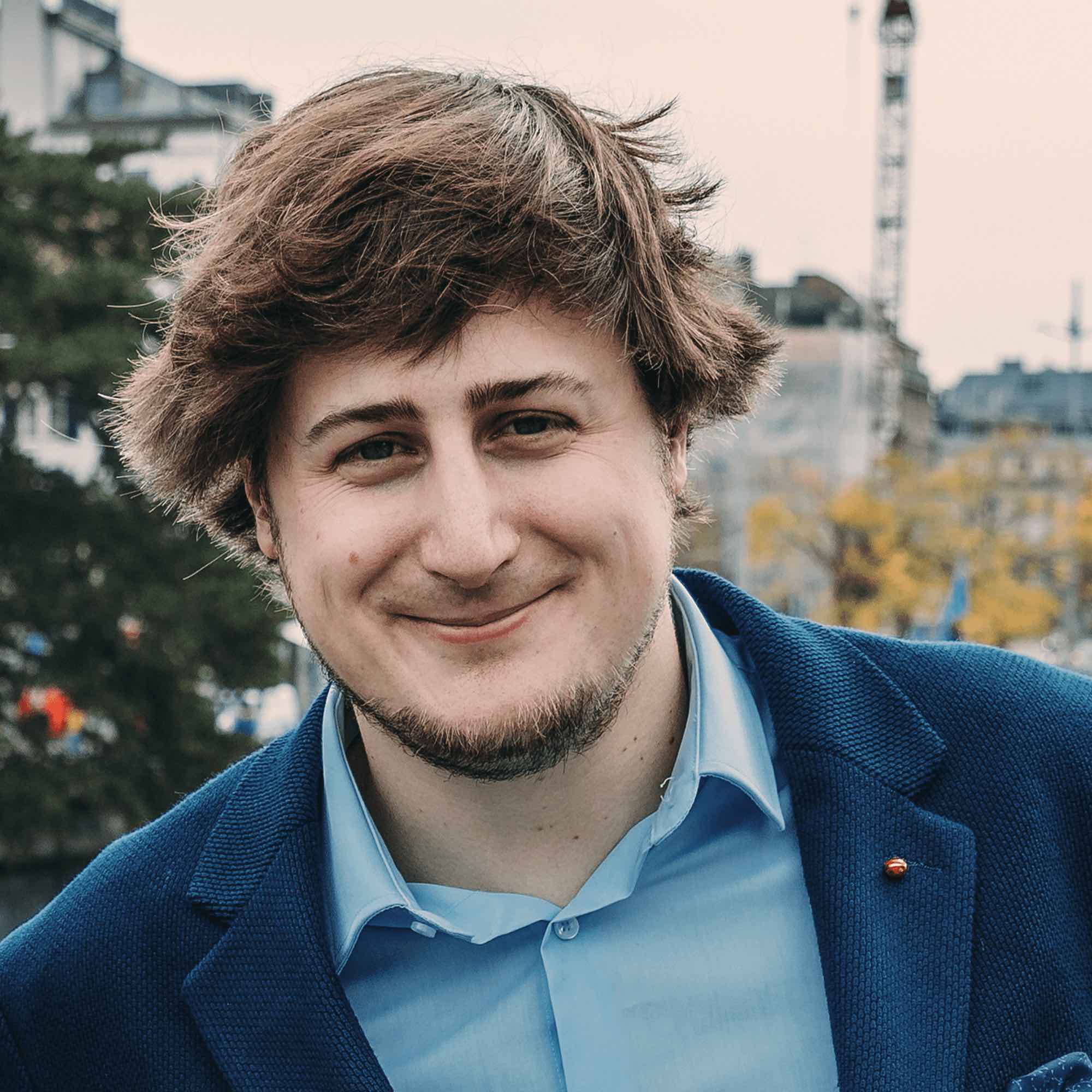
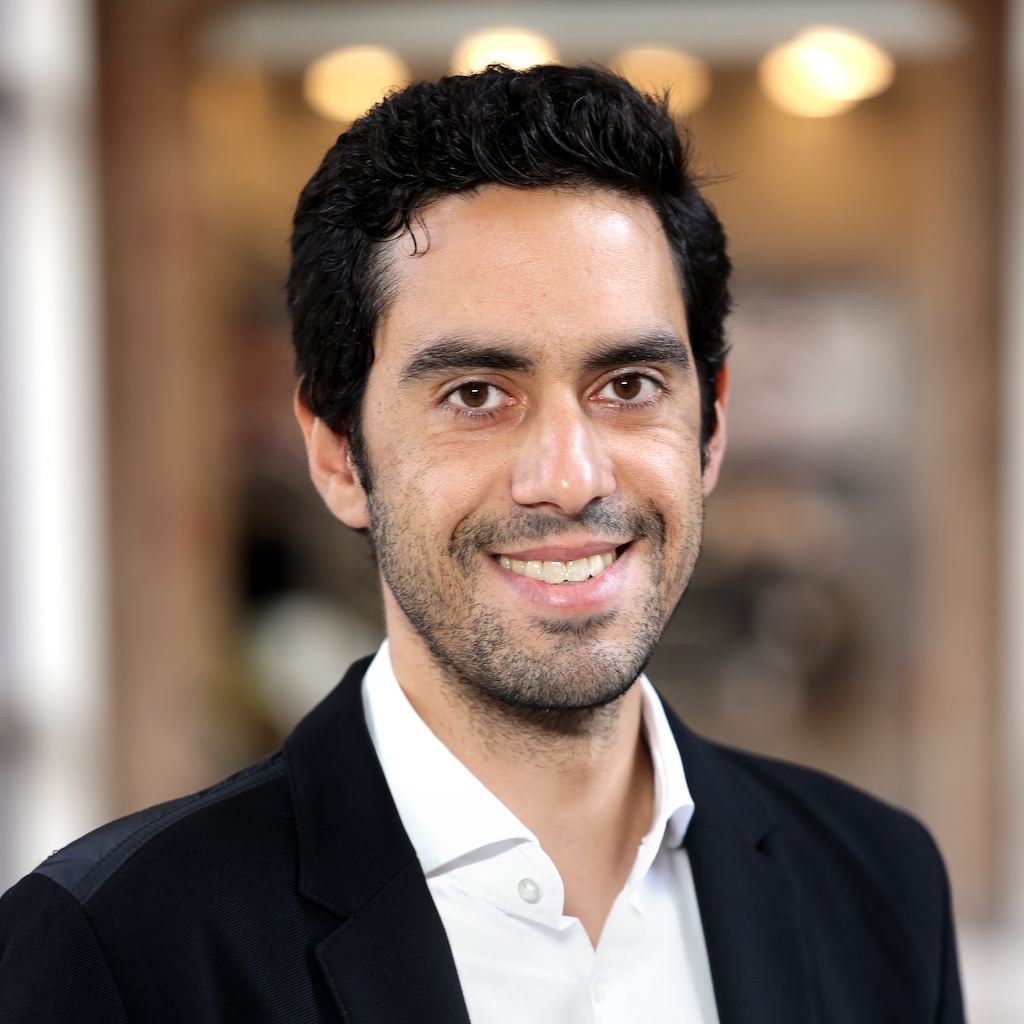
Gioele Zardini is the Rudge (1948) and Nancy Allen Assistant Professor at MIT's Department of Civil and Environmental Engineering (CEE), with affiliations to the Laboratory for Information and Decision Systems (LIDS) and the Institute for Data, Systems, and Society (IDSS). He holds a PhD from ETH Zurich and previously worked as a postdoctoral scholar at Stanford University. His research focuses on co-design of complex systems, autonomous systems, and game-theoretic modeling of transportation networks. Education: BSc and MSc in Mechanical Engineering and Robotics from ETH Zurich (2017–2019), PhD in 2023. He has held visiting roles at nuTonomy Singapore, Stanford, and MIT. Research interests include co-design methodologies, autonomous vehicle systems, compositionality in engineering, and strategic interactions in mobility networks. Recent work emphasizes scalable fleet coordination, safety-critical robotics, and user-centric transportation solutions. Notable awards include the 2024 ETH Doctoral Dissertation Award (Silver Medal), Best Paper at ITSC 2021, and federal grants for enhancing urban transit equity. He leads the Zardini Lab, fostering interdisciplinary collaboration in systems engineering and autonomy. Grants and advising: Received federal grants for transit accessibility projects. His work on Autonomy Talks has produced over 180 recorded lectures, promoting knowledge exchange in autonomous systems. Labs/Teams: Principal Investigator at LIDS, affiliate at IDSS, and founder of the Zardini Lab, focusing on systems co-design, mobility innovation, and game-theoretic frameworks.
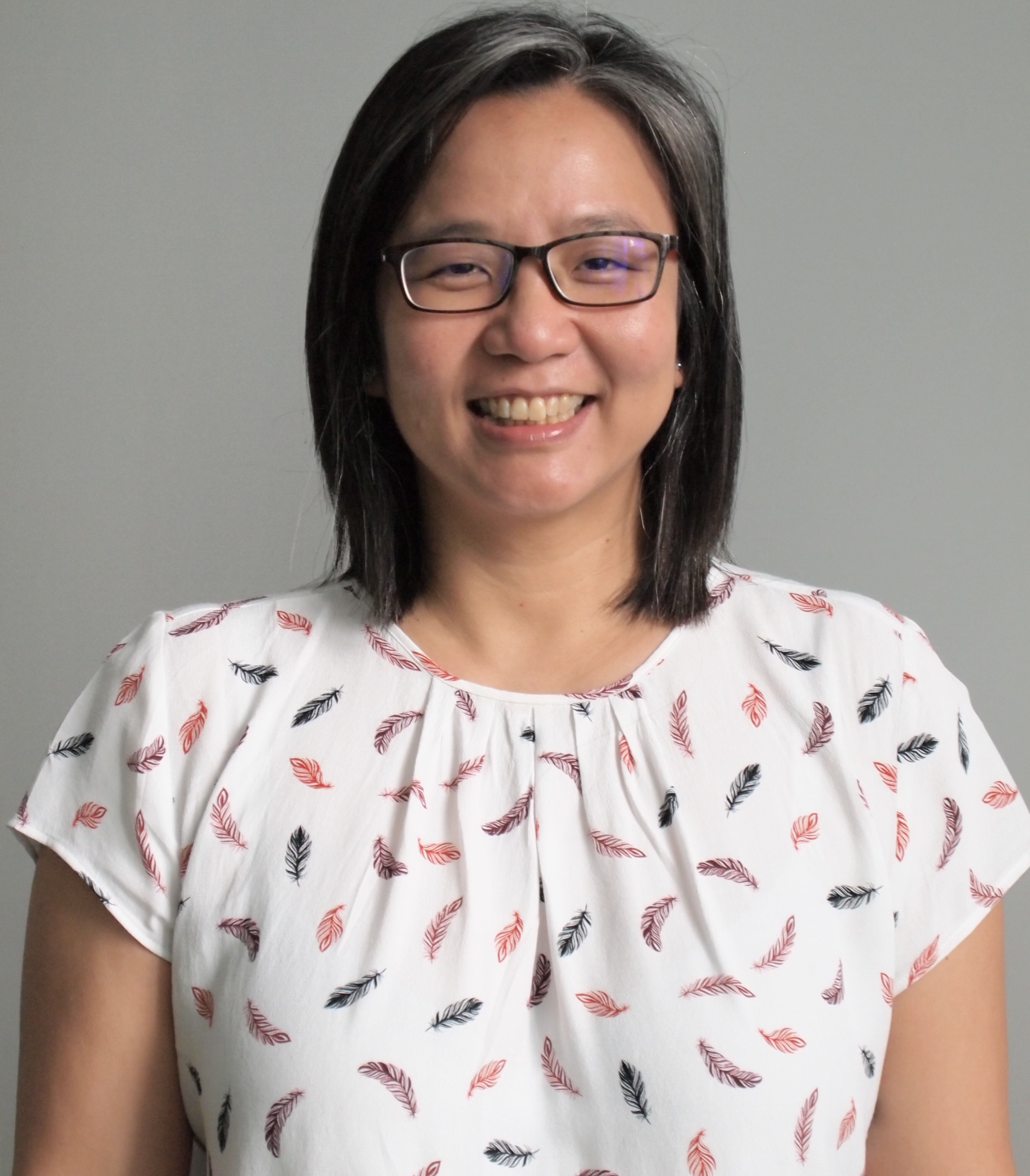
FOONG Pin Sym is a Senior Research Fellow at the Saw Swee Hock School of Public Health, National University of Singapore. She leads the Telehealth Core, a research center focused on developing and studying eHealth projects. Her academic background includes a Master's in Human Computer Interaction Design and a PhD in Interactive Media. Her research emphasizes patient-centered technologies, with a focus on chronic disease prevention, caregiver support, and mobile health applications. Her work addresses challenges in healthcare decision-making, end-of-life care, and lifestyle interventions. Notable projects include developing digital tools for diabetes risk communication, caregiver decision support systems, and studies on telehealth during the pandemic. She teaches courses in Human-Computer Interaction, Mobile Interaction Design, and Technology for Older Adults. Her research spans qualitative and quantitative methodologies, including randomized controlled trials and participatory action research. She actively participates in interdisciplinary collaborations across health, technology, and design sectors to improve patient and caregiver outcomes. Education: PhD in Interactive Media, Master's in Human Computer Interaction Design Labs/Teams: Leads the Telehealth Core research team Grants/Projects: SMART-GDM Study, Vita project for dementia care
Jan Skaloud serves as an Adjunct Professor at École Polytechnique Fédérale de Lausanne (EPFL), affiliated with the School of Architecture, Civil and Environmental Engineering (ENAC). He holds positions across multiple departments including SSIE (Institute of Earth Surface Dynamics), EDCE (Doctoral Program in Environmental Sciences and Engineering), and leads the Earth Sensing and Observation (ESO) Lab. His office is located at GC C2 397 in the EPFL campus in Lausanne, Switzerland. Dr. Skaloud's research expertise spans satellite positioning, inertial and integrated navigation systems, sensor orientation and calibration, attitude determination, mobile mapping, airborne laser scanning, and Kalman filtering techniques. His work bridges theoretical development with practical applications in UAV navigation, photogrammetry, and remote sensing. He teaches across three EPFL sections and two faculties, demonstrating his interdisciplinary approach to education. His publication record shows consistent contributions to the field, with recent work (2023-2025) focusing on vehicle dynamic model-based navigation for various UAV platforms, including delta-wing and fixed-wing drones. His research demonstrates a clear trajectory toward increasingly sophisticated navigation systems that integrate aerodynamic modeling with traditional sensor fusion approaches. This trend reflects the growing importance of model-based navigation in achieving higher precision and autonomy in UAV operations. 2021: Samuel Gamble Award for career contribution in photogrammetry & sensing (ISPRS) 2020: U.V. Helava Award for best paper in ISPRS Journal (2016-2019) 2017: Best Demo Award at IEEE International Workshop on Metrology & Aerospace 2014: Hansa Luftbild Award for best paper in PFG journal 2012: Karl Kraus Medal for best textbook in Photogrammetry 2009: GNSS Leader to Watch Innovation Award (GPS World) Dr. Skaloud has supervised numerous PhD students whose work focuses on advanced navigation systems, sensor calibration, and UAV applications. His research has received funding for projects involving direct georeferencing, mobile mapping systems, and UAV-based search and rescue operations. The ESO lab he directs serves as a hub for cutting-edge research in Earth observation technologies. The Earth Sensing and Observation Lab under Dr. Skaloud's direction brings together researchers working on navigation systems, sensor integration, and data processing techniques for geospatial applications. The lab maintains strong connections with industry partners and international research organizations, facilitating technology transfer and collaborative research projects.
Timo Minssen is Professor of Law at the University of Copenhagen (UCPH) and the Founding Director of UCPH's Center for Advanced Studies in Bioscience Innovation Law (CeBIL). He also holds affiliations as an LML Research Affiliate at the University of Cambridge and an Inter-CeBIL Research Affiliate at Harvard Law School's Petrie-Flom Centre. With extensive expertise in Intellectual Property, Competition, and Regulatory Law, Minssen focuses on the legal aspects of emerging health and life science technologies, including genome editing, big data, artificial intelligence, and quantum technology. His educational background includes a German law degree (Staatsexamen) from Georg-August-University in Göttingen, and Swedish biotech & IPR related LL.M., LL.Lic., and LL.D. degrees from Lund University and Uppsala University. His PhD thesis on the patentability of biopharmaceutical technology in the US & Europe received the prestigious Swedish King Oscar award. 2024: TUM Global Visiting Professor, Technical University of Munich (Germany) 2016: Visiting Research Fellow, University of Cambridge (UK) 2014: Visiting Research Fellow, University of Oxford (UK) 2013-14: Visiting Scholar, Harvard Law School (US) 2012: LL.D. - Doctor of Laws (Swedish "juris doktor"), EU/US patent law, Lund University, Sweden Minssen's research spans AI & Big Data in Health & Life Sciences, Sustainable and responsible innovation & tech transfer, Pharmaceutical-, Life Science- & Biotech Law, Comparative European & US Patent Law, Intellectual Property Law & Open Innovation, and EU Competition- & US Antitrust Law. His work addresses legal issues throughout the lifecycle of health and life science products and processes, from R&D regulation to technology transfer and commercialization. His extensive publication record includes 7 books and over 200 articles and book chapters published in leading journals such as Science, Nature Biotechnology, JAMA, and Harvard Business Review. His research has been featured in The Economist, Financial Times, and other major media outlets. Minssen's recent work shows a strong focus on AI regulation, quantum technology law, and data governance in health contexts, reflecting the evolving landscape of technology and law. Scientific Awards and Recognition King Oscar award for best Jur. Dr. thesis (2014) Jorcks Fonds Forsknings Pris (Jorck's Foundation Research Prize) (2017) Awapatent Research Prize (2009) Max Planck Research Scholarship (2005) Visiting Scholar appointments at Harvard Law School, University of Oxford, and University of Cambridge Recipient of a Novo Nordisk Foundation Grant for a "Collaborative Research Program in Biomedical Innovation Law" (2018) As an advisor, Minssen serves international organizations including the WHO, WIPO, and EU Commission. He has supervised numerous PhD students in areas including pharmaceutical law, biotechnology patents, and antimicrobial resistance. His current research projects include the Novo Nordisk Foundation's International Collaborative Bioscience Innovation & Law (Inter-CeBIL) Programme (50 million DKK), CLASSICA: EU Horizon Project on AI-assisted surgery, and AI@Care: Law and Ethics and Algorithmic Bias in Healthcare. Minssen leads the Center for Advanced Studies in Bioscience Innovation Law (CeBIL), which serves as a hub for interdisciplinary research on the intersection of law, technology, and innovation in the health and life sciences. The center collaborates with institutions worldwide to address pressing legal challenges in emerging technologies.
Professor Dinusha Mendis is a leading academic in Intellectual Property and Innovation Law at Bournemouth University, where she serves as Director of the Centre for Intellectual Property Policy and Management (CIPPM). Her expertise bridges copyright law with emerging technologies like 3D printing, AI, blockchain, and the Metaverse, informed by extensive research and consultation with entities such as the European Parliament, UKIPO, and corporations like HP and Chanel. She holds a PhD from Edinburgh University and has authored seminal works on the intersection of technology and IP. BSc in Law from Aberdeen University LLM and PhD from Edinburgh University Called to the Bar of England and Wales Her research focuses on copyright challenges in immersive environments , AI-generated content regulation , and blockchain/NFTs . She led major studies for the European Commission and UKIPO , including the first peer-reviewed work on 3D printing and IP. Her 2019 co-edited book with Stanford and QUT scholars established foundational frameworks for additive manufacturing legal analysis. Recent publications highlight AI copyright disputes (2024 The Conversation ), NFT legal ambiguities (2022), and pandemic-era 3D printing (2020). Trends show increasing emphasis on decentralized IP systems and machine learning's impact on creative industries . Scientific Awards & Grants JSPS Visiting Professorship (2023) Daiwa Anglo-Japanese Foundation Grant (2024) EU Commission Research Funding (2020) AHRC Grant for 3D Jewellery Study (2017) As a PhD supervisor, she mentors researchers on AI copyright (Benjamin White), crypto-art (Bahar Dagli), and music creation law (Elizabeth Bailey). She contributes to global IP policy through the World Economic Forum's Metaverse Governance Team and EU IPR Enforcement Projects .
Dr. Jiahong Chen is a Lecturer in Law at the University of Sheffield School of Law . His research focuses on the intersection of law and technology, particularly Data Protection Law , Cybersecurity Law , Law and AI , and Internet Regulation . He serves as Departmental EDI Director and Deputy LLM Programme Director. PhD, University of Edinburgh LLM, China University of Political Science and Law LLB, China University of Political Science and Law His research examines regulatory challenges in smart homes , large language models , and data ethics . Current projects include the ESRC-funded "The Internet of Tactical Engagement (IoTE)" and RAI UK's "Addressing Socio-technical Limitations of Large Language Models" . Publications span GDPR interpretation, health data regulation, and smart device accountability. He teaches modules on Information Technology Law , Data Privacy and Governance , and Consumer Law .
Tania Burchardt is an Associate Professor of Social Policy at the London School of Economics (LSE) , where she serves as Deputy Director of STICERD and Associate Director of CASE (Centre for Analysis of Social Exclusion). Her work bridges theoretical frameworks like the capability approach with empirical analyses of inequality , disability policy , and applied welfare policy . Key Research Areas : Theories of justice, inequality measurement, time poverty, and social care systems Leadership Roles : Co-led projects on multidimensional inequality, intergenerational exchanges, and child poverty Her recent work explores intra-household resource allocation , social care inequities , and public engagement in policymaking . She has collaborated with organizations like the Nuffield Foundation and Sense about Science to translate research into practice. Scientific Contributions span empirical studies on: Long-term care funding reforms (2015–2020) Disability-related income disparities Time poverty intersections with economic hardship Data-driven policy recommendations for Roma/Gypsy/Traveller communities Multidimensional child poverty frameworks
Søren Holm is a Professor at the Center for Medical Ethics , University of Oslo. His work spans medical ethics, bioethics, and research ethics , with a focus on artificial intelligence in healthcare, pandemic ethics, and organ transplantation . Primary Affiliation: University of Oslo, Faculty of Medicine Research Themes: AI diagnostics, informed consent, research integrity, end-of-life ethics Key Collaborations: Thomas Ploug, Bjørn Hofmann, Daniel Warrington Recent Publications (2023-2025) analyze ethical challenges in AI-driven healthcare regulation, pandemic research ethics, and data governance . Notable topics include contestable AI diagnostics , equipoise in clinical trials , and conflict of interest disclosure . Contact: Email via soren.holm@medisin.uio.no . No scientific awards or student advisement details explicitly mentioned in the scraped text.
Wilfried Swenden is a Professor of South Asian and Comparative Politics at the University of Edinburgh , School of Social and Political Science . He hails from Belgium, having earned a D.Phil in Politics from the University of Oxford and prior academic qualifications from KULeuven and ULBruxelles. Research Focus : Comparative federalism, territorial party politics, majoritarian nationalism in South Asia, intergovernmental relations, and governance in divided societies. Active Grants : Recent British Academy-GRCF collaborative grant (2021-2023) on COVID-19 and the South Asian State , Leverhulme International Network (2014-2017) on Indian federalism, and support from the Economic and Social Research Council, Edinburgh Global Innovation Fund, and Hayter Fund. Supervision : Accepts PhD proposals on territorial party politics in India, constitutional reform in multi-level states, and conflict regulation via federalism/regionalism in South Asia. Recent Publications (2021-2025) address federalism's resilience during crises, majoritarian nationalism in India/Pakistan/Sri Lanka, and intergovernmental relations. Key journals include Publius: The Journal of Federalism , Contemporary South Asia , and Regional & Federal Studies . Scientific Awards : Flemish Fund for Scientific Research (FWO) postdoctoral fellowship
Andy Hargreaves is an internationally recognized scholar and advisor in education, holding dual roles as Adjunct Professor at Boston College and Visiting Professor at the University of Ottawa. He advises governments including Ontario, Scotland, and New Brunswick on educational policy and system reform. His work focuses on leadership, well-being, student engagement, and systemic educational change. Hargreaves co-leads the ARC Education Project and founded CHENINE, a Canadian research initiative advancing pedagogical innovation. Research Interests: Leadership from the Middle Teacher Well-Being and Professional Capital Identity Development in Schools Play-Based Learning Crisis Management in Education Awards: 2023 Canadian EdTech Awards Educator of the Year 2023 RHSU Edu-Scholar #16 2022 National Academy of Education Member 2015 Grawemeyer Award Key Projects: ARC Education Project (7 nations collaboration) CHENINE (Canadian educational innovation hub) Canadian Playful Schools Network Labs/Teams: Directs CHENINE, collaborates through ARC networks, and leads research on global educational transformation.
Nancy Kass is a Professor in the Department of Health Policy and Management at the Johns Hopkins Bloomberg School of Public Health, where she also holds the Phoebe R. Berman Professorship in Bioethics and Public Health. She serves as Vice Provost for Graduate and Professional Education at Johns Hopkins University and is the Interim Chair of the Department of Health Policy and Management. Additionally, she is Deputy Director for Public Health at the Johns Hopkins Berman Institute of Bioethics and co-directs the Johns Hopkins Fogarty African Bioethics Training Program. ScD, Johns Hopkins University, 1989 BA, Stanford University Postdoctoral Fellowship, Kennedy Institute of Ethics, Georgetown University Dr. Kass’s research focuses on the ethical dimensions of public health policy and research, with particular expertise in bioethics, research ethics, public health ethics, informed consent, learning health systems, and global health ethics . Her work addresses ethical challenges in HIV/AIDS, obesity prevention, genetics, and international research. She has developed influential frameworks for ethical oversight in public health and clinical research. Her recent publications (2024–2025) reflect a strong focus on modernizing clinical research ethics, including optimizing informed consent, integrating clinical trials with medical practice, and enhancing data infrastructure. These works emphasize ethical governance, patient-centered decision-making, and the alignment of research with real-world healthcare delivery. Her scholarship spans high-impact journals such as JAMA and Implementation Science , demonstrating sustained scholarly leadership. GBFFR Annual Award, Global Forum on Bioethics in Research, 2016 Member, National Academy of Medicine (formerly Institute of Medicine), 2008 Fellow, Hastings Center, 2007 Delta Omega Honorary Society in Public Health, 1996 AMTRA (Advising, Mentoring, and Teaching Award), Johns Hopkins, 1996 Dr. Kass has played a pivotal role in education and mentorship, having directed the PhD program in Bioethics and Health Policy for 15 years. She currently leads the Fogarty-funded African Bioethics Training Program, advancing global bioethics capacity. She has served on numerous national and international advisory bodies, including the National Cancer Institute’s central IRB, the National Academy of Medicine, and the WHO Ethics Review Committee. Her leadership extends to chairing the national Precision Medicine Initiative central IRB. She is actively involved in research projects such as the CDC Informed Consent Project, Bioethics of Quality Improvement, and Demonstrating Respect and Acceptable Consent Strategies in patient-centered outcomes research. These initiatives underscore her commitment to ethical innovation in public health and clinical practice.
Sophie Horowitz is an Associate Professor of Philosophy at the University of Massachusetts Amherst, where she has been a core faculty member since 2016. She currently chairs the Climate Committee and maintains active teaching responsibilities, including regular instruction in Medical Ethics. Prior to UMass, she served as an Assistant Professor at Rice University from 2014 to 2016, following her PhD completion at MIT. Her educational background includes: BA in Philosophy and Studio Art from Swarthmore College (2008) PhD from MIT (2014), with a dissertation examining the relationship between epistemic rationality and truth Horowitz's research centers on epistemology, specifically dissecting the interplay between rationality and truth through formal frameworks. She investigates higher-order evidence, permissivism (the Uniqueness Thesis), accuracy norms, and partial belief structures, while also exploring ethical dimensions of belief formation and practical rationality. Her work bridges traditional epistemological questions with mathematical precision, often utilizing epistemic utility theory to analyze truth-conducive belief practices. She has contributed influential perspectives on when evidence demands belief changes and how rational agents should handle conflicting epistemic inputs. Her publication trends reveal deep engagement with epistemic normativity across three distinct phases: early work on epistemic akrasia and rationality (2013-2015), mid-career focus on evidence aggregation and transformative experience (2015-2019), and recent contributions to permissivism debates and credal dynamics (2021-2025). Articles consistently target top philosophy journals while addressing foundational questions about truth, evidence, and rational constraints. Scientific recognition includes: 2015 Marc Sanders Prize in Epistemology for "Accuracy and Educated Guesses" Horowitz demonstrates significant teaching activity across institutions, with Medical Ethics being a recurring course at UMass. She actively shares pedagogical tools like annotated student papers and grading rubrics, indicating commitment to educational innovation. The texts confirm no formal advisees or grant projects are documented, though she co-teaches seminars and has developed specialized courses on higher-order evidence. Her academic service extends to editorial contributions, notably for the Stanford Encyclopedia of Philosophy entry on higher-order evidence. Outside academia, she maintains a documented practice as an oil painter focused on food subjects, reflecting her dual background in philosophy and studio art.
Christian List is Professor of Philosophy and Decision Theory at Ludwig Maximilian University of Munich, where he serves as Co-Director of the Munich Center for Mathematical Philosophy (MCMP). Previously, he was Professor of Philosophy and Political Science at the London School of Economics until 2020. His work bridges philosophy, economics, and political science with a particular focus on individual and collective decision-making and the nature of intentional agency. Professor List's research spans multiple interconnected domains: theories of individual and collective choice (particularly social choice theory and judgment aggregation), free will and consciousness, the philosophy of mind and action, and the foundations of the social sciences. His work on group agency, developed in his influential book Group Agency with Philip Pettit, has reshaped debates about corporate entities and collective intentionality. His more recent work on free will, culminating in his book Why Free Will is Real , presents a scientifically grounded defense of free will against reductionist skepticism. His recent publications reveal a sophisticated integration of formal methods with deep philosophical questions, particularly regarding consciousness, probability aggregation, and the relationship between different levels of explanation. List's work consistently demonstrates how mathematical precision can illuminate fundamental philosophical problems while maintaining relevance to broader social and scientific contexts. Scientific Awards and Recognition: Elected Fellow of the British Academy (2014) Member of Academia Europaea (2023) Member of the Bavarian Academy of Sciences and Humanities (2022) Joseph B. Gittler Award from the American Philosophical Association (2020) Philip Leverhulme Prize in Philosophy (2007) 5th Social Choice and Welfare Prize (2010) List has supervised numerous PhD students and early-career researchers, many of whom have gone on to prominent positions in philosophy and related fields. His collaborative work with Franz Dietrich on judgment aggregation has been particularly influential. As Co-Director of the Munich Center for Mathematical Philosophy, he has secured substantial research funding and established MCMP as a leading international hub for formal and mathematical approaches to philosophical problems. Through the Munich Center for Mathematical Philosophy, List leads a vibrant research community that brings together philosophers, economists, political scientists, and mathematicians to tackle foundational questions using rigorous formal methods. The center hosts regular workshops, seminars, and visiting scholars, creating a dynamic intellectual environment that bridges disciplinary boundaries.
Christoforos Mavrogiannis is an Assistant Professor of Robotics at the University of Michigan, leading the Fluent Robotics Lab within the Department of Robotics. He holds a Ph.D. and M.S. from Cornell University and a Diploma in Mechanical Engineering from the National Technical University of Athens. His research focuses on enabling robots to seamlessly integrate into dynamic, unstructured environments through advancements in human-robot interaction, shared autonomy, multiagent systems, and navigation algorithms. Education: Ph.D. and M.S., Cornell University Diploma in Mechanical Engineering, National Technical University of Athens Research Interests: His work spans human-robot interaction , shared autonomy , and multiagent systems . He develops algorithms for navigating dynamic environments , decentralized control , and behavior prediction , with applications in robotic manipulation and collaborative transport . Recent projects include the HOUND off-road robot and pixel-art generation with mobile robots. Awards: Best paper award at the RSS Social Navigation Workshop (2024) Grants & Advising: He advises the Fluent Robotics Lab and contributes to organizing conferences like ICRA and HRI. His lab focuses on human-centered robotics and socially competent navigation . Labs & Teams: Fluent Robotics Lab at the University of Michigan, collaborating on projects like the HOUND platform and electrostatic brake systems for manipulation.
Mehrdad Nojoumian is an Associate Professor at Florida Atlantic University's College of Engineering and Computer Science, specializing in Security, Privacy, Trust, and Human-Autonomy Interaction. His research bridges computer science with FinTech and autonomous systems, focusing on cryptographic protocols, blockchain, and IoT security. PhD, University of Waterloo (Computer Science, 2012) MSc, University of Ottawa (Computer Science, 2007) BSc, Islamic Azad University (Computer Engineering, 2002) His research explores privacy-preserving mechanisms in autonomous systems, trust modeling in blockchain, and cross-disciplinary applications of cryptography. Recent work includes patents on adaptive driving modes and ongoing studies on IoT vulnerabilities and autonomous coordination. Notable awards include the Excellence and Innovation in Undergraduate Teaching Award (2023), NAI Induction (2022), and multiple Best Paper Awards . His publications span journals like Information and Computation and conferences such as GameSec and IEEE Blockchain . He mentors graduate students in cybersecurity bootcamps, high school outreach programs, and collaborative research projects funded by NSF , ARO-AFOSR , and AFRL . His lab emphasizes diversity and inclusion, particularly supporting underrepresented groups in STEM.