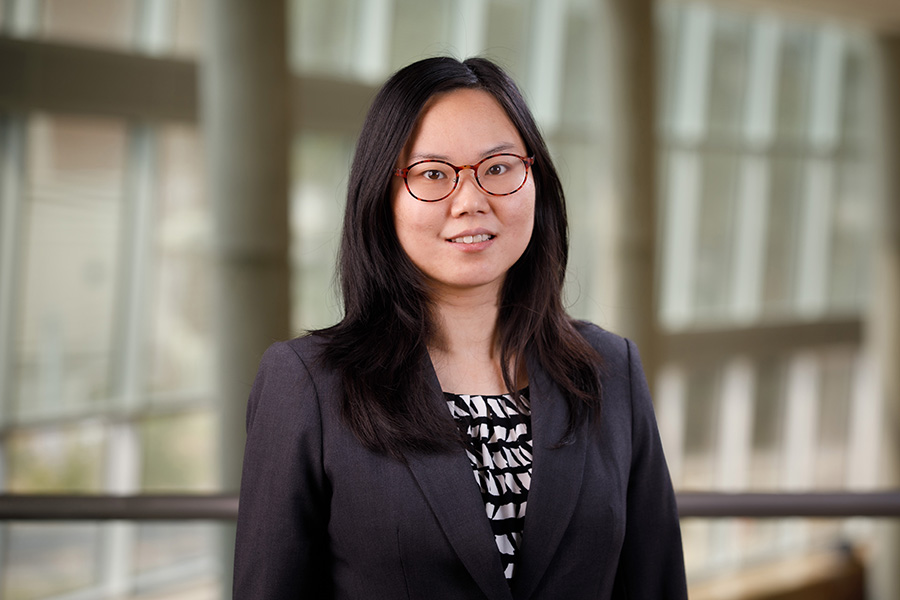
Zoltán Szabó is a Professor of Data Science at the Department of Statistics, London School of Economics (LSE). His research focuses on statistical machine learning, particularly kernel methods, information theoretical estimators, and scalable computation. He has held roles such as Programme Director of the MSc Data Science program and is actively involved in academic service, including Area Chair positions at top conferences like NeurIPS and ICML. His work bridges theory and applications, with contributions to fields like safety-critical learning, economics, climate data analysis, and natural language processing. Education and Affiliations: While specific educational details are not explicitly listed, his career trajectory indicates advanced training in statistics and machine learning. He is affiliated with the LSE's Department of Statistics and the Turing Institute, contributing to academic leadership and interdisciplinary projects. Research Interests: His work emphasizes kernel-based methods, including kernel Stein discrepancies, Hilbert-Schmidt independence criteria, and shape-constrained prediction. Applications span finance, economics, robotics, and environmental data analysis. Recent projects include developing outlier-robust estimators and scalable algorithms for high-dimensional data. Publications: His recent work includes advancements in kernel methods for dependency testing, shape-constrained regression, and robust estimation. Key themes include improving computational efficiency, theoretical guarantees for kernel approximations, and practical applications in interdisciplinary domains. Awards and Grants: While no explicit awards are listed, his contributions to NeurIPS (e.g., a Best Paper Award in 2017) and his role in securing grants (e.g., Europlace Institute of Finance) highlight his impactful research. He also serves on editorial boards, including JMLR and ACM Transactions on Probabilistic Machine Learning. Students and Labs: Supervises PhD students in areas like functional data analysis and scalable computation. Collaborates with researchers on projects such as distribution regression and safety-critical learning, contributing to both theoretical and applied outcomes.