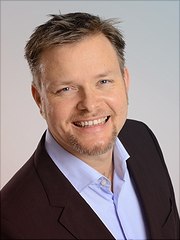
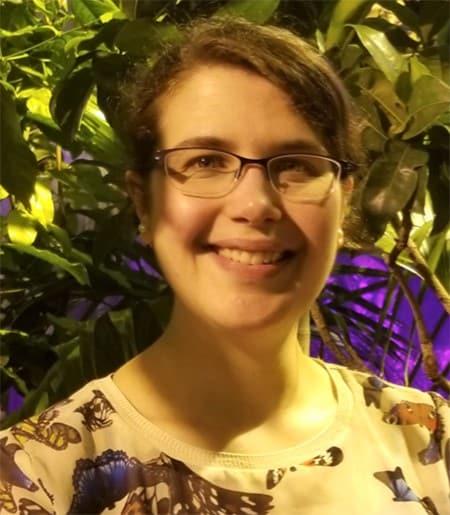
Zhilu Lai is an Assistant Professor at The Hong Kong University of Science and Technology (Guangzhou). He previously worked as a Postdoctoral Researcher at ETH Zurich's Chair of Structural Mechanics and Monitoring (2018-2020) and as a Senior Assistant with the Dynamic Mobile Sensing Platform team at the Singapore-ETH Centre (2020-2022). His research bridges physics-based modeling and machine learning. Research Interests Physics-informed machine learning for dynamical systems Computer vision in structural monitoring Variational inference with physical constraints Hybrid frameworks for structural health monitoring (SHM) Energy-preserving neural architectures Applications in bridge monitoring and wind turbine dynamics Scientific Contributions Developed symplectic encoder frameworks for nonlinear dynamics modeling Proposed physics-guided Deep Markov Models (PgDMM) for hysteretic systems Integrated neural ODEs with physics-based eigenmodes for high-dimensional SHM Created robust algorithms for bridge weigh-in-motion and influence surface identification
Nilanjana Laha is an Assistant Professor in the Department of Statistics at Texas A&M University, affiliated with the College of Arts & Sciences. Her research focuses on dynamic treatment regimes, high-dimensional statistics, and shape-constrained inference. She holds a PhD from the University of Washington (2019), advised by Jon Wellner and Alex Luedtke, and completed a postdoctoral fellowship at Harvard University's Biostatistics Department under Rajarshi Mukherjee. Prior education includes a Master of Statistics (2014) and Bachelor of Statistics (2012) from the Indian Statistical Institute, Kolkata. Her work is supported by an NSF DMS Award and a Texas A&M Institute of Data Science Career Initiation Fellowship. She is actively involved in mentoring PhD students at Texas A&M and collaborates broadly in statistical methodology. Contact details include Blocker 416D office and nlaha@tamu.edu. Research interests emphasize developing statistical frameworks for personalized medicine and high-dimensional data analysis. She maintains an active presence on Google Scholar and GitHub for software contributions.
Marco Carone is a Professor of Biostatistics and Adjunct Professor of Statistics at the University of Washington, holding the Norman Breslow Endowed Faculty Fellowship. He is an Affiliate Investigator at the Fred Hutchinson Cancer Research Center’s Vaccine and Infectious Disease Division. His research focuses on causal inference, survival analysis, and nonparametric methods, with applications in vaccine science, environmental health, and public health. Carone earned his PhD in Biostatistics from Johns Hopkins University and completed postdoctoral training at UC Berkeley. Education: PhD in Biostatistics, Johns Hopkins University (2011) Hon. B.Sc. in Probability and Statistics, McGill University (2005) Diploma of College Studies in Pure and Applied Sciences, Marianopolis College (2002) Research Interests: Development of robust statistical methods for causal inference and nonparametric estimation Analysis of vaccine efficacy and infectious disease data Integration of machine learning with traditional biostatistical frameworks Applications in environmental epidemiology and aging research His publications span topics including survival analysis, immune correlates of vaccine efficacy, and statistical methodologies for high-dimensional data. Carone has advised over 15 PhD students, many of whom hold academic and industry roles. Awards: Norman Breslow Endowed Faculty Fellowship (2019) UW Teaching Award (2018) Phi Beta Kappa and Delta Omega Honor Societies (2011) Teaching & Service: Teaches courses on survival analysis, statistical inference, and biostatistical consulting Associate Editor for Biometrics and Journal of Causal Inference Peer reviewer for leading journals and grant agencies
Oksana Chernova is a Research Fellow at the Technical University of Munich's Institute for Advanced Study (TUM-IAS), appointed in 2022 under the Fellowship for Ukrainian Scientists program. Hosted by the School of Computation, Information and Technology and mentored by Prof. Mathias Drton, she maintains her primary affiliation with Taras Shevchenko National University of Kyiv while conducting research at TUM. Her work specializes in shape-constrained density estimation within nonparametric statistics, focusing on log-concave functions as infinite-dimensional generalizations of Gaussian densities. She addresses computational inefficiencies in higher-dimensional estimation through novel methodologies combining exponential series techniques with score matching procedures. This research enhances practical applications for data visualization, feature extraction, and tuning-parameter-free inference in modern statistical challenges. As part of TUM-IAS's mission to foster interdisciplinary collaboration, Chernova contributes to advancing statistical theory applicable to real-world data analysis problems while representing the institute's support for displaced Ukrainian academics.
Hélène Halconruy is an Assistant Professor at Télécom SudParis since September 2023. She previously served as a Lecturer at ESILV (2022–2023), Postdoctoral Researcher at the University of Luxembourg (2020–2022), and held roles as Pedagogical Manager and Lecturer at ESME Sudria (2013–2020). Her doctoral work (PhD 2020) focused on probability under Prof. Laurent Decreusefond at Télécom Paris. Research Interests : Probability theory and mathematical statistics, including stochastic analysis, Malliavin calculus for discrete-time processes, Stein's method applications, financial market models (e.g., Greeks computation, portfolio management), and non-parametric statistical inference (e.g., density estimation under shape constraints, robust methods). Recent Work Trends : Her articles address advanced topics like wavelet leaders distribution, privacy-aware parameter estimation, stochastic process generators, and jump-diffusion models. These contributions bridge theoretical probability with practical applications in finance and data science. Grants & Teams : Affiliated with the SAMOVAR research group at Télécom SudParis. No explicit grants or formal advising roles listed.
Yashar Ahmadian is a University Lecturer in Computational Neuroscience at the Department of Engineering , University of Cambridge . After earning his PhD in theoretical condensed matter physics, he transitioned to computational neuroscience through postdoctoral work at Columbia University's Center for Theoretical Neuroscience under Liam Paninski and Ken Miller. He later established his research group at the University of Oregon before returning to Cambridge. Current research focuses on neural dynamics and learning in recurrent circuits Specializes in mathematical modeling of cortical networks Applies dynamical systems, statistical physics, and machine learning His work bridges theoretical neuroscience with experimental data, particularly through collaborations with labs studying visual and auditory systems. Recent publications analyze multi-area consensus-building, efficient coding principles, and stabilized supralinear network dynamics. Notable methodological contributions include neural decoding frameworks and tuning curve analysis tools. His lab currently includes Edward Young (investigating adaptation phenomena) and Monika Jozsa (developing AI-inspired models for visual recognition). Key research trends include: Understanding how cortical connectivity shapes perception through attractor dynamics Developing normative theories for neural homeostasis and adaptation Modeling multi-timescale learning in uncertain environments Analyzing heterogeneous tuning curves with implicit generative models Decoding sensorimotor strategies in olfactory navigation
Hassan Maatouk is a Lecturer at the University of Perpignan, affiliated with the UFR SEE (Science, Economics, and Engineering) faculty, specifically within the MATH-INFO Department. He is a member of the LAMPS (Multidisciplinary Modeling and Simulation Laboratory) where he conducts research in applied mathematics and statistics. His primary research interests include: Data Science and Statistical Learning Nonparametric and Bayesian Statistics High-dimensional Statistical Modeling Computational Statistics and Gaussian Processes MCMC Methods and Uncertainty Quantification Dr. Maatouk's research focuses on non-parametric statistics and high-dimensional modeling with structured constraints such as monotonicity, bounds, and convexity. His work aims to improve prediction models based on Gaussian processes and quantify uncertainties in simulations, with applications spanning econometrics, microbiology, chemistry, and industrial contexts. His recent publications demonstrate a strong emphasis on constrained Gaussian processes, truncated multivariate normal distributions, and scalable Bayesian methods for large datasets, with increasing citation impact (65 citations in 2025 alone). His scholarly impact is evidenced by 362 total citations and an h-index of 8. His most influential works include 'Gaussian process emulators for computer experiments with inequality constraints' (123 citations) and 'Kriging of financial term-structures' (70 citations). Dr. Maatouk collaborates with researchers across France including Xavier Bay from École des Mines de Saint-Étienne, Areski Cousin from the University of Strasbourg, and Yann Richet from IRSN. His interdisciplinary approach extends to materials science as shown by his co-authored work on ZnO nanoparticles' antibacterial properties.
Santiago Paternain is an Assistant Professor in the Department of Electrical, Computer and Systems Engineering at Rensselaer Polytechnic Institute's School of Engineering. He joined RPI in 2020 after completing his Ph.D. and postdoctoral work at the University of Pennsylvania, where he developed foundational algorithms at the intersection of machine learning and control theory. His research bridges theoretical rigor with practical applications in robotics, power systems, and autonomous vehicles. His academic credentials include: B.Sc. in Electrical Engineering, Universidad de la República, Uruguay (2012) M.Sc. in Statistics, The Wharton School, University of Pennsylvania (2018) Ph.D. in Electrical and Systems Engineering, University of Pennsylvania (2018) Paternain's research centers on reinforcement learning and control of dynamical systems, with emphasis on safety guarantees, optimization, and real-world deployment. He develops algorithms that integrate model-based control with data-driven methods to overcome limitations of pure reinforcement learning, particularly for constrained and safety-critical applications. Current projects explore in-context learning for robotics, physics-guided AI for power grids, and multi-agent coordination in uncertain environments, always prioritizing theoretical soundness and practical viability. Analysis of his 15 most recent publications reveals a dominant focus on constrained reinforcement learning (60% of works), with growing applications in power systems (20%) and robotics (15%). A clear trend shows increasing integration of foundation models with control theory, particularly for safety-critical decision making. His work consistently addresses scalability challenges while maintaining rigorous safety guarantees, reflecting his commitment to bridging theoretical and applied research. His scientific contributions have earned significant recognition: Best Student Paper Award at ICASSP 2020 Joseph and Rosaline Wolfe Best Doctoral Dissertation Award (2019) Best Student Paper Award at CDC 2017 Best Student Paper Award at I2MTC 2014 Best Teaching Assistant at University of Pennsylvania (2017) CTL's Graduate Fellowship for Teaching Excellence (2018) Paternain actively mentors six doctoral students across diverse research areas including safe reinforcement learning, multi-robot systems, and power grid applications. His research is supported by substantial funding including multiple RPI-IBM Future of Computing Research Collaboration grants (quantum computing and LLM reasoning), a DOE grant for EV battery assessment, an ONR grant for autonomous helicopter refueling, and industry partnerships with Boeing and ARM. He leads a high-impact research group that organizes influential workshops like "Learning under Requirements" at premier conferences including AAAI and L4DC. His laboratory focuses on translating theoretical advances into industrial applications through partnerships with GE Research, The Boeing Company, and national laboratories. Current projects include autonomous helicopter aerial refueling systems, real-time power grid stability assessment tools using graph neural networks, and safety-certified multi-robot coordination frameworks, all emphasizing deployable solutions for critical infrastructure challenges.
André Kelm is a PhD candidate in the Computer Vision group at the Department of Informatics , University of Hamburg, affiliated with the Faculty of Mathematics, Informatics and Natural Sciences . His research spans deep learning for industrial innovation, domain adaptation, and synthetic data applications, with interdisciplinary interests in physics, audio, medical, and biological domains. His work focuses on efficient adaptive inference , interpretability in deep learning , and bottom-up/top-down attention mechanisms . Recent publications highlight applications in drone-based port monitoring , dynamic neural network optimization , and multimodal knowledge distillation . Projects he contributes to include InteGreatDrones , Crossmodal Learning (CML) , and NEUROBOTICS . For collaboration, contact him at andre.kelm@uni-hamburg.de.
Mary C. Meyer is a Professor at Colorado State University , Department of Statistics. Her research focuses on nonparametric estimation and shape-restricted inference, with applications in environmental science, public health, and anthropology. Education: Ph.D. in Statistics from University of Michigan (1996) Research Interests include: Nonparametric function estimation under shape constraints Constrained regression splines and generalized additive models Statistical software development for constraint-based modeling Applications to forest dynamics and public safety Publication Trends show a focus on: Statistical methodology for shape-restricted models Environmental applications (Landsat time series, forest monitoring) Public safety analysis (airbag effectiveness studies) Statistical software packages (cgam, cone projection algorithms) Email: meyer@stat.colostate.edu
Sumona Mondal serves as Professor of Mathematics and Co-Director of the MS Program in Applied Data Science at Clarkson University, where she has been faculty since 2007. She is affiliated with the Coulter School of Engineering & Applied Sciences within the Department of Mathematics, contributing to both theoretical statistics and interdisciplinary applications. Her educational foundation includes a Ph.D. in Statistics from the University of Louisiana at Lafayette, complemented by Bachelor of Science and Master of Science degrees in Statistics from the University of Calcutta, India. Professor Mondal specializes in constructing tolerance regions for multivariate linear models, developing tolerance factors for multivariate normal distributions, and creating statistical methodologies for engineering failure prediction and pollution assessment. Her research extends to bio-engineering, environmental sciences, and physical therapy applications, focusing on robust inferential procedures for complex real-world problems. This work bridges theoretical statistics with practical implementations across diverse scientific domains. Analysis of her recent publications (2021-2025) reveals a strong trend toward interdisciplinary collaboration, particularly in environmental monitoring (air quality sensor networks, PM2.5 analysis), health statistics (rheumatoid arthritis comorbidities, dental caries, HPV vaccination), and emerging fields like robotics acceptance and hate speech detection. Her methodological contributions consistently emphasize statistical rigor while addressing data challenges such as imbalanced datasets, correlated predictors, and low-cost sensor calibration. As Co-Director of the MS Program in Applied Data Science, Professor Mondal actively shapes graduate education and mentors students in statistical methodology development. She maintains significant academic engagement through over 27 national and international conference presentations, demonstrating consistent scholarly productivity and community involvement.
Pramita Bagchi is an Assistant Professor at the Department of Biostatistics and Bioinformatics, Milken Institute School of Public Health, The George Washington University. She holds a Ph.D. in Statistics from University of Michigan and completed postdoctoral research at Ruhr Universitat Bochum, Germany. Doctor of Philosophy (Ph.D.) in Statistics - University of Michigan, Ann Arbor (2015) Postdoctoral Researcher - Department of Mathematics, Ruhr Universitat Bochum, Germany (2015-2018) Master of Statistics - Indian Statistical Institute, Kolkata, India (2010) Bachelor of Statistics - Indian Statistical Institute, Kolkata, India (2008) Her research focuses on developing computationally efficient statistical methodologies for analyzing high-dimensional dependent data , including longitudinal, spatial, and time series observations. Applications span climate science, protein sequencing, medical imaging , and financial data . Methodologically, she explores functional data analysis, shape-constrained inference, asymptotic theory , and non-parametric methods . Current projects include frequency band analysis for functional time series and clinical data analytics for heart failure biomarkers . Dr. Bagchi has received research grants from the National Science Foundation (2022-2025) and INOVA Hospital (2020-2023). Her work emphasizes modeling data with minimal structural assumptions , addressing computational challenges in high-dimensional contexts.
Daniel Steffen serves as Professor and Co-Head of the Master of Science in Real Estate (MScRE) program at Lucerne University of Applied Sciences and Arts (HSLU), School of Business, within the Institute for Financial Services Zug (IFZ) Center for Real Estate. His academic leadership spans real estate economics, data-driven decision making, and sustainable market analysis, with significant contributions to Swiss housing policy discourse. His educational background includes: PhD in Economics (2016-2020) from University of Bern, focusing on causal data analysis in real estate and development economics MSc in Economics (2014-2016) from University of Bern & Universidad Carlos III Madrid BSc in Economics with Philosophy minor (2010-2013) from University of Bern Steffen's research centers on real estate market dynamics , examining housing affordability, regulatory impacts, and sustainable investment transitions. His work integrates causal inference methodologies with practical industry challenges, particularly in Swiss urban contexts. Key themes include tokenized real estate investments, demographic change effects, and climate transition risks in property markets, bridging academic rigor with policy relevance through the IFZ research ecosystem. His publication trends reveal a strategic shift toward transitional real estate challenges , with increasing focus on sustainability metrics, climate risk integration, and housing policy evaluation since 2022. While maintaining strong foundations in housing market analysis, recent work expands into educational economics through field experiments in developing contexts, demonstrating methodological versatility across economic subfields. Through IFZ research projects including the Sustainable Lending Monitor, Rental Apartment Demand Monitor, and Digitalization Barometer, Steffen drives evidence-based industry insights. His advisory role in MScRE program development shapes next-generation real estate professionals, while industry presentations translate complex research into actionable market intelligence for stakeholders across Switzerland's financial and property sectors.
Jeff Borggaard is a Professor of Mathematics at Virginia Tech, affiliated with the College of Science and the Interdisciplinary Center for Applied Mathematics (ICAM). His research focuses on numerical analysis, computational science, and control theory, with emphasis on optimization and control of systems governed by partial differential equations (PDEs). He specializes in sensitivity analysis, reduced-order modeling, and their applications in fluid dynamics and engineering systems. His work includes developing computational methods for PDE-constrained optimization, control of fluid flows, and uncertainty quantification. Key collaborations involve researchers at institutions like Florida State University and École Polytechnique de Montréal. Borggaard has been funded by agencies including the Air Force Office of Scientific Research (AFOSR) and the National Science Foundation (NSF), supporting projects on model reduction, flow control, and energy-efficient building systems. Research highlights include advancements in proper orthogonal decomposition (POD) for turbulent flows, nonlinear balanced truncation techniques, and applications of reduced-order models in control and optimization. His contributions also extend to thermal energy modeling in buildings and parameter estimation in groundwater flow systems. Borggaard holds positions at both the Department of Mathematics (McBryde Hall) and ICAM (Wright House), and maintains active involvement in professional societies such as the Society for Industrial and Applied Mathematics (SIAM) and the American Mathematical Society (AMS).
Megan Greischar is an Assistant Professor in the Department of Ecology and Evolutionary Biology at Cornell University, co-leading the Diversity and Inclusion initiative. She holds a Ph.D. from Pennsylvania State University (2014) and a B.S. from Indiana University (2007). Her research focuses on parasite evolution, particularly malaria infections, examining how ecological factors influence transmission strategies, host-parasite interactions, and disease dynamics. Key areas include developmental synchrony in malaria, plasticity in parasite responses to host environments, and the impact of vector ecology on disease spread. She leads the Greischar Lab, which employs mathematical modeling and statistical approaches to address these questions. Courses taught include Evolutionary Medicine and seminars on infectious disease ecology. Her work bridges theoretical and applied research, with implications for public health and drug resistance. Research interests span community ecology, population biology, and evolutionary processes, with a focus on malaria’s life history strategies. Her team develops models to predict parasite behavior under variable ecological conditions and analyzes time-series data to uncover adaptive cues parasites use. Recent work explores how resource limitations constrain virulence evolution and how vector ecology shapes transmission patterns. The lab also investigates pre-symptomatic disease transmission and synchronization mechanisms tied to host biological rhythms. Publications emphasize quantifying synchrony, transmission investment, and evolutionary trade-offs in malaria. While no scientific awards are listed, her contributions to malaria epidemiology and ecological modeling are notable. She advises students in the graduate programs of Ecology & Evolutionary Biology and mentors undergraduate research projects. The Greischar Lab collaborates with affiliated centers at Cornell, contributing to interdisciplinary efforts in infectious disease research and biodiversity conservation.