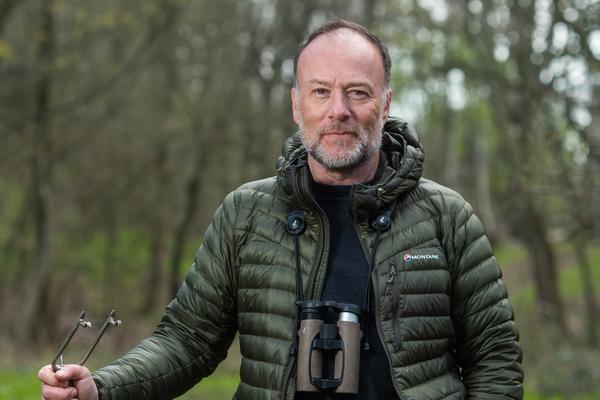
Professor Ben Sheldon FRS holds the Luc Hoffmann Chair of Ornithology and directs the Edward Grey Institute within the University of Oxford's Department of Biology. His research focuses on evolutionary ecology, particularly individual variation, environmental adaptation, and long-term ecological studies like the Wytham Woods great tit project. Current themes include spatial scaling of ecological interactions, life-history evolution, and social dynamics in bird populations. He has secured major grants from ERC, UKRI, NERC, and BBSRC, and hosted postdocs via Marie Curie Fellowships. Research interests integrate field studies, genetics, and quantitative analysis to explore how environmental and social factors shape animal behavior and adaptation. Recent work examines phenological mismatches, climate impacts, and social network effects on reproduction and survival. Awards include Fellowship of the Royal Society. Advising includes 7-8 graduate students and postdocs, with a focus on PhD and postdoc project supervision. Administrative roles include past Head of the Department of Zoology (2016–2021) and Senior User Representative for the Life and Mind Building (2019–2022). The Edward Grey Institute serves as a key research hub for avian ecology and ornithology.
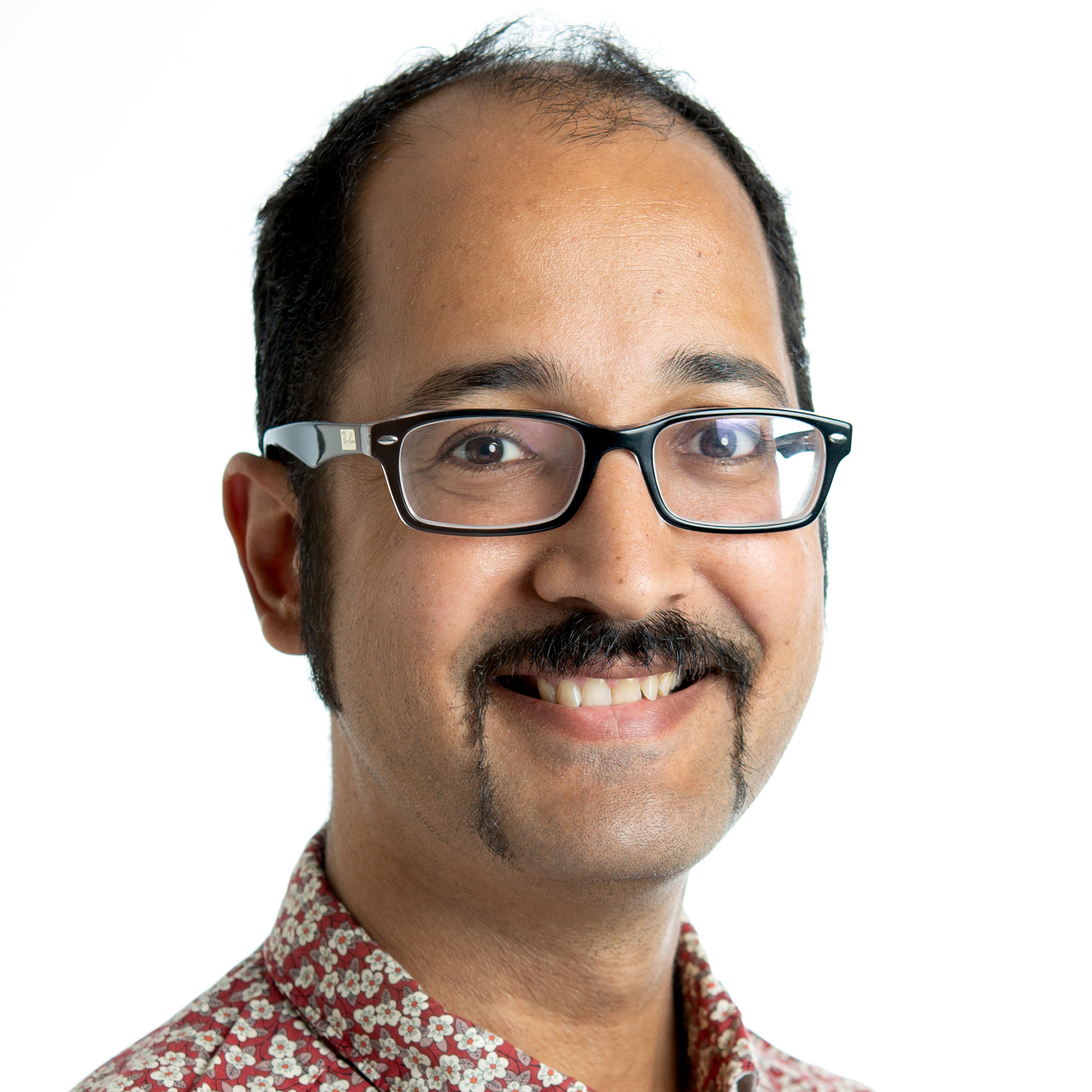
José Alvarado is an Assistant Professor of Physics at the University of Texas at Austin, affiliated with the College of Natural Sciences. His research focuses on biophysics, soft matter, and active matter, particularly exploring mechanical design principles in biological systems. He investigates topics such as planar cell polarity (PCP), actomyosin networks, and morphogenetic processes. Alvarado’s work integrates experimental and theoretical approaches, often involving collaborations with centers like the Center for Nonlinear Dynamics and Texas Robotics. His studies address questions about how biological systems achieve mechanical efficiency and how active matter principles apply to biological actuation and control. Key themes in his research include the nonlinear mechanics of actomyosin gels, the role of PCP in tissue shaping during convergent extension, and the design of biomimetic actuators for robotics. He has also contributed to understanding fluid dynamics in microscale systems, such as hairy surfaces and colloidal liquid crystals.
Jared Rubin is a Professor of Economics at Chapman University’s George L. Argyros College of Business and Economics and Co-Director of the Institute for the Study of Religion, Economics, and Society (IRES). His research bridges economic history, institutional economics, and religious studies, focusing on how historical political and religious institutions shaped economic development in the Middle East and Western Europe. Rubin’s work has been published in top journals like Review of Economic Studies and Journal of Economic Growth , and his book Rulers, Religion, and Riches (2017) received the Douglass North Best Book Award. He has secured over $1 million in grants from the John Templeton Foundation and serves on editorial boards for Journal of Economic History and Journal of Comparative Economics . Education: B.A., University of Virginia (2002) Ph.D., Stanford University (2007) Research Themes: Role of religious institutions in economic development Historical divergence between Middle East and Western Europe Political legitimacy and governance structures Cultural transmission of economic norms Recent Publications (2024): Religion, Political Legitimacy, and Complexity How Did the World Become Rich? Endogenous Political Legitimacy: The Tudor Roots of England’s Constitutional Governance Awards & Grants: Douglass North Best Book Award (2017) Over $1 million in grants from the John Templeton Foundation Leadership Roles: Co-Director, Institute for the Study of Religion, Economics, and Society (Chapman University) President, Association for the Study of Religion, Economics, and Culture (ASREC) Editorial Boards: Journal of Economic History Journal of Comparative Economics Explorations in Economic History
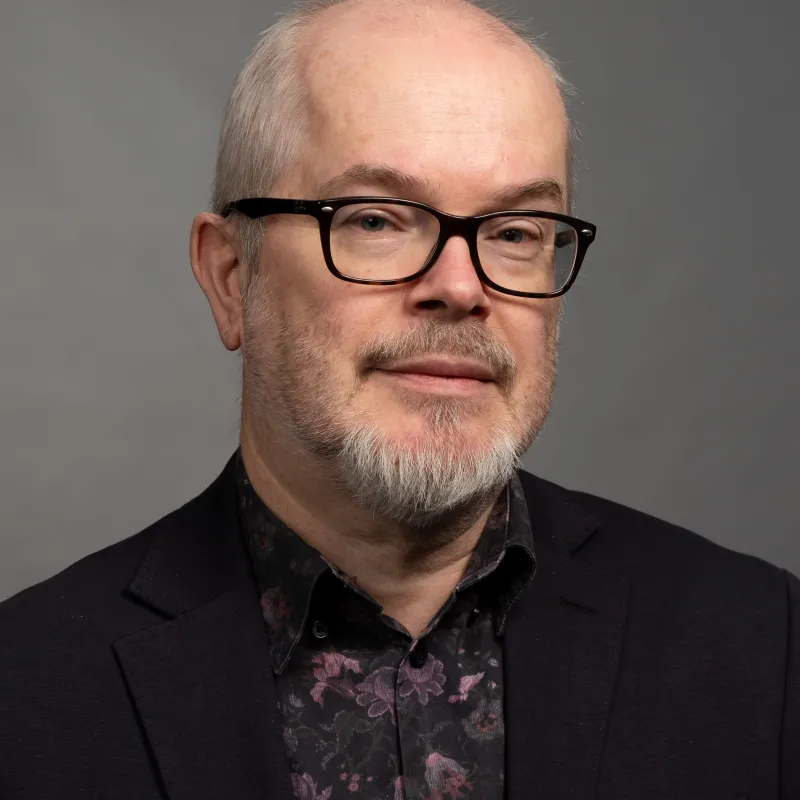
Prof. Dr. Ahmet ÖZMEN is a Professor at Sakarya University's Faculty of Computer and Information Sciences, Department of Software Engineering. He has held various administrative positions including Head of the Software Engineering Department (2019-2028) and Director of the Computer Research and Application Center (2019-2022). With extensive experience in academia since 1991, he has made significant contributions to computer vision, traffic monitoring systems, and sensor technologies. Sakarya University: Professor (2019-present), Associate Professor (2011-2019) Dumlupınar University: Assistant Professor (2001-2011), Research Assistant (2000-2001, 1993-1998) Istanbul Technical University: Research Assistant (1991-1993) Prof. ÖZMEN's research spans computer vision applications for traffic monitoring, indoor air quality systems, parallel computing, and sensor technologies. His work bridges theoretical computer science with practical engineering applications, particularly in developing vision-based systems for nighttime vehicle detection, traffic flow monitoring, and environmental sensing. His interdisciplinary approach combines machine learning, image processing, and embedded systems to solve real-world problems in transportation and environmental monitoring. His publication record shows a clear evolution from parallel and distributed systems in his early career to computer vision and sensor applications in recent years. The majority of his recent work focuses on traffic monitoring systems using computer vision techniques, particularly for nighttime conditions, and indoor air quality monitoring systems using sensor networks. His research demonstrates strong industry and societal relevance, with applications in smart transportation, environmental protection, and educational technology. TÜBİTAK Publication Awards (2006, 2008, 2009, 2010) Physical implementation award from TÜBİDER (2008) Microsoft Certified Professional Certificate (2005) YÖK overseas study scholarships (1993, 1998) Elginkan graduate scholarships (1990, 1991) Prof. ÖZMEN has supervised numerous graduate students across multiple institutions, with a focus on practical engineering problems. His research has been supported by various projects including TÜBİTAK projects, institutional research grants, and industry collaborations. He has led significant research initiatives in traffic monitoring systems, indoor air quality monitoring, and educational technology platforms. His administrative leadership has included directing research centers and shaping curriculum development in software engineering. His work has involved establishing research teams focused on computer vision applications, sensor network development, and educational technology. These teams have produced numerous publications, developed practical systems, and trained the next generation of computer engineers. Current research directions include advanced traffic monitoring systems using deep learning and multi-camera setups for urban planning applications.
Heikki Handroos is a Full Professor of Mechanical Engineering at LUT University, leading the Laboratory of Intelligent Machines since 1993. He holds a DSc (Technology) from Tampere University of Technology and has served as Vice-Dean of the Faculty of Technology (2007-2009) and currently chairs the Collegiate Body of LUT University. His research focuses on mechatronics, robotics, control systems, and fluid power, with over 300 publications and 2,400+ citations. He has supervised 34 doctoral theses and 150+ MSc projects, managed R&D projects exceeding €20M, and co-founded four tech startups. His work spans industrial collaborations, digital twin applications, and innovative robotics for nuclear energy (e.g., DEMO reactor maintenance systems). He has held visiting professorships in the U.S., Japan, and Russia, and actively contributes to academic editorial roles and professional societies like ASME and IEEE.
Dr. Anna Raffoni serves as a Senior Lecturer in Accounting and Finance at Loughborough Business School, Loughborough University, and holds the strategic role of Programme Lead for Social Science Research (Business and Management Studies). She joined the institution in January 2015 after accumulating academic experience at the University of East Anglia, Cranfield University School of Management, and the University of Bologna, establishing herself as a key contributor to the Accounting and Finance research group. Her academic foundation includes a PhD in Management Accounting (specializing in customer value management) awarded by the University of Florence in 2009, which continues to inform her interdisciplinary research trajectory. Raffoni's scholarly work centers on performance management, business analytics, and strategic management accounting, with publications appearing in premier journals including the European Journal of Operational Research, British Accounting Review, Production, Planning & Control, and Omega. Her research uniquely bridges quantitative operations research methods with accounting frameworks, particularly examining how data analytics transforms traditional performance measurement in banking and service sectors through techniques like machine learning and data envelopment analysis. Analysis of her 15 most recent publications (2012-2024) reveals a clear evolution toward integrating advanced analytics with performance management systems. She has pioneered multidimensional efficiency measurement in banking branches, explored total cost of ownership in supply chains, and investigated strategic performance measurement adoption, consistently demonstrating how operational research methods solve real-world accounting challenges while advancing theoretical models. Her scientific recognition features the Dean’s Award for Early Career Teacher of the Year (2017), acknowledging her excellence in undergraduate and postgraduate instruction. In her capacity as Programme Lead, Raffoni shapes research strategy and supports faculty development across Business and Management Studies. While specific supervisees and grant details aren't documented in available materials, her leadership role and active publication record indicate substantial engagement in research mentorship and academic community building. She actively collaborates within Loughborough's Accounting and Finance research group, contributing to interdisciplinary projects that address contemporary challenges in financial management through analytical approaches, with emerging work suggesting increasing focus on artificial intelligence applications in performance systems.
Scott Barnes is Head of the Department of Linguistics and Course Director of the Master of Speech and Language Pathology at Macquarie University. He leads the Macquarie Linguistics Conversation Analysis Lab with Joe Blythe, supervising research on communication disabilities, speech pathology assessment, and cross-linguistic interaction analysis. His teaching focuses on acquired communication disorders, language analysis, and speech pathology foundations. Barnes researches acquired communication disabilities (aphasia, TBI) using conversation analysis and interactional linguistics. Key interests include: Everyday communication practices in clinical populations Turn-taking and repair organization across languages Multimodal interaction analysis Speech pathology assessment frameworks Cross-cultural communication disorders His publications demonstrate consistent focus on clinical conversation analysis, with recent work examining: Therapeutic interactions in mental health settings Multimodal communication in Mandarin and Indonesian contexts Auditory processing in post-stroke communication Repair strategies in dysarthria and aphasia As external accreditor for Speech Pathology Australia (2021-2026), he shapes professional education standards. He directs multiple active grants including projects on bilingual education, communication breakdowns in noise, and voice visualization technology.
Peter Bearman serves as Director of the Incite Institute and holds the Jonathan R. Cole Professorship of Sociology at Columbia University, where he maintains an active research and teaching profile within the Department of Sociology. His office is located at Knox Hall on Columbia's Morningside Heights campus. Bearman specializes in social network analysis and historical sociology, with significant contributions to health/population studies and qualitative methodology. His research increasingly integrates computational approaches for text and narrative analysis, examining phenomena ranging from historical religious discourse to modern social conflict dynamics. This interdisciplinary work bridges classical sociological theory with contemporary methodological innovation. Recent publications reveal a trajectory toward computational social science applications, particularly in semantic network analysis of historical texts and neural correlates of social behavior. His work consistently connects micro-level interactions with macro-scale social structures across diverse contexts including religious history, workplace conflict, and collective violence. His distinguished scientific honors include: Kohli Prize for Sociology (2025) for contributions to movements, networks, health, and science Golden Goose Award (2016) for the National Longitudinal Study of Adolescent Health Election to the National Academy of Medicine (2019) Membership in the American Academy of Arts and Sciences Membership in the National Academy of Sciences Bearman co-designed the landmark National Longitudinal Study of Adolescent Health, demonstrating sustained leadership in major federally-funded research initiatives. As Director of the Incite Institute, he oversees interdisciplinary research teams and co-edits Columbia University Press's Middle Range and Oral History book series, actively shaping scholarly discourse through mentorship and publication curation. The Incite Institute functions as Bearman's primary research hub, facilitating collaborations that advance innovative methodologies in social science while connecting historical analysis with contemporary network theory applications.
Lars Hanson is a Professor of Product Design Engineering at the University of Skövde's School of Engineering Science. His research focuses on ergonomics, digital human modeling, and optimizing manufacturing systems with a strong emphasis on human well-being and sustainable production. He leads projects like LITMUS (Industry 4.0 to 5.0 transition) and has contributed to developing tools such as IPS IMMA for ergonomic simulations. Active in virtual verification of human-robot collaboration and smart textile systems for workplace safety Published extensively in journals like International Journal of Human Factors Modelling and Simulation and IEEE Access Editor of conference proceedings and contributor to industry standards in automotive and healthcare sectors Research interests include multi-objective optimization of factory layouts, musculoskeletal risk assessment, and integrating ergonomic evaluations into product design processes. Current projects address Industry 5.0 sustainability challenges through digital twin technologies and smart manufacturing solutions.
James Reed Farre is a Researcher and Research Group Leader at the Max Planck Institute for Mathematics in the Sciences (MPI MiS) in Leipzig, leading the Geometry on Surfaces group since October 2023. Previously, he held roles including Juniorprofessor (W1/Assistant Professor) at Ruprecht-Karls-Universität Heidelberg (2022–2023), Gibbs Assistant Professor at Yale University (2021–2022), and an NSF Postdoctoral Fellow at Yale (2019–2020). He earned his PhD in Mathematics from the University of Utah in 2019 under Kenneth Bromberg. His research focuses on hyperbolic geometry, dynamics of earthquake flows, Teichmüller theory, and geometric group theory. Notable areas include affine laminations, hyperconvex representations of surface groups, and ergodic theory in geometric contexts. Farre has contributed to understanding minimal surfaces in hyperbolic 3-manifolds and has explored applications of bounded cohomology to discrete groups. Publications span topics like shear-shape cocycles, horocycle orbit closures, and Hamiltonian flows for pseudo-Anosov mapping classes. His work bridges pure geometry with computational methods, as seen in CAD algorithm development for rigid subsystems. Farre is actively involved in mentoring and has contributed to STEM education initiatives, including the Freshman Research Initiative.
Andrés Baselga Fraga is a Professor at the University of Santiago de Compostela, affiliated with the Department of Zoology, Genetics and Physical Anthropology within the Faculty of Biology. He leads the BiBiCI research group (Biodiversity, Biogeography and Integrative Conservation) and is associated with the Center for Interdisciplinary Research in Environmental Technologies (CRETUS). His doctoral work (2002) focused on Chrysomelidae beetles in Galicia, supervised by Dr. Francisco Novoa Docet. Education: PhD in Biology, University of Santiago de Compostela (2002) Thesis: 'Study of the Chrysomelidae (Coleoptera) of Galicia' Research Interests: His work centers on biodiversity patterns, biogeographical processes, and community ecology, with a focus on spatial scaling of phylogenetic diversity, climate change impacts, and dispersal limitation effects. He explores these through macroecological approaches, integrating genetic, taxonomic, and environmental data. His studies often address beetle communities, particularly Chrysomelidae, and their responses to environmental changes. Article Trends: Recent publications analyze biodiversity value through phylogenetic uniqueness, climate stability's role in species abundance-genetic diversity congruence, and dispersal mechanisms shaping community turnover. He also examines spatial and temporal shifts in montane ecosystems and develops novel statistical methods for assessing distance-decay relationships. Awards: No specific academic awards noted in the provided texts. Grants & Advising: No grant details or student advisees explicitly listed. His research has been supported through institutional affiliations like CRETUS. Labs/Teams: Leads the BiBiCI group and collaborates with CRETUS, focusing on interdisciplinary environmental research.
Pascal Boyer is Professor of Sociocultural Anthropology and Psychology at Washington University in St. Louis, where he also holds the Henry Luce Professorship of Collective and Individual Memory. He is jointly affiliated with the Department of Anthropology and the Department of Psychology, reflecting his interdisciplinary research at the intersection of cognitive science, evolutionary psychology, and cultural anthropology. PhD, Université de Paris-Nanterre Graduate work with Jack Goody, University of Cambridge Fieldwork in Cameroon on Fang oral epics and traditional religion Former teaching positions at Cambridge, San Diego, Lyon, and Santa Barbara Boyer’s research investigates the cognitive foundations of cultural transmission, particularly focusing on religion, memory, and the evolution of human social cognition. He proposes that religious ideas and cultural norms are shaped by universal properties of the human mind, making certain concepts more cognitively 'natural' and thus more easily transmitted across generations. His work integrates experimental psychology, developmental studies, and ethnographic research to explore how brains evolved to process cultural information. His publications span cognitive development, agency detection, autobiographical memory, and the neural underpinnings of cultural concepts. Notable books include The Naturalness of Religious Ideas (1994), Religion Explained (2001), and Memory in Mind and Culture (2009). His most recent work, Minds Make Societies (2018), synthesizes insights from evolutionary biology, psychology, and economics to model the formation of human societies. The body of his work shows a consistent trend toward interdisciplinary integration, using cognitive science to explain cultural universals. Henry Luce Professor of Collective and Individual Memory Editor of Memory in Mind and Culture (2009) Contributor to major cognitive science and anthropology journals Boyer has mentored numerous students and collaborators, though specific names are not listed in the provided texts. He has secured significant academic recognition through his publications and endowed professorship, indicating sustained research funding and academic leadership. He is actively involved in both experimental and theoretical research, leading projects on early cognitive development and mathematical reasoning. His lab combines cognitive psychology paradigms with anthropological field methods, fostering a unique interdisciplinary team. Boyer continues to publish and contribute to the advancement of cognitive anthropology as a rigorous scientific discipline.
Aneta Podkalicka is a Senior Lecturer in Communications and Media Studies at the School of Media, Film and Journalism (MFJ), Monash University, Melbourne. She is actively engaged in research, teaching, and supervision, with a strong focus on media's role in social innovation, environmental sustainability, and everyday life. Her work bridges academic research with real-world applications across non-profit, government, and commercial sectors. Her research interests include: Media and everyday life Environmental communication Media for social innovation Digital and automated technologies and work futures Thrift, secondhand, and circular economies Media analytics and research training Aneta’s recent publications reflect a consistent trajectory in examining how media shapes sustainable practices, digital economies, and social inclusion. Her work spans cultural studies, sociology of consumption, and media policy, often employing qualitative and interdisciplinary methods. She has contributed to journals such as International Journal of Cultural Studies , Media International Australia , and Convergence , as well as book publications with Intellect and Palgrave. She is currently a Chief Investigator on the international project 'Workers in transition through automation, digitalisation and robotisation of work' (2020–2025), and previously led a project on virtual housing policy modeling. She has served as guest editor for Media International Australia and Linkoping University Electronic Press, demonstrating her active role in academic publishing. Aneta supervises postgraduate students in media, communication, sociology of consumption, and design. She is part of the 'Media and Environment' research group at MFJ and contributes to advancing the UN Sustainable Development Goals, particularly those related to sustainable consumption and environmental sustainability.
Michelle Cameron is an Associate Professor in the Department of Anthropology at the University of Toronto's Faculty of Arts & Science. She joined the department in 2018 and specializes in skeletal biology and bioarchaeology, integrating skeletal analysis with archaeological and ecological evidence to study human adaptability across diverse environments. Her research explores how environmental and cultural contexts shape human biology through time, focusing on biocultural stressors and skeletal responses. She employs advanced methodologies including 3D modeling, biomechanical analyses, and spatial analysis frameworks to examine human adaptation to environmental challenges. Primary research regions: Africa (South Africa, Namibia, Lake Turkana), North America, Europe Key methodologies: Cross-sectional geometry, skeletal biomechanics, paleodiet reconstruction Dr. Cameron's publications demonstrate expertise in subsistence transitions (herding practices), human evolutionary morphology, and contemporary skeletal biology applications. She maintains active fieldwork programs in southern Africa while engaging in comparative studies across continents. Scientific Awards: SSHRC Insight Development Grant Connaught New Researcher Award Education: PhD, University of Cambridge (2017) As co-host of the YouTube series 'Humans in 5', she actively participates in science communication, distilling complex anthropological concepts into accessible five-minute segments.
George Evans is the John B. Hamacher Professor of Economics at the University of Oregon, affiliated with the Department of Economics in the College of Arts and Sciences. He holds a Ph.D. from the University of California, Berkeley (1980), with expertise in macroeconomics and econometrics. His research centers on adaptive learning in macroeconomic models, exploring how expectations influence monetary and fiscal policy, economic stability, and sunspot equilibria. His work integrates theoretical modeling with experimental and behavioral insights, contributing significantly to the understanding of bounded rationality and learning dynamics in economic systems. The recent articles highlight a consistent focus on expectations, learning, and macroeconomic policy . Themes include the stability of economic equilibria under learning, the role of bounded rationality in unemployment and market dynamics, and the nonlinear effects of fiscal policy. His research often employs advanced dynamic modeling and has been published in leading journals such as the American Economic Journal: Macroeconomics and Journal of Economic Theory . Evans has received research funding, including from the NSF (Grant No. SES-1559209), and is a co-author of the influential book Learning and Expectations in Macroeconomics . He has delivered numerous invited lectures at international conferences and institutions, solidifying his role as a leading scholar in behavioral and learning-based macroeconomics. He advises and collaborates extensively, particularly with Seppo Honkapohja, Bruce McGough, and William Branch. His work continues to shape the discourse on how agents form expectations and how such behavior affects macroeconomic outcomes.