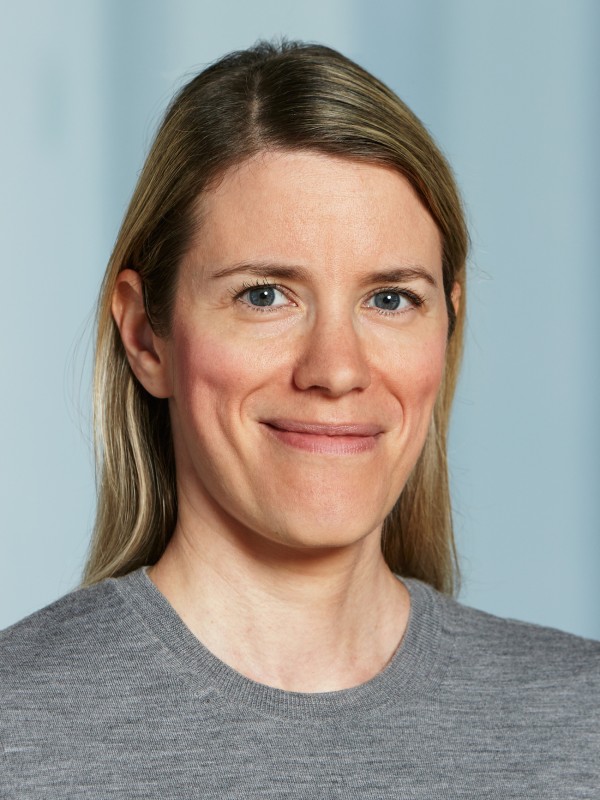
Olga Sorkine-Hornung is a Professor of Computer Science at ETH Zurich and head of the Institute of Visual Computing. She leads the Interactive Geometry Lab, focusing on theoretical and practical advancements in digital content creation, geometry processing, and shape modeling. Current position: ETH Zurich, Department of Computer Science Previous roles: Courant Institute (NYU), Technical University of Berlin Education: BSc and PhD from Tel Aviv University, postdoc at TU Berlin Her research spans shape representation, digital fabrication, computer animation, and fundamental geometry processing. Key contributions include Laplacian surface editing, as-rigid-as-possible deformation, and generalized winding numbers. She works on applications in VR, AR, and autonomous systems. Awards include Test of Time Awards (2024), ACM Fellow (2020), ERC Consolidator Grant (2020), and EUROGRAPHICS Young Researcher Award (2008). She has supervised numerous students and co-developed software libraries like libigl and Instant Meshes . Co-chair roles for SIGGRAPH, Eurographics, and Pacific Graphics Editorial board member for ACM Transactions on Graphics and other journals Keynote speaker at VMV, CVPR, and SIAM conferences Her work bridges mathematical rigor with practical implementation, advancing computer graphics and geometry processing through intuitive algorithms that maintain surface detail while enabling efficient computation.
April Yi Wang is a tenure-track Assistant Professor in the Department of Computer Science at ETH Zürich, where she directs the Programming, Education, and Computer-Human Interaction Lab (PEACH Lab). She is a core faculty member at the Institute for Intelligent Interactive Systems and associated with the ETH AI Center. Wang is also an active member of ETH HCI and Swiss CHI communities, contributing significantly to human-computer interaction and educational technology research. Dr. Wang's educational background includes: Ph.D. in Information Science from University of Michigan (2023), advised by Steve Oney and Christopher Brooks M.Sc. in Computer Science from Simon Fraser University (2018), advised by Parmit Chilana B.Eng in Computer Science from Zhejiang University (2016) Dr. Wang's research focuses on human-centered approaches to programming and data science. Her work reimagines programming as a form of literature that communicates with both machines and people, exploring creative representations like text, shapes, animations, and everyday objects. She investigates how to make programming more natural and intuitive through literate programming environments, with applications in professional and educational contexts. Her research spans human-computer interaction, educational technology, and AI-assisted programming tools. Analysis of Dr. Wang's recent publications reveals a strong focus on AI-enhanced educational tools, particularly for programming and data literacy. Her work increasingly integrates large language models to scaffold learning while maintaining user agency. There's a clear trajectory toward developing situated learning approaches that connect abstract concepts to real-world contexts through augmented reality and tangible interfaces. Her research bridges HCI, education, and AI to create more accessible and engaging technical learning experiences. Dr. Wang has received numerous prestigious awards including: 2023 Gary M. Olson Award and Honourable Mention Award at ACM CHI 2022 Rising Stars in EECS and Heidelberg Laureate Forum Young Researcher 2020 Best Short Paper Award at IEEE VL/HCC and Honourable Mention at ACM CHI 2019 Best Paper Award at ACM CSCW Dr. Wang actively mentors students through thesis projects at ETH Zürich, supervising numerous bachelor's and master's students on topics ranging from AI-assisted programming to data literacy tools. Her lab, PEACH Lab, has secured funding including the recent innovedum funding for the Coducate project. She serves on program committees for major conferences including CHI and UIST, and regularly reviews for top HCI and education journals. The PEACH Lab, directed by Dr. Wang, focuses on creating expressive, intelligent, and human-centered systems that make technical topics more accessible. The lab explores textual, visual, and embodied representations for programming, with emphasis on enhancing communication, collaboration, and learning. Current research directions include balancing automation with user agency, supporting diverse learning needs, and developing tools for interdisciplinary technical communication.
Prof. Olga Sorkine Hornung is a Full Professor of Computer Science at ETH Zürich, leading the Interactive Geometry Lab. She holds a BSc and PhD from Tel Aviv University (2000 and 2006) and conducted postdoctoral research at Technical University Berlin. Her research focuses on computer graphics, geometric modeling, and geometry processing, with applications in shape editing, digital fabrication, and animation. She has received numerous accolades, including the ACM Fellowship (2020), ERC Consolidator Grant (2020), and the Golden Owl Teaching Award (2021). Her work bridges theoretical foundations and practical algorithms, addressing challenges in parameterization, surface compression, and interactive design tools. Her research interests span: Computer Graphics & Visualization Geometric Modeling & Processing 3D Content Creation & Digital Fabrication Garment Design & Simulation Human Motion Analysis & Animation Awards and grants include: 2024: Best Paper Honorable Mention (EUROGRAPHICS) 2023: Member of Swiss Academy of Engineering Sciences (SATW) 2020: ERC Consolidator Grant 2017: Rössler Prize (ETH Zurich) Her lab focuses on developing novel methods for interactive geometry processing, with recent advancements in garment modeling (e.g., AIpparel, Rags2Riches) and motion retargeting systems like WalkTheDog. She actively collaborates on interdisciplinary projects, including biomedical applications and sustainable fashion technology.
Prof. Willy Tinner is a leading academic at the University of Bern, serving as Head of the Paleoecology section and Vice Executive Director within the Institute of Plant Sciences. His research focuses on reconstructing past environmental changes through pollen analysis, vegetation dynamics, and human-ecosystem interactions. Tinner's work integrates paleoecological data with climatology, archaeology, and conservation biology to understand long-term ecological processes. His expertise spans Holocene climate impacts, Neolithic land use patterns, and biodiversity conservation challenges in alpine and Mediterranean ecosystems. Notable research includes studies on Fagus-Quercus forest coexistence in Italy, Abies alba climatic adaptations, and human-driven vegetation changes across Europe. Tinner collaborates internationally, contributing to projects in Greece, Ukraine, and the Balkans. He has published extensively on topics such as fire regimes, lake sediment archives, and the ecological consequences of ancient agricultural practices. His leadership positions reflect his role in shaping Switzerland's ecological research priorities through institutions like WSL Cadenazzo.
Johannes Larsch is a tenure-track Assistant Professor at the Center for Integrative Genomics within the Faculty of Biology and Medicine at Université de Lausanne (UNIL). His research focuses on understanding the neuronal mechanisms underlying social interactions, using larval zebrafish as a model organism. He employs advanced techniques like virtual reality and optical imaging to study how social signals are processed in the brain. Education: Bachelor of Biology, University of Konstanz, Germany PhD in Neurobiology, Rockefeller University, USA (lab of Cori Bargmann) Postdoc at Max Planck Institute of Neurobiology, Germany (with Herwig Baier) Research interests center on neuronal circuits driving group behavior, social recognition, and the interplay between genetics and environment in shaping behavior. His lab investigates how individual brains coordinate collective social behaviors through studies of neuronal activity and circuit dynamics. Current lab openings include fully funded PhD and PostDoc positions focused on social neuroscience and neurogenomics. Contact: johannes.larsch@unil.ch .
Manuel Kaufmann is a Lecturer in the Department of Computer Science at ETH Zürich. His work focuses on advanced 3D human motion capture, sensor-based systems, and computer vision applications. He is affiliated with the Institute of Informatics (inf.ethz.ch) and contributes to research in real-time motion tracking, dataset development, and machine learning integration for human-robot interaction. Research interests include holistic human-scene reconstruction from monocular videos, gaze estimation using EEG signals, and expressive avatar creation. His projects emphasize practical applications in robotics, sports analytics, and biomedical engineering, often leveraging electromagnetic and inertial sensors for high-precision data acquisition. His publications reflect a trend toward multi-modal data fusion, real-world dataset creation (e.g., WorldPose, ARCTIC), and addressing challenges in loose garment modeling (Reloo). These efforts aim to improve markerless motion capture, crowd analysis, and human-robot collaboration. No scientific awards or grants are explicitly listed. He has no documented advisees, though his research may involve collaborations with students or teams. His office is located at OAT X 23, Andreasstrasse 5, Zürich, Switzerland, and contact details include a phone number and professional email.
Mennatallah El-Assady serves as Assistant Professor at ETH Zurich's Department of Computer Science, where she leads the Interactive Visualization and Intelligence Augmentation Lab (IVIA). Her academic trajectory includes research fellowships at ETH's AI Center and doctoral work at University of Konstanz and OntarioTech University, establishing her expertise at the intersection of visualization and artificial intelligence. Her research focuses on advancing responsible data-driven decision-making through human-centered analytics, with particular emphasis on explainable machine learning systems. Dr. El-Assady combines data mining techniques with visual interfaces to create transparent AI workflows, specializing in text data analysis. Her work bridges computational linguistics, digital humanities, and information visualization to develop tools that make complex AI processes interpretable for end users. Recent publications demonstrate growing focus on generative AI's impact on visualization practices and sophisticated frameworks for interactive machine learning. Her research consistently addresses the challenge of maintaining human agency in increasingly automated systems, with applications spanning political debate analysis, musicology, and healthcare data interpretation. The trend shows increasing sophistication in evaluation methodologies for visual analytics systems. Best Paper Award: Honorable Mention for 'Progressive Learning of Topic Modeling Parameters: A Visual Analytics Framework' Dr. El-Assady actively shapes her field through workshop leadership including ArgVis (Argument Visualization), Vis4DH (Visualization for Digital Humanities), and VISxAI (Visualization for AI Explainability). Her teaching includes 'Interactive Machine Learning- Visualization and Explainability' at ETH Zurich, training next-generation researchers in human-centered AI development. She maintains strong industry connections with coverage in Forbes and ETH News regarding human-AI collaboration frameworks. The Interactive Visualization and Intelligence Augmentation Lab (IVIA) develops cutting-edge tools including explAIner for transparent machine learning, LingVis for linguistic analysis, VisArgue for debate structure visualization, and VALIDA for political deliberation analysis. These projects share a common thread of enhancing human understanding through carefully designed visual interfaces that expose AI decision processes.
Swiss Federal Institute of Technology in LausanneSwitzerland
Dima Damen is a Professor of Computer Vision at the School of Computer Science, University of Bristol, where she leads the Machine Learning and Computer Vision Group. She also serves as a Senior Research Scientist at Google DeepMind. As an EPSRC Early Career Fellow (2020-2025) and a Fellow of ELLIS for Europe, her research focuses on advancing computer vision, particularly in egocentric (first-person) vision, video understanding, and action recognition. Her educational background and professional journey have positioned her as a leader in the field of computer vision, with a particular emphasis on understanding human activities from wearable cameras. She has received numerous awards including Best Paper at ACCV 2024 and Outstanding Paper at ICASSP 2021. Professor Damen's research interests span multiple areas of computer vision and machine learning. She specializes in egocentric vision, where she has made significant contributions to understanding human activities from first-person perspectives. Her work explores video understanding, action recognition, hand-object interactions, and the development of vision-language models that can interpret and generate instructions from visual data. She has pioneered approaches to unique video captioning, long video understanding through active memory representations, and spatial reasoning from egocentric videos. Her research often bridges the gap between theoretical computer vision and practical applications in human-centered AI. Her recent publications demonstrate a strong focus on egocentric vision, with papers like "AMEGO: Active Memory from long EGOcentric videos" (ECCV 2024) and "HOI-Ref: Hand-Object Interaction Referral in Egocentric Vision" (2024) advancing the state of the art in understanding long-form first-person videos. She has also contributed to vision-language models with works like "ShowHowTo: Generating Scene-Conditioned Step-by-Step Visual Instructions" (CVPR 2025) and "It's Just Another Day: Unique Video Captioning by Discriminitave Prompting" (ACCV 2024, Best Paper). Her research shows a consistent trajectory toward building systems that can understand human activities in natural environments with human-like capabilities. Professor Damen has received significant recognition for her work, including: EPSRC Early Career Fellow (2020-2025) ELLIS Fellow for Europe (Nov 2024) Best Paper at ACCV 2024 Outstanding Paper at ICASSP 2021 (awarded to only 3 out of 1700 papers) Outstanding Reviewer for CVPR 2020 and 2021 Program Chair for ICCV 2021 She has successfully advised numerous PhD students and postdoctoral researchers, many of whom have gone on to prestigious positions in academia and industry. Her group has secured significant research funding including the EPSRC Programme Grant Visual AI and the EPSRC UMPIRE grant. She actively collaborates with industry partners including Google DeepMind, Adobe, and Meta, ensuring her research has practical impact. Professor Damen leads the Machine Learning and Computer Vision Group at the University of Bristol, which focuses on egocentric vision, video understanding, and the development of vision-language models. The group has created influential datasets like EPIC-KITCHENS, which has become a standard benchmark in egocentric vision research. Her team regularly participates in and organizes workshops at major computer vision conferences including CVPR, ICCV, and ECCV.
Swiss Federal Institute of Technology in LausanneSwitzerland
Pedro M. Reis serves as Full Professor and Director of the Institute of Mechanical Engineering (IGM) at École Polytechnique Fédérale de Lausanne (EPFL), leading the Flexible Structures Laboratory (FLEXLAB) within the School of Engineering (STI). He holds additional appointments as Full Professor in STI-SGM Teaching, Member of the STI Academic Evaluation Committee, and PhD Program Committee Member for Mechanics. His academic journey includes: B.Sc. in Physics, University of Manchester (1999) Certificate of Advanced Studies in Mathematics, University of Cambridge (2000) Ph.D. in Physics, University of Manchester (2004) Postdoctoral research at City College of New York (2004-2005) and CNRS/ESPCI Paris (2005-2007) Faculty positions at MIT (2007-2013) as Esther and Harold E. Edgerton Assistant Professor and Gilbert W. Winslow Associate Professor Reis's research pioneers the exploitation of mechanical instabilities in flexible structures, spanning experimental mechanics, fluid-structure interactions, and buckling phenomena. His work bridges theoretical modeling with physical experimentation to develop novel functional materials and devices, emphasizing practical applications in engineering design and soft matter systems. His accolades include: 2013 Brilliant 10 recognition by Popular Science 2014 NSF CAREER Award 2016 Thomas J.R. Hughes Young Investigator Award (ASME) 2016 GSOFT Early Career Award (APS) APS Fellowship and 2021 Presidency of the Society of Engineering Science (SES) Reis actively mentors nine PhD students across current and graduated cohorts while directing FLEXLAB's experimental research on structural instabilities. His leadership extends to institutional roles including Director of IGM and committee memberships shaping EPFL's academic framework and doctoral programs in mechanics.
Swiss Federal Institute of Technology in LausanneSwitzerland
Li Tang is an Associate Professor with tenure at École polytechnique fédérale de Lausanne (EPFL), affiliated with the Institute of Bioengineering (IBI) and the Institute of Materials Science and Engineering (IMX) within the School of Engineering (STI). She leads the Laboratory of Biomaterials for Immunoengineering, focusing on developing innovative strategies at the intersection of immunology, materials science, and cancer therapy. Her work bridges fundamental research and clinical translation, with multiple ongoing clinical trials based on CAR-T cell therapies developed in her lab. B.S. in Chemistry, Peking University (2003–2007) Ph.D. in Materials Science and Engineering, University of Illinois at Urbana-Champaign (2007–2012) Postdoctoral Fellow, MIT (2013–2016) Her research lies at the forefront of immunoengineering, integrating chemical, metabolic, and mechanical approaches to modulate immune responses. Key areas include cancer immunotherapy, immune metabolism, mechano-immunology, and biomaterials. She investigates how physical and biochemical cues can reprogram T cells, overcome exhaustion, and enhance tumor targeting. Her work emphasizes multidimensional immunity-disease interactions, aiming to develop safer and more effective therapies for cancer and autoimmune diseases. The recent publications highlight a strong trend in engineering immune cells (especially CAR-T) for enhanced durability and function, using advanced biomaterials and metabolic reprogramming. There is a clear focus on overcoming challenges in solid tumors, modulating the tumor microenvironment, and translating findings into clinical applications. The use of nanoparticle delivery, single-cell analysis, and biomechanical cues are recurring themes across her work. Notable scientific awards include: Friedrich Miescher Award (2025) ERC Starting Grant (2018) MIT TR35 Innovators Under 35 (China Region, 2020) Nano Research Young Innovator Award (2018) Biomaterials Science Emerging Investigator (2019) Materials Horizons Emerging Investigator (2020) Li Tang actively mentors PhD students across multiple doctoral programs (EDBB, EDMS, EDMX) and has advised numerous graduates who have gone on to prestigious postdoctoral and faculty positions. She is involved in significant research grants, including an Innosuisse project with Novochizol SA, and her lab is supported by competitive funding. She teaches core courses such as Immunoengineering and Next-Generation Biomaterials, shaping the next generation of scientists. Her lab fosters interdisciplinary collaboration and innovation, with active projects in chemical, metabolic, and mechanical immunoengineering, as well as CAR-T cell development. She is the Principal Investigator of the Tang Lab, which includes postdoctoral fellows, PhD students, and technical staff. The lab is actively recruiting and has a strong publication and clinical translation record. Tang Lab is also involved in multiple MA/BA training projects and promotes student engagement in cutting-edge research. The lab’s discoveries are being translated into clinical trials, reflecting a strong commitment to translational science.
Dr. Xiao Zhou is a Research Fellow affiliated with the Professorship for Consumer Behavior at ETH Zurich. His current position began in 2021. Prior to this, he conducted postdoctoral research at the University of Reading (2020-2021) and completed his PhD in Consumer Behavior at the University of Copenhagen (2015-2019). His research focuses on advancing consumer behavior studies through interdisciplinary approaches, combining insights from marketing, behavioral economics, and human motion analysis. Zhou’s work emphasizes understanding decision-making processes and their applications in real-world contexts. Education history includes a PhD in Consumer Behavior from the University of Copenhagen (2015-2019), followed by postdoctoral training at the University of Reading (2020-2021). His academic trajectory reflects a strong foundation in both theoretical and applied research. His research interests span consumer behavior, marketing research methodologies, and behavioral economics. Notably, his recent publications explore cutting-edge technologies in motion capture and computer vision, including real-time human motion tracking and generative models for 3D reconstruction. This reflects a unique intersection of consumer behavior studies with technical advancements in computational methods. Zhou’s research outputs demonstrate expertise in areas such as inertial sensor-based motion analysis, physics-aware tracking systems, and hierarchical modeling techniques. His contributions highlight innovative solutions for challenges in human pose estimation and 3D reconstruction. He is currently based at ETH Zurich’s Department of Consumer Behavior, contributing to both academic research and potential industrial applications of his work.
Professor Stefan Goedecker is a distinguished faculty member in the Department of Physics at the University of Basel, Faculty of Science. He holds the position of Professor of Computational Physics and leads an active research group focused on developing advanced computational methods for materials science and quantum physics. Dr. Goedecker received his physics education at the Technical University Munich and the College of William and Mary, followed by a Ph.D. from EPFL Lausanne. His postdoctoral training included positions at Cornell University and the Max-Planck Institute in Stuttgart. In 2003, he was appointed Professor of Computational Physics at the University of Basel, where he has established himself as a leading researcher in computational methods development. His research interests center on computational physics with emphasis on electronic structure calculations, atomistic simulations, and the development of novel algorithms for materials science applications. His work has strong interdisciplinary connections spanning physics, mathematics, material sciences, chemistry, and computer science. Current research directions include machine learning applications in catalysis, fourth-generation neural network potentials for molecular chemistry, and methods for quantifying material synthesizability. Analysis of his recent publications reveals a strong focus on advancing computational methods for electronic structure calculations, with particular emphasis on machine learning potentials, molecular dynamics optimization, and accurate modeling of material properties. His work bridges theoretical physics with practical applications in materials science and nanotechnology, with increasing integration of artificial intelligence techniques into traditional computational physics frameworks. Machine learning for Catalysis (Ongoing) Fourth-Generation Neural Network Potentials for Molecular Chemistry (Completed) Towards Quantifying the Synthesizability of Materials (Completed) Professor Goedecker's research group operates within the Department of Physics at the University of Basel, which is part of the NCCR SPIN initiative focused on silicon-based quantum computing development. The department hosts over 20 research groups with more than 180 teaching staff members, creating a vibrant research environment for computational physics and quantum technologies.
Juergen Schmidhuber is Associate Professor at the Faculty of Informatics of Università della Svizzera italiana and a leading researcher at the Dalle Molle Institute for Artificial Intelligence (IDSIA USI-SUPSI). He is also Chief Scientist at NNAISENSE, a company dedicated to building practical general-purpose AI. His work has profoundly influenced modern artificial intelligence, particularly through the development of Long Short-Term Memory (LSTM) networks in 1991, now deployed across billions of devices for speech recognition, machine translation, and virtual assistants. His research interests span Artificial Intelligence, Deep Learning, Recurrent Neural Networks, Universal AI, Meta-Learning, Algorithmic Information Theory, Artificial Curiosity, Robotics , and Low-Complexity Art . He has pioneered mathematically rigorous frameworks for self-improving AI systems and formal theories of creativity and beauty. His work bridges theoretical foundations with real-world applications in computer vision, natural language processing, and autonomous robotics. The recent articles reflect a consistent trajectory of innovation, combining deep theoretical insights with scalable machine learning architectures. His publications emphasize sequence modeling, universal learning, intrinsic motivation, and computational creativity , demonstrating both foundational contributions and industrial impact. From LSTM to Goedel machines, his work consistently targets the long-term goal of self-improving general AI. Scientific Awards: Numerous awards in AI and machine learning (specific names not listed) Schmidhuber leads a research group at IDSIA, where he mentors students and researchers in advancing the frontiers of AI. His lab has secured significant recognition and industrial collaboration, though specific grants are not detailed. He promotes the 'New AI'—general, sound, and relevant to physics—and continues to explore the convergence of intelligence, computation, and the universe. Labs and Teams: Dalle Molle Institute for Artificial Intelligence (IDSIA USI-SUPSI) NNAISENSE (as Chief Scientist)
Siyu Tang is an Assistant Professor in the Department of Computer Science at ETH Zürich, where she leads the Computer Vision and Learning Group (VLG) at the Institute of Visual Computing. Her research focuses on computational models for human perception and digitalization through computer vision and machine learning. Her educational background includes: PhD in Computer Science, Max Planck Institute for Informatics (2017), supervised by Prof. Bernt Schiele Master of Science in Media Informatics, RWTH Aachen University Bachelor of Science in Computer Science, Zhejiang University, China Dr. Tang specializes in human-centric computer vision, developing statistical models for motion analysis, pose estimation, and digital human creation. Her work integrates machine learning with optimization techniques to enable machines to interpret human activities from visual data, with applications spanning virtual reality, healthcare, and human-computer interaction. Key research thrusts include generative models for content creation, egocentric vision, and human motion synthesis. Her recent publications (2024-2025) demonstrate intense focus on 3D human modeling and neural rendering, with Gaussian splatting emerging as a dominant technique for efficient avatar creation and scene reconstruction. Significant themes include text-driven motion synthesis using diffusion models, relightable avatars, surgical training applications, and egocentric multimodal pretraining. This work bridges computer vision, graphics, and machine learning to advance human digitalization. No scientific awards were mentioned in the provided text. Dr. Tang leads the VLG research group at ETH Zürich, mentoring PhD and Master's students in human-centric AI. She previously secured an early career research grant from the Max Planck Institute for Intelligent Systems to establish her independent research program. Her group actively pursues funding for projects in human motion analysis, 3D reconstruction, and generative modeling, with strong industry and clinical collaborations. The Computer Vision and Learning Group (VLG) operates within ETH's Institute of Visual Computing, maintaining dedicated facilities for motion capture, 3D scanning, and high-performance computing. The team collaborates internationally with institutions like the Max Planck Society and focuses on scalable solutions for real-world human digitalization challenges, including surgical training systems and immersive virtual environments.
Prof. Dr. Johan Robertsson is a Full Professor of Applied Geophysics and Head of the Exploration and Environmental Geophysics (EEG) Group at ETH Zürich's Department of Earth and Planetary Sciences. He holds a MSc from Uppsala University (1991) and a PhD in Geophysics from Rice University (1994). Before joining ETH in 2012, he spent 15 years at Schlumberger in R&D roles, leading projects that revolutionized marine seismic data acquisition. His research focuses on wave propagation physics, seismic data inversion, and applications in exploration and environmental geophysics. He pioneered the use of Distributed Acoustic Sensing (DAS) for landslide monitoring and contributed to Mars seismology via the InSight mission. Education: MSc in Engineering Physics, Uppsala University (1991) PhD in Geophysics, Rice University (1994) Research Interests: Seismic wavefield modeling and inversion Planetary seismology (Mars, Moon) Acoustic metamaterials and wave control Environmental geohazard monitoring Marine seismic acquisition techniques His work on the Martian soil properties using InSight data and lunar exploration instrumentation (ALGEP) reflects his cross-disciplinary approach. He holds 90+ patents and has secured prestigious grants like the ERC Advanced Grant. Awards: EAGE Guido Bonarelli Award (2020) ERC Advanced Grant MATRIX (2017) EAGE Conrad Schlumberger Award (2018) Grants & Advising: Led the MATRIX ERC project advancing seismic imaging algorithms Advised over 20 PhD/MS students (names not listed) Secured Schlumberger's largest R&D project in marine seismic sampling His EEG Group operates cutting-edge labs for immersive wave experimentation and planetary geophysical instrumentation. Current initiatives include lunar subsurface exploration and acoustic invisibility experiments.