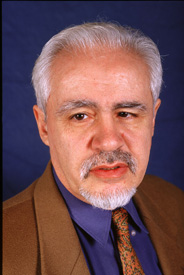
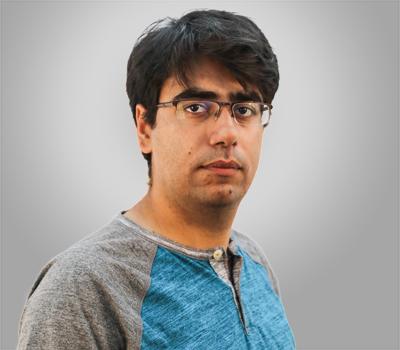
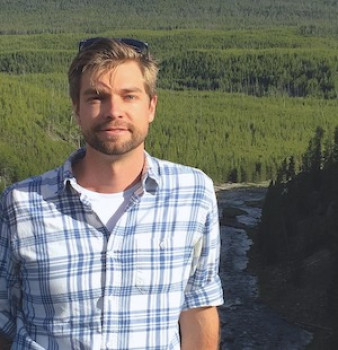
Tom Needham is an Assistant Professor in the Department of Mathematics at Florida State University. His research focuses on geometry, topology, and their applications to data science and signal processing. He holds a faculty position in a leading mathematics department with active engagement in interdisciplinary research. Research Interests: His expertise spans geometric analysis, topological data analysis, optimal transport theory, and their applications in machine learning, neuroscience, and signal processing. He develops novel methods for analyzing complex geometric and topological structures in datasets, including shape analysis, network comparison, and probabilistic modeling of metric spaces. Publications: Recent work includes advancements in Gromov-Wasserstein distances, topological cycle matching, hypergraph stability, and cortical coding studies in neuroscience. These contributions bridge pure mathematics with applied problems in data science and computational geometry. Advising & Grants: No advising or grant information is explicitly provided in the source text. Labs/Teams: No specific lab affiliations or collaborative teams are mentioned.
Robert Azencott is a Professor of Mathematics at the University of Houston and holds the title of Emeritus Professor at École Normale Supérieure in France. He specializes in interdisciplinary research at the intersection of mathematics, biosciences, and imaging. His work spans stochastic processes, data mining, and medical imaging applications such as 3D-echocardiography analysis and deformable shape matching. Azencott has contributed to probabilistic methods for bacterial genetic evolution models and financial market microstructure analysis. His research also addresses texture classification, kernel-based learning, and stochastic differential equations (SDEs) in finance and biology. Research Interests Genomics & Proteomics : Sparse modeling of gene interactions, microRNA impact on cancer survival, proteomic mass spectra analysis. Bacterial Evolution : Stochastic models for genetic evolution with periodic selection and large deviations theory. Medical Imaging : 3D-echocardiography strain analysis, deformable shape dynamics via diffeomorphic matching, and ROI reconstruction in X-ray tomography. Probability & Statistics : SDE parameter estimation, kernel-based clustering, and applications to algorithmic trading and option pricing. Labs & Collaborations Azencott collaborates on projects such as digital stains for live-cell microscopy and intra-cardiac echography analysis to assess myocardium deformations. His work intersects with teams in cardiology, computational biology, and financial engineering.
Nicolas Charon is an Assistant Professor in the Department of Mathematics at the University of Houston. He holds a PhD in Mathematics from École normale supérieure de Cachan (2013) and completed postdoctoral research at the University of Copenhagen. His research focuses on geometric methods for medical imaging and computational anatomy, including diffeomorphic registration, functional shape analysis, and Riemannian metrics on curves/surfaces. He has been supported by the NSF DMS-1945224 CAREER Award and has developed software tools like fshapesTk , h2metrics , and ShapeGraph_H2match . Key research areas include varifold-based shape registration, metamorphoses of functional shapes, and sparse methods for diffusion MRI compression. Charon has advised three PhD students and contributed to over 50 publications. His work bridges theoretical mathematics with applications in healthcare, including stroke risk assessment via left atrial appendage morphology analysis and 4D human shape synthesis. Recent projects involve scalable frameworks for PDE solution operators, self-supervised learning of human body scans, and data-driven elastic shape analysis with topological constraints. Charon’s interdisciplinary approach integrates geometry, optimization, and machine learning to advance computational anatomy and medical imaging technologies.
Andreas Mang is an Associate Professor in the Department of Mathematics at the University of Houston, part of the College of Natural Sciences & Mathematics. His research focuses on developing computational methods that integrate data, simulation, and optimization to address challenges in applied sciences, particularly in medical imaging and oncology. He leads the Numerical Analysis and Scientific Computing Group, emphasizing parallel algorithms and high-performance computing. Education: PhD in Engineering Sciences (Dr.-Ing), University of Luebeck, Germany (2013) Postdoctoral Fellowship at the Oden Institute, University of Texas at Austin (2013–2017) Research Interests: Mang's work spans numerical analysis, inverse problems, optimal control, and medical image registration. Key areas include diffeomorphic image registration (e.g., CLAIRE framework), biophysical tumor growth modeling, and scalable algorithms for large-scale inverse problems. His methods leverage GPU acceleration and distributed-memory systems for efficiency. Recent Contributions: His research includes advancements in GPU-accelerated image registration, parameter estimation for tumor growth models, and uncertainty quantification. Notable projects involve the CLAIRE software for 3D image registration and collaborations on oncology imaging and computational oncology. Awards & Recognition: NSF CAREER Award (2022) NSM Junior Faculty Award for Excellence in Research Award for Excellence in Research from University of Houston Outreach & Leadership: Mang advises the Texas Theta Chapter of Pi Mu Epsilon and actively organizes workshops/conferences (e.g., SIAM, ICCOPT). He contributes to academic mentoring, including PhD admissions in the Mathematics Department.
Kevin B. McGowan is an Associate Professor and Director of Graduate Studies in the Department of Linguistics at the University of Kentucky, affiliated with the UK Phonetics Lab and the Lewis Honors College. His research focuses on phonetics, speech perception, sociophonetics, and sound change, with a particular interest in how linguistic variation intersects with social and cognitive factors. He co-authored the third edition of English with an Accent , a seminal work on linguistic discrimination and sociolinguistic awareness. His work bridges experimental phonetics with sociolinguistic theory, emphasizing the role of listener expectations and language ideology in shaping perception. McGowan's contributions include studies on coarticulation timing, non-native speech perception, and the impact of socioindexical cues in noisy environments. He actively promotes open-access methodologies, as seen in projects like Wildcat Voices . His research highlights the interplay between linguistic structure and social meaning, advancing both theoretical and applied linguistics.
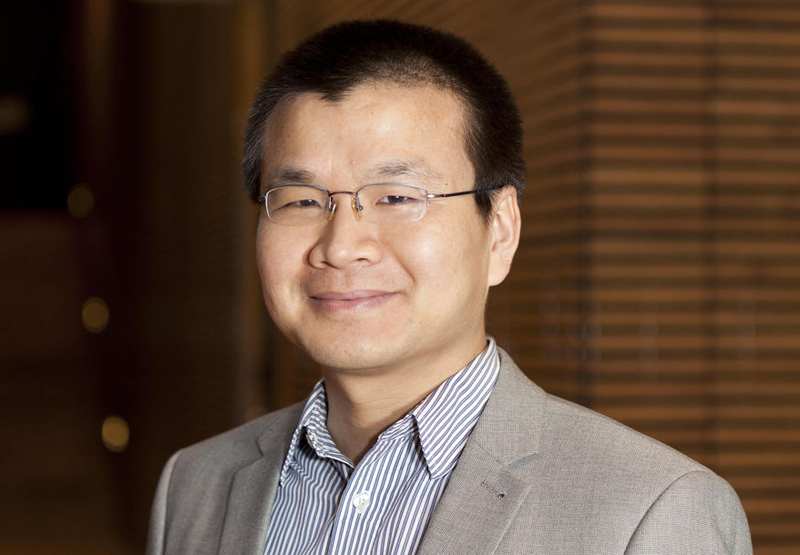
Dong Li is a Professor of Economics at the University of Texas at Dallas (UT Dallas), affiliated with the School of Economic, Political and Policy Sciences. His research focuses on econometrics, industrial organization (particularly antitrust issues), financial economics, and the Chinese economy. He holds a Ph.D. in Economics from Texas A&M University (2000), an M.A. in Quantitative Economics from Huazhong University of Science & Technology (1994), and a B.A. in Quantitative Economics from the same institution (1991). Li's work emphasizes methodological contributions to panel data models, spatial econometrics, and semiparametric estimation techniques. His recent studies include analyses of cartel behavior in agricultural markets, military aid's impact on terrorism, and the implications of securities transaction taxes in emerging markets. His research bridges theoretical econometrics with applied policy questions, particularly in antitrust and financial regulation contexts. His articles span topics ranging from Bayesian auction analysis to China's economic policies, showcasing interdisciplinary rigor. While no specific awards are noted, his extensive publication record reflects sustained academic influence. His research often addresses practical economic challenges, such as optimizing college admissions systems and evaluating currency valuation impacts on macroeconomic variables like inflation and output growth.
Zhipei Sun is a Professor at Aalto University, Finland, specializing in nanoscience, photonics, and optoelectronics. His research focuses on 2D materials, quantum technologies, and nonlinear optics. He has held positions at the University of Cambridge (UK) and ICFO (Spain). Education: Ph.D. (2005) from Chinese Academy of Sciences, M.Sc. (2002) and B.Sc. (1999) in Physics from Anhui University and Huaibei Normal University. Research interests include moiré photonics, interlayer excitons in van der Waals heterostructures, and ultrafast optical systems. Awards include the ERC Advanced Grant (2018) and Highly Cited Researcher recognition (2019-2020). He leads projects like the Academy of Finland’s Center of Excellence in Quantum Technology. Recent work involves miniaturized spectrometers, chiral nanoscrolling of 2D materials, and high-performance photodetectors. His contributions bridge nanotechnology with photonics for applications in agrifood, energy, and quantum systems.
Amir Nayyeri is an Associate Professor in the School of Electrical Engineering and Computer Science at Oregon State University, part of the College of Engineering. His research focuses on theoretical computer science, with particular emphasis on algorithms, computational geometry, and computational topology. He holds a PhD from the University of Illinois at Urbana-Champaign, following bachelor's and master's degrees from the University of Tehran. His work bridges theoretical foundations with applications such as shape matching, graph analysis, and topological data processing. He has advised numerous graduate students, including Mitchell Black (PhD 2024), Evelyn Warton (current PhD advisee), and William Maxwell (PhD 2021). Notable awards include the 2019 NSF CAREER Award. His research contributions span algorithmic advancements in surface-embedded graphs, minimum cuts, and Frechet distance calculations. He frequently serves on program committees for prestigious conferences like SODA, SoCG, and CCCG. Teaching includes courses on algorithms (CS325, CS515), graph theory (CS420/520), and computational geometry (CS519). His recent work explores applications of topology to Laplacian solvers and quantum algorithms, reflecting a commitment to advancing both theoretical and applied computer science.
Feng Liu is an Assistant Professor in the Department of Computer Science at Drexel University's College of Computing & Informatics (CCI). He previously served as a Postdoctoral Researcher at Michigan State University's Department of Computer Science and Engineering. His research spans computer vision, machine learning, and biometric recognition, with a focus on 3D scene understanding, generative AI, and human-AI interaction. Research Interests: 3D Computer Vision: 3D object/scene understanding, 3D generation, VR/AR, 3D vision+language understanding 3D Human Digitization: Modeling, reconstruction, rendering, biomechanics Generative AI: Explainability, generalization, controllability in generative models, DeepFake detection Biometric Recognition: Face and gait recognition, person re-identification AI + X: Applications in Education and Healthcare Publication Trends: Dr. Liu's recent publications demonstrate a strong focus on advancing biometric recognition systems, particularly in open-set scenarios and video-based person re-identification. His work integrates 3D vision, diffusion models, and large-scale benchmarking, with increasing emphasis on real-world challenges such as aerial-ground integration, long-range recognition, and controllable synthetic data generation for training robust models. Scientific Recognition: Area Chair for BMVC 2025, ACM MM 2025, FG 2025, IJCNN 2025 Area Chair for FG 2024 Advising and Engagement: Dr. Liu is actively recruiting PhD students and interns, indicating an expanding research group. He regularly presents at major conferences including CVPR, NeurIPS, and WACV, and participates in workshops such as ELFA, demonstrating active engagement with the research community. His collaborations span multiple institutions, including Michigan State University, Queensland University of Technology, and others. Labs and Teams: While specific lab names are not mentioned in the provided texts, Dr. Liu leads a research group focused on computer vision and AI, with projects involving 3D reconstruction, biometrics, and generative models. His work on AG-VPReID and HAMoBE suggests leadership in developing large-scale benchmarks and hierarchical recognition systems.
Dr. Ian McFadden is a Lecturer in Computational Ecology at Queen Mary University of London, affiliated with the School of Biological and Behavioural Sciences and the Centre for Biodiversity and Sustainability. His research focuses on leveraging artificial intelligence, computer vision, and global datasets to study species interactions, biogeography, and conservation challenges across terrestrial, freshwater, and marine ecosystems. McFadden’s work emphasizes understanding how climate change and human activities shape biodiversity patterns at local to global scales. Education: PhD in Ecology, UCLA Postdoctoral research at University of Amsterdam (UvA) and ETH Zurich (WSL/ETH Zürich) Research Assistant in Tropical Ecology at UC Berkeley Bachelor’s studies in Visual and Fine Arts at the San Francisco School of the Arts Research Interests: Global community ecology and species interactions Climate change impacts on biodiversity Ecological modeling and big data applications Conservation strategies using AI and computer vision Biogeographic processes and historical ecology Grants & Collaborations: Active grants in global biodiversity research (details available via his profile) Collaborations with institutions like the ETH Domain, UvA, and international conservation networks Labs/Teams: Group Leader at Queen Mary’s Centre for Biodiversity and Sustainability Associated with the River Communities Group
Prof. Dr. Ulrich Bauer is a Professor at the Technische Universität München (TUM) , leading the Applied and Computational Topology research group within the TUM School of Computation, Information and Technology . His academic career includes positions at Freie Universität Berlin, Georg-August-Universität Göttingen (where he earned a doctoral degree in Mathematics), and the Institute of Science and Technology Austria. Bauer specializes in applied and computational topology, focusing on multi-scale data connectivity and developing computational methods for large datasets. He is a key member of the Collaborative Research Center Discretization in Geometry and Dynamics and the Centre for Topological Data Analysis . Research Interests: Bauer’s work bridges theoretical foundations and practical applications in topology. He explores methods like persistent homology and discrete Morse theory to uncover global data structures. His contributions include advancing algorithms for topological data analysis, with applications in medical imaging, computational biology, and geometric modeling. Bauer’s software tool Ripser is widely recognized for efficient computation of persistence barcodes. Awards: ATMCS Best New Software Award (2016) Best Paper Award TopoInVis (2013) Apple Design Award (2003) O’Reilly Mac OS X Innovators Award (2003) Grants & Leadership: Bauer’s leadership roles include the executive board of the CRC Discretization in Geometry and Dynamics. His research has been supported by grants focusing on topological methods in data science and geometry. He actively contributes to advancing interdisciplinary collaborations between mathematics, computer science, and applied fields. Labs & Teams: As founder of the Applied and Computational Topology group at TUM, Bauer fosters innovation in computational topology, mentoring researchers and students in developing cutting-edge methodologies. His work intersects with the TUM School’s broader mission in computational and data-driven science.
Edwin Leuven is a Professor in the Department of Economics at the University of Oslo, where he has been a faculty member since 2011. He previously held academic positions at the École Nationale de la Statistique et de l’Administration Économique (ENSAE) in Paris and the University of Amsterdam. His research is centered on labor economics, education, and applied microeconometrics, with a strong emphasis on policy-relevant empirical analysis. He obtained his Ph.D. in Economics from the University of Amsterdam in 2001 and an M.A. in Econometrics in 1994. Before his doctoral studies, he worked as a full-time consultant at the OECD. His academic journey reflects a deep engagement with labor market dynamics, human capital formation, and education policy. Leuven’s research interests include labor economics, education economics, microeconometrics, human capital, training, peer effects, class size, and field of study choice. He employs advanced econometric techniques—particularly instrumental variables and quasi-experimental designs—to evaluate causal effects in education and labor markets. His work frequently uses administrative data from Norway and other countries to assess long-term impacts of educational interventions. His recent publications reveal a consistent focus on causal identification in education policy. Key themes include returns to different fields of study, the long-term effects of class size, peer effects in university, information frictions in student loan take-up, and the impact of broadband on trade. He often collaborates with leading economists such as Hessel Oosterbeek, Magne Mogstad, and Marte Rønning. Research Fellow, IZA, Bonn (2006–present) Researcher II, Statistics Norway (2011–present) Research Affiliate, CEPR, London (2007–2020) Research Associate, CREST, Paris (2003–2008) Research Fellow, Tinbergen Institute, Amsterdam (2002–2008) Leuven has served as an Associate Editor for several top journals, including the Journal of Political Economy (2017–2024), Annals of Economics and Statistics (2010–present), and Economics of Education Review (2007–2010). He has also been actively involved in editorial and organizational roles in the European Association of Labour Economists (EALE). He has supervised numerous Ph.D. students and served on thesis committees at institutions such as the University of Geneva, Paris School of Economics, and University of Copenhagen. His current and former advisees include Erlend Flesje, Espen Dahl, and Ingrid Huitfeldt. He leads major research projects such as 'The Demand and Supply of Public Education' (NFR Toppforsk), focusing on how education policies shape individual and societal outcomes.
Dr. Sydney Chinchanachokchai is an Associate Professor of Marketing in the College of Business at The University of Akron. Her academic work bridges consumer psychology, digital marketing, and cross-cultural studies, with a strong emphasis on student engagement and community impact. Education: Ph.D. in Marketing, University of Illinois at Urbana-Champaign MBA, University of Illinois at Urbana-Champaign BBA, Thammasat University Her research focuses on consumer attention, multitasking, advertising avoidance, diversity in advertising, cross-cultural marketing, and consumer well-being, particularly among vulnerable populations. She explores how cultural, psychological, and technological factors shape consumer behavior and decision-making. Her recent publications span topics such as ad blocker usage, cultural intelligence in education, sustainable tourism, and influencer marketing. These works reflect a strong trend toward interdisciplinary research that integrates psychology, technology, and social responsibility, often with a global or cross-cultural lens. Scientific Awards: Fulbright U.S. Scholar Award (2023) Excellence in Community-Engaged Teaching Award Akron Community Engaged Scholar Dean’s Research Excellence Award Dean’s Teaching Excellence Award Passion Award Best Undergraduate Research Paper Award (as mentor) Marketing Behavioral Research Fellow (2025–2026) Dr. Chinchanachokchai is deeply committed to mentoring students, having guided undergraduate research that won national recognition. She has led multiple grants, including those focused on healthy eating among refugee consumers and transformative consumer research. She actively collaborates with local communities, farmers' markets, and nonprofits to promote healthy consumption and inclusive marketing practices. She serves as Program Director for the Study Abroad Thailand program and faculty advisor for the Akron Triathlon Club and National Millennial and Gen Z Community. She is involved in several labs and research teams, including collaborative projects with colleagues on ad effectiveness, consumer attention, and cross-cultural gift giving. Her work with the Fulbright program and international conferences highlights her global scholarly engagement.
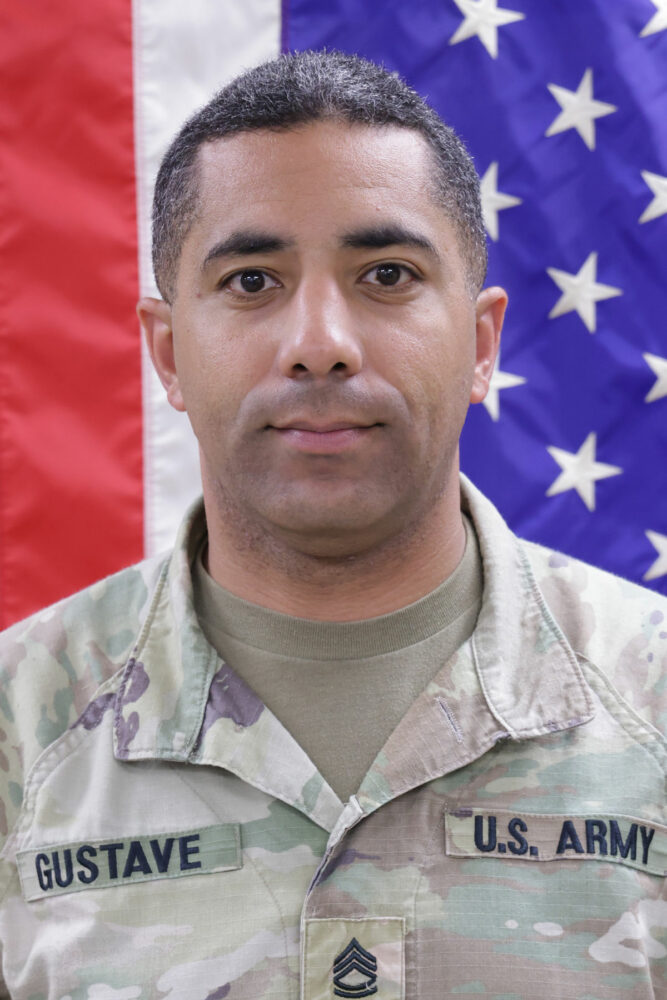
Cedric Gustave serves as an Instructor in Military Science at the University of Wisconsin-Stevens Point, affiliated with the Department of Military Science. His office is located in Marshfield Clinic Health System Champions Hall, room 159G, with contact phone 254-449-2288. His professional background includes: Staff Sergeant (SFC), United States Army, 2015 Bradley Master Gunner School, 2011 Drill Sergeant training, 2007 His expertise centers on military leadership development across operational contexts, specialized M2A3 Bradley armored vehicle crew training, and tactical instruction for individual soldiers and small units. He emphasizes character-driven leadership development and practical combat readiness, drawing from extensive field experience in combined arms exercises. His teaching philosophy prioritizes translating battlefield lessons into leadership frameworks for future military officers. His distinguished recognition includes the 1st Brigade, 1st Cavalry Division Master Gunner award for Brigade Combined Arms Live Fire Exercise (CALFEX) at Fort Hood, TX, in 2019. SFC Gustave mentors cadets in military science curriculum with a focus on experiential learning, advising students that 'you will get back what you put in' and stressing that leadership development requires matching effort with passion. He actively shapes future Army leaders through ROTC programs while maintaining active-duty service connections.
Sebastian Maneth is a Heisenberg Professor at the Universität Bremen , affiliated with the Faculty of Mathematics and Computer Science and the Department of Computer Science . His research focuses on Databases , Automata Theory and Applications , and Data Compression , with significant contributions to tree transducers and XML processing. Editor of Theory of Computing Systems (TOCS) Associate Editor for Frontiers in Computer Science Editor of Algorithms His recent work explores the boundaries of tree transducers , regular expressions , and grammar-based compression , with decidable properties in formal language theory. He organizes major conferences like the Dagstuhl Seminar on Regular Expressions and serves on numerous program committees (CIAA, ICALP, FoIKS, etc.). Current projects include FO-Query Enumeration over compressed data, shape-preserving tree transducers , and user identification via eye-tracking data . His editorial and organizational roles highlight leadership in theoretical computer science communities.