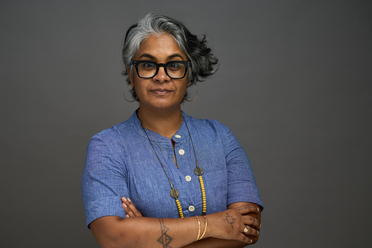
Professor Sundari Anitha is Chair in Sociological Studies at the University of Sheffield's School of Sociological Studies, Politics and International Relations. She joined in 2024 after positions at the University of Lincoln, Leeds, and Central Lancashire. Her research examines violence against women (domestic/sexual violence, forced marriage, transnational abandonment) and migrant labor rights using qualitative and feminist methodologies. Her work spans: Intersections of gender, race, migration in violence contexts (UK, US, India) Trade union representation and industrial action by migrant workers Policy interventions for gender-based violence prevention Anitha's publications (2019-2024) predominantly analyze gender-based violence through intersectional and policy lenses, with recurring themes of migrant rights, institutional responses to abuse, and cultural narratives around violence. Her research employs qualitative rigor while advocating for structural change. Grants & Advising: Principal Investigator for British Academy/Leverhulme projects on violence in romantic relationships (2023-2025) Co-Investigator on ESRC-funded studies addressing violence against minoritized women (2023-2024) Supervises PhD students in violence against women and industrial action She engages extensively with NGOs (trustee of Asha Projects, ATLEU, Natcen) and influenced UK policy on transnational marriage abandonment.
Professor Paul Apostolidis holds the rank of Professor in the Department of Government at the London School of Economics (LSE). His research integrates critical theory with empirical studies of migrant labor, precarity, and racial capitalism. He leads civic engagement initiatives including CIVICA and advises the Mellon-funded 'Latinx Futures' project in California. His academic leadership spans roles as Director of the Radical Critical Theory Circle and co-editor of the 'Studies in Subaltern Latina/o Politics' series. Key publications include *The Fight for Time* (2019) and *Breaks in the Chain* (2010), analyzing Latinx migrant workers' struggles. He teaches GV262 (Contemporary Political Theory) and GV498 (Multiculturalism), emphasizing public-oriented research. His doctoral work at Cornell University and undergraduate studies at Princeton inform his interdisciplinary approach. Research focuses on precarity's political dimensions, night labor's sociopolitical implications, and transnational migrant solidarity. He critiques neoliberalism's temporal structures and advocates for emancipatory education. Recent work examines digital labor platforms and climate change impacts on labor. His articles bridge Marx, Foucault, and Freire to address contemporary struggles over time, labor, and freedom.
Professor Caroline Fennell is Head of the College of Arts, Celtic Studies & Social Sciences at University College Cork (UCC), where she has held multiple leadership roles since 1996. A qualified barrister and member of the Royal Irish Academy, she specializes in criminal justice, evidence law, and gender studies. She has authored seminal works, including The Law of Evidence in Ireland (1992), and co-founded the Centre for Criminal Justice & Human Rights. Her research explores fairness in criminal justice systems, particularly in crisis scenarios like terrorism. She has secured grants totaling over €200,000 for projects on victimology and legal dissonance. Notable awards include the Royal Irish Academy membership and Honorary Lifetime Membership from UCC’s Students’ Union. Education: BCL (UCC), LLM (Osgoode Hall, Canada), PhD (University of Wales). Visiting roles included fellowships at Wadham College, Oxford, and the London School of Economics. She has advised on prison reform, led curriculum development (e.g., LLM Criminal Justice), and contributed to national legal policy via roles like Chair of the Irish Research Council (2009–2015). Current initiatives include the Chinese Artists in Residence Programme and leadership in UCC’s Athena SWAN Steering Committee. Research Interests: Law of Evidence, Criminal Justice reform, terrorism, gender equity, and interdisciplinary legal education. Grants & Awards: €90,400 for Access to Justice for Victims with Disabilities (2013–2017) €66,750 for Science, Law and Juridical Fact-Finding (2013–2016) Irish Research Council grants for studies on sexual assault attrition and diminished responsibility offenders Recent Contributions: Plenary speaker at conferences on legal pedagogy and humanities research Co-authored reports on domestic violence processing and victim needs Supervised over 20 doctoral candidates, including work on globalized criminality and fairness frameworks Current Roles: Head of College (since 2010), member of UCC’s Governing Body, and external examiner for the Law Society of Ireland’s Evidence courses.
Jordi Díez is a Professor of Political Science at the University of Guelph, affiliated with the College of Social & Applied Human Sciences. His expertise spans comparative politics, Latin American politics, environmental policy, judicial politics, and sexual minority rights. He holds a doctoral degree from the University of Toronto and has held visiting professorships at institutions including Harvard University, UC San Diego, and universities across Latin America. Research Interests : Díez's work focuses on environmental policymaking in Latin America (with a focus on Mexico's Lacandone rainforest), security and defense relations in North America, the expansion of LGBTQ+ rights in Argentina, Chile, and Mexico, and the applicability of Global North public policy theories to Latin American contexts. His current SSHRC-funded projects examine judicial politics in Latin American constitutional courts and the judicialization of abortion rights. Teaching : He teaches courses ranging from introductory comparative politics to advanced judicial politics and Latin American politics at both undergraduate and graduate levels. His pedagogical approach integrates digital media's impact on public opinion and social movements. Grants & Projects : He leads SSHRC-funded research on Latin America’s constitutional courts and LGBTQ+ rights expansion. Past collaborations include a co-edited volume on globalization and environmental degradation in the Global South (Broadview Press). Awards : While no specific prizes are listed, his work has received consistent federal research funding, including SSHRC grants for comparative judicial studies and LGBTQ+ policy research. Labs/Teams : Collaborates with global networks including experts from the Americas and Europe on comparative public policy and judicial behavior studies.
Dr. Stuart J. Turnbull-Dugarte is an Associate Professor in Quantitative Political Science at the Department of Politics & International Relations, University of Southampton. His research focuses on political sociology, LGBTQ+ politics, and comparative politics, with a particular emphasis on far-right party success, political identity dynamics, and LGBTQ+ political behavior. He actively supervises PhD students and teaches quantitative research methods, including causal inference, at undergraduate and postgraduate levels. Associate Editor: Public Opinion Quarterly, European Journal of Politics and Gender, Research & Politics Steering Group Member: Centre for Behavioural Experimental Action and Research (C-BEAR) His methodological expertise includes experimental and quasi-experimental designs, with applications in electoral campaigns and public policy analysis. Current projects include a Leverhulme Trust Fellowship for his book The Rainbow Vote and research on surrogacy reform, homonationalism, and far-right mobilization. Recent publications in American Political Science Review , British Journal of Political Science , and Journal of European Public Policy highlight his work on identity projection, religious stereotyping, and class perception in politics. He has received multiple accolades, including the ECPR Rising Star Award (2024) and Best Article Prizes from European Union Politics (2020, 2025).
Tanya Kant is an Associate Professor in Media and Cultural Studies (Digital Media) at the University of Sussex’s School of Media, Arts and Humanities. Her research focuses on algorithmic personalization, digital identity, and the socio-economic implications of data-driven systems. She authored the influential book *Making It Personal: Algorithmic Personalization, Identity and Everyday Life* (2020) and co-manages REFRAME, an open-access publishing platform. Her work bridges qualitative cultural studies with critical political economy, examining how algorithmic systems shape identities, creativity, and socio-material realities. Key research areas include generative AI ethics, algorithmic autobiographies, data profiling, and the impact of AI on PR/communications industries. Kant has collaborated with Ofcom, MIT, and Full Fact on data ethics and misinformation. Her teaching roles include convening MA Digital Media and supervising PhDs in critical AI studies. Recent grants include a £9,600 AHRC Impact Accelerator Award (2023) for studying ethical AI use in communications sectors. Professional activities include advisory roles at Open Rights Group and Full Fact, as well as frequent media engagements discussing AI’s societal implications. Her work emphasizes creative resistance strategies against algorithmic systems, such as participatory methods for ‘writing with’ digital selves through algorithmic autobiography projects. Notable Grants: Sussex KE Fellowship (2025), AHRC Impact Accelerator Award (2023) Key Collaborations: MIT, Ofcom, Full Fact, Magenta Associates Teaching Portfolio: Convenes 10+ modules including ‘Digital Cultures’ and ‘Gender, Sexuality and Digital Culture’
Susan Gail Sherman, PhD, MPH, is a Professor in the Department of Health, Behavior and Society at Johns Hopkins Bloomberg School of Public Health. She holds joint appointments in Population, Family and Reproductive Health, Epidemiology, and Mental Health departments. Dr. Sherman is Co-Director of the Baltimore HIV Collaboratory and part of the Executive Leadership Committee of the Johns Hopkins Center for AIDS Research. She co-leads the Addiction and Overdose workgroup of the Bloomberg American Health Initiative and serves on Baltimore City and state advisory commissions on syringe exchange and overdose prevention initiatives. Dr. Sherman earned her PhD from Johns Hopkins Bloomberg School of Public Health in 2000, MPH from University of North Carolina at Chapel Hill in 1996, and BA from University of Michigan in Ann Arbor in 1989. Her research focuses on improving the health of marginalized populations, particularly drug users and sex workers, with emphasis on structural drivers of health. She has over 17 years of experience developing and evaluating HIV prevention, peer-outreach behavioral, and microenterprise interventions in Baltimore, Pakistan, Thailand, and India. Her research spans the intersection of public health and public safety, harm reduction evidence for drug policy, economic development as HIV prevention, and structural determinants of health. Dr. Sherman is PI of studies examining police roles in the STI/HIV risk environment of street-based sex workers and evaluating innovative pre-booking diversion programs for low-level drug offenders. She is also developing a full-service drop-in center for sex workers in Baltimore. Analysis of her recent publications reveals a strong focus on harm reduction, opioid crisis interventions, structural determinants of health, and the intersection of public health and law enforcement. Her work increasingly addresses gender-specific vulnerabilities, particularly among women who use drugs and sex workers, while maintaining a strong commitment to evidence-based policy solutions. 2011 Advising, Mentoring & Teaching Recognitions Award, Johns Hopkins Bloomberg School of Public Health 2006 Advising, Mentoring & Teaching Recognitions Award, Johns Hopkins Bloomberg School of Public Health 2002 Delta Omega Society 1997-2000 NIMH Predoctoral Training Grantee, Office of AIDS Dr. Sherman has received significant grant funding for her work, including the FORECAST (Fentanyl Overdose Reduction Checking Analysis Study) and the SAPPHIRE (Sex Workers and Police Promoting Health in Risky Environments) study. She serves as PI for multiple projects examining structural interventions with sex workers and drug users in Baltimore. Her research portfolio includes international work in Pakistan, Thailand, and India on HIV prevention and microenterprise interventions. Dr. Sherman is actively involved with the Center for AIDS Research, Center for Global Health, Center for Public Health and Human Rights, and Center for Sexually Transmitted Diseases Research, Prevention and Training. She serves as Board Secretary of the National Harm Reduction Coalition and is deeply engaged with community-based organizations working with marginalized populations.
Adebola A. Adedimeji is an Adjunct Professor in the Department of Epidemiology & Population Health at the Wake Forest University School of Medicine. She holds advanced degrees including an M.B.A., M.P.H., M.S., and Ph.D. Her research focuses on social and structural determinants of health, HIV prevention, stigma reduction, cancer education, and community-based interventions for marginalized populations. She is affiliated with the Health Behavior Research & Implementation Science division. Her work emphasizes implementation science and real-world evidence, particularly in sub-Saharan Africa. Key research themes include LGBTQ+ health, transgender HIV service access, substance use impacts on HIV care, and climate change linkages to sexual health. Publications span HIV stigma reduction interventions, pediatric HIV treatment strategies, cervical cancer screening barriers, and global health capacity-building initiatives. Notable collaborations include the Einstein-Rwanda program and studies in Nigeria and Uganda. She advocates for health equity and policy reforms addressing intersecting stigmas.
Ewa Batyra is an Affiliate Researcher at the Laboratory of Fertility and Well-Being within the Max Planck Institute for Demographic Research (MPIDR). Her work focuses on global demographic patterns related to fertility, family formation, and socioeconomic disparities. Key Research Areas: Fertility dynamics, child marriage, union formation, and the impact of education on demographic transitions. Geographic Focus: Global South, particularly Sub-Saharan Africa and Latin America. Recent Trends: Batyra's publications analyze post-disaster fertility shifts, unintended pregnancy outcomes, and the role of income inequality in delaying parenthood. She employs cross-national datasets and advanced statistical methods like fixed-effects modeling. Collaborations: Works with institutions such as the University of Pennsylvania (Hans-Peter Kohler), University of Oxford (Tiziana Leone), and Brazilian research teams on fertility forecasting.
Beth Reingold is a Professor of Political Science and Women’s, Gender, and Sexuality Studies at Emory University, where she also serves as Director of Graduate Admissions and Placement. She holds a Ph.D. in Political Science from the University of California, Berkeley, and a B.A. in Political Science and History from Rice University. Her research focuses on the intersections of gender, race/ethnicity, and political representation, particularly within U.S. state legislatures. Key areas include legislative behavior, intersectionality, and policy-making processes related to anti-abortion, welfare, and immigration politics. Reingold’s work has been widely recognized, including the 2023 Mac Jewell Enduring Contribution Book Award for her first monograph Representing Women , and the 2021 Richard Fenno, Jr. Prize for her co-authored book Race, Gender, and Political Representation . She collaborates with scholars like Irene Browne on NSF-funded projects examining Black elites and immigration politics. Her current research explores legislative power dynamics and how marginalized groups attain institutional influence. Her scholarly contributions span over three decades, with publications in top journals like Political Research Quarterly and American Journal of Political Science . She has advised numerous projects and serves as a leading voice in intersectional political theory and legislative studies.
Erica S. Lawson is an Associate Professor in the Department of Gender, Sexuality, and Women’s Studies at Western University. She holds an MA and PhD from OISE (University of Toronto). Her work focuses on motherhood studies, Black feminist theory, critical race studies, and gender dynamics in post-conflict societies such as Liberia. Dr. Lawson’s research critically examines intersections of race, gender, and power, particularly regarding maternal grief, anti-Black racism in Canadian institutions, and social reproductive labor in global crises. She has authored/co-authored over 30 peer-reviewed articles, book chapters, and edited volumes, including *African Canadian Leadership: Continuity, Transition, and Transformation* (2019) and contributions to *Memorializing Violence: Transnational Feminist Dialogues* (forthcoming 2025). Her funded research includes SSHRC grants addressing: 1) racialized women’s experiences as pandemic frontline workers; 2) Liberian women’s post-conflict gender equality initiatives. She has also led studies on HIV vulnerabilities among Black men in Ontario and the socio-cultural dimensions of maternal activism in North America. Dr. Lawson’s teaching emphasizes decolonizing methodologies and Black feminist frameworks in academia. Key grants include SSHRC Insight Development Grant (2021–present) and SSHRC Insight Grant (2017–present). Her work bridges academic scholarship with community advocacy, particularly around anti-racist pedagogy and global health equity. She collaborates internationally with Liberian researchers and Canadian-based Black communities.
Crystal Eddins serves as an Associate Professor in the Department of Sociology at the University of Pittsburgh's Dietrich School of Arts & Sciences. Her academic work centers on historical analysis of race, gender, and resistance within the African Diaspora, with particular emphasis on revolutionary movements and structural oppression. Her research interests include: Historical Sociology of Slavery and Resistance Racial Capitalism and Black Social Movements Gender Studies and Reproductive Justice The Haitian Revolution and Black Internationalism Memory Politics of Civil Rights Movements She investigates how enslaved communities employed marronage, ritual practices, and collective action to challenge oppressive systems, especially focusing on Black women's experiences. Analysis of her recent publications reveals three dominant trends: (1) the Haitian Revolution as foundational to Black revolutionary consciousness across the Atlantic World, (2) intersections of racial capitalism with gendered oppression in reproductive justice and land dispossession contexts, and (3) political transformations of historical memory regarding civil rights struggles. Her work consistently centers diasporic resistance while connecting historical patterns to contemporary social justice issues. While no specific scientific awards are documented in the source material, Dr. Eddins' extensive publication record in high-impact journals demonstrates significant scholarly contribution. Information regarding student advising, grant funding, or laboratory affiliations was not provided in the available texts.
Mimi (Paulomi) Bhatt, PhD, MPH, CNM, is an Assistant Professor at NYU Rory Meyers College of Nursing. She is a certified nurse-midwife, researcher, educator, and theorist whose work centers on birth equity, reproductive justice, and the integration of midwifery care in public health systems. She actively provides clinical care within NYC Health + Hospitals and contributes to national and global maternal health policy. PhD in Nursing Theory, NYU Meyers College of Nursing MSN, Frontier Nursing University MPH in Global Health Leadership, NYU Global Institute of Public Health BSN, NYU Steinhardt School of Education BA in Comparative Literature and English Education, NYU College of Arts & Science Dr. Bhatt’s research is grounded in critical feminist theory and qualitative methodologies. Her work investigates how midwifery models can advance health equity, particularly for Black, Indigenous, and other minoritized communities. She explores themes such as autonomy in childbirth, respectful maternity care, perinatal mental health, and systemic barriers faced by midwives of color. Her scholarship emphasizes anti-oppression frameworks and community-based participatory research. Her recent publications analyze experiential outcomes in maternity care, revealing that midwife-led care—especially in community settings—leads to higher autonomy, respect, and lower mistreatment. She has also published on the experiences of sexual and gender-diverse parents, cervical cancer screening in the Dominican Republic, and midwifery integration in India. Her work consistently highlights structural inequities and advocates for transformative change in maternal health systems. Scientific awards and honors include: NYU University-wide Dissertation Award – Allied Health & Social Services (2020) Jonas Nurse Leaders Scholar Award (multiple years) Johnson & Johnson Minority Faculty Nurse Scholar Award (multiple years) Herman Biggs Health Policy Fellow Women’s Leadership Initiative at NYU Dr. Bhatt mentors future nurse-midwives and contributes to policy through service on the NYC Maternal Mortality and Morbidity Review Committee and the International Confederation of Midwives’ Americas Regional Committee. She received postdoctoral training at the Birth Place Lab, University of British Columbia, and as a Provost Postdoctoral Fellow at NYU. Her clinical and academic work is deeply informed by her identity as a first-generation immigrant and her mother’s legacy as a nurse-midwife in India. She is affiliated with the Birth Place Lab and collaborates with multidisciplinary teams focused on respectful maternity care, midwifery practice climate, and global maternal health capacity building.
Carla Rice is a Professor in the Department of Family Relations & Applied Nutrition at the University of Guelph, and holds a Tier 1 Canada Research Chair in Feminist Studies and Social Practice. Her work bridges critical psychology, equity education, and disability studies, focusing on embodiment, social justice, and arts-based methodologies. She leads Re•Vision: The Centre for Art and Social Justice and the Revisioning Differences Media Arts Laboratory (REDLAB), leveraging digital storytelling and participatory research to challenge marginalization. Rice earned a Ph.D. in Women's Studies from York University (2004) and an M.Ed. in Applied Psychology from OISE (1993). Her research addresses topics like early puberty, body-based harassment, and the sexualization of girls, while centering intersectional and decolonial frameworks. Recent projects include Bodies in Translation (disability arts and technology) and Into the Light (countering eugenic legacies in education). Her awards include the SSHRC Tier 1 CRC, Royal Society of Canada membership, and the Lieutenant Governor’s Ontario Heritage Award. Rice’s work emphasizes community-engaged scholarship, training students in transformative methodologies and fostering inclusive policies in health care, education, and the arts. Key initiatives include Relaxed Performance (accessible theater), Re•Storying Autism (autistic narratives), and Stretching Our Stories (digital storytelling for marginalized groups). She currently supervises graduate students pursuing critical theories and arts-informed research.
Dr. Utsa Mukherjee is a Senior Lecturer in Education at Brunel University London and serves as the Director of Equality and Diversity within the Department of Education. Previously, she held academic positions at the University of Southampton, Birkbeck University of London, and the University of Roehampton. Her research integrates Sociology and Social Geography to examine childhood/youth studies, social inequality, leisure, and migration through a social justice lens. Qualifications: PhD in Sociology (Royal Holloway, University of London), BA in English with Sociology and History (Presidency University Kolkata) Her work focuses on how structural inequalities shape the lived experiences of minoritized groups, particularly racialized minority children in the UK and sexual minority youth in India. She explores topics such as leisure practices, parenting cultures, childhood agency, and critical race/sexuality theories. Her research spans South Asia and its diaspora, employing ethnographic and critical methodologies. Recent publications analyze childhood masculinities, decolonizing leisure rights, and the intersection of race, class, and parenting. Awards include the British Sociological Association’s Philip Abrams Memorial Prize runner-up (2024) . She supervises PhD/EdD researchers in education-related projects and holds editorial roles in journals like Journal of Family Studies and Schole . Grants: Centring Families in Iceland’s Just Transition (Brunel University London, 2023-2024) Childhood Inequalities and Leisure (Froebel Trust, 2022-2024) Research and Development Fund (Leisure Studies Association, 2022-2023) Professional memberships include the British Sociological Association, American Sociological Association, and the Royal Geographical Society’s Geographies of Children, Youth and Families Research Group. Her outreach includes co-founding the Academy of Social Sciences and serving on the Leisure Studies Association executive committee.