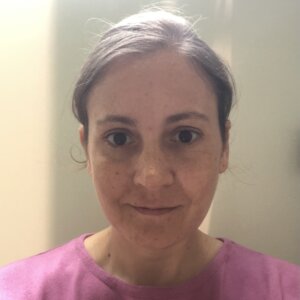
Denise Sulzbach, JD, is a faculty member and Director of the TA Network at the Innovations Institute, University of Connecticut. Her work focuses on systems of care, data-informed decision-making, and behavioral health system design for youth and families. She has over 25 years of experience in cross-agency technical assistance, care pathway planning, and data analytics. Education: JD from University of Baltimore School of Law, BA in sociology from Fairfield University. Her research interests span systems reform, implementation science, and mobile response services in behavioral health. As a former prosecutor in child abuse, sexual assault, and juvenile law, she brings unique insights into cross-system behavioral health challenges. She previously held high-level appointments in Maryland's Governor's Office for Children and Department of Juvenile Services, overseeing technical assistance for SAMHSA-funded children’s behavioral health centers from 2013 to 2020. Her proposal authoring secured hundreds of millions in awards.
Bridget Kraus is an Assistant Professor in Occupational Therapy at the University of Missouri, focusing on mitigating the impact of neurological injuries like spinal cord injury on functional abilities and well-being. Her work integrates targeted interventions, rehabilitation technologies, and implementation science methodologies. PhD in Occupational Therapy (2024) MS in Occupational Therapy (2018) BS in Occupational Therapy (2016) Dr. Kraus’s research emphasizes neurological recovery, health outcomes for acquired neurological conditions, and the role of occupational therapy in supporting individuals navigating grief after disability or loss. She also explores systemic issues in rehabilitation science, including workplace safety and ethical practices. Her publications span spinal cord injury self-management programs, qualitative analyses of patient experiences, and systemic change recommendations in occupational therapy academia. Key themes include rehabilitation technologies, implementation science, and addressing sexual harassment in healthcare professions. 2024 Mizzou Alumni Association Mizzou 18 Award Dr. Kraus serves on the editorial board of the Occupational Therapy Journal of Research , contributes to the Model Systems Knowledge Translation Center as a Spinal Cord Injury Ambassador, and participates in professional organizations like the American Occupational Therapy Association and American Congress of Rehabilitation Medicine.
Julia Bahner is an Associate Professor at Lund University's School of Social Work with multiple specialized affiliations including Civil Society and Social Movements, Child Youth and Family, Professions and Organisation, and Social Vulnerability and Inequality. She is actively engaged in research and teaching with a focus on disability rights and sexuality. Associate Professor, School of Social Work Senior Lecturer, Social Vulnerability and Inequality Senior Lecturer, Child, Youth and Family Associate Senior Lecturer, Civil Society and Social Movements Profile Area Member, LU Profile Area: Human Rights Profile Area Member, LU Profile Area: Proactive Ageing Dr. Bahner's research centers on the intersection of disability rights, sexuality, and social policy. Her work examines how accessibility issues impact sexual expression and relationships for people with disabilities, drawing on the UN Convention on the Rights of Persons with Disabilities. She has conducted extensive research on sexual citizenship, personal assistance services, and disability rights movements across multiple countries including Sweden, England, the Netherlands, and Australia. Her research often involves collaboration with civil society organizations and aims to develop practical tools for improving services and policies. Her recent publications demonstrate a consistent focus on disability rights movements, digitalization's impact on organizational engagement, and the complex relationship between disability and sexuality. The articles reveal a trajectory from theoretical exploration of sexual citizenship to practical applications in policy development and service provision, with increasing attention to intersectional aspects of disability identity and representation. Leading Forte-funded research project 'Representation in the digital era: Democratic consequences of changing engagement in the Swedish disability movement' Conducting project 'Improved Sexual Health as a Basis for Violence Prevention' funded by Norrbacka-Eugenia Foundation Developing easy-to-read materials based on her book 'Disability and Sexuality' with FUB Uppsala County Leading study circle for young people with disabilities through Folkuniversitetet in Malmö Dr. Bahner actively supervises doctoral students and teaches in both bachelor's and master's social work programs. Her work contributes to Sustainable Development Goals related to reduced inequalities, good health and well-being, and gender equality. She frequently collaborates with disability organizations, government agencies, and international researchers to translate academic findings into practical applications that improve the lives of people with disabilities.
Dr. Harjot K. Singh is a Clinical Associate Professor of Medicine at Weill Cornell Medical College , affiliated with NewYork-Presbyterian Hospital . She specializes in Infectious Diseases with a focus on HIV/AIDS , particularly in adolescents transitioning to adult care and pregnant women . Education Sc.M., Johns Hopkins Bloomberg School of Public Health (2008) M.D., Medical College of Virginia (2000) B.S., College of William and Mary (1995) Her research integrates clinical investigation with public health , emphasizing vaccine-preventable diseases , antimicrobial stewardship , and quality improvement for HIV-infected individuals . Recent publications highlight advancements in infection control during pandemics, HIV care complexities, and global health challenges. Dr. Singh coordinates HIV services for fellows, mentors trainees, and contributes to federally funded initiatives like the New York/New Jersey AIDS Education and Training Center . She also serves as an Infectious Disease/PEP consultant for NYP Workforce Health and Safety .
Julie Womack is an Associate Professor in the Department of Biomedical Informatics & Data Science at Yale School of Medicine. She holds secondary appointments in the same department and participates in initiatives like the Yale-BI Biomedical Data Science Fellowship and the Yale-UPR Integrated HIV Basic and Clinical Sciences Initiative. PhD in Biomedical Informatics & Data Science (Yale University, 2009) Master of Science in Nursing (Yale School of Nursing, 1994) MA in Health Sciences (Stanford University, 1985) Her research spans biomedical informatics, focusing on AI implementation in healthcare, HIV-related health disparities, and veterans' health issues. She develops NLP algorithms for clinical data extraction and investigates telehealth equity during pandemics. Recent research examines: AI-ready data frameworks for fairness Bone mineral density analysis automation Telehealth access disparities among HIV patients Pharmacist-led interventions for HIV veterans Collaborators include: Farah Kidwai-Khan (NLP research) Cynthia Brandt (biomedical data science) Evelyn Hsieh (clinical informatics) Her work addresses critical gaps in: Electronic health record optimization Residential mobility tracking Metabolic outcomes in blast-injured veterans
Professor Rachel Skinner is a distinguished clinical academic and Adolescent Physician at the Children's Hospital at Westmead, holding a professorship in Child and Adolescent Health within the Sydney Medical School at the University of Sydney. She serves as Deputy Director of Wellbeing, Health and Youth at the NHMRC Centre for Research Excellence in Adolescent Health and acts as Senior Clinical Advisor in Youth Health and Wellbeing for the NSW Ministry of Health. Her career spans clinical practice, research leadership, and policy development across multiple institutional affiliations. Sydney Medical School, University of Sydney - Professor in Child and Adolescent Health Children's Hospital at Westmead - Adolescent Physician NHMRC Centre for Research Excellence in Adolescent Health - Deputy Director of Wellbeing, Health and Youth NSW Ministry of Health - Senior Clinical Advisor in Youth Health and Wellbeing Royal Australasian College of Physicians - Member Australian Association for Adolescent Health - Member Professor Skinner's research spans public health, bio-psychosocial and ethical dimensions of adolescent health, with particular expertise in human papillomavirus (HPV) vaccine efficacy, sexual behavior, contraception, and early pregnancy in adolescents. Her methodological approach integrates prospective cohort studies, population-based cross-sectional research, complex intervention evaluation, qualitative inquiry, and clinical trials across diverse settings including schools, health services, and digital platforms. She has developed innovative multi-faceted interventions for youth health promotion and validated outcome measures, with strong emphasis on involving young people throughout the research process. Her publication record demonstrates significant contributions to adolescent health literature, particularly in HPV vaccination programs, gender and sexuality diversity, and digital health technologies. Recent work focuses on mental health interventions, vaccination strategies for vulnerable populations, and the impact of social media on sexual development. Vice Chancellor's award for excellence in postgraduate research supervision, University of Sydney (2017) As an educator, Professor Skinner contributes to medical student teaching in pediatrics, coordinates the Adolescent Module in Sydney Medical School's Master of Medicine in Paediatrics, and serves as deputy postgraduate coordinator for the Discipline of Child and Adolescent Health overseeing more than 100 research students. Her leadership extends to multiple research collaborations including the NHMRC Centre for Research Excellence in Adolescent Health across five universities. Current projects address social media's impact on sexual agency, HPV vaccination gaps, adolescent mental health interventions, and innovative vaccine delivery systems.
Dr. Cristyn Davies is a Senior Research Fellow at the University of Sydney's Sydney University Clinical School, based at Children's Hospital at Westmead. She is a member of the Charles Perkins Centre with research expertise spanning adolescent health, child health, human papillomavirus (HPV), sexually transmitted diseases, and social science applications in medicine. Her work integrates qualitative research methods with public health implementation to address critical gaps in youth healthcare. Her primary research interests focus on adolescent vaccination programs (particularly HPV), gender and sexuality diversity in youth, and health equity for marginalized populations. Davies employs qualitative methodologies to examine vaccine decision-making, school-based health interventions, and sexuality education frameworks. Her work consistently addresses health disparities affecting gender and sexuality diverse youth and adolescents with intellectual disabilities. Analysis of her recent publications reveals strong thematic continuity in vaccination research (especially HPV), with increasing focus on microarray patch technology and special populations. Her scholarship bridges social science perspectives with clinical public health, emphasizing community engagement and equity-focused implementation. Current work demonstrates growing emphasis on digital health innovation and intersectional approaches to adolescent health services. Davies actively contributes to national health policy through advocacy with the Public Health Association of Australia and research informing school vaccination programs. Her work on gender and sexuality diverse youth has generated nationally representative data on mental health disparities and school climate factors. She collaborates extensively within the Charles Perkins Centre and with clinical teams at Children's Hospital at Westmead, focusing on translating research into practice through school-based interventions and healthcare system improvements. Current projects emphasize vaccine technology innovation and inclusive health service design for neurodiverse adolescents.
Laura Skrip serves as Assistant Professor with a joint appointment at Nagasaki University's School of Tropical Medicine and Global Health (Japan) and the London School of Hygiene and Tropical Medicine (UK) since 2024. Previously, she held academic positions at the University of Liberia School of Public Health (2020-2024) and research roles at the Swiss Tropical and Public Health Institute (2020-2021) and Institute for Disease Modeling (2018-2020). Her educational background includes: MPH PhD Dr. Skrip's research centers on infectious disease dynamics using social epidemiological modeling to quantify behavior-focused interventions. She investigates vaccine impact (particularly measles outcomes linked to nutritional programs), risk communication efficacy, and community engagement during Ebola/COVID-19 outbreaks. Her fieldwork spans Liberia, Democratic Republic of Congo, and Cameroon, emphasizing context-driven policy guidance through collaboration with social scientists, clinicians, and communities. Analysis of her publication record reveals consistent focus on outbreak response modeling in resource-limited settings, integrating social determinants into transmission dynamics. Key themes include cross-outbreak behavioral analysis (Ebola to COVID-19), simulation-based vaccine impact assessment, and post-crisis health system strengthening in Liberia, with methodological emphasis on mixed-methods approaches and data quality innovation. Dr. Skrip supervises Master's and Doctoral students at both institutions while teaching core modules in Epidemiology and Statistics for Population Health. Her research implies involvement in externally funded initiatives related to epidemic preparedness, though specific grant details are unreported. Her collaborative work engages international consortia including the Social Mobilization Action Consortium during Ebola response, with ongoing field partnerships in Liberia focusing on quantitative capacity building and community-driven outbreak mitigation strategies.
Professor George W. Leeson serves as Director of the Oxford Institute of Population Ageing at the University of Oxford and holds a Professorial Fellowship at Kellogg College. He additionally maintains a Visiting Professorship in Demography at Mexico's University of Guanajuato-Leon. His academic leadership spans global demographic research with particular emphasis on socio-demographic aspects of ageing populations across multiple continents. His educational foundation includes: First degree in Mathematics (University of Oxford) Master's in Applied Statistics (University of Oxford) Doctorate in Demography (University of Copenhagen) Leeson's research program integrates demographic modeling with analysis of national and international datasets to address critical questions in population ageing. His work examines demographic inequalities in global ageing trajectories, evolving population structures in Europe and Latin America, migration patterns within Europe, depopulation drivers in Central and Eastern Europe, and future longevity prospects. He directs the Danish Longitudinal Future Study and co-leads the Global Ageing Study—a landmark survey of 44,000 individuals aged 40-80 across 24 countries—with Professor Sarah Harper. Recent publications demonstrate consistent thematic focus on Latin American population ageing, grandparenthood dynamics, migration-ageing intersections, and socioeconomic implications of increased longevity. The research employs comparative methodologies across diverse cultural contexts while maintaining strong policy relevance through engagement with governmental and international bodies. His professional recognition includes: Fellow of the Adelphi Genetics Forum Leeson actively contributes to policy development as demographic expert for the European Commission's Food Safety Directorate, Specialist Advisor to the Danish Government Commission on Ageing, and member of Public Health England's Expert Advisory Group on Productive Healthy Ageing. He co-edits the Journal of Population Ageing and Population Horizons while directing the Centre for Migration and Ageing Populations (MAP Centre). He leads the Complex Environmental Population Interactions Project—a multidisciplinary collaboration uniting demographers, economists, anthropologists, and environmentalists—and oversees the Institute's Latin American Research Network (LARNA) and Central/Eastern European Research Network (EAST) to address 21st-century demographic challenges through integrated research and scenario modeling.
Lynn Saunders is a Professor of Applied Criminology at the University of Derby, affiliated with the School of Law and Social Sciences. She has a distinguished career in the UK Criminal Justice System, including leadership roles in prison management for individuals with sexual convictions. Education: PhD in Socio-Legal Studies, University of Nottingham MA in Criminology, University of Nottingham BA (Hons) in Applies Social Studies, University of Keele CCETSW Practice Teaching Award Her research focuses on the resettlement of sexual offenders post-release, prevention of sexual offending, aging populations in prisons, and family dynamics post-conviction. Her work bridges academic inquiry with practical policy development. Her publications emphasize sexual offender management, prison healthcare, and community reintegration strategies. She co-founded the Safer Living Foundation and holds leadership roles in organizations like the Lucy Faithfull Foundation and NOTA. Scientific Awards: OBE (2017) Leadership Excellence in Public Service (2018) Honorary Doctorates (2015, 2018) Honorary Professor Title (2021) She actively engages in media outreach, including BBC documentaries and newspaper features, and serves on editorial boards like the Prison Service Journal.
Lauren Lee White is an Adjunct Professor at the USC Annenberg School of Journalism , where she teaches investigative reporting. She has previously taught at the School of the New York Times and worked as a documentary filmmaker in New York City with institutions like the Tribeca Film Institute and Artistic Noise . Her work focuses on public safety , policy , and criminal justice reform , often supported by grants from organizations like the Economic Hardship Reporting Project . 2018: Fund for Investigative Journalism Grant (Los Angeles County women’s jail misconduct) 2016: John Jay College/H.F. Guggenheim Reporting Fellow 2015: USC Center on Public Diplomacy Fellow White’s journalism has appeared in The Guardian , Vice , The Christian Science Monitor , and The Appeal , covering topics such as: Sexual misconduct in prisons Bail reform Climate change and inequality Homelessness and foster care She has curated film programs like Prison Images: Incarceration and the Cinema and is involved in international residencies at institutions including the Cité Internationale des Arts in Paris. Contact her at llwhite@usc.edu or laurenleewhite76@gmail.com .
Hyman Scott, MD is a Volunteer Assistant Clinical Professor in the Department of Medicine at the University of California, San Francisco (UCSF) School of Medicine. His academic work focuses on HIV prevention, infectious diseases, and public health interventions, with particular emphasis on pre-exposure prophylaxis (PrEP) and sexually transmitted infection prevention strategies. Dr. Scott is affiliated with the Bridge HIV research program at UCSF, where he contributes to clinical trials and implementation science research. Dr. Scott completed his medical education at Yale School of Medicine in 2006, followed by an Internal Medicine residency at UCSF in 2009, and an Infectious Diseases fellowship at UCSF in 2014. His training background provides him with strong clinical foundations in both internal medicine and infectious disease specialties, which informs his research in HIV prevention and sexual health. Dr. Scott's research primarily centers on innovative approaches to HIV prevention, with significant contributions to the development and implementation of pre-exposure prophylaxis (PrEP) strategies. His work spans clinical trials of biomedical interventions, evaluation of mobile health applications for HIV prevention, and studies examining barriers to PrEP access and adherence. A notable aspect of his research program involves investigating doxycycline as post-exposure prophylaxis for bacterial sexually transmitted infections. Dr. Scott has also contributed to HIV vaccine research, examining novel delivery methods and adjuvant strategies to enhance immune responses. Analysis of Dr. Scott's recent publications reveals a strong focus on translational research that bridges clinical science with public health implementation. His work spans multiple domains including clinical trials of biomedical HIV prevention tools, evaluation of digital health interventions, epidemiological studies of STI trends, and implementation science research to improve access to prevention services. A significant portion of his recent work examines the effectiveness of doxycycline for preventing bacterial STIs, representing an emerging area of research with important public health implications. Dr. Scott has been involved in numerous high-impact clinical trials and research initiatives, including the HPTN 083 study evaluating long-acting cabotegravir for HIV prevention, the DoxyPEP study examining doxycycline for STI prevention, and multiple studies investigating mobile health applications for HIV testing and PrEP adherence. His collaborative approach is evident through his extensive co-authorship network spanning academic institutions, research networks, and public health organizations.
Hannah Haksgaard is a Professor at the University of South Dakota 's Knudson School of Law , with affiliated faculty status in the Gender, Women and Sexuality Studies Department . She teaches courses in Property , Family Law , Modern Real Estate Transactions , and Reproduction & the Law , previously teaching Employment Discrimination . Her academic journey includes a JD from UC Berkeley School of Law (2012) and a BA in Political Science and Gender & Women's Studies from University of Kentucky (2009) . Her research focuses on rural access to justice and family law , particularly examining how family status impacts property ownership and rurality affects reproductive healthcare access . She has pioneered analysis of the rural lawyer shortage , drawing parallels with rural medical workforce strategies and exploring solutions like incentive programs. Among her recent publications, she investigates rural legal infrastructure and historical property law through articles such as The Rural Lawyer: How To Incentivize Rural Law Practice (2025) and Including Unmarried Women in the Homestead Act of 1862 (2022). Her work has been recognized with the Belbas-Larson Award for Excellence in Teaching (2023) and the John Wesley Jackson Memorial Award (2022) from the University of South Dakota. In addition to her academic roles, she serves on editorial boards for Family Law and Children's Advocacy and American Constitution Society , and has presented extensively on topics ranging from rural legal deserts to reproductive rights post-Dobbs . Her interdisciplinary approach bridges law with gender studies and rural sociology .
Sine Lehn is an Associate Professor at Roskilde University's Department of People and Technology, specializing in health professions, learning, and collaboration within healthcare systems. Her research focuses on how changing healthcare conditions impact professional identity among nurses, physiotherapists, and midwives, using theories of relational and context-dependent learning. She leads multiple research projects, including MINERVA (2020-2029) and AI i sundhedsprofessionelles arbejde (2025-2026), and collaborates with practice partners across healthcare sectors. External Research Manager at Copenhagen University Hospital-Rigshospitalet (2018-2019) Project leader for studies on clinical learning and competence development Her work addresses healthcare inequality, interprofessional education, and policy transformations, contributing to UN Sustainable Development Goals. She has published over 69 research outputs and presented internationally on collaborative challenges in healthcare. Her accolades include the 2017 "Bedste Abstract" prize.
Dr Sabrina Germain is a Senior Lecturer in Healthcare Law and Policy at the City Law School, City, University of London, and serves as the Associate Dean for Equality, Diversity, and Inclusion. She is a member of the Centre for Healthcare Innovation Research (CHIR) and co-leads the Health and Equity Lab, focusing on justice in healthcare law at systemic, organizational, and individual levels. Research Focus: Inequalities in healthcare related to race, gender, and marginalized groups; recent projects include regulatory models for NHS resource equity, telemedical abortion access for racialized and LGBTQ+ communities, and legal design solutions for reproductive rights in Nepal. Education: JSD and LL.M. from Cornell University, DESS from Sciences Po, BA from McGill University, and New York State Bar admission. Career: Joined City in 2017 (Senior Lecturer 2019–2022, Reader 2022–present), previously at the University of Surrey (2016–2017) and visiting roles at Cambridge, Cape Town, and Brooklyn Law School. Scientific Awards: Institute for Medical Ethics (2024) Research Funding Oxford University Press Law Teacher of the Year (2019) Grants: Multiple awards from Higher Education Innovation Fund (2019–2024), NIHR (2024), and others for participatory research, policy development, and international collaborations. Media Engagement: Regular contributor to Al Jazeera, The Times, The Conversation, and live TV discussions on NHS challenges during the pandemic and post-Brexit healthcare impacts.