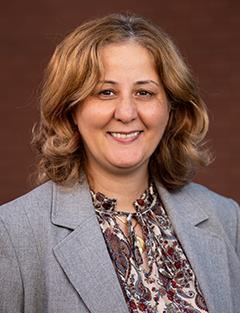
Dr. Sara Kijewski is a Lecturer at ETH Zurich's Department of Humanities, Social and Political Sciences (D-GESS), specializing in the Ethics and Governance of Artificial Intelligence, Digital Health, and Health Policy. She joined ETH in 2022 after earning her PhD in Political Science from the University of Bern, with additional studies at the University of North Carolina, University of Oslo, and University of Zurich. Her research focuses on AI ethics frameworks, digital health governance, and the societal impacts of war through projects like the Health Ethics & Policy Lab's Health Data and AI course coordination and postdoctoral work on NRP 77 (Digital Health Innovation Governance). As Director of Operations for the ETH AI Ethics and Policy Network, she bridges academic and policy dimensions of emerging technologies. Key research interests include global AI governance, healthcare innovation ethics, and the long-term social consequences of conflict, reflected in publications analyzing post-war societies, public opinion on biotechnology, and international health policy challenges. Her academic background includes multilingual proficiency (Norwegian/Finnish native, German/English fluent), supporting cross-cultural research collaboration. Professional activities include undergraduate course coordination, internship supervision, and contributions to interdisciplinary initiatives like Precise4Q: Predictive Modelling in Stroke. Current academic roles combine teaching (e.g., Ethics Workshop: The Impact of Digital Life on Society in Autumn 2025) with research leadership in AI ethics and health policy domains.
Katherine Johnson is a Professor and Dean of the School of Global, Urban and Social Studies (GUSS) at RMIT University. Her academic leadership spans roles such as Executive Dean, Research Centre Director, and Associate Dean in Australia and the UK. Her research focuses on LGBTQ+ mental health, transgender health, and participatory methods, with a commitment to social equity and environmental justice. She has led projects funded by Horizon 2020/NHMRC, ARC, and VicHealth, and her work bridges policy, practice, and community impact. Awards include the RMIT Vice Chancellor Leadership Award for Inclusion (2024) and the Vice Chancellor Research Impact and Engagement Award (2024). Research Interests: Her interdisciplinary work addresses LGBTQ+ suicide prevention, early mental health interventions for youth, and transformative policy. Key areas include participatory action research, psychosocial interventions, and global collaborations in Europe, Mexico, and the UK. She emphasizes creative and inclusive methodologies to foster social change. Professional Experience: Prior to RMIT, she directed the Centre for Transforming Sexuality and Gender at the University of Brighton. She has held visiting fellowships at institutions like the University of Sydney, Universitat Autònoma de Barcelona, and Universidade Federal de São Paulo. Her industry engagement includes advisory roles with LGBTQ+ organizations and mental health advocacy. Awards & Recognition: RMIT Vice Chancellor Leadership Award for Inclusion (2024) Vice Chancellor Research Impact and Engagement Award (Open) (2024) Grants & Funding: Projects are supported by Horizon 2020/NHMRC, ARC, VicHealth, and international partnerships. Her research often addresses global challenges like LGBTQ+ youth mental health and transgender health equity. Teaching & Supervision: Open to supervising PhD and Masters students in areas such as LGBTQ+ health, participatory methods, and social policy. She champions inclusive pedagogies and transformative student experiences.
Søren Lundbye-Christensen is an Associate Professor and Biostatistician affiliated with the Clinical Institute at the Faculty of Health Sciences, Aalborg University, and Aalborg University Hospital in Denmark. He specializes in biostatistical support for medical research, with a strong emphasis on cardiovascular and epidemiological studies. His research interests include biostatistics, survival analysis, cohort studies, clinical epidemiology, and statistical modeling in public health. He has contributed to a wide array of healthcare research, particularly in cardiovascular diseases, cancer, maternal health, and infectious diseases. His methodological expertise spans time-to-event analysis, registry-based research, and interval-censored data modeling. The recent publications highlight a strong trend in applying advanced statistical methods to large-scale clinical and population-based datasets. His work often involves collaboration with medical researchers to derive prognostic models, validate clinical databases, and assess public health outcomes. Key themes include cardiovascular risk, fertility, cancer biomarkers, and implementation of medical training programs. Scientific Contributions and Recognition: Published over 320 research articles and datasets. Active contributor to methodological advancements in biostatistics. Regular peer reviewer, including for journals like the R Journal. Public engagement through media appearances on statistics and health. Academic Advising and Grants: Søren has supervised 31 student theses, formally serving as PhD supervisor for 14 theses and as a biostatistical advisor for 19 others, primarily in mathematics and statistics. He has participated in numerous research projects funded through institutional and national grants, including studies on seasonal disease trends, postoperative complications, and metabolic disease prediction. His work often involves interdisciplinary collaboration across medicine, public health, and data science. Labs and Research Teams: He is embedded in collaborative research networks at Aalborg University Hospital and Aalborg University, contributing statistical expertise to clinical research groups. He is involved in projects utilizing Danish national health registries and has contributed to the development and validation of clinical databases. His work supports both hypothesis-driven medical research and methodological innovation in biostatistics.
Leonora C Angeles is a Professor at the University of British Columbia's School of Community and Regional Planning (SCARP), serving as Admissions Chair with joint appointments as Associate Professor in Women's and Gender Studies and Director of the Institute for Gender, Race, Sexuality and Social Justice. Previously a Faculty Research Associate at UBC's Centre for Human Settlements, she conducted international development projects across Southeast Asia, Brazil, and Vietnam. Her academic credentials include a Diploma, Bachelor of Arts, Master of Arts, and Doctor of Philosophy from Queen's University, reflecting foundational training in interdisciplinary social sciences. Angeles' research critically interrogates community development through participatory planning, governance, and transnational feminist frameworks. She examines how gender, race, class, sexuality, and (dis)ability intersect in planning processes, with deep regional expertise in Southeast Asia. Her scholarship challenges conventional development paradigms by centering feminist participatory action research that prioritizes community agency and social justice, particularly in agrarian transitions and urban governance contexts. Analysis of her recent publications reveals consistent interdisciplinary engagement with political economy, disaster resilience, and feminist planning methodologies. Her work demonstrates methodological rigor in qualitative and participatory approaches while maintaining regional specificity in Philippine and Southeast Asian contexts. Key thematic threads include pandemic governance, food security, transnational marriage systems, and climate adaptation, all analyzed through intersectional power dynamics. As Graduate Program Advisor for the Centre for Women's and Gender Studies, Angeles mentors emerging scholars in critical methodologies. Her international research collaborations, particularly in the Philippines and Vietnam, have generated significant insights into participatory governance and capacity building, though specific grant mechanisms are not detailed in available sources. She actively shapes UBC's research ecosystem through leadership in the Institute for Gender, Race, Sexuality and Social Justice and Centre for Women's and Gender Studies, driving interdisciplinary scholarship at the nexus of planning, gender, and social justice while maintaining strong community-university partnerships in the Global South.
E. Jennifer Edelman, MD, MHS is a Professor of Medicine (General Internal Medicine) at Yale School of Medicine and an Associate Professor on Term in Social and Behavioral Sciences at Yale School of Public Health. She serves as an HIV provider at the Yale-New Haven Hospital Nathan Smith HIV Clinic and is the physician consultant in the Addiction Medicine Treatment Program. Dr. Edelman is certified as an internist, HIV specialist, and in Addiction Medicine, and holds multiple appointments across Yale's medical and public health institutions. Professor of Medicine, General Internal Medicine (Primary) Associate Professor on Term, Social and Behavioral Sciences (Secondary) Addiction Medicine Fellowship Program AIDS Care Program Internal Medicine Program in Addiction Medicine Yale Center for Clinical Investigation (co-Director of Education) Yale-Drug use, Addiction, and HIV prevention Research Scholars (DAHRS) Dr. Edelman's research focuses on optimizing HIV prevention and treatment in the context of substance use, including opioid, alcohol, and tobacco use. Applying a range of methodologies, she leads and collaborates on NIH-funded projects to evaluate novel and implement evidence-based addiction treatment in medical settings, especially HIV treatment settings. Her work has focused on understanding harms associated with opioid use among people with HIV and promoting HIV prevention, including use of pre-exposure prophylaxis (PrEP). She collaborates extensively with community-based and public health partners to advance these goals. Analysis of her recent publications (2024-2025) reveals a strong emphasis on integrated care models addressing substance use disorders within HIV treatment settings. Her research spans multiple methodologies including randomized controlled trials, implementation science, qualitative studies, and epidemiological analyses. Key themes include contingency management for alcohol use disorder among people with HIV, PrEP implementation among high-risk populations, and interventions for tobacco cessation in HIV clinics. Her work demonstrates a consistent focus on addressing health disparities and improving outcomes for vulnerable populations. Dr. Robert A. Savitt & Dr. George D. McCormack Award (2022) Lipkin Award Finalist, Society of General Internal Medicine National Annual Meeting (2021) Lipkin Award Finalist, Society of General Internal Medicine National Annual Meeting (2019) Veterans Affairs Locally-Initiated Project Funding Award New England Society of General Internal Medicine Award for Excellence in Clinical Investigation Society of General Internal Medicine Lawrence Linn Award Dr. Edelman actively mentors trainees including post-doctoral fellows and public health students, and serves as Associate Director of the Research on Addiction Medicine Scholars (RAMS) Program. She regularly serves on NIH grant review committees and is Associate Editor of Addiction Science and Clinical Practice. Her current research includes the EXHIT ENTRE trial (Exemplar Hospital Initiation Trial to Enhance Treatment Engagement), which focuses on addressing untreated alcohol use disorder in hospital settings. She has received substantial grant funding from the National Institutes of Health, National Institute on Alcohol Abuse and Alcoholism, and National Cancer Institute to support her work in addiction medicine and HIV care.
Associate Professor Aditi Dey holds a conjoint appointment at the Sydney Medical School within the University of Sydney , and serves as Manager of Surveillance at the National Centre for Immunisation Research and Surveillance (NCIRS) . Her work focuses on immunization program evaluation, vaccine coverage analysis, and surveillance of vaccine-preventable diseases and adverse events. She has extensive experience in public health research, spanning roles in Thailand and India prior to her current positions in Australia. Dr Dey completed an MBBS, followed by postgraduate qualifications including a DTM&H (Tropical Medicine & Hygiene), Grad Dip Applied Science (Health Information Management), MPH, and a PhD from the University of Sydney. Her research integrates epidemiological analysis with public health policy implementation, particularly addressing health disparities in vaccination access and outcomes among Indigenous populations and other underserved groups. Her research interests prominently feature vaccine safety , epidemiological trends of infectious diseases, and the impact of vaccination policies such as Australia’s “No Jab, No Pay” initiative. She also investigates the effectiveness of vaccination programs for diseases like rotavirus, HPV, and varicella-zoster virus, often analyzing large-scale national health datasets. Notable contributions include evaluations of Australia’s HPV vaccination program, analysis of rotavirus vaccine efficacy, and assessments of adverse events following immunization. Her work emphasizes improving immunization coverage through better data systems and healthcare provider education, particularly for at-risk populations. Dr Dey actively contributes to public health efforts through teaching and course coordination at the University of Sydney, and collaborates with institutions like the Sydney Infectious Diseases Institute . Her expertise bridges clinical practice, research, and policy, driving evidence-based improvements in Australia’s immunization landscape.
Shayesteh Jahanfar is a Professor in the Department of Public Health and Community Medicine at Tufts University School of Medicine, with a secondary appointment in Community Health at the Tufts School of Arts and Sciences. As a reproductive epidemiologist with expertise in public health and biostatistics, she directs the Cochrane Affiliate at Tufts and co-directs the Pregnancy and Childbirth US Satellite with Cochrane. Her global research spans reproductive health, maternal-child health, and genetic versus environmental studies across Australia, Malaysia, Canada, and the USA. Education: Doctor of Philosophy, University of British Columbia, Vancouver, Canada (2016) Doctor of Philosophy, University of New South Wales, Sydney, Australia (1995) Master of Science in Community Health, Universiti Putra Malaysia, Seri Kembangan, Malaysia (2009) Postdoc Epidemiology and Public Health, Universiti Putra Malaysia, Seri Kembangan, Malaysia (2008) Dr. Jahanfar's research program focuses on reproductive health, maternal-child health, global health, HIV/AIDS, opioid use, and twin studies. She leads WHO-funded projects related to reasons for Cesarean sections, family planning, and assisted vaginal birth, and collaborates with WHO's Department of Sexual and Reproductive Health and Research. Her work with twin studies spans multiple international settings, examining genetic versus environmental influences on health outcomes. She actively develops training materials for Cochrane trainers and promotes evidence-based healthcare practices globally. Her recent publications (2025) demonstrate a strong focus on women's health issues, particularly reproductive health, maternal outcomes, and interventions during pregnancy and childbirth. Her research combines epidemiological methods with clinical trials and systematic reviews, often with a global health perspective. She frequently collaborates on research in Iran and other international settings, addressing both clinical and social determinants of health. Her work spans from molecular diagnostics in cancer to behavioral interventions in maternal health, reflecting her interdisciplinary approach to public health research. Scientific Awards: Equity & Inclusion Fellow (2023) Most Stimulating Paper (2019) President and Provost's Research Award Nomination (2019) With over 35 years of teaching experience, Dr. Jahanfar has trained more than 800 clinicians and scientists through over 80 Cochrane workshops worldwide. Her grant portfolio includes multiple WHO-funded projects on family planning, Cesarean sections, and assisted vaginal birth. Under her leadership, Tufts University established a memorandum of understanding with the University of Malaya, facilitating student research projects in Malaysia during Summers 2022-2024. She actively seeks students and researchers to collaborate on Cochrane's work, twin studies, and reproductive health research projects. Dr. Jahanfar directs the Cochrane Affiliate at Tufts and co-directs the Pregnancy and Childbirth US Satellite. She collaborates with WHO's Maternal and Perinatal Health department, Department of Sexual and Reproductive Health and Research, and serves as a consultant for WHO and EMRO. Her global health research initiatives span Australia, Malaysia, Egypt, Iran, Europe, and the Middle East, reflecting her commitment to advancing global health education and research through international partnerships.
Amy K Johnson, PhD, serves as Associate Professor in Pediatrics (Adolescent and Young Adult Medicine) at Northwestern University's Feinberg School of Medicine, with clinical affiliation at Ann & Robert H. Lurie Children's Hospital of Chicago. She holds key roles in the Institute for Public Health and Medicine (IPHAM) - Center for Dissemination and Implementation Science, Northwestern University Clinical and Translational Sciences Institute (NUCATS), and Robert J. Havey, MD Institute for Global Health (IGH). Dr. Johnson earned her PhD from the University of Illinois, Chicago in 2016. Her research centers on adolescent sexual and reproductive health with dual emphases on HIV/STI intervention implementation and ethical dimensions of community participation in cure research. She develops prevention packages targeting adolescents—particularly young women—and addresses surveillance gaps in sexually transmitted diseases through implementation science frameworks. Analysis of her 2024-2025 publications reveals a dominant focus on PrEP implementation across diverse populations and geographies. Her work consistently addresses health disparities through mixed-methods approaches, examining structural barriers among Black women in Chicago, migrant communities in France, and youth in Nigeria. Common threads include innovative delivery strategies (text messaging, peer navigation), cultural adaptation of interventions, and ethical considerations in community engagement—demonstrating her commitment to translating research into equitable prevention solutions. Her scientific contributions have been recognized with the Excellence in Scholarship award from Lurie Children's Hospital (2023) and Best Poster Award from the American Sexually Transmitted Disease Association (2016). Excellence in Scholarship, Lurie Children's Hospital (2023) Best Poster Award, American Sexually Transmitted Disease Association (2016) Dr. Johnson actively shapes public health practice through leadership in the Illinois PrEP Working Group, Getting to Zero Illinois, and as Vice Chair of Epidemiology for the Illinois Public Health Association. Her editorial role at Frontiers in Reproductive Health and memberships in the American College of Epidemiology and American Public Health Association reflect her influence in advancing methodological rigor and equity-focused HIV prevention science. Current projects like iCARE Nigeria and POWER Up demonstrate her commitment to scalable interventions addressing the HIV care continuum.
Bryce Westlake is an Associate Professor in the Department of Justice Studies within the College of Social Sciences at San Jose State University. He is a leading researcher in digital forensics and child sexual abuse material detection, with significant contributions to both forensic science education and alternative sexuality studies. Education: Ph.D. in Criminology from Simon Fraser University (2015) Master's degree in Criminology from Simon Fraser University Bachelor of Arts degree in Psychology and Sociology (double major) from University of British Columbia Dr. Westlake's research spans two primary areas with significant societal impact. In digital forensics, he focuses on developing automated tools to detect, collect, analyze, and match child sexual abuse material disseminated online. His work involves international collaboration with researchers, law enforcement agencies, and government partnerships to create more effective detection systems. In his secondary research area, he explores alternative sexuality, particularly BDSM communities, conducting multi-phasic, kink-positive studies examining health and safety within these communities. His research aims to destigmatize participation through a deeper understanding of the social and emotional enrichment practitioners receive from activities. His recent publications demonstrate a clear trend toward increasingly sophisticated technical approaches to combating child sexual exploitation while simultaneously advancing understanding of alternative sexual practices. The technical publications focus on biometric identification, file structure analysis, and ethical web scraping methods, while his BDSM-related work emphasizes community safety, education pathways, and mental health benefits. This dual focus positions him uniquely at the intersection of technology, law enforcement, and human sexuality research. Scientific Awards: The Storytellers Award (Social Sciences and Humanities Research Council) - April 2014 Canadian Graduate Scholarship (Social Science and Humanities Research Council) - May 2012 Dr. Westlake has been heavily involved in developing the forensic science program at SJSU, creating six undergraduate courses, revising two graduate courses, and introducing one graduate course. In Fall 2020, he created and implemented a new concentration in digital evidence (computer forensics) for forensic science majors - one of the first in-person digital forensic bachelor of science degrees in the United States meeting FEPAC standards. He has developed and directs the Silicon Valley Digital Forensics Laboratory, which began accepting students for internships in Fall 2024. He was awarded a three-year $497,948 grant from the National Science Foundation in 2023 to study 'Training digital forensics examiners through hands-on education investigating live criminal investigations.' Through the Silicon Valley Digital Forensics Laboratory and partnerships with criminal justice agencies (district attorneys offices, law enforcement agencies, etc.), Dr. Westlake provides students with training and practical experience conducting digital forensic investigations from start (evidence collection) to finish (report writing and testimony). He also co-hosted the first annual Child Sexual Abuse Reduction Research Network workshop in Adelaide Australia in December 2023.
Brady Robards is an Associate Professor of Sociology and Associate Dean (Research) in the Faculty of Arts at Monash University. His research focuses on youth, gender, sexuality, and digital cultures, with notable projects examining social media’s impact on employment, alcohol promotion, and LGBTQ+ digital experiences. He co-convenes the Monash Digital Cultures Research Group . Current projects include Social Media & Employment (ARC DECRA) and Scrolling Beyond Binaries (LGBTIQ+ youth studies) Recent awards: 2024 University of Bristol Visiting Fellowship, 2022 Dean’s Award for Research Enterprise Key collaborations: ARC, FARE, VicHealth, Australian Public Service His methodological innovations include the social media scroll back technique for analyzing longitudinal digital traces. Research supervision areas cover youth digital cultures, gender backlash movements, and dating technologies. He is a member of the Association of Internet Researchers (AoIR) and The Australian Sociological Association (TASA) .
Stijn Baert is a Full-Time Professor of Empirical Labor Economics at Ghent University and a Part-Time Professor at the University of Antwerp. He leads UGent@Work, a research network of 30 professors analyzing labor market dynamics. Affiliated with institutions like Université catholique de Louvain, GLO, IMISCOE, and IZA, Baert's work bridges academic rigor with policy impact. Doctorate in Economics (2013), Ghent University Master's in Economics (2008), Ghent University Civil Engineering Degree (2006), Ghent University His research focuses on labor market discrimination , unemployment consequences , and work-health intersections . He has published in European Economic Review , Health Economics , and Social Science & Medicine , with over 1,000 annual citations. Baert's policy work includes proposals for degressive unemployment benefits and sector-specific practical tests to address discrimination. Key articles highlight AI's labor market impact, parenthood's career effects, and compressed work schedules. His awards include the Rotary Science Award (2020) and multiple recognitions for doctoral research. He is a frequent media commentator, with over 7,500 citations in national/international outlets, and a top 1% globally influential economist. 2020: Ranked Second Among Flemish Thought Leaders 2019: Included in Trends Magazine’s Top 30 Belgian Thirty-Somethings 2014: Charles Ullens Prize 2013: P&V Foundation Prize Baert's advocacy includes evidence-based labor market reforms, participation in Flemish recovery committees, and public engagement through YouTube videos and media interviews. His work on AI in the workplace (2025) reveals that 52% of men but only 40% of women use AI, with 21% finding AI brainstorming more productive than human collaboration.
Prof. Dr. Markus Freitag is a Professor of Political Sociology at the University of Bern . He studied political science, economics, and German language and literature at Heidelberg University, obtaining his Magister Artium in 1995, followed by a PhD in 1999. Positions: Post-Doc at University of Basel, ETH Zurich, University of Essex; Visiting Lecturer at University of Konstanz; Assistant Professor at Humboldt University Berlin; Chair of Comparative Politics at University of Konstanz (2005-2011) Current role: Director of the Institute of Political Science, University of Bern (since 2011) His research focuses on political sociology, political psychology, comparative politics, social capital , and direct democracy . Key themes include: Emotional drivers of political behavior during crises (e.g., pandemic politics) Personality traits and voter decision-making Trust in institutions and associational life Intergroup conflict and polarization Swiss militia system and local governance Global analysis of regime preferences and social cohesion Recent scientific publications emphasize affective polarization, pandemic preparedness, institutional trust , and arms export ethics , with empirical studies across Europe and post-conflict regions . His work appears in journals like British Journal of Political Science , Comparative Political Studies , and Political Psychology . Prof. Freitag leads teaching courses at the University of Bern, including "Demokratie und Gesellschaft I" and "The Political Sociology of Crises" , and collaborates with researchers such as Christopher Claassen, Sascha Göbel, Alina Zumbrunn , and Maximilian Filsinger .
Dr. Pilar Gonalons-Pons is an Associate Professor of Sociology at the University of Pennsylvania's School of Arts & Sciences, with affiliations to the Population Studies Center, Gender and Sexuality Studies, and the Leonard Davis Institute for Health Economics. She holds a Ph.D. from the University of Wisconsin-Madison (2015), an M.A. in International Migration from the University of Deutso (2008), and a B.A. in Sociology from the University of Barcelona (2006). Her postdoctoral work included a position at Goethe University in Frankfurt, Germany, and she served as a Visiting Scholar at the Russell Sage Foundation (2021-2022). Her research focuses on the interplay between work, families, and public policies in shaping economic inequalities, with a particular emphasis on the gender dynamics of paid and unpaid care work. She explores how gender culture influences family dynamics and socioeconomic outcomes. Her work has been published in high-impact journals such as the American Sociological Review and Demography . Dr. Gonalons-Pons teaches courses on the Sociology of Gender, Family Sociology, and Social Statistics. Her recent publications analyze the economic impacts of caregiving roles during crises, the effectiveness of social policies in reducing poverty, and cross-national comparisons of care labor structures. Her research consistently highlights the need for equitable policy frameworks to address systemic inequalities in caregiving and labor markets. No scientific awards are explicitly mentioned in the provided materials. She has advised no listed students but has contributed to numerous collaborative projects and policy analyses. Her affiliations include leading roles in interdisciplinary research teams focused on care labor economics and gender equity.
Mohsen Malekinejad is an Associate Professor at the University of California, San Francisco (UCSF) School of Medicine and serves as the director of the Center for Resilient Societies and Technology (CREST) . He is a core member of the RESILIENT network at the University of California system, focusing on pandemic intelligence and community resilience. His career spans 20 years of public health experience with expertise in evidence-based medicine, systematic reviews, and translating research into policy. Education: DrPH (UC Berkeley, 2008), MPH (UC Davis, 2003), MD (Tehran Azad University, 1999), Postdoctoral Studies (UCSF, 2009) Dr. Malekinejad's research addresses health disparities among marginalized populations globally, focusing on substance use disorders, HIV/HCV, and pandemic response strategies . His work includes methodological innovations for sampling hard-to-reach groups (e.g., homeless populations, drug users) and economic evaluations of public health interventions . Recent publications highlight systematic reviews on topics like COVID-19 exposure notification systems, TB testing cascades, and HIV risk behaviors . His methodological strengths include respondent-driven sampling, meta-analysis, and health equity frameworks. He has led major projects funded by NIH, CDC, and WHO, including the California Department of Public Health's COVID-19 Exposure Notification system implementation. Dr. Malekinejad also maintains an active role in graduate-level public health education and collaborates across disciplines to strengthen translational research.
Thomas Schanding serves as Associate Professor and Department Head in the Department of Educational and Counselling Psychology, and Special Education at the University of British Columbia's Faculty of Education. He concurrently directs the Psychological Services and Counselling Training Centre. Previously, he held significant roles including core faculty in Special Education and Associate Director of Outreach and Leadership for the decade-long LoneStar LEND program at the University of Texas Health Science Center at Houston, alongside clinical supervision positions at Baylor College of Medicine/Texas Children’s Hospital. His educational foundation includes doctoral coursework at the University of Southern Mississippi (APA-accredited) and doctoral internship with Cypress-Fairbanks Independent School District (APA-accredited). Doctoral Coursework: University of Southern Mississippi Doctoral Internship: Cypress-Fairbanks Independent School District Dr. Schanding's research centers on social-emotional learning (SEL) and behavioral/mental health (B/MH) through three interconnected pillars: (1) assessment methodologies for SEL/B/MH, (2) evidence-based interventions to enhance youth well-being, and (3) cultural-linguistic considerations in school-community contexts. His clinical expertise spans Autism Spectrum Disorders and 2SLGBTQIA+ youth experiences, operating within Cognitive-Behavioral and Ecological theoretical frameworks. The SMART Lab ( https://blogs.ubc.ca/smartlab ) drives his applied research agenda focusing on inclusive practices and mental health promotion. Analysis of his recent publications reveals consistent emphasis on SEL assessment tools, helicopter parenting dynamics, and diversity-inclusive frameworks in school psychology. Key trends include validation studies of early literacy screeners, exploration of LGBTQ+ mental health predictors, and critical examinations of equity in educational literature, reflecting his commitment to evidence-based social justice. His scholarly contributions have been recognized through: President’s Distinguished Faculty Research Award, University of Houston – Clear Lake (2020) Group Teaching Excellence Award, University of Houston (2011) Early Career Scholar, Society for the Study of School Psychology (2009) As an educator, Dr. Schanding has supervised numerous practicum and intern students across settings including school districts and hospital systems. His leadership extends to directing the Psychological Services and Counselling Training Centre at UBC and previously leading outreach initiatives for neurodevelopmental disabilities through the LEND program. His teaching portfolio includes EPSE 506 (Applied Psychopathology), EPSE 555 (Academic & Social-Emotional Assessment), and specialized courses on Autism Spectrum Disorders. The SMART Lab (Social, Mental health, and Academic Research Team) operates as his primary research vehicle, conducting community-engaged projects on SEL implementation, mental health screening, and culturally responsive interventions for diverse youth populations, with particular attention to inclusive practices for 2SLGBTQIA+ students.