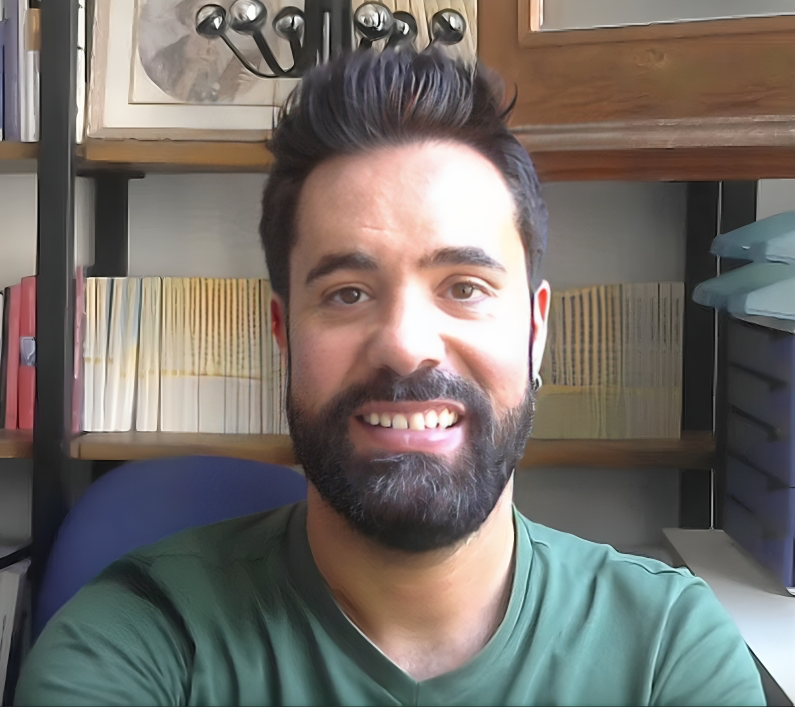
Dr. Cheryl Collier is a Professor and Dean of the Faculty of Arts, Humanities and Social Sciences at the University of Windsor, appointed since July 2021. She holds a position in the Department of Political Science with research expertise in gender-based violence in political contexts, Canadian social policy, and feminist institutionalism. Her research examines: Violence against women in politics (VAWIP) #MeToo movement impacts on political institutions Comparative legislative harassment policies Media representations of gender-based violence Intersectional approaches to policy analysis Recent publications form a comprehensive analysis of gender-based violence in Canadian politics, including social media harassment, mainstream media coverage, institutional responses, and policy solutions. Her work employs comparative frameworks analyzing Canada alongside the UK and other democracies.
Ian Gilby is an Associate Professor at the School of Human Evolution and Social Change, Arizona State University. His research focuses on the social behavior, ecology, and cognition of wild chimpanzees, particularly within the context of long-term studies at Gombe National Park, Tanzania. Gilby investigates topics such as cooperative hunting, dominance hierarchies, social bonding, and the influence of ecological factors on primate behavior. His work bridges primatology, evolutionary biology, and conservation science, with a strong emphasis on understanding the adaptive strategies of chimpanzees in complex social environments. Key themes in Gilby’s research include the evolution of cooperation, reproductive strategies, and the ecological drivers of social behavior. He has contributed significantly to studies on chimpanzee aggression, hunting tactics, and the role of vocal communication in group coordination. His findings highlight the intricate relationship between social structure, ecological conditions, and individual success in primate communities. Notably, Gilby is involved in the Gombe Chimpanzee Project, analyzing long-term datasets to address questions about data sharing in conservation science and the impacts of environmental changes on wildlife. While no formal awards or grants are explicitly mentioned in the provided texts, his extensive publication record underscores his expertise in primate behavior and ecology.
Dr. Christian End is an Associate Professor in the School of Psychology at Xavier University. He earned his B.S. from Xavier University in 1996 and his Ph.D. from Miami University in 2002. Dr. End has been teaching at Xavier since 2004, following a previous position at the University of Missouri–Rolla. He serves as co-Faculty Academic Representative for the athletic department and founded a research lab studying social media's psychological impacts. Dr. End's research explores social identity frameworks in sport fan behavior (aggression, self-presentation, conformity) and investigates interpersonal consequences of social media use. His work also addresses prejudice toward marginalized groups (adopted individuals, childless persons, welfare recipients) and spans communication dynamics and romantic relationships. His publications demonstrate consistent focus on social perception and prejudice mechanisms, with recent work examining religion's relationship to longevity, societal views on childlessness, depression-related stigma, sport fan superstitions, employment discrimination, media influences on aggression, and attitudes toward LGBTQ+ athletes. Methodologies include experimental designs and survey-based analyses across diverse populations. Dr. End teaches courses emphasizing psychology's scientific foundations, including: Research Methods & Design I/II (with labs) Social Psychology Orientation to the Major Senior Comprehensive Review Advanced Research Design Social Aspects of Behavior He actively mentors undergraduate and graduate researchers, regularly accompanying students to regional conferences where they present award-winning work. His laboratory facilitates investigations into social media's psychological effects and sport fan behavior.
Paul D. Hastings is a Professor of Psychology at the University of California, Davis, and former Chair of Psychology and Interim Dean of the School of Education. He directs the Healthy Emotions, Relationships and Development Laboratory (HERD Lab) at the Center for Mind and Brain (CMB) and holds affiliations with the Center for Poverty Research and Institute for Global Nutrition. His educational background includes: Ph.D. in Applied Developmental Psychology, University of Toronto M.A. in Experimental Psychology, University of Toronto B.S. in Faculty of Science, McGill University Post-doctoral training, University of Waterloo Professor Hastings' research examines developmental trajectories of physiological, social, and emotional functioning from childhood to adulthood. He investigates how cultural/socioeconomic conditions (context), family/peer relationships (nurture), and biological systems (nature) interact to shape adaptive outcomes like empathy and social competence, as well as maladaptive outcomes including depression, anxiety, and aggression. His international work spans Bangladesh, Canada, Chile, Ghana, India, Jordan, and multiple U.S. states. Recent publications reveal strong trends in adolescent mental health, physiological regulation (particularly parasympathetic activity), and pandemic impacts. Key themes include suicidal behavior prediction through inflammatory markers, prosocial development linked to physiological regulation, cross-cultural parenting effects, and socioeconomic influences on developmental psychopathology. His scientific recognition includes: Fellow of the Association for Psychological Science UC Davis Distinguished Graduate and Postdoctoral Mentorship Award (2022) Professor Hastings has secured major grants from the National Science Foundation, National Institute of Mental Health, MacArthur Foundation, and Lego Foundation. He actively mentors graduate students and leads collaborative international research projects. His lab conducts fieldwork across diverse cultural contexts to examine how structural inequities impact neurobiological development and mental health outcomes. The HERD Lab, directed by Professor Hastings, integrates psychophysiological methods with developmental science to explore how biological and social systems interact in shaping emotional and relational development across the lifespan.
Dr. Gordon Hodson is a Distinguished Professor of Psychology at Brock University, Canada. He specializes in intergroup relations, prejudice, and dehumanization, with a focus on linking human-animal relations to broader systems of oppression. His work bridges academia and advocacy, exploring how ideologies like social dominance underpin both speciesism and ethnic prejudice. Education: Ph.D. (Psychology) from Western University (formerly University of Western Ontario). Research Interests: His studies examine intergroup contact's role in reducing bias, the psychological roots of prejudice, and the cognitive mechanisms underlying dehumanization. Key areas include: Intergroup contact theory Prejudice dynamics Human-animal relations Political radicalization Publications & Awards: Authored/edited over 150 peer-reviewed articles and books, including Why We Love and Exploit Animals . Honors include the SPSSI Gordon Allport Award (2019) and the APA Division 34 award (2016). Lab & Team: Leads the Brock Intergroup Attitudes Scholarship (BIAS) Lab, training students in prejudice research. Collaborates internationally on projects addressing speciesism, climate change, and pandemic risks linked to meat consumption. Grants & Future Work: Active in securing funding for research on intergroup contact generalization effects and policy implications of dehumanization. Current projects include longitudinal studies on prejudice trends and interventions to enhance cognitive liberalization.
Lucas Gottzén is a Professor at the Department of Child and Youth Studies, Stockholm University. His research focuses on masculinity, youth studies, affect theory, and extremism, with a particular interest in how these intersect with violence and gender dynamics. He has contributed to understanding radicalization pathways in online spaces, the role of masculinity in intimate partner violence, and the cultural politics of fatherhood in Swedish society. Research interests include ecofascist visual communication, vulnerability and identity politics in digital subcultures, and the sociological analysis of pornography debates. His work often bridges theory and practice, addressing issues of gender equality and violence prevention through innovative methodological approaches. Key publications examine themes such as the 'red pill' phenomenon, affective dimensions of masculinity, and the paradoxes of Sweden's gender-equality reputation alongside high rates of sexual violence. He has collaborated on evaluations of violence prevention programs and authored critical analyses of media representations of fatherhood and youth.
Paul H. White is an Associate Professor of Social Psychology in the Department of Psychology at the University of Utah, where his research centers on the three 'P's': persuasion, prejudice, and performance, investigating motivational drivers of human behavior. His educational background: B.A., Berea College (1989) Ph.D., Northeastern University (1993) Post-doctoral training, Ohio State University (1993-1995) Dr. White's persuasion research examines how source/target characteristics (race, gender, sexual orientation) impact message processing and attitude change, including 'stealing thunder' dynamics. His prejudice work investigates subtle bias through intergroup models incorporating stigmatized groups' perspectives, while his performance studies explore evaluation effects, social underachievement ('letting up'), and stereotype threat mitigation. Analysis of his publications reveals sustained focus on stereotype threat, intergroup relations, and environmental behavior across cross-cultural contexts, with consistent application of social psychological theory to real-world problems in education and sustainability. Dr. White currently mentors three graduate students: Logan Call (admitted 2020) Emma Franklin (2022) Brittany Clark (2022) He directs the Persuasion, Prejudice, and Performance (PPP) Lab, which serves as the primary research environment for experimental and applied investigations into his three core research areas.
Antonio Terrón Barroso is a predoctoral researcher at the University of Barcelona's ADHUC Research Centre (Theory, Gender, Sexuality) and UNESCO Chair on Women, Development, and Cultures. He holds a Postgraduate Certificate in Social Science Research (Aston University), Master's in Teaching (PGCE, King Juan Carlos University), dual Bachelor's degrees in Translation Studies (University of Granada) and Communication (Open University of Catalonia), and a Tourism Diploma (University of Granada). Research Focus: Gender violence discursive normalization in 19th-century peninsular women's press through digital humanities methodologies. Key subfields include national/gender identity construction via literature and cinema, multilingual translation dynamics, and transnational reception studies. Teaching Experience: International roles at University of Birmingham (Spanish Teaching Fellow), Panthéon-Assas University (Spanish Lecturer), Aston University (Spanish/Translation Teaching Assistant), Cardiff University (Spanish Associate Tutor), and University of Massachusetts Amherst (Hispanic Studies Visiting Teaching Associate). Scientific Awards: FPI Predoctoral Researcher Contract (MINECO) Key Collaborations: Working with Dr. Elena Losada Soler and Dr. María Xesús Lama López on the Género, violencia y representación project. Affiliated with the consolidated research group 'Women's Creation and Thought' (2021 SGR 01097).
Stephen D. Benning is an Associate Professor in the Department of Psychology at the University of Nevada, Las Vegas. His research focuses on the psychophysiology of emotion and personality, particularly the two-factor model of psychopathy (fearless dominance vs. impulsive antisociality) and its implications for emotional processing, reward systems, and risk-taking behavior. He has developed novel psychophysiological measures like the postauricular reflex to study positive emotion in psychopathology. Education: Ph.D. in Clinical Science and Psychopathology Research (University of Minnesota, 2006) Employment: UNLV (2012–present); Vanderbilt University (2006–2012) His work spans psychopathy, autism, depression, and schizophrenia, with a focus on translating animal models to human studies. He has secured multiple NIH grants, including NIMH R21 awards for hedonic processing in depression and autism. His lab (PEPlab) explores intersections of personality, emotion, and morality, particularly in Las Vegas’ unique context. Recent publications highlight his contributions to misophonia, moral decision-making, and behavioral risk assessment. He emphasizes open science practices and methodological rigor, advocating for alpha justification and replication studies. Awards include the UNLV Outstanding Teaching and Mentoring Award (2024) and the Howell Award for Undergraduate Research (2000). Scientific Awards: Outstanding Teaching and Mentoring Award (UNLV, 2024) Howell Award for Excellence in Undergraduate Research (Rice University, 2000) National Merit Scholar (1996–2000) Volunteer Service Award (Walk-In Counseling Center, 2004) Student Poster Award (Society for Psychophysiological Research, 2003)
Ximena Arriaga is a Professor in the Department of Psychological Sciences at Purdue University. Her research focuses on intimate partner violence, adult attachment dynamics, and social psychological factors in interpersonal relationships. She teaches courses in experimental methods and social psychology, and leads the ARCC Lab (Aggression, Relationships, and Coping Collaborative). Ph.D. from University of North Carolina at Chapel Hill Research interests span three domains: Intimate Partner Violence : Examines victim/perpetrator justification mechanisms, social support responses, and longitudinal impacts. Attachment Theory : Studies relationship security during life transitions (e.g., parenthood) and contextual influences like the COVID-19 pandemic. Social Dynamics : Investigates confrontation scenarios, trust mechanisms, and interdependence theory applications. Her 2019-2025 publications reveal methodological diversity, combining experimental designs, longitudinal analysis, and machine learning techniques to study relational patterns. Themes include violence normalization, coping trajectories, and contextual factors shaping relationship outcomes.
Lucia O'Sullivan is a Professor and Chair in the Department of Psychology at the University of New Brunswick. She holds a PhD in Experimental Psychology from Bowling Green State University, with postdoctoral research training in HIV at Columbia University. Her research focuses on the intersection of sexuality and intimate relationships, including digital technologies' impact on relationships and barriers to sexual health care. She has conducted international studies in South Africa, the UK, Guatemala, India, and the US. Dr. O’Sullivan has authored/co-authored over 175 peer-reviewed articles, a textbook on human sexuality, and serves on multiple journal editorial boards. She is currently not accepting graduate students. Education: B.A. (Hons.) and M.A. in Clinical Psychology from UNB; PhD in Experimental Psychology from Bowling Green State University; Postdoctoral training in HIV at Columbia University. Research interests include adolescent and young adult sexuality, sexual violence prevention, and the role of technology in relationships. Her work emphasizes global health perspectives and collaborative international research. Key contributions include co-editing a book on sexual coercion and developing measurement tools like the Short Sexual Subjectivity Inventory. Her recent studies explore sugar arrangements, bystander intervention in sexual aggression, and infidelity predictors.
Dr. Pia Kontos is a Senior Scientist at KITE-Toronto Rehabilitation Institute (University Health Network) and a Professor at the Dalla Lana School of Public Health, University of Toronto. She holds academic appointments at multiple institutions, including the Institute of Medical Science and Rehabilitation Sciences Institute (University of Toronto). Her research focuses on dementia care, stigma reduction, relational caring, and arts-based methodologies. She has pioneered initiatives using film and dance to foster inclusive dementia care and has contributed to policy development in aging and health equity. Education: Ph.D., M.A., B.A. (specific fields not explicitly stated but inferred as public health or social sciences). Research Interests: Critical social theory applied to health, embodiment theory, qualitative research methodologies, and ethics in healthcare. Her work emphasizes the intersection of citizenship, embodiment, and relationality in dementia care. Key Projects: Co-led initiatives to reduce dementia stigma via documentary films (e.g., 'Cracked'). Developed arts-based interventions for social inclusion of people with dementia. Investigated end-of-life decision-making and sexuality in long-term care settings. Awards: Mid-Career Investigator Prize (CIHR, 2021). Early Researcher Award (Ontario, 2012–2017). Career Scientist Award (Ontario, 2007–2009). Grants & Collaborations: Funded projects include CIHR, Alzheimer Society of Canada, and AGE-WELL grants. Collaborations span healthcare institutions, universities, and advocacy organizations. Labs/Teams: Leads interdisciplinary teams in qualitative health research and dementia advocacy through platforms like the Centre for Critical Qualitative Health Research.
Lisa D. Brush is a Professor in the Department of Sociology at the University of Pittsburgh, holding a core faculty appointment in the Gender, Sexuality, and Women's Studies Program. She is affiliated with the Kenneth P. Dietrich School of Arts and Sciences, contributing to its interdisciplinary academic environment. Her primary contact is lbrush@pitt.edu . Dr. Brush's research focuses on the intersection of gender, poverty, and public policy, particularly examining how welfare systems and institutional frameworks impact women experiencing domestic violence. She explores themes such as the rhetoric of self-sufficiency, racial disparities in welfare-to-work transitions, and the historical construction of narratives about single mothers. Her work bridges feminist theory with empirical analysis, critiquing policy outcomes and advocating for systemic change. Her articles reveal a persistent engagement with welfare reform's consequences for marginalized groups, the dynamics of domestic violence in economic contexts, and gendered governance structures. Key topics include the relationship between employment and domestic abuse, the role of protection orders in earning stability, and the ethical dimensions of violence research. She has also analyzed how historical discourse shapes contemporary understandings of gender roles and social policy. No scientific awards or grants are explicitly mentioned in the provided texts. Dr. Brush has no listed advisees or students. She is not associated with any labs or teams in the available information. Her work emphasizes interdisciplinary collaboration within the Dietrich School and the Gender, Sexuality, and Women's Studies Program.
Nora H Prior, PhD, is a Senior Research Associate in the Psychology Department at Cornell University, focusing on sensory systems, social behavior, and neurogenomics. Her research team explores avian behavioral neuroscience, with expertise in neuroendocrinology, bioacoustics, and comparative psychology. 2020-2021: Sessional Instructor & course designer, University of British Columbia 2018-2021: Postdoctoral Associate, Avian Behavioral Neuroscience Lab (University of Maryland) 2016-2018: Postdoctoral Fellow, Center for Comparative and Evolutionary Biology of Hearing (University of Maryland) 2015: Postdoctoral Fellow, Neuroethology & Bioacoustics Lab (University of Lyon) 2009-2014: PhD Candidate (University of British Columbia) Her research combines neuroendocrinology, bioacoustics, and behavioral ecology to study avian communication, pair bonding, and neurogenomic responses to environmental stressors. Key topics include: Acoustic fine structure in zebra finch communication Neuroendocrine regulation of monogamy and aggression Effects of water restriction on vocal behavior Differential gene expression in extreme physiological states Temporal processing of vocal sequences Perceptual limitations in avian cognition While her publications span from 2010-2025, recent work emphasizes methodological rigor in neuroscience research, environmental impacts on brain development, and neurogenomic resilience in wild birds. Her 2025 paper on Science Democratization addresses systemic challenges in behavioral neuroscience.
Professor Robert Brooks is a Scientia Professor at the University of New South Wales , affiliated with the Evolution & Ecology Research Centre and leading the SEX LAB . His research spans evolutionary biology, behavioral ecology, and evolutionary psychology. Key affiliations: UNSW, Evolution & Ecology Research Centre Research focus: Evolutionary consequences of sex, sexual selection, human aging, gender dynamics, and technological impacts on mating Research Interests include: Mate choice and sexual conflict Evolution of attractiveness costs Sex differences in aging and longevity Intersection of evolution and economics Human life history evolution Evolutionary perspectives on social issues (obesity, feminism, technology) Recent Publications demonstrate interdisciplinary work: behavioral ecology in Proceedings of the Royal Society B , evolutionary psychology in Adaptive Human Behavior and Physiology , and socioecological analysis in Frontiers in Ecology and Evolution . Themes include mating systems, human behavioral patterns, and reproductive trade-offs. Awards: 2012 Queensland Literary Award for Science Writing 2013 Eureka Prize for Communicating Science Contact: rob.brooks@unsw.edu.au