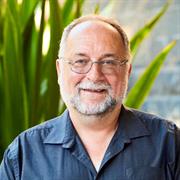
Prof. Ivan Cole is an Adjunct Professor at RMIT University's School of Engineering, specializing in rapid materials discovery for corrosion protection, nanostructures, and additive manufacturing. His work integrates computational modeling with high-throughput experimentation, focusing on corrosion inhibitors, biocompatible surfaces, and additive manufacturing process optimization. With over 30 years of experience across academia and industry (including leadership roles at CSIRO and Centro-Svilluppo Materiali), he leads the Rapid Discovery & Fabrication Team (RDF) to advance these research areas. Research Interests: Corrosion science, microbially induced corrosion (MIC), additive manufacturing surfaces, nanostructure sensing, multiscale modeling, and green materials discovery. His team addresses challenges in corrosion protection, biomedical implants, and environmental remediation through innovative methodologies. Awards: 2019 Australian Corrosion Medal 2016 CSIRO Lifetime Achievement Award 2013 Best Paper in NACE Corrosion Supervision & Projects: Active in mentoring PhD/Master’s students across corrosion inhibition, additive manufacturing, and nanostructure design. Notable projects include developing quorum sensing inhibitors for biofilm control, in-situ monitoring for metal AM, and eco-friendly corrosion inhibitors. Labs & Collaborations: Leads the Rapid Discovery & Fabrication Team and collaborates with industry partners to translate research into practical solutions for materials durability and sustainability.
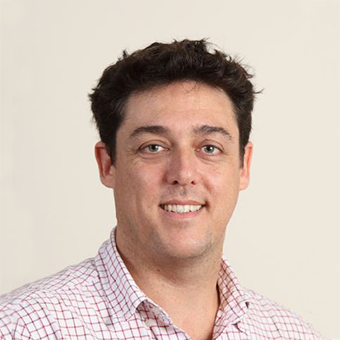
Professor Stuart James Khan is an Adjunct Professor in the School of Civil & Environmental Engineering at the University of New South Wales (UNSW). He previously served as Director of the Australian Graduate School of Engineering (AGSE). His research focuses on sustainable urban water management, water treatment processes, and chemical contaminant analysis. Khan holds a PhD in Environmental Engineering from UNSW (2003) and a BSc (Hons 1 in Organic Chemistry) from the University of Sydney (1995). His research interests include water recycling, desalination, disinfection byproduct formation, and the safe management of chemical contaminants. He has advised over 15 PhD students on topics ranging from advanced treatment technologies to risk assessment frameworks. Khan has published extensively, with over 200 journal articles and 18 book chapters, emphasizing interdisciplinary approaches to water quality challenges. Key contributions include advancing membrane bioreactor performance, optimizing water recycling systems, and assessing risks associated with emerging contaminants. His work bridges fundamental science and practical engineering solutions, addressing global water security challenges. Current projects explore wastewater-based epidemiology, PFAS remediation, and climate-resilient water infrastructure. Khan collaborates internationally on water reuse strategies and has contributed to policy frameworks for safe water management. His teaching spans courses like Water & Wastewater Treatment and Environmental Risk Analysis, reflecting his commitment to educating future engineers in sustainable practices.
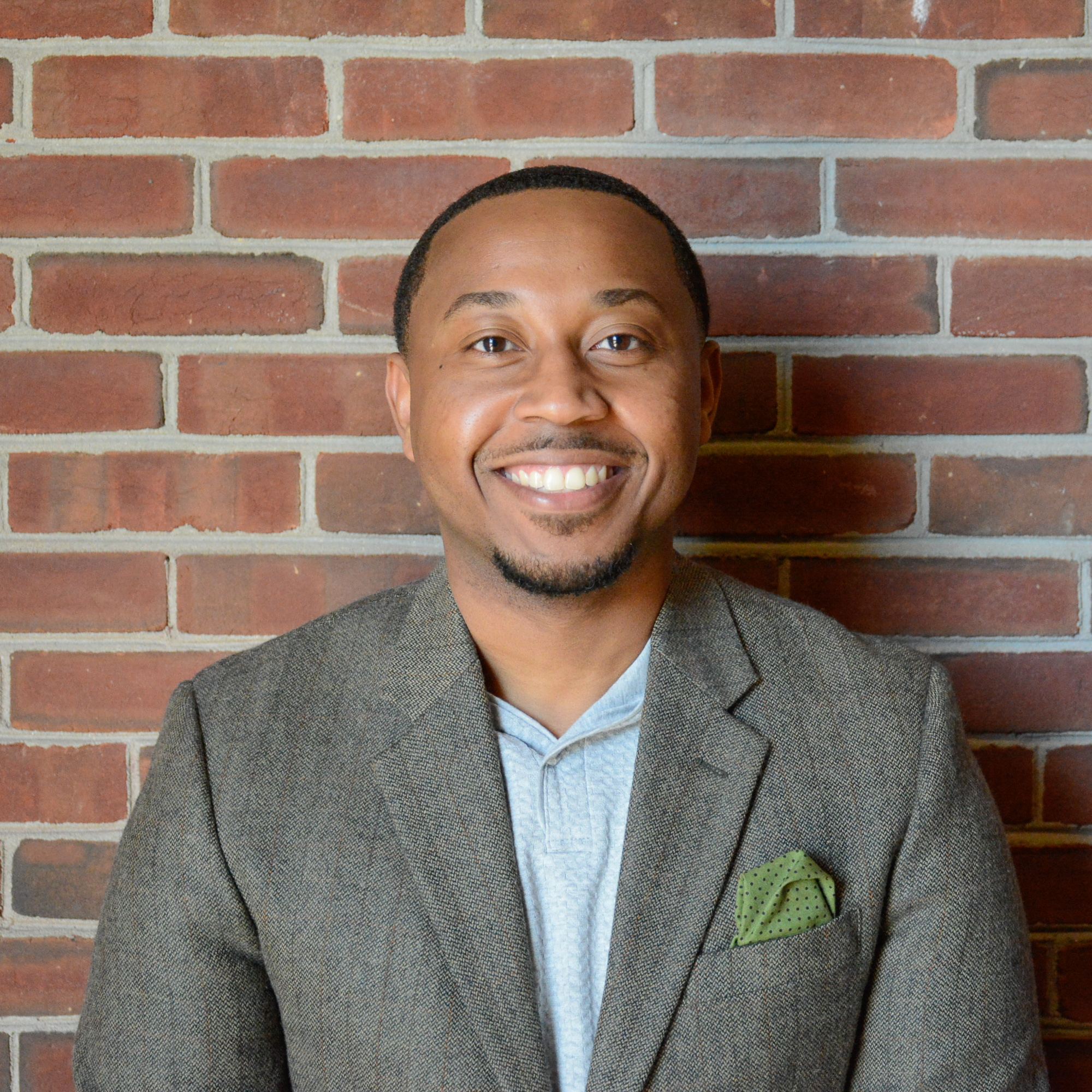
Professor Bruce Jefferson is a Professor of Water Engineering at Cranfield University's Water Science Institute. He holds visiting positions at RMIT and the University of New South Wales in Australia. With a BEng and PhD from Loughborough University, he joined Cranfield in 1997, progressing through roles including Senior Research Fellow (2003) and Senior Lecturer (2006). His research focuses on optimizing water and wastewater treatment technologies, particularly resource recovery, anaerobic processes, and advanced oxidation. Key interests include low-energy nutrient removal, control of NOM and algae, and sustainable water production techniques like slow sand filter skimming. Education: BEng (Chemical Engineering) and PhD from Loughborough University. Research spans innovative treatment methods, such as microbubble applications in ozonation and coagulation strategies for PFAS removal. He collaborates with major water utilities (e.g., Anglian Water, Thames Water) and agencies like the EPA. Current projects include NextGen circular water solutions, pollution resilience in rivers, and phosphorus removal via wetlands. Advises six doctoral students and oversees research teams at Cranfield's Water Institute. Labs/Teams: Cranfield Water Science Institute, leading research groups in wastewater treatment, resource recovery, and environmental engineering.
Upaka Rathnayake is a Professor of Civil Engineering and Principal Investigator at the Mathematical Modelling and Intelligent Systems for Health and Environment (MISHE) research unit at Atlantic Technological University Sligo, Ireland. He has held academic and research roles globally, including in Sri Lanka, Japan, the UK, New Zealand, Australia, and Fiji. His research focuses on water resources management, hydrological modeling, climate analysis, and AI-driven solutions for environmental challenges. He holds a PhD from the University of Strathclyde and advanced certifications from Hokkaido University. Education: PhD in Optimal Management of Urban Sewer Systems (University of Strathclyde, 2013) Professional Memberships: Institution of Engineers Sri Lanka, Engineers New Zealand, International Association of Hydrological Sciences Research interests include: Hydrological modeling and climate change adaptation Multi-objective optimization and soft computing techniques Explainable AI applications in environmental systems Remote sensing and GIS for water resource management Recent articles highlight AI-driven solutions for air quality prediction, soil nutrient analysis, and flood risk assessment. Awards include the 2023 Presidential Award for Scientific Publications and multiple university excellence awards. He actively advises PhD students on projects like urban water systems optimization and climatic trends analysis. Rathnayake is an editorial board member of journals like Scientific Reports and PLoS ONE , contributing to peer review and policy-oriented research. His work bridges data-driven methods with traditional hydrological practices to address global environmental challenges.
Dr. Marccus D. Hendricks is an Associate Professor of Urban Studies and Planning at the University of Maryland, where he directs the Stormwater Infrastructure Resilience and Justice (SIRJ) Lab. His work examines how development patterns create infrastructure vulnerabilities in marginalized communities. Research investigates: Equity in green-gray infrastructure systems Health impacts of sewer overflows Participatory flood risk assessment Climate adaptation planning As former Senior Advisor for Climate and Community Resilience at the White House Council on Environmental Quality, he shaped federal environmental justice initiatives. Community-engaged projects in Texas, D.C., and Maryland employ photography, water monitoring, and GIS to document infrastructure failures. Honors include selection as a Grist 50 Emerging Leader (2021) and contributions to the U.S. Fifth National Climate Assessment. Research appears in AJPH, Sustainable Cities and Society, and Risk Analysis.
Jung Soo Lim is an Assistant Professor in the Department of Computer Science at California State University, Los Angeles, within the College of Engineering, Computer Science, and Technology. He earned his B.S. from Cal State LA and M.S. and Ph.D. from UCLA, returning to his alma mater as a part-time lecturer in 2014 before transitioning to a full-time assistant professor role in 2019. Education: B.S. (Cal State LA), M.S. (UCLA), Ph.D. (UCLA) His research focuses on Internet of Things (IoT) , Cyber-Physical Systems , Wireless Networking , Software Engineering , and Medical Computing . He has active projects in IoT applications for healthcare, urban safety, and wastewater monitoring, including the Center for Inclusive Computing (CIC) Transfer Pathways Project. Recent publications highlight interdisciplinary work bridging IoT, healthcare diagnostics, and smart city infrastructure. Notable topics include stroke detection algorithms , IoT communication protocols , and sensor-based environmental monitoring . Scientific Awards: Outstanding Senior at Cal State LA (1997) He teaches core computer science courses such as Computer Programming Fundamentals and Analysis of Algorithms, and actively mentors graduate students. His lab focuses on developing embedded systems and IoT solutions for real-world challenges.
Professor Lyudmila Mihaylova is a distinguished academic at the University of Sheffield's School of Electrical and Electronic Engineering, where she holds the position of Professor of Signal Processing and Control. She has established herself as a leading researcher in the fields of signal processing, Bayesian methods, and autonomous systems, with significant contributions to particle filtering techniques for intelligent transportation systems. Her work bridges theoretical developments with practical applications across multiple domains including transportation, healthcare, and industrial automation. Prof. Mihaylova's research interests center on nonlinear filtering, sequential Monte Carlo methods, statistical signal processing, and sensor data fusion. Her work spans both theoretical advancements and practical implementations, with particular focus on high-dimensional problems including vehicular traffic flow estimation, image processing, and localization in sensor networks. She has extensive experience with various image modalities such as optical, thermal, LIDAR, SAR, and hyperspectral imaging. Her group actively develops novel methods for autonomous intelligent systems focusing on sensing, tracking, decision making, and machine learning applications. Analysis of Prof. Mihaylova's recent publications reveals a strong trend toward uncertainty quantification in machine learning models, particularly for safety-critical applications. Her work increasingly integrates traditional signal processing techniques with modern deep learning approaches, with applications spanning sewer inspection robotics, medical diagnostics (particularly sleep apnea detection), UAV swarm tracking, industrial manufacturing, and autonomous vehicle systems. A significant portion of her recent research focuses on developing robust methods that can handle incomplete or outlier-corrupted data while providing reliable uncertainty estimates. Among her notable professional achievements: President of the International Society of Information Fusion (ISIF) Senior member of the IEEE Signal Processing Society Associate Editor for IEEE Transactions on Aerospace and Electronic Systems Associate Editor for Elsevier Signal Processing Journal Prof. Mihaylova has successfully mentored numerous PhD students and postdoctoral researchers, many of whom have gone on to prominent academic and industry positions. Her research has been supported by major funding bodies including EPSRC, EU, MOD/DSTL, and industry partners, with recent projects including 'Protecting Environments with UAV Swarms' (InnovateUK, 2022-2024), 'ShiRAS: Towards Safe and Reliable Autonomy in Sensor Driven Systems' (NSF-EPSRC, 2019-2023), and 'Confident safety integration for Cobots' (Lloyd's Register Foundation, 2019-2020). Her research group follows a collaborative approach with the philosophy 'We share knowledge, we grow.' Prof. Mihaylova maintains active research collaborations with institutions worldwide and has held previous academic positions at Lancaster University (2006-2013) and University of Bristol (2004-2006), along with research visiting positions at the University of Ghent, Katholic University of Leuven, and the Bulgarian Academy of Sciences.
Elham Ramin is a Researcher at the Department of Chemical and Biochemical Engineering at the Technical University of Denmark (DTU), affiliated with the Center for Energy Resources Engineering (CERE) and the Process and Systems Engineering Centre (PROSYS). Her work contributes to multiple UN Sustainable Development Goals, particularly in clean water and sanitation, affordable and clean energy, and industry innovation. Dr. Ramin completed her PhD at DTU (2010-2014) with research focused on modeling water quality in sewer-WWTP systems. Her academic journey demonstrates a strong foundation in environmental process engineering with applications to real-world water treatment challenges. Her research interests span wastewater treatment optimization, Power-to-X applications for water resource recovery, industrial symbiosis in water management, and biomanufacturing process modeling. She specializes in computational fluid dynamics, activated sludge modeling, and one-dimensional simulation models for wastewater treatment plants. Her work bridges environmental engineering with sustainable resource management, focusing on practical solutions for water-energy nexus challenges. Analysis of her recent publications reveals a strong trend toward integrating sustainable energy solutions with water treatment processes, particularly Power-to-X technologies. Her research portfolio shows increasing focus on digitalization of water resource recovery facilities and cross-sectoral industrial symbiosis for optimal resource utilization. The work demonstrates strong interdisciplinary connections between environmental engineering, chemical process modeling, and sustainable development. Dr. Ramin has participated in significant research projects including ERASE (Evaluation of Resource recovery Alternatives in South African water) and GECKO (Green and Circular Innovation for Kenyan Companies), demonstrating international collaboration and application of research to diverse water management contexts. Her work has generated substantial academic interest with multiple publications receiving significant downloads and reader engagement on platforms like Mendeley. She is actively involved with research centers including CERE and PROSYS at DTU, contributing to interdisciplinary teams focused on energy resource engineering and process systems optimization. Her collaborations extend to pharmaceutical industry applications, particularly in vaccine manufacturing development and digital twin implementation for bioprocesses.
Professor Muttucumaru Sivakumar is a faculty member at the University of Wollongong (UOW), holding the rank of Professor and serving as Academic Program Director for Environmental Engineering (ENVE) within the School of Civil, Mining, Environmental and Architectural Engineering. He has been with UOW since 1984, progressing through roles such as Lecturer, Senior Lecturer, and Associate Professor before becoming a full Professor in 2025. His academic career includes visiting positions at institutions worldwide, including the University of Minnesota, University of Heidelberg, and Indian Institutes of Technology. Education: He earned a BSc Eng from the University of Peradeniya (Sri Lanka, 1970–1974), an MEng from the Asian Institute of Technology (Thailand, 1976), and a PhD from the University of Newcastle (Australia, 1977–1981). Research Interests: His work focuses on water quality modeling of coastal reservoirs, sediment transport, membrane distillation for wastewater treatment, and environmental hydraulics. Current projects include coastal reservoir development for Jakarta, solar-powered desalination, and wastewater-based epidemiology for pathogen monitoring. Grants: Key funding includes the KONEKSI grant for Jakarta’s coastal reservoir development (2023–2024) and internal grants for geopolymer research and anaerobic co-digestion. He also secured equipment grants for nanopore sequencing platforms and low-vacuum electron microscopy. Advising & Students: He has supervised over 15 HDR completions since 1990, including notable PhD graduates such as San Rathviboon (2011) and Debashis Raha (2006). Current students focus on topics like methane control in wastewater systems and coastal reservoir sediment transport. Labs & Teams: His research groups collaborate on interdisciplinary projects involving water resource management, environmental engineering, and sustainable infrastructure development. He leads initiatives in the International Association for Coastal Reservoir Research (IACRR).
Dr. Iñaki Esnaola is a Senior Lecturer at the Department of Automatic Control and Systems Engineering, University of Sheffield, and a Visiting Research Collaborator at Princeton University. He holds a MSc from the University of Navarra (2006) and a PhD from the University of Delaware (2011). His research focuses on information theory, machine learning, and cybersecurity, particularly in cyberphysical systems like smart grids. His work addresses data integrity, privacy, robust estimation, and optimal sensor placement. Research interests include: Information theory and data science, machine learning and high-dimensional statistics, cybersecurity (especially data injection attacks), privacy, robust estimation, and sensor placement optimization. Recent projects involve empirical risk minimization with regularization, stealth attacks on control systems, and compressive sensing for environmental monitoring. Key publications include studies on relative entropy in machine learning, sensor placement for sewer networks, and stealth attacks in smart grids. He leads a research group with ongoing projects in resilient cyberphysical systems and received a UKRI grant for advanced manufacturing. His work bridges theoretical foundations with real-world applications in energy systems and environmental monitoring.
Dr Sean Anderson is a Senior Lecturer at the Department of Automatic Control and Systems Engineering , University of Sheffield , with over 15 years of experience in interdisciplinary research spanning robotics, control systems, and computational biology. He earned his MEng and PhD from the University of Sheffield, focusing on control systems and chemical engineering. Education: MEng in Control Systems Engineering, University of Sheffield (2001) PhD in Chemical and Process Engineering, University of Sheffield (2005) Research Interests include: Bioinspired robotics Adaptive and optimal control in biological systems Nonlinear system identification Computational neuroscience Acoustic and visual sensor fusion for localization His recent publications highlight innovations in robotic localization in hazardous environments, interpretable deep learning for control systems, acoustic sensing technologies, and data-driven modeling of complex systems. Key projects involve autonomous navigation in pipe networks, turbulence modeling, and biomedical signal processing. Grants and Funding: He has secured major grants from EU H2020 (£4M), EU FP7 (£2.9M), and EPSRC (£5.7M), focusing on bioinspired control algorithms, robotic safety, and infrastructure assessment. Teaching: He leads the ACS61011 Deep Learning module, emphasizing practical applications in robotics and signal processing.
Dr. Nihar Biswas is a Distinguished Professor in the Department of Civil and Environmental Engineering at the University of Windsor. His research focuses on enzymatic wastewater treatment, hazardous waste management, and sustainable infrastructure. He holds a PhD from the University of Ottawa and has contributed to over 100 publications. Dr. Biswas is a Fellow of the Canadian Society for Civil Engineering and recipient of the Albert E. Berry Medal for outstanding contributions to environmental engineering. Education: PhD, University of Ottawa MASc (Master of Applied Science) B.Eng, University of Calcutta Research Interests: Enzymatic treatment of industrial wastewater Water quality and drinking water disinfection Hazardous waste treatment technologies Water and wastewater management in developing countries Bioremediation of pharmaceutical contaminants Professional Roles: Co-editor, Canadian Journal of Civil Engineering Member of multiple international advisory panels (WHO/PAHO, NSERC) Invited speaker at institutions globally, including China and Mexico Grants & Collaborations: NSERC/URIF/ICST-funded enzymatic wastewater treatment projects Pilot plant development in Mexico for industrial refinery wastewater Industry partnerships in advanced oxidation processes Labs & Projects: Pioneer in soybean peroxidase-catalyzed wastewater treatment Research on stormwater infrastructure resilience Development of retention treatment basins for combined sewer overflows
Thomas Ertl is a Professor at the University of Natural Resources and Life Sciences, Vienna (BOKU), leading the Institute of Sanitary Engineering and Water Pollution Control. His research focuses on urban water systems, emphasizing sustainable drainage, climate change adaptation, and nature-based solutions. He has coordinated 55 projects, including international initiatives in Albania and Austria, addressing stormwater management, wastewater heat recovery, and sewer infrastructure resilience. Key Projects : Analysing re-activated watercourses for urban resilience (2024–2028) Resilient rainwater management in Austria (2024–2028) Assessing pollutant emissions in Albania (2024–2027) Research Themes : Building Information Modeling (BIM) in wastewater systems Uncertainty analysis under climate change Stormwater pollution and heat island mitigation Awards : 2018: Goldene Ehrennadel des ÖWAV 1993: Best student award at AGIT 93 His recent publications highlight multidisciplinary approaches to wastewater energy recovery, spatial compatibility of nature-based solutions, and prioritization of stormwater management sites. He has supervised numerous theses and contributed to media discussions on urban climate resilience, including articles in Austrian outlets like futurezone.at and Der Kurier.
Associate Professor Ilje Pikaar is affiliated with the School of Civil Engineering at The University of Queensland . He holds a PhD in Environmental Engineering (2012) from UQ, preceded by BSc (2004) and MSc (2006) in Environmental Science and Technology from Wageningen University, Netherlands. Research Interests: Environmental electrochemistry, global nitrogen cycle, sewer corrosion mitigation, next-generation sludge management, metal recovery, integrated urban water management, resource recovery with emphasis on nitrogen recovery and microbial protein production. Scientific Contributions: Over 40 peer-reviewed publications (avg. impact factor 8.51), including first-author papers in Science (2014), Nature Food (2020), and Lancet Planetary Health (2021). His 2017 work on nitrogen-efficient food systems was recognized with the best feature article award in Environmental Science and Technology . Leadership Roles: Co-chair (2019–present) and former secretary (2015–2019) of the International Water Association's Resource Recovery from Water cluster. Associate Editor for Waste Management (2018–present) and guest editor for Water Research (2020). Funding: Secured 7 Australian Research Council (ARC) projects as Chief Investigator. Played a pivotal role in the $50M CRC Blue Economy project (2016–2023). Editorial Work: Developed a graduate-level textbook with IWA Publishing (2021) and serves on advisory boards for Environmental Science and Technology (2020–present).
Dr. Sven Mackenbach serves as a Postdoctoral Researcher and Senior Engineer at RWTH Aachen University's Institute of Construction Management, Digital Engineering and Robotics in Construction (ICoM) since January 2023. Holding a doctorate in circular construction from the same institution, he leads the development of the "Circular Construction" research area, oversees multidisciplinary projects, and teaches Sustainable Construction Management to engineering students. His academic credentials include: PhD in Circular Construction, RWTH Aachen University (2023) Mackenbach's research integrates circular economy principles with digital construction technologies, focusing on strategic management frameworks for sustainable building practices. His expertise spans modular construction methods, BIM-based sustainability assessment, and digital twinning applications for infrastructure management. He bridges theoretical research with practical implementation through sustainability consulting for construction stakeholders, addressing real-world challenges in resource efficiency and regulatory compliance. His publication portfolio reveals a decisive shift toward data-driven circular construction solutions, with increasing emphasis on BIM-ontology integration for deconstruction planning, public participation systems, and sewer infrastructure management. Recent works demonstrate sophisticated methodological approaches to quantify ecological, economic, and social sustainability metrics without specialized expertise. As a scientific supervisor, Mackenbach mentors research assistants in project execution while contributing to curriculum development through his specialized course instruction. His leadership in research project coordination indicates substantial grant management experience, though specific funding sources aren't detailed in available materials. Within ICoM's collaborative environment, he contributes to cross-disciplinary teams advancing digital engineering and robotics applications in construction, particularly through the KaSyTwin sewer management project and BIPV facade digitalization initiatives.