Rasul Shafikov is a Professor in the Department of Mathematics at Western University's Faculty of Science. He has maintained an active research program in complex analysis and geometry while teaching a range of undergraduate and graduate mathematics courses including Calculus, Real Analysis, Complex Analysis, and Functional Analysis over multiple academic years. Dr. Shafikov's research focuses on several complex variables and complex geometry, with particular interest in polynomial and rational convexity of real submanifolds in complex spaces, geometric properties of holomorphic mappings and functions, and holomorphic foliations on Levi-flat hypersurfaces. His work represents significant contributions to understanding the boundary behavior of holomorphic functions, convexity properties in complex spaces, and the geometric structure of complex manifolds. An analysis of his recent publications reveals a consistent trajectory in advancing the theory of complex analysis in several variables, with increasing focus on the interplay between complex geometry, CR geometry, and convexity properties. His work often involves collaborations with researchers across international institutions, demonstrating the global relevance of his research in complex analysis. Dr. Shafikov has supervised multiple PhD students and postdoctoral researchers who have gone on to academic positions at institutions worldwide, including the University of Arkansas, Indian Institute of Science in Bangalore, Masaryk University in Czech Republic, and Central Michigan University. His mentorship has produced scholars who continue to contribute to the field of complex analysis. He has co-authored a book titled 'Geometry of Holomorphic Mappings' (Birkhäuser, 2023) with S. Pinchuk and A. Sukhov, which serves as a significant contribution to the literature in complex analysis. His teaching portfolio includes advanced graduate courses such as Complex Analysis, Functional Analysis, and Real Analysis, demonstrating his expertise across multiple mathematical disciplines.
Daniel Kasper is a researcher at the University of Hamburg's Faculty of Education, specializing in Educational Science with a focus on International Educational Monitoring and Reporting. He currently serves as the National Project Manager for TIMSS 2027, continuing his leadership role from previous TIMSS cycles (2023, 2019). His work centers on large-scale educational assessments, statistical methodology, and primary education research. Dr. Kasper completed his Habilitation in Educational Science with special consideration of empirical educational research at TU Dortmund (2012-2020), followed by his PhD in Educational Science at the same institution (2010-2012). He earned his Diploma in Educational Science from the University of Münster (2001-2007). His research interests span evaluation of education systems, primary school research, educational disparities, and advanced statistical methods in education. He has developed significant expertise in TIMSS methodology, multilevel modeling, and analysis of large-scale assessment data, with numerous publications addressing methodological challenges in international comparative studies. Analysis of his 15 most recent publications reveals a strong focus on TIMSS methodology and results, particularly regarding mathematics and science competencies in primary education. His work demonstrates expertise in statistical methodology for educational assessment, with several publications developing and refining analytical techniques for large-scale data. A recurring theme is examining educational disparities related to student composition, socioeconomic factors, and gender differences. Dr. Kasper has served as National Project Manager for multiple TIMSS cycles (2019, 2023, 2027) and has been involved in PIRLS studies, demonstrating sustained leadership in major international educational assessments. His work bridges methodological innovation with practical application in educational monitoring. He teaches courses across all academic levels, including 'Introduction to Empirical Research Methods' for Bachelor students, 'Methods of Empirical Educational Research' for Master students, and advanced workshops on longitudinal scaling and the Rasch model for doctoral candidates. His teaching reflects his dual expertise in educational research methodology and statistical analysis.
Cynthia Vinzant is an Associate Professor in the Department of Mathematics at the University of Washington, College of Arts and Sciences. Her research lies at the intersection of real algebraic geometry, combinatorics, and convex optimization, with a focus on polynomials, determinants, and matroids. Ph.D., Mathematics, UC Berkeley, 2011 B.A., Mathematics and Neuroscience, Oberlin College, 2007 Her research interests include real algebraic geometry, combinatorics, convex optimization, tropical geometry, and spectrahedra. She studies the algebraic and combinatorial structures underlying optimization problems and geometric objects, particularly through the lens of hyperbolic and log-concave polynomials. Her recent publications span topics such as tropicalization of principal minors, determinantal representations, Fourier quasicrystals, and log-concave polynomials. These works demonstrate strong interdisciplinary connections across algebraic geometry, combinatorics, optimization, and mathematical physics. Sloan Research Fellowship (2020) Best Paper Award, STOC (2019) von Neumann Fellowship, IAS (2020–2021) Bernard Friedman Prize, UC Berkeley (2011) Rebecca Cary Orr Prize, Oberlin College (2007) She has advised several Ph.D. students including Tracy Chin, Jonathan Niño-Cortes, Joseph Rogge, Faye Pasley Simon, Michael Ruddy, Georgy Scholten, and Abeer Al Ahmadieh. She has received significant NSF funding, including a CAREER award (2020–2025) on determinantal, hyperbolic, and log-concave polynomials. She has taught courses in tropical geometry, convex algebraic geometry, and optimization at both the University of Washington and North Carolina State University.
Prof. Dr. rer. nat. habil. Detlef Hauke Mache is a full Professor of Mathematics and Applied Mathematics at the TH Georg Agricola University of Applied Sciences in Bochum, Germany, within the Faculty of Electrical Engineering, Information Technology, and Industrial Engineering. Since 2003, he has held the chair for Applied Mathematics with a focus on Constructive Approximation. Education: Diploma in Mathematics and Computer Science, University of Dortmund (1988) Doctoral degree (Dr. rer. nat.) in Mathematics, University of Dortmund (1991) Habilitation (Dr. habil.) in Mathematics, University of Dortmund (1997) Research Interests: Prof. Mache's research spans Constructive Approximation Theory , emphasizing the development and analysis of approximation methods. He explores Radial Basis Function (RBF) Networks and their applications in neural networks and fuzzy logic. His work integrates theoretical foundations with practical algorithms, particularly in numerical analysis and approximation techniques. Key areas include: Neural Networks and Fuzzy Logic Systems Quasi-Interpolation Methods Orthogonal Polynomial Expansions Integral Transforms and Convolution Structures Publications and Editorial Contributions: Prof. Mache has authored over 30 peer-reviewed papers and edited several volumes in approximation theory. His research trends indicate a focus on advancing approximation methods through theoretical insights and practical applications in neural networks and computational intelligence. Scientific Awards and Honors: While no specific awards are listed, his extensive editorial roles and habilitation qualification signify recognition in his field. Teaching and Advising: He teaches courses in Higher Mathematics, Applied Mathematics, Differential Equations, and Numerical Analysis. While no specific students are named, his long-standing academic positions suggest significant contributions to graduate education. Laboratories and Teams: As a professor in the Faculty of Electrical Engineering and Information Technology, he likely collaborates with interdisciplinary teams, though no specific labs are mentioned.
Dr. Xiong Yi is an Assistant Professor at the School of System Design and Intelligent Manufacturing (SDIM) at Southern University of Science and Technology (SUSTech) in Shenzhen, China. He leads the Computational Design and Fabrication (CoDeFab) research group, focusing on the integration of computational design methods with advanced manufacturing technologies, particularly in the field of additive manufacturing. Dr. Xiong has established himself as a leading researcher in computational design for additive manufacturing, with a strong international research background spanning Europe and Asia. Dr. Xiong's educational journey includes: Doctor of Science (DSc) in Engineering Design and Production from Aalto University, Finland (2012-2016) Master of Science (MSc) in Machine Automation from Tampere University of Technology, Finland (2010-2012) Bachelor of Engineering (BEng) in Mechanical Engineering from Hubei University of Technology, China (2006-2010) Dr. Xiong's research primarily focuses on computational design and fabrication methodologies, with particular emphasis on design for additive manufacturing (DfAM), intelligent manufacturing systems, and smart materials. His work bridges the gap between theoretical design principles and practical manufacturing constraints, developing novel approaches for the production of complex engineered products. He has pioneered research in continuous fiber-reinforced composite additive manufacturing, developing innovative process planning and optimization techniques that enable the production of high-performance structural components. His research in electrothermally controlled origami and 4D printing of smart materials represents cutting-edge work at the intersection of materials science, mechanical engineering, and computational design. Dr. Xiong's recent publications reveal a strong focus on continuous fiber-reinforced composites, with significant contributions to 4D printing, metamaterials, and intelligent process planning. His work integrates computational design with manufacturing constraints, creating novel approaches for topology optimization, toolpath planning, and structural design that consider both performance requirements and manufacturability limitations. The research demonstrates increasing sophistication in materials science applications, particularly in programmable materials and multi-functional structures. Dr. Xiong has received multiple prestigious awards for his research contributions, including: Best Presentation Award at the 24th Chinese Conference on Mechanisms and Machine Science (IFToMM CCMMS2024) Best Presentation Award at the International Conference on Frontiers of Additive Manufacturing Research (RAAM 2024) Best Paper Award at the International Conference on Design for 3D Printing (ICD3DP 2023) PhD Scholarship from Aalto University (2016) Research Travel Grant from the International Association for Vehicle System Dynamics (IAVSD) (2013) National Scholarship from the Ministry of Education (2008) As a dedicated educator and mentor, Dr. Xiong serves as a PhD supervisor at SUSTech and has successfully guided students who have gone on to pursue advanced studies and careers at prestigious institutions including Hong Kong Polytechnic University, Beihang University, DJI Innovations, and Singapore's A*STAR research institute. His research is supported by multiple competitive grants, including key projects from the National Key R&D Program of China, the National Natural Science Foundation of China, and provincial and municipal funding agencies. Dr. Xiong also serves on the editorial board of the Journal of Engineering Design and as a guest editor for Composites Communications, contributing to the advancement of his field through scholarly service. Dr. Xiong leads the CoDeFab research group, which maintains a strong collaborative culture focused on 'design leading manufacturing, manufacturing driving design, and digital-intelligent integration.' The group has developed several advanced manufacturing platforms, including multi-axis continuous fiber-reinforced composite additive manufacturing systems, smart composite additive manufacturing platforms, and multifunctional soft matter open manufacturing platforms. With a focus on practical applications and innovation, the CoDeFab group actively collaborates with industry partners and has established a joint laboratory to bridge academic research with industrial implementation.
Martin Andersen is an Associate Professor with the Water Research Laboratory and School of Civil and Environmental Engineering at the University of New South Wales (UNSW). His research focuses on hydrogeology, groundwater dynamics, and surface water-groundwater interactions, with particular emphasis on coastal zone processes and reactive flow and transport modeling. Dr. Andersen's research interests span several critical areas in hydrogeology and environmental science. His work on reactive flow and transport modeling examines how chemical reactions affect water movement through geological formations. He investigates geochemical processes and groundwater dynamics in coastal zones, which is crucial for understanding saltwater intrusion and managing coastal aquifers. His research on surface water-groundwater interactions helps inform sustainable water resource management, particularly in Australia's diverse hydrological environments. Andersen has made significant contributions to understanding how climate variability affects groundwater recharge processes and the implications for water security in arid and semi-arid regions. Analysis of Dr. Andersen's recent publications reveals a strong focus on understanding complex hydrological systems through innovative methodologies. His work spans multiple disciplines including hydrogeology, climate science, biogeochemistry, and computational modeling. A key trend in his research is the investigation of groundwater dynamics in various environmental contexts - from arid zone aquifers to coastal wetlands and fractured rock systems. He employs diverse approaches including field monitoring networks, laboratory experiments, statistical modeling, and paleoclimate reconstructions to address pressing water resource challenges. His research has significant implications for sustainable groundwater management, climate adaptation strategies, and ecosystem conservation. Dr. Andersen is actively involved in several research teams and laboratories. As an Associate Director in the School of Civil and Environmental Engineering at UNSW, he contributes to the Water Research Laboratory's mission of advancing water science and engineering. His work often involves interdisciplinary collaborations across hydrology, geology, environmental science, and climate research. Through his leadership in establishing monitoring networks and conducting field experiments, he has helped build valuable infrastructure for ongoing water research in Australia.
Yakov Eliashberg is the Herald L. and Caroline L. Ritch Professor of Mathematics at Stanford University, Department of Mathematics. His research focuses on symplectic geometry, topology, and several complex variables. He has advised at least one student, Eric Kilgore. Key contributions include work on contact structures, Lagrangian submanifolds, and the h-principle. His recent articles (2021–2024) explore topics like arboreal models, Weinstein manifolds, and symplectic rigidity/flexibility. He has authored textbooks such as Introduction to the h-Principle and contributed to foundational works in symplectic topology. Research interests span geometric topology, symplectic field theory, and interactions between contact and conformal structures. His work bridges abstract mathematical frameworks with concrete geometric constructions, emphasizing both theoretical rigor and applications in complex analysis. Publications since 2015 highlight themes of geometric stability, Lagrangian embeddings, and the topology of contact structures. While no specific awards are listed here, his extensive contributions to symplectic geometry have established him as a leading figure in the field. He has also engaged in pedagogical efforts, expanding course materials for advanced mathematical topics.
Song-Ying Li is a Professor in the Department of Mathematics at the University of California, Irvine (UCI), affiliated with the School of Physical Sciences. Her research focuses on Analysis and Partial Differential Equations, with particular emphasis on complex geometry, harmonic maps, and Bergman metrics. She is also associated with the Rowland Hall facility, where her office hours are held weekly. Her work addresses fundamental problems in several complex variables, including boundary behavior of harmonic functions, geometric PDEs, and rigidity theorems. Notable contributions include studies on Bergman metrics with constant holomorphic curvatures, solutions to the Kerzman problem, and applications of the Calabi extension theorem. She has published extensively on topics such as CR geometry, eigenvalue estimates for the Kohn Laplacian, and composition operators in complex analysis. Her research trends reflect deep engagement with geometric analysis, operator theory, and the interplay between complex geometry and partial differential equations. While no specific awards are listed, her prolific publication record underscores her scholarly impact. Advising and grants information is not detailed in the provided text, but her lab/teams' focus aligns with UCI's Department of Mathematics research priorities in analysis and geometry.
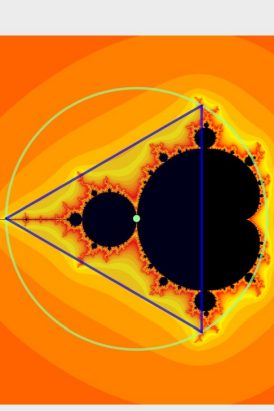
Jeffrey Diller is a Professor in the Department of Mathematics at the University of Notre Dame, specializing in complex analysis, complex dynamics, and algebraic geometry. Education B.A., University of Dayton, 1988 Ph.D., University of Michigan, 1993 Research Interests Diller studies multi-variable complex dynamics, using tools from pluripotential theory, complex algebraic geometry, and dynamical systems. His work centers on understanding the behavior of rational maps of two or more variables under iteration, particularly plane birational maps, and aims to extend this understanding to higher dimensions and non-invertible rational maps. Computer experimentation plays a crucial role in his investigations, aiding in the development of intuition and mathematical progress. Selected Publications Diller's recent publications span from 2001 to 2021, covering topics such as dynamics of birational and meromorphic maps, invariant forms, energy, and invariant measures in complex dynamics, and transcendental dynamical degrees. These works significantly advance the understanding of complex dynamical systems. Contact & Office Email: jdiller@nd.edu Office: 168B Hurley Building Phone: 574-631-7694
Raul Adrian Oset Sinha is an Associate Professor in the Department of Mathematics at the Faculty of Mathematics, University of Valencia, Spain. His research is centered on singularity theory, differential geometry, and topology, particularly focusing on stable maps, geometric invariants, and the geometry of singular surfaces. His work lies at the intersection of Geometry and Topology , Singularity Theory , and Global Analysis . He investigates the geometric structure of mappings from manifolds, especially in low dimensions, analyzing projections, curvature properties, and topological invariants of singular images. The trends in his publications reveal a consistent focus on stable mappings , projections of surfaces , and classification of singularities . His recent work explores axial curvature, frontal surfaces, and augmentations, contributing to the understanding of geometric behavior in higher codimensions and corank-one settings. He is a member of the research group GEOSING: Singularities, Generic Geometry and Applications , collaborating with leading experts such as M. A. S. Ruas, F. Tari, and K. Saji. His publications appear in journals like Mathematische Annalen , Advances in Geometry , and Journal of Singularities . Oset Sinha earned his PhD from the University of Valencia in 2009 under the supervision of Dr. Maria del Carmen Romero Fuster. His thesis, Topological invariants of stable maps from 3-manifolds to three-space , laid the foundation for his ongoing research in singularity theory. He has advised students and supervised research, though specific names are not listed. He actively collaborates internationally and contributes to the academic community through peer reviewing and editorial work.
Gee Y. Lee is an Associate Professor with Tenure in the Department of Statistics and Probability and the Department of Mathematics at Michigan State University. Lee holds a PhD from the University of Wisconsin-Madison and is an Associate of the Society of Actuaries (ASA). Their research focuses on applying advanced statistical and machine learning methods to solve complex problems in actuarial science and insurance. Dr. Lee's educational background includes: PhD from the University of Wisconsin-Madison Associate (ASA) designation from the Society of Actuaries Dr. Lee's research spans several critical areas in modern actuarial science. Their primary focus includes insurance loss modeling for rate-making and loss reserving applications, optimization of multivariate insurance coverage, and dependence modeling. A significant portion of their recent work applies machine learning methods, particularly deep neural networks, to traditional actuarial problems. They are also pioneering research in analyzing unstructured data for insurance applications, which represents an emerging frontier in the field. Their work bridges theoretical statistical methods with practical insurance industry needs. Dr. Lee's publication record demonstrates a clear evolution from traditional actuarial methods toward more sophisticated and interdisciplinary approaches. Early work focused on fundamental aspects of insurance pricing and modeling, while more recent publications incorporate machine learning techniques, natural language processing, and advanced optimization methods. A notable trend is the increasing integration of unstructured data analysis into actuarial science, reflecting broader industry shifts. Their research consistently addresses both theoretical advancements and practical applications in insurance risk assessment and management. While specific awards aren't detailed in the available information, Dr. Lee's recognition includes: Associate (ASA) designation from the Society of Actuaries Michigan State University recognized by the Society of Actuaries as granting MS and PhD degrees focused on actuarial science (as of 2023) Dr. Lee actively mentors students at multiple levels, supervising undergraduate research through REU programs, directed studies (STT 490, MTH 490, MTH 491B), and graduate research for MS and PhD candidates. They have advised numerous students who have presented at UURAF (Undergraduate Research Assistant Fellowship) conferences. For graduate students, Dr. Lee supports research leading to MS degrees in Statistics, Applied Statistics, and Industrial Mathematics with actuarial science focus, as well as PhD dissertations in Statistics. Beyond direct student supervision, Dr. Lee has organized significant academic events including the Simon Conference for Young Researchers in Risk Management and Insurance (2019, 2023) and contributed to other workshops, demonstrating leadership in the actuarial research community. While specific lab names aren't mentioned, Dr. Lee appears to lead a research group focused on actuarial science and insurance analytics at Michigan State University. Their collaborative work with researchers like Scott Manski, Taps Maiti, Peng Shi, and others suggests an active research team working at the intersection of statistics, machine learning, and actuarial applications. The research group seems particularly focused on bridging traditional actuarial methods with modern data science techniques.
Dr. Bernhard Lamel is a Professor at the Department of Mathematics , Faculty of Mathematics , University of Vienna . He specializes in Several Complex Variables , CR Geometry , and Differential Geometry , with a focus on CR maps, hypersurfaces, and geometric analysis. His work spans formal and analytic equivalence, jet determination, and convergence of normal forms. Key research areas: CR Geometry Differential Geometry Several Complex Variables Partial Differential Equations in CR Context Recent publications (2024–2018) analyze degenerate CR maps Borel mappings for compact sets regularity in CR vector bundles finite jet determination problems equivalence theory for infinite type hypersurfaces
Leonard J. Schulman is a Professor of Computer Science at the California Institute of Technology (Caltech), where he has been on the faculty since 2000. He is affiliated with the Caltech Center for the Mathematics of Information (which he directed from 2003 to 2017) and the Institute for Quantum Information and Matter. His academic appointments have included positions at UC Berkeley, the Weizmann Institute of Science, the Georgia Institute of Technology, and the Mathematical Sciences Research Institute. Schulman received his BSc in Mathematics in 1988 and his PhD in Applied Mathematics in 1992, both from the Massachusetts Institute of Technology (MIT). Schulman's research spans several overlapping areas in theoretical computer science and applied mathematics. His work focuses on algorithms and communication protocols , combinatorics and probability , coding and information theory , and quantum computation . More recently, his research has expanded into causal inference and machine learning , particularly in the areas of mixture models, causal discovery, and structure learning. His approach combines deep theoretical insights with practical applications across multiple domains. An analysis of Schulman's recent publications (2019-2025) reveals a strong focus on causal inference and machine learning, particularly in the areas of mixture models, causal discovery, and structure learning. His work bridges theoretical computer science with statistical learning, often developing novel algorithms with provable guarantees. He has also maintained his foundational work in coding theory, algorithms, and quantum computation, demonstrating remarkable breadth across theoretical computer science. IEEE Schelkunoff Prize (2004) ACM Notable Paper (2012) UAI Best Paper Award (2016) FOCS Test of Time Award (2022) S. A. Schelkunoff Transactions Prize Paper Award (2004) SIAM Fellow NSF CAREER award NSF mathematical sciences postdoctoral fellowship MIT Bucsela prize in mathematics Schulman has advised numerous PhD students and postdoctoral researchers who have gone on to successful careers in academia and industry. His former students and postdocs include notable researchers such as Ashwin Nayak, Yaoyun Shi, Sean Hallgren, Jie Gao, and Michael Langberg. He served as Editor-in-Chief of the SIAM Journal on Computing from 2013 through 2018 and has been on the editorial boards of several prestigious journals including the Journal of the ACM, ACM Transactions on Algorithms, and SIAM Journal on Discrete Mathematics. Schulman directs the Caltech Center for the Mathematics of Information, a research center focused on the mathematical foundations of information processing, communication, and computation. His work often involves interdisciplinary collaborations across computer science, mathematics, physics, and economics.
Catherine Hurley is a Professor of Statistics at Maynooth University's Faculty of Science & Engineering, where she serves as Subject Head of Statistics in the Department of Mathematics and Statistics. She maintains strong affiliations with both the MU Hamilton Institute and the National Centre for Geocomputation, positioning her work at the intersection of statistics, data science, and computational methods. Dr. Hurley is a leading expert in data visualization with primary research interests in visualization techniques for data science and machine learning problems. Over her distinguished career, she has authored and contributed to numerous software packages, beginning with Data Viewer (1987), a predecessor to GGobi, Quail (1987-2000), and many R packages including condvis2, vivid (2021), and Bartvis (2022). Her work has significantly advanced the field of statistical graphics and model visualization. Her recent research has focused on conditional visualization for statistical models, with several publications on the condvis package and related tools that enable researchers to explore complex machine learning models through interactive visual interfaces. She has also made substantial contributions to dendrogram seriation, pairwise comparison visualization, and variable importance displays, creating numerous R packages that have become essential tools for statisticians and data scientists. Her 2023 publications include significant contributions to Bayesian additive regression trees and variable importance visualization for machine learning models. Dr. Hurley has held significant leadership roles in the statistical community, serving as Vice-President (2017-2019) and President (2019-2021) of the Irish Statistical Association. She also served as Editor-in-Chief and Editor of the R Journal from 2019 to 2023, playing a crucial role in advancing open-source statistical software development and dissemination. Her work demonstrates a consistent pattern of developing practical visualization tools that address real-world challenges in statistical analysis and machine learning interpretation. The progression from early work on statistical graphics infrastructure to recent innovations in model exploration reflects her sustained commitment to making complex statistical concepts accessible through visualization.
Sarah C. Koch is a Professor in the Department of Mathematics at the University of Michigan. She received her B.S. from Rensselaer Polytechnic Institute (2001), M.S. from Cornell University (2005), and dual Ph.D.s from Université de Provence (2007) and Cornell University (2008). Her research spans complex dynamics, Teichmüller theory, algebraic geometry, and topology, focusing on dynamical moduli spaces. Education: B.S., Rensselaer Polytechnic Institute (2001) M.S., Cornell University (2005) Ph.D., Université de Provence (2007) Ph.D., Cornell University (2008) Her work investigates complex dynamical systems in one and several variables, with a strong emphasis on analytic and algebraic approaches to moduli spaces. She has contributed significantly to understanding Thurston maps, rational map dynamics, and algebraic structures in moduli spaces. Her recent publications address boundary stable Thurston maps, Gleason polynomial factorization, and eigenvalues of the Thurston operator. She has received prestigious awards, including the Class of 1923 Memorial Teaching Award, Harold R. Johnson Diversity Service Award, and Haimo Award from the MAA. Scientific Awards: Class of 1923 Memorial Teaching Award Harold R. Johnson Diversity Service Award Haimo Award from the MAA As the Director of the Math Corps program at the University of Michigan, she fosters educational initiatives for middle and high school students from Ypsilanti and Detroit. She actively organizes seminars and outreach programs, including Bagel Sundays and Michigan Math Circle.