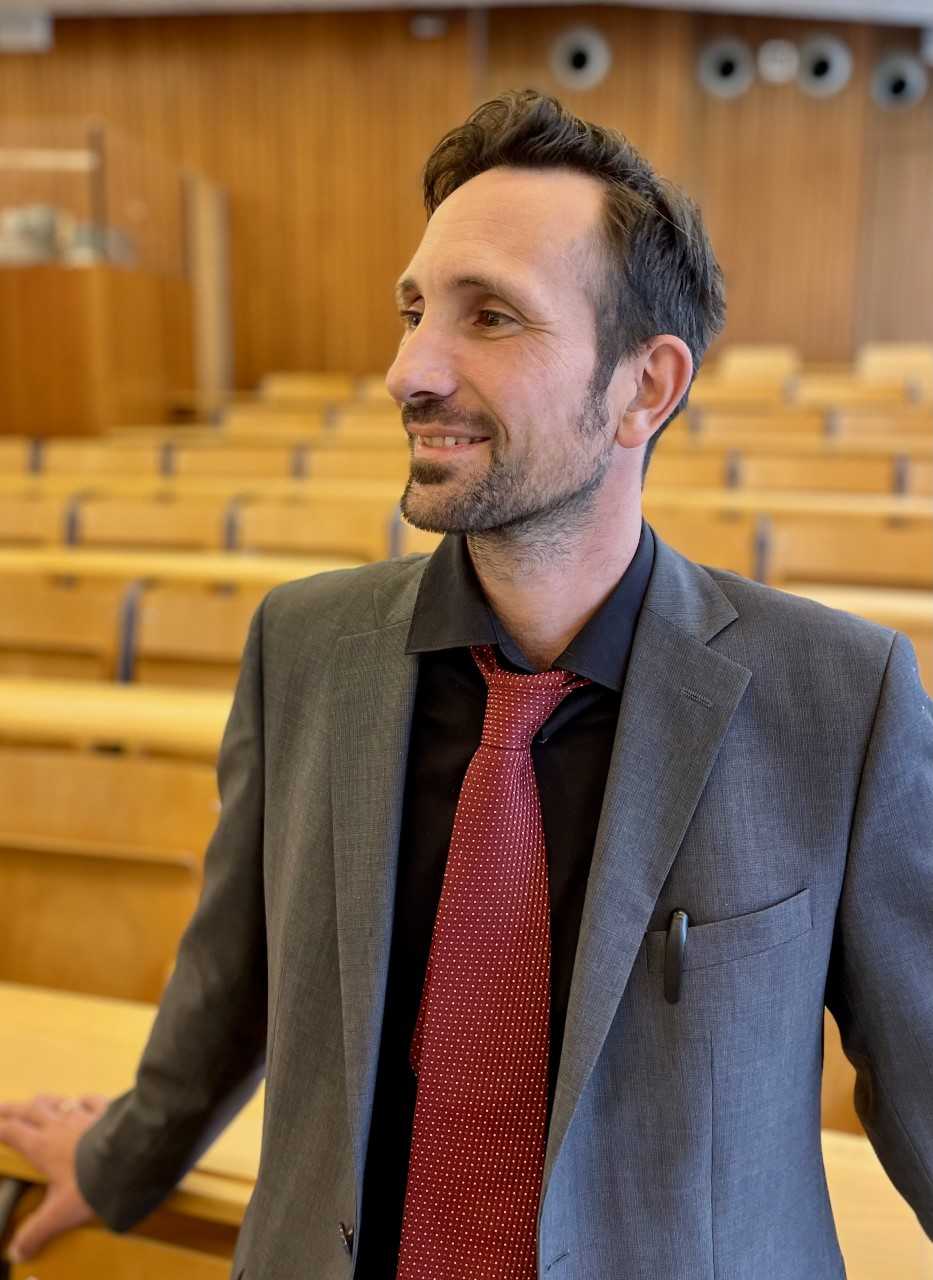
Konstantin Voigt, Professor of Musicology II , serves at the University of Würzburg within the Faculty of Philosophy and Institute of Music Research. His research spans medieval Latin song traditions, music theory, notation systems, and digital humanities applications. He also explores 20th-century composers like Arnold Schoenberg and the reception of medieval music in popular culture. Current: Chair of Musicology II, University of Würzburg (2024–) Previous: Tenure-track Professor, University of Freiburg (2020–2024) Education: PhD (Würzburg), MA (Erlangen-Nürnberg), Musicology & Art History Voigt's research bridges premodern music history with digital methodologies, focusing on: Medieval Latin song structures (9th–13th centuries) Development of musical notation and visualization Digital editions as tools for manuscript analysis Intermedial relationships in postmodern composition Stefan George’s poetry in Schoenberg’s works His recent publications analyze scribal practices in Paris 1139 manuscripts and digital approaches to monophonic music. He co-leads the Weave Lead project on French music reception in Central Europe before 1350 and contributes to the Corpus monodicum digital edition. Collaborations include PD Dr. Hana Vlhova-Wörner (Prague) and institutions like the Schola Cantorum Basiliensis.
Sergey Tulyakov is the Director of Research at Snap Inc. , leading the Creative Vision team. His work focuses on enhancing creator capabilities through computer vision , machine learning , and generative AI , with applications in 2D/3D/4D video generation, editing, and personalization. He pioneered video generation frameworks like MoCoGAN and First Order Motion Model , and has been recognized for BEST IN SHOW AWARD at SIGGRAPH Real-Time Live! 2020. PhD (2012-2017): University of Trento, Italy MSc (2010): Belorusian State University of Informatics and Radioelectronics B.Eng (2009): Belorusian State University of Informatics and Radioelectronics His research interests span computer vision , generative models , 3D reconstruction , and personalization , with a focus on making large models efficient and mobile-compatible . Recent publications highlight advancements in 4D video generation , text-guided 3D composition , and lightweight architectures . Key scientific awards include the SIGGRAPH Real-Time Live! 2020 Best in Show for Interactive Video Stylization. He has also served on technical program committees for top-tier conferences like CVPR, ICCV, SIGGRAPH, and NeurIPS since 2022. His team organizes tutorials and keynotes, including courses on Deep Generative Models and Efficient Neural Networks . While no direct student names are listed, his collaborative work spans 60+ top-tier publications.
Prof. Dr. sc. techn. ETH Oliver Staadt is Full Professor of Computer Science and Chair of Visual Computing at the University of Rostock , Germany. Since 2023 he also serves as Director of the Institute for Visual and Analytic Computing within the Faculty of Computer Science and Electrical Engineering . Previously he was Dean (2016–2018) and Vice Dean (2010–2016) of the same faculty. Education Ph.D. in Computer Science, ETH Zürich (2001) M.Sc. in Computer Science, TU Darmstadt (1994) Research Interests Prof. Staadt’s research spans virtual and augmented reality , computer graphics , visualization , telepresence , immersive analytics , and human–computer interaction . A particular focus lies on real-time rendering and display technologies for large high-resolution display systems, depth-image enhancement for RGB-D sensors, and interaction techniques that leverage spatial cognition and eye-tracking. His work is frequently applied to collaborative settings and microgravity environments, including experiments aboard parabolic flights and the International Space Station. Recent Publication Trends Between 2019 and 2021 his output centers on foveated rendering , AR viewpoint guidance , collaborative analytics on wall-sized displays , and embodied interaction metaphors . Earlier work addressed bandwidth-efficient telepresence, depth-image filtering, and physically-based animation. The corpus reveals a steady evolution from fundamental graphics algorithms toward applied immersive systems. Scientific Awards & Honors Fellow of the Eurographics Association Associate Editor, IEEE Transactions on Visualization and Computer Graphics (past) Associate Editor, Computers & Graphics (past) Associate Editor, Computer Animation and Virtual Worlds (past) Associate Editor, Frontiers in Virtual Reality (current) Chair, Expert Group on Virtual & Augmented Reality, German Informatics Society (2013–2020) Advising & Funding He has successfully supervised more than ten PhD graduates whose dissertations range from collision detection and physically-based animation to 3D interaction in microgravity and predictive user modeling. Current PhD researchers include Bipul Mohanto, Mana Takhsha, and Sven Kluge. His projects are supported by national and EU programs such as EVOCATION, SMOOTH, ARGuide, 3DPick, DIVA, and Telepresence. Labs & Teams Prof. Staadt leads the Visual Computing Group at Rostock, operating state-of-the-art facilities including large tiled display walls, VR/AR laboratories, and motion-capture systems. The institute hosts interdisciplinary collaborations with partners in visualization, computer vision, psychology, and aerospace engineering.
Prof. Dr. Julia Bernstein is a Professor of Discrimination and Inclusion in Immigration Society at Frankfurt University of Applied Sciences (since 2015), affiliated with the Department of Social Work and Health. Her academic background includes a B.A. in Sociology, Cultural Anthropology, and Art History (1992–1995), an M.A. in Sociology and Cultural Anthropology (1996–2000) from the University of Haifa, Israel, and a Ph.D. in Cultural Anthropology from Goethe University Frankfurt (2009). She leads the research area Social Legacy of National Socialism and coordinates international projects on antisemitism prevention. Bernstein's research examines discrimination through interdisciplinary lenses, focusing on: Antisemitism in institutional and everyday contexts Migration, identity, and transnationalism among Russian-speaking Jews Stereotyping mechanisms and racialization processes Holocaust memory and its societal repercussions Food sociology as a marker of cultural identity Her recent publications (2020–2022) demonstrate a strong focus on antisemitism in educational settings, analyzing victim perspectives, teacher training gaps, and pedagogical counter-strategies. She frequently addresses media representations of Jewish communities and the normalization of Israel-related antisemitism. Honors include the Barbara-und-Piergiuseppe-Scardigli-Preis for her dissertation (2011) and nomination for the WISAG-Preis (2010). Bernstein directs federally funded projects like Mach mal keine Judenaktion! (2017–2019) and collaborates with institutions including the German Federal Anti-Discrimination Agency, Anne Frank Educational Center, and Tel Aviv University's Kantor Center. At Frankfurt UAS, she teaches courses on antisemitism, social inequality, and Holocaust legacy in Bachelor of Social Work and Master of Diversity and Inclusion programs. She mentors emerging scholars through the Ernst Ludwig Ehrlich Studienwerk and co-leads the Frankfurt meets Haifa academic exchange initiative.
Dr. Benjamin de Haas is a vision scientist and faculty member at Justus Liebig University Giessen , Germany, within the Department of Psychology and Sports Science . He currently leads the ERC-funded Indivisual project and co-leads project C9 Factors influencing categorical face processing within the Collaborative Research Centre CRC/TRR 135. He is also a principal investigator in the NeurOscientific Workflow Assistance (NOWA) infrastructure project, dedicated to open, reproducible neuroscience. Research Focus Dr. de Haas pursues two intertwined questions: How do early and late stages of visual processing interact—from the initial registration of slanted edges to the recognition of faces? How and why do our perceptions differ from one person to the next? To answer these questions his group combines psychophysics, high-resolution eye-tracking, functional and quantitative MRI, and computational modelling, with a strong emphasis on face perception, individual differences, and naturalistic viewing conditions. Publications Overview Across more than 20 publications since 2016, Dr. de Haas has advanced understanding of individual differences in face processing, gaze control, and visual salience. His work repeatedly appears in Journal of Vision , Nature Communications , PNAS , and NeuroImage , highlighting a sustained focus on eye-movement behaviour, cortical representations of faces and scenes, and methodological best practices in neuroimaging. Current Supervision & Team Dr. de Haas currently supervises two PhD students: Elaheh Akbarifathkouhi Hilal Nizamoglu Together with Dr. Katharina Dobs (co-project leader) and affiliated post-docs and research technicians, the group forms the Indivisual laboratory at Giessen. Contact & Resources Email: Benjamin.de-Haas@psychol.uni-giessen.de Department of Psychology and Sports Science Otto-Behaghel-Str. 10F, 35394 Gießen, Germany
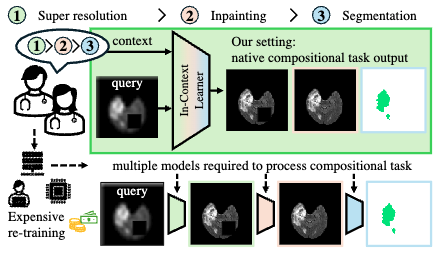
Prof. Dr. Erik Rodner is a faculty member at the University of Applied Sciences Berlin (HTW Berlin), where he serves as a Professor for Machine Learning and Data Science. He also contributes to the School of Engineering Sciences - Technology and Life. His research spans computer vision, machine learning, and biomedical applications, with a focus on learning with limited data, robust visual recognition models, and medical image analysis. He has developed innovative methods for medical diagnostics, industrial classification, and anomaly detection. Recent publications (2025-2016) highlight his expertise in visual in-context learning, semi-weakly segmentation, and active learning frameworks. He has collaborated with institutions such as ZEISS Group, Friedrich Schiller University Jena, and UC Berkeley. Scientific Awards: Award for Excellent Teaching (2023)
Susanne Narciss is a Professor at the Psychology of Learning and Instruction department of Technische Universität Dresden, leading the Center of Tactile Internet with Human in the Loop (CeTI). Her research focuses on error processing in educational contexts, with 15 recent publications analyzing error climates, feedback strategies, and motivational frameworks. Key Research Areas : Learning from errors/failure, instructional feedback design, affective-motivational responses, error-related metacognition. Methodological Scope : Combines longitudinal studies, experimental designs, and qualitative analyses across K-12, university, and informal learning settings (museums, home contexts). Her work emphasizes context-specific interventions for educators, parents, and students, including error-competency training programs and metacognitive scaffolding tools. Current projects examine vibrotactile feedback systems for motor learning and cultural responsiveness in psychology education. Collaborative Networks : Works with international teams on the International Competences for Undergraduate Psychology model and cyber-physical system pedagogy. Recent Trends : 2025 articles focus on collaborative error processing, scenario-based human-machine interaction, and generative learning tasks in digital environments.
Dr. Nina Berlinger is a researcher and educator specializing in mathematics education at the University of Münster. She is actively involved in teaching courses related to primary school mathematics education, inclusive teaching practices, and the development of mathematical talents in young children. Her work focuses on creating inclusive learning environments that cater to diverse student needs while fostering mathematical excellence. Dr. Berlinger's research interests center on inclusive mathematics education and the identification and nurturing of mathematical talents in primary school children. She has developed approaches for natural differentiation in mathematics classrooms, allowing all students to engage with challenging mathematical content at their appropriate level. Her work emphasizes creating open, substantial problem fields that provide opportunities for mathematical exploration regardless of students' prior knowledge or abilities. She investigates how spatial reasoning relates to mathematical talent development in young children and develops practical teaching strategies for educators. Her publications reveal a strong focus on inclusive mathematics education, with particular emphasis on how to design classroom settings that simultaneously support students with varying abilities while challenging mathematically talented children. She has contributed significantly to the understanding of natural differentiation in mathematics classrooms and has developed practical teaching materials like the "Mathematische Weltreise" station learning concept. Her work often bridges theory and practice, providing concrete examples like the "Wege in Manhattan" problem that demonstrate how open mathematical problems can create inclusive learning opportunities. Dr. Berlinger has received recognition through numerous publications in mathematics education journals and has presented her work at various national conferences. Her collaborative projects, particularly the "Inklusiver Mathematikunterricht" initiative, demonstrate her commitment to translating research into practical classroom applications. She actively supervises bachelor's theses and teaches multiple courses each semester, including lectures on "Lernende und Mathematik" (Learners and Mathematics) and specialized seminars on differentiating mathematics instruction for primary school children, with particular attention to mathematically talented students. She also leads seminars on promoting mathematically talented children through the MaZ (Math Center Münster) program. Dr. Berlinger is part of a research team working on inclusive mathematics education, collaborating with colleagues like Prof. Dr. Daniel Frischemeier, Prof. Dr. Marcus Nührenbörger, and Dr. Marcus Veber. Together, they have developed comprehensive approaches to inclusive mathematics teaching and teacher education.
Andreas Maier is a Researcher at the University of Hamburg's Faculty of Mathematics, Informatics and Natural Sciences, affiliated with the Computational Systems Biology department. He began his PhD in May 2021 with Cosy.Bio (Center for Systems Biology) at UHH, focusing on drug repurposing projects such as REPO-TRIAL. Previously, he completed a Bioinformatics master's thesis at TUM (Technical University of Munich), developing a web application for analyzing molecular disease networks. His research interests emphasize network medicine, drug repurposing, and computational tools for biomedical discovery. He has contributed to platforms like NeDRex-Web, Drugst.One, and BioCypher, which democratize access to systems medicine workflows. His work bridges heterogeneous data integration, federated learning for rare diseases, and quantum computing applications in genetics. Maier's publications highlight innovations in knowledge graph-based drug discovery, privacy-preserving federated learning, and single-cell network analysis. He actively develops open-source bioinformatics tools to address challenges in disease module identification and patient stratification. His projects align with the REPO4EU consortium and other collaborative initiatives in translational bioinformatics.
Núria Agell Jané is a Full Professor at ESADE Business School , Universitat Ramon Llull, specializing in Artificial Intelligence and Decision-Making Systems. She leads the JUICE (Judgements and Decisions in the Market Place) research group and the ESADE D3 - Institute for Data-Driven Decisions . Doctorate in Applied Mathematics (Qualitative Reasoning Modelling), UPC-BarcelonaTech Bachelor's in Mathematics, University of Barcelona Her research focuses on Artificial Intelligence , Decision-Making Systems , and Fuzzy Logic , with applications in Business, Marketing, and Sustainability. Recent publications emphasize Hesitant Fuzzy Linguistic Term Sets , Consensus Modeling , and AI in Sustainable Development . She coordinates multiple publicly and privately funded projects applying AI to Business and Marketing challenges. As PhD Programme Director (2005-2013) and current Department Director of Operations, Innovation and Data Sciences , she has shaped academic and research strategies at ESADE. Her work spans collaborations with institutions like LAAS-CNRS (France) and University of Edinburgh Business School , with over 40 journal publications and 50 conference contributions. She has directly supervised 11 PhD students in AI and Decision Sciences.
Marina L. Gavrilova is a Professor at the University of Calgary, Canada. Her research focuses on biometric systems, computer vision, and machine learning with an emphasis on multimodal recognition and security applications. She has authored numerous publications in top journals and conferences, contributing to advancements in fields like emotion-aware de-identification, generative adversarial networks, and ethical AI frameworks in healthcare. Her work spans social behavioral biometrics, gait recognition, masked face recognition, and aesthetic-based person identification. Key contributions include frameworks for ethical AI in care systems, fusion algorithms for multi-biometric systems, and innovations in visual and audio signal processing. Collaborations with experts like Osvaldo Gervasi, Jon G. Rokne, and Padma Polash Paul highlight her interdisciplinary approach. Publications emphasize practical applications such as privacy-preserved biometrics, emotion detection from social media, and adaptive systems for template aging. Despite no explicit mention of grants or labs, her extensive co-author network and frequent citations indicate significant academic influence.
Leonid Goubergrits is a Professor of Cardiovascular Modeling and Simulation at the Einstein Center Digital Future and Charité – Universitätsmedizin Berlin . With a background in applied mathematics and physics from the Moscow Institute of Physics and Technology, he has dedicated his career to applying computational fluid dynamics (CFD) to cardiovascular medicine since immigrating to Germany in 1995. His work bridges fundamental research and clinical applications, aiming to integrate numerical models into everyday medical practice to enhance diagnostics and reduce invasiveness. Doctorate at Technische Universität Berlin (2000) Habilitation at Technische Universität Berlin (2016) His research spans blood flow modeling in coronary vessels, cerebral aneurysms, heart valves, and the aorta, alongside artificial organ development and blood damage modeling . He leads a research group at Charité and the German Heart Center Berlin, focusing on patient-specific simulations and their translation to clinical settings. Recent publications highlight his work on deep learning integration for hemodynamic analysis, 4D Flow MRI validation , and medical device optimization using computational models. His team’s research includes virtual therapy planning for aortic valve replacements, hemolysis modeling , and pulmonary artery pressure sensors . Leonid actively contributes to education, redesigning TU Berlin’s Fluid Mechanics in Medicine curriculum and fostering interdisciplinary collaboration between engineers, physicians, and computer scientists. His vision emphasizes the digital transformation of medicine through computational modeling and simulation.
Nikolas Brasch is a PhD candidate and researcher at the Chair of Computer Aided Medical Procedures (CAMP) within the Department of Informatics at the Technical University of Munich. He is affiliated with the research group led by Prof. Nassir Navab and maintains his office at Boltzmannstr. 3, 85748 Garching b. München, Room 5613.03.039. Brasch's research centers on 3D computer vision with emphasis on SLAM (Simultaneous Localization and Mapping) and 3D scene understanding. His work bridges computer vision with medical applications, particularly in medical augmented reality and surgical robotics. He has developed innovative approaches for improving depth estimation in challenging environments and creating robust SLAM systems that maintain accuracy in dynamic settings. His publication record shows a consistent trajectory in advancing 3D vision techniques with practical applications in medical contexts. His research demonstrates particular strength in sensor fusion techniques and semantic understanding of 3D environments. Wild ToFu: Improving Range and Quality of Indirect Time-of-Flight Depth with RGB Fusion in Challenging Environments (2021) Structure-SLAM: Low-Drift Monocular SLAM in Indoor Environments (2020) Semantic Monocular SLAM for Highly Dynamic Environments (2018) As an educator, Brasch serves as a teaching assistant for the Praktikum on 3D Computer Vision course at TUM. He mentors students on various thesis projects related to 3D vision, human pose estimation, and semantic reconstructions, typically collaborating with Prof. Federico Tombari. His teaching activities reflect his research expertise and commitment to training the next generation of computer vision researchers.
Dr. Julia Carina Böttcher is a research associate in the field of scientific reflection at ZIWIS (Zentrum für Interdisziplinäre Wissenschaftsforschung) at Friedrich-Alexander University Erlangen-Nürnberg. She holds a habilitation from Ludwig Maximilian University of Munich (2025) and is a member of the Leopoldina Center for Science Studies project group. Her work bridges the history of science, early modern history, and the interplay between natural science and politics. PhD in History of Science (University of Regensburg, 2017) Habilitation in History of Science (LMU Munich, 2025) Researcher at University of Regensburg and LMU Munich post-2017 Her research focuses on observation practices during 18th-century exploration trips, academic communities (e.g., Leopoldina Academy), and the political behavior of scholars . Key themes include elite identity formation, bodily practices, and the institutional dynamics of scientific networking. She is currently concluding her DFG-funded project on The Politics of Networking (2020–2023) and will serve as interim professor for History of Science at LMU Munich in 2025. Her 15 most recent publications (2024–2019) analyze collection practices, scientific communities, and the cultural history of expeditions. Articles span topics from 18th-century anatomical research to Enlightenment botanical enthusiasm, often emphasizing methodological innovation and institutional interplay. She is an alumna of the Young Research Fellows program at the Bavarian Academy of Sciences and Humanities and maintains active collaborations in international research networks. Her work has contributed to re-evaluating the Leopoldina Academy's role as a strategic scholarly collective in early modern Europe.
Sonja Sudimac is a Postdoctoral Fellow at the Center for Environmental Neuroscience, Max Planck Institute for Human Development, Berlin. Her research investigates neural and physiological mechanisms through which natural and urban environments influence stress, emotions, and cognitive processes using fMRI and physiological monitoring. Her educational background includes: Dr. rer. nat. (2024) from Freie Universität Berlin MSc in Cognitive Science (2019) from Technische Universität Kaiserslautern MSc in Educational Psychology (2016) from University of Belgrade BSc in Psychology (2015) from University of Belgrade Sudimac's research centers on environmental impacts on brain function, with specific focus on amygdala reactivity during stress exposure, gender-specific responses to nature, and neural correlates of restorative experiences. She employs controlled one-hour walk paradigms in forest versus urban settings to isolate physiological and cognitive changes, emphasizing applications for mental health optimization through environmental design. Analysis of her publication record reveals consistent methodological emphasis on fMRI to quantify neural plasticity changes, particularly in limbic system structures. Recurring themes include nature-induced amygdala deactivation, hippocampal plasticity linked to cognitive restoration, and perceptual processing differences in urbanized environments, spanning interdisciplinary intersections of neuroscience, environmental psychology, and urban planning. No scientific awards are mentioned in available sources. No advisees or research grants are detailed in the provided institutional profile. Sudimac actively contributes to the Environmental Neuroscience Research Team, which conducts collaborative studies on environmental-brain interactions using multimodal neuroimaging and physiological assessment to inform evidence-based design of health-promoting spaces.