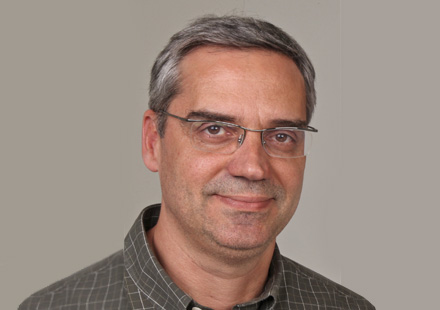
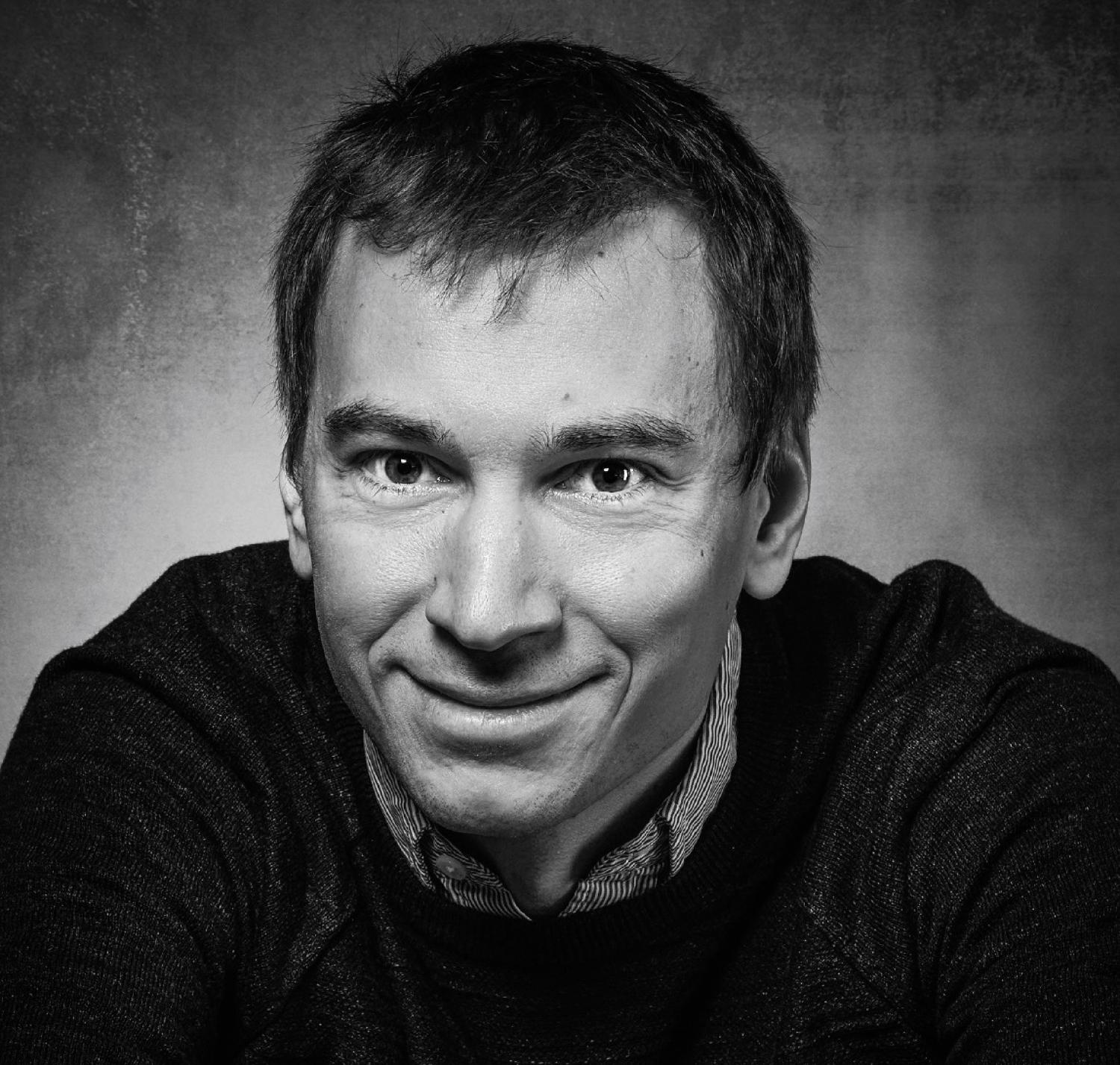
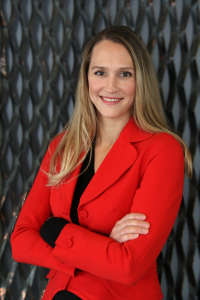
Dr Walter Wojciech M. Kozlowski is an Adjunct Associate Professor at the School of Mathematics and Statistics of the University of New South Wales . He has been actively engaged in research in functional analysis, fixed point theory, and their applications since the 1980s. Additionally, he is a professional in Information and Communication Technology, serving as Head of Architecture at Telstra Network Cloud and elected Technology Co-Lead of the Common NFVI Telco Taskforce (CNTT) in 2019. Research Interests: Dr Kozlowski specializes in functional analysis , fixed point theory , and modular function spaces . His work explores the convergence of iterative processes, nonlinear operator theory, and applications in Banach spaces. Recent Publications: His 2024 studies focus on implicit iterative processes, modular versions of fixed point theorems, and convergence analysis. Earlier works (2013-2017) examine nonlinear differential equations, pointwise Lipschitzian mappings, and common fixed points in modular spaces. Scientific Awards: Fulbright Scholar
Orit Shaer is a Professor and co-Chair of Computer Science at Wellesley College , where she founded and directs the Human-Computer Interaction (HCI) Lab . Her work bridges tangible interaction, human-AI collaboration, and mixed-reality interfaces, focusing on transforming work and learning environments through embodied technologies. Education : B.A. from Academic College of Tel-Aviv, M.S. and Ph.D. in Computer Science from Tufts University Research interests center on novel human-computer interaction paradigms : Human-AI collaboration frameworks Tangible and embodied interface design Mixed-reality applications for productivity Genomics collaboration tools STEAM education technologies Recent publications highlight human-AI co-creation (CHI 2024), temporal dynamics in automated work (CHIWork 2024), and pandemic-era remote interaction studies (IEEE Pervasive Computing 2021). Awarded: NSF CAREER Award Agilent Technologies Research Award Google App Engine Education Award Pinanski Prize for Excellent Teaching Best Paper Honorable Mention (ACM CHI 2014) Honorable Mention (CHIWork 2022) She co-founded the international CHIWork Symposium and chairs the ACM TEI conference. Her NSF IRES grant (2022) supports US-German collaboration on human-automation interaction.
Isaac Lage is an Assistant Professor of Computer Science at Colby College since July 2023, specializing in interactive optimization methods for sociotechnical machine learning applications. Their work bridges technical rigor with societal impact, emphasizing accessibility in educational settings and algorithmic accountability. Harvard University PhD in Computer Science (NSF GRFP Fellow) Microsoft Research Intern (Adaptive Systems and Interaction Group) Research Software Engineer at MIT/NYU with David Sontag Research focuses on interpretable machine learning , human-AI collaboration , and healthcare equity analysis . Current projects explore sociotechnical implications of computing systems through EHR data patterns , fairness in predictive models , and user-driven interpretability frameworks . Recent publications show trends in explainable AI (2020-2022), with subfields including clinical decision support , policy summarization , and uncertainty communication . Key themes: healthcare disparities , robust interpretability , and human-in-the-loop learning . Scientific Awards: NSF GRFP Fellowship NeurIPS Spotlight Presentation (2018) AAAI HCOMP Honorable Mention (2019) As a Pedagogy Fellow at Harvard SEAS (2022-23), they contributed to curriculum design for CS 152 and CS 231 at Colby. Also earned a Teaching Certificate from Harvard's Derek Bok Center (Spring 2023).
Jürgen Sauer is a Full Professor at the University of Fribourg , affiliated with the Department of Psychology under the Faculty of Letters and Human Sciences . With over 120 publications, his research focuses on Human-Machine Interaction , Usability Testing , User Experience (UX) , and Automation Design , particularly in high-stakes environments like X-ray baggage screening and spaceflight simulations . Email: juergen.sauer@unifr.ch Phone: +41 26 300 7622 Address: RM 01 bu. C-1.117, Rue PA de Faucigny 2, 1700 Fribourg Orcid: 0000-0003-2105-1694 His research projects, funded by the Swiss National Science Foundation (FNS), include: Improving work design for airport security officers (2019-2024): Developed pictorial scales for measuring psychological constructs in security environments. Social stress and support in hybrid teams (2018-2023): Investigated machine-induced social stressors and mitigation through social support. Automation in visual inspection tasks (2014-2018): Examined adaptable automation for baggage screening and system reliability effects. Usability testing effectiveness (2012-2016): Analyzed cultural background impacts and non-usability product features influencing test outcomes. Key contributions include the Luggage Inspection Simulation (LIS) environment for modeling work environments and the development of pictorial usability scales for multilingual applicability. His work bridges ergonomics , human factors , and applied psychology , with notable collaborations with researchers like Adrian Schwaninger and Andreas Sonderegger . His recent publications (2025-2014) analyze: Human-machine performance under false alarms and miscues Social stressor dynamics in hybrid teams Usability scale animation effects Phubbing behavior in professional contexts Accessible website design for non-disabled users
Andres Terech serves as Adjunct Professor of Marketing and Faculty Director of the Morrison Center for Marketing and Data Analytics at UCLA Anderson School of Management. With deep expertise in retailing and consumer behavior, he teaches pricing strategy, marketing analysis, and retail management while advising startups and Fortune 500 companies across multiple industries including retail, financial services, and automobile sectors. Education: Ph.D. Marketing, 2004, UCLA Anderson School of Management MBA 1997, IAE Business School, Universidad Austral B.A. Business Administration, 1994, Universidad de Buenos Aires Terech's research integrates retail innovation with consumer choice modeling, focusing on Latin American markets and emerging consumer trends. His work examines shopping method integration, franchising dynamics, and performance metrics through both theoretical frameworks and real-world case studies. He founded the Latin American Franchising Research Council (CLIF) to bridge academic and industry expertise in franchising. His publication portfolio reveals consistent focus on retail innovation in emerging economies, consumer loyalty modeling, and practical pricing applications. Articles demonstrate strong regional emphasis on Latin America while addressing universal challenges in brand expansion, market entry, and competitive positioning across entertainment, telecommunications, and retail sectors. Scientific Awards: Fully Employed MBA Teaching Excellence Award (2014) Fully-Time MBA Teaching Excellence Award (2014) Deloitte Consulting Award for Management Field Study (2014) Informs Doctoral Consortium Fellowship (2002-2003) UCLA Summer Doctoral Fellowship Program (2000-2002) Multiple Austral University Graduate Fellowships (1996-2004) Terech provides strategic guidance to startups through board advisory roles and has developed executive education programs across Latin America and Spain. His consulting practice covers new product launches, growth strategy, and distribution optimization for major corporations while maintaining active academic engagement through case writing and scholarly publications. As Faculty Director of the Morrison Center for Marketing and Data Analytics, he drives initiatives connecting marketing theory with data-driven business applications while continuing leadership through the Latin American Franchising Research Council he established in Argentina.
Prof. Fausto Cavallaro is a faculty member at the Department of Economics of the University of Molise . His research focuses on sustainability, renewable energy, and multi-criteria decision-making using advanced fuzzy logic methodologies. He actively collaborates on global projects related to sustainable development and supply chain optimization. Primary institution: University of Molise Department: Economics Academic rank: Professor Research interests include: Core: Sustainability, Renewable Energy, Fuzzy Set Theory Specialized: Multi-Criteria Decision Making, Circular Economy, HyperSoft Sets Applications: Healthcare supply chain, Wind energy, Wastewater treatment Recent publication trends show interdisciplinary work combining: Fuzzy logic with sustainability frameworks Innovative methods like SPC-MARCOS and RANCOM-WISP Focus on healthcare logistics, offshore wind farms, and circular economy
Kristin Braa is a Professor at the Department of Informatics, University of Oslo, and serves as Director of the HISP Center. Her career includes an 8-year tenure as Research Director at Telenor, where she established a Research and Innovation Center in Malaysia. Academic Roles: Vice Head of Department of Informatics, head of Information Systems (IS) research group Research Focus: Mobile extensions of open-source DHIS2 software for low-resource settings, action research methods, sustainable health information systems Research Themes: She investigates innovative approaches to support rural healthcare workers and underserved populations, emphasizing long-term engagement in national health systems. Her projects include MobiHealth (2010–2014) and NORAD-funded initiatives (2010–2014) for health information systems in developing countries. Scientific Awards: 2023 AIS Impact Award (with Jørn Braa) 2020 Roux Prize (with Jørn Braa) 2013 University of Oslo Innovation Prize 2013 Researcher of the Year (Faculty of Mathematics and Natural Sciences, UiO) 2011 ICT and Energy Researcher of the Year 2011 Rosing Prize Finalist for rural Bangladesh health initiative Collaborations: Active in the IS research group and Climate Health Network. She advocates for sustainable, community-empowering information systems through participatory design and sociotechnical approaches.
Luca Frediani is a Professor in Theoretical and Computational Chemistry at the Hylleraas Center, Department of Chemistry, UiT The Arctic University of Norway. His research focuses on advanced quantum chemistry methods, including density functional theory, multiwavelet basis sets, and solvation modeling. He actively develops computational tools like MRChem and VAMPyR for molecular electronic structure calculations. Current affiliation: UiT The Arctic University of Norway Research group: Theoretical and Computational Chemistry Teaching: KJE-2001 Theoretical Chemistry and Spectroscopy His work spans relativistic quantum chemistry, numerical methods for response properties, and benchmarking of basis set limits. Publications emphasize eliminating basis set errors, multiwavelet applications, and polarizable continuum models for solvation. He collaborates extensively on software development for quantum chemistry. Recent articles highlight multiwavelet-based DFT at the basis set limit, noise-tolerant force calculations, and relativistic effects in electronic structure. Sub-fields include scalar relativity, cavity-free solvation, and metal-ligand interaction accuracy.
Prof. Dr. rer. nat. Rainer Leupers is a faculty member at RWTH Aachen University, chairing the Department of Software for Systems on Silicon. His research focuses on embedded systems, hardware-software co-design, virtual prototyping, and security in computing-in-memory architectures. He has published extensively on RRAM accelerators, logic locking, and neuromorphic security. Chair of Software for Systems on Silicon Research in hardware security and deep learning accelerators Recent publications on cross-tool virtual frameworks and thermal side-channel attacks His work bridges system-level modeling with practical security implementations, emphasizing reliability and performance in heterogeneous computing environments. Key trends in his 2025-2023 articles include compute-in-memory optimization, neural network inference efficiency, and security vulnerabilities in emerging hardware. Awards and formal recognitions are not explicitly detailed in the provided materials. He has not directly mentioned advising students or research grants in the given text fragments. The chair's contact information includes an office at ICT Cube 1, Electrical Engineering, Aachen, with direct email and website links.
Onita Basu, Professor in the Department of Civil and Environmental Engineering at Carleton University's Faculty of Engineering and Design, specializes in water and wastewater treatment technologies. With a Ph.D. from the University of Waterloo, she leads the Basu Research Group, focusing on filtration/membrane bioreactors, biological removal of pharmaceuticals, and community-based water solutions in Tanzania. Her teaching includes courses like ENVE 3001 Water Treatment Principles and Design and graduate-level membrane processes. B.A.Sc., M.A.Sc. (University of British Columbia) Ph.D. (University of Waterloo) Professional Engineer (P.Eng.) Research Interests: Professor Basu investigates integrated water treatment systems, emphasizing membrane fouling control, nanoparticle disinfection mechanisms, and removal of recalcitrant organics. Her work bridges advanced technologies like ceramic ultrafiltration with practical implementations in low-resource settings through projects such as the Tanzania Water Hub. Recent Publications: Her 2025 studies on silver-doped zinc oxide for antimicrobial water treatment and PFAS removal strategies highlight emerging contaminant solutions, while 2024 work explores graphene oxide adsorption and climate change education programs. Earlier articles focus on membrane fouling, nanoparticle elution, and biofiltration optimization. Labs & Projects: The Basu Research Group operates pilot plants for membrane testing, biofiltration systems, and community engagement initiatives in Tanzania. They hosted Carleton's 3MT event in 2023 and collaborate with institutions like Humber College on NSERC-funded projects.
Waldemar Celes Filho is an Associate Professor in the Department of Computer Science at Pontifical Catholic University of Rio de Janeiro (PUC-Rio) and serves as Director of the Tecgraf Institute/PUC-Rio. With a career spanning over three decades, he has established himself as a leading researcher in computer graphics and scientific visualization. His educational background includes a Civil Engineering degree from UFRJ (1986), a Master's in Civil Engineering from PUC-Rio (1990), a Doctorate in Computer Science from PUC-Rio (1995), and postdoctoral studies in Computer Graphics at Cornell University (1995-1997). Dr. Celes Filho's research focuses primarily on Computer Graphics with special emphasis on Scientific Visualization, Numerical Simulation, Distributed Visualization, and Real-Time Rendering. He is particularly known for his work on visualization techniques for black oil reservoir models and as a co-creator of the Lua programming language. His research has resulted in over 50 publications spanning nearly three decades, with consistent output continuing through 2025. His recent publications demonstrate a strong trend toward applying advanced visualization techniques to complex industrial problems, particularly in petroleum engineering and construction informatics. His work bridges theoretical computer graphics with practical applications in engineering domains, showing particular strength in volume rendering, CAD model visualization, and distributed rendering systems. As Director of the Tecgraf Institute, he leads research initiatives that connect academic work with industry applications, fostering collaborations that translate visualization research into practical tools. Dr. Celes Filho has mentored numerous students who have become co-authors on his publications, including Paulo Ivson, Fábio Markus Miranda, and Lucas Caracas de Figueiredo, among others. His work continues to be influential in both academic and industrial settings.
Yasser Arafat Payne is a Professor of Sociology & Criminal Justice at the University of Delaware's College of Arts & Sciences, with a joint appointment as an associate professor in the Department of Africana Studies. His academic work focuses on street ethnographic research examining policing and reentry, economic well-being and educational inequality, and gun violence with street-identified Black Americans through the innovative Street Participatory Action Research (Street PAR) framework. Payne earned his Ph.D. and M.Phil. from the City University of New York Graduate Center, an M.A. from Seton Hall University, and a B.A. from Wagner College. His educational background has informed his distinctive approach to studying marginalized communities through the lens of those who live within them. Payne's research program challenges dominant arguments in the literature by asserting that all of the streets of Black and Brown America are resilient. His work focuses on racial identity, street identity, school violence, physical violence, Gangster Rap music and culture, and the methodology of street participatory action research. He has developed Street PAR as a framework that includes three essential features: research orientation, intervention for Street PAR members, and a vehicle for action and activism in local communities. His recent publications reveal a consistent focus on violence exposure, police-community relations, reentry challenges, and resilience among street-identified Black populations. Payne's work spans multiple disciplines including criminology, sociology, public health, and urban studies, with particular attention to the intersection of structural inequality and individual experience. Payne actively engages with media on issues of policing and structural violence, as evidenced by his July 2024 commentary on stop-and-frisk policies for NBC News and his August 2023 presentation to the Wilmington Reparations Task Force. He co-authored the book 'Murder Town, USA: Homicide, Structural Violence and Activism in Wilmington' (Rutgers University Press, 2023), which has become a key resource for understanding gun violence in urban communities. As an educator, Payne teaches specialized courses on street ethnography, Gangster Rap Music and Culture, Racial Stratification, and core courses on Race, Class & Gender and Race, Gender & Poverty. His teaching philosophy centers on bringing the lived experiences of street-identified populations into academic discourse through innovative pedagogical approaches. Payne leads a research lab focused on Street PAR methodology, training community members to document experiences of street-identified Black populations through surveys, interviews, and dual interviews. His approach emphasizes community ownership of research and the transformative potential of participatory methodologies in addressing structural violence.
András Gyenis is an Assistant Professor in the Department of Electrical Engineering at the University of Colorado Boulder, specializing in photonics and quantum engineering. His research focuses on developing hybrid superconducting-semiconducting quantum devices to enhance qubit coherence times. Prior to CU Boulder, he held postdoctoral and visiting positions at Princeton University and the Niels Bohr Institute, focusing on superconducting quantum circuits and topological materials. Education: PhD in Physics (2016, Princeton University), MS/BS in Experimental Condensed Matter Physics (Budapest University of Technology, Hungary). His work bridges quantum material science and quantum information science, emphasizing noise-protected qubit architectures and novel material platforms. Research Interests: Hybrid quantum devices, topological materials, superconducting circuits, coherence time extension, and cryogenic electronics. His lab creates qubits with intrinsic protection mechanisms to counteract environmental noise, advancing scalable quantum computing. Selected Articles: Recent work includes symplectic geometry in quantum circuits (2024), supercurrent reversal in nanowires (2023), and protected qubit designs (2021–2022). These studies explore material integration, dynamical sweet spots, and noise mitigation strategies. Labs/Teams: The Gyenis Lab at CU Boulder develops hybrid qubits and semiconductor-based quantum devices. They seek graduate/undergraduate students for experimental and theoretical contributions.
Judith Andersen is an Associate Professor at the University of Toronto Mississauga, specializing in health psychology with a focus on the psychophysiology of stress and its impact on mental and physical health in high-stress occupations. Her research emphasizes evidence-based training programs for police and special forces, resilience development for first responders, and mental health disparities among LGBTQ+ communities. She holds a PhD from the University of California, Irvine. Her work includes designing stress-regulation interventions to enhance police decision-making during critical incidents and developing competency frameworks for incident commanders. Recent projects involve applying biofeedback technology (e.g., HRV monitoring) to improve officer performance and wellness. She collaborates internationally with law enforcement agencies in Canada, the U.S., and Europe. Key research domains include: Psychophysiological stress responses and their modulation Resilience training for first responders Mental health disparities in marginalized groups Evidence-based policing strategies Her publications from 2024–2025 explore topics like stress physiology in policing, competency development for crisis leaders, and the role of social support in reducing LGBTQ+ mental health disparities. Ongoing projects focus on reducing racial bias in policing and optimizing training through big data analytics. While no formal advisees are listed, her research teams engage in translational studies impacting policy and practice. She advocates for applied psychological research to bridge academic and real-world challenges in public safety and health.
Alannah Oleson is an Assistant Professor in the Department of Computer Science at the University of Denver's Ritchie School of Engineering and Computer Science. Her work focuses on inclusive design, computing education, and addressing equity issues in technology. She is actively involved in the KIHA Innovation Labs, exploring human-centered approaches to computing education and HCI. Her research investigates how demographic factors influence learning outcomes in computing courses, develops pedagogical methods for teaching inclusive design (e.g., the CIDER framework), and examines the ethical implications of technology in K-12 and university settings. Notable areas include algorithmic fairness, gender bias in software systems, and culturally responsive computing education for underrepresented groups. Dr. Oleson's research emphasizes practical methods for integrating critical thinking into software design processes, with recent work exploring peer feedback systems for equity analysis in large courses and curriculum reforms to promote ethical awareness. Her contributions bridge theory and practice, aiming to make computing education more equitable and socially responsible.