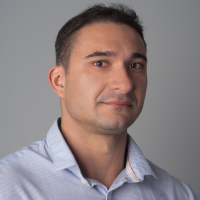
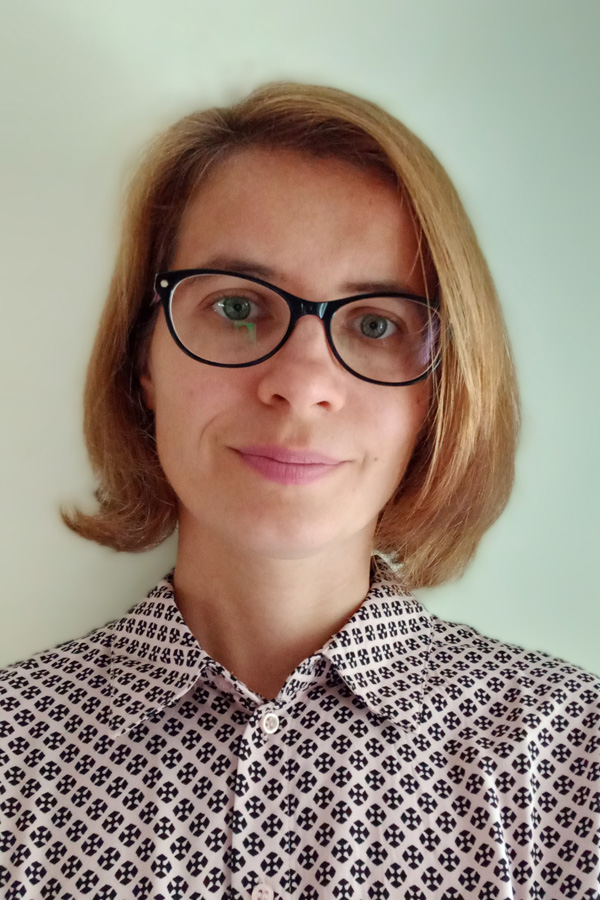
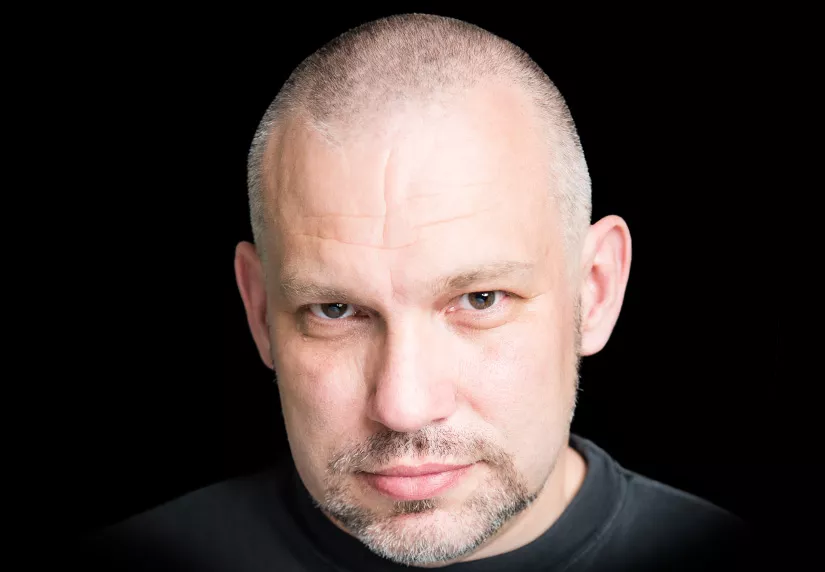
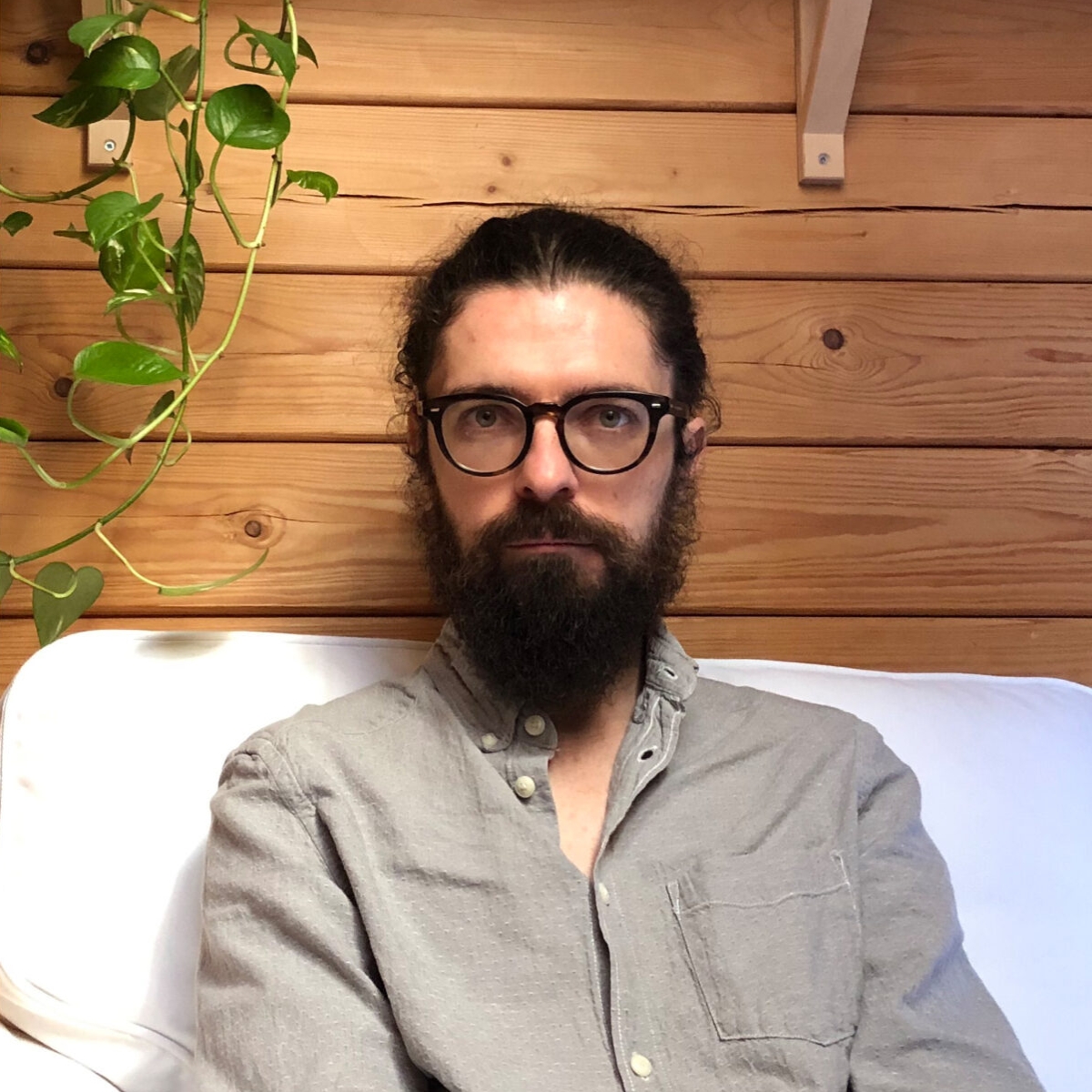
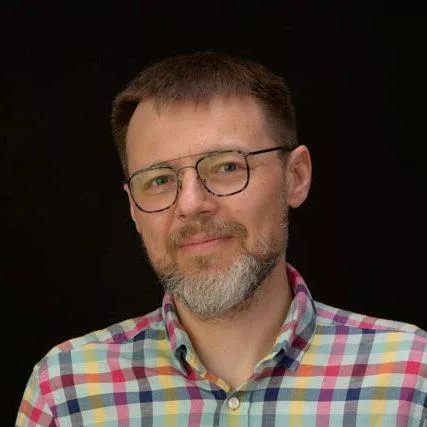
Michał Pilipczuk is an Associate Professor at the Institute of Informatics, Faculty of Mathematics, Informatics and Mechanics of the University of Warsaw. His research focuses on theoretical computer science, particularly algorithms on discrete structures, parameterized algorithms, structural graph theory, and logic in computer science. He leads the ERC-funded project "BOBR: Decomposition Method for Discrete Problems" and previously led a grant on optimality in parameterized complexity funded by the Polish National Science Center. His research interests include parameterized algorithms , structural graph theory , graph algorithms , and computational complexity . He has made significant contributions to the understanding of problems such as Independent Set in restricted graph classes, graph editing problems, and structural decompositions. The recent publications highlight a strong focus on structural graph theory and exact algorithms . Key themes include quasi-polynomial time algorithms for Independent Set in claw-free graphs, diameter computation in bounded genus graphs, and kernelization in trivially perfect graphs. His work often bridges combinatorial insights with algorithmic applications, particularly in the context of parameterized complexity. Principal Investigator, ERC Grant BOBR: Decomposition Method for Discrete Problems (2021–2026) Principal Investigator, Polish National Science Center Grant on Optimality in Parameterized Complexity (2014–2017) He has advised or collaborated with several researchers, including Marcin Wrochna and Marcin Pilipczuk. His work is published in top venues such as STOC, SODA, ESA, and ICALP.
Damian Grela is a Lecturer in the Department of Automation and Computer Science at the Faculty of Electrical and Computer Engineering, Cracow University of Technology. His work spans two distinct research domains: software engineering (focusing on BPEL processes, web services, and fault injection testing) and environmental engineering (specializing in diatomite-based biogennic pollutant removal, rain gardens, and surface water quality monitoring).
Jerzy Kukuczka Academy of Physical Education in KatowicePoland
Michał Krzysztofik is a Professor at the Academy of Physical Education in Katowice, specializing in sports science and exercise physiology. He holds a Master's degree (2014), PhD in Physical Culture Sciences (2018), and a post-doctoral habilitation in Medical and Health Sciences (2022). His research focuses on resistance training strategies, post-activation performance enhancement (PAPE), eccentric training, and blood flow restriction techniques. He collaborates with national sports associations like the Polish Athletic Association and Handball Association, providing scientific support to elite athletes. Notable awards include the Silesian Science Award (2021) and a Ministry of Education Scholarship (2022). Research interests emphasize optimizing athletic performance through biomechanical and physiological interventions. Key areas include sprint mechanics, muscle-tendon stiffness modulation, and training protocols for combat sports. His work integrates practical applications with elite athletes in volleyball, soccer, and track & field. Over 50 peer-reviewed articles since 2021 explore topics like PAPE repeatability, plyometric-isometric combinations, and sprint performance optimization. Personal athletic achievements include Vice-Champion of Poland in Bodybuilding (2017) and Wielkopolska Champion in Bodybuilding (2017). His studies often employ crossover trials and randomized controlled designs to evaluate acute and chronic adaptations in trained populations.
Dr. Michał Kalisz is an Assistant Professor in the Department of Computer Science at the John Paul II Catholic University of Lublin, affiliated with the Faculty of Philosophy. His work bridges theoretical computer science with practical applications in artificial intelligence (AI) across education and business domains. Research Focus: AI ethics, educational technology, business informatics, and knowledge representation. Academic Contributions: Recently presented four conference papers between 2023-2024, exploring AI's role in education (opportunities/threats, knowledge limits), public AI literacy, and business applications. Professional Engagement: Acted as a reviewer for the Annals of Social Sciences , led international workshops (USA, Europe), and participated in the Lublin Science Festival.
Dr. Katarzyna Jesse-Józefczyk is an Assistant Professor at the Institute of Mathematics, University of Zielona Góra, Poland. She maintains an office in Room 509 A-29 and can be contacted at k.jesse-jozefczyk@im.uz.zgora.pl. Her academic profile combines teaching responsibilities with diverse research activities across theoretical and applied mathematics. Her primary research interests include: Graph Theory (graph coloring, computational complexity of graph algorithms, coalitions and safe sets in graphs) Stochastic Inclusions and Multivalued Stochastic Equations with applications in economics and biological sciences Multivariate Linear Models and Analysis Game Theory (stochastic, multigenerational, and large games) Approximation Theory using Fourier series Preference Models using graded and interval relations Dr. Jesse-Józefczyk's work bridges theoretical mathematics with practical applications in secure data transmission, e-business, and space communication. She actively participates in the Center for Applications of Mathematics and Computer Science (OZMI), contributing to interdisciplinary research projects focused on sustainable energy, healthy society initiatives, and innovative industrial technologies. Her teaching portfolio includes algorithms and data structures, computer programming courses (both introductory and advanced), object-oriented programming, and database systems curriculum.
SWPS University of Social Sciences and HumanitiesPoland
Dr. Katarzyna Grunt-Mejer is an academic at SWPS University of Social Sciences and Humanities, based at the Poznań campus. She is affiliated with the Faculty of Psychology and Law and works within the Department of Clinical and Health Psychology at the Institute of Psychology. Holding a Doctor of Humanities in Psychology degree with additional training in sexology, philosophy, and bioethics, she serves as an Assistant Professor teaching sexology, basic psychology, and research methods in clinical psychology. She also directs the postgraduate studies in practical sexology. Dr. Grunt-Mejer's research focuses on sexual ethics, psychological support, the functioning of close relationships, and sexology. She has made significant contributions to understanding consensual non-monogamy, having led an international project from 2013 to 2015 examining attitudes toward non-mononormative relationships. Her work spans multiple disciplines including psychology, bioethics, and social sciences, with particular emphasis on the ethical implications of sexual health practices and the social construction of sexual norms. Her publication record shows consistent output across multiple domains, with her most recent work addressing contemporary issues in sexology, relationship structures, and sexual health. The articles demonstrate a clear progression from foundational research on relationship types to more nuanced examinations of ethical considerations in sexual health and the medicalization of sexual desire. Member of the scientific committee for the "Conference on the Future of Monogamy and Non-monogamy" Recipient of National Science Centre funding (SONATA competition) for her project "The concept of norm in sexology" (2017-2020) Contributor to significant research on road aggression and transportation psychology Dr. Grunt-Mejer actively engages in both academic and public discourse, participating in conferences like the Impact 2024 congress and contributing to public understanding of human sexuality. She leads the Sexology Scientific Club at the university and has been involved in numerous research projects examining the intersection of psychology, ethics, and sexual health. Her work demonstrates a commitment to bridging academic research with practical applications in clinical settings and public education.
Paweł Pilarczyk is an Associate Professor at the Institute of Applied Mathematics within the Faculty of Applied Physics and Mathematics at Gdańsk University of Technology, where he has been employed since 2018. His research spans multiple mathematical disciplines with applications across various scientific fields. Dr. Pilarczyk's research interests include dynamical systems , computational topology , rigorous numerics , and applications of advanced computational techniques . His work bridges theoretical mathematics with practical applications in neuroscience, cardiology, ecology, and epidemiology. Analyzing his publication record from 2025 back to 2007 reveals a consistent focus on rigorous mathematical approaches to understanding complex systems. His recent work shows increasing interdisciplinary applications, particularly in medical diagnostics (sleep apnea detection, heart rate variability analysis) and neuroscience (neuron modeling), while maintaining strong foundations in pure dynamical systems theory. As project manager for the OPUS-funded "Topological and numerical methods in dynamical systems" (since 2022), he leads significant research initiatives at the Department of Differential Equations and Mathematical Applications. Dr. Pilarczyk maintains an active research program with collaborators across multiple institutions, evidenced by his extensive publication record and research data sets available through Gdańsk Tech's Bridge of Knowledge platform.
Bydgoszcz University of Science and TechnologyPoland
Włodzimierz Kasprzak is a Professor at the Institute of Control and Computation Engineering, Faculty of Electronics and Information Technology, Warsaw University of Technology. His research focuses on computer vision, robotics, human-computer interaction, and machine learning. He has contributed to advancements in human action classification, skeleton-based feature analysis, and multimodal interface design. Research Highlights: Development of lightweight classification models for human actions in video using skeleton-based features. Advances in multi-stream fusion techniques for image and video analysis. Design of embodied agent systems for cybersecurity event visualization and control. Awards and Recognition: 2024: Individual First Class Rector's Award for Scientific Achievements (2022-2023) 2021: Medal of the Commission of National Education 2011: Golden Cross of Merit His work integrates theoretical contributions with practical applications in robotics, surveillance systems, and human-centered technologies.
Dr. Krystian Barzykowski is a Professor at the Department of General Psychology within the Faculty of Philosophy at Jagiellonian University in Kraków, Poland. He currently serves as Head of the Applied Memory Research Laboratory and is a Member of the Research Ethics Committee. He also holds the position of Proxy of the Dean of the Faculty of Philosophy for quality assessment and is a Member of the Board of the Krakow Branch of the Polish Psychological Society. Barzykowski obtained his doctorate in 2014 from Jagiellonian University and has since established himself as a leading researcher in cognitive experimental psychology with a focus on memory processes. His research spans multiple areas of cognitive psychology, particularly examining the mechanisms of autobiographical and episodic memory, involuntary cognitive processes, and the intriguing phenomenon of déjà vu. His work uniquely integrates cross-cultural perspectives with experimental cognitive psychology, exploring how multiculturalism and multilingualism affect psychological assessment and memory processes. His research program demonstrates a sophisticated approach to understanding the cognitive mechanisms behind memory retrieval, particularly focusing on how working memory influences involuntary autobiographical memories. Barzykowski's work on mind-wandering and thoughts detached from tasks represents a significant contribution to understanding spontaneous cognition. His recent Marie Skłodowska-Curie Postdoctoral Fellowship project 'SpontaneousPAST' specifically investigates how déjà vu can illuminate spontaneous memory retrieval processes. Barzykowski's extensive publication record shows a consistent focus on memory mechanisms while increasingly incorporating cross-cultural dimensions. His recent work has expanded to address timely societal issues including the psychological impact of the pandemic, refugee integration in educational settings, and the development of cultural intelligence among healthcare professionals. The interdisciplinary nature of his research connects cognitive psychology with educational, clinical, and social applications. Marie Skłodowska-Curie Postdoctoral Fellowship (2023) Andrzej Malewski Award from the Polish Academy of Sciences (2020) Mieczysław Bekker Scholarship from the National Agency for Academic Exchange (2020) Ministry of Science and Higher Education Scholarship for Outstanding Young Researchers (2018-2020) Multiple French Government Scholarships (2019-2021) International European Roma Spirit Award Finalist (2016) Barzykowski has successfully led multiple significant research projects funded by prestigious organizations including the National Science Centre, the Ministry of Science and Higher Education, the Stefan Batory Foundation, and the European Commission. His project portfolio includes 'Analysis of the role of working memory in the formation of involuntary autobiographical memories' (2020-2025), 'Wandering-mind: Advances in involuntary past and future thinking research' (2020), and 'The Role of Cognitive Inhibition in Involuntary Thinking about the Past and Future' (2016-2019). He is particularly noted for originating and co-authoring the first Polish textbook on psychological assessment in multicultural and multilingual contexts, which received a recommendation from the Council of Europe. At Jagiellonian University, Barzykowski leads the Applied Memory Research Laboratory, which focuses on experimental investigations of memory processes, particularly examining involuntary and voluntary memory retrieval mechanisms. His laboratory work integrates sophisticated experimental designs with cross-cultural perspectives, creating a unique research environment that bridges cognitive psychology with multicultural considerations. The laboratory has become a significant center for memory research in Poland, attracting international collaborators and contributing to major multinational research initiatives.
SWPS University of Social Sciences and HumanitiesPoland
Mariusz Czubaj is a Professor of Cultural Anthropology at SWPS University in Warsaw, where he is affiliated with the Faculty of Humanities and Department of Cultural Studies. He is a prominent cultural studies scholar with extensive expertise in cultural anthropology, literature, and popular culture. His academic work spans both scholarly research and creative writing, making significant contributions to understanding contemporary cultural phenomena. Professor Czubaj specializes in fan culture, sports anthropology, and alternative movements. His research explores the intersections between popular culture, literary forms, and social dynamics. He has developed particular expertise in crime fiction as both a literary form and cultural phenomenon, examining how this genre reflects and shapes societal attitudes and values. His approach combines anthropological methods with literary analysis to provide nuanced insights into cultural practices and representations. His publications reveal a consistent focus on cultural representation, particularly through the lens of popular genres. Czubaj's work demonstrates how crime fiction serves as both entertainment and cultural testimony, while his studies of fan culture illuminate the complex relationships between audiences and cultural icons. His research shows particular interest in how historical contexts shape contemporary cultural expressions, especially in music and sports narratives. Wielki Kaliber Award for best Polish crime and thriller novel in 2008 for '21:37' Professor Czubaj teaches cultural theory, crime and thriller fiction, and specialized journalism at SWPS University. He is also a faculty member of SWPS University's School of Ideas, an innovative program dedicated to design thinking and innovation. As an active public intellectual, he publishes regularly in the weekly 'Polityka' and the quarterly 'Kultura Popularna,' bridging academic scholarship with public discourse on contemporary cultural issues.
Prof. Dr. hab. Helena Słotwińska is a full-time Professor at the Department of Integral Catechetics within the John Paul II Catholic University of Lublin, Poland. Her academic career spans decades, focusing on religious education, pedagogy of religion, and the intersection of theology with moral and educational practices. Role: Professor in Integral Catechetics Institution: John Paul II Catholic University of Lublin Her research explores the emotional and psychological impacts of religious education, the role of liturgy in pedagogy, and the challenges of aggression and moral development in educational settings. She emphasizes the authority of educators and the integration of theological values into modern pedagogical frameworks. Recent publications highlight her work on sacramental rites, teacher-student dynamics, and the sociological dimensions of religious pluralism. Her articles span journals like Religions , Collectanea Theologica , and Pedagogical Annals , reflecting both qualitative and quantitative methodologies. While no explicit scientific awards are listed in the provided texts, her extensive bibliography and advisory roles (e.g., reviewing Fr. Grzegorz Śniadach's doctoral thesis) underscore her influence in academic and pastoral theology.
Krzysztof Cicheński is an interdisciplinary artist, academic lecturer, and opera director affiliated with the Faculty of Interior Design and Scenography at Magdalena Abakanowicz University of Arts in Poznań (UAP). Since 2025, he holds the rank of Assistant Professor at the Department of Scenography, where he teaches courses such as 'Selected issues in the history of theatre and drama' and 'Introduction to directing.' Education : Doctoral degree in art (visual arts and art conservation) from UAP (2024); Inter-Faculty Interdisciplinary Studies in Humanities (Master's) at Adam Mickiewicz University in Poznań (2005–2010). His artistic practice merges opera direction, playwright, libretto writing, set design, and sound art. He specializes in interdisciplinary performances that blend spatial activities, sound installations, and operatic installations, often exploring themes like forgotten works, historical narratives, and socio-cultural commentary. Notable projects include the 2024 opera Wedding (libretto and direction), the 2023 interdisciplinary Landscape , and the 2022 research-based performance The Devil's Wheel , which interrogates the ontological status of lost artworks. His work frequently involves collaborations with institutions like the Zbigniew Raszewski Theatre Institute and Grand Theatre in Warsaw. Scientific Awards : Scholarship of the Ministry of Culture and National Heritage (2024, 2020) Scholarship of the Marshal of the Wielkopolska Voivodeship (2013) He co-founded the Automaton Theatre (2005–2018) and has taught at institutions including Adam Mickiewicz University and the Academy of Music in Poznań. His projects are supported by programs like 'Placówka,' which funds innovative theatrical explorations.
Prof. Dorota Klus-Stańska serves as Professor and Head of the Department of Childhood and School Research within the Institute of Pedagogy at the University of Gdańsk's Faculty of Social Sciences. Her academic leadership spans critical analysis of educational systems, teacher development, and institutional frameworks shaping early education in Poland. Her research interrogates foundational tensions in educational practice: the conflict between institutional standardization and cognitive autonomy in children, the paradoxes of school readiness assessments, and the linguistic construction of educational realities. She champions reconceptualized paradigms that prioritize holistic child development over developmental imperatives, examining how multicultural inclusivity intersects with pedagogical traditions. Her work consistently challenges transmissive teaching models while exploring narrative-based alternatives that honor children's epistemic agency. Analysis of her 2019-2025 publications reveals three dominant trajectories: deconstruction of educational language traps (27% of output), reconceptualization of early social education models (41%), and critical examinations of teacher autonomy within bureaucratic systems (32%). This scholarship bridges continental philosophy, Polish educational policy, and classroom ethnography, with increasing international engagement evident in her 2023-2025 English-language publications. Scientific Awards: No specific awards documented in available sources. While doctoral advisees and grant details remain unlisted, her departmental leadership and prolific publication record (15+ articles annually) indicate significant mentorship responsibilities. Her position as Head of Department suggests oversight of curriculum development and academic quality assurance within early childhood education programs. Research infrastructure appears integrated within the Department of Childhood and School Research, with no dedicated laboratories specified. Her collaborative work with the Pomeranian Centre for Cultural Research suggests cross-institutional engagement in sociocultural analyses of education.
Tomasz Placek is a Professor at the Jagiellonian University within the Institute of Philosophy , specifically the Department of Epistemology . His work bridges philosophy of physics , ontology , and theories of agency , with a focus on quantum mechanics, relativity, and epistemological frameworks. Research Interests : Philosophy of physics (quantum theory, relativity), causal set theory, determinism vs. indeterminism, and modal interpretations of spacetime. Key Contributions : Analysis of Wigner’s Friend paradoxes, causal structures in quantum correlations, and topological issues in indeterministic models. Email : tomasz.placek@uj.edu.pl
SWPS University of Social Sciences and HumanitiesPoland
Radosław Kaczan, Ph.D., Assistant Professor at SWPS University's Faculty of Psychology in Warsaw, specializes in developmental psychology with a focus on creating diagnostic tools for children and adolescents. His work addresses peer violence in schools through research and implementation of prevention programs like RESQL. He contributes to standardizing learning outcomes and collaborates with academic and professional organizations. Education: Ph.D. in Psychology His research spans developmental psychology, educational psychology, and inclusion studies. Key projects include the RESQL bullying prevention system and analyses of vocational education pathways. Awards highlight his innovative impact, particularly with RESQL's recognition as social innovation and Mazovia's Innovator. Recent publications reflect his expertise in early childhood assessment, working memory's role in learning, and identity formation challenges. He actively participates in academic conferences and collaborates with institutions like the Bullying Research Center (BRC). Teaching responsibilities include human development psychology courses. Scientific Awards: Genius Universitatis 2025 competition success Best Social Innovation (RESQL System) Innovator of Masovia (RESQL System) Positive Impact Startup 2022 by Leon Kozminski Academy Warsaw Booster'21 winner (RESQL System) Polish Science Gala 2022 award (RESQL System) PRom Association awards Dr. Kaczan's work integrates research on cognitive development, bullying prevention, and inclusive education policies. His lab collaborations, particularly with the Bullying Research Center, drive practical implementations nationwide. He remains engaged in advancing educational frameworks through both academic and applied research.