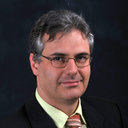
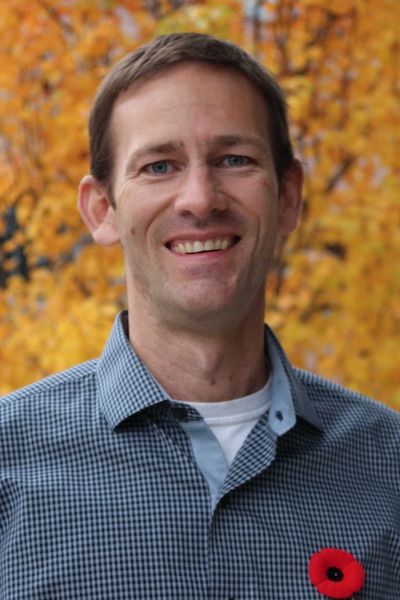
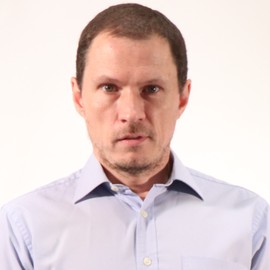
Hans Hallez is an Associate Professor at the KU Leuven , affiliated with the Faculty of Engineering Technology and the Department of Computer Science . He leads research in Wireless Programmable Sensor Networks and Sensor-Based Algorithm Development and Signal Processing . His work spans interdisciplinary domains including Artificial Intelligence , Embedded Systems , Edge Computing , and Biomedical Applications . Member of the KU Leuven Student Services Council Senior academic staff in Faculty of Engineering Technology Council Promotor/Co-promotor for 10+ R&D projects (2024-2029) His recent research focuses on fault-tolerant control systems , medical edge computing , and smart drug delivery materials . Collaborative projects integrate AI in embedded systems and distributed sensor networks for healthcare and industrial applications. He teaches modules in Data Engineering , Digital Signal Processing , and Distributed Embedded Software Engineering , with industry-focused courses like Upgradable Machine Design and Industrial Internet of Things .
István Varga is an Associate Professor in the Department of Control for Transportation and Vehicle Systems at the Faculty of Transportation Engineering and Vehicle Engineering, Budapest University of Technology and Economics. His work bridges theoretical control systems and practical transportation applications, particularly in intelligent traffic management and autonomous mobility. His research interests are centered on traffic control , urban traffic modeling , autonomous vehicles , emission modeling , and intelligent transportation systems . He applies advanced control methodologies such as model predictive control (MPC), set-theoretic control, and LPV modeling to solve real-world traffic problems including congestion, safety, and environmental impact. His work often integrates simulation platforms like VISSIM and MATLAB for system design and validation. The recent publications (2019–2024) reveal a strong trend toward connected and automated mobility , with a focus on V2X communication, platooning in urban environments, dynamic traffic light integration, and testing infrastructure like ZalaZONE. His research also addresses policy-level questions such as speed limit changes and dynamic road pricing using simulation-based impact analysis. The articles consistently emphasize multi-objective optimization, balancing traffic performance with environmental sustainability. István Varga is actively involved in the Hungarian Research Centre for Autonomous Road Vehicles (RECAR), contributing to national-level advancements in autonomous transport technology. His earlier work includes significant contributions to nuclear power plant safety systems, demonstrating interdisciplinary expertise in safety-critical control systems. While specific grants and students are not listed, his extensive publication record and leadership in research initiatives suggest active project involvement and academic supervision. He has contributed to both theoretical frameworks and real-world implementations, including traffic-responsive signal control, emission modeling for motorways, and robust control of industrial systems. His collaborations span academia and industry, with frequent co-authorship with researchers from Budapest University of Technology and Economics and the Hungarian Academy of Sciences.
Maren Mayer is a postdoctoral researcher at the Leibniz-Institut für Wissensmedien (IWM) in Tübingen, Germany, where she is affiliated with the Knowledge Construction lab. She holds a PhD in Psychology from the University of Mannheim and teaches courses at Eberhard Karls Universität Tübingen. Her research centers on sequential collaboration , dependent judgments , and cognitive modeling , with applications in group decision making, science communication, and forensic identification. She employs experimental and computational methods to study how individuals aggregate judgments and update beliefs in collaborative settings. The trend in her publications reflects a strong focus on improving collective intelligence through structured collaboration. Her work spans cognitive psychology, human-computer interaction, and mathematical modeling, with recent studies examining anchoring effects, opting-out behaviors, and human-AI collaboration. She frequently publishes in high-impact journals such as Scientific Reports , PNAS , and Psychonomic Bulletin & Review . She is actively involved in multiple research projects, including: Using sequential collaboration to aggregate judgments into accurate estimates (2022–present) Improving group decision making with sequential collaboration (2023–2024) The influence of expertise on the anchoring effect (2023–present) Her scientific contributions include numerous peer-reviewed articles and preprints, with a strong emphasis on open science practices such as preregistration, open data, and code sharing. She also organizes symposia and presents her work at major psychology and cognitive science conferences. Maren Mayer supervises and collaborates with researchers in experimental psychology and cognitive modeling. She teaches undergraduate courses in psychology at the University of Tübingen, including Introduction to Psychology and Collaboration in Digital Media . She is based at Schleichstr. 6, Tübingen, and can be reached at maren.mayer@iwm-tuebingen.de .
Warren Hare is a Professor and Associate Head of the Graduate Program in the Department of Computer Science, Mathematics, Physics and Statistics at the University of British Columbia Okanagan. He holds a PhD in Mathematical Optimization from Simon Fraser University. His research focuses on structured blackbox optimization, emphasizing algorithm development for applications such as road design and computer simulations. He serves as an Associate Editor for Set Valued and Variational Analysis and the Pacific Journal of Optimization , and co-authored the book Derivative-Free and Blackbox Optimization . Research Interests: Mathematical optimization, nonconvex analysis, derivative-free optimization, bundle methods, and applications in road design. He explores structured blackbox optimization problems where mathematical structures (e.g., max functions) can be leveraged to design efficient algorithms. Advising & Grants: Supervises graduate students in optimization and has secured funding for projects involving road alignment optimization and medical imaging applications. Collaborates on interdisciplinary initiatives combining optimization with civil engineering and medical physics. Labs/Teams: Engaged with UBC Okanagan’s optimization research group and collaborates with industry partners on infrastructure and healthcare optimization challenges.
Benoit Valiron is a Researcher affiliated with the Formal Methods Laboratory, focusing on quantum computing, formal methods, and programming languages. His work integrates theoretical foundations with practical applications in quantum software development and formal verification. Research interests include semantics of quantum programming languages, reversible computing, and categorical logic. He explores quantum algorithms' operational and denotational semantics while developing tools like Qbricks for formal verification of quantum systems. Recent publications emphasize quantum circuit optimization, concurrency models in quantum systems, and applications of ZX-calculus. His work bridges theoretical advancements with real-world quantum technologies, addressing challenges in NISQ-era hardware and algorithm design. Key contributions include foundational papers on quantum control structures, time synchronization protocols for real-time systems, and vectorial λ-calculus extensions. His research often involves collaborations with institutions advancing quantum software ecosystems and formal methods in safety-critical systems.
Dr. Chen Wang serves as an Assistant Professor in the Department of Statistics and Actuarial Science at the University of Hong Kong, with visiting appointments at the University of Cambridge Faculty of Economics during June-August 2024, July-August 2022, and July-December 2019. His academic position and active research output confirm his status as a current faculty member engaged in interdisciplinary statistical research. His core research focuses on: Random Matrix Theory for high-dimensional covariance estimation Time Series Analysis in complex stochastic systems High-dimensional Data Analysis methodologies These statistical frameworks provide foundational tools for modern data-intensive scientific domains. Analysis of his 2022-2025 publications reveals a strategic expansion into biomedical AI applications, particularly in single-cell genomics and spatial biology. His work demonstrates consistent innovation in developing AI agents for biological experimentation (e.g., PerTurboAgent for Perturb-seq, SpatialAgent) and advancing molecular design through diffusion models. This trajectory shows a deliberate integration of his statistical expertise with cutting-edge computational biology challenges. No scientific awards or honors were documented in the provided materials. The available information contains no details regarding graduate student supervision, research grant funding, or laboratory affiliations. His visiting positions at Cambridge suggest collaborative international research activities, but specific advising relationships or grant mechanisms remain unreported in the source text.
Dr. Patrick Walker is an Associate Professor in the School of Public Health at the Faculty of Medicine, Imperial College London. His research focuses on mathematical modeling of malaria burden and intervention impact, particularly in relation to pregnant women and antenatal care surveillance. He collaborates with the World Health Organization and the Malaria in Pregnancy consortium to enhance global malaria burden estimation. Key affiliations include the Imperial College Network of Excellence in Malaria and the MRC Centre for Global Infectious Disease Analysis. He led work on the global impact of the COVID-19 pandemic as part of Imperial College's response team. PhD: 'Quantifying the effects of measures to control highly pathogenic avian influenza H5N1 in Southeast Asia' (supervised by Prof. Azra Ghani and Dr. Simon Cauchemez) Research interests include malaria transmission dynamics, routine data integration into decision-making, and antenatal care-based surveillance. His work bridges mathematical modeling with public health policy, addressing challenges in low-resource settings. Publications highlight contributions to understanding malaria prevalence patterns in Tanzania and Indonesia, pandemic mortality analysis in Zambia and Syria, and surgical access equity studies. He advocates for improved surveillance methods to inform malaria control strategies.
Dr. Marco Pavone is an Associate Professor of Aeronautics and Astronautics at Stanford University, directing the Autonomous Systems Laboratory and the Center for Automotive Research at Stanford (CARS). He is also a Distinguished Research Scientist at NVIDIA leading autonomous vehicle research. He holds courtesy appointments in Electrical Engineering and Computer Science, and affiliations with HAI and ICME. His research focuses on autonomous systems, including self-driving cars, aerospace vehicles, and mobility systems, emphasizing control methodologies and system design. Education: Ph.D. in Aeronautics and Astronautics from MIT (2010). Former roles include Research Technologist at NASA JPL and participation in the National Academy of Engineering’s Frontiers program. He teaches courses on optimal control, robotics, and autonomous systems. Research Interests: Development of methodologies for analysis/design/control of autonomous systems, with emphasis on self-driving cars, aerospace vehicles, future mobility systems, and integration with energy networks. His work spans robotics, AI, control theory, and transportation systems. Publications reflect expertise in autonomous vehicle coordination, energy systems optimization, real-time perception, and multimodal decision-making. Recent work explores generative models for scenario analysis, transformer-based control, and safety-critical systems. Awards: PECASE (2017), ONR YIP (2017), NSF CAREER (2015), NASA Early Career (2012), Hellman Scholar (2012) Labs: Autonomous Systems Laboratory (ASL) and CARS Grants: Extensive funding from NSF, ONR, NASA, and industry partnerships Students: Mentors over 30 graduate students and postdocs, focusing on robotics, control, and AI
Siem Jan Koopman is a Full Professor of Econometrics at the Department of Econometrics, School of Business and Economics, Vrije Universiteit Amsterdam. He is also a Research Fellow at the Tinbergen Institute and holds a long-term Visiting Professor position at CREATES, University of Aarhus. His academic career includes positions at the London School of Economics and CentER (Tilburg University), with long-term visits at the US Bureau of the Census, European University Institute, and European Central Bank. Dr. Koopman earned his PhD in Statistics from The London School of Economics and Political Science between 1989 and 1992, with his degree awarded on March 30, 1992. Professor Koopman's research spans several interconnected areas of econometrics, with a particular focus on time series analysis. His work centers on state space methods, score-driven time-varying parameter models (GAS models), and dynamic factor models. He has made significant contributions to the fields of financial econometrics, forecasting methodologies, and simulation-based estimation techniques. His research bridges theoretical developments with practical applications across economics, finance, and climate science, demonstrating the versatility of econometric methods in addressing complex real-world problems. Koopman's work often involves developing innovative statistical approaches to model time-varying parameters and extract meaningful signals from noisy data. His recent publications reveal a continued emphasis on advancing methodological frameworks for time series analysis, with increasing applications to climate modeling and environmental economics. There's a clear trajectory toward more sophisticated modeling of nonlinear dynamics, volatility, and interdependencies in economic and financial systems. His work increasingly bridges econometrics with climate science, particularly in analyzing CO2 emissions, climate variability, and the economic impacts of natural disasters. Journal of Applied Econometrics Distinguished Author Fellow of the Society of Financial Econometrics (SoFiE) Professor Koopman has supervised 30 PhD theses, demonstrating his significant contribution to mentoring the next generation of econometricians. His research has been supported by multiple competitive grants including the Labex Louis Bachelier grant from the Institut Europlace de Finance, research grants from the National Bank of Poland, and the VILLUM Visiting Professor Programme grant from the Velux Foundation. These grants have supported work on portfolio allocation, interest rate forecasting, and systemic risk analysis. As a Statistical Software Developer, Koopman has created and maintained important econometric tools including STAMP and SsfPack, which are widely used in academic and professional settings for time series analysis. These software packages implement state space methods and have become standard tools in the field of econometrics.
Christopher Baish serves as a Fixed Term Assistant Professor in the Department of Geography, Environment, and Spatial Sciences at Michigan State University. He simultaneously holds positions as a Graduate Research Assistant at MSU and an Adjunct Associate Researcher at the Desert Research Institute's Division of Earth and Ecosystem Sciences in Reno, Nevada. His academic career bridges physical geography, soil science, and Quaternary landscape evolution with practical applications in military geoscience and historical route analysis. Ph.D. in Geography, Michigan State University (in progress) M.S. in Geography, Michigan State University (2020) B.A. in Environmental Geography, University of Northern Iowa (2017) Baish's research centers on pedology and soil geomorphology, with emphasis on landscape history and dynamics. His work investigates relationships between glacial/post-glacial sedimentological processes, soil development in diverse geomorphic settings, and soil-vegetation interactions. Current projects focus on argillic horizon degradation in Great Lakes forested soils, Quaternary climate change effects on landscape instability in New Mexico, and predictive modeling of subsoil properties in glaciated landscapes. He also studies glacial dynamics, podzolization processes, permafrost melt effects on loess distribution, and soil influences on historical European trade routes. Analysis of Baish's publication record reveals consistent focus on soil-landscape relationships across diverse geographical contexts from the Great Lakes to New Mexico, Alaska, and international locations including Estonia and Lithuania. His methodological approach combines field observations with laboratory analyses and predictive modeling, addressing both theoretical questions in Quaternary landscape evolution and practical applications for military terrain assessment. Key recurring themes include soil formation processes, landscape response to climatic changes, and the application of soil science to solve real-world problems in vehicle mobility and historical geography. Peter Birkeland Soil Geomorphology Award from the Geological Society of America Advancing Pedology Award from the Soil Science Society of America Baish works under the advisement of Dr. Randall J. Schaetzl at Michigan State University as he completes his doctoral studies. His research has received significant funding from the U.S. Army Corps of Engineers through the Cold Regions Research and Engineering Laboratory, supporting multiple projects on terrain analysis and predictive soil mapping for military applications. These grants have enabled fieldwork across diverse environments including northeastern Europe, the American Southwest, and Alaska, with particular focus on how soil properties affect vehicle mobility in challenging terrain conditions. Baish collaborates extensively with researchers at the Desert Research Institute and participates in Michigan State University's Quaternary Landscapes Research Group. His interdisciplinary work involves geologists, soil scientists, and military geoscience specialists, particularly through the U.S. Army Cold Regions Test Center at Fort Greely, Alaska. Current team projects focus on developing landform-based predictive models for soil properties and assessing high-latitude environments as analogs for military operations in cold regions.
Serafín Frache is an Associate Professor in the Department of Economics at the School of Business and Economics, Universidad de Montevideo, holding this position since March 2020 after serving as Assistant Professor from March 2018 to February 2020. His academic appointments include teaching roles at Universidad del CEMA (Argentina), dECON-UDELAR, and Queen Mary University of London, with research focusing on macroeconomics, monetary policy, and applied econometrics in Latin American contexts. His educational background features a Ph.D. in Economics from Queen Mary University of London (2015), an M.Sc. in Economics from University College London (2009), and a B.A. in Economics from Universidad de la República, Uruguay (2004). Ph.D. Economics, Queen Mary University of London (2015) M.Sc. Economics, University College London (2009) B.A. Economics, Universidad de la República, Uruguay (2004) Frache's research centers on macroeconomic dynamics with emphasis on inflation expectation formation, household saving behavior, and firm pricing decisions. His work integrates DSGE modeling with empirical analysis of household and firm-level data, particularly examining how economic agents process information in high-inflation environments and respond to monetary policy. Recent studies investigate buffer-stock saving models, belief-dependent pricing mechanisms, and countercyclical prudential tools within estimated DSGE frameworks. His publication record shows consistent output in top economics journals and central bank publications, with increasing focus on policy-relevant research for Latin America. The 2024 Econometrica paper on inflation learning represents a career milestone, while policy reports for the World Bank demonstrate applied impact. Key thematic threads include expectation formation heterogeneity, monetary policy transmission mechanisms, and DSGE model applications to commodity-exporting economies. Scientific recognition includes: Third Prize, Central Bank Economics and Finance Award, Brazil (2017) Chevening Scholarship (2008-2009) Japan-Inter-American Development Bank Scholarship PhD Fellowship, Queen Mary University of London Frache has advised eight Master's students at Universidad de Montevideo while serving on thesis committees at UDELAR. His research is supported by SSHRC Canada Insight Grants (2023-2028) as collaborator, building on earlier SSHRC Development Grants (2020-2022). As co-founder of MONT 2 Econ Lab (2020), he leads collaborative research initiatives, and has served on the Scientific Committee for the Central Bank of Uruguay's Economic Annual Meetings since 2014. He actively contributes to policy development through consultancy roles with the World Bank (Lead Modeler, 2022-2023), Inter-American Development Bank (multiple engagements 2014-2023), and Central Bank of Uruguay (Senior Researcher 2014-2017).
Mark Pezzo is an Associate Professor in the Department of Psychology at the University of South Florida, within the College of Arts & Sciences. He has held significant administrative roles, including Associate Dean, Department Chair, and Graduate Director at the St. Petersburg campus. Previously, he taught at Wake Forest University and UNC Greensboro. Education: B.S. in Special Studies, Psychoacoustics (Magna Cum Laude), S.U.N.Y. Fredonia, 1987 M.S. in Experimental Psychology (Social/Cognition), Ohio University, 1991 Ph.D. in Experimental Psychology (Social/Cognition), Ohio University, 1996 Dr. Pezzo's research centers on judgmental biases, especially hindsight bias , planning fallacy , rumor transmission , and algorithm aversion . His work investigates the interplay between cognitive and motivational processes in human judgment, with increasing focus on medical decision making and how people evaluate AI-based diagnostic tools. He explores how emotions, beliefs, and motivations shape retrospective evaluations and predictive accuracy. His recent publications reflect a strong trend toward understanding human-AI interaction in healthcare , particularly how patients and physicians respond to algorithmic decision aids. The articles span cognitive psychology, social psychology, and medical decision science, demonstrating interdisciplinary rigor. Key themes include trust in AI, hindsight bias in clinical settings, and the conditions under which humans prefer machines over peers. Scientific Awards: Multiple awards for teaching Dr. Pezzo has mentored students and led academic programs, serving as Graduate Director. While specific grants are not listed, his sustained research output in high-impact journals suggests active funding support. He has contributed to curriculum development, particularly in Psychological Statistics , Social Psychology , and Judgment & Decision Making . Outside academia, he is a musician, playing upright bass in Dean Johanesen & The 24 Hour Men, a gypsy/swing jazz trio performing across Florida.
Joseph Carreno, PharmD, MPH is an Associate Professor and Director of Research and Sponsored Programs at the Department of Pharmacy Practice, Albany College of Pharmacy and Health Sciences (ACPHS). He holds a dual role as an Inpatient Clinical Pharmacist at Albany Stratton Veteran's Affairs Medical Center. His academic focus is on infectious disease, with expertise in antimicrobial stewardship, epidemiology, and technology integration in healthcare. Education: M.P.H., Wayne State University School of Medicine Infectious Diseases Pharmacy Fellowship, Henry Ford Hospital/Wayne State University PGY1 Pharmacy Practice Residency, New York Methodist Hospital Pharm.D., Albany College of Pharmacy and Health Sciences Research Interests: Dr. Carreno investigates the application of technology and epidemiologic methods to enhance antimicrobial stewardship programs. Key areas include pharmacists' roles in active surveillance, prevention of anti-infective adverse events, and bacterial epidemiology of infectious diseases. His work emphasizes optimizing antimicrobial use through rapid diagnostics and multidisciplinary collaboration. Grants & Awards: Recipient of ACPHS Preceptor of the Year (2017) and Provost Technology Award (2014) Lead investigator on grants totaling $105,000+ from institutions like ASHP Foundation and Society of Infectious Diseases Pharmacists Recognized for contributions to infectious disease pharmacotherapy through ICAAC and MAD-ID fellowships Teaching & Mentorship: Teaches courses on infectious diseases, epidemiology, and antimicrobial management at ACPHS. Supervises student researchers, with notable trainees including Babowicz, LaPlante, and Eaton. Active in guiding initiatives like the STOP-NT randomized trial and Stewardship-NOW program. Labs & Teams: Leads ACPHS's Research and Sponsored Programs office, fostering collaborations on projects like rapid diagnostic impact studies and sepsis resolution algorithms. Engages with multidisciplinary teams in VA and hospital settings to advance clinical practice.
Antonio Galbis Verdu is a Full Professor in the Department of Mathematical Analysis at the Faculty of Mathematics, University of Valencia, Spain. His research is centered on functional analysis, operator theory, and harmonic analysis, with a particular focus on ultradifferentiable functions, time-frequency analysis, and convolution operators. PhD, Universitat de València, 1988 His research interests include functional analysis, operator theory, harmonic analysis on Euclidean spaces, partial differential equations, and integral transforms. He works extensively with weighted spaces of holomorphic functions, Gelfand-Shilov spaces, and pseudodifferential operators. His work often bridges abstract functional analytic frameworks with concrete problems in analysis and mathematical physics. The recent articles highlight a strong and consistent research trajectory in functional and harmonic analysis, particularly in time-frequency localization, Gabor systems, and operator theory on function spaces such as Fock and modulation spaces. The publications demonstrate deep engagement with ultradifferentiable function classes, convolution and Toeplitz operators, and foundational aspects of frame theory in non-Banach settings. The keywords span functional analysis, operator theory, and harmonic analysis, with subfields including time-frequency analysis, pseudodifferential operators, and spaces of smooth and holomorphic functions. There are no scientific awards explicitly mentioned in the provided text. Antonio Galbis has collaborated extensively with researchers such as José Bonet, Carmen Fernández, Joachim Toft, and David Jornet. He has been involved in numerous joint publications, indicating a strong advisory and collaborative role in the mathematical community. While specific grant details are not provided, his sustained publication record in high-impact journals suggests active funding support. He is a member of the research group ESALDI (Spaces and Algebras of Differentiable Functions), which focuses on functional analytic structures and their applications. He is a key member of the ESALDI research group at the University of Valencia, which investigates spaces and algebras of differentiable functions, with applications to partial differential equations and operator theory. This group fosters collaboration on advanced topics in analysis and supports the training of early-career researchers.
Martin Singull is a Professor and Head of Division in Applied Mathematics at the Department of Mathematics, Faculty of Science and Engineering, Linköping University. He has held academic positions at Linköping University since 2012, progressing from Assistant Professor to full Professor in 2020, and serving in leadership roles since 2016. His research is centered on mathematical statistics, particularly statistical inference for complex, high-dimensional data with repeated measurements. His research interests include: Statistical inference for repeated measurements and growth curve models Classification and discriminant analysis Multivariate statistical analysis High-dimensional data modeling Applications in public health, cardio-oncology, and development contexts Martin Singull's recent publications focus on likelihood-based classification, Edgeworth-type expansions for distribution approximation, residual analysis in GMANOVA-MANOVA models, and the estimation of misclassification probabilities. His work often involves collaboration with Dietrich von Rosen and other researchers, applying advanced statistical techniques to both theoretical and applied problems. A strong trend in his research is the development of efficient classifiers using temporal and spatial information in longitudinal data. His scientific service includes: Director for the Research School in Interdisciplinary Mathematics (2024–) Chair of the organizing committee for IWMS 2023 and LinStat2014 Team Leader for Sida-funded bilateral programs in mathematics with universities in Africa Member of the ISP Mathematics Reference Group Board member of the Faculty of Science and Engineering Martin Singull has supervised numerous PhD students, both at Linköping University and in collaborative programs in Rwanda, Uganda, Tanzania, Mozambique, and Cambodia. His advising spans theoretical statistics and applied interdisciplinary research. He leads research collaborations aimed at strengthening mathematical capacity in low-income countries, particularly in Africa. His work is supported by funding from Sida and ISP, and he is actively involved in international academic networks such as the International Workshop on Matrices and Statistics (IWMS). He is also associated with research initiatives in computational cardio-oncology, where statistical models are used to predict cardiovascular complications in cancer survivors, and has contributed to projects on fistula prevention and health outcomes in low-resource settings.