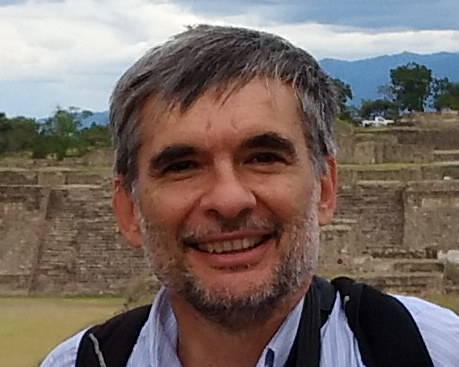
J. Garrett Morris is a researcher and teacher at the University of Iowa's Department of Computer Science, with previous affiliation to the University of Kansas. His work focuses on programming languages, type systems, and formal verification. Active contributor to conferences like POPL, ICFP, and Haskell Recognized for research in session types, linear logic, and functional programming His publications span topics including Exceptional Asynchronous Session Types , Partial Type Constructors , and Constrained Type Families . While no specific awards or students are mentioned in the scraped data, his academic activities include committee roles and keynote sessions.
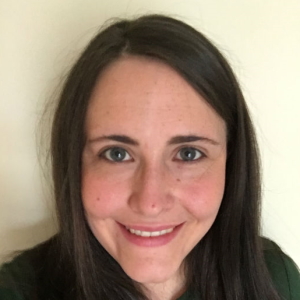
Fan Li, PhD, is an Assistant Professor at the College of Nursing, University of Missouri – St. Louis, specializing in diabetes nursing research and psychosocial responses during pandemics. With 10 years of interdisciplinary collaboration experience, her work bridges quantitative and qualitative methodologies across US-China healthcare contexts. PhD in Nursing (UMSL, 2022) MMed in Nursing (Nanjing University of Chinese Medicine, 2015) Her research focuses on diabetes management using machine learning to predict health outcomes in youth-onset type 2 diabetes. Recent publications highlight pandemic-era stressors in US nurses via network analysis, cross-cultural volunteerism during health crises, and psychosocial interventions for diabetic patients. Key awards include the 2022 Mary Reardon Castles Award and a 2015 International Diabetes Federal Travel Award . She has presented her findings globally, including at the American Diabetes Association Scientific Sessions and the World Diabetes Congress.
Dr. Bridianne O'Dea is an Associate Professor and NHMRC MRFF Investigator based at the Black Dog Institute, affiliated with the University of New South Wales. She completed her PhD in Health Sciences at the University of Sydney in 2013, along with a Graduate Certificate in Educational Studies (Higher Education) in 2011 and a Bachelor of Health Science (Honors, First Class) in 2009. Dr. O'Dea leads a comprehensive research program focused on identifying and addressing treatment gaps in mental health service provision using innovative Internet solutions. Her research integrates public health, psychology, and computer science to design and test scalable, low-cost digital interventions that proactively reach young people rather than waiting for them to seek help. Her vision is to ensure all young Australians have access to timely, appropriate, and effective mental healthcare. Her work demonstrates significant trends in digital mental health, with a strong emphasis on creating accessible treatments and service models through technology. Recent publications highlight her leadership in developing smartphone applications for mental health monitoring, school-based prevention programs, and AI-driven recommendation systems. Her research spans adolescent depression, suicide prevention, teacher wellbeing, and the use of digital phenotyping to identify mental health markers. Scientific Awards: Bupa Emerging Health Researcher Award (2018) NSW Young Tall Poppy Award (2017) theMHS Early Career Research Award - Innovation (2017) Multiple Black Dog Institute Travel Awards (2015-2018) Centre for Research Excellence in Suicide Prevention Best Paper Award (2017) Dr. O'Dea has secured substantial research funding, including an NHMRC MRFF Investigator Grant (2021-2026) for her project 'Tackling it with Tech: Using novel internet solutions to overcome the burden of depression in youth' and multiple NHMRC Project Grants. She collaborates extensively with researchers across disciplines including psychology, computer science, and public health. Her work with the Future Proofing Study represents a major longitudinal effort to understand adolescent mental health through digital interventions and monitoring.
Brigitte Pientka is a Full Professor in the School of Computer Science at McGill University, leading the Computation and Logic research group. She holds a PhD from Carnegie Mellon University (2003) and has conducted studies at the University of Edinburgh and Technical University of Darmstadt. Her research focuses on theoretical foundations of reliable software systems, combining programming languages, type theory, and theorem proving. Notable contributions include work on modal dependent type theory, contextual types, and mechanizing meta-theoretic proofs using the Beluga system. Her academic roles include serving as General Chair of POPL 2020, Program Chair for ICFP 2024 and CPP 2023/2024, and Executive Editor of Logical Methods in Computer Science. Awards include the Humboldt Fellowship and a Test of Time Award at PPDP'18. She actively contributes to conference PCs and editorial boards, emphasizing formal methods and programming languages. Pientka teaches advanced courses on programming languages (COMP 523, COMP 527), logic, and dependently typed systems (COMP 599, COMP 762). Her work spans theoretical advancements and practical tools, with a focus on educating students in functional programming and formal verification. She advocates for diversity in computer science, encouraging underrepresented groups to pursue research opportunities.
Prof. Nobuko Yoshida is the Christopher Strachey Chair of Computing at the University of Oxford's Department of Computer Science, leading the Programming Languages research theme. She joined Oxford in 2022 from Imperial College London, holding one of the oldest chairs in the department, previously held by Tony Hoare and Samson Abramsky. Her research focuses on session types , notably introducing Multiparty Session Types in 2008, which revolutionized protocol verification and earned the Most Influential POPL Paper Award (2018). Her work spans concurrent and distributed systems , formal verification, and industry collaborations with companies like Red Hat, Google, and EDF Energy. She holds EPSRC funding, is an Honorary Fellow at Glasgow University, and serves on editorial boards for leading journals like ACM Transactions on Programming Languages and Systems. Her research group develops tools such as Scribble for runtime monitoring, deployed in projects like the US Ocean Observatories Initiative. Awards include the British Computing Society Fellowship and EPSRC Established Career Fellowship. She mentors over 19 researchers who have secured academic and industry roles globally. Current students include Ari Hernawan, Kai Pischke, Jessica Richards, and Litu Zou.
Lukasz Ziarek is an Associate Professor in the Department of Computer Science and Engineering at the University at Buffalo, and serves as the Associate Dean for Academic Affairs in the School of Engineering and Applied Sciences. His research focuses on concurrency, real-time systems, distributed systems, and formal verification. He holds a PhD from Purdue University (2011) and a BS from the University of Chicago (2003). His research explores topics such as real-time Java implementations, session types for distributed protocols, and visual debugging techniques. Recent work includes formal models for secure multiparty computation, IoT device validation, and optimizing visual SLAM systems for robotics applications. He has contributed to frameworks like Juav (a Java-based UAV autopilot) and RTDroid (a real-time Android extension). Ziarek has received notable awards including the 2023 IEEE Technological Innovation Award, 2022 Meyerson Teaching Award, and 2018 NSF CAREER Award. His grants include collaborative research on UAV software infrastructure and real-time communication protocols. He actively develops tools like PTDETECTOR for JavaScript library analysis and Anodize for mixed-criticality systems. His work integrates formal methods with practical systems, addressing challenges in embedded systems security, compiler optimization, and real-time programming language design. He maintains a lab focused on advancing reliable software for autonomous systems and distributed computing environments.
Gabriel Ciobanu is a Professor at Alexandru Ioan Cuza University of Iasi, Romania, and a Senior Researcher at the Romanian Academy, Iasi. He has held various academic positions internationally including as a Visiting Professor at Newcastle University (UK) from 2010-2015 and as a Research Fellow/Professor at the National University of Singapore (2000-2004). His educational background includes PhD studies at A.I.Cuza University and Edinburgh University (1990-1994) under the mentorship of Robin Milner, and his undergraduate studies in the Faculty of Mathematics and Computer Science at A.I.Cuza University of Iasi (1977-1982). Professor Ciobanu's research focuses on Membrane Computing and Natural Computing , Distributed Systems Models including process calculi with emphasis on semantics, behavioral equivalences, logics, and verification. He has made significant contributions to bridging membrane computing and process calculi, and to the Foundations of Mathematics and Computer Science through his work on Finitely Supported Mathematics. His research has applications in theoretical computer science, formal methods, and computational biology. His publication record shows a consistent research trajectory focusing on theoretical computer science with applications to natural computing, membrane systems, process calculi, and finitely supported structures. Recent work (2023-2025) continues to explore these areas with increasing focus on multi-agent systems, continuation semantics, and applications to medical systems and reaction systems. Scientific Awards and Recognition 2013 Grigore Moisil Award, Romanian Academy (as co-author of "Mobility in Process Calculi and Natural Computing", Springer) 2010-2013 Member of the National Research Council (CNCS) in Romania 2008-2010 Royal Society of London Joint International Project (Newcastle University, School of Computing) 2004 Octav Mayer Award for Scientific Achievements, Romanian Academy of Sciences, Iasi branch 2000 Grigore Moisil Award of the Romanian Academy of Sciences for results in Theoretical Computer Science 1995-1996 Japan Society for the Promotion of Science Fellowship (Tohoku University and Kyoto University) 1994 DAAD Research Fellowship (Institute of Computer Science, University of Kiel) 1991-1992 Royal Society of London and Romanian Academy Fellowship (University of Edinburgh) Professor Ciobanu has supervised 8 PhD students and numerous master's students. He has served as Editor-in-Chief of the Scientific Annals of Computer Science since 2006 and has been a guest editor for special issues of several international journals. He has collaborated with researchers from numerous countries including UK, France, Netherlands, Spain, Italy, Russia, China, Singapore, and India. He has been involved in various research projects and has spent research periods at prestigious institutions worldwide including Edinburgh University, Universite de Paris XI, CWI and VU Amsterdam, Tohoku and Kyoto University, National University of Singapore, and Newcastle University.
Robert Dell is the Chair Professor in the Department of Industrial and Systems Engineering at the University at Buffalo, School of Engineering and Applied Sciences. He also serves as Managing Director of the Collaborative Institute for Multisource Information Fusion. His research spans optimization, production scheduling, supply chain design, and professional sports analytics. Recent publications highlight his work in military logistics (aircraft maintenance planning, amphibious group routing), integer programming (web session reconstruction, pallet loading), and defense infrastructure optimization. His methodologies integrate machine learning, combinatorial optimization, and geospatial modeling. Scientific achievements include the IFORS Prize Finalist (2012) .
Andreea Costea is an Assistant Professor in the Programming Languages Group within the Faculty of Electrical Engineering, Mathematics & Computer Science (EEMCS) at Delft University of Technology. She joined TU Delft in October 2024 after completing her PhD at the School of Computing, National University of Singapore (NUS), where she worked in the Programming Languages and Software Engineering lab collaborating with the Automated Program Repair team, Trustworthy and Secure Software group, and VERSE lab. Her primary research focuses on programming languages design and implementation, with particular emphasis on software verification for critical code, program synthesis, and automated program repair. She maintains strong connections with industry while pursuing formal methods research, especially in the context of Rust programming language safety and interoperability. Dr. Costea's publication record demonstrates consistent contributions to software engineering and programming languages research, with recent work focusing on automated program repair techniques, Rust language safety mechanisms, and communication protocol verification. Her research shows a clear trajectory from theoretical foundations in session types and separation logic toward practical applications in memory safety and program repair. She actively serves the research community as Program Committee member for major conferences including ASE, ICSE, ICFP, and APLAS. Her service includes chairing publicity committees for SPLASH and artifact evaluation for ESOP. Regular Journal Reviewer: CACM, TOSEM, TSE Panel discussions: PLMW @ POPL'22, PLDI'21, PLMW @ PLDI'21, POPL'21 Extensive reviewing for top-tier conferences including POPL, OOPSLA, CAV, VMCAI Dr. Costea supervises multiple Master's students working on Rust-related safety projects and is actively recruiting PhD students to work on software interoperability, particularly focusing on how to restore Rust's safety guarantees when integrating with legacy C code and ensuring correct interaction between components written in different languages.
Chris Hawblitzel is a Senior Principal Researcher at Microsoft Research , affiliated with the Systems Research Group – Redmond . His work bridges programming languages, operating systems, verification, and security, emphasizing the integration of safe programming language features into systems development. Research interests include: Programming Languages and Type Systems Formal Verification of Systems Software Language Design for Security and Safety Systems and Networking Recent publications highlight advancements in Rust verification, linear types for systems, proof automation in F*, assembly language verification, and tactic languages. Key trends involve leveraging type systems for safety, SMT-based automation, and cross-layer formal methods. He has contributed to academic communities as a committee member for conferences such as PLDI 2025 , OOPSLA 2023 , and CPP 2019 , alongside session chair roles.
Dr. Stephanie Balzer is an Assistant Professor in the Principles of Programming Group at Carnegie Mellon University's School of Computer Science. Her research focuses on enabling failure-free software through formal methods like type systems and verification logics. She emphasizes compositional proofs for scalability and practical validation via software artifacts. Programming Languages Type Theory Program Verification Concurrency & Security Her recent work explores timed protocols, disentanglement logic, and multiparty session types. Articles demonstrate semantic logical relations for termination (2025), deadlock freedom in Rust embeddings (2022), and information flow control (2024). Key collaborative papers address cyclic process networks and separation logic frameworks. Scientific recognition includes: NSF CAREER Award (2025) ACM SIGPLAN Distinguished Paper (2022) ECOOP Distinguished Paper (2022) She supervises PhD candidates Yue Yao, Yinsen Zhang, and Zak Kent (with Guy Blelloch), plus Master's student Sonya Simkin. Former advisee Jules Jacobs received Cum Laude distinction at Radboud University. Active in academic service, Balzer chairs PLMW@POPL workshops and co-organizes Oregon Programming Language Summer School. She serves on program committees for LICS, POPL, and ICFP.
Alberto Marcone is a Full Professor of Mathematical Logic at the University of Udine, where he serves as the Director of the Department of Mathematical, Computer and Physical Sciences (DMIF) since October 1, 2024. His academic home is within the Department of Mathematical, Computer and Physical Sciences at the University of Udine, located at Via delle Scienze, 208 -- Loc. Rizzi, 33100 Udine, Italy. Professor Marcone's research spans several interconnected areas within mathematical logic. His primary interests include reverse mathematics, descriptive set theory, well-quasi-order and better-quasi-order theory, and computable analysis with particular emphasis on the Weihrauch lattice. His work explores the logical strength of mathematical theorems, classification problems in continuum theory, and the computational content of mathematical principles. He has made significant contributions to understanding the relationships between different mathematical principles and their proof-theoretic strength. Analysis of his recent publications reveals a consistent focus on the intricate connections between order theory, reverse mathematics, and descriptive set theory. His work often examines the logical strength of combinatorial principles related to well-quasi-orders and better-quasi-orders, while increasingly exploring connections to computable analysis through the Weihrauch lattice framework. Recent publications demonstrate growing international collaboration, particularly with researchers across Europe, and an expanding application of logical methods to topological and metric space problems, including connections to knot theory and fractal geometry. Member of editorial board of the journal Computability Member of the board of the PhD program in Mathematics and Physics Organizer of Logic Colloquium 2018 (Udine) Organizer of Special Session on Computability Theory at AMS-UMI International Joint Meeting (Palermo, July 2024) Organizer of XXVIII Incontro di Logica AILA (Udine, September 2024) Professor Marcone teaches Mathematical Logic for both undergraduate and graduate mathematics programs at the University of Udine. His office is located on the 2nd floor, room A2 90, where he holds student reception hours either in person or via Microsoft Teams by appointment. As department director, he oversees the academic and administrative functions of the Department of Mathematical, Computer and Physical Sciences.
Dr. Yu-Cheng Lin (also known as Robbie Lin) is a Sessional Lecturer at the University of New South Wales (UNSW), Faculty of Built Environment, specializing in real estate investment and finance. He holds a PhD in real estate investment and finance from UNSW and is a chartered member of the Royal Institution of Chartered Surveyors (MRICS) in investment management, fund management, financial modelling and valuation. His academic appointments include Coordinator/Sessional Lecturer positions at UNSW for courses including Property Industry Application (REST0010) and Construction Management Risk and Business Analytics (CONS0016), as well as teaching roles at Western Sydney University. PhD in Real Estate Investment and Finance, University of New South Wales University International Postgraduate Award (UIPA scholarship), UNSW, 2019 Dr. Lin's research focuses on the intersection of real estate markets, capital markets, and investment strategies. His expertise includes analyzing interest rate sensitivity across different real estate sectors, particularly REITs in the Pacific Rim region, US, UK, Europe, and APAC markets. He investigates how monetary policy affects various commercial real estate sectors including office, retail, industrial and logistics, multifamily (BtR), healthcare, hotel, infrastructure, and data center properties. His work bridges academic research with practical application in institutional investment, providing insights for portfolio construction, tactical and strategic asset allocation, and interest rate risk management. His recent publications demonstrate a clear trend toward sector-specific analysis of real estate investment performance, with particular emphasis on how different property types respond to changing interest rate environments. His research increasingly focuses on the Pacific Rim region while maintaining a global perspective, examining how US monetary policy transmits to international real estate markets. The growing importance of logistics and industrial real estate due to e-commerce trends, as well as the development of specialized investment vehicles like Build-to-Rent (BtR), features prominently in his recent work. Doctoral Program Manuscript Prize Winner, American Real Estate Society (ARES), 2021 PhD Award for 'Highly Commended Presenter on the Day', Pacific Rim Real Estate Society (PRRES), 2020 University International Postgraduate Award (UIPA scholarship), University of New South Wales, 2019 Dr. Lin has secured research funding including a €$15,000 grant from the European Public Real Estate Association (EPRA) for his project on varying interest rate sensitivity of different real estate sectors. His research has been commercially applied in formulating institutional fund and investment management strategies, with practical implementations in real estate wholesale funds reporting for global institutional investors (SWFs, Pension Funds, Insurers). He has developed tactical and strategic asset allocation strategies for real estate funds across multiple regions and has created distressed asset and debt investment strategies for various real estate sectors. Through his media engagement with outlets including The Property Chronicle and Special Broadcasting Service (SBS), Dr. Lin actively translates academic research into practical insights for industry professionals and the broader public. His work demonstrates a strong commitment to connecting academic research with real-world applications in the commercial real estate industry.
Dr. Mathias Mayer is a Lecturer at ETH Zurich since 2023, with prior postdoctoral roles at WSL (2020-2023) and BOKU Vienna. His research focuses on carbon and nutrient cycling in forest ecosystems, emphasizing soil microbial communities (particularly fungi) and their roles in plant-soil interactions. Mayer's work examines disturbances like windthrow, bark beetle infestations, logging, and climate change impacts across European Alps, Dinarian Mountains, Northern Scandinavia, and Himalayan forests. Key Research Areas: Forest disturbance ecology, mycorrhizal symbiosis, carbon flux modeling, microbial biogeochemistry Methodologies: Stable isotope analysis, DNA-based techniques, field experiments, meta-analyses His recent publications reveal trends in post-disturbance carbon dynamics, fungal community shifts following windthrow, and interactions between defoliation events and soil processes. Mayer has received multiple awards including the UV-Forschungsstipendium (2019) and Walter Kubiena Forschungspreis (2017). Scientific Awards: UV-Forschungsstipendium - Dissertation (2019) Förderungspreis der Stiftung 120 Jahre Universität für Bodenkultur (2017) Walter Kubiena - Forschungspreis (2017) Dr.in Wilfrieda Lindner Wissenschaftspreis (2014) Topstipendium für Niederösterreich (2010) Mayer actively contributes as reviewer for journals like New Phytologist and Functional Ecology , and has chaired sessions at EGU General Assembly (2021) and GfÖ conferences (2018). His work bridges field experiments with computational modeling across alpine and boreal forest systems.
Kayleigh Mason is a Senior Research Fellow in Epidemiology and Biostatistics at the School of Medicine, Keele University. She joined Keele in 2020 and leads the Keele Health and Care Data Research (HCDR) Network, contributing to national research initiatives. Her work focuses on epidemiological analysis of healthcare data, particularly electronic health records (EHRs), to address health inequalities, disease management, and outcomes in chronic conditions like psoriasis and musculoskeletal pain. Education: BSc (Hons) Pharmacology from The University of Manchester (2010), PhD in "Central and Peripheral Mechanisms of Pain in Clinical Knee Osteoarthritis" from The University of Manchester (2014). Professional Experience: Previously a Research Associate at The University of Manchester, specializing in pharmacoepidemiology and applied statistics using BADBIR dermatology datasets. Current Roles: Member of the School of Medicine Management Team and statistical reviewer for Rheumatology and Rheumatology Advances in Practice . Research Interests: Large-scale EHR analyses for population health insights Pharmacoepidemiology of psoriasis therapies Musculoskeletal pain epidemiology in children and adults Health inequalities and patient outcomes Public and Patient Involvement (PPI) in research design Collaborations: Leads NIHR-funded projects (e.g., CLIMB, CAM-Pain, MSKCOM) and collaborates with global institutions like Lund University and Oxford University. Her work has generated over £1 million in research income and contributed to over 40 peer-reviewed publications. Teaching: Delivers statistics/epidemiology sessions for postgraduate and undergraduate programs, including the Summer School on Prognosis Research. Advocates for open-access training materials in EHR methodologies.