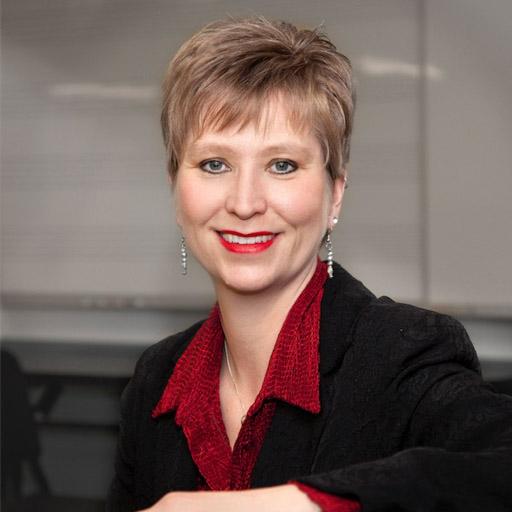
Emma Maclean is a Part-Time Lecturer and Module Coordinator in the Division of Occupational Therapy and Arts Therapies at Queen Margaret University. She holds qualifications including MA (Distinction), PG Dip, and BA (Joint Honours). Her roles include teaching on the MSc Music Therapy program, focusing on supervision for practice education placements and interdisciplinary studies. Education: MA (Distinction) in Music Therapy PG Dip in Music Therapy BA (Joint Honours) Research Interests: Partnership working, collaboration, evaluation, group work, and mental health across children, adults, and older populations. She employs research methods such as case studies and focus groups. Publications & Presentations: Her work includes a peer-reviewed article on partnership evaluation and a chapter in Arts Therapies in Schools . She co-presented a plenary session at the 2016 BAMT conference titled Music Therapy in a Changing Landscape . Affiliations: British Association for Music Therapy (BAMT) representative on Allied Health Professionals Federation Scotland (AHPFS) Registered with the Health and Care Professions Council Fellow of the Higher Education Academy Clinical Work: Works as a lead music therapist in the NHS, specializing in pediatric services, adult/older adult mental health (including dementia), and supervision. Engages in freelance violin performance with ceilidh bands, tango groups, and orchestras.
Morna O'Neill is a Professor and Department Chair at Wake Forest University, specializing in Eighteenth- and Nineteenth-Century European Art, with a focus on the intersection of art, design, and politics in Britain. Her research redefines traditional hierarchies between fine and decorative arts through a political lens. Research Interests: Art History, British Art, Arts and Crafts Movement, Political Art, Colonial Art, Domestic Interiors, Museum Studies. Key Publications include monographs on Walter Crane and Hugh Lane, and articles exploring topics such as socialist symbolism in decorative arts, imperial narratives in Victorian print culture, and the role of domestic spaces in art history. Her work has been recognized with the Historians of British Art Book Prize. Projects: Co-founder of the digital humanities initiative Home Subjects , which investigates the domestic display of art in Britain (1715–1914), supported by a National Endowment for the Humanities grant. She co-chaired the 2015 College Art Association conference session on private art display. Scientific Awards: Historians of British Art Book Prize for Best Book before 1900 (2011).
Naomi Rogers, Ph.D. (She/Her) is Professor of the History of Medicine in the Section of the History of Medicine and the Program in the History of Science and Medicine at Yale University. She holds courtesy appointments in the History Department and the Women's, Gender and Sexuality Studies Program, and serves on Yale's Dean's Advisory Council for LGBTQI Affairs. Professor Rogers teaches undergraduate, graduate, and medical students, regularly lecturing on the history of AIDS, reproduction, health economics, eugenics, nutrition, disability, and health activism. Professor Rogers' educational background includes: PhD in History from University of Pennsylvania (1986) MA from University of Pennsylvania (1986) BA in Music from Melbourne University (1980) BA with Honors from Melbourne University (1979) Her research focuses on 20th and 21st century history of medicine with emphasis on health inequities and social justice. Professor Rogers' historical interests span gender and health, disease and public health, disability studies, feminism, alternative medicine, health policy, and health activism. Her work critically examines the intersection of medical practices with social movements, particularly how marginalized communities have challenged medical orthodoxy throughout American history. She has published extensively in journals such as American Journal of Public Health, Bulletin of the History of Medicine, Journal of Medical Humanities, Radical History Review, Social History of Medicine, and Women and Health. Professor Rogers' recent scholarship demonstrates a consistent focus on the historical dimensions of contemporary health issues, particularly vaccine politics, abortion history, and community health activism. Her publications reveal patterns of resistance to medical authority, the role of race and gender in shaping health outcomes, and the historical roots of current health justice movements. Her work bridges academic history with public engagement, as evidenced by her frequent media commentary on COVID-19 and other health issues in outlets including BBC Radio, CNN, Huffington Post, National Public Radio, New York Times, Wall Street Journal, and Washington Post. Among her notable recognitions: AAHN's Lavinia L. Dock Award for Exemplary Historical Research for 'Polio Wars: Sister Kenny and the Golden Age of American Medicine' (2014) Presenter of the AAHM's Garrison Lecture: 'Radical Visions of American Medicine: Politics and Activism in the History of Medicine' (2017) Professor Rogers has been actively involved in academic leadership and mentoring. She has served as Director of Graduate Studies for the 2022-23 academic year, Chair of the Women's Faculty Forum, and Liaison to the Committee on Status of Women in Medicine. Her service extends to editorial boards including the Journal of the History of Medicine and Allied Sciences since 2018. She has also contributed to public understanding of medicine through consultations for documentaries including 'The Polio Crusade' (PBS), 'On the Basis of Sex' (Focus Features), and 'War on Science' (in process). Currently, Professor Rogers serves on the Medical School's OBGYN 'Dobbs' Sessions Planning Committee, which has organized webinars for the Yale community, and was co-organizer of the history-themed session 'Rooted in History: Abortion, Law and American Health Care.' She is working on her book project 'Health Radicalism and the Humanization of American Medicine' (under contract with Oxford), examining critics of medical orthodoxy since 1945 including civil rights, consumer, and feminist activists. She also conducts ongoing research on antisemitism in American medicine in the decades before and after World War II.
Professor Sławomir Kaczorowski, Ph.D., has been a faculty member at the Grażyna and Kiejstut Bacewicz Academy of Music in Łódź since 1981, where he teaches composition and served as Head of the Department of Composition from 2011 to 2021. He previously held significant leadership roles including Vice-Rector for Artistic and Teaching Affairs (1999-2005) and Vice-Dean of the Faculty of Composition, Music Theory, Music Education and Rhythmics (1996-1999). His educational background includes diplomas in music theory (1981) and composition under Professor Bronisław Kazimierz Przybylski (1981) from the State Higher School of Music in Łódź. Awarded the title of professor by the President of Poland in 2002, he remains an active academic leader currently serving as chairman of the Art Section of the Polish Accreditation Commission. Kaczorowski specializes in contemporary composition with emphasis on instrumental works, chamber music, and choral compositions. His research interests manifest in diverse output featuring piano, accordion, and mixed ensembles, with notable focus on tango-inspired forms and liturgical reinterpretations. He pioneered the MUSICA MODERNA sessions promoting new music through biannual concerts and lectures. Analysis of his 15 most recent compositions reveals consistent exploration of Polish contemporary classical traditions with strong emphasis on instrumental timbre, cross-genre fusion (particularly tango elements), and innovative approaches to sacred music forms. His works demonstrate technical mastery across diverse ensembles from solo piano to full orchestral settings. Silver Medal for Merit to Culture – Gloria Artis (2021) Numerous national composition competition awards Jury membership at international competitions including the T. Baird Young Composers' Competition (Warsaw 2018) and National Association of Composers USA competitions (2017-2018) Professor Kaczorowski has mentored award-winning composers including Grzegorz Duchnowski and Tomasz Szczepanik. His institutional leadership includes directing the Grażyna Bacewicz International Composition Competition (2012, 2015, 2019) and serving as president of the Łódź Branch of the Polish Composers' Union until 2022. He maintains active artistic engagement through premieres across Europe, China, and the United States. His creative work is organized through departmental initiatives including the Department of Composition's performance series and collaboration with the Artur Rubinstein Łódź Philharmonic. Current activities focus on expanding Polish contemporary music's international presence through competitions and cross-border artistic exchanges.
Helle Hochscheid is a University Lecturer in antiquity and heritage at University College Roosevelt, a Liberal Arts & Sciences college within Utrecht University in Middelburg. She holds an affiliation with the Humanities Research Institute for History and Art History and the Department of Ancient History and Classical Civilization. Her academic roles include coordinating the Archaeology in the Classroom project and serving on the Scientific Advisory Board of the Netherlands Institute in Athens, the Editorial Board of PHAROS: Journal of the Netherlands Institute at Athens , and the Advisory Board of Theran Press. Her research expertise spans Greek archaeology, ancient history, cultural heritage, and women’s history, with a focus on craft production (particularly sculpture and musical instruments like auloi) in ancient Greek societies. She investigates social contexts of craftsmanship, including the roles of non-elite groups and women in Athenian artistic networks. Key themes include gender diversity, migration’s societal impact, and the intersection of craft labor with early knowledge economies. Hochscheid regularly collaborates with undergraduate students, co-editing volumes such as The World on Walcheren (2024). She teaches courses including Academic Internship , Greek Art & Archaeology , and Making Society in Archaeology , emphasizing interdisciplinary education and community-engaged learning. Her work bridges academic research and public heritage through projects like Archaeology in the Classroom , which introduces transferable skills via archaeology to primary school children. Her professional contributions include organizing sessions at the EAA Annual Conference (2024) and presenting on topics like women’s work in ancient Athens. She is a member of the Engendering Ancient Economies Network (EAEN) and the TEXNH research collaboration, exploring economic and social dimensions of ancient Mediterranean crafts.
Jessica Glazier is an Assistant Professor in the Frances L. Hiatt School of Psychology at Clark University, Worcester, MA. She completed her Ph.D. and M.S. in Psychological Science at the University of Washington (2022 and 2019, respectively) and a B.A. in Psychology & Music from Albion College (2015). Her research focuses on challenging societal norms about social categories like gender, race, and sexual orientation, emphasizing inclusivity for marginalized groups such as transgender, multiracial, and asexual individuals. She employs methods from social, developmental, cognitive psychology, and interdisciplinary approaches like feminist and LGBT studies. Research Interests Exploring how social categorization affects perceptions and experiences of individuals who defy traditional norms Examining consequences of gender/racial essentialism on prejudice and discrimination Investigating gender development in youth, including transgender and cisgender children Addressing statistical methodology limitations in psychological science Recent Research Trends Her 2024 work highlights challenges in LGBTIQ+ research inclusivity and examines gender attitudes across diverse children. Recent projects (2023–2024) emphasize statistical frameworks for meaningful inference, intersectionality in harassment perceptions, and the role of adult beliefs in shaping children’s identity autonomy. Earlier studies (2019–2022) established foundational insights into gender categorization mechanisms and transgender children’s developmental similarities to cisgender peers. Teaching & Mentoring Teaches Advanced Social Psychology (PHD) and Statistics (undergraduate), prioritizing student learning through dedicated skill-building sessions. Mentored research assistants (e.g., Liza Moore, Martina Khurana) and supervised Elizabeth Abel’s honors project on race and gender essentialism. Actively supports early-career researchers via peer mentoring programs. Labs & Collaborations Conducts research within Clark University’s Frances L. Hiatt School of Psychology lab environments, collaborating with institutions like Northeastern University and international teams on child development and social categorization projects.
Courtney N. Reed is a Lecturer in Digital Technologies at Loughborough University London, where she joined in November 2023. She maintains a dual role as a visiting research fellow at the Max Planck Institute for Informatics. Her academic journey includes a BMus in Electronic Production and Design from Berklee College of Music (2016), followed by an MSc (2018) and PhD (2023) in Computer Science from Queen Mary University of London. Prior to her current position, she completed postdoctoral research at both the Max Planck Institute for Informatics and King's College London. Bachelor of Music: Electronic Production and Design, Berklee College of Music (2016) Master of Science: Computer Science, Queen Mary University of London (2018) Doctor of Philosophy: Computer Science, Queen Mary University of London (2023) Dr. Reed's research explores the entangled relationships between humans, bodies, instruments, and technology in music interaction, with particular focus on vocal electromyography (VoxEMG) and the vocalist-voice relationship. Her work incorporates feminist and post-human theories to examine sociopolitical contexts within arts technology, aiming to design for creativity while acknowledging individual, messy bodies in artistic practice. She has developed an open-source platform for vocal electromyography to investigate how biosignal feedback changes understanding and perception of the body in vocal performance. Her interdisciplinary approach bridges music technology, human-computer interaction, and embodied interaction studies. Analysis of Dr. Reed's recent publications (2023-2025) reveals a strong thematic focus on embodied interaction in music technology, with particular emphasis on vocal performance, biosignal feedback, and the philosophical underpinnings of digital instrument design. Her work consistently integrates theoretical frameworks like Karen Barad's agential realism with practical applications in digital musical instruments. Key trends include the exploration of ambiguity in data representation, the sociocultural dimensions of timbre in instrument design, and the development of novel methodologies for understanding embodied musical experiences through micro-phenomenology and ethnographic approaches. ACM SIGCHI Outstanding Dissertation Award (2024) for her thesis 'Imagining & Sensing: Understanding and Extending the Vocalist-Voice Relationship Through Biosignal Feedback' Best Newcomer Award at Loughborough University London's Community Awards Celebration (2024) Dr. Reed actively contributes to the academic community through conference organization and leadership roles. She serves as Member-at-Large on the NIME Board, previously chaired papers for NIME 2024, and co-organized the IBM SkillsBuild Sprint at Loughborough London. She has also chaired sessions at the ACM TEI Conference and co-chaired the Student Design Competition. Her collaborative work spans multiple institutions and includes significant contributions to interdisciplinary projects that bridge music, technology, and human experience. She has been instrumental in developing the senSInt research group and the RaveNET wearable network project. Dr. Reed leads the senSInt research group which focuses on sensorimotor interaction in music and performance contexts. The group develops innovative technologies including the VoxEMG platform for vocal electromyography, the Bones anti-corset for vocal performance, and the RaveNET network of wearable biosensing nodes. These projects explore the intersection of biosignals, embodied interaction, and musical expression, creating novel frameworks for understanding how technology mediates human creativity and performance. The group frequently collaborates with musicians, technologists, and theorists to develop and test these systems in real-world performance contexts.
Dr. Laurel Young is a Professor in the Department of Creative Arts Therapies at Concordia University, specializing in music therapy with a focus on gerontology, palliative care, and neurodiverse populations. She holds certifications in the Bonny Method of Guided Imagery and Music (FAMI) and has over 23 years of clinical experience across geriatrics/dementia, oncology, HIV care, and developmental disabilities. Her roles have included Professional Leader of Creative Arts Therapies at Sunnybrook Health Sciences Centre and teaching positions at Wilfrid Laurier University and Temple University. Dr. Young’s research spans multicultural competence in therapy, ethical frameworks, and the intersection of music with health and well-being. Key themes include end-of-life care for dementia patients, singing groups for autistic adults, and bereavement support through music. She has published extensively in peer-reviewed journals and books, including editorial leadership for Barcelona Publishers’ Qualitative Inquiries in Music Therapy Monograph Series (2012–2013). Her work emphasizes bridging research and clinical practice, with a focus on marginalized groups such as older adults, individuals with disabilities, and those facing chronic illnesses. Awards include the 2014 CAMT Research & Publications Award and teaching accolades from Wilfrid Laurier and Temple Universities. Current projects explore AI-assisted therapeutic technologies and community-based music interventions.
Marissa Benedict is an Assistant Professor of Trumpet at the University of Minnesota, Twin Cities, where she maintains an applied studio of 16 undergraduate and graduate students. She holds affiliations with the Minnesota Orchestra, St. Paul Chamber Orchestra, and remains principal trumpet for the Pasadena Symphony/Pops while continuing performances with the Los Angeles Philharmonic and Los Angeles Chamber Orchestra. Assistant Professor, Department of Music, University of Minnesota Principal Trumpet, Pasadena Symphony/Pops Active performer with Minnesota and LA-based orchestras Education Bachelor of Music in Trumpet Performance, University of Southern California (1984) Research & Performance Focus Marissa Benedict's career spans 40 years of expertise in trumpet performance across classical, jazz, and studio recording disciplines. Her pedagogical work includes brass fundamentals instruction and chamber music coaching. Recent projects like Continental Drift (2023) and Homage (2023) showcase her solo and ensemble artistry. She has been featured on over 180 motion picture soundtracks, including Spider-Man: No Way Home (2021) and Avatar: The Way of Water (2022). Notable Collaborations Los Angeles Philharmonic tours (Asia, Scotland, Boston to London) 2019 Academy Awards (Oscars®) Yamaha Educator and Performing Artist Publications Benedict, M. (2022). Beyond Lip Service: A Framework for Brass Fundamentals. Carl Fischer Publishing. Student Development Her graduates in Music Education and Performance majors are actively teaching and performing in the Minneapolis area. Benedict continues to recruit nationally and provide masterclasses across the United States.
FURUZUKI, Takayuki is a Professor at Waseda University's Faculty of Science and Engineering, Graduate School of Information, Production, and Systems. He holds a PhD from Kyushu Institute of Technology and maintains the NCLab research group (http://nclab.w.waseda.jp/nclab/). His professional memberships include the Institute of Electronics, Information and Communication Engineers, Institute of Electrical Engineers of Japan, Society of Instrument and Control Engineers, and IEEE. His educational background includes a PhD in Information Science from Kyushu Institute of Technology (1994-1997), a Master's degree in Electronics Engineering from Sun Yat-Sen University (1983-1986), and a Bachelor's degree in Electrical & Electronic Systems Engineering from Sun Yat-Sen University (1979-1983). Professor FURUZUKI's research spans neural networks, genetic algorithms, system identification and control, complex systems, bioinformatics, and combinatorial optimization. His work integrates soft computing techniques with medical informatics and control systems engineering, developing innovative approaches for problems ranging from brain tumor segmentation to music information retrieval. His research methodology often combines theoretical foundations with practical applications in healthcare, energy systems, and intelligent transportation. His recent publication record shows a strong focus on sequential recommendation systems, graph neural networks for medical imaging, music information retrieval, and power systems analysis. The consistent thread across his work is the application of advanced machine learning techniques to solve complex, real-world problems across diverse domains, with particular emphasis on handling missing data, improving model efficiency, and enhancing prediction accuracy. His scientific achievements have been recognized with several prestigious awards: ISCIIA2008 Excellent Paper Award (2008) Institute of Electrical Engineers of Japan Excellent Paper Award (2001) Guangdong Province Higher Education Science and Technology Progress Second Prize (1991) Guangdong Province Higher Education Science and Technology Progress Second Prize (1989) Chinese Ministry of Education Scientific and Technological Achievements Second Prize (1986) Professor FURUZUKI has maintained continuous research activity since joining Waseda University in 2003, with significant contributions to multiple research projects spanning neural computation, soft computing, and system engineering. His work demonstrates strong international collaboration, with publications involving researchers from various institutions worldwide. His research output includes over 410 papers with 3,623 citations and an h-index of 23 according to Scopus data. The NCLab research group, which he leads, focuses on neural computation and related areas, providing a platform for interdisciplinary research that bridges theoretical foundations with practical applications in healthcare, energy systems, and intelligent transportation. His laboratory environment fosters innovation in machine learning algorithms and their application to real-world problems, with particular emphasis on developing efficient, robust solutions for complex data analysis tasks.
Lisandro Abadie is a Lecturer in historical performance practice for singing at the Schola Cantorum Basiliensis, where he has been employed since fall 2022. He also teaches in the Master of Advanced Studies (AVES) program and leads vocal coaching sessions. A bass-baritone performer, he collaborates with renowned ensembles like Les Arts Florissants and has worked with conductors such as William Christie and Václav Luks. His research focuses on linguistic foundations of singing, vocal pedagogy, and historical performance practices, including translations of key texts like Giulio Caccini’s writings. He is a recipient of the 2006 Edwin Fischer Memorial Prize. Education: Graduated from the Schola Cantorum Basiliensis and the Lucerne University of Music. Research & Awards: Ongoing book project on historical vibrato practices Translations and editions of early music treatises Recipient of the Edwin Fischer Memorial Prize (2006) Teaching & Masterclasses: Vocal coaching at Schola Cantorum Basiliensis Masterclasses in Thiré, Paris, Fontainebleau, Venice, and Urbino
Dr. John McGowan is a Lecturer at the School of Computing Engineering and the Built Environment , Edinburgh Napier University. His work bridges Music Therapy , Interaction Design , and Assistive Technologies for autistic individuals. Research Focus: Development of the CymaSense application—a real-time 3D audio-visual tool for augmenting music therapy sessions. This research explores how interactive cymatics (sound visualization) can improve communication and social interaction for people on the autism spectrum. Research Trends: His publications emphasize multi-sensory environments , therapeutic software systems , and user-centered design for neurodiverse populations. Recent work addresses stress triggers in autistic adults using augmented reality and mobile technologies . Supervision: Co-supervised PhD projects on topics including auditory selective attention in mixed reality and adaptive sound design for video games . Grants: Secured funding from Edinburgh Napier University and Arts & Humanities Research Council ( Audio Mostly 2023 conference ). £5,000 grant (AHRC) for embodied music interaction research Labs: Affiliated with the Centre for Interaction Design , contributing to interdisciplinary projects in health technology and creative arts .
Emily J. King is a tenured Associate Professor in the Department of Mathematics at Colorado State University (CSU), College of Natural Sciences. She previously held a faculty position at the University of Bremen and has been actively contributing to the mathematical community through research, mentorship, and academic leadership. Her primary research interests include Frame Theory , Harmonic Analysis , Algebraic and Geometric Combinatorics , and Data Science , with applications in signal and image processing, Earth science, and artificial intelligence. She integrates deep mathematical theory with practical data analysis challenges. Her recent scholarly output reflects a strong focus on equiangular tight frames, combinatorial structures in frames, mathematical models for attention mechanisms, and applications to satellite imagery and cloud processes. Her work often bridges pure and applied mathematics, with a growing emphasis on interpretable AI and data science foundations. Dr. King has supervised several doctoral and master’s students, including Lander ver Hoef, Sören Schulze, Harley Meade, and Kristina Moen. She is a co-PI on an NSF grant focused on cloud processes and has been recognized for mentoring excellence, as evidenced by her student Emma Slack receiving the inaugural Outstanding Undergraduate in Mathematics award. NSF Grant Co-PI (2024) Outstanding Undergraduate in Mathematics award (mentored student, 2023) She is a founding co-organizer of the international Codes and Expansions (CodEx) Seminar and has organized sessions at major conferences such as SIAM AG and the Joint Mathematics Meetings. She frequently delivers invited talks at universities and research institutes worldwide, including upcoming presentations at the Air Force Institute of Technology, SIAM AG25, and TU Clausthal. Dr. King’s academic lineage includes John Benedetto as her mathematical advisor and Chandler Davis as her mathematical grandfather. She is actively involved in interdisciplinary research, particularly in marine data science, having co-spoken for the Helmholtz School for Marine Data Science (MarDATA).
Lindsay Wolfington is an Adjunct Professor in the Music Industry program at the University of Southern California. With 19 years of experience in music supervision, she has contributed to over 1,700 songs in television shows like One Tree Hill and Netflix's To All the Boys I’ve Loved Before series, blending music with moving pictures through collaborations with artists ranging from Led Zeppelin to emerging talents. Education: Brown University Her research interests include music supervision , film and television soundtracks , and music production , focusing on the intersection of media and entertainment. Wolfington’s work spans documentaries, web series, and major streaming platforms like Netflix, Hulu, and ABC. Notable Awards: 2018 Guild of Music Supervisors Award 2013 Sunset Sessions Award Nominated four times for The Royals and The Sing Off Contact: (213) 740-3224 | wolfingt@usc.edu
ERIKA BORELLA is a Full Professor at the University of Padua, specializing in cognitive aging, working memory, and interventions for dementia. Her research focuses on understanding cognitive changes across the lifespan, including the effects of music, sleep, personality, and environmental design on mental health and cognition. She leads studies on cognitive stimulation therapy, therapeutic gardens for dementia care, and the development of assessment tools like the Padua PM task. Her work emphasizes practical applications, such as memory training programs and strategies to enhance quality of life in older adults. Research Interests: Cognitive Aging and Lifespan Development Executive Functioning and Attention Emotion Regulation and Mental Health Neuropsychological Assessment and Intervention Therapeutic Environments for Dementia Cognitive Reserve and Lifelong Learning Key Contributions: Dr. Borella has pioneered studies on cognitive stimulation therapy efficacy, music-based interventions, and the role of soft skills in aging populations. Her work bridges theoretical research and practical solutions, such as designing dementia-friendly spaces and evaluating the impact of outdoor activities on cognitive function in older adults. Recent Trends in Publications: Her recent work explores how emotions influence sleep quality, the psychological impacts of the pandemic on older adults, and the development of questionnaires for injury prevention. She emphasizes interdisciplinary approaches, integrating neuroscience, psychology, and environmental design to address complex aging-related challenges. Labs and Teams: Dr. Borella collaborates on initiatives like Cognitive Stimulation Therapy and Therapeutic Garden Programs , promoting active aging through evidence-based interventions. These projects involve interdisciplinary teams focused on improving mental health, cognitive function, and quality of life for older adults.


.jpg)