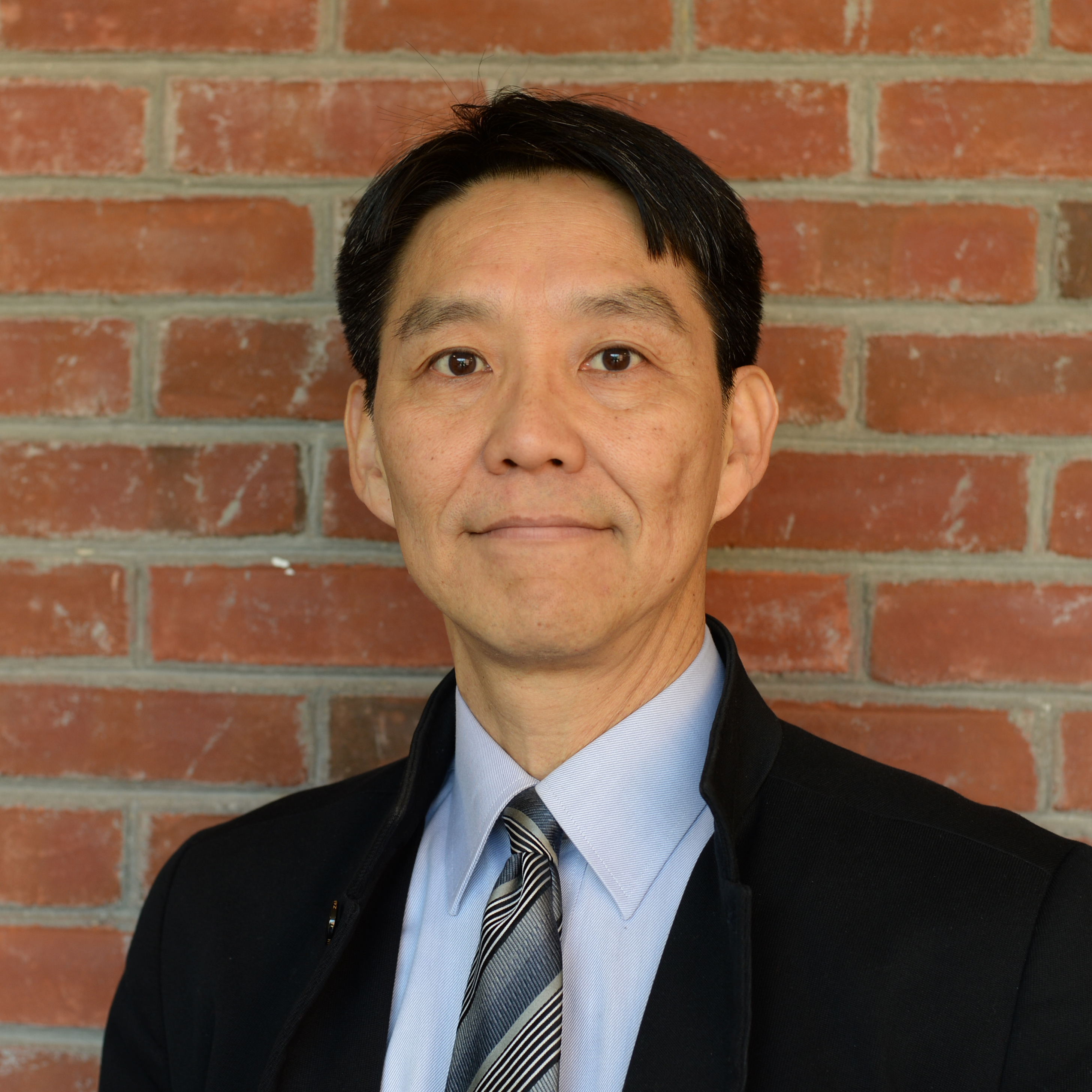
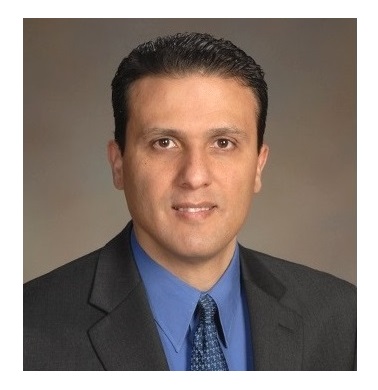
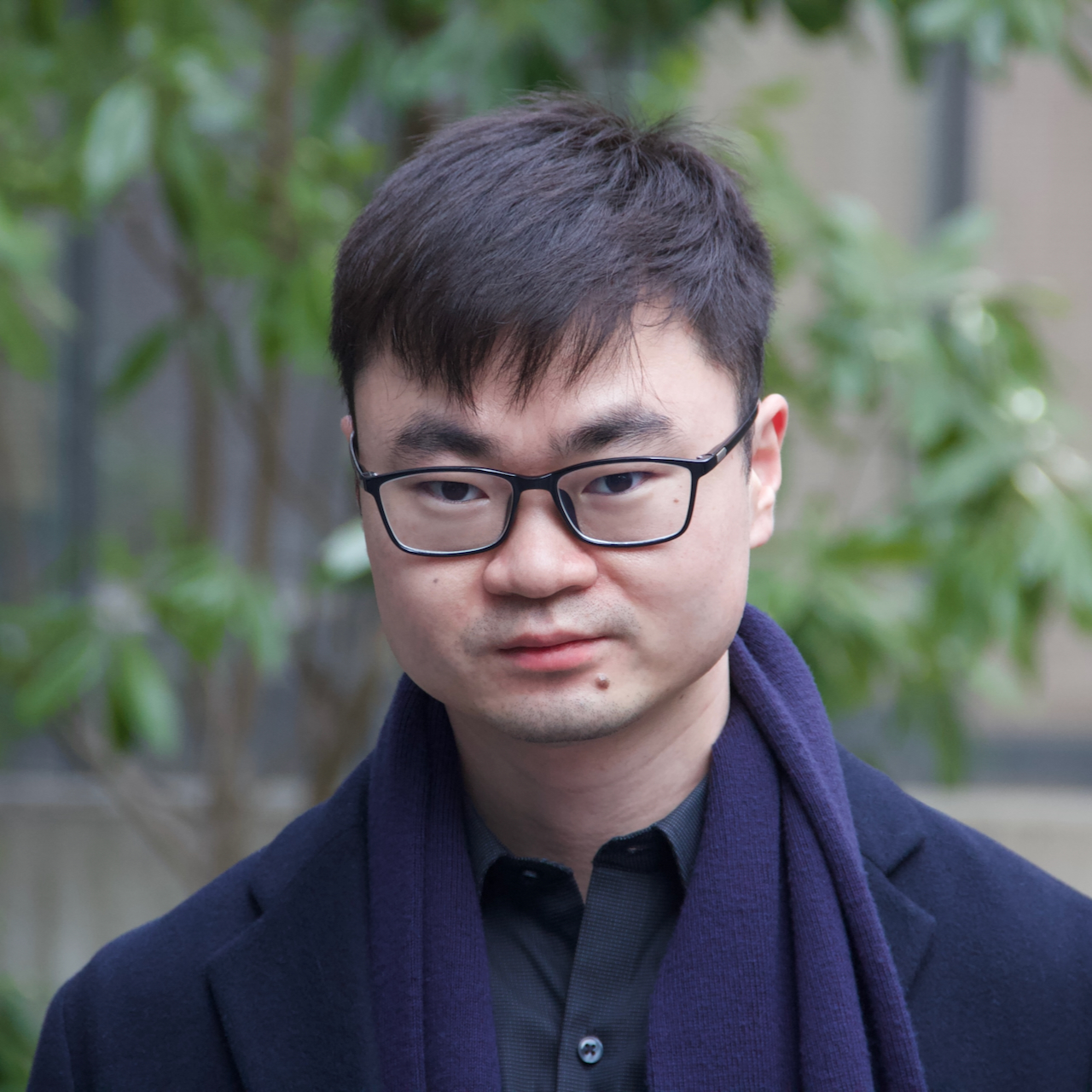
Hiroyuki Iseki is Associate Professor of Urban Studies and Planning at University of Maryland's School of Architecture, Planning and Preservation, and Research Affiliate with the National Center for Smart Growth. His work examines interactions between transportation, land use, equity, and environmental sustainability. Research focuses on: Transit-oriented development impacts on firm location Equity in public transit finance Climate policy implementation in urban planning Active transportation infrastructure analysis Recent publications analyze post-pandemic transit demand shifts, campus multimodal conflicts, and bicycle accessibility modeling. Methodological strengths include spatial econometrics, GIS analysis, and longitudinal data approaches. Work increasingly addresses climate adaptation in transportation planning and EV charging grid impacts. Research contributes to urban policy through WMATA collaborations and Japanese municipal climate planning studies. Current PhD program directorship advances urban planning analytics training.
Dr. Wahab Hamou-Lhadj is a Professor and Chair at the Department of Electrical and Computer Engineering , Concordia University, and an Affiliate Researcher at NASA JPL, Caltech . He leads research in Artificial Intelligence for IT Operations (AIOps) , Software Observability , and Model-Driven Engineering , focusing on improving the reliability of digital systems in AI-driven environments.
Chee-Wooi Ten is a tenured Professor in the Department of Electrical and Computer Engineering at Michigan Technological University, where he has served since 2010 and achieved tenure in 2016. He concurrently holds an Affiliated Professor appointment in Applied Computing and directs both the PSERC Site and ICC CPS Center. His institutional roles emphasize cyber-physical security integration within power infrastructure. His educational background includes: PhD in Electrical Engineering from University College Dublin (2009) MSc in Electrical Engineering from Iowa State University (2001) BSc in Electrical Engineering from Iowa State University (1999) Ten's research pioneers cyber-informed security engineering strategies for bulk power systems, focusing on quantifying rare events through system risk models and data science. His work bridges power grid interactions with robotics and transportation systems to advance decarbonization and electrification. Key methodologies include validating cyber-physical security frameworks against steady-state and dynamic grid approaches, with emphasis on attack/defense combinatorics and smart home technologies. This transdisciplinary approach supports the fourth industrial revolution's resilience requirements. His publication trends reveal strong focus on risk-aggregated substation testbeds using generative adversarial networks, cyber insurance models for power systems, and cascading failure analysis from switching attacks. Recent works increasingly integrate machine learning with physics-based modeling to address cybersecurity threats in inverter-based resource integration and distribution emergency operations. Ten has secured over $6.5M in active funding including: $2M DOE grant (MTU portion $105,000) for CyDERMS Center on DERs/Microgrids cybersecurity $704,409 CyManII award for secure digitalization in smart manufacturing $1.05M DOE ARPA-E grant for decarbonized freight transportation modeling NSF CyberCorps Scholarship for Service program ($3.38M) His grants consistently address risk management through data-driven and physics-based modeling, with industry partnerships through PSERC and utility collaborations. As ICC CPS Center Director, he leads research on cyber-physical security testbeds and coordinates the PSERC Summer Transformation School. His team develops validation frameworks for NERC CIP compliance while addressing practical pain points in OT cybersecurity for grid operators.
Susan Powers is a Professor of Civil & Environmental Engineering at Clarkson University, where she also serves as the Spence Professor of Sustainable Environmental Systems, Director of the Institute for a Sustainable Environment, and Associate Director of Sustainability. She earned her Ph.D. in Environmental Engineering from the University of Michigan in 1992. Research Interests: Dr. Powers specializes in lifecycle assessment and environmental impact metrics for energy systems, with recent interdisciplinary work on anaerobic digestion for food waste management and smart housing to encourage energy conservation. Her educational research integrates project-based learning to enhance energy and climate change literacy across K-12 and college levels. Scientific Awards: AEESP Distinguished Service Award (2019) AEESP Fellow (2019) Spirit of Entrepreneurship Award (2012) Premier Curriculum Award for K-12 Engineering (2009) NSF Directors Award – Distinguished Teaching Scholar (2004) Grants & Educational Leadership: Dr. Powers has led multiple education-oriented grants, including the NSF Distinguished Teaching Scholars award, to develop project-based modules for sustainability education. She actively incorporates campus sustainability initiatives into student projects to teach real-world environmental problem-solving.
Qizhen Zhang is a Professor in the Department of Computer Science at the University of Toronto's Faculty of Arts and Science. Specializing in hyperscale data processing systems, Zhang leads research at the intersection of cloud computing, distributed systems, and data center networking. Recent work focuses on network-centric designs for efficient large-scale data processing, including pioneering contributions to disaggregated data center architectures. Research interests center on hyperscale data processing , network-aware system design , and disaggregated infrastructure . Current projects investigate DPU-accelerated systems (dpBento, DPDPU), memory disaggregation (Cowbird, Redy), and blockchain scalability (FlexChain). Zhang's approach systematically integrates network characteristics into distributed system optimization, addressing challenges in trillion-item workloads through novel shuffle layers (TeShu) and compute pushdown mechanisms (TELEPORT). Zhang advises multiple graduate students working on satellite networking (SaTE), federated learning, and DPU-optimized storage (DDS). Professional service includes program committees for SIGMOD, VLDB, NSDI, and EuroSys (2023-2026), plus journal reviews for ACM TODS and IEEE/ACM Transactions on Networking. Industrial collaborations with Microsoft Research have yielded production-oriented systems like Redy and CompuCache. Key contributions include MimicNet for scalable network simulation (SIGCOMM 2021), GraphRex for network-aware graph processing (SIGMOD 2019), and foundational work on disaggregated data centers (CIDR 2020, VLDB 2020). Teaching responsibilities encompass graduate courses CSC2235 (Cloud-native Data Management) and undergraduate CSCC43 (Databases) at the University of Toronto.
Oya Celiktutan is a Reader (Associate Professor) at King’s College London in the Department of Engineering, leading the Social AI & Robotics (SAIR) Lab within the Centre for Robotics Research. She holds a BSc in Electronics Engineering from Uludag University, and an MSc and PhD in Electrical and Electronics Engineering from Bogazici University, Turkey. Her doctoral work included a visiting research period at the National Institute of Applied Sciences in Lyon, France. She has held postdoctoral positions at Queen Mary University London, the University of Cambridge, and Imperial College London before joining King’s College in 2018. Her research focuses on multimodal machine learning for autonomous agents, addressing challenges in human-robot interaction, social awareness, and navigation. Key areas include human behavior analysis, generative models, and continual learning. Her work is supported by EPSRC, The Royal Society, EU Horizon, and industry partners like Toyota and NVIDIA. Notable awards include the EPSRC New Investigator Award (2021) and a Best Paper Award at IEEE Ro-Man 2022. Dr. Celiktutan’s lab explores socially assistive robotics, extended reality systems, and ethical AI. Recent projects include the LISI initiative to enable robots to learn social interactions from human-human data and the CL-HRI project advancing continual learning in human-centric robotics. Her research has led to datasets like MHHRI and RICA, and collaborations with companies like SoftBank Robotics. She teaches modules on Sensing and Perception, and Sensors and Actuators, emphasizing practical applications in robotics and mechatronics. Current research interests span socially-aware navigation, algorithmic fairness, and multimodal data fusion for robotics in healthcare and urban environments.
Dr. Angelos D. Keromytis is the John H. Weitnauer, Jr. Endowed Chair Professor and Georgia Research Alliance (GRA) Eminent Scholar at the School of Electrical and Computer Engineering , Georgia Institute of Technology . He is a globally recognized leader in systems and network security and applied cryptography , with over 250 publications and 67 issued US patents. He is an elected Fellow of both the IEEE and ACM, and previously served as a Program Manager at DARPA and Program Director at NSF. Education: Ph.D. in Computer Science, University of Pennsylvania (2001) M.Sc. in Computer Science, University of Pennsylvania (1997) B.Sc. in Computer Science, University of Crete, Greece (1996) Research Interests: Dr. Keromytis's research spans a broad spectrum of cybersecurity topics, including: Systems and Network Security : He has led foundational work in secure systems design, intrusion detection, and network anomaly detection. Applied Cryptography : His work includes cryptographic protocols, secure communications, and privacy-preserving systems. Hardware and Side-Channel Security : He has pioneered techniques for detecting hardware Trojans using electromagnetic side-channels. Cloud and IoT Security : He has developed novel approaches to securing cloud services and IoT devices. Software Security : His work includes defenses against malware, return-oriented programming (ROP), and automated software patching. Scientific Awards: John H. Weitnauer, Jr. Endowed Chair Georgia Research Alliance (GRA) Eminent Scholar IEEE Fellow (2018) ACM Fellow (2017) ACM Distinguished Scientist (2012) DARPA Superior Public Service Medal DARPA Results Matter Award Advising and Grants: Dr. Keromytis has advised over 30 Ph.D. students and numerous postdocs. He has secured over $35M in research funding from agencies like DARPA, NSF, IARPA, ONR, and AFRL. His recent grants include: DARPA SMOKE : $22.7M for "Antikythera" cybersecurity framework NSF SaTC : $1.2M for mobile network anti-tracking architecture DARPA CHASE : $1.7M for network abuse behavioral engine DARPA OPS-5G : $7.3M for large-scale adversary defense ONR : $4.4M for dormant hardware Trojan detection Labs and Teams: He co-founded and co-directs the Center for Cyber Operations Enquiry and Unconventional Sensing (COEUS) at Georgia Tech. Previously, he founded and directed the Network Security Lab (NSL) at Columbia University, which produced foundational research in network security, intrusion detection, and software protection.
Keigo Kobayashi is an Associate Professor at Waseda University's Faculty of Science and Engineering, School of Creative Science and Engineering, Department of Architecture. He has served in this position since 2016, previously holding the rank of Assistant Professor from 2012 to 2016. His professional journey includes significant experience at the Office for Metropolitan Architecture (OMA) in Rotterdam, where he worked as a Senior Architect and Project Architect from 2007 to 2012. His educational background includes a Master of Architecture II from Harvard University's Graduate School of Design (2005), a Master of Architecture from Waseda University's Graduate School of Science and Engineering (2003), and a Bachelor's degree in Architecture from Waseda University's School of Science and Engineering (2002). Kobayashi's research focuses on architectural planning and city planning, with particular interests in food-related architecture, spatial behavior, and sustainable design. His work explores the intersection of architecture with everyday life, examining how spatial configurations influence human behavior and community formation. Recent research has investigated food systems in urban contexts, playful approaches to spatial design, and the relationship between architectural form and environmental performance. His publications demonstrate a strong focus on practical applications of architectural theory, with projects spanning from food truck design in Shodoshima to zero-energy housing solutions and innovative approaches to architectural education. His work shows a consistent interest in how architecture can respond to contemporary social challenges while maintaining theoretical rigor. Excellence in Concrete Construction Award 2019, American Concrete Institute (ACI), Qatar National Library / OMA Kobayashi actively contributes to architectural education through various committee memberships, including serving as Chief of the Subcommittee on Strategies for International Compatibility in Architectural Education at the Architectural Institute of Japan and leading the Caberra Accord Correspondence Subcommittee at the Japan Accreditation Board for Engineering Education. His teaching portfolio at Waseda University is extensive, covering architectural design studios from undergraduate to doctoral levels. He leads several research initiatives, including the Wakusei Project in Tosa, Kochi, NPO PLAT (Platform for Architectural Thinking), and the European Thinkbelt/McDonald's Radio University project which represents an innovative approach to architectural education and community engagement, particularly in contexts of migration and cultural exchange.
Shiqing Ma is an Assistant Professor in the Manning College of Information and Computer Sciences at the University of Massachusetts Amherst. Previously, he held a faculty position at Rutgers University from 2019 to 2023. He earned his Ph.D. in Computer Science from Purdue University (2019) and B.E. from Shanghai Jiao Tong University (2013). His research focuses on secure, intelligent, and transparent computing systems, particularly at the intersection of security, AI, and software systems. Key areas include integrating machine learning into software systems, ensuring algorithmic security through program analysis, and developing novel system architectures. Professor Ma's work has been recognized with prestigious awards, including the NSF CAREER Award (2023), and distinguished paper awards at USENIX Security (2017) and NDSS (2016). He actively contributes to the academic community through editorial roles and program committees in security, privacy, and software engineering. His research explores topics like backdoor attacks, AI safety, and bias mitigation in large language models. Recent articles emphasize defense mechanisms against adversarial attacks, watermarking techniques, and automated debugging systems for machine learning pipelines.
Shiva Nejati is a Professor at the University of Ottawa 's School of Electrical Engineering and Computer Science . He holds a PhD in Computer Science from the University of Toronto and previously worked as a Senior Scientist (2012-2019) and Scientist (2009-2012) at the SnT Centre (University of Luxembourg) and Simula Research Laboratory. Research focus: Software engineering for cyber-physical systems (autonomous vehicles, IoT), blending formal verification, machine learning, and search-based testing Key tools developed: ARIsTEO, SOCRaTEs, SimCoTest, EPIcuRus Editorial roles: Associate Editor for EMSE Journal (2025–), ASE Journal (2025–), IEEE Transactions on Software Engineering (2020–2024) His work combines formal methods , empirical software engineering , and AI/ML to address verification challenges in complex systems, particularly through evolutionary algorithms and surrogate modeling . Notable collaborations include industry partners in telecommunications, automotive, and aerospace sectors. Recent publications emphasize large language models for requirements analysis, adversarial testing of vision systems, and multi-objective optimization for test generation. His Sedna Research Lab actively trains graduate students in these cutting-edge methodologies.
Dr. Alessio Russo is a Senior Lecturer in Landscape Architecture at the School of Architecture and Built Environment, Queensland University of Technology (QUT). As a recognized expert in urban ecosystem services and green infrastructure, his research bridges environmental design with human health and climate change mitigation. His research emphasizes enhancing urban human health and wellbeing through biodiverse green spaces, participatory design, and nature-based solutions that address thermal comfort, pollution removal, food production, and water runoff. Key projects include 2023-2024: Urban rewilding aesthetics & people's needs in blue/green infrastructure (UKRI RECLAIM Network Plus) 2023: Climate-resilient public spaces (RPA Small Grants, UoG) 2021-2022: Shared vision for urban greening (UCL & Net Zero Innovation Programme) His scholarly output spans 2014-2025, focusing on nature-based urban regeneration aligned with SDG 11. He serves as Associate Editor for Urban Agriculture and Regional Food Systems and sits on editorial boards of Urban Planning, Discovering Cities, and Urban Resilience and Sustainability. Professional memberships include IFLA, ICOMOS-IFLA, and IUCN CEM.
Dr. Giulia Celentano is a Senior Scientific Assistant and Humanitarian Research Fellow at ETH Zurich's Department of Civil, Environmental and Geomatic Engineering (D-BAUG), affiliated with the Institute of Construction and Infrastructure Management (IBI). She holds a PhD in Sustainable Construction from ETH Zurich and has academic roles including lecturer in courses at D-BAUG and D-ARCH, as well as visiting professorships at Politecnico di Milano and ETSAM in Madrid. Her research focuses on humanitarian engineering, post-disaster reconstruction, and sustainable construction in conflict-affected and informal urban settings. She leads projects with organizations like the ICRC, UN-HABITAT, and UNHCR, emphasizing field-based, impact-oriented strategies. Education includes a Bachelor's and Master's in Architecture from Politecnico di Milano, a short course in Shelter and Settlements from IFRC/Oxford Brookes, and guest research at MIT ReAct. Current initiatives include coordinating the MOOC on Regenerative Materials (launching 2025) and developing tools like the ETH-ICRC Sustainable Construction Tool. Her work spans case studies in the MENA region, Sub-Saharan Africa, and Southeast Asia, addressing challenges in informal settlements and resilient health infrastructure.
Juergen Dingel is a Professor in the School of Computing at Queen's University, Canada. He joined the faculty in 2000 and holds a PhD in Computer Science from Carnegie Mellon University (1999). His research focuses on software modeling, model-driven engineering, formal methods, and formal verification, with applications in real-time systems and embedded systems. He leads the Modeling and Analysis in Software Engineering (MASE) research group. Education: PhD in Computer Science, Carnegie Mellon University (1999) M.Sc. in Pure and Applied Logic, Berlin University of Technology (1994) M.Sc. in Computer Science, Berlin University of Technology (1992) Research Interests: Model-driven engineering and transformation Formal specification and verification Automated testing and debugging Real-time and embedded systems Service composition and distributed systems His work emphasizes practical tools like Papyrus-RT and MDebugger , integrating formal methods into software development. Grants & Collaborations: Funded by NSERC, OCE, and industry partners (IBM, GM, Ericsson) Focus on automotive systems, IoT, and safety-critical applications Service: Editorial board member for SoSyM , STTT , and JOT Former chair of the MODELS Steering Committee (2016–2018) PC co-chair for MODELS 2014 and FMOODS/FORTE 2011 Labs & Teams: Leads the MASE group, which develops open-source tools for model-driven engineering. Collaborates with industry on automotive and IoT projects.
Mustafa Asım Kazancıgil is an Assistant Professor at Yeditepe University's Faculty of Computer and Information Sciences, Department of Information Security Technology. He has also served in the Department of Information Systems and Technologies at Yeditepe University since 2014. His academic journey includes a PhD in Informatics-Computer Science from Universita degli Studi di Milano (2013) and a Master's in Interactive Digital Television from the same institution (2006). PhD: Universita degli Studi di Milano (2013) Master's: Universita Degli Studi di Milano (2006) Bachelor's: Yeditepe University, Faculty of Communication, Department of Radio, Television and Cinema (2004) His research focuses on web design , information systems security , big data analytics , and emergency services technology . His publications include works on disaster resilience and interactive digital television applications. He has taught courses on Web Design, Information Systems Security, and Advanced Web Programming at both undergraduate and graduate levels. Administrative roles include Head of Department (2021) and multiple Erasmus Coordinator positions (2016-2019). He supervises theses in digital marketing and CRM trends, as well as CRM/SCM applications in management information systems. His teaching portfolio spans 2013-2025 across Yeditepe University's academic calendar.
David Lillis is an Associate Professor in the School of Computer Science at University College Dublin (UCD). His research focuses on Natural Language Processing (NLP), Artificial Intelligence (AI), and their applications in legal and forensic contexts. He leads projects like CeADAR (Ireland’s Applied AI Center) and the Transpire project, collaborating with organizations such as Corlytics and the Department of Enterprise, Trade and Employment. He holds adjunct roles as a Guest Professor at Beijing University of Technology’s Data Mining and Security Lab and has been a Fulbright Scholar at the University of New Haven’s Cyber Forensics Research and Education Group. Education: B.A. (Hons) in Law and Accounting, University of Limerick Higher Diploma in Computer Science, UCD M.Sc., Ph.D. in Computer Science, UCD Professional Certificate in University Teaching & Learning, UCD Research Interests: Legal AI, digital forensics, machine learning, multi-agent systems, and information retrieval. Recent work includes NLP for regulatory analysis, crop yield prediction via neural networks, and AR-driven decision support systems. Grants & Projects: Principal Investigator: Transpire (AI Platform for Regulation) SFI Funded Investigator: CONSUS (Crop Optimization) PI: CeADAR Technology Centre Teaching roles include Deputy Programme Director for Software Engineering at Beijing-Dublin International College (BDIC) since 2014. Labs & Groups: UCD Forensics and Security Research Group, ML-Labs (SFI Centre for ML Training), and the Data Mining and Security Lab (BJUT).