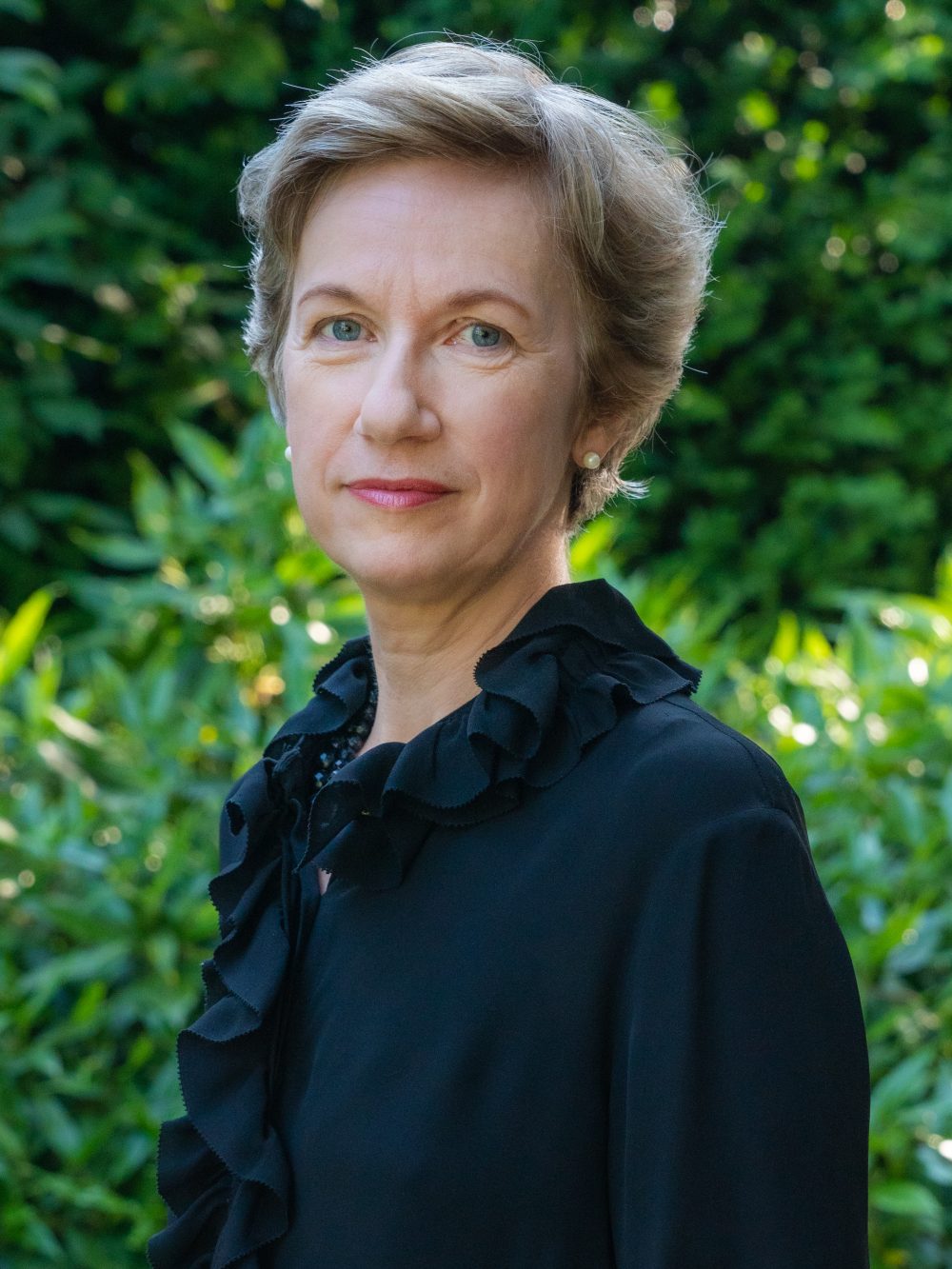
Professor Merje Kuus is a distinguished political geographer at the Department of Geography , Faculty of Arts , University of British Columbia . Her work bridges political geography , international relations , and sociology to examine knowledge production in policy-making contexts. PhD from Syracuse University (1999) WSET Level 3 Award in Wine holder Active in Arctic Circle's Mission Council on the GlobalArctic Research focuses on expertise in diplomatic practices , with empirical specializations in European Union and Arctic governance . She also explores geographical imaginaries in wine production , connecting policy analysis to cultural geography. Key publications include: Geopolitics and Expertise: Knowledge and Authority in European Diplomacy (Wiley Blackwell, 2014) Geopolitics Reframed: Security and Identity in Europe’s Eastern Enlargement (Palgrave Macmillan, 2007) Ashgate Research Companion to Critical Geopolitics (co-edited, 2013) Recent scientific awards include: Fulbright Fellowship Killam Fellowship SSHRC Canada grants Her supervision portfolio spans climate governance, disaster response expertise, and transnational policy networks, with completed PhD theses on topics ranging from Vancouver's climate governance to Arctic resource governance .
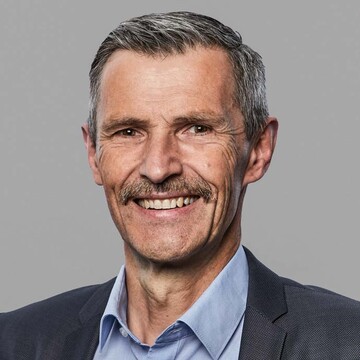
Stefan Schaltegger is Professor for Sustainability Management at the Centre for Sustainability Management (CSM) at Leuphana University Lüneburg. With over two decades of research experience, he is a globally recognized scholar in sustainability management, corporate sustainability, and environmental accounting. His work bridges academic research with practical business applications, influencing sustainability practices across multiple industries. Professor for Sustainability Management at Leuphana University Lüneburg Director of the Centre for Sustainability Management (CSM) Extensive publication record in top sustainability journals Regular contributor to policy discussions on sustainability Professor Schaltegger's research focuses on sustainability management systems, corporate sustainability strategy, environmental accounting, sustainable business models, and sustainability transitions. His work examines how organizations can effectively integrate sustainability into core operations, emphasizing stakeholder engagement, sustainability performance measurement, and the development of compelling business cases for sustainability. He has pioneered research on sustainability management accounting, rebound effects in sustainability initiatives, and the role of change agents in corporate sustainability transformations. His research spans both theoretical development and practical application, making significant contributions to how businesses understand and implement sustainability. His recent publications reveal an evolving research trajectory with increasing focus on systemic sustainability challenges. Schaltegger has shifted from foundational work on sustainability management accounting toward more complex issues like environmental rebound effects, sustainability transformations, and regenerative business practices. His 2023-2025 publications show growing attention to climate change responses, biodiversity conservation, and the role of service innovation in sustainability transformations. The interdisciplinary nature of his work is evident in publications spanning business strategy, environmental science, accounting, and policy journals. Ranked among the world's top 2% scientists in the Stanford study (2020) Best Young Researcher of the Year at Leuphana University Lüneburg (2010) IFAC PAIB Committee Research award for "article of merit" (2003) Professor Schaltegger actively mentors doctoral students and early-career researchers, though specific student names aren't listed in the provided materials. His research is supported by numerous projects including "TrICo Subproject: Community Sustainable Production," "Account4GreenEco," and "Hochschulen in Gesellschaft – Realexperimente transformativer Lern- und Forschungsprozesse für eine Kultur der Nachhaltigkeit an Hochschulen." His work demonstrates strong industry engagement through collaborations with businesses implementing sustainability practices. The Centre for Sustainability Management (CSM), which Schaltegger leads, serves as a hub for interdisciplinary sustainability research, education, and practice. The CSM coordinates multiple research projects including the Innovation Network aiming at Sustainable Smartphones (INaS) and works closely with industry partners to develop practical sustainability solutions. The center's activities span research, education, and transfer, reflecting Schaltegger's commitment to bridging the gap between academic theory and business practice in sustainability.
Carolina Matos is a Professor at City, University of London's School of Communication & Creativity, specializing in media studies, gender politics, and communications research with a particular focus on Brazil and Latin America. Her scholarly work bridges academic inquiry with practical advocacy, especially in the areas of sexual and reproductive health rights (SRHR), feminist media studies, and democratic processes in the Global South. Dr. Matos's research interests span several interconnected domains: Gender politics and feminist media studies, with particular attention to Brazilian and Latin American contexts Sexual and reproductive health and rights (SRHR) communications and advocacy across global contexts Media democratization and public service broadcasting in Brazil and Latin America Digital activism and online networks for social change and gender equality Health communication in the age of misinformation, particularly regarding women's health in politically polarized environments Journalism's role in democratic processes and political transitions Her recent publications (2021-2025) demonstrate a clear trajectory toward examining how marginalized communities, particularly women in the Global South, navigate complex media landscapes around reproductive health. Her methodology frequently employs focus group research designed to empower participants while gathering insights on media consumption and interpretation. She has conducted significant research in partnership with NGOs like Reprolatina in Brazil and Open Arms in Florida, examining how disadvantaged communities process health communications in contexts of political polarization and misinformation. Dr. Matos has made substantial theoretical contributions through both foundational and recent works: Her book "Globalization, gender politics and the media" (2016) examines changing media representations in relation to feminist movements globally Her seminal work "Journalism and Political Democracy in Brazil" (2009) analyzes media's critical role in Brazil's democratization process following the military dictatorship She has conducted extensive comparative research on how NGOs communicate about SRHR across the Global North and South Her research on "New Brazilian feminism and online networks" (2017) documents the emergence of digital feminist activism in Brazil Her methodological approach consistently combines rigorous academic frameworks with practical applications, often utilizing mixed methods including content analysis, discourse analysis, and participatory research techniques designed to center marginalized voices while advancing scholarly understanding of media, gender, and power dynamics.
Alok Gupta holds the Curtis L. Carlson Chair in Information Management at the Carlson School of Management, University of Minnesota . He is a Professor in the Department of Information and Decision Sciences , with a career spanning over 25 years. From 2006–2014, he served as Department Chair, and as Senior Associate Dean of Faculty, Research and Administration until 2024. Education: BS, Mining Engineering (1988), Institute of Technology, Banaras Hindu University MS, Mine Electrical Systems (1991), Pennsylvania State University PhD, Management Science and Information Systems (1996), University of Texas-Austin His research focuses on Economic Engineering of systems , emphasizing participant incentives in transactional systems such as the Internet, real-time databases, B2B systems, e-commerce, and Human-AI collaboration. He has published over 90 journal articles, including 50+ in premier journals like Management Science , Information Systems Research , and MIS Quarterly . Recent publications highlight trends in experimental economics , online auctions , information feedback mechanisms , and smart market design . His work bridges information systems , economic modeling , and artificial intelligence . Scientific Awards: NSF CAREER Award (2001) INFORMS ISS Design Science Award (2012, 2011) INFORMS ISS President’s Service Award (2021) INFORMS ISS Practical Impacts Award (2021) AIS Impact Award (2020) AIS Fellow (2016) INFORMS ISS Distinguished Fellow (2014) AIS LEO Award (2021) INFORMS Fellow (2024) He has served as Publisher of MIS Quarterly (2005–present), Editor-in-Chief of Information Systems Research (2017–2022), and in editorial roles for Management Science , ISR , and Journal of MIS . His teaching spans Human-AI collaboration , computer networking, electronic commerce, and decision support at all academic levels.
Nick Abel is an Honorary Associate Professor at the Fenner School of Environment & Society, Australian National University. With a distinguished international career spanning Africa and Australia, he has worked in Zimbabwe, Kenya, Ethiopia, Botswana, Somalia, Swaziland, Zambia, and Australia. His academic credentials include a Ph.D., M.Sc., and B.Sc.(Hons.), reflecting a strong foundation in environmental sciences and complex systems thinking. Abel's research program centers on the critical challenge of human adaptation to climate change, with particular focus on why adaptation efforts are insufficient to prevent environmental and social tipping points. He critically examines Australia's role as the world's third largest exporter of fossil fuels while facing escalating climate impacts, investigating how fossil fuel companies have maintained influence over public policy. His work integrates social-ecological systems theory, resilience thinking, and practical governance frameworks to address climate adaptation challenges. His publication record demonstrates a clear evolution from foundational work in rangeland management and complex adaptive systems toward urgent climate policy interventions. Early research established theoretical frameworks for understanding resilience in dryland ecosystems, while recent work focuses on transformation pathways, Indigenous engagement, and community-based adaptation strategies. A consistent thread throughout his career is the integration of diverse knowledge systems and the development of practical approaches for environmental governance in rapidly changing conditions. Abel has registered to supervise research students at ANU and participates in significant collaborative projects, including the current 'Partnering with local communities in regional Australia to increase resilience to flood events' (2022-2025). His high-impact publications, including the highly cited 'Resilience management in social-ecological systems' (1,120 Scopus citations) and 'From Metaphor to Measurement: Resilience of What to What?' (2,596 Scopus citations), demonstrate his foundational contributions to the field. Through his work with various research groups and projects, Abel has helped establish frameworks for understanding social-ecological systems and climate adaptation. His contributions to the Fenner School include advancing methodologies for integrating scientific and Indigenous knowledge systems, developing practical approaches to environmental governance, and critically examining the political economy of climate policy in Australia.
Séverine Dusollier is a Professor of Intellectual Property at the Law School of Sciences Po Paris and holds a Senior Chair at the Institut Universitaire de France. She serves as Director of the Law School's Research Centre and Head of the Master in Innovation Law, actively contributing to doctoral committee activities. Her expertise spans copyright law , digital rights , and intellectual property frameworks. Key roles : Research Centre Director, Master in Innovation Law Head International engagement : Founding Member of the European Copyright Society, ATRIP member Her research focuses on digital copyright issues , authorship concepts , contractual protections for creators , and the evolution of exceptions and limitations . Recent work explores generative AI implications, public domain dynamics , and inclusive property models . She has held visiting positions at Berkeley, Columbia, NYU, and Cambridge. Notable scientific awards include: ERC research grant (2014–2019) Senior Chair, Institut Universitaire de France CSPLA (French Copyright Council) membership Her publications emphasize digital transitions , IP openness , and fair remuneration in streaming , reflecting her dedication to reconciling traditional IP structures with modern technological realities.
Duane J. Seppi is a Professor of Financial Economics at the Tepper School of Business , Carnegie Mellon University since 2001, currently holding the Richard C. Green Professor chair. His research focuses on market microstructure (price manipulation, limit orders, market liquidity) and derivative pricing for commodities. PhD in Finance from University of Chicago (1988) MBA from University of Chicago (1984) BA from Stanford University (1977) His work bridges financial theory with commodity operations , exploring topics like natural gas storage valuation , electricity price modeling , and merchant commodity asset management . Key publication trends include Nash equilibrium in price impact , latent trading demand analysis , and commodity real options . Scientific awards include: Best Paper Award (2015) WFA/NYSE Prize (2005) George Leland Bach Award (2002) Roger F. Murray Prize (1998) As a dedicated educator , he teaches option pricing , stochastic processes , and algorithmic trading . His editorial board service spans the Journal of Finance , Journal of Financial Markets , and Review of Finance . Duane has held visiting fellowships at the U.S. SEC , University of Vienna , and Nanyang Technical University .
Julia DiBenigno is a Professor of Organizational Behavior at Yale School of Management, where she has been faculty since 2016 and was promoted to full professor in 2023. She holds a courtesy appointment in Sociology and is an organizational ethnographer whose research focuses on the sociology of work, professional collaboration, upward influence, and organizational change. Her research interests include understanding how professional groups collaborate across boundaries, how frontline workers can effectively voice concerns upward in organizational hierarchies, and how organizations navigate change during crises. She specializes in qualitative, ethnographic methodologies, immersing herself in organizational settings ranging from hospitals to the U.S. Army to uncover the social dynamics that shape workplace behavior. DiBenigno's publication record includes multiple articles in top journals like Administrative Science Quarterly and Organization Science, with her most recent work examining how crises create opportunities for implementing long-resisted changes. Her research demonstrates patterns where frontline staff can successfully push through organizational resistance when they move quickly and demonstrate both short- and long-term value of their proposals. Ned Smith Rising Star Award, Organization & Management Theory Division of the Academy of Management, 2023 Thinkers50 Radar List, Class of 2022 Equity, Diversity, and Inclusion Research Award, NYU Wagner, 2021 Grigor McClelland Best Dissertation Award, EGOS, 2017 W. Richard Scott Outstanding Paper Award, American Sociological Association, 2016 As an educator, DiBenigno teaches Managing Groups & Teams and Power & Politics at Yale SOM. Her research on team dynamics has revealed insights about coordination loss, the common knowledge problem in group decision-making, and how hierarchical structures can both help and hinder effective teamwork. Her work with healthcare providers during the pandemic demonstrated how team identification reduces stress and burnout among frontline workers.
Susan Powers is a Professor of Civil & Environmental Engineering at Clarkson University, where she also serves as the Spence Professor of Sustainable Environmental Systems, Director of the Institute for a Sustainable Environment, and Associate Director of Sustainability. She earned her Ph.D. in Environmental Engineering from the University of Michigan in 1992. Research Interests: Dr. Powers specializes in lifecycle assessment and environmental impact metrics for energy systems, with recent interdisciplinary work on anaerobic digestion for food waste management and smart housing to encourage energy conservation. Her educational research integrates project-based learning to enhance energy and climate change literacy across K-12 and college levels. Scientific Awards: AEESP Distinguished Service Award (2019) AEESP Fellow (2019) Spirit of Entrepreneurship Award (2012) Premier Curriculum Award for K-12 Engineering (2009) NSF Directors Award – Distinguished Teaching Scholar (2004) Grants & Educational Leadership: Dr. Powers has led multiple education-oriented grants, including the NSF Distinguished Teaching Scholars award, to develop project-based modules for sustainability education. She actively incorporates campus sustainability initiatives into student projects to teach real-world environmental problem-solving.
Nicolò Cesa-Bianchi is a Professor of Computer Science at the University of Milan, where he serves as head of the Computer Science programs. He is also associated with the Department of Electronics, Information and Bioengineering (DEIB) at Politecnico di Milano. Cesa-Bianchi holds significant leadership roles including Board member, Fellow and co-director of the Milan unit of the European Laboratory for Learning and Intelligent Systems (ELLIS), and membership in the prestigious Accademia Nazionale dei Lincei. He is also involved with The European Lighthouse on Secure and Safe AI (ELSA), The European Lighthouse of AI for Sustainability (ELIAS), and The FAIR foundation. Professor Cesa-Bianchi's research focuses on the theoretical foundations of machine learning, with special emphasis on sequential decision making and online learning algorithms. His work spans multiple areas including multi-armed bandit problems, regret analysis, prediction with expert advice, and learning on graphs. He has made significant contributions to understanding the theoretical limits of learning algorithms and developing efficient methods for various learning scenarios. His research has important applications in online markets, social networks, and bioinformatics. His monographs 'Prediction, Learning, and Games' and 'Regret Analysis of Stochastic and Nonstochastic Multi-armed Bandit Problems' are considered seminal works in the field. His recent publications demonstrate continued leadership in advancing the theoretical understanding of machine learning, with 2024-2025 papers covering cooperative online learning, multitask learning, fair trade mechanisms, and refined analyses of bandit algorithms. The research shows increasing focus on practical economic applications while maintaining strong theoretical foundations. Google Research Award Xerox Foundation UAC Award Member of the Accademia Nazionale dei Lincei ELLIS Fellow Cesa-Bianchi has been deeply involved in academic service, having served as action editor for the Machine Learning Journal, IEEE Transactions on Information Theory, and the Journal of Machine Learning Research. He currently serves as associate editor for the Journal of Information and Inference and TheoretiCS. He has held leadership positions including President of the Association for Computational Learning and member of the steering committee for the EC-funded Network of Excellence PASCAL2. He was program chair of the 13th Annual Conference on Computational Learning Theory and the 13th International Conference on Algorithmic Learning Theory. He leads the Laboratory for AI and Learning Algorithms (ALGA) at the University of Milan, which focuses on theoretical and applied research in machine learning. His international collaborations are extensive, with visiting positions at UC Santa Cruz, Graz Technical University, Ecole Normale Supérieure in Paris, Google, and Microsoft Research. As an educator, he teaches advanced courses including Reinforcement Learning and Statistical Methods for Machine Learning, and has supervised numerous students through the years.
Jennifer Lavoie is an Associate Professor at Wilfrid Laurier University's Faculty of Human and Social Sciences, affiliated with the Department of Psychology and Criminology. She specializes in mental health crisis response, policing strategies, de-escalation techniques, and scenario-based training. Wilfrid Laurier University: Faculty of Human and Social Sciences, Psychology and Criminology Departments Research Interests : Her work focuses on integrating virtual reality and scenario-based training to improve police de-escalation skills. She examines violence risk assessment , correctional systems , and housing first programs for homeless individuals with mental illness. Recent studies address big data governance , cyberstalking victimization , and community-driven policing approaches . Publication Trends : Her research spans mental health policy , police training efficacy , and technological integration in crisis management . She explores virtual reality applications and community co-designed interventions , alongside longitudinal studies on stress and coping mechanisms in correctional and psychiatric settings. Scientific Awards : No scientific awards listed in available data. Advising : Actively supervises students in psychology and criminology, with unlisted advisees. Her work bridges academic research and practical policing applications .
Miguel Ángel Bernal Merino serves as a Part-Time Lecturer in the Department of Modern Philology, Translation and Interpretation at the University of Las Palmas de Gran Canaria. Concurrently, he acts as convener of the MA in Translation at the University of Roehampton in London, managing its Specialised Translation, Audiovisual Translation, and Intercultural Communication pathways since 2005. His academic profile bridges theoretical research and industry application in localization disciplines. PhD in The Localisation of Video Games, Imperial College London MSc in The Localisation of Multimedia Interactive Entertainment Software, Imperial College London Certificate in Software Localisation, University of Limerick CELTA, University of Cambridge MPhil in Lip-Synched Dubbing, Universidad de Alicante MA in Hispanic Literature, University of Rhode Island BA in English & Spanish Linguistics, Universidad de Alicante Bernal Merino's research pioneers the expansion of Translation Studies into interactive media domains. His work on video game localization examines interactivity, cultural adaptation, glocalisation, and playability, while his audiovisual translation research investigates creativity in lip-synched dubbing, subtitling, and audiodescription. He extends these frameworks into gaming-based language learning through haptic environments and multisensory reinforcement, exploring physiological aspects of multilingual cognition and polysemiotic neural networks. This multidisciplinary approach fundamentally challenges traditional boundaries in translation theory. His publication trajectory reveals evolving industry-academia integration, shifting from foundational game localization frameworks (2008-2015) toward user-centered research and educational applications (2018-2024). Recent work emphasizes measurable business impacts through quality localization, regional market adaptations, and crowd-sourced methodologies, demonstrating consistent influence on professional standards across gaming and translation sectors. Fellow of the Higher Education Academy Bernal Merino supervises doctoral research on mobile game localization, transmedia fan experiences, and historical game content translation while developing industry-academia pipelines through projects like AHRC's Media Across Borders. His funded initiatives—including Maximising ROI through Quality Game Localisation and Video Games for Language Learning—bridge theoretical innovation with commercial implementation, focusing on glocalisation strategies, interactivity metrics, and playability optimization. These collaborations connect European universities, gaming studios, and localization service providers. As chair of the IGDA Localization SIG and member of GIR Discourse, Communication and Society, he directs international forums for game localization discourse. His work with Routes into Languages promotes audiovisual media in language education, while REF-readiness collaborations enhance research excellence across European institutions through his professional network spanning industry conferences like GDC Summit and Game Global.
Petri Mähönen is a Full Professor at the Department of Information and Communications Engineering , Aalto University. His research focuses on networked systems, machine learning applications in telecommunications, and smart grid technologies. University: Aalto University Department: Information and Communications Engineering Research Interests span networked systems, IoT security, UAV communication, and AI-driven network optimization. His work addresses predictive QoS in cellular-connected drones and generative adversarial networks for cybersecurity. Recent Publications include studies on GAN-based traffic augmentation, anomaly detection in mobile networks, and regulatory frameworks for data platforms. His articles reflect expertise in both theoretical and applied network science.
Natasha Zhang Foutz is a Research Associate Professor of Commerce at the McIntire School of Commerce, University of Virginia . Her work bridges Artificial Intelligence , Marketing Analytics , and Consumer Behavior , with a focus on Digital Content and Location-Based Services . She teaches Marketing Analytics , Entertainment Marketing , and Marketing Models across undergraduate to PhD programs. Ph.D. in Marketing, Cornell University M.S. in Statistics & Marketing, Cornell University B.S. in Economics, Fudan University Her research investigates: AI-Powered Entertainment Marketing : Using machine learning to analyze consumer behavior in digital content. Privacy and Ethical Data Use : Studying consumer trade-offs between privacy and public good, especially during crises like the COVID-19 pandemic . Location Analytics : Leveraging mobile data for urban economics, real estate, and emergency response modeling (e.g., MobiRescue for disaster logistics). Prosocial Consumer Behavior : Exploring how social capital and diversity drive innovation and policy compliance. Recent publications highlight trends in Reinforcement Learning for crisis management, Privacy-Preserving AI , and Freemium Pricing Models in digital markets. Her awards include the 2025 UVA Outstanding Researcher Award and the 2018 Mallen Award for motion picture studies. Natasha serves as an Area Editor for multiple journals, emphasizing Data Science in marketing. She has advised numerous PhD students and collaborated on projects analyzing Big Data in consumer mobility and platform economics.
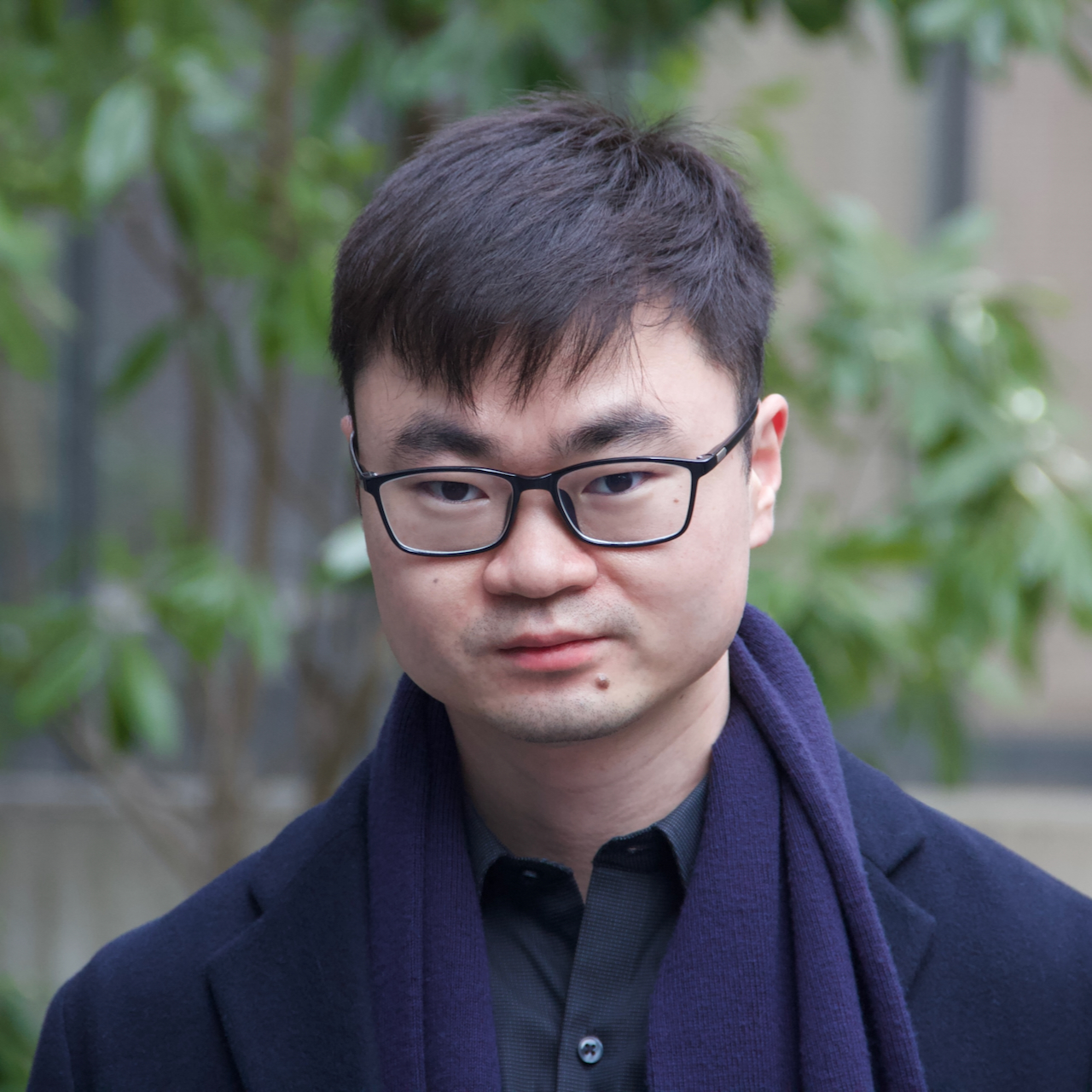
Qizhen Zhang is a Professor in the Department of Computer Science at the University of Toronto's Faculty of Arts and Science. Specializing in hyperscale data processing systems, Zhang leads research at the intersection of cloud computing, distributed systems, and data center networking. Recent work focuses on network-centric designs for efficient large-scale data processing, including pioneering contributions to disaggregated data center architectures. Research interests center on hyperscale data processing , network-aware system design , and disaggregated infrastructure . Current projects investigate DPU-accelerated systems (dpBento, DPDPU), memory disaggregation (Cowbird, Redy), and blockchain scalability (FlexChain). Zhang's approach systematically integrates network characteristics into distributed system optimization, addressing challenges in trillion-item workloads through novel shuffle layers (TeShu) and compute pushdown mechanisms (TELEPORT). Zhang advises multiple graduate students working on satellite networking (SaTE), federated learning, and DPU-optimized storage (DDS). Professional service includes program committees for SIGMOD, VLDB, NSDI, and EuroSys (2023-2026), plus journal reviews for ACM TODS and IEEE/ACM Transactions on Networking. Industrial collaborations with Microsoft Research have yielded production-oriented systems like Redy and CompuCache. Key contributions include MimicNet for scalable network simulation (SIGCOMM 2021), GraphRex for network-aware graph processing (SIGMOD 2019), and foundational work on disaggregated data centers (CIDR 2020, VLDB 2020). Teaching responsibilities encompass graduate courses CSC2235 (Cloud-native Data Management) and undergraduate CSCC43 (Databases) at the University of Toronto.