Prof. Dr.-Ing. André Nitze is a faculty member at the Brandenburg University of Technology in the Department of Economics . His research focuses on Internet of Things (IoT) , Digital Business Models , Software Architectures , Cloud Computing , Mobile Computing , and Predictive Analytics . He leads research projects on municipal LoRaWAN infrastructure, rural on-demand transport systems, and user-centered digitalization for sustainable development. Area of Expertise: IoT Applications, Software Engineering, Digital Transformation Current Research: Sustainable Municipal LoRaWAN, Rural Mobility Solutions Projects: risKI - KatKomm (2024-2026): Protocol development for disaster communication InNoWest (2023-2027): Subproject leader for digital sustainability OSLO (2023): Rural on-demand transport software architecture Awards: Best Paper Award at ICDS 2024 for work on LoRaWAN infrastructure Education & Supervision: M.Sc. and B.Sc. in Business Informatics Supervised over 15 theses including topics on GIS analysis, sensor networks, and AI applications
Professor Eamonn McKeown is a distinguished academic at City St George's, University of London , where he has worked since 2006. Currently serving as Head of the Department of Global, Public & Population Health & Policy (established 2025), he leads strategic academic development for the School of Health & Medical Sciences management team. His career spans roles including Associate Dean for Postgraduate Studies (2021-2025) and Head of Health Services Research & Management Department (2014-2021). Qualifications: PhD in Social Anthropology, Queen's University Belfast BA (Hons) in Social Anthropology, Queen's University Belfast PGDip in Academic Practice, City University London As an interdisciplinary researcher, McKeown specializes in equality and diversity issues across health and education sectors, employing qualitative methodologies . His fieldwork includes studies in Papua New Guinea on literacy patterns and in the United States on migration/ethnic identity. Recent research focuses on educational research aligned with EDI (Equality, Diversity, Inclusion) agendas to improve student experiences. His 15 most recent articles (2024-2006) demonstrate sustained contributions to Mental health interventions in higher education Nursing clinical practice Public health policy Sexual health research Qualitative methodology development Digital health solutions Scientific Recognition: Fellow of Royal Society for Public Health Senior Fellow of Higher Education Academy Fellow of Royal Anthropological Institute Recognised Research Supervisor, UK Council for Graduate Education As an educator, McKeown teaches NM3270 Using Research Knowledge (BSc) HRM020 Foundations in Research Methods (Masters) HRM001 Introduction to Research Methods (Masters) and has mentored 10 PhD/MRes students to completion.
Univ.-Prof. Dr. Andrea Gröppel-Klein is Professor of Business Administration (Marketing) and Director of the Institute for Consumer and Behavioral Research at Saarland University's Faculty of Empirical Human Sciences. She joined CEUS in 2021 and maintains active research collaborations across Europe. Her leadership extends to deputy directorship at the Europa-Institut (Economics Section), where she teaches interdisciplinary courses. Her research examines consumer behavior through innovative interdisciplinary methods including eye tracking, electrodermal response measurement, and facial expression analysis. Key focus areas include: Cross-cultural consumer behavior comparisons Impacts of digitalization, virtual worlds, and demographic shifts Consumer responses to crises (e.g., COVID-19, Ukraine war) Food/health policy through EU projects (FLABEL, CLYMBOL, mEATquality) Animal welfare economics and sustainable consumption Recent publications (2021-2024) demonstrate strong emphasis on digital transformation in marketing, particularly virtual influencers, AI interfaces, blockchain applications, and crisis-driven consumer behavior. Her work consistently integrates behavioral science with practical marketing implications. Honors include: OWL-Unternehmerpreis for doctoral research Büropa-Preis for habilitation excellence Lise-Meitner-Stipendium research grant She directs multiple EU-funded projects investigating meat quality perception and health labeling, while supervising doctoral candidates through the EIASM network. Her institute employs interdisciplinary teams using physiological measurement labs for consumer studies.
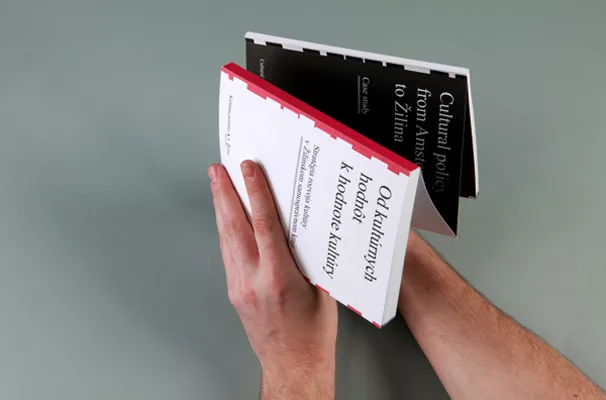
Marcel Benčík serves as Associate Professor and Vice-Rector for International Cooperation at the Academy of Fine Arts and Design in Bratislava, where he heads the Studio Space within the Department of Visual Communication. With over two decades of professional design experience, he bridges academic leadership and creative practice across Central Europe through significant collaborations with cultural institutions including the Slovak National Gallery and architectural studio zerozero. Academic Background ArtD. (Doctorate) from Academy of Fine Arts, Prague (2004-2007) under Assoc. Prof. Pavel Choma Master's Degree from Academy of Fine Arts, Bratislava (2002-2004) Bachelor's Degree from Academy of Fine Arts, Bratislava (1998-2002) Benčík's research focuses on the intersection of communication design with architectural spaces, where he explores how visual systems enhance user experience in cultural institutions. His work demonstrates particular innovation in exhibition design and spatial navigation systems, often integrating traditional graphic elements with digital interfaces to create cohesive visitor journeys that serve both functional and aesthetic purposes. His award-winning projects include the Balustrade on the Parish Stairs in Žilina (2016 National Award winner) and Kasárne/kulturpark Košice's visual communication system. Recent outputs through 2024 show continued exploration of intermedia museum concepts and urban design interventions that respond to contemporary social contexts while maintaining strong visual identities. Selected Honors National Award for Communication Design (Experimental Design Category, 2016) Multiple National Design Awards (2020, 2021) Dušan Jurkovič Award for Architectural Integration Polish Design Award for International Collaboration The Most Beautiful Book of Slovakia recognition As Studio Space manager, Benčík mentors students in thesis development while leading international collaborations through G4 network and Design Weekend Bratislava. His academic service includes jury participation for design competitions across Europe and opposition roles at Polish and Czech institutions, demonstrating significant contribution to regional design education standards.
Dr. Oliver Roider is a researcher at the Institute of Transport Studies , part of the University of Natural Resources and Life Sciences, Vienna (BOKU) . With a career spanning over two decades, he specializes in transport modeling, mobility behavior analysis, and sustainable transport policy development. Education : PhD from BOKU (2012), Civil Engineering degree from BOKU (1987-1994) Key Affiliations : Institute of Transport Studies (BOKU), University of Applied Sciences Technikum Wien (2005-2021) His research focuses on transport models , mobility behavior , and public transport optimization , with particular emphasis on transport economics and rural mobility solutions . He has led numerous projects analyzing the impact of mobility hubs , sustainable transport policies , and autonomous vehicle integration in rural areas. Recent publications examine shared micromobility adoption , mobility hub deployment , and stakeholder governance in transport initiatives . His work has been supported by diverse funders including the European Commission , FFG , and City of Vienna . Scientific Awards : 2012 Anerkennungspreis für Dissertationen from Austrian Road & Rail Research Society As an active member of academic committees, he has served in Austrian Society for Transport Science and contributed to QUALIVERMO quality guidelines . He has organized international conferences like IATBR 2024 and presented at key events in Edinburgh, Brussels, and Washington DC.
Kathrin Figl is a Full Professor (Tenured) for Human-centric Information Systems Design at the Department of Information Systems, Production and Logistics Management at the University of Innsbruck. Previously, she held positions as an Assistant Professor at WU Vienna University of Economics and Business and as a research associate at the University of Vienna. Her educational background includes a doctoral degree in Information Systems (2008, with honors, awarded the Dr. Maria Schaumayer Prize) and dual master's degrees in Information Systems (2004) and Psychology (2006), all from the University of Vienna. This interdisciplinary foundation bridges technical and psychological perspectives in her research approach. Professor Figl's research centers on human-centered information systems with particular emphasis on cognitive aspects of digital interaction: Human-AI interaction and algorithmic management systems Digital nudging techniques and online manipulation Eye-tracking methodologies in user research Cognitive biases and heuristics in digital environments Fake news perception and detection mechanisms Webpage prototypicality and its effects on user attitudes Business process modeling as cognitive tools Her publication trajectory demonstrates a sophisticated evolution from foundational work on business process modeling to cutting-edge research on device-specific cognitive effects and misinformation perception. A hallmark of her methodology is the rigorous application of empirical approaches, particularly eye-tracking studies, to investigate how screen design, device type, and interface elements influence human cognition and decision-making across digital platforms. Professor Figl has earned significant recognition for her scholarly contributions: Dr. Maria Schaumayer Prize for doctoral excellence Three Best Paper Awards at major international conferences Excellent Teaching Award from WU Vienna Recognition as a top reviewer for Software & Systems Modeling journal Outstanding service awards as associate editor and track chair She has secured substantial research funding including an FWF Lisa Meitner Programme grant (€145,260) on Web Design Prototypicality and an Austrian Nationalbank Research Grant (€55,000) on Cognitive Effectiveness in Business Process Modeling. While specific advisees aren't documented in the provided materials, her extensive publication record with numerous co-authors indicates active mentorship of graduate researchers. Her work with eye-tracking technology suggests leadership of a specialized laboratory environment for studying human-computer interaction, with established collaborations including the Technical University of Denmark and Queensland University of Technology.
Lynne Baillie is a Professor in Computer Science at Heriot-Watt University and leads human-robot interaction, assistive living, and health research at the National Robotarium. She directs the Interactive and Trustworthy Technologies Research Group, focusing on human-robot collaboration, usability, and societal impacts. Affiliation: School of Mathematical and Computer Sciences, Heriot-Watt University Role: Director of ITT Research Group, National Robotarium Her research spans Human-Robot Interaction , Assistive Technologies , and Equitable Digital Systems , with funding from UK research councils, EU, Microsoft, Siemens, and charities. She has published over 100 peer-reviewed papers and explores collaborative interaction between humans, robots, and environments. Recent publications highlight advancements in: Accessibility-focused robotics (e.g., tour guides for sight-impaired individuals) Bias-aware frameworks for socio-technical AI systems Brain-robot interfaces for rehabilitation Equitable digital service design Haptic feedback applications for elderly cognitive engagement Scientific Awards: Excellent Oral Presentation Award (2025) Spirit of Heriot-Watt Outward Looking Award (2017) As a PhD supervisor, she mentors students in robotics and AI. Her work addresses UN Sustainable Development Goals through technology ethics, digital inclusion, and healthcare innovation.
Dr. Sagit Bar-Gill is an Assistant Professor in the Coller School of Management at Tel Aviv University , specializing in Technology Management and Information Systems . She is also a Digital Fellow at both MIT’s Initiative on the Digital Economy and Stanford's Digital Economy Lab . Currently on sabbatical at NYU’s Stern School of Business , her work bridges economic modeling, econometric analysis, and online experiments to explore the digital economy. Education: PhD in Economics, Tel Aviv University MA in Economics, Tel Aviv University BSc in Mathematics, Tel Aviv University Research Interests : Dr. Bar-Gill focuses on the economics of online markets , examining how digitization affects firms and consumers. Her work spans platform economics, media consumption, and behavioral economics, particularly studying: Digital engagement and its offline consequences Social vs. nonsocial referral channels Platform competition and strategic expansion Echo chamber dynamics and algorithmic bias Data-driven decision-making in SMEs Cultural transmission in digital contexts Article Trends : Her research combines empirical analysis with experimental methods, emphasizing the interplay between digital platforms and economic behavior. Topics include platform rivalry, content choice diversity, and behavioral spillovers in e-commerce. Scientific Awards : Digital Fellow, MIT Initiative on the Digital Economy Digital Fellow, Stanford Digital Economy Lab Advising and Grants : While specific students and grants aren’t listed, her interdisciplinary research has been published in top journals like Management Science and MISQ , reflecting significant academic impact.
Dr Scott Andrew Brown is a Lecturer at UNSW Arts, Design and Architecture (ADA), specializing in inclusive design practices that center neurodiverse communities. Based in the School of Art & Design, he employs user experience (UX) and interaction design methods to co-create adaptive technologies and multisensory environments with marginalized groups, particularly autistic individuals and their families. Education: PhD in Art, Design and Media (UNSW Sydney) Bachelor of Digital Media with First Class Honors (UNSW Sydney) His research focuses on redefining assistive technology through strengths-based approaches, emphasizing co-production and community-led design. He leads the assistive technology research focus in the Creative Robotics Lab, where he develops responsive sensory spaces and explores social robots for therapeutic applications. Recent projects include evaluating the effectiveness of 'quiet rooms' for autistic children at sporting events and creating adaptive technologies for social engagement. He also founded the Neurodiversity + Embodiment research group and organized the inaugural Autism MeetUp at UNSW Art & Design. While no scientific awards are documented in the provided texts, his work intersects health, disability, and design to advocate for systemic change in technology and service development.
I.V. Ramakrishnan is a Professor in the Department of Computer Science at Stony Brook University. His research spans Artificial Intelligence, Computational Logic, Machine Learning, Information Retrieval, and Computer Accessibility. Ph.D. in Computer Science, University of Texas at Austin (1983) His work focuses on advancing AI and machine learning to solve accessibility challenges for visually impaired users, healthcare informatics, and robotic manipulation. Key contributions include leveraging large language models for multimodal text correction, developing gesture recognition systems for blind users, and applying reinforcement learning to medical data analysis. Recent publications highlight the integration of LLMs in accessibility tools, AI-driven healthcare solutions (e.g., mortality risk prediction, physician attribution), and robotics innovations (e.g., manipulation planning, vertical farming automation). Faculty Service Award (2014) He teaches courses CSE 352 (Artificial Intelligence) and CSE 537 (AI). His research bridges theoretical and applied domains, emphasizing inclusive technology and clinical decision support systems.
Fuad Abujarad is an Associate Professor of Emergency Medicine and Biostatistics at the Yale School of Public Health . His interdisciplinary research bridges Digital Health , Gerontechnology , and Health Informatics to address critical gaps in elder mistreatment detection and informed consent processes. PhD in Computer Science from Michigan State University (2010) MSc in Computer Science from Michigan State University (2005) His work focuses on developing Virtual cOaching in making Informed Choices on Elder Mistreatment Self-Disclosure (VOICES) – an NIH/NIA-funded digital screening tool for elder abuse – and Virtual Multimedia Interactive Informed Consent (VIC) , an AHRQ-funded mHealth solution to enhance patient comprehension. Additional projects span Personal Care Aides (PCA) workforce strengthening and Health Information Technology systems for abuse prevention. Recent publications highlight applications of his tools in dementia care , emergency departments , and primary care settings . Key trends include digital risk assessment , multimodal patient education , and fault-tolerant software design for healthcare systems. Merit of Achievements (2006) from Yale University Fulbright Fellowship (2004) Dr. Abujarad leads grants from NIA , AHRQ , CMS , RWJF , and National Institutes of Health . His lab collaborates with Michigan State University and Yale Cancer Center , emphasizing patient-centered design and real-time background check systems for long-term care worker vetting.
Janis Shearer is an Assistant Professor and Public Services & Engagement Librarian at the University Library of the University of Illinois Urbana-Champaign. Based at the Funk ACES Library, she serves as the liaison to University of Illinois Extension and Agricultural Communications. Her role encompasses advancing library services through community outreach and academic collaboration. Her research explores critical areas in library science, including: Diversity and Inclusion : Auditing library exhibits and workforce representation to promote equity. Community Engagement : Developing strategies to connect BIPOC communities with STEMM resources. Library Assessment : Evaluating service efficacy during disruptions like the COVID-19 pandemic. Agricultural Communication : Studying user interactions with agricultural information systems. Recent publications highlight a focus on crisis adaptation in libraries, diversity initiatives, and evolving professional roles. Her work frequently employs methodologies such as scoping reviews, autoethnography, and case studies to address systemic challenges in librarianship.
Dr Nicola Dempsey is a Senior Lecturer at the University of Sheffield's School of Architecture and Landscape, specializing in sustainable landscape planning and management. Her research centers on the concept of 'place-keeping'—the long-term management of green and open spaces through innovative design, funding, and policy frameworks that secure their future viability. Her work spans urban-rural continuums across diverse global contexts including Sheffield, India, Spain, and the UK. Key research interests include urban wellbeing, biodiversity impacts on mental health, cultural heritage in landscapes, and equity in green space provision. She examines how policies translate into lived experiences within urban green spaces, with particular focus on post-pandemic adaptation and climate resilience. Recent publications (2019-2024) reveal a strategic shift toward therapeutic landscape design, floral aesthetics for wellbeing, and critical analysis of urban park management crises. Her work increasingly integrates biodiversity studies with human emotional responses, while maintaining strong connections to Indian urbanization contexts and riverfront cultural heritage. As Principal Investigator for multiple funded projects including AHRC/ICHR's 'Reflecting on the River' and ESRC's 'Place-Keeping in Sheffield', she bridges academic research with municipal practice through Sheffield's Green Space Forum. Her teaching emphasizes holistic landscape understanding across physical and socio-political scales, with focus on research methodology demystification through live projects.
Prof. Dr. Martina Steul-Fischer holds the Chair of Business Administration, with a specialized focus on Insurance Marketing, at Friedrich-Alexander University Erlangen-Nuremberg (FAU). She is affiliated with the Institute of Marketing and the FACT Institute, and serves as founding director of the Experimental Lab for Business Insights Nuremberg (ELAN). Additionally, she acts as the women's representative for both the Business, Economics and Social Sciences Department and the Faculty of Law and Economics. She is a board member of Forum V, the North Bavarian Institute for Insurance Science and Economics at FAU, and participates in the 'Consumption and Behavior' research group. Prof. Steul-Fischer earned her doctorate from Goethe University Frankfurt and completed her habilitation at the University of Wuppertal. Her academic journey includes teaching and research stays at the European Business School, Université Lumière Lyon II in France, and the University of Maryland in the USA. She serves on the Editorial Review Board of 'Marketing ZFP – Journal of Research and Management' and co-edits the Gabler series 'Consumption and Behavior.' Her research primarily focuses on financial services marketing and consumer behavior within the insurance sector. She investigates how digital transformation affects customer experience management, examines consumer decision-making processes across different devices, and explores psychological factors influencing health risk perception. Her work bridges theoretical insights with practical applications, often collaborating with industry partners to address real-world challenges in insurance marketing. Analysis of her recent publications reveals a strong emphasis on omnichannel behavior, device effects on customer decisions, referral programs, and health-related insurance products. Her research employs diverse methodologies including experimental designs, systematic literature reviews, and clickstream data analysis, demonstrating methodological versatility in addressing complex consumer behavior questions. Prof. Steul-Fischer is actively involved in multiple interdisciplinary research focuses at FAU, particularly in Customer Insights, Health, and sustainability-related research. Her contributions to these areas reflect her commitment to addressing contemporary challenges at the intersection of marketing theory and insurance industry practice.
Hirotaka Matsuoka is a Professor at the Faculty of Sport Sciences, Waseda University . Holding a Ph.D. from The Ohio State University, he has been actively contributing to sports management research since 2003. His work appears in journals like International Journal of Sports Marketing and Sponsorship , Journal of Business Research , and Frontiers in Psychology . Education: Ph.D., Sport Management, The Ohio State University (2001) M.A., Osaka University of Health and Sport Sciences B.A., Kyoto University of Education Research Focus: Sports consumer behavior Event management Corporate social responsibility in sports Wearable technology adoption Psychological impacts of sports spectatorship His recent publications examine language effects in sports advertising, CSR strategies in sponsorship, and fan behavior patterns. Grants from the Japan Society for the Promotion of Science support his work on mega-event impacts and social effects of the Tokyo 2020 Olympics. He collaborates with institutions in Japan, Germany, and the USA, and has published in both Japanese and international journals. Scientific Awards: Japan Society for the Promotion of Science Grants-in-Aid for Scientific Research DAAD-Waseda Partnership Programme Professor Matsuoka's advising has influenced numerous studies on sport marketing and spectator behavior. His research projects address community engagement through sports events, fan migration patterns, and digital technology integration in sports contexts.