

Isabelle Chrisment is a prominent computer science academic and research leader, currently serving as Director of the Inria Research Center at the University of Lorraine and Inria Branch at the University of Strasbourg since July 1, 2025. Her career spans significant roles at Inria, including leadership positions in the MADYNES and RESIST project teams. Inria Center Director (University of Lorraine & Strasbourg) Professor at TELECOM Nancy (2006-present) Deputy Director (2009-2014) Scientific Director of MADYNES (2014-2017) Her research focuses on network security and resilient system design , particularly in the Cloud-Networks-IoT continuum . She specializes in creating secure communication systems and supervising dynamic networks. Her academic contributions include 30+ years of research projects across Inria's nine research centers, with particular emphasis on network lifecycle management and exploratory research actions . She continues to shape France's AI research landscape as Deputy Scientific Director for Inria's "Networks, Systems and Services, Distributed Computing" research area.
جستوجوی استاد و پژوهشگر
استاد راهنما، استاد دانشگاه یا پژوهشگر مناسب برای مسیر پژوهشیتان را پیدا کنید و با او ارتباط بگیرید.
نمایش ۷۲۱-۷۳۵ از ۲٬۳۰۵ استاد راهنما
اطلاعات این پروفایلها از صفحات عمومی دانشگاهها جمعآوری شده و ممکن است بهروز نباشد.
Ricardo Roberto Duarte Marau is a researcher affiliated with the School of Engineering at Universidade Lusófona, Portugal. His work focuses on real-time distributed and embedded systems, particularly in industrial communication networks and cyber-physical systems. Research Interests: His primary research areas include Real-Time Systems, Distributed Embedded Systems, Quality of Service (QoS) Management, Industrial Communication Networks, Real-Time Scheduling, and Cyber-Physical Systems. He explores techniques for dynamic QoS adaptation, server-based Ethernet switching, and middleware for reconfigurable systems. Education: Licenciatura in Electronics and Telecommunications Engineering PhD in Informatics Engineering Publication Trends: His recent work centers on real-time communication over switched Ethernet, FTT-CAN, OpenFlow extensions, and dynamic reconfiguration in distributed systems. The publications span IEEE Transactions and Springer volumes, emphasizing schedulability analysis, QoS management, and robust real-time protocols. Scientific Awards: No awards listed in the provided text. Advising and Grants: There is no mention of students, advising roles, or grants in the available information. However, his extensive publication record suggests active research engagement and likely participation in funded projects related to real-time and embedded systems. Labs and Teams: While specific lab names are not mentioned, his work on CAMBADA robots and resource contracting frameworks (e.g., FRESCOR) indicates collaboration with research teams focused on distributed sensing, actuation, and real-time middleware development.

Emilia Ndilokelwa Weyulu is a Ph.D. student and researcher in the Internet Architecture department at the Max Planck Institute for Informatics, Saarbrücken, Germany, with concurrent enrollment in Computer Science at Universität des Saarlandes. Her work focuses on internet congestion control mechanisms and transport protocol analysis within the Saarland Informatics Campus ecosystem. Her academic journey includes: Ph.D. in Computer Science (2019–present) at Universität des Saarlandes and Max Planck Institute for Informatics Master of Informatics (2016–2018) at Tokyo University of Information Sciences, thesis: Asymmetric RTS/CTS for Exposed Node Reduction Master of Computer Science (2014–2017) at Namibia University of Science and Technology, thesis: A Rate Adaptive and Forward Error Correction Scheme for Video Streaming in 802.11b WLANs Bachelor of Science in Computer Science and Statistics (2006–2011) at University of Namibia Weyulu's research centers on congestion control heterogeneity in internet infrastructure, with emphasis on BBRv3 protocol evaluation, in-band service routing, and network-assisted congestion feedback. Her work bridges theoretical protocol design with empirical measurement in public internet environments, extending to wireless networking challenges including ad hoc WLAN optimization and video streaming reliability. She employs cross-layer approaches to address exposed node problems and throughput limitations in wireless networks. Analysis of her 2024 publications reveals a concentrated focus on next-generation congestion control evaluation, particularly BBRv3's real-world performance across diverse network conditions. Her research combines protocol design with large-scale internet measurement, addressing both wired infrastructure challenges and wireless network constraints through innovative routing and feedback mechanisms. Weyulu has served as tutor for Data Networks courses during Winter 2018 and 2020 terms, and for the Hot Topics in Data Networks Seminar in Summer 2020 at Universität des Saarlandes. She also acted as student scribe for the CoNEXT 2020 TPC meeting, demonstrating active engagement in academic community service. As a core member of the Internet Architecture research group at Max Planck Institute for Informatics, she contributes to projects analyzing internet traffic patterns, transport protocol evolution, and network measurement methodologies within the institute's collaborative research environment on the Saarland Informatics Campus.
Ning Xiong is a Professor at Mälardalen University, affiliated with the School of Innovation, Design and Engineering and the Division of Intelligent Future Technologies. His research focuses on advanced artificial intelligence, machine learning, optimization algorithms, and cyber-physical systems. He explores applications ranging from digital twin frameworks in distributed systems to predictive maintenance using explainable AI and anomaly detection in timeseries data. His work integrates techniques like federated learning, Bayesian classifiers, and bio-inspired computing (e.g., membrane clustering) to address challenges in smart systems and data science. Key research areas include: Machine Learning & Deep Learning Cyber-Physical Systems Optimization Algorithms Smart Systems & IoT Data Science & Big Data Recent publications highlight advancements in digital twin frameworks for resilient distributed systems, ensemble learning for imbalanced data, and lightweight object detection methods for UAV imagery. His contributions emphasize practical applications in energy grids, predictive maintenance, and industrial automation while addressing theoretical challenges in model explainability and scalability. His research is characterized by interdisciplinary collaboration, combining software engineering, systems architecture, and domain-specific expertise to develop innovative solutions for dynamic environments.

George Kousiouris is an Associate Professor at the Department of Informatics and Telematics , Harokopio University of Athens . He holds a Ph.D. in Cloud Computing from the National Technical University of Athens (2012) and a Dipl. Eng. in Electrical and Computer Engineering from the University of Patras (2005). His research focuses on Cloud Platforms , Serverless Computing (FaaS) , IoT Infrastructure , and Performance Engineering . He has led major EU-funded projects such as H2020 PHYSICS (lead architect), BigDataStack , and CloudPerfect , contributing to cloud service benchmarking, FaaS frameworks, and edge-cloud collaboration. His work emphasizes practical applications in healthcare, smart agriculture, and urban network analysis. Over 70 publications highlight his expertise in cloud resource optimization , service-level agreements , and data-driven infrastructure management . His recent work explores sustainable computing , human-AI collaboration , and conversational AI for MLOps . Key Projects: PHYSICS, BigDataStack, CloudPerfect, SLALOM, COSMOS Research Highlights: FaaS performance benchmarking, IoT event processing, hybrid-cloud workflows Awards/Grants: Multiple EU H2020 and FP7 project leadership roles He advises on cloud migration methodologies (e.g., ARTIST framework) and contributes to regulatory compliance frameworks like GDPR via semantic ontologies.
- Wireless Vehicular Communication
- Transportation Modeling
- Positioning and Localization Systems
- +۵ مورد دیگر
Jérôme HÄRRI is a Professor at EURECOM, specializing in Communication Systems within the Faculty of Communication Systems. He leads research in vehicular wireless communication, traffic modeling, and localization technologies. His work focuses on cooperative intelligent transport systems (C-ITS), autonomous driving, and standards like 5G/6G for mobility. He coordinates the Post-Master program on Connected Vehicles and C-ITS and teaches courses on C-ITS standards, mobility modeling, and smart transportation systems. Education & Qualifications: Holds a Habilitation à diriger des recherches (HDR) in Mobile Cyber-Physical Systems (2013). Research Interests: Vehicular networks, traffic flow modeling, cooperative localization, control systems, and ADAS technologies. His research emphasizes practical applications, such as precise positioning for autonomous vehicles and safety-critical V2X communications. He has developed simulation frameworks like iTETRIS and ms-van3t-CARLA for evaluating vehicular systems. His work bridges theoretical advancements with real-world deployment, including contributions to 5G NR and cooperative perception for platooning vehicles. Awards: Best Short Paper Award (2018) for work on V2X service integration. Best Poster Award (2018) for localization in mixed-vehicle control systems. Best Student Paper Award (2016) for cooperative localization research. ACM MSWIM Best Demo/Poster Award (2011) for ITS simulation tools. Best Technical Paper Award (2005) for vehicular trajectory analysis. Grants & Projects: Leads initiatives like Safe4Rail-3 (railway safety architecture) and collaborates on 5G cross-border V2X trials (5GCroCo). His work includes open-source contributions like OpenAirInterface for 6G smart networks. Labs & Teams: Active in EURECOM's Communication Systems research group, focusing on vehicular knowledge networking and 5G/6G testbeds. His team explores AI-driven roundabout control and cooperative perception frameworks.
- Computer Science
- Networking
- Operating Systems
- +۴ مورد دیگر
Eric Brewer is a Professor in the Department of Computer Science at the University of California, Berkeley, part-time since July 2014 while also serving as a leader at Google. He is renowned for his work in operating systems, networking, and technology for developing regions. His academic journey includes a B.S. from UC Berkeley (1989) and a Ph.D. from MIT (1994), both in EECS. Brewer's research focuses on scalable systems, security, and energy-efficient technologies for underserved areas. He co-founded Inktomi Corporation and pioneered projects like FirstGov.gov (now USA.gov). His awards include the ACM Prize in Computing (2009) and membership in the National Academy of Engineering. Education: B.S. in EECS from UC Berkeley (1989), M.S. and Ph.D. in EECS from MIT (1994). Research interests span developing region technologies, programming languages, and networking. His work on DC microgrids and rural cellular networks highlights efforts to bridge the digital divide. Collaborative projects in Cambodia, India, Ghana, and other regions emphasize practical, sustainable solutions. Recent publications address energy systems, cloud computing, and low-cost connectivity. Awards include ACM Fellow, SIGOPS Mark Weiser Award, and Global Leader for Tomorrow recognition. His contributions to education include courses like CS169 (Software Engineering) and CS262A (Advanced Topics in Computer Systems).

Michael Papazoglou is a Professor of Computer Science at Tilburg University and serves as Scientific Director of the European Research Institute in Service Science (ERISS) and the European Commission's S-Cube Network of Excellence. He holds honorary professorships at the University of Trento (Italy), and professorial fellowships at Université Lyon (France), Université Paris Dauphine (France), University of New South Wales (Australia), RMIT Melbourne (Australia), Universidad Rey Juan Carlos (Spain), Universitat Politècnica de Catalunya (Spain), and Technical University of Cyprus. Business Information Systems Databases Human-Computer Interaction Information Systems Software Engineering His research focuses on service-oriented computing, distributed systems, and software engineering. He has authored/co-edited 23 books and published over 200 peer-reviewed papers with 10,000+ citations. He co-founded MIT Press and Springer-Verlag book series on Information Systems and Service Science. Scientific Awards: Keynote Speaker at ICEIS 2013 Keynote Speaker at ENASE 2013 Keynote Speaker at ICEIS 2009 Papazoglou has served as advisor to the European Commission on Internet of Services initiatives and evaluated national research programs across Europe, Middle East, Asia, North America, and Australia. His leadership roles include directing ERISS and S-Cube Network of Excellence.
- Data Science
- Big Data
- Scientific Data Management
- +۱۳ مورد دیگر
Sandro Luigi Fiore is an Associate Professor in the Department of Information Engineering and Computer Science at the University of Trento, Italy. He has held academic positions at the University of Salento and visiting scientist roles at the University of Chicago and Lawrence Livermore National Laboratory. His research integrates data science, big data, and high-performance computing with climate informatics and open science. Education: Ph.D. in Innovative Materials and Technologies, University of Lecce, 2004 Master of Science in Computer Engineering (with honors), University of Lecce, 2001 His research interests span Data Science, Big Data, Scientific Data Management, Artificial Intelligence, and Distributed/Cloud/Parallel Computing , with a strong application focus on Climate Change and Open Science . He develops FAIR-enabled data analytics solutions and contributes to large-scale data infrastructures such as ESGF, EOSC-hub, and INDIGO-DataCloud. His work emphasizes provenance, reproducibility, and interoperability in scientific computing. The articles reflect a consistent trajectory in large-scale scientific data systems , evolving from Grid-DBMS and parallel computing to modern applications in climate informatics, AI, and FAIR data. Key themes include distributed data management, middleware, exascale software, and reproducible workflows in HPC environments. Scientific Awards: Earth System Grid Federation Team Award (2017) UNIDATA Community Equipment Award (2011) Best Student Paper Award, ITCC2003 Fiore has advised on and led multiple national and European projects including EOSC-hub, IS-ENES, and BARRACUDA (RDA-Europe3). He actively supports the adoption of FAIR data principles in scientific repositories, advising on data policies, architecture, provenance, and interoperability. He is a member of the FAIR Champions group and serves on the Advisory Board of FAIRsFAIR. He is involved in key research teams and projects such as the Earth System Grid Federation (ESGF) , Globus Lab (University of Chicago) , and PCMDI/LLNL . His work contributes to climate model intercomparison (CMIP5/6) and the development of next-generation data infrastructure for open science.

Assistant Professor at the Polytechnic University of Catalonia 's Barcelona School of Informatics , specializing in Computer Architecture and Genomic Data Security . Research focuses on: Secure genomic information representation (MPEG-G, FAIR principles) Medical device cybersecurity (MedSecurance project) Privacy-preserving health data systems (HIPAMS, GIPAMS) Digital rights management for multimedia and health content Watermarking techniques for data leak detection Recent publications address cybersecurity challenges in interconnected medical devices, reversible fingerprinting for genomic data, and compliance with international standards like ISO/IEC 23092. Key collaborators include researchers from health informatics and multimedia standardization fields.
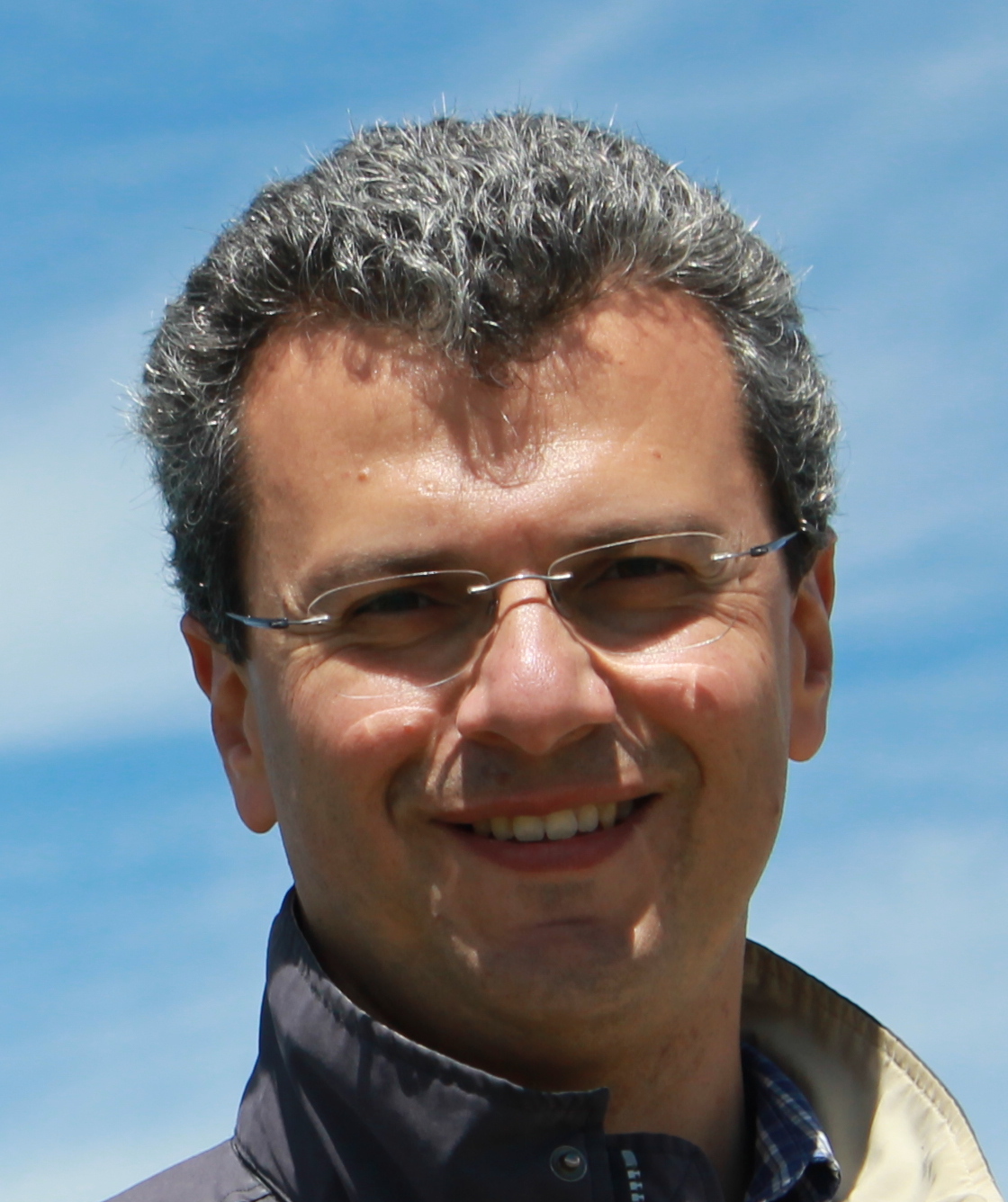
Orazio Tomarchio is an Associate Professor in Information Processing Systems (ING-INF/05) at the Department of Electrical, Electronic and Computer Engineering of the University of Catania. He earned his PhD in Computer Science from the University of Palermo in 1999 and has taught software engineering, security, and distributed systems at both undergraduate and graduate levels. His research focuses on distributed systems, cloud computing, middleware for IoT, semantic technologies, and business process management. He has coordinated regional projects like Cloud4Business, SEEE, PRO.MANA, and led the University of Catania's research unit in the national PRIN2008 Cloud@Home project. Currently, he contributes to projects such as TRAIT (Therapeutic Robot and Artificial Intelligence in experimental Therapy) and QUALIAGRO 4.0, aiming to integrate BPM and IoT for quality management in the agri-food sector. His work involves mobile ad-hoc networks, personal/ubiquitous computing, and SLA in cloud environments.

Nazaraf Shahمشاهده پروفایل
مدرس ارشد
Nazaraf Shah is a Senior Lecturer in Ethical Hacking and Computer Security at the CEES School of Science. He holds a PhD in Computer Science from Coventry University and a BSc in Electrical Engineering. His academic work spans cybersecurity, service-oriented computing, multi-agent systems, and semantic web technologies. His research interests include: Ethical Hacking and Information Security Application of ICT in Energy Management Systems Secure web-based enterprise applications using Agent and Web Services Multi-Agent Systems (MAS) in distributed computing Runtime exception diagnosis in open, cooperative agent environments The recent trend in his scholarly output shows a strong focus on cybersecurity, ontologies, intelligent systems, and applications of AI in enterprise and cloud environments. His work integrates formal knowledge modeling with practical implementations in cloud, IoT, and smart systems. He has contributed to both theoretical frameworks and applied solutions in secure and resilient computing. Nazaraf has served on program committees of over ten international conferences and held leadership roles such as Workshop Chair and Publication Chair for IEEE ICEBE. He was a session chair for IEEE CEC 10 and ICGreen 2010 and delivered an invited talk at the Second International Conference on Cyber Security in 2013. He has supervised 8 academic projects, indicating active involvement in mentoring students. His research is supported by extensive publication activity, with over 50 papers and recent outputs extending to 2025. He is also involved in editorial activities and has contributed to the advancement of his field through conference organization and peer review. His work intersects with labs and teams focused on intelligent systems, cybersecurity, and semantic technologies, particularly in cloud and enterprise contexts.

- Software Engineering and Testing
- Program Slicing and Clustering
- Information Retrieval in Software Engineering
- +۶ مورد دیگر
David W. Binkley is a Professor in the Department of Computer Science at Loyola University Maryland. His research focuses on Software Engineering and Testing Program Slicing and Clustering Information Retrieval Techniques in Software Engineering Safety-Critical Systems Code Clone Detection Recent work includes dynamic slicing of WebAssembly binaries and adaptive change recommendation systems using association rules. He has contributed extensively to empirical studies on dependence clusters, testability transformations, and observational slicing techniques. Key collaborations include institutions like Simula Research Laboratory (Norway) and NIST (National Institute of Standards and Technology). His publications span top-tier venues such as IEEE Transactions on Software Engineering, ACM TOPLAS, and ICSE.
Jacqueline Campbellمشاهده پروفایل
مدرس ارشد
Dr. Jacqueline Campbell is Course Director for the undergraduate and postgraduate Data Science programs at Leeds Beckett University, within the School of Built Environment, Engineering and Computing. She holds a Doctorate in Education and is recognized as a Senior Teacher Fellow for excellence in teaching. Her academic work integrates industry engagement, pedagogical innovation, and research on ethical and social aspects of technology. Her educational background includes a degree in Mathematics from Cardiff University. Her teaching spans a wide range of programs, including BSc and MSc Data Science, Computer Science, Cyber Security, and Digital and Technology Solutions. Dr. Campbell's research lies at the intersection of technology, sociology, and education. Her current focus is on data and technology bias and the informed evaluation of data analytics processes and outcomes. She applies sociological theories to understand computing students and advocates for ethical, inclusive, and socially aware technological education. Her work reflects a strong commitment to pedagogical innovation, particularly through enquiry-based learning , where students explore real-world problems to drive their own learning. She also integrates team-teaching and technology-enhanced methods in her practice. Senior Teacher Fellow Dr. Campbell has held multiple leadership roles in academic management, including academic leadership, enterprise development, employability lead, placements coordination, and personal tutoring. She actively connects students with the Leeds Digital and Technology sector, supporting their career development. While no specific grants are mentioned, her consultancy services and industry collaboration suggest applied, practice-oriented funding and partnerships. She is involved in community outreach as a School Governor and by running a local maths homework club, further demonstrating her commitment to education and inclusion.

Tore Brattliمشاهده پروفایل
مدرس ارشد
Tore Brattli is a Senior Lecturer and Study Program Manager in Media and Documentation Science at the Department of Language and Culture, UiT The Arctic University of Norway, under the Faculty of Humanities, Social Sciences and Teacher Education. He plays a key role in shaping the BA, MA, and one-year programs in media and documentation science, with a focus on information technology integration. His research interests include: Information Retrieval Search Engines Databases Digitalization Classification and Cataloging Knowledge Organization Semantic Change in Digital Terminology His teaching spans courses such as Databases, Search Engines and Data Modeling (MDV-1004), Document Organization and Retrieval (MDV-1201), Document Institutions in a Digital Age (MDV-1210), and Big Data, Social Media and Retrieval (MDV-3051). His recent publications reflect a strong focus on the evolution of digital concepts, classification systems like Dewey Decimal, and innovations in library services, especially in digital and networked environments. Themes across his work include the transformation of scholarly communication, automatic classification using semantic indexing, and the impact of digital media on traditional library structures. Notable scientific contributions include studies on the semantic expansion of the term "digital," experiments in automatic classification for public libraries, and analyses of digital journal paradigms. His work bridges library science, information systems, and digital humanities. He advises on curriculum development and leads program management but no formal advisees or students are listed. There is no mention of grants, awards, or laboratory affiliations. His research is primarily theoretical and applied within academic and library contexts.
فقط ۷۵۰ نتیجه اول نمایش داده میشود. برای رسیدن به نتایج دقیقتر، جستوجو را با فیلترها محدودتر کنید.