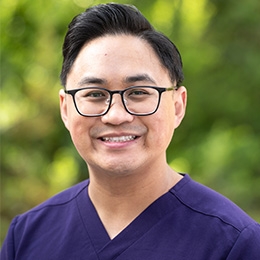
Potenciano (Sean) Salvador serves as an Adjunct Instructor and Clinical Simulation Services Manager at Dominican University of California within the School of Health and Natural Sciences and Department of Nursing. With nine years of institutional experience, he specializes in nursing education through Nursing Fundamentals Lab instruction and oversight of Med-Surg I, II, III, and Geriatric Foundations clinical rotations, emphasizing practical skill development and critical thinking. His educational credentials include: Bachelor of Science in Nursing (BSN) Registered Nurse (RN) certification Salvador's research focus centers on integrating advanced simulation technology into nursing pedagogy to bridge theoretical knowledge with real-world clinical competencies. His work particularly addresses skill acquisition in medical-surgical and geriatric contexts, utilizing simulation to enhance student preparedness for complex healthcare environments while fostering critical decision-making abilities. No scientific awards were documented in the source material. While Salvador mentors nursing students through lab instruction and clinical supervision, no formal graduate student advising or research grants were specified in the available information. As Clinical Simulation Services Manager, he directs the university's simulation laboratory operations, implementing high-fidelity patient scenarios and technological resources to create immersive learning experiences that mirror contemporary healthcare delivery challenges.
Dr. Alessandro Inversini is an Associate Professor at the EHL Hospitality Business School, part of HES-SO University of Applied Sciences Western Switzerland. His primary role involves teaching and researching in the Department of Global Hospitality Business, focusing on marketing, digital transformation, and sustainability within the hospitality and tourism sectors. Educational Background: No explicit educational details provided in the text. Research Interests: Explores the transformative impact of emerging technologies (e.g., AI, ChatGPT) on hospitality operations and customer experience. Advocates for regenerative and net-positive approaches to sustainability in the hospitality industry. Investigates CSR communication strategies on social media and cross-cultural dynamics in tourism reviews. Analyzes digital media’s role in B2B relationships and customer-centric frameworks. Article Trends: Recent works emphasize AI-driven changes in tourism, ethical digital transformation, and CSR practices. Key themes include regenerative hospitality, cultural review differences, and leveraging social media for transformative learning. Awards: No scientific awards explicitly listed. Advising & Grants: Guided research on regenerative hospitality in Lebanon and transformative homestay experiences in Malaysia. Contributed to international conferences like ENTER2016 and EuroCHRIE 2024. Labs/Teams: Collaborates with interdisciplinary teams on projects involving digital tools for rural development and ethical technology integration in hospitality.
Andrea Appolloni is an Associate Professor at the Department of Management and Law, University of Rome Tor Vergata. His academic career focuses on Management with emphasis on Sustainable Supply Chain Management , Digital Transformation , and Circular Economy . His research explores the intersection of technological innovation and sustainability, particularly through topics like AI in Logistics , Green Procurement , and Policy Optimization . Publications span both theoretical frameworks and empirical studies in China, Italy, and Malaysia, with a strong focus on environmental impact and organizational performance. Recent work includes digital twin applications for human-AI collaboration, blockchain integration in sustainable supply chains, and analyzing barriers to circular economy adoption. His 15 most recent articles (2025-2022) demonstrate a trend toward combining Artificial Intelligence , Operations Management , and Environmental Governance .
Noémie Jeannin is a doctoral assistant and PhD student at École polytechnique fédérale de Lausanne (EPFL), affiliated with the Laboratory of Photovoltaics and Thin Films (PV-LAB) within the School of Engineering and the Institute of Microengineering. She is a member of the Energy Doctoral Program (EDOC-EDEY) and serves as the doctoral student representative, contributing to academic governance. Her work is centered on sustainable energy systems, particularly the integration of renewable energy and transportation electrification. Her research focuses on the coupling of photovoltaic (PV) energy production with electric vehicle (EV) charging, using advanced geospatial modeling to quantify energy demand and mobility habits across Europe. She develops methodologies to assess charging flexibility and infrastructure needs, contributing to the European OPENGIS4ET project and the development of the Citiwatts open-source platform for energy transition planning. Her work spans disciplines including energy systems, smart grids, GIS, and sustainable urban mobility. The trends in her publications reveal a strong emphasis on spatial and temporal modeling of energy demand, policy-relevant analysis of electricity tariffs, and innovative solutions for grid integration of distributed energy resources. Her recent articles highlight practical applications in urban energy planning, EV charging behavior, and cost-effective alternatives to grid upgrades. Noémie is actively involved in teaching as an assistant for the course 'Energy Supply Economics and Transition (ENG-410)' and participates in academic service through her representative role. She collaborates with researchers such as A. Pena-Bello, C. Ballif, and N. Wyrsch, and her work is supported by European and institutional research initiatives. She maintains professional profiles on ORCID, Google Scholar, and LinkedIn, and her primary contact is via email at noemie.jeannin@epfl.ch. Her office is located at MC A2 208, EPFL.
Dr. Faisel Tubbal is a Lecturer, Laboratory Manager, and Work Integrated Learning Coordinator at the School of Electrical, Computer and Telecommunications Engineering, University of Wollongong. He holds a PhD in Telecommunication Engineering from the University of Wollongong (2017) and has extensive experience in research and academia. His roles include managing laboratories and coordinating work-integrated learning programs. Education: B.E. in Telecommunication Engineering, College of Electronic Technology, Libya (2004) Graduate Diploma in Engineering Technology, University of Wollongong (2011) M.S. in Telecommunication Engineering, University of Wollongong (2012) M.S. in Engineering Management, University of Wollongong (2013) Ph.D. in Telecommunication Engineering, University of Wollongong (2017) Research Interests: Dr. Tubbal specializes in antenna designs for CubeSat communications, wearable antennas, metamaterials, and wireless power transfer. His work bridges theoretical advancements with practical applications in satellite technology and IoT. Recent trends in his publications focus on RF energy harvesting, 5G/IoT integration, and medical wearable systems. Awards: 2021 and 2016 Vice-Chancellor's OCTAL Awards for teaching excellence Fellow at Wollongong Academy for Tertiary Teaching and Learning Excellence (WATTLE) Grants & Supervision: Currently supervising four PhD students on CubeSat systems, medical wearable antennas, and wireless power reception. He led an institutional grant (2024) on alternative learning content development. Labs & Teams: Manages engineering laboratories and coordinates industry-linked projects at the University of Wollongong. Active in IEEE as a Senior Member and contributes to conference organizing (e.g., ICSPCS 2019 Technical Committee).
Lin Ma is an Assistant Professor in the Department of Electrical Engineering and Computer Science at the University of Michigan, Ann Arbor, since August 2023. His research focuses on advancing database systems through machine learning integration, with a particular emphasis on self-driving DBMS, query optimization, and GPU acceleration. He holds a PhD from Carnegie Mellon University, where he also served as a postdoctoral researcher, and previously worked as a Software Engineer at Databricks. Research Interests: Lin’s work bridges database management systems and machine learning, aiming to create autonomous systems capable of self-optimization. Key areas include workload forecasting, behavior modeling for self-driving DBMS, and leveraging GPU capabilities for large-scale analytics. His contributions have been recognized through publications in top venues like VLDB, SIGMOD, and CIDR. Service: He actively serves on program committees for major conferences including SIGMOD, VLDB, and CIDR, and has held roles such as Web/Information Chair for SIGMOD (2023). His contributions extend to academic service, including admissions and faculty search committees at CMU and UMich. Labs & Projects: Lin leads research initiatives in database systems, including the QueryBot5000 framework for workload forecasting, and collaborates on projects like Vortex and Database Gyms to advance GPU-accelerated analytics and self-driving system design.
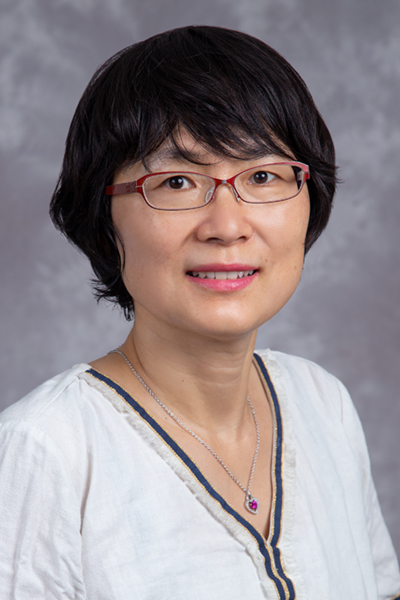
Xiaowei Yang is a Professor of Computer Science at Duke University, where she holds multiple leadership positions including Co-Director of Graduate Studies for the Master of Science in Economics and Computation Program and Director of Graduate Studies for the MS Program in the Department of Computer Science. She is a prominent researcher in computer networks and distributed systems with numerous publications in top-tier conferences and journals. Dr. Yang received her Ph.D. in Computer Science from Massachusetts Institute of Technology in 2004 and her B.S.E. in Electronic Engineering from Tsinghua University in China in 1996. Prior to joining Duke University, she served as an assistant professor in the Department of Computer Science at the University of California at Irvine. Dr. Yang's research focuses on large-scale computer systems, particularly computer networks and distributed systems. Her work addresses challenges that arise as computer systems scale in size and distribute across geographical locations, with emphasis on scalability, reliability, security, performance, and manageability. Her current research interests include developing practical ML/AI technologies to improve network reliability and security (AIOps), protecting online privacy and security of Internet users, and providing network and system support for latency-sensitive applications. Her research has significant practical impact, with several projects addressing real-world problems in cloud computing, content delivery networks, and broadband infrastructure. Dr. Yang's recent publications demonstrate a consistent focus on practical network systems research with strong empirical validation. Her work spans multiple aspects of networking including cloud infrastructure, content delivery, security protocols, and network measurements. A notable trend in her recent work is the increasing focus on privacy-preserving technologies and the security implications of modern web infrastructure, particularly concerning content delivery networks and third-party services. Among her notable recognitions is the prestigious NSF CAREER award, which supports early-career faculty who exemplify the role of teacher-scholars through outstanding research, excellent education, and the integration of education and research. Dr. Yang has secured significant research funding, including multiple National Science Foundation grants. Current projects include "CNS Core: Small: Optimizing IP Anycast Performance at Scale" (2022-2026) and previously led "CNS Core: Small: Collaborative Research: Improving the Reliability of Cable Broadband Networks with Proactive Network Maintenance" (2019-2023) and "FIA-NP: Collaborative Research: The Next-Phase MobilityFirst Project" (2014-2018). She is actively involved in mentoring students and has taught courses including Introduction to Computer Systems and Advanced Computer Networks. As part of the Duke Systems group, Dr. Yang collaborates with colleagues on various systems research projects. Her work often involves close collaboration with industry partners, particularly cloud service providers and content delivery networks, ensuring her research addresses real-world challenges in large-scale systems.
Prof. Constantinos Antoniou is a Full Professor in the Chair of Transportation Systems Engineering at the Technical University of Munich (TUM), part of the TUM School of Engineering and Design. He holds a Diploma in Civil Engineering from the National Technical University of Athens (1995), an MS in Transportation (1997), and a PhD in Transportation Systems (2004) from MIT. His research focuses on transportation systems engineering, including modeling/simulation, intelligent transport systems (ITS), behavioral economics in transport, road safety, and sustainable transport systems. He has authored over 500 scientific publications, including over 210 peer-reviewed journal papers, and serves as Co-Editor-in-Chief of Transportation Research Part A . Awards include the Francquis Chair (2023), IEEE ITS Outstanding Application Award (2011), and Marie Curie Fellowship (2006–2008). He has secured over €4M in third-party funding, leading projects such as SCUDO, CulturalRoad, and PHOEBE. Currently supervising 17 PhD students, he has mentored seven graduates who now hold academic positions at institutions like UCL and UPC. Research interests span autonomous vehicles, traffic resilience, and policy-driven transport solutions. Key projects include analyzing urban air mobility, MaaS potential, and pandemic impact on transport networks. His work contributes to UN Sustainable Development Goals, emphasizing sustainable cities and communities.
Cuo Zhang is a Lecturer of Power Engineering and ARC DECRA Fellow at the University of Sydney's School of Electrical & Computer Engineering. He holds a B.E. (Hons.) from the University of Sydney (2014) and a Ph.D. in Electrical Engineering from UNSW (2018). His research focuses on smart grids, renewable energy integration, voltage control, and optimization of power systems. Key interests include distributed generation planning, energy storage systems, and demand response mechanisms. Dr. Zhang leads research on enhancing distribution network resilience through advanced control strategies and participates in the Net Zero Institute. He has secured grants such as the 2024 ARC DECRA project on renewables hosting capacity. Supervised students include Yunqing Zhang, working on robust renewables integration. His recent publications emphasize data-driven approaches, decentralized energy trading, and adaptive control for unbalanced networks. He explores machine learning applications in energy management and stochastic optimization under uncertainty. Awards include the University Medal for academic excellence. Awards: ARC DECRA Fellow Grants: 2024 Robust Renewables Hosting Capacity Enhancement Labs/Teams: Member of the Net Zero Institute
Dr. Ioannis Kaparias is an Associate Professor in Transport Engineering at the University of Southampton, affiliated with the Transportation Research Group (TRG). He holds a Master of Engineering from Imperial College London and a PhD from the same institution. His academic career includes roles at City, University of London, and postdoctoral research at Imperial College. He is a Fellow of Advance HE, a member of the Chartered Institute of Highways and Transportation (CIHT), and serves as Deputy Editor-in-Chief of the IET Intelligent Transport Systems journal. Education: MEng in Civil Engineering, Imperial College London (2004) PhD in Transport Engineering, Imperial College London (2008) Postdoctoral Researcher, Imperial College London (2008–2012) Research Interests: Efficient, safe, and sustainable land transport systems Highway and traffic management, including real-time routing and network reliability Active travel modes (cycling/pedestrian infrastructure) Public transport operations and optimization New transport technologies (CAVs, MaaS, EVs) Land use-transport interaction models Teaching: Highway & Traffic Engineering modules at Southampton Doctoral Programme Director (Training) in the School of Engineering Past roles include teaching at Imperial College London, City University London, and the University of East London External Roles: Member of US Transportation Research Board committees (Pedestrians/ACH10 and Human Factors/ACH40) Independent expert for the European Commission Speaker at international conferences (e.g., 'To share or not to share space? A very British tale', 2023)
Julienne Senyard is an Associate Professor at Griffith University's Department of Management, affiliated with the Griffith Business School and the Centre for Work, Organisation and Wellbeing. She holds roles such as Program Outcomes Director for Griffith Business School and has over two decades of academic and entrepreneurial experience. She earned a PhD in Entrepreneurship from Queensland University of Technology (2015), with earlier degrees in Business Communication/Marketing and Arts from QUT and Griffith. Her research focuses on entrepreneurship, innovation, resourcefulness, and social impact, including refugee entrepreneurship and circular economy initiatives. Recent projects include evaluating waste management in First Nations communities and exploring AI's role in entrepreneurship education. Dr. Senyard has secured over $1.5M in research funding, including grants from the Queensland Government and Australian Research Council. Notable awards include the 2024 Vice Chancellor’s Innovation Engagement Award and Senior Fellow status from the Higher Education Academy. Teaching responsibilities include undergraduate courses like Innovation, Creativity, and Entrepreneurship (2043IBA) and postgraduate leadership modules. She supervises doctoral research on topics like social ventures, humanitarian integration, and agri-food systems. Her work emphasizes culturally grounded policy pathways and community-led solutions in circular economy frameworks.
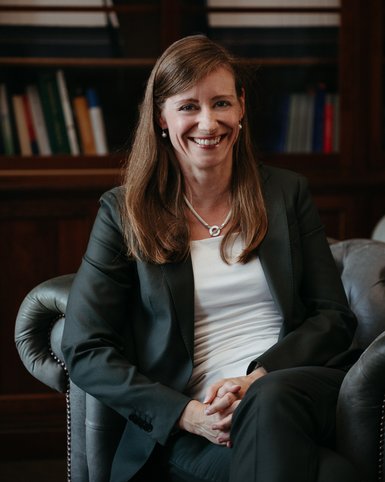
Professor Julia Hartmann serves as the Chair of Sustainability Management at EBS Business School, part of EBS Universität für Wirtschaft und Recht in Oestrich-Winkel, Germany. Her research focuses on climate change mitigation, energy transition strategies, sustainable supply chain resilience, and ESG compliance. She leads a team supported by industry partners like Procter & Gamble and Tetra Pak, emphasizing practical applications of sustainability theory. Her work bridges data analytics (machine learning, natural language processing) with business strategies, published in top journals such as Journal of International Business Studies and Journal of Business Ethics . Hartmann teaches courses on strategic CSR, environmental management, and empirical data techniques, advising companies on ESG leadership and future readiness. Her recent work examines oil and gas industry transitions, supply chain liability, and pandemic resilience. She actively engages with media (TV, podcasts) to discuss sustainability challenges, contributing to public discourse on energy policy and corporate responsibility. Education & Career: While formal academic qualifications are not explicitly listed, her extensive publication record and professorial role indicate advanced doctoral training in business administration or related fields. She has held leadership roles at EBS since assuming the chair position. Research Interests: Her work spans three core areas: 1) Sustainable supply chain design and resilience, 2) Energy transition pathways for industries, and 3) Quantitative methods for measuring ESG impacts. She explores how media attention, legal frameworks, and consumer behavior shape corporate sustainability outcomes. Awards & Recognition: While no specific awards are cited, her peer-reviewed publications and industry partnerships reflect scholarly and practical impact. She was an invited speaker at major conferences like EurOMA 2024 and Arthur D Little CEO Insights Conference. Grants & Collaboration: Partnerships with Procter & Gamble and Tetra Pak support applied research initiatives. Her lab focuses on bridging academic insights with industry implementation through joint projects and executive education programs. Labs/Teams: The Chair of Sustainability Management serves as her primary research hub, hosting interdisciplinary projects on supply chain governance, climate policy, and digital sustainability tools.
Stefano Paleari is a Full Professor of Financial Systems Analysis at the Department of Management, Information and Production Engineering, University of Bergamo. He holds a degree in Nuclear Engineering from Politecnico di Milano and has held significant academic roles, including Rector of the University of Bergamo (2009–2015) and President of CRUI (2013–2015). His research interests span financial systems, aviation economics, and higher education governance, with notable contributions to policy analysis and institutional performance evaluation. Administrative Roles: Scientific Director of ICCSAI, EUA Board member, and advisor to the Italian Ministry of Universities and Research. Key Projects: Led initiatives on university sustainability, energy consumption, and digital healthcare systems. Recognition: Honored as Grande Ufficiale della Repubblica Italiana and Cavaliere di Gran Croce, and awarded the Pearson Prize for financial research. His work integrates academic leadership with practical policy impact, focusing on institutional efficiency and innovation in education and healthcare sectors.
Mondher Feki is an Associate Professor of Management at Université Paris-Saclay, focusing on IS/IT management and digital transformation. His research explores blockchain applications in supply chains, robotic process automation (RPA), robo-advisors, and generative AI. He teaches Management Information Systems and Data Management courses. Currently serving as a reviewer for journals like Business & Information Systems Engineering and conferences like HICSS and ECIS. Active member of the Association Information & Management (AIM). Key research areas include digital transformation strategies, blockchain's operational impact, AI-driven financial advisory systems, and RPA implementation in insurance sectors. His work emphasizes technology adoption challenges and strategic alignment in business contexts. Recent publications analyze blockchain use in French retail logistics, RPA benefits for Allianz France, and IS quality's strategic role in firm performance. Conference contributions address robo-advisors in crowdfunding and pandemic-driven higher education innovation. Maintains active academic service roles in peer review and conference organization.
Guillaume DELATOUR is an Associate Professor in Risk and Crisis Management at Université de Technologie de Troyes (UTT), specializing in organizational resilience and security dynamics. He leads UTT's InSyTE laboratory's crisis/resilience/security research axis and coordinates the PRESAGES crisis simulation platform. His academic roles include directing the IMSGA Master's program in Global Security Engineering and co-developing executive certificates like DSRT (Ministry of Interior collaboration) and AMCSS (ENSP partnership). Research focuses on crisis cell coordination, community resilience post-disasters (e.g., Storm Alex studies), and temporal dynamics in crisis management. He has coordinated major projects including ANR-funded INPLIC (2018-2021) and regional initiatives on rural crisis preparedness. His educational contributions span crisis simulation pedagogy and integrating citizen participation in disaster response strategies. Published extensively in crisis management, his 2023 work on Storm Alex solidarity mechanisms and 2024 papers on crisis cell coordination exemplify his focus on real-world operational challenges. Advises PhD students Gaëtan Chevalier and Aymée Nakasato, exploring crisis simulation frameworks and collective risk behaviors. Education: PhD (2011-2015) on decision-making in high-risk environments, Research Engineer at UTT (2015-2017), UN research stint (2010). Grants: ANR, IHEMI/FIESP, regional funding for RPM project (2015-2016). Labs/Teams: InSyTE Lab, Chaire Gestion des Crises, Chaire Sécurité Globale.