Daria Davitti is a Senior Lecturer and Associate Professor in Public International Law at Lund University's Department of Law. Her research focuses on intersections of international economic law and human rights, particularly in contexts of migration, climate breakdown, and privatized public goods. She leads major projects like the ERC-funded 'Refugee Finance: Histories, Frameworks, Practices' and the Formas-funded 'Screening for Sustainability'. Awards include the 2021 Juridiska Föreningens pedagogiska pris and the title of Docent in Public International Law. She advises on EU migration policies and environmental law compliance, and collaborates with institutions like GLAN and the International Code of Conduct Association for private security service providers. Her work examines refugee finance mechanisms, sustainable investment frameworks, and legal accountability in transnational corporate activities. Key areas include refugee entrepreneurship, EU Taxonomy sustainability criteria, and human rights due diligence in international investment. She has published extensively on topics ranging from refugee bonds to litigation finance in investment arbitration.
Tony Mickelsson Blomqvist is a Lecturer at the Department of Police Work , Södertörn University. He holds a PhD in Social Work (2023) and serves as a research coordinator for the Institute for Policing. Additionally, he is the coordinator of the European Policing Research and Education Network (EPREN) and will become associate editor of the Nordic Journal of Studies in Policing in 2025. PhD in Social Work (2023) Lecturer in Policing Research coordinator and network leader His research focuses on police collaboration with civil society and social services , local crime prevention , and organized crime dynamics , with a unique interest in the intersection between internal security and hybrid warfare . He also explores the role of sports clubs in social inclusion and community development. Tony leads an EU-funded project on Strategic Enforcement for Undermining Criminal Networks (2024–2027) and contributes to initiatives like ‘Martial Arts as a Crime Prevention Tool’ (2024–2026). His recent publications analyze Ukrainian refugee experiences, martial arts’ socialization effects, and sports clubs’ role in vulnerable areas. He has no listed scientific awards but holds editorial and coordination roles in policing research.
Lina Bertling Tjernberg is a Professor at the Department of Electrical Engineering, KTH Royal Institute of Technology, and Deputy Head of the School of Electrical Engineering and Computer Science (EECS) with responsibility for research conditions and impact. She served as Director of KTH's Energy Platform during 2018-2024 and holds memberships in IVA (Swedish Royal Academy of Engineering Sciences) and the IEEE Power & Energy Society. Research Focus: Applying mathematics (statistics, optimization, life cycle assessment) to enhance reliability and predictive maintenance in electric power systems, with emphasis on future electricity grids integrating microgrids, battery storage, HVDC, nuclear/pumped/hydro/wind/solar power, hydrogen, and electrified transport. Collaborations: Engaged with Comillas Pontifical University (Madrid), Addis Ababa University, Norwegian University of Science and Technology (NTNU), and IEA Wind. Key Research Trends: Recent articles highlight advancements in microgrid control (2025), SMR nuclear energy integration (2025), AI-driven asset management (2024), hydrogen sector coupling (2024), and renewable forecasting techniques (2024). Awards: 2021 Power Woman of the Year 2022 Energy Power List (Sweden’s top 20 energy influencers) Leadership Roles: Swedish Electromobility Center (SEC) board Chair of Swedish Electrical Standards (SEK Svensk Elstandard) Member, IEEE PES ISGT Europe steering committee
Jan Grimell is an Associate Professor and Senior Lecturer at the Department of Sociology, Umeå University. His research focuses on military chaplaincy, veterans' mental health, and identity formation, combining sociological and religious perspectives. He is affiliated with the research groups Sociology of Organizations, Sociology of Religion, and Sociology of Work. Key research themes include Moral Injury, PTSD, and the transition challenges veterans face when leaving military service. His work explores existential and spiritual dimensions of health, identity reconstruction, and the role of chaplaincy in armed forces and healthcare settings. Recent projects include studies on Ukrainian military chaplaincy during the Russia-Ukraine war, the impact of moral injury among healthcare providers during the pandemic, and the long-term identity struggles of Swedish veterans. His publications span journals like Frontiers in Sociology , Journal of Pastoral Care & Counseling , and Health and Social Care Chaplaincy , with a focus on interdisciplinary approaches linking social psychology, medical sociology, and religious studies.
Yang Liu is a tenured Associate Professor at the Department of Management and Engineering , Linköping University, Sweden, and an Adjunct Professor at the University of Oulu, Finland. His expertise spans smart manufacturing, clean energy transition, and Industry 4.0 applications. He holds an M.Sc. and D.Sc. from the University of Vaasa, Finland. Research & Awards: Liu's work focuses on sustainable systems, decision support systems, and AI-driven energy efficiency. He has authored over 140 Web of Science publications, including top 0.1% ESI Hot Papers. He is ranked among the world's top 2% scientists (Stanford-Elsevier) and leads globally in 'big data analytics in manufacturing' and 'Industry 4.0-driven circular economy' research. Leadership & Projects: He leads projects like FlexSUS (EU Horizon 2020) and PERSEUS, developing tools for smart urban energy planning and 15-minute city models. He serves as Editor-in-Chief of Cleaner Engineering and Technology and Guest Editor for multiple journals. His research emphasizes bridging data science with sustainability challenges in manufacturing and energy systems. Key Achievements: Top-ranked in global citations, ESI Highly Cited Papers, and industry-driven sustainability frameworks. Grants: Leads EU-funded projects and collaborates with Siemens Energy on energy transition solutions. Labs & Teams: Part of the Environmental Technology and Management (MILJÖ) division and Unit for Product Service Innovation (MILJOPSI) at Linköping.
Janis Stirna is a Professor and Unit Head at the Department of Computer and Systems Sciences (DSV), Stockholm University. He leads the PRECIS research group, focusing on theories and tools for organizational and IT solution design. PhD in Computer and Systems Sciences (2001), Royal Institute of Technology, Sweden Associate Professor (2008), Jönköping University Research Interests include enterprise modeling, requirements engineering, organizational patterns, and knowledge management. His work spans methodologies like EKP, EKD, and 4EM, with notable coordination of the EU FP7 project CaaS (Capability as a Service). He co-edited key Springer publications on enterprise modeling and capability management. Teaching: Delivers Object-Oriented System Analysis with UML to DSV BSc students. Leadership: Chairs IFIP Working Group 8.1 and co-initiated the PoEM conference series.
Professor Isto Huvila is a leading scholar at Uppsala University's Department of ABM (Archives, Libraries, and Museums) within the Faculty of Humanities. His academic profile spans information science, digital humanities, and cultural heritage studies with a distinctive focus on documentation practices and information management across diverse contexts. His research interests encompass: Information and knowledge management Social and participatory information practices Documentation and paradata theory Digital humanities and archaeological information systems Health information and e-health services Open data and research data management Recent scholarly output reveals a strong trajectory toward understanding information practices across multiple domains. A significant portion of his work examines paradata in archaeological contexts through the CAPTURE project, investigating how documentation of data creation processes can enhance research transparency and data reuse. He also conducts extensive research on digital inclusion among older adults and immigrant populations regarding e-health services, analyzing both experiences and expectations of these user groups. Professor Huvila publishes in high-impact journals including Journal of Documentation, Information Research, Journal of the Association for Information Science and Technology, and Journal of Medical Internet Research. His interdisciplinary approach connects information science with archaeology, health informatics, and digital humanities, yielding practical insights for improving documentation standards, research data management, and e-health service design. His 2025 book 'Paradata: Documenting Data Creation, Curation and Use' represents a major contribution to the field, alongside influential review articles like 'Trends in information behavior research, 2016-2022' in the Annual Review of Information Science and Technology. His work bridges theoretical and practical concerns in information science, making substantive contributions to both academic knowledge and real-world applications in cultural heritage institutions and healthcare information systems.
Dean B. Carson is a researcher at Umeå University , affiliated with the Faculty of Medicine, Department of Epidemiology and Global Health , and the Arctic Research Centre . His work focuses on rural health systems, social care workforce challenges, sustainable rural development, and community-based approaches to healthcare and food security. Rural Health : Explores capacity-building in rural health research and medical education reform. Public Health : Analyzes service delivery models and co-creation frameworks for elderly care. Geography : Investigates spatial dynamics in northern peripheries, including food production networks and micro-urbanization. Recent publications (2024-2025) examine topics such as rural health research capacity frameworks , hospital-to-home transfer systems , and non-commercial food distribution networks . His studies often integrate theoretical models like Rural Nursing Theory and Beyond Periphery while emphasizing stakeholder engagement and policy translation. Grants and Collaborations : Funded by the Swedish Research Council Formas, American National Science Foundation (NSF), and Riksbankens Jubileumsfond. Collaborates with Arctic-FROST networks and Lifestyle Migration Hub researchers.
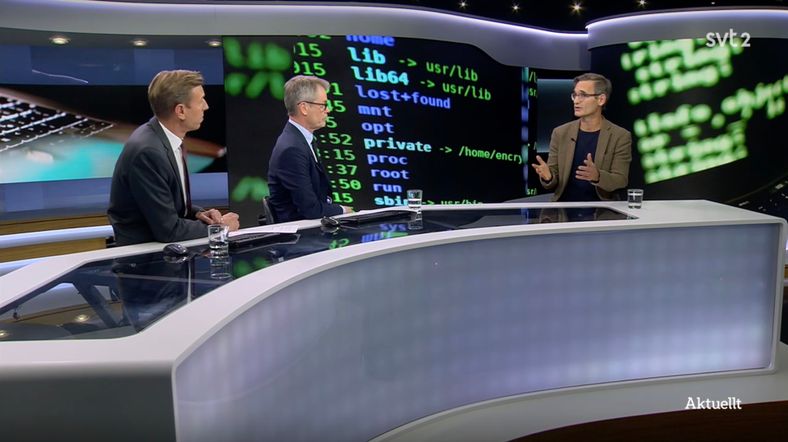
Pontus Johnson is a Professor at the KTH Royal Institute of Technology in Stockholm, Sweden. He leads the Center for Cyber Defense and Information Security (collaborating with Swedish Armed Forces, FRA, MSB, FOI, FHS) and serves as vice director of Cybercampus Sweden since 2024. His research focuses on cybersecurity , enterprise architecture analysis , and probabilistic threat modeling , particularly through his development of the Meta Attack Language (MAL) for simulating cyber attacks on networked systems. Education: MSc in Computer Science, Lund Institute of Technology (1997) PhD in Computer Science, KTH (2002) Docent title, KTH (2007) Leadership Roles: Director, Center for Cyber Defense and Information Security (2013–present) Vice Director, Cybercampus Sweden (2024–present) Board Member, Swedish Research Council (2025–present) Deputy Chair, Swedish Royal Academy of Engineering Sciences (IVA) Board (2024–present) His work spans cybersecurity research , attack simulation methodologies , and enterprise architecture frameworks . He has developed tools like securiCAD (acquired by Google) and pwnPr3d for probabilistic threat modeling. His 15 most recent publications highlight advancements in graph-based attack simulations , automated security assessments , and AI applications in cyber defense . Scientific recognition includes: Listed among Tech Awards Sweden's 50 Most Influential People in Swedish Tech (2022, 2023) Discovery of vulnerability in the Universal Turing Machine (2021) He supervises 16 PhD students and alumni (2005–2024), including Simon Gökstorp , Jakob Nyberg , and Sotirios Katsikeas . His academic service includes over 50 program committee roles and leadership positions in international conferences. He contributes to both academic and public domains through media appearances (SVT, Aftonbladet), courses in ethical hacking , and industry collaboration via his role at Google (20% of his time). His research group Software Systems Architecture and Security (SSAS) focuses on predictive security frameworks and system-of-systems analysis.
Johan Eklöf is a Professor at Stockholm University within the Department of Ecology, Environment and Plant Sciences . His research emphasizes marine ecology , focusing on interactions between marine biodiversity, environmental conditions (including climate), and societal impacts . He teaches courses such as Management of Aquatic Resources in the Tropics , Marine Ecology for the Biogeo Program , and Ecology II . Research Focus: Causal relationships between biodiversity and ecosystem resilience Foundation species as drivers of ecosystem services Optimizing resource management under climate change Projects: Principal Investigator for FORCE (2023-present), a transdisciplinary Baltic Sea recovery project Contributor to NordSalt (climate impacts on Nordic salt marshes) and PlantFish (Baltic Sea vegetation-fish interactions) Scientific Leadership : Supervises 2 current PhD students and co-supervises 6 additional PhD/postdocs Formerly mentored 4 PhD graduates and >40 MSc students Environmental Context: His work spans Baltic Sea and Western Indian Ocean ecosystems, using seagrass beds , mussel beds , and coastal benthic systems as primary models. Recent publications highlight climate change impacts on trophic cascades , habitat connectivity , and policy frameworks for marine conservation .
Mats Alvesson is a Professor in Organizational Studies at the Department of Business Administration, School of Economics and Management, Lund University. He is actively engaged in research, teaching, and supervision at the PhD and master's levels, with a focus on critical perspectives in management and organization theory. University: Lund University School: School of Economics and Management Department: Department of Business Administration Academic Rank: Professor Email: mats.alvesson@fek.lu.se His research centers on leadership, organizational culture, identity, power, gender, knowledge-intensive firms, qualitative methods, and the philosophy of science. He is known for co-developing the concept of 'functional stupidity' and for his critical analyses of symbolic management and leadership. His recent work explores the paradoxes of meaning and emptiness in modern organizations. The 15 most recent articles and books reflect a sustained engagement with critical management studies, strategy as practice, organizational change, and reflexive methodologies. His publications span qualitative theory development, leadership critique, cultural analysis, and methodological innovation, often published with leading academic presses like Oxford University Press, Sage, and Cambridge University Press. While no specific scientific awards are listed in the provided material, his extensive publication record, high research output (231 items), and international collaborations indicate significant scholarly recognition. Mats Alvesson supervises PhD students, including Rachel Waldo, and has been involved in teaching qualitative methods, knowledge work, and organizational change. He has participated in external academic activities, such as visiting Hanken School of Economics and hosting scholars like Yiannis Gabriel. His work contributes to the UN Sustainable Development Goals in the domain of social sciences and business administration. He is currently leading a dissertation project titled 'The enchanted sense making: An exploration of employee-brand love relationships in the luxury-brand sector,' reflecting his ongoing interest in symbolic and affective dimensions of organizational life.
Susanne Iwarsson is a Professor in Gerontology and Care for Older People at Lund University's Faculty of Medicine, holding the Mary and Seved Ribbing Professorship since 2005. She also serves as Director of the Centre for Ageing and Supportive Environments (CASE) and Coordinator of the Swedish National Graduate School for Competitive Science on Ageing and Health (SWEAH). Her academic journey includes a PhD in Medical Science (1997) and promotions to Associate Professor (1999) and Professor (2003). She has held leadership roles such as Pro-dean of the Faculty of Medicine (2006-2011) and Coordinator of the strategic research area MultiPark (2012-2014). Her research focuses on environmental gerontology, housing accessibility, and proactive ageing strategies. Key contributions include the Housing Enabler assessment tool and studies on ageing populations' participation in society. She has supervised 18 PhD students and 6 licentiates, with ongoing supervision of 4 current PhD candidates. Major projects include the Home, Health and Disability longitudinal study (2002-present) and the UserAge program exploring user participation in ageing research. Awards include the Excellent Teaching Practitioner title (2010) and Doctor Honoris Causa. Her work addresses UN Sustainable Development Goals related to health, sustainable cities, and reduced inequalities. Collaborations span universities in Sweden, Finland, Latvia, and the U.S., with partnerships in healthcare and municipal sectors.
Nicholas Kamenos is a Professor at the Department of Ecology, Environment and Geoscience and Director of the Umeå Marine Sciences Centre (UMF) at Umeå University, Sweden. His research bridges global biogeochemical cycles and ecological responses to climate change, focusing on ecosystem engineers like coralline algae, corals, and seagrass. He works in polar to tropical regions, employing SCUBA, mesocosm experiments, and advanced analytical tools. Role: Director, Umeå Marine Sciences Centre Research Focus: Climate change impacts, ocean acidification, blue carbon, Arctic-temperate-tropical ecosystems His recent publications highlight interdisciplinary approaches to understanding marine ecosystem resilience. Research spans proxy development for historical climate reconstruction, carbon burial dynamics, and the role of calcifying organisms in carbon cycling, with applications to conservation and policy. Key grants include projects like AQUASERV (2024–2029) on service provision in marine ecosystems, Light Harvesting in Coralline Algae (2024–2027), and IRISCC (2024–2026) exploring seawater temperature changes. Collaborative work addresses coastal deoxygenation and socio-political aspects of blue carbon economies. He leads the Umeå Marine Sciences Centre, leveraging facilities like the Marine Mesocosm Facility and advanced tools (laser ablation ICPMS, isotope ratio mass spectrometry). His work integrates biological, geological, and chemical techniques to address multidisciplinary questions.
Saurabh Amin is a Professor in the Department of Civil and Environmental Engineering at the Massachusetts Institute of Technology (MIT), where he also serves as the Edmund K. Turner Professor and Undergraduate Officer. He is a Principal Investigator at the Laboratory of Information and Decision Systems and holds affiliations with the Operations Research Center and the Center for Computational Science and Engineering. His educational background includes: B.Tech. 2002, Indian Institute of Technology (IIT) Roorkee M.S. 2004, University of Texas (UT) Austin Ph.D. 2011, University of California (UC) Berkeley Saurabh Amin's research focuses on the design and control of infrastructure systems using game theory and optimization in networks. His work spans three main areas: resilient network control, information systems and incentive design, and optimal resource allocation in large-scale infrastructure systems. By concentrating on critical infrastructure domains including highway transportation, electric power distribution, and urban water networks, his research develops innovative theory and tools to enhance system performance against both stochastic and adversarial disruptions. His approach involves modeling cyber-physical interactions in infrastructures to assess vulnerabilities, developing detection and response tools for failures at various scales, and designing economic incentive schemes that improve aggregate public good while accounting for dependencies and private information among strategic entities. Amin's work bridges mathematical systems theory with practical civil engineering applications, creating a rigorous theoretical foundation for infrastructure resilience that addresses diverse failure mechanisms from natural disasters to deliberate malicious actions. His recent publications demonstrate a strong focus on decarbonization of energy systems, resilient infrastructure planning under climate uncertainty, optimization methods for complex networked systems, and game-theoretic approaches to sustainable infrastructure management. His work increasingly integrates artificial intelligence and machine learning techniques with traditional control theory to address contemporary challenges in infrastructure resilience and sustainability. The research shows a clear trajectory toward addressing climate change impacts on infrastructure systems while maintaining economic efficiency and operational reliability. Professor Amin has received numerous prestigious awards and honors: Common Ground Excellence in Teaching Award, 2025 HSCC Test-of-Time Award, 2024 MIT CEE, Distinguished Service and Leadership Award, 2023 Samuel M. Seegal Prize (SoE) – inspiring students in pursuing and achieving excellence, 2022 Earll M. Murman for Excellence in Undergraduate Advising, 2022 C3.ai Digital Transformation Institute Research Award, 2020 MIT, Ole Madsen Mentoring Award, 2020 MIT, Energy Initiative Research Award, 2020 National Academy of Engineering, China-America Frontiers of Engineering Symposium speaker, 2019 MIT, Robert N. Noyce Career Development Professor, 2015-2018 Google Faculty Research Award, 2015 National Science Foundation CAREER Award, 2015 Siebel Energy Institute Research Award, 2015 MIT, Solomon Buchsbaum AT&T Research Fund Award, 2012 Professor Amin has been actively involved in significant research projects including the C3.ai DTI project on Causal Reasoning for Real-Time Attack Identification in Cyber-Physical Systems and another on Learning in Routing Games for Sustainable Electromobility. He serves as the chief scientist on multi-institutional NSF grants, including the $9 million Foundations of Resilient Cyber-Physical Systems (CPS) project. His teaching portfolio includes courses such as 1.008 Engineering for a Sustainable World, 1.104 Sensing and Intelligent Systems, 1.020 Engineering Sustainability: Analysis and Design, and 1.208 Resilient Networks. As Undergraduate Officer, he plays a key role in shaping the educational experience for civil and environmental engineering students at MIT. Professor Amin leads the Resilient Infrastructure Networks Lab at MIT, where his team develops theoretical foundations and practical tools for infrastructure resilience. The lab focuses on the intersection of control theory, game theory, and optimization applied to cyber-physical infrastructure systems. Current research directions include pandemic-resilient urban mobility and hurricane-resilient smart grid operations, reflecting the lab's commitment to addressing pressing societal challenges through rigorous systems engineering approaches.
Karl Henrik Johansson is a Professor at the School of Electrical Engineering and Computer Science, KTH Royal Institute of Technology in Stockholm, Sweden, where he also serves as the Founding Director of Digital Futures. He is a Fellow of both IEEE and the Royal Swedish Academy of Engineering Sciences, and has held leadership positions including Immediate Past President of the European Control Association and IEEE Control Systems Society Vice President Diversity, Outreach & Development. Dr. Johansson earned his MSc in Electrical Engineering and PhD in Automatic Control from Lund University. His academic journey includes visiting positions at prestigious institutions such as UC Berkeley, Caltech, and NTU. His research focuses on networked control systems and cyber-physical systems with applications in transportation, energy, and automation networks. His work investigates fundamental challenges in connecting physical world systems through communication networks, exploring how wireless communication and sensor technology can enhance system robustness, reliability, energy efficiency, and safety. Current research directions include security of cyber-physical systems, distributed optimization, multi-agent systems, and applications to intelligent transportation and energy networks. Analysis of his recent publications reveals a strong focus on distributed optimization algorithms, secure networked control, multi-agent systems, and applications to transportation and energy networks. His work increasingly integrates machine learning techniques with traditional control theory, addressing challenges in privacy-preserving distributed computation, resilient state estimation, and resource allocation in complex networked systems. IEEE Control Systems Society Hendrik W. Bode Lecture Prize (2024) Swedish Research Council Distinguished Professor (2018-2027) Wallenberg Scholar (2009-2026) IFAC Young Author Prize IEEE CSS Distinguished Lecturer (2017-2019) IFAC Outstanding Service Award IEEE Fellow Dr. Johansson has supervised over 100 postdocs and PhD students, with many now holding prominent positions at institutions worldwide. His research has been supported by significant grants including the Swedish Research Council Distinguished Professor Grant (2018-2027), multiple Wallenberg Foundation grants, and numerous EU and national research projects. He has directed major research centers including ACCESS Linnaeus Centre (2009-2016) and Strategic Research Area ICT TNG (2013-2020). His research group operates within the Digital Futures initiative and maintains strong connections with industry partners through projects like the Integrated Transport Research Lab (supported by Scania and Ericsson) and Smart Mobility Lab. The group actively collaborates with international institutions and participates in major EU-funded projects addressing challenges in cyber-physical systems, transportation, and energy networks.