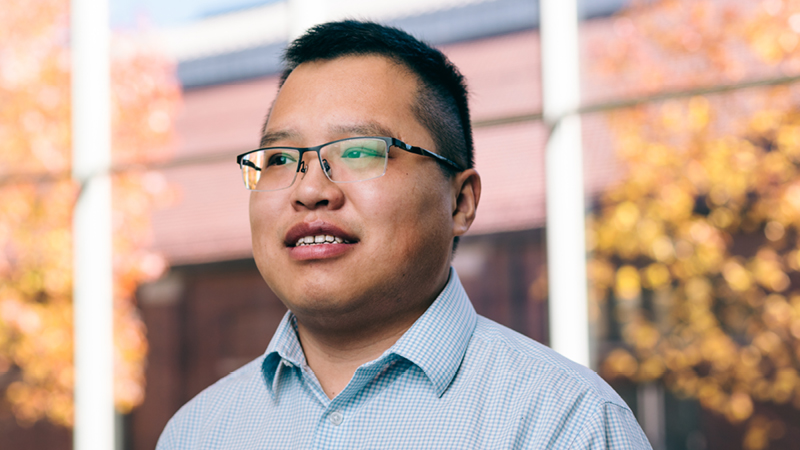
Beng Chin Ooi is a Lee Kong Chian Centennial Professor at the National University of Singapore (NUS), School of Computing (SoC). He holds a B.Sc. (1st Class Honors) and Ph.D. in Computer Science from Monash University. His research focuses on database systems, large-scale analytics, and distributed computing. He has held leadership roles including Dean of School of Computing (2007–2013) and Director of Smart Systems Institute (2011–2021). Key achievements include the Singapore President’s Science Award (2011), ACM Fellow (2011), IEEE Fellow (2009), and multiple best paper awards. His work emphasizes scalable data management, blockchain systems, and healthcare data analytics. Education: Monash University (B.Sc., Ph.D.) Leadership: Dean (SoC), Director (Smart Systems Institute) Awards: Over 15 major honors including ACM SIGMOD E.F. Codd Innovations Award (2020) His research spans distributed databases, big data systems, and innovative applications of blockchain technology. Recent work includes NASI (neural architecture search) and Rafiki (ML-as-a-service).
Tim Ceci is a Part-time Lecturer at Parsons School of Design, The New School. He is a Senior Retail/Omni-channel and Arts/Culture Executive with extensive experience in luxury retail and corporate leadership. His career includes roles at Goyard, Hall des Lumiéres, Saks Fifth Avenue, LVMH, and Nike. He focuses on business development, strategic planning, and customer experience optimization. Education: BA in Business with Marketing Major from Hofstra University. Research Interests: Business Development, Retail Project Management, Omni-channel Retail Strategies, Strategic Planning in Luxury Brands, Fashion Industry Dynamics, and Cross-cultural Customer Experience Design. He also explores intersections between arts/culture and retail environments. Professional Roles: Advisory board member for emerging fashion organizations, international conference presenter, and founder of Tim Cecci Retail Consulting (www.timceci.com). His LinkedIn profile further details professional activities. Teaching: Recently taught PMFM 5070: Retailing & Service Design in Spring 2025.
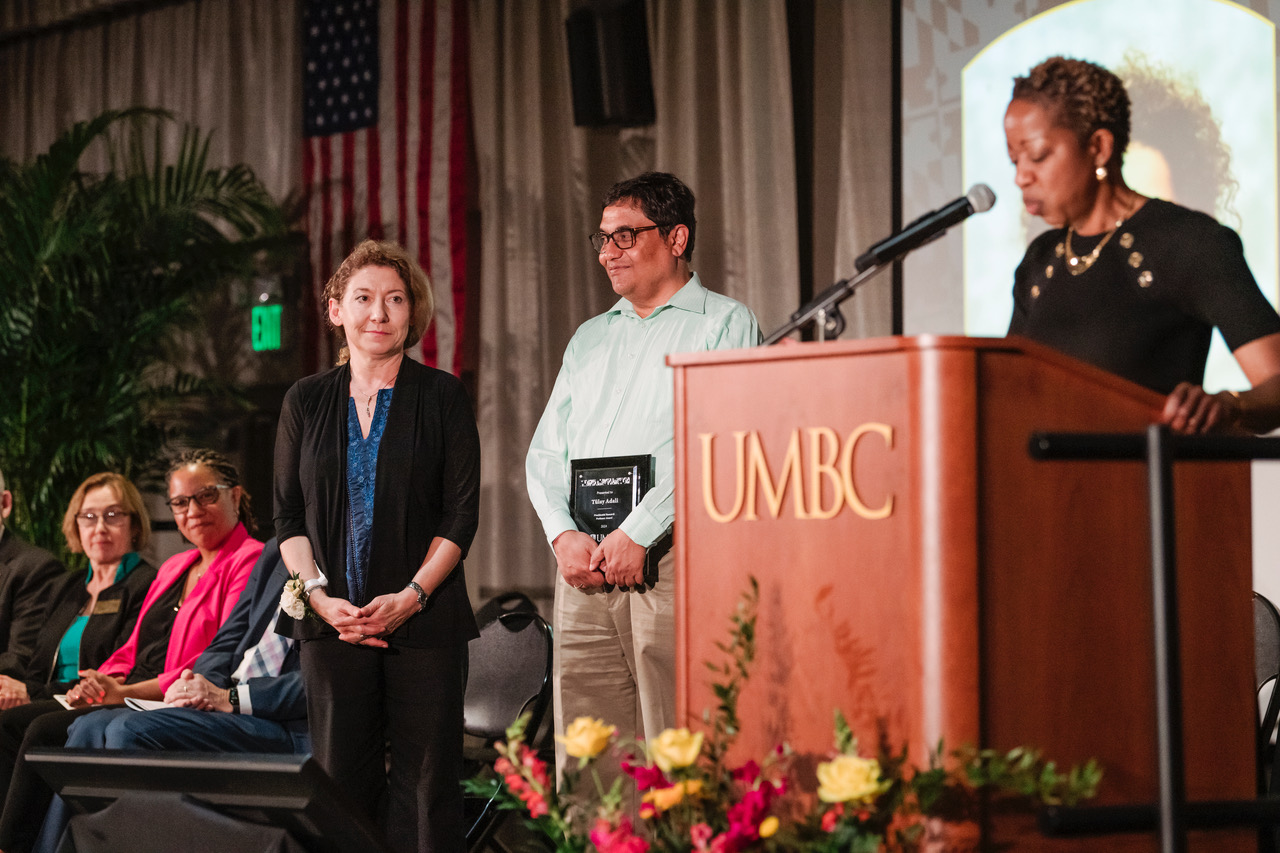
Tülay Adali is a Professor in the Department of Computer Science and Electrical Engineering at the University of Maryland, Baltimore County (UMBC). She has held this position since 1992 and was named a Distinguished University Professor in 2015 for her contributions to statistical signal processing and machine learning. Currently serving as Editor-in-Chief of the IEEE Signal Processing Magazine, she has also held leadership roles in IEEE committees and conferences. Her research focuses on statistical signal processing, machine learning, and their applications in medical imaging and data fusion. Dr. Adali earned her Ph.D. in Electrical Engineering from North Carolina State University in 1992. Her work integrates foundational signal processing techniques with biomedical applications, addressing challenges in neuroimaging analysis. She leads the Machine Learning for Signal Processing laboratory, supported by grants from NSF and NIH. Her lab develops algorithms for analyzing complex signals in medical contexts, emphasizing reproducibility and interdisciplinary collaboration. Recognition includes IEEE Fellow, AIMBE Fellow, AAIA Fellow, Humboldt Research Award, and NSF CAREER Award. She has authored numerous papers on fMRI analysis, independent component analysis, and multimodal data fusion. Her editorial leadership and service to technical communities reflect her commitment to advancing signal processing and education. Education: Ph.D. in Electrical Engineering, North Carolina State University (1992) Grants: NSF, NIH-funded projects on medical imaging and signal processing Awards: SPS Meritorious Service Award, SPIE Pioneer Award
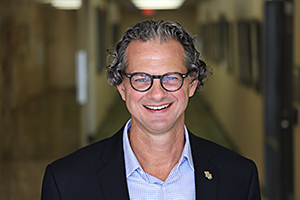
Marlon Dumas is a Professor of Information Systems at the University of Tartu's Faculty of Science and Technology, with a 20-year academic career spanning Estonia and Australia. He holds a PhD in Computer Science from the University of Grenoble 1, France, and has served as Head of Chair and Programme Director in Software Engineering programs. Specializes in Business Process Management (BPM) and Process Mining Current research focuses on prescriptive process monitoring, simulation modeling, and data privacy Recipient of 25+ scientific awards, including multiple Test of Time Awards and the Estonian National Research Award in Technical Sciences Editorial leadership: Area Editor for Information Systems (Elsevier) and ERC Starting Grant Panel Chair His work bridges theoretical advancements in BPM with practical applications in financial services and anti-money laundering. He has developed tools like SIMOD, Kronos, and Kairos for process optimization and analysis. His research integrates AI/ML techniques (reinforcement learning, causal inference) with traditional process modeling. Key trends in his recent publications include: Prescriptive monitoring systems combining causal inference and machine learning Privacy-preserving process mining techniques (differential privacy, anonymization) Resource availability modeling and multi-objective process optimization LLM applications for process analysis and intervention policies Scientific honors include: 2024 BPM Best Paper & Prototype Awards 2023 ICPM Best Prototype Award 2019 ERC Advanced Grantee 2017 Estonian National Research Award in Technical Sciences 2019 MODELS Test of Time Award 2017 BPM Best Prototype Award He has mentored PhD candidates as thesis examiner and contributed to 30+ conference program committees, including General Co-Chair roles at ESEC-FSE 2019 and CAiSE 2018. His work has been supported by European Research Council grants and Estonian Science Foundation projects.
Gilbert Fridgen is Full Professor in Digital Financial Services and holder of the PayPal-FNR PEARL Chair at the University of Luxembourg's Interdisciplinary Centre for Security, Reliability and Trust (SnT). He leads the FINATRAX research group focusing on blockchain, digital identity, and sustainable digital solutions. His research explores decentralized technologies in finance, energy systems, and public administration. Current projects investigate blockchain applications in industrial demand response, NFT markets, EU digital identity wallets, and DeFi institutional adoption. Prof. Fridgen examines the intersection of technology with regulatory frameworks and user behavior in energy and financial systems. He collaborates extensively with industry partners including PayPal and Spuerkeess. Prof. Fridgen actively contributes to EU digital policy discussions, particularly regarding the European Digital Identity Wallet framework and decentralized finance governance.
Dr Luke Garrod is a Senior Lecturer in Economics at Loughborough University's Loughborough Business School. He holds a PhD, MPhil, and BA from the University of East Anglia. His research focuses on industrial organization, competition policy, consumer policy, and behavioral economics, with a particular emphasis on modeling firm incentives in imperfectly competitive markets. He received the International Journal of Industrial Organization Best Theoretical Paper Award 2019 for his work on collusion mechanisms. His book on hub-and-spoke cartels provides critical insights into antitrust enforcement strategies. Teaching responsibilities include Principles of Microeconomics (ECA002) and Industrial Economics (ECC005). He serves as an Associate Editor for the International Journal of the Economics of Business and contributes to economic consultancy through his role at Economic Insight. His research has explored topics such as cartel damages quantification, digital market regulation, and the interplay between consumer protection and competition policies. Key awards include the 2019 Best Theoretical Paper Award, reflecting his contributions to advancing antitrust and competition policy frameworks. His work bridges theoretical economic modeling with practical regulatory applications, addressing emerging challenges in global competition dynamics and digital economy policies.
Laura Ray is the Myron Tribus Professor of Engineering Innovation and Senior Associate Dean for Faculty Development at the Thayer School of Engineering, Dartmouth College. Her research focuses on autonomous robotics, system dynamics, and machine intelligence with applications in polar exploration and agriculture. She leads NSF- and NASA-funded projects, including the development of robots like Yeti and Cool Robot for remote terrain analysis. Education: BSE in Mechanical and Aerospace Engineering from Princeton University (1984), MSE in Mechanical Engineering from Stanford University (1985), and PhD in Mechanical and Aerospace Engineering from Princeton University (1991). Research Interests: Her work spans robotics navigation, cooperative multi-robot systems, and acoustic signal processing. Recent projects include tactile sensing for agricultural robotics and terrain identification algorithms for autonomous vehicles. Awards: Honored with the 2022 Outstanding Service Award, National Academy of Inventors Senior Membership (2020), and multiple fellowships in engineering. Notable contributions include patents for noise-canceling devices and adaptive filtering technologies. Leadership: Served as Interim Dean of Thayer School (2018–2021) and co-leads initiatives like the NSF-funded PhD Innovation Program. Teaches courses in control theory (ENGS 26) and systems engineering (ENGS 22). Key Achievements: Developed robots that reduce risks in polar regions, supported NASA missions, and pioneered precision agriculture technologies. Her lab's innovations have been highlighted in Science, National Geographic, and IEEE Spectrum.
A. Michael Knemeyer is a Professor of Logistics at The Ohio State University's Max M. Fisher College of Business, where he contributes to research and teaching in supply chain management. His work focuses on supply chain relationships, risk and resilience, vendor relations, and sustainability integration. Educational Background: PhD from the University of Maryland, BSBA from John Carroll University Research Areas: Supply chain relationships, international logistics, sustainability, vendor relations, risk management Key Awards: 2013 IJPDLM Outstanding Paper Award, 2013 Bernard J. La Londe Best Paper Award Knemeyer's publications in journals like Harvard Business Review and Journal of Business Logistics explore critical themes in logistics outsourcing relationships, supply chain integration, and sustainable practices. His work often examines cross-cultural dynamics and institutional factors affecting supply chain performance. Selected Courses: Strategic Supply Chain Management, Contemporary Issues in Supply Chain Management, Logistics and Supply Chain Decision Making
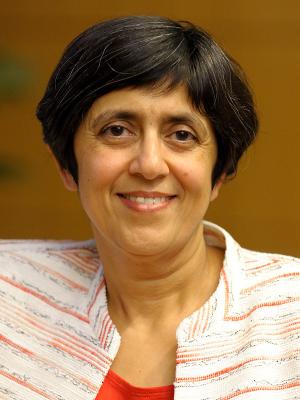
Sarita V Adve is the Richard T. Cheng Professor of Computer Science at the University of Illinois at Urbana-Champaign, where she conducts research spanning hardware, programming languages, operating systems, and applications with a focus on domain-specific systems. Her work bridges theoretical foundations and practical implementations, particularly in extended reality and heterogeneous computing. Her educational background includes a Ph.D. and M.S. in Computer Science from the University of Wisconsin-Madison (1993, 1989) and a B.Tech in Electrical Engineering from the Indian Institute of Technology Bombay (1987). Prior to joining Illinois, she served on the faculty at Rice University from 1993 to 1999. Adve's research centers on generalizable and scalable specialization for domain-specific systems, with current emphasis on extended reality (XR) systems including virtual, augmented, and mixed reality. She chairs the ILLIXR consortium to democratize XR research and developed the first fully open-source XR system (ILLIXR). Her foundational contributions include memory consistency models for C++ and Java programming languages, the Spandex coherence framework for heterogeneous systems, and software-driven approaches for hardware reliability. Her work spans hardware reliability (SWAT and RAMP projects), power management (GRACE system), and instruction-level parallelism. Recent publications reveal a strong focus on energy-efficient XR systems, hardware-software co-design for AI workloads, and resilience analysis. Her team explores rendering offload, visual-inertial odometry optimization, and compositional error injection frameworks, often targeting tradeoffs between energy, latency, and accuracy in mobile and edge environments. Fellow of the American Academy of Arts and Sciences Fellow of the ACM and IEEE ACM/IEEE-CS Ken Kennedy Award Anita Borg Institute Woman of Vision in Innovation Award ACM SIGARCH Maurice Wilkes Award Alfred P. Sloan Research Fellowship UIUC University Scholar University of Illinois Campus Award for Excellence in Graduate Student Mentoring Adve actively mentors students and has received multiple teaching awards. She co-founded the CARES movement to address discrimination in CS research events and chairs CS@Illinois CARES. Her service includes leadership roles in ACM SIGARCH (2015-2019), DARPA/ISAT study group, ACM Council, and Computing Research Association. She has secured significant funding including DARPA initiatives and Google Faculty Research Awards. She leads the ILLIXR consortium and has established collaborative research programs such as the $8.3M DARPA Joint University Microelectronics Program. Her lab focuses on open-source XR development, heterogeneous system architectures, and reliability-aware designs, with strong industry and government partnerships.
Mohammad Saifur Rahman is the Daniels School Chair in Management and a Professor of Management Information Systems at the Mitch Daniels School of Business, Purdue University. Previously, he was an Associate Professor at the Haskayne School of Business, University of Calgary. His academic journey includes significant leadership roles such as co-chairing the Conference on Information Systems and Technology (CIST) in 2013 and serving as president of the INFORMS eBusiness Society in 2014. Currently, he serves as an associate editor for both Management Science and Information Systems Research (ISR). Ph.D. in Management Information Systems, Krannert School of Management, Purdue University (2008) MBA in Management Information Systems, Southern Illinois University (2004) BS in Computer Science, Southern Illinois University (2002) Rahman's research primarily focuses on the economic implications of digital transformations. His work examines how digitization affects consumer behavior, market structures, and business strategies across various industries. He investigates the value of digital traces in driving consumer behavior and improving decision-making, particularly in omnichannel retail environments. His research on the sharing economy has revealed important insights about economic disparities, showing how platforms like Airbnb provide economic benefits to predominantly white neighborhoods while failing to generate similar spillover effects in predominantly Black or Hispanic neighborhoods. His recent publications reveal a consistent focus on the intersection of technology, economics, and social impact. Rahman's work frequently examines how local market structures interact with digital platforms to create or exacerbate economic inequalities. His research spans multiple disciplines including information systems, economics, marketing, and operations management, with a particular emphasis on empirical studies using real-world data from major companies like Walmart and Cisco. CICP Faculty Commercialization Award (2020) INFORMS Sandy Slaughter Early Career Award (2018) World's Top 40 Business School Professors Under 40 by Poets and Quants (2017) Jay N. Ross Young Faculty Scholar Award (2015) Dean's Award for Outstanding Research Achievement (University of Calgary, 2014) Rahman has secured substantial research funding from organizations including Social Sciences and Humanities Research Council (SSHRC), Adobe Systems ($50,000 grants in 2017 and 2020), Trask Innovation Fund ($21,218), and NSF I-Corps ($50,000). He has advised numerous PhD students and collaborated with industry partners to translate research into practical applications. Rahman co-founded RightFit Analytics, a precision health analytics solution that utilizes AI to learn success patterns in healthcare. He has organized significant academic events including the Krannert-Walmart Data Dive (believed to be the first data dive on a college campus) and the Dawn or Doom Data Dive in cooperation with Cisco. Rahman actively engages with industry through consulting and collaborative research projects. His work with Walmart, Cisco, and other major corporations demonstrates his ability to bridge academic research with practical business applications. He has been particularly active in studying how AI and big data analytics can be leveraged to improve business decision-making while addressing potential negative consequences like algorithmic bias and economic inequality.
Diane E. Austin is a Professor and Director of the School of Anthropology at the University of Arizona. She also serves as a Research Anthropologist at the Bureau of Applied Research in Anthropology (BARA). Her work focuses on environmental anthropology, particularly community dynamics in industrial and environmental contexts, with a strong emphasis on social justice and collaborative research. She has over 25 years of experience leading interdisciplinary projects in the U.S., Mexico, and Gulf Coast regions. Austin's research spans diverse areas including Native American communities, U.S.-Mexico border sustainability, Gulf Coast oil industry impacts, and urban food systems in arid regions. She has pioneered long-term partnerships with tribal organizations, federal agencies, and community groups, earning recognition such as the University Distinguished Outreach Professor (2008) and Distinguished Director (2023). Her recent work highlights longitudinal studies on the Deepwater Horizon oil spill's social effects, binational environmental initiatives in Nogales, and community-based approaches to disaster resilience. She coordinates BARA's internship and post-baccalaureate programs, supporting hundreds of students in applied anthropological research. Awards: Partners in Conservation Award (2010), Border Research Partnership Award Finalist (2012) Leadership Roles: Chair of the Good Neighbor Environmental Board, Member of the Gulf Research Program Advisory Board Key Projects: Southern Paiute cultural preservation, Gulf Coast oil industry studies, Nogales reforestation initiatives Austin’s teaching includes courses on ethnographic methods, data analysis, and mixed-methods research. She actively engages in policy advocacy, contributing expert testimony in legal proceedings related to environmental disasters and labor rights.
Min Yen Kan is an Associate Professor and Vice Dean of Undergraduate Studies at the National University of Singapore's School of Computing, Department of Computer Science. With a PhD from Columbia University (2002), he leads the Web Information Retrieval / Natural Language Processing Group (WING.NUS) and serves as ACL Ethics Committee co-chair. His research spans Natural Language Processing , Large Language Models , Digital Libraries , and Information Retrieval , with specific focus on scientific discourse analysis, fact verification, and multimodal systems. Current projects include Scholarly Document Information Extraction (TRL 6), Task-Oriented Dialogue Systems (TRL 4), and Recommendation Systems (TRL 5). Recent publications reveal strong trends in LLM limitations (bias, hallucination, evaluation), conversational recommendation systems , and misinformation detection . His work consistently bridges theoretical NLP with real-world applications in digital libraries and scientific communication. Award highlights include: CIKM 2019 Best Paper Award ACL Distinguished Service Awards Vannevar Bush Best Paper Award (JCDL 2012) ACM Distinguished Speaker designation Kan mentors PhD students with placements at Google and USTC, and serves as associate editor for Information Retrieval and survey editor for Journal of AI Research . His lab WING.NUS develops practical tools like SciWING for scientific document processing and FANG for fake news detection. Media engagements include commentary on AI regulations in Southeast Asia and workforce implications in the AI era.
Jon Singletary serves as Dean and holds the Diana R. Garland Endowed Chair of Child and Family Studies at Baylor University's Diana R. Garland School of Social Work. He joined Baylor in 2003 after earning his PhD in Social Work from Virginia Commonwealth University (VCU), alongside an MSW from VCU and MDiv from Baptist Theological Seminary. His career includes prior roles as Associate Dean (2010–2015) before becoming Dean in 2015. Before academia, Singletary worked as a pastor, community organizer, and social service administrator. His research focuses on strengthening congregational ministries, community development, and advocacy for vulnerable populations. Notable projects include launching the Texas Hunger Initiative and directing the Strengthening Congregational Community Ministries Project. He co-founded the Faith and Service Technical Education Network (FASTENnetwork.org) to bridge faith-based organizations and social service sectors. His publications explore spirituality's role in social work, faith-based program development, and community organizing strategies. Recent work examines career resilience among professionals in aging care and leadership development through Enneagram frameworks. Earlier research addressed child food security, orphan care in Kenya, and rural community capacity building. Singletary's leadership emphasizes integrating faith and practice, evidenced by his edited volumes on Christianity and social work, and his advocacy for competency-based education models. He holds leadership roles in national organizations like the North American Association of Christians in Social Work and has advised global initiatives in Africa.
Jianguo Wang is an Assistant Professor in the Department of Computer Science at Purdue University, joining in Spring 2021. His research focuses on database systems for the cloud and large language models, including disaggregated databases and vector databases. He holds a PhD from the University of California, San Diego, and has worked at Zilliz (Milvus) and Amazon Web Services (AWS). Education: PhD in Computer Science (UC San Diego, 2019), MPhil (Hong Kong Polytechnic University), BSc (Zhengzhou University) Research interests include Disaggregated Databases, Vector Databases for Large Language Models, and cloud-native systems. Notable work includes OpenAurora (an open-source Amazon Aurora prototype) and contributions to Milvus. He has received grants like the NSF CAREER Award and honors such as the IEEE TCDE Rising Star Award. Advising a team of students in database systems and teaching courses like CS592 (Disaggregated Database Systems) and CS440 (Large-scale Data Analytics). Serves on program committees for SIGMOD, VLDB, and ICDE.
Sarah Dean is an Assistant Professor in the Computer Science Department at Cornell University, affiliated with the College of Engineering. Her research focuses on the interplay of machine learning, optimization, and dynamics in real-world systems, particularly in control theory, recommendation systems, and ethical AI. Education: PhD in EECS, University of California, Berkeley (2021) Postdoctoral Research, University of Washington (2021-2022) Research Interests: Data-driven control systems, reinforcement learning, recommendation systems, user dynamics, algorithmic fairness, and the societal impacts of AI. She emphasizes foundational understanding of how learning systems interact with human and social processes. Recent Work Trends: Her articles explore topics like bilinear system identification, user participation dynamics in recommendation platforms, and ethical considerations in AI development. Recent work includes harm mitigation strategies and mathematical modeling of AI-human feedback loops. Awards: AI2050 Early Career Fellow (2024) Best Paper at ICML 2018 (Delayed Impact of Fair Machine Learning) Best Student Paper in Imaging Systems (OSA Congress 2018) Advising & Labs: Advises over 15 graduate and undergraduate students. Leads research on interactive ML systems, with contributions to projects like the 'MSGD' repository for streaming data learning. Active in the GEESE group, promoting socially responsible computing.