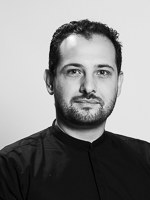
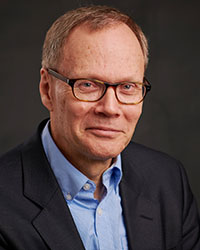
Roy Johnsen is a Professor in the Department of Mechanical and Industrial Engineering at the Norwegian University of Science and Technology (NTNU), specializing in corrosion and surface technology. With a Dr.ing. degree from NTH (1984), he has extensive industry experience from Statoil Research Centre (1985-1991) and CorrOcean (1991-2004), where he expanded the company globally. His current research focuses on hydrogen embrittlement, corrosion protection, and integrity management in offshore systems, with collaborations across Europe, Asia, and the Americas.
Professor Inge Hoff is affiliated with the Norwegian University of Science and Technology (NTNU) in the Department of Civil and Environmental Engineering, where he has served since 2009. Prior to this, he held roles as senior researcher and research leader at SINTEF. Research Interests : Materials for road construction, frost protection, laboratory testing, pavement dimensioning, road rehabilitation, state development modeling, ground-penetrating radar surveys, and concrete/natural stone coverings. Students : Mentors active PhD fellows Lisa Hannasvik, Arman Hamidi, Clara Weber, and Shoiab Ahmad. Teaching : Coordinates courses like TBA4204/BYGT1102 Transport Infrastructure , BYGT2204 Road and Railway Construction , and BA8600 Pavement Structure Dimensioning . Recent publications highlight his expertise in granular material behavior, asphalt durability under climate stressors, and advanced structural assessment techniques. Collaborations with international researchers and presentations at major conferences (TRB, International Conference on Bituminous Mixtures) demonstrate his ongoing contributions to road engineering.
Per Sigvald Bakke is a Professor at the University of Bergen's Faculty of Medicine, Department of Clinical Science, with extensive expertise in respiratory medicine. His research primarily focuses on Chronic Obstructive Pulmonary Disease (COPD), asthma, and related pulmonary conditions, with significant contributions to understanding disease mechanisms, clinical phenotyping, and epidemiology. Dr. Bakke's research interests span COPD phenotyping, asthma heterogeneity, genomics of respiratory diseases, pulmonary function testing, and clinical epidemiology. His work frequently involves large-scale cohort studies and international collaborations, particularly through the U-BIOPRED consortium. His research has significantly advanced understanding of COPD progression, exacerbation risk factors, and the relationship between respiratory diseases and systemic conditions like metabolic syndrome. His publication record demonstrates consistent contributions to respiratory medicine, with recent work focusing on multi-omics approaches to disease phenotyping, genetic determinants of lung function, and clinical management of COPD. His research often bridges basic science with clinical application, addressing critical questions in respiratory disease management and patient outcomes. Dr. Bakke has been instrumental in numerous international collaborative studies including the ECLIPSE cohort, U-BIOPRED, and various genome-wide association studies examining COPD and asthma. His work has contributed to clinical guidelines and improved understanding of respiratory disease mechanisms across diverse populations.
Eduard Kamburjan is a Researcher at the University of Oslo , affiliated with the Reliable Systems (PSY) and Data and Knowledge Systems (DKM) research groups. His work bridges formal methods , digital twin engineering , and knowledge graph applications . Research interests include: Formal verification of hybrid systems using deductive methods Digital twin architecture with compositional correctness guarantees Semantic lifting and ontology-driven modeling for complex systems Concurrency analysis and non-determinism in program verification Interactive visualization as serious games for formal methods His 2024-2023 publications demonstrate expertise in digital twin reconfiguration , semantic interoperability , and knowledge-based runtime enforcement . Key contributions include Crowbar for active object verification and ABS simulator toolchain for model-driven engineering. Collaborations span institutions like Springer , ACM , and IEEE , with work featured in Lecture Notes in Computer Science (LNCS) , Software and Systems Modeling (SoSyM) , and Science of Computer Programming . His research integrates RDF data management , behavioral contracts , and modular analysis for distributed systems.
Gaute Barlindhaug serves as an Assistant Professor in the Department of Language and Culture at UiT The Arctic University of Norway, within the Faculty of Humanities, Social Sciences and Teacher Education. His academic work bridges artistic practice with scholarly research in sonic arts and cultural documentation. His research interests span Sonic Arts , Sound Studies , Music Technology , and Digital Humanities , with particular focus on the ontological status of sound recordings, the intersection of traditional and digital sound technologies, and the preservation of cultural heritage through both artistic and technological approaches. His work often examines how sonic mediations transform aesthetic experiences and cultural expressions. Analysis of his publications reveals a consistent trajectory exploring the relationship between technology and sonic expression, with recent work incorporating artificial intelligence applications in document preservation. His research demonstrates an interdisciplinary approach that combines artistic practice with scholarly inquiry, particularly evident in his contributions to the Journal for Artistic Research. Barlindhaug is actively involved in multiple research initiatives: Engaging Conflicts in a Digital Era (ENCODE) Worlding Northern Art LAMCOM – Libraries, archives, and museums in the community His scholarly output includes both traditional academic publications and creative works, reflecting his position at the intersection of artistic practice and academic research. His contact information is available through the university directory at gaute.barlindhaug@uit.no.
Eirik Brazier serves as Associate Professor in the Department of Culture, Religion and Social Studies at the Faculty of Humanities, Sports and Educational Sciences, University of South-Eastern Norway (USN), where he teaches history and social studies in teacher education programs and international politics through IFOS (Year-long course in international understanding and cooperation). His academic appointments include editorial roles at Store norske leksikon as subject editor for First World War, Canadian, and Australian history, and as topic editor for Norway at 1914-1918 online, the International Encyclopedia of the First World War. His research spans multiple interconnected domains including British colonial history, Norwegian involvement in World War I (despite official neutrality), intelligence operations during wartime, and the cultural history of bicycles. Recent scholarly output demonstrates particular focus on Norwegian war decorations from World War II, German military brothels during occupation, and Scandinavian participation in Allied forces. His methodological approach combines traditional archival research with digital history techniques and analysis of gaming culture's relationship to historical understanding. Academic trends in his publication record reveal increasing specialization in transnational military history, with growing emphasis on microhistorical case studies (e.g., individual soldiers like Knut Werswick) alongside broader analyses of imperial structures. His work consistently bridges academic and public history through popular science contributions in media outlets like Dagbladet and radio appearances on NRK P2, particularly regarding Haus Sphinx brothel investigations and Norwegian-American combat experiences. Brazier actively participates in multiple research collectives including the Political Culture Research Group at USN, the Social Science Didactics Research Group, the Nordic Surveillance History Network ("Maktens øyne og ører"), and international collaborations like the Australia Canada New Zealand Research Network. His current projects explore Scandinavia's role in World War I, digital tools for historical education, and the social history of cycling as cultural phenomenon.
Jan G. Bjaalie is Professor of Neuroinformatics and Dean of Research and Innovation at the University of Oslo Faculty of Medicine . Since 2023 he heads the faculty’s research and innovation strategy, while directing the Neural Systems and Graphics Computing Laboratory at the Institute of Basic Medical Sciences. Education: 1990 Ph.D. in Neuroanatomy, University of Oslo 1986 M.D., University of Oslo Research interests revolve around collaborative and open neuroscience, digital brain atlasing, and the cyber-infrastructures that enable data sharing. He leads efforts to build next-generation atlases that integrate multi-scale brain architecture and connectivity data, and to develop ontologies and FAIR-compliant platforms for global neuroscience. Recent work emphasizes in silico integration of rodent and human imaging datasets, leveraging machine-learning registration tools and cloud-based services such as EBRAINS. The goal is to transform how brain data are stored, visualised and reused across laboratories worldwide. Scientific output & impact: A scan of publications from 2023-2025 reveals a strong focus on digital atlas frameworks, automated image registration (DeepSlice, DeMBA), open data standards (AtOM ontology), and large-scale analyses of genetic influences on brain structure in Alzheimer’s models. These works collectively advance reproducible, high-throughput neuroanatomy and cross-species translation. Grants & leadership roles: Coordinator/Partner in EU Flagships EBRAINS 2.0, BRAIN Health, Human Brain Project (2013-2026) Infrastructure Director, Human Brain Project (2018-2023) Leader of Neuroinformatics Platform & EBRAINS Data Services (2017-2023) Head of Institute of Basic Medical Sciences (2009-2016) Executive Director, International Neuroinformatics Coordinating Facility (INCF) (2006-2008) Chair, International Brain Initiative (2021-) Editorial & governance service: Founding Chief Editor Frontiers in Neuroinformatics (2007-), Section Editor Brain Structure and Function (2002-2020), member of the INCF Governing Board and EBRAINS AISBL Management Board, and numerous international advisory panels on data governance and ethics. His laboratory hosts the Norwegian Neuroinformatics Node and collaborates closely with global consortia to deliver open-access atlases, software pipelines and FAIR data standards that underpin modern neuroscience.
Robin André Rolfhamre is a Professor in the Department of Classical Music and Music Education at the University of Agder, Faculty of Fine Arts. His work bridges performance, pedagogy, and research, with a focus on Early Modern music (c. 1400–1700) and its contemporary relevance. His research interests include: Early Modern Music and Performance Practice Music Pedagogy and Digital Education Rhetoric and Performativity in Music Organology and Tone Production Interdisciplinary Approaches to Musicology Historically Informed Performance (HIP) His recent publications reflect a strong trend toward digital music education, the social dimensions of early music, and the philosophical underpinnings of performance. He explores how rhetoric shapes musical expression, how digital tools can enhance conservatory training, and how performance functions as a form of democratic and social engagement. His work often combines historical analysis with contemporary pedagogical and ethical reflection. Scientific awards received: Agder Academy of Sciences and Letters’ Research Prize for Young Researchers Vest-Agder County Council’s Artist Scholarship The Norwegian Arts Council’s Artist Scholarship (Diversestipend) He is an elected member of the Agder Academy of Sciences and Letters and has supervised Master’s and PhD students. He has led significant projects such as the SERVICE project on digital learning in music education and is the organiser of the REMP (Reconfiguring Early Modern Performance) research group. He is also involved in the Arts in Context research platform and the Research Group for Song Lyrics. He is actively engaged in performance as a lutenist and guitarist, is a composer and producer, and serves as a Pyramid Historical Strings Artist, performing on Lauri Niskanen instruments.
Karin Dyrstad is a Professor at the Department of Sociology and Political Science, Faculty of Social and Educational Sciences at NTNU. Her research focuses on the intersection of political behavior and peace/conflict studies, particularly in conflict-affected societies and fragile states. She examines individual-level causes and consequences of political violence, support for peacebuilding strategies, and policy design improvements. Her work spans post-conflict contexts such as Guatemala, Nepal, Northern Ireland, and the Western Balkans. Key themes include public attitudes toward peace agreements, transitional justice mechanisms, trauma impacts, and the socio-political dynamics of post-war societies. She collaborates extensively with institutions like PRIO and Uppsala University, and her findings contribute to both academic discourse and policy recommendations. Teaching responsibilities include quantitative research methods and leading the political science specialization in NTNU's Social Science PhD program. Her outreach activities include media contributions, policy seminars, and international conference presentations on conflict resolution, peacebuilding, and post-conflict governance.
Kine Pedersen is an Associate Professor at the Department of Health Management and Health Economics within the Faculty of Medicine at the University of Oslo. Her academic career focuses on health economic analysis, disease simulation modeling, and evaluation of healthcare interventions with particular expertise in cervical cancer prevention, HPV-related disease control, and primary care services. She has established herself as a leading researcher in cost-effectiveness analysis of preventive healthcare strategies within the Norwegian healthcare system. Education: PhD in Health Economics and Health Policy, University of Oslo (2018) M.Phil. in Health Economics, Policy and Management, University of Oslo (2014) BA in Economics, University of Oslo (2012) BA in Health Management and Health Economics, University of Oslo (2011) Dr. Pedersen's research program centers on developing and applying sophisticated mathematical models to evaluate preventive healthcare interventions, with a strong emphasis on cervical cancer screening programs and HPV vaccination strategies. Her work bridges health economics, epidemiology, and clinical practice to inform evidence-based healthcare policy. She has made significant contributions to understanding how to optimize screening protocols for vaccinated versus unvaccinated populations and has extensively studied the cost-effectiveness of various approaches to accelerate cervical cancer elimination in Norway. Her recent publications (2022-2024) reveal an expanding research portfolio that now includes telemedicine applications for chronic disease management and team-based primary care models, while maintaining her core focus on cancer prevention. The consistent thread through her work is the application of rigorous health economic methodologies to evaluate preventive interventions, with particular attention to structural uncertainty in modeling and real-world implementation challenges. Scientific Awards: The Society for Medical Decision Making's Lee B. Lusted Student Prize in Health Services and Policy Research Dr. Pedersen teaches HEVAL5120: Modelling in Economic Evaluation I and HMET4210: Research Design. Her research is supported through collaborations with the Cancer Registry of Norway, Center for Health Decision Science at Harvard T.H. Chan School of Public Health, Norwegian Institute of Public Health, and Department of Biostatistics at Aarhus University. She leads or participates in several significant research projects including ASCERTAIN, Optimal Cervical Cancer Prevention Policies (CC-PREVENT), and EXCEED – Network for economic evaluation in Norway. Her work directly informs Norwegian healthcare policy and contributes to international efforts to eliminate cervical cancer through evidence-based preventive strategies.
Ragnhild Kobro Runde is an Associate Professor in Computing Education at the Department of Informatics, University of Oslo. Her work focuses on software engineering methodologies, formal methods in system design, and computing education at both secondary and undergraduate levels. She is affiliated with the Computing Education research group. Her research explores topics such as UML sequence diagram semantics, formal specification techniques (Event-B/STAIRS), and the transition from block-based programming (Scratch) to text-based languages (Python) in schools. She also investigates how ICT exposure impacts mathematics self-belief and academic performance in PISA assessments. Runde has contributed to over 30 peer-reviewed publications since 2005, appearing in journals like Formal Aspects of Computing and Software and Systems Modeling. Her work frequently addresses challenges in software design, security risk analysis, and service-oriented architecture modeling using UML extensions. Key contributions include developing pattern languages for web application security risk analysis, analyzing nondeterminism in sequence diagrams, and creating methodologies for dynamic service composition using UML 2.x. She has collaborated with international researchers on computing education initiatives and formal methods applications.
Mette Marianne Svenning is a Professor at the Department of Arctic and Marine Biology at UiT The Arctic University of Norway. Her research focuses on microbial communities in Arctic and high-latitude ecosystems, particularly methanotrophs and their roles in methane cycling, permafrost dynamics, and climate change feedbacks. She investigates microbial adaptations to extreme environments, including cold-adapted methanotrophs and their metabolic pathways. Her work integrates genomic, transcriptomic, and biogeochemical approaches to understand microbial contributions to global carbon cycles. Key research themes include methane oxidation mechanisms, microbial community responses to environmental changes, and symbiotic relationships in Arctic seep ecosystems. She has conducted extensive fieldwork in Svalbard and other Arctic regions, contributing to long-term ecological studies at Ny-Ålesund. Her research also explores applications in biotechnology, such as microbial consortia for methane conversion to industrial products. Dr. Svenning collaborates internationally on projects addressing permafrost thaw impacts, microbial biogeography, and the interplay between vegetation, herbivory, and soil microbiota. Her findings highlight the critical role of Arctic microorganisms in modulating greenhouse gas emissions under climate change scenarios.
Jan Lindgård is a Researcher at the Department of Structural Engineering , Norwegian University of Science and Technology (NTNU). His work focuses on alkali-aggregate reactions (AAR) and concrete durability, with particular emphasis on alkali-silica reactions (ASR) and pyrrhotite-induced degradation in concrete structures. Key Research Areas: Concrete durability, AAR/ASR mechanisms, accelerated testing methods, alkali leaching, microstructural analysis. Collaborations: Active in RILEM Technical Committee 258-AAA, SINTEF, international institutions. His recent publications analyze pyrrhotite quantification in aggregates, ASR damage assessment in dams, and validation of CEN/RILEM testing standards. He investigates alkali release mechanisms and their impact on concrete performance through both field surveys and laboratory experiments. Scientific activities include: Co-authoring multiple Academic Articles and Technical Reports Contributing to RILEM STAR Reports and Guidelines Participating in Norwegian Infrastructure Projects like COIN and PARTNER Projects address ASR mitigation via low-alkali cements, silica fume additives, and field-lab correlation studies. His work informs Norwegian concrete standards and international AAR prevention strategies.
Zhiliang Zhang is a Professor of Mechanics and Materials at the Department of Structural Engineering, Norwegian University of Science and Technology (NTNU) . He is renowned for his contributions to fracture mechanics and material science, serving as Editor-in-Chief of Engineering Fracture Mechanics and recipient of the Griffith Medal from the European Structural Integrity Society (ESIS). His research focuses on damage mechanics, hydrogen embrittlement, and anti-icing materials, utilizing experimental and computational approaches. Education: BSc and MSc in Structural Engineering, Tongji University (1985, 1988) PhD in Mechanical Engineering, Lappeenranta University of Technology (1994) Research Interests span damage and fracture mechanics , additive manufacturing (AM) , hydrogen embrittlement , and anti-icing surface development . His work integrates multiscale computational modeling with nanomechanical experiments , addressing challenges in energy, structural integrity, and material design. Publication Trends highlight his expertise in hydrogen embrittlement , gas hydrate adhesion , anti-icing surfaces , and additive manufacturing . His articles in journals like Chemical Reviews and Advanced Materials emphasize predictive modeling , nanoscale characterization , and sustainable material solutions . Scientific Awards include Griffith Medal (2024, ECF24) ESIS Fellow (2014) Norwegian Academy of Technological Sciences membership Academic Service involves external doctoral examinations at institutions like Paris Tech and National University of Singapore, and faculty review roles at Imperial College and University of Michigan. He founded the NTNU Nanomechanical Lab in 2006 and has led 14 externally funded projects totaling over €12 million.
Pavel Zemliansky is a Professor at Oslo Metropolitan University (OsloMet), affiliated with the University Library OsloMet and its Research Support Services . His work bridges academic language practices and digital literacy within global educational contexts. Rhetorics Intercultural Rhetoric Online Learning Writing Studies Zemliansky’s research focuses on user-centered design in e-learning environments , emphasizing student engagement and effective writing instruction . His publications explore global academic publishing , faculty development programs , and cross-cultural communication in post-Soviet educational systems. Collaborative projects highlight sociomaterial approaches to teaching and learning, integrating digital tools into professional communication training. As part of the ADEPT research group (ADvanced hEalth intelligence and brain-insPired Technologies), Zemliansky contributes to interdisciplinary efforts in educational technology and digital literacy . His work spans online course design , academic English instruction , and pedagogical assessment frameworks, with applications in STEM education and virtual learning spaces .